Microbial ecology: Complexity and strategies
 Call Kai
 Learn
Learn Practice Test
 Spaced Repetition
 Match
Match Flashcards
 Knowt Play
1/37

There's no tags or description
Looks like no tags are added yet.
Name | Mastery | Learn | Test | Matching | Spaced | Call with Kai |
|---|
No analytics yet
Send a link to your students to track their progress
38 Terms
3 Different levels of microbial complexity
Diversity
Functionality
Individuality
(makes disinfectant unable to kill 100% of microbes)
DIVERSITY: How to study community Diversity?
Metagenomics, which analyzes a pool of DNA and RNA from environmental samples
→ powerful tool to identify community complexity
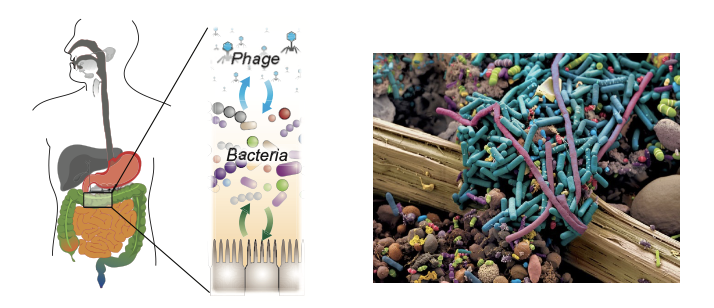
DIVERSITY: What hosts the most complex microbial communities?
Mammalian gut
DIVERSITY: Genetic diversity of E.coli
4700 genes
< 50% are core genes in all E.coli strains
> 15000 genes are E.coli accessory genome
→ Comparable to the genetic diversity of all species
DIVERSITY: What is the accessory genome?
Genetic diversity within the species is necessary to adapt to new environments and colonize new hosts
FUNCTIONALITY: What does accessory genes add to core genomes?
Novel functions like antimicrobial resistance, stress resistance, novel metabolic processes
e.g. E.coli strains
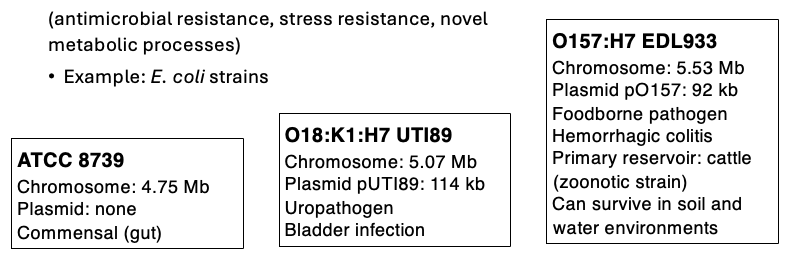
FUNCTIONALITY: Examples of accessory genes in different E.coli strains?
ATCC 8739 - Commensal with Gut
O18:K1:H7 UTI89 - Uropathogen
O157:H7 EDL933 - Foodborne pathogen
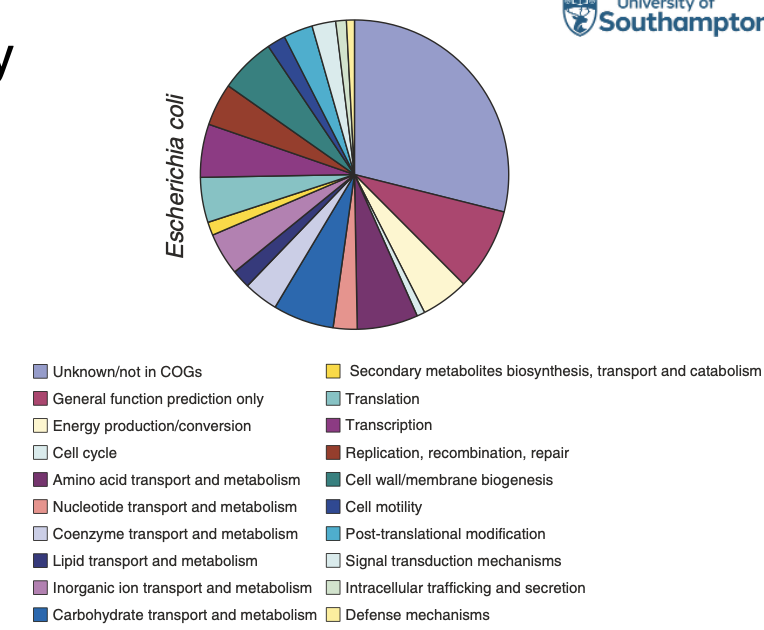
FUNCTIONALITY: Usage of Gene Ontology (GO) system
A bioinformatics pipeline
To classify the biological functions of identified microbial genes and the proteins they encode
FUNCTIONALITY: What species needs the Gene Ontology (GO) system for classifying? For what?
Various prokaryotic and eukaryotic species
to annotate proteins based on their molecular functions, cellular components, and biological processes.
FUNCTIONALITY: Why is E. coli unknown despite being the most studied organism?
The functions of about 1/3 of its proteins are unknown
also called y-genes
INDIVIDUALITY: How do bacteria enhance survival?
Phenotypic heterogeneity
INDIVIDUALITY: Individual cells expressing different levels of stress response genes, metabolic genes for which 2 adaptation ways to achieve phenotypic heterogeneity?
Bet hedging & Division of labour
INDIVIDUALITY: Bet hedging - 2 ways
Dormancy
Sporulation
INDIVIDUALITY: Division of labour - 3 ways
Metabolic specialization
Biofilm formation
Fruiting body formation
3 types of gene regulation in bacteria
Transcriptional regulation - activate
Post-transcriptional (Translational) regulation - mRNA stability
Post-translational regulation - regulation of protein activity, localisation , stability
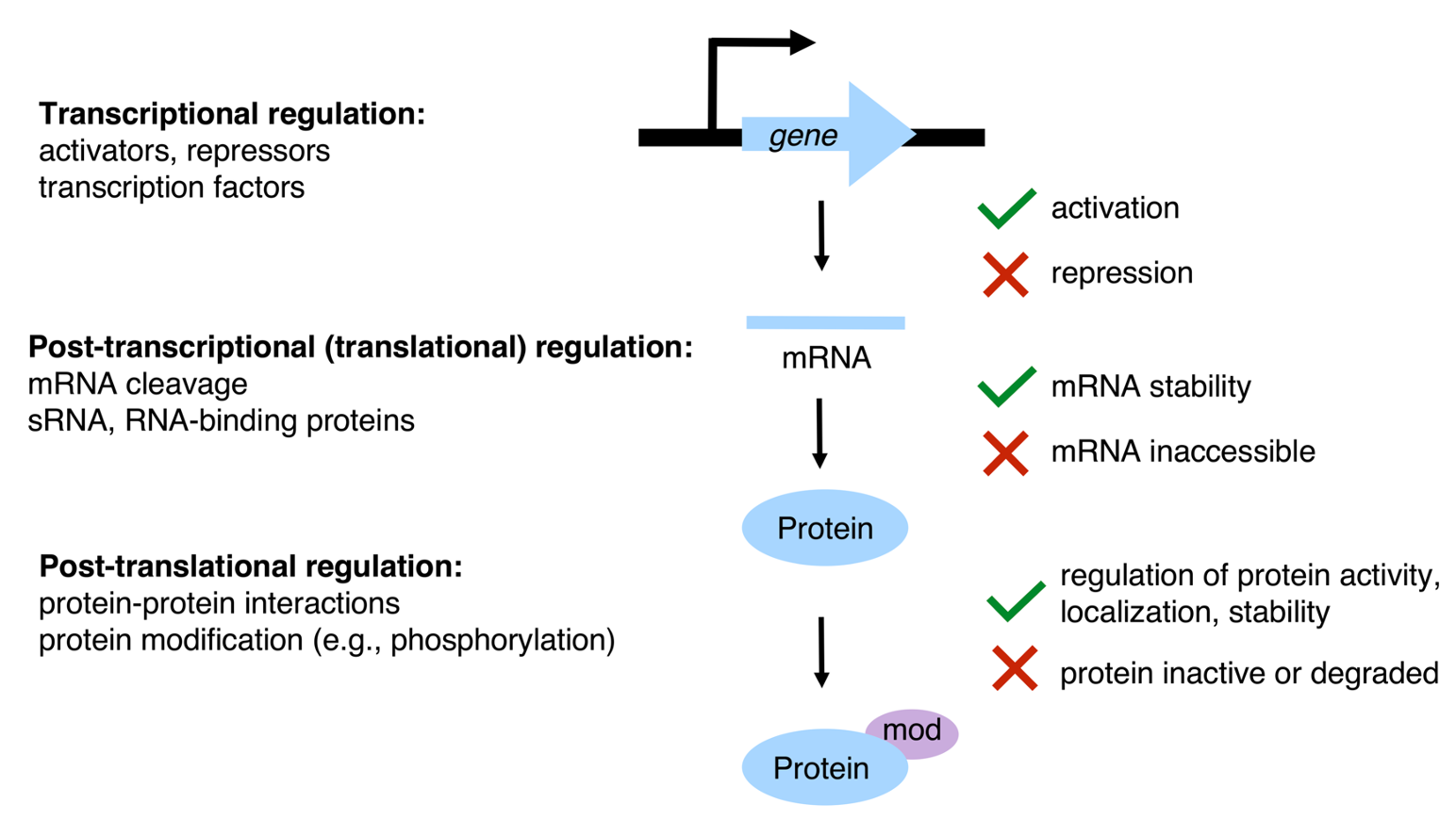
Transcriptional regulation involved of… and for?
Activators, repressors, transcription factors
FOR activation of genes (x repression)
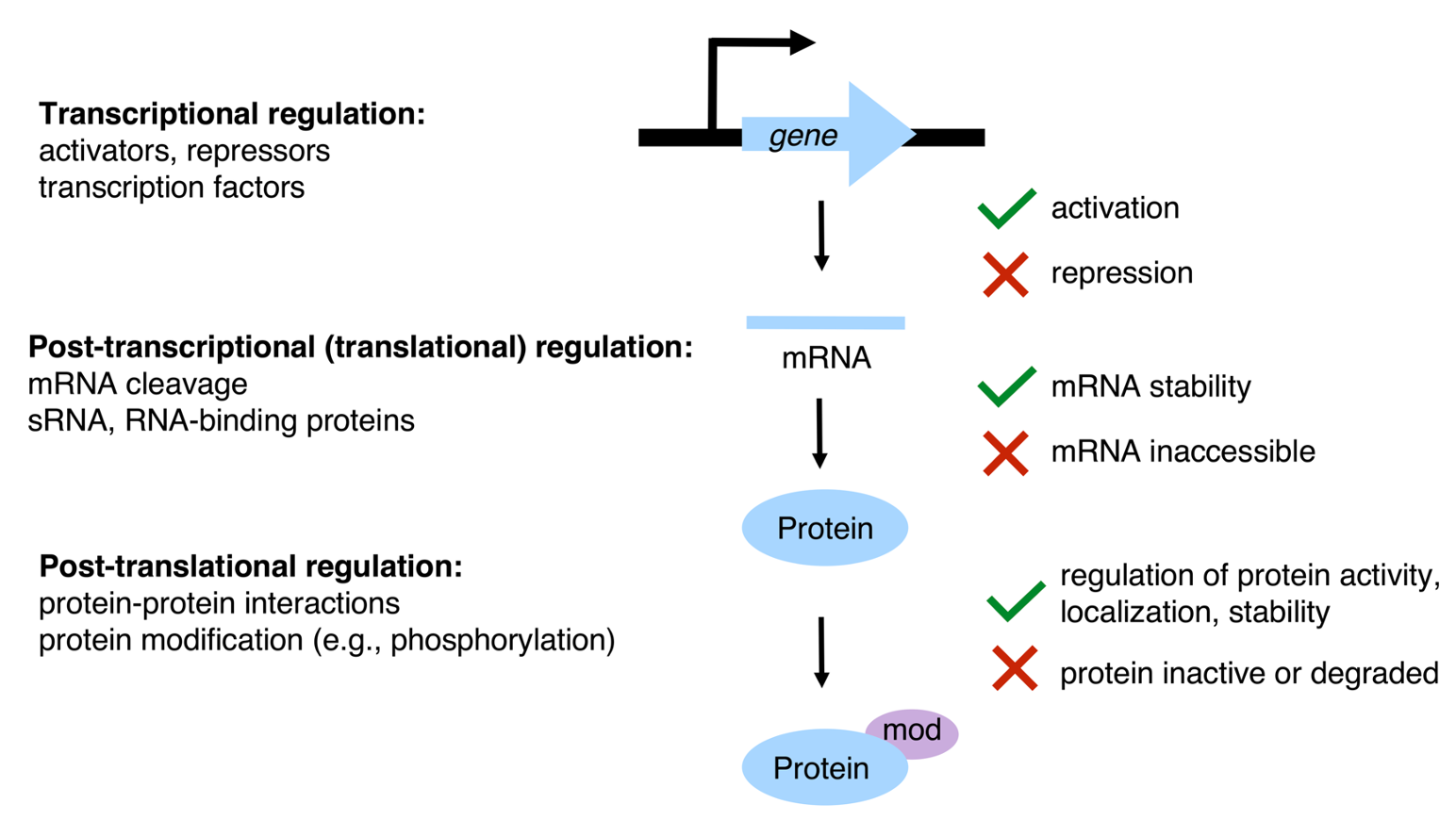
Post-transcriptional (Translational) regulation involved of…and for?
mRNA cleavage, sRNA, RNA-binding proteins
FOR mRNA stability (x mRNA inaccessible)
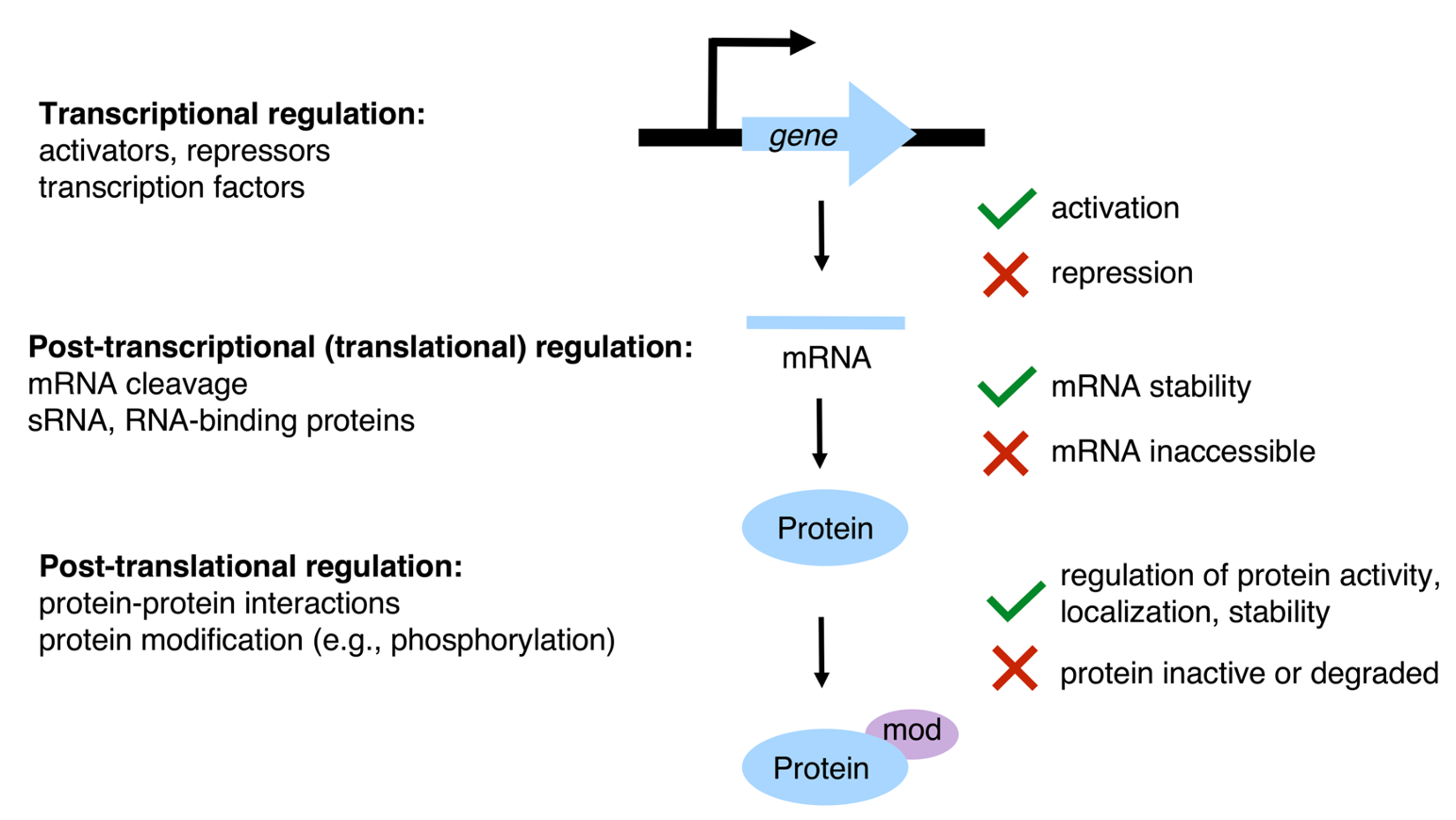
Post-translational regulation involved of…and for?
protein-protein interactions, protein modification (e.g. phosphorylation)
FOR regulation of protein activity, localisation, stability (xprotein inactive/degraded)
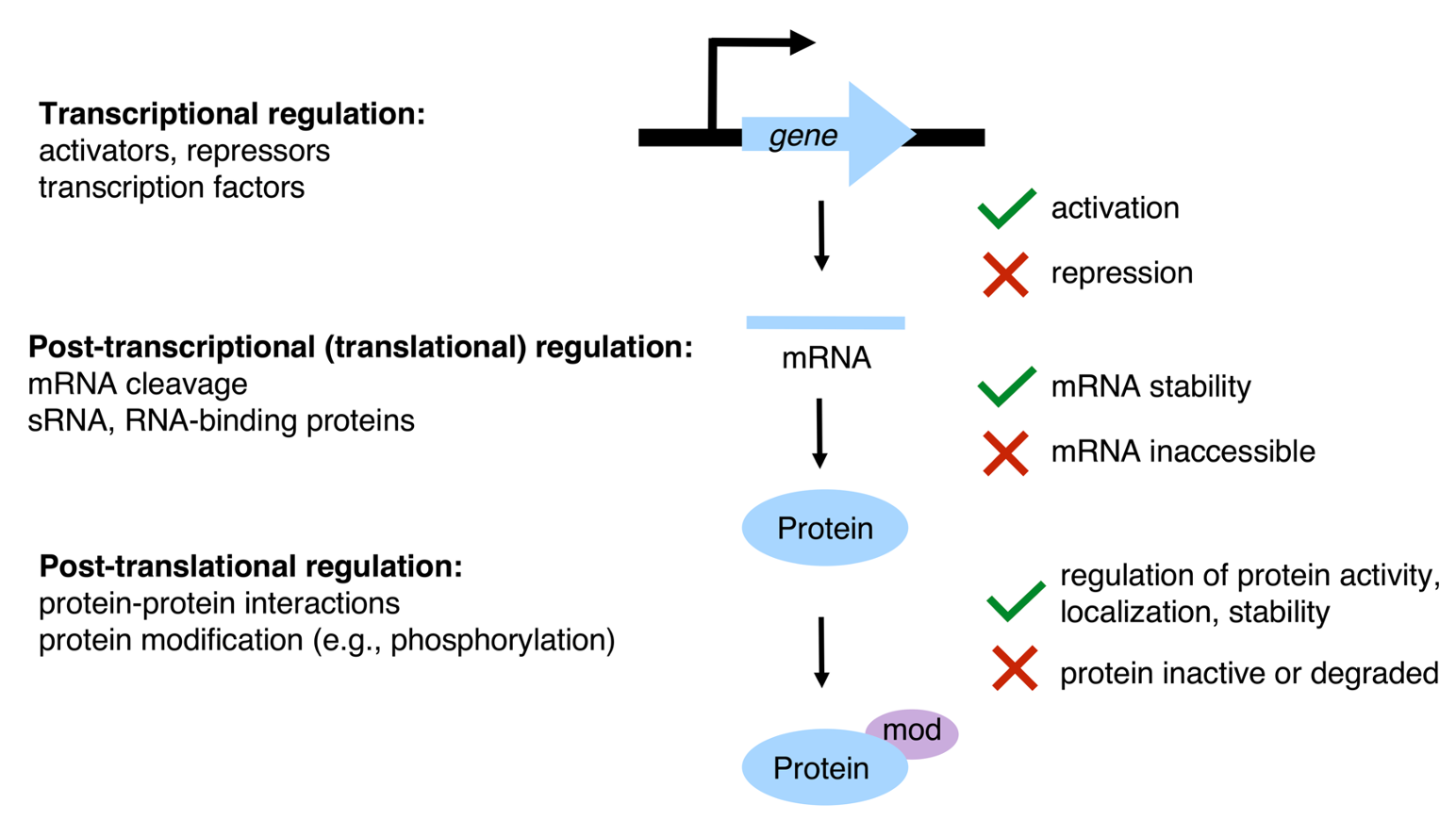
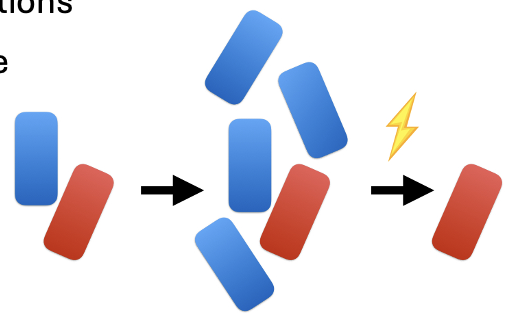
What is Bet hedging?
Survival strategy in bacteria:
where a variety of phenotypes within a single population to ensure that at least some individuals can survive unpredictable and stressful conditions (good in fluctuating environments)
→ benefits whole pop.
What is Dormancy in Bet hedging?
Persister cell surviving
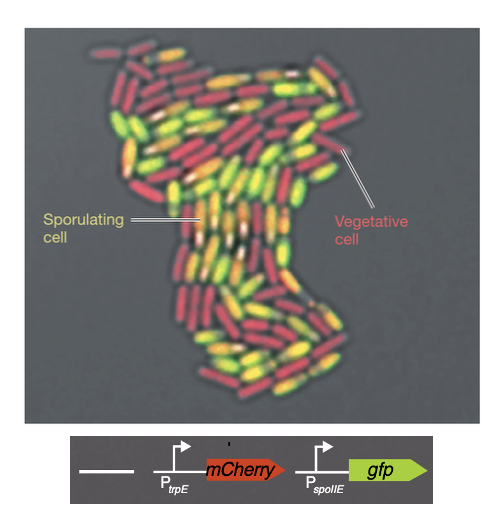
What is Sporulation in Bet hedging (e.g. in Bacillus subtills)?
A population of Bacillus subtilis cells with some members committing to developing spores (GFP + Spo0A sporulation factor), while other cells remain vegetative and metabolically active (RFP + tryptophan synthesis genes).
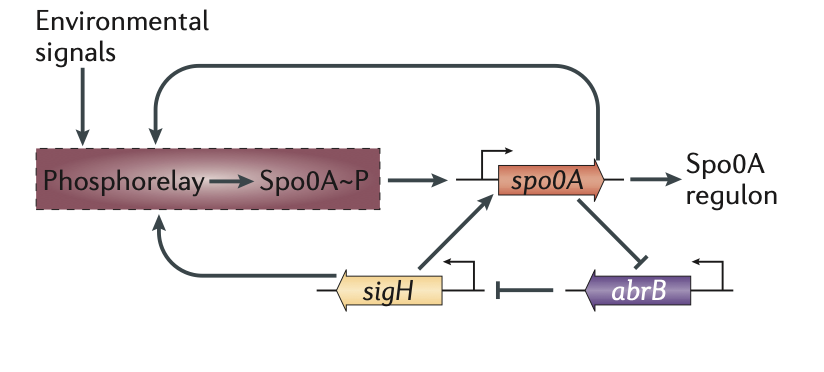
How is Sporulation in Bet hedging initiated in Bacillus subtills? (In stressful conditions)
Env. signals integrated into phosphorelay → Phosphorylation of Spo0A (when food less)
Spo0A~P directly and indirectly auto-activates its own transcription + phosphorylation which
→ derepression of AbrB-regulated genes to sigH etc.
Genes REQUIRED for efficient spore formation at high threshold of Spo0A~P
What does sporulation regulation in Bacillus subtills ensure?
This level of complexity in the regulation of sporulation:
→ makes sure bacteria are capable of switching between different gene expression transcriptional programs based on reactions and responses to the environment
(Avoid potential of extinction if nothing to deal with stressful conditions)
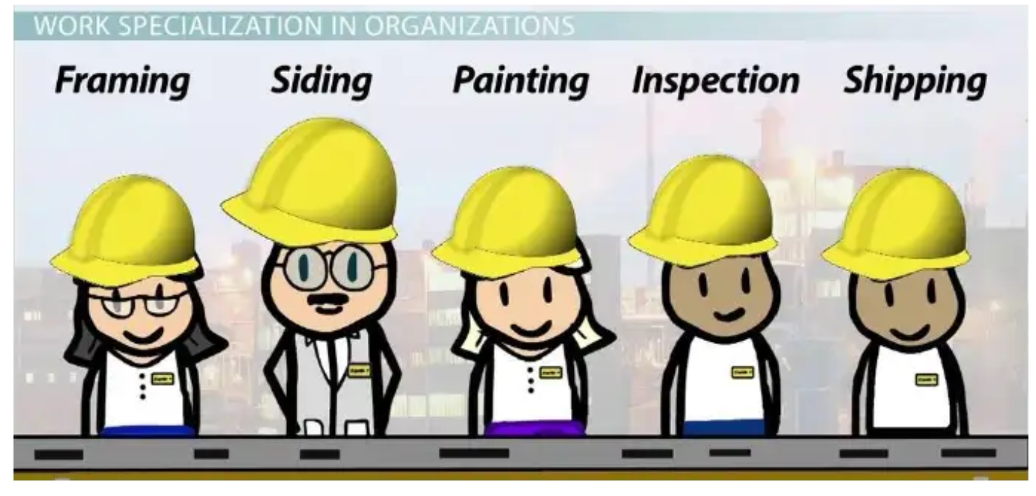
What is the Division of Labor?
Specialized tasks / Simultaneous performance of incompatible biochemical reactions
e.g. performed in 200 clearly distinguishable types of cells in the human body
Division of Labor examples
Metabolic specialization (N metabolism) in Filamentous cyanobacteria
Biofilm development
What is Metabolic specialization (N metabolism) in Division of Labor in Filamentous cyanobacteria ?
Filamentous cyanobacteria (e.g., Anabaena) cells differentiate into photosynthetic cells and nitrogen-fixing heterocysts
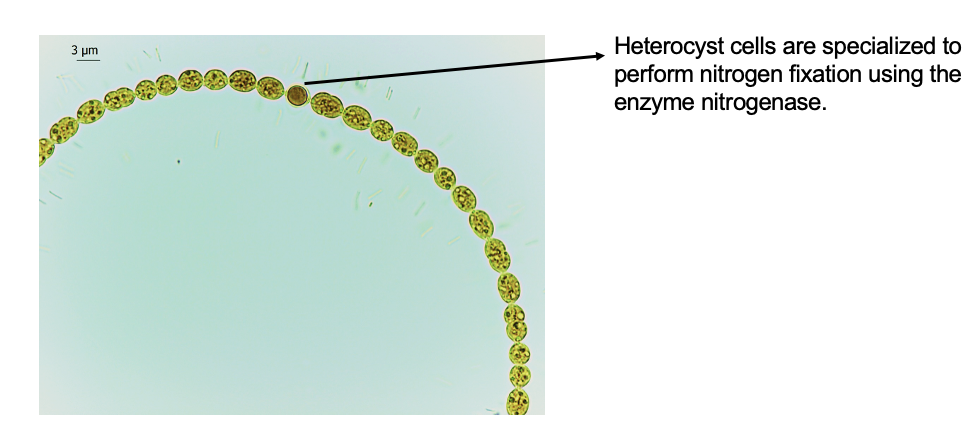
How is Metabolic specialization (N metabolism) in Filamentous cyanobacteria useful?
Allow the cyanobacterial community to perform both photosynthesis and nitrogen fixation simultaneously, → ensuring the survival and growth of the entire population
(nitrogenase is highly sensitive to oxygen but also needs photosynthesis)
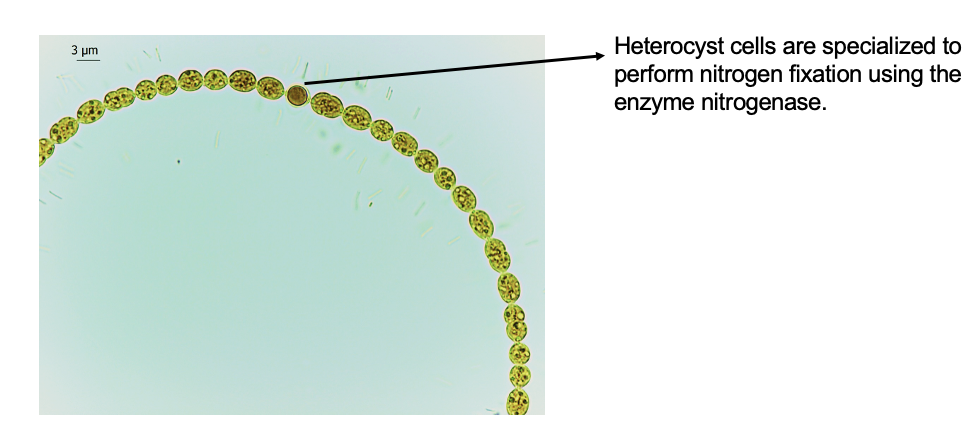
Metabolic specialization (N metabolism): Usage of heterocyst cells in Filamentous cyanobacteria (e.g., Anabaena)
Specialized to perform nitrogen fixation using the enzyme nitrogenase.
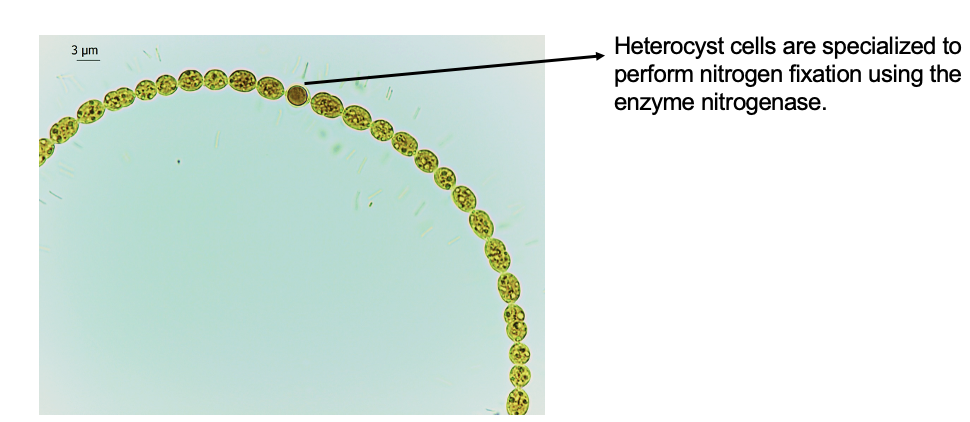
Metabolic specialization (N metabolism): What if NO heterocyst cells in Filamentous cyanobacteria (e.g., Anabaena)
Under sufficient nitrogen conditions,
Nitrate metabolism occurs in the vegetative cells, where they possess a second Mo-dependent nitrogenase capable of functioning under anoxic conditions
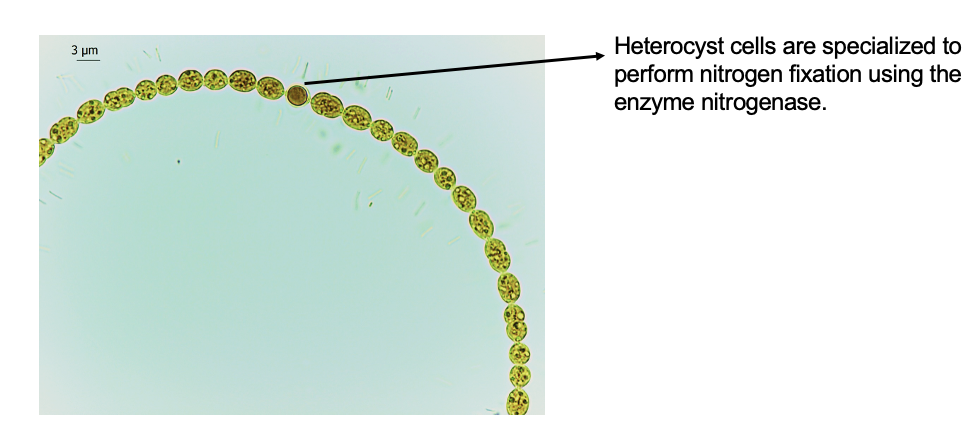
What is Biofilm development in the Division of Labor?
To protect cells from hostile environments
e.g antimicrobial treatments, by preventing antimicrobials from reaching the cells
(help pathogens evade the immune response, avoiding detection and phagocytosis during infection)
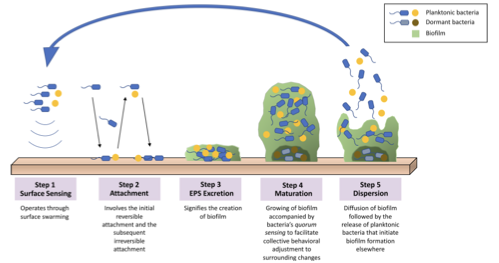
Planktonic v.s. biofilm functions
Planktonic = colonisation
Biofilm = protection
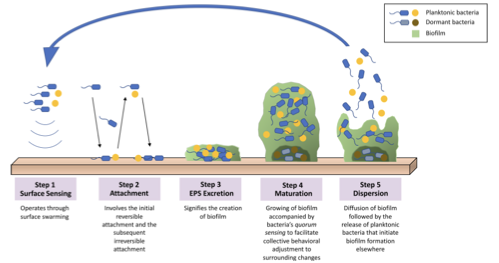
What does EPS stand for?
Extracellular polymeric substances
primarily polysaccharides, proteins and DNA
What is Quorum sensing?
A process used by bacteria to coordinate their behavior based on population density.
→ more on biofilm lecture
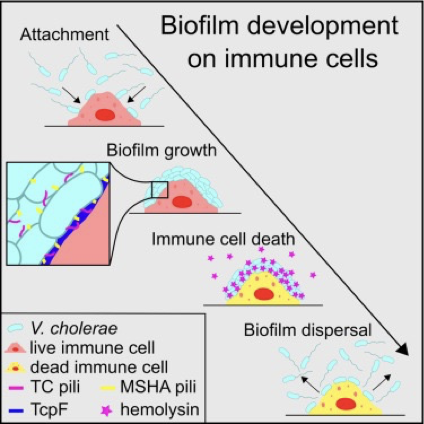
Biofilm development: Other usage in the human pathogen Vibrio cholerae
An aggressive trait (besides protective)
→ form on immune cells, encase and kill them, and then disperse
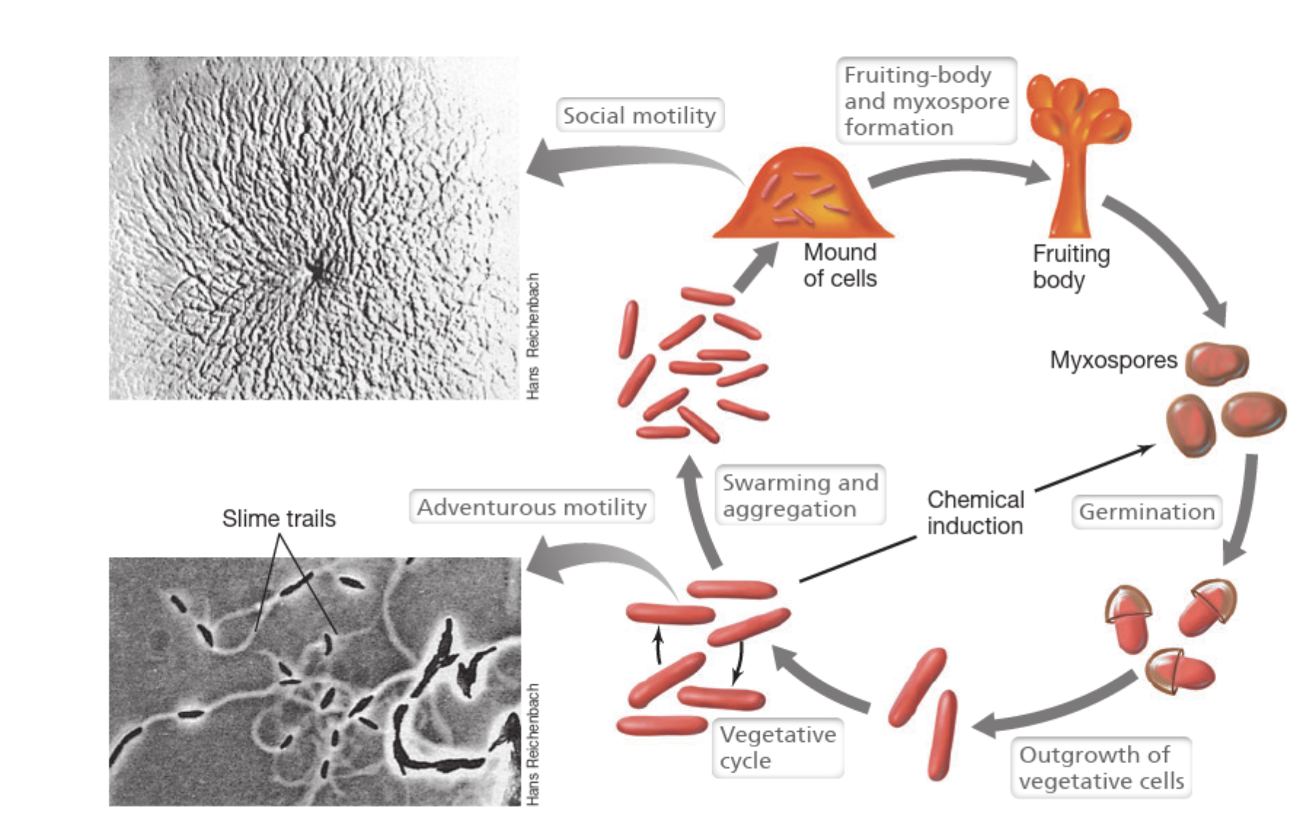
What is Fruiting body formation in the Division of Labor (e.g. Myxococcus)?
Cells differentiate into distinct roles: some become spores, which are resistant to harsh conditions, while others form the supportive structure of the fruiting body.
→ survive and thrive under varying environmental condition (prepared to endure stress)
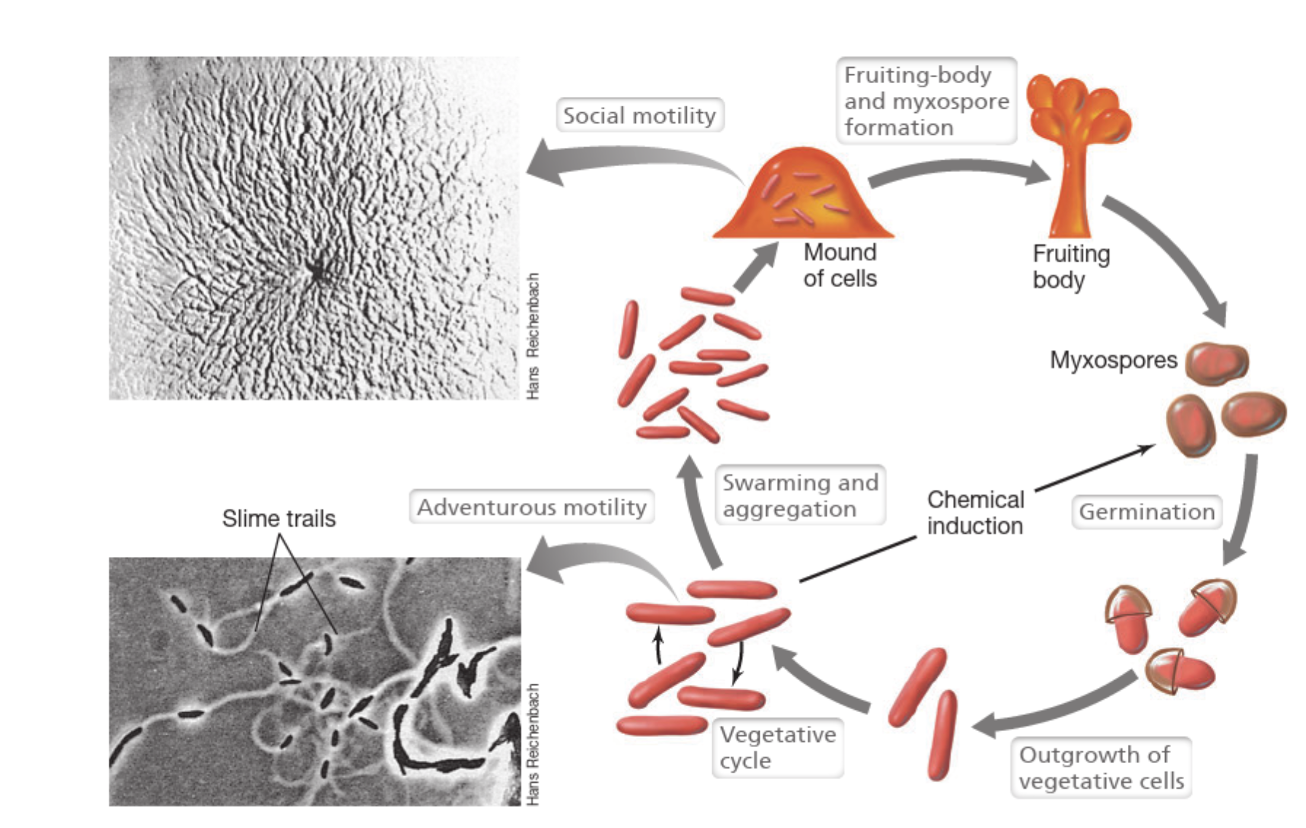
Fruiting body formation: Vegetative cells in Myxococcuse exhibits…?
Exhibit adventurous motility characterized by gliding
(lower inset)
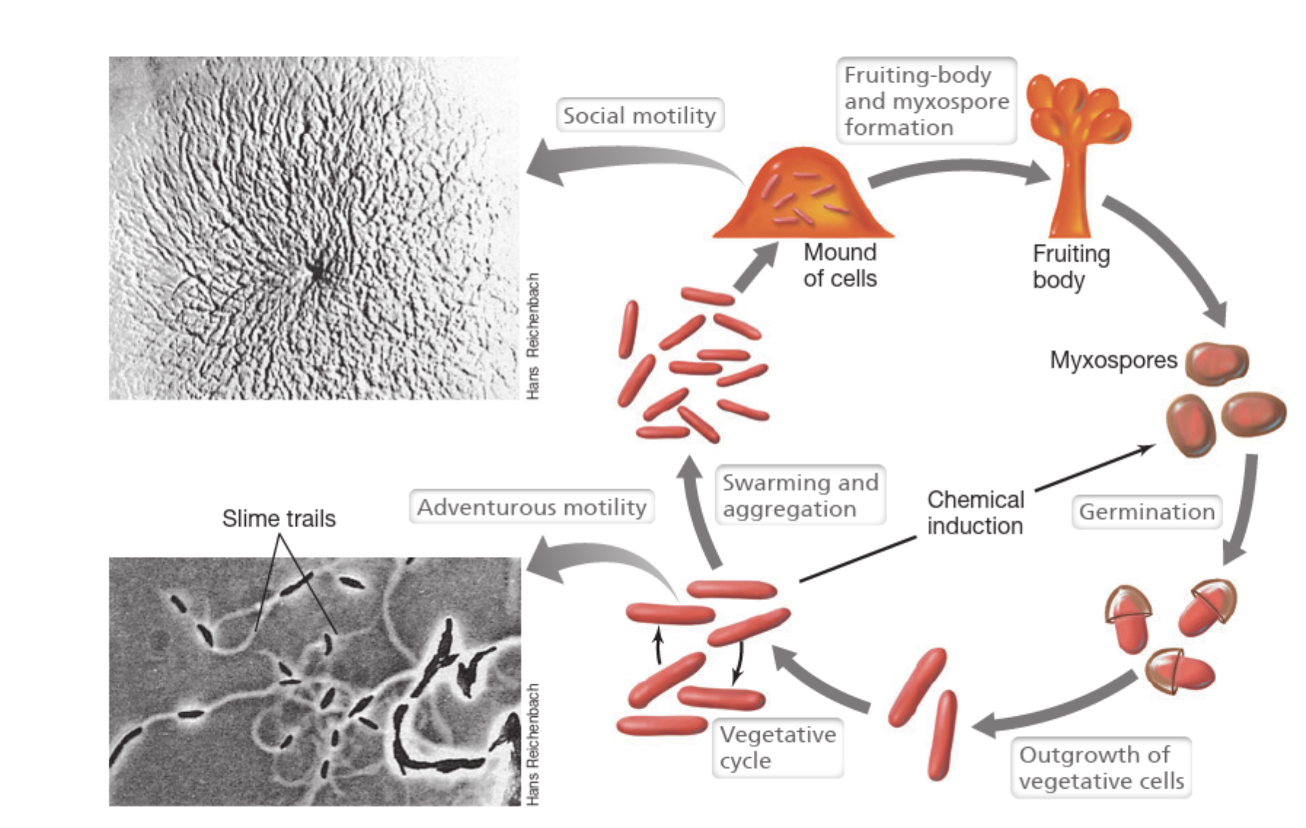
Fruiting body formation: Cell aggregates when nutrients are limited in Myxococcuse exhibit…?
Swarming colonies exhibits social motility mediated by type IV pili and twitching
(upper inset)
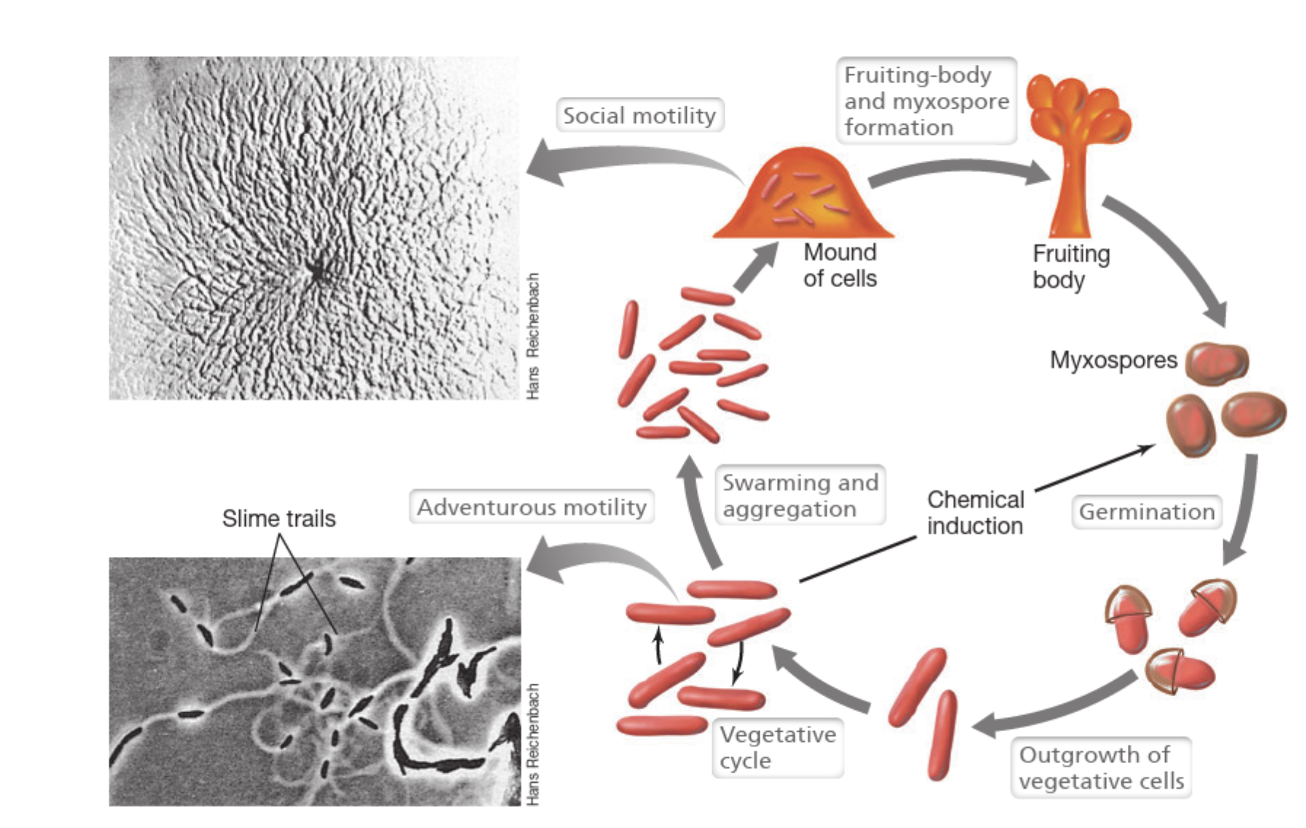
Fruiting body formation: Fate of cell aggregates and vegetative cells in Myxococcuse?
Cell aggregates → fruiting bodies
Some veg. cells → myxospores