ABS Quiz 1
 Call Kai
 Learn
Learn Practice Test
 Spaced Repetition
 Match
Match Flashcards
 Knowt Play
1/161

There's no tags or description
Looks like no tags are added yet.
Name | Mastery | Learn | Test | Matching | Spaced | Call with Kai |
|---|
No analytics yet
Send a link to your students to track their progress
162 Terms
What are the 4 components of the physical exam?
Observation, Palpation, Percussion, Auscultation
Cephalic
Head area
Occipital
back of head area
Frontal
forehead area
otic region
ear area
orbital region
eye region
buccal region
cheek area
nasal region
nose area
mental
chin area
cervical
neck area
axillary
armpit area
mammary
breast area
sternal
breastbone area/sternum
abdominal
stomach area
umbilicus
belly button area
thoracic
chest area
acromial
shoulder area
vertebral
spine area
lumbar
lower back area
scapular
shoulder blade area
pelvic
pelvis area
coxal
hip area
inguinal
groin area
pubic
genital area
perineal
between anus and genitals
sacral
tail bone area
gluteal
buttocks area
anetcubital
inner elbow area
brachial
upper arm
antebrachial
forearm
olecranal
back of elbow area
crural
shin
patellar
anterior knee
fibular
outer/lateral side of leg
femoral
thigh
popliteal
back of knee
sural
calf
Inferior (caudal)
away from the head, towards the feet
superior (cranial/cephalad)
toward the head end or upper part of a structure or the body; above
lateral
Away from the midline of the body
medial
Toward the midline of the body
intermediate
between two structures (medial and lateral)
proximal
Closer to the point of attachment to the body
distal
away from point of attachment
posterial (dorsal)
back of, on the behind/on the back
what can dorsal also refer to?
superior portion of the body that protrudes outward (top of foot, top of penis)
anterior (ventral)
front of, in the front
superficial
closer to the surface/skin
deep
closer to the inside of the body
ipsilateral
on the same side of the body
contralateral
on the opposite side of the body
coronal plane
divides body into front and back sections
sagittal plane
divides the body into left and right sections
median/mid sagittal
divides the body into equal right and left halves
axial (horizontal of transverse)
divides the body into upper and lower segments
supine
on your back
prone
lying face down
trendelenberg
bed is flat but declined so that the head is lower than the feet
fowlers
semi-sitting body position in which a person's head and shoulders are elevated 30-45 degrees
right/left lateral recumbent
The person is lying on the left or right side with corresponding side down (arm under head)
lithotomy
lying on back with legs in the air on stirrups (GYN position)
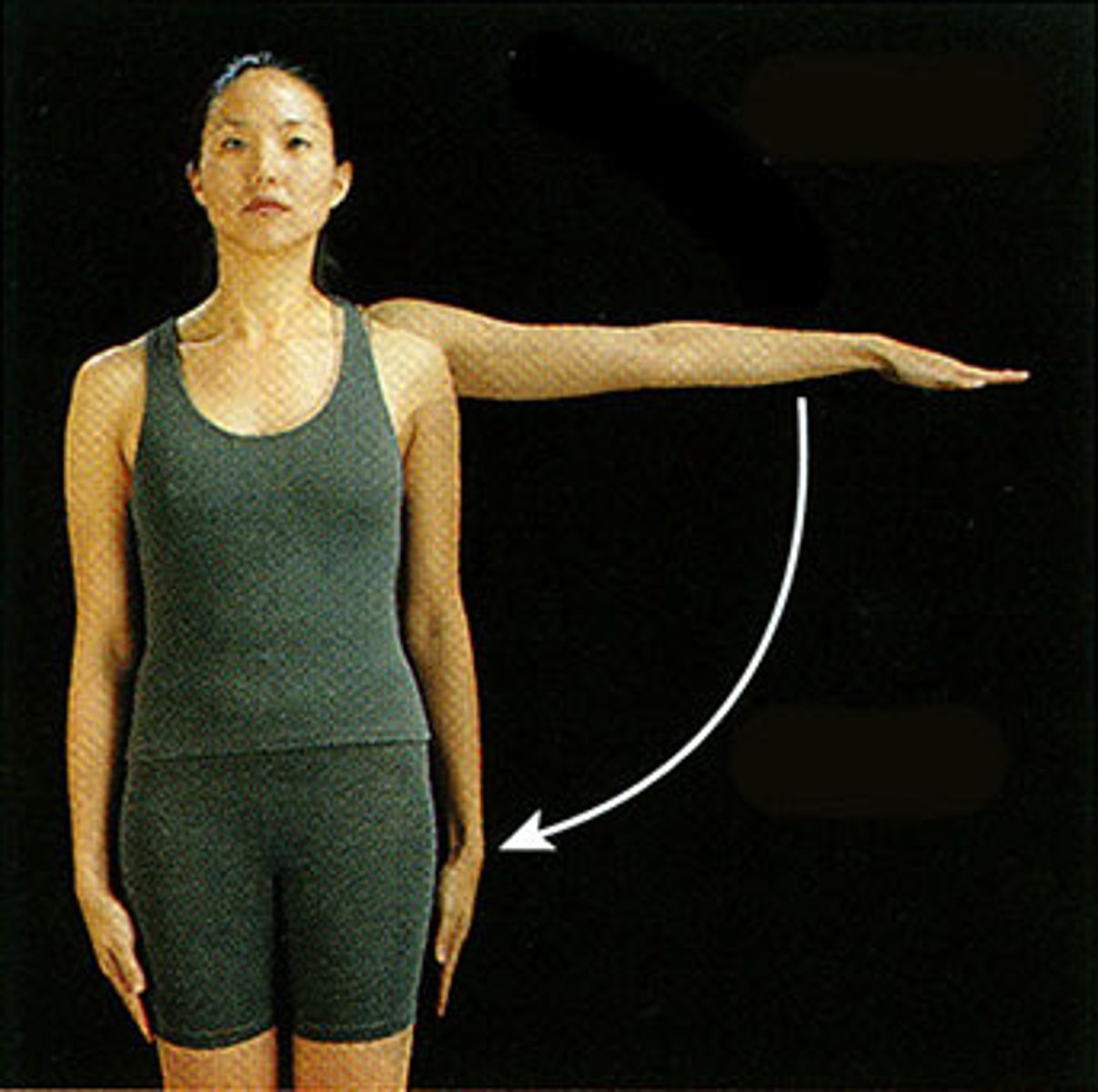
abduction
movement away from the midline
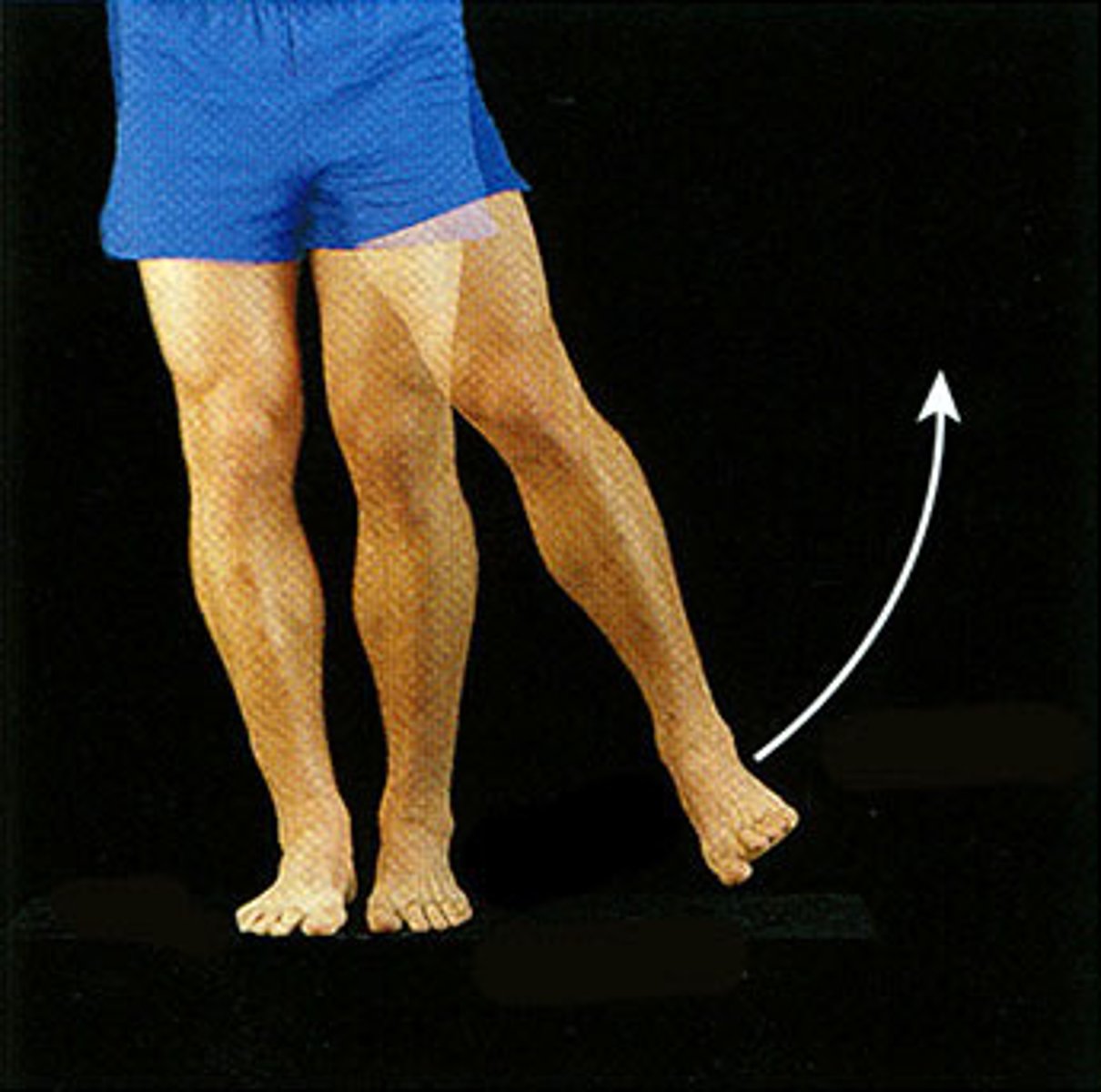
adduction
movement towards the centerline of body
supination of the ankle
outward roll, ankle joint pushing out
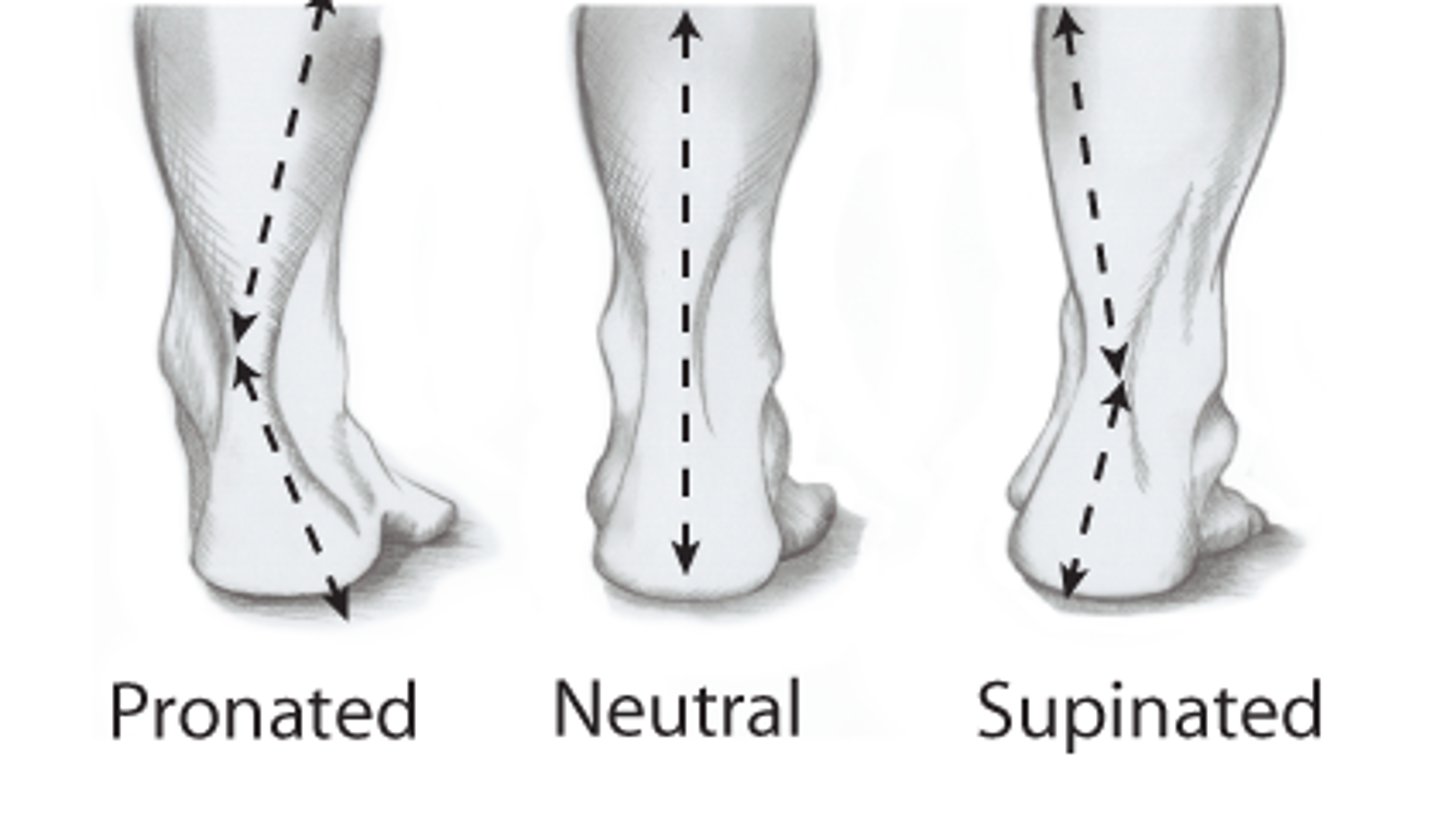
pronation of the ankle
ankle joint pushing in
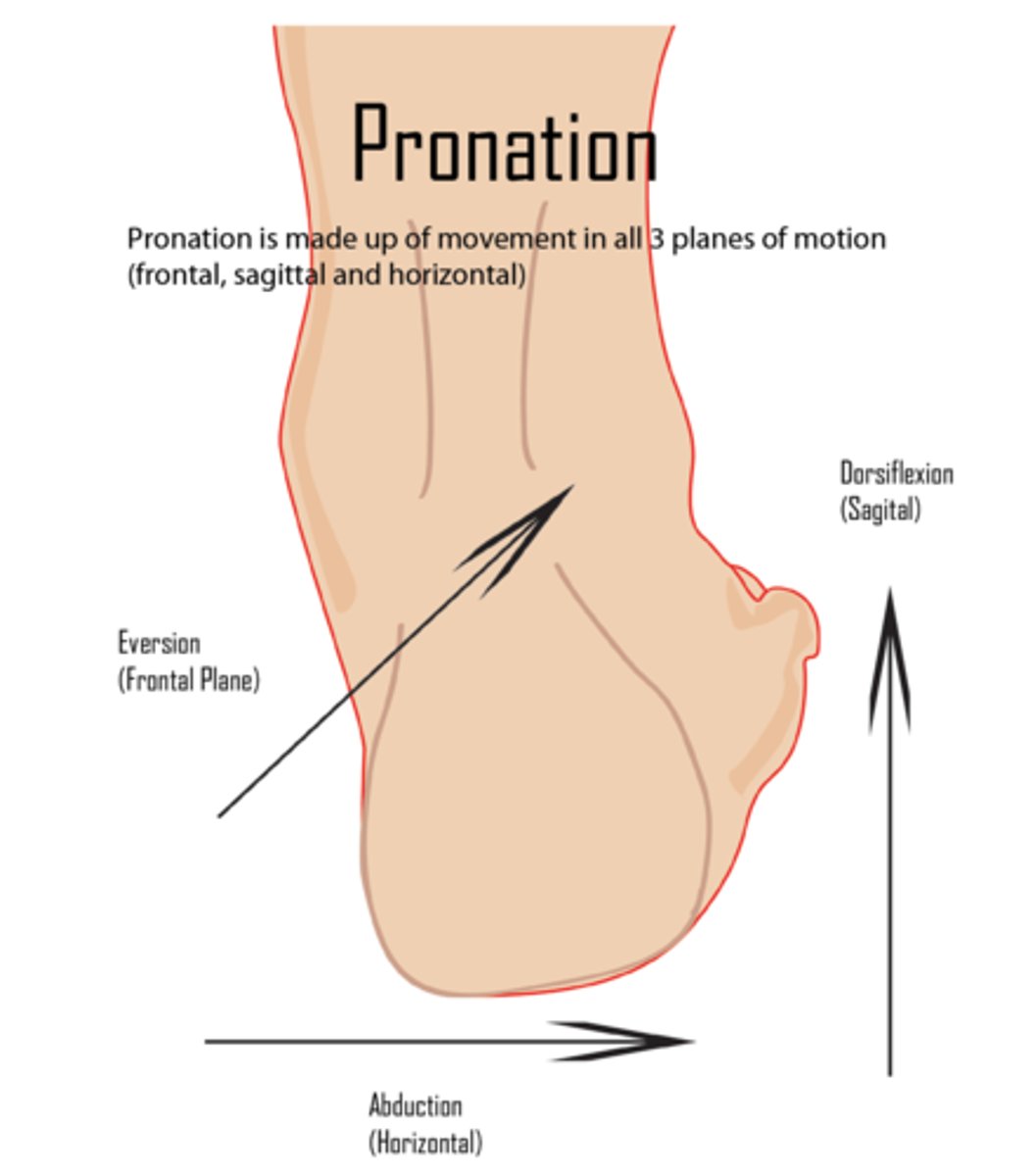
inversion of the ankle
inward side up, big toe up, most common ankle injury
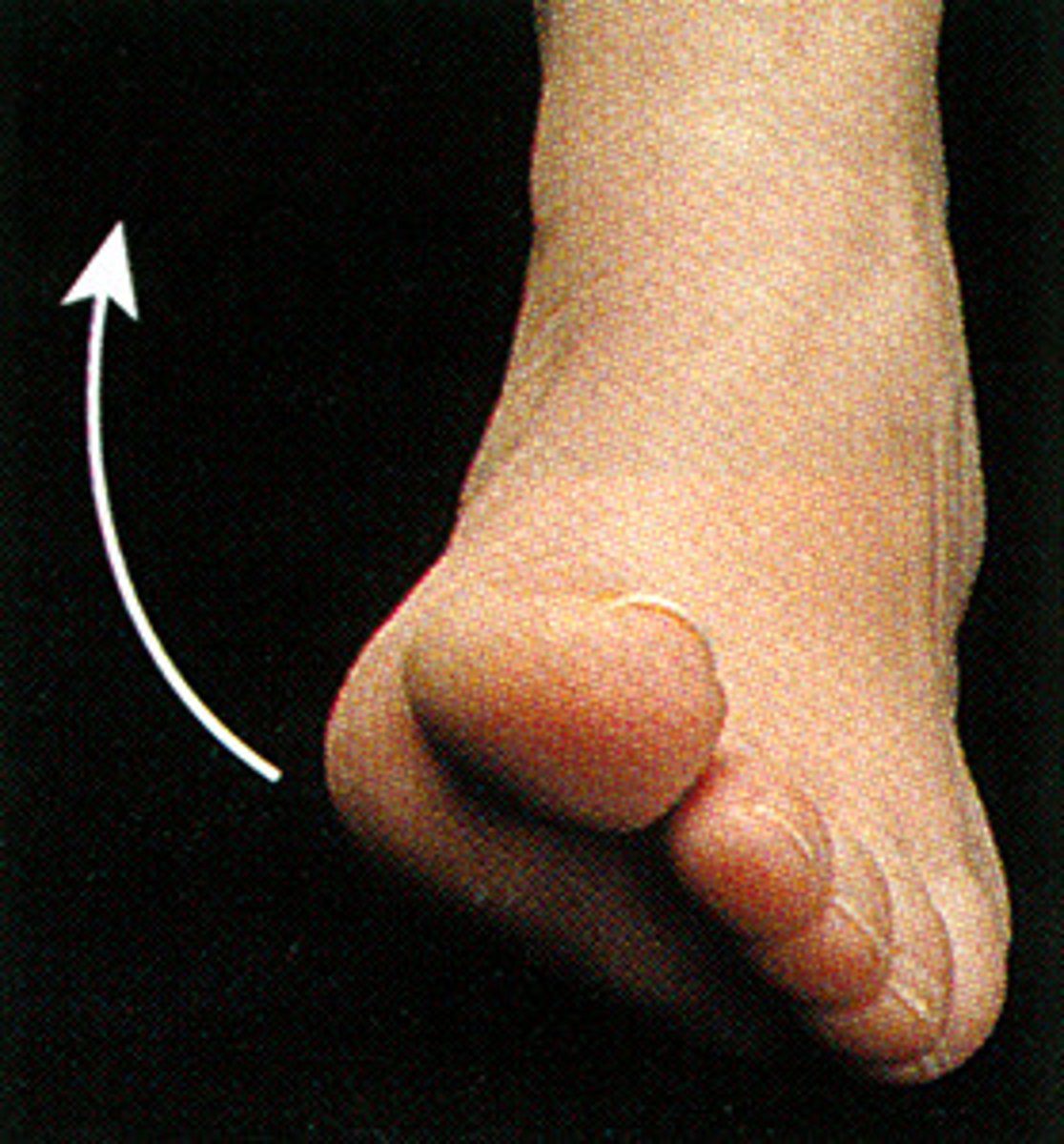
eversion of the ankle
outward side up, big toe down
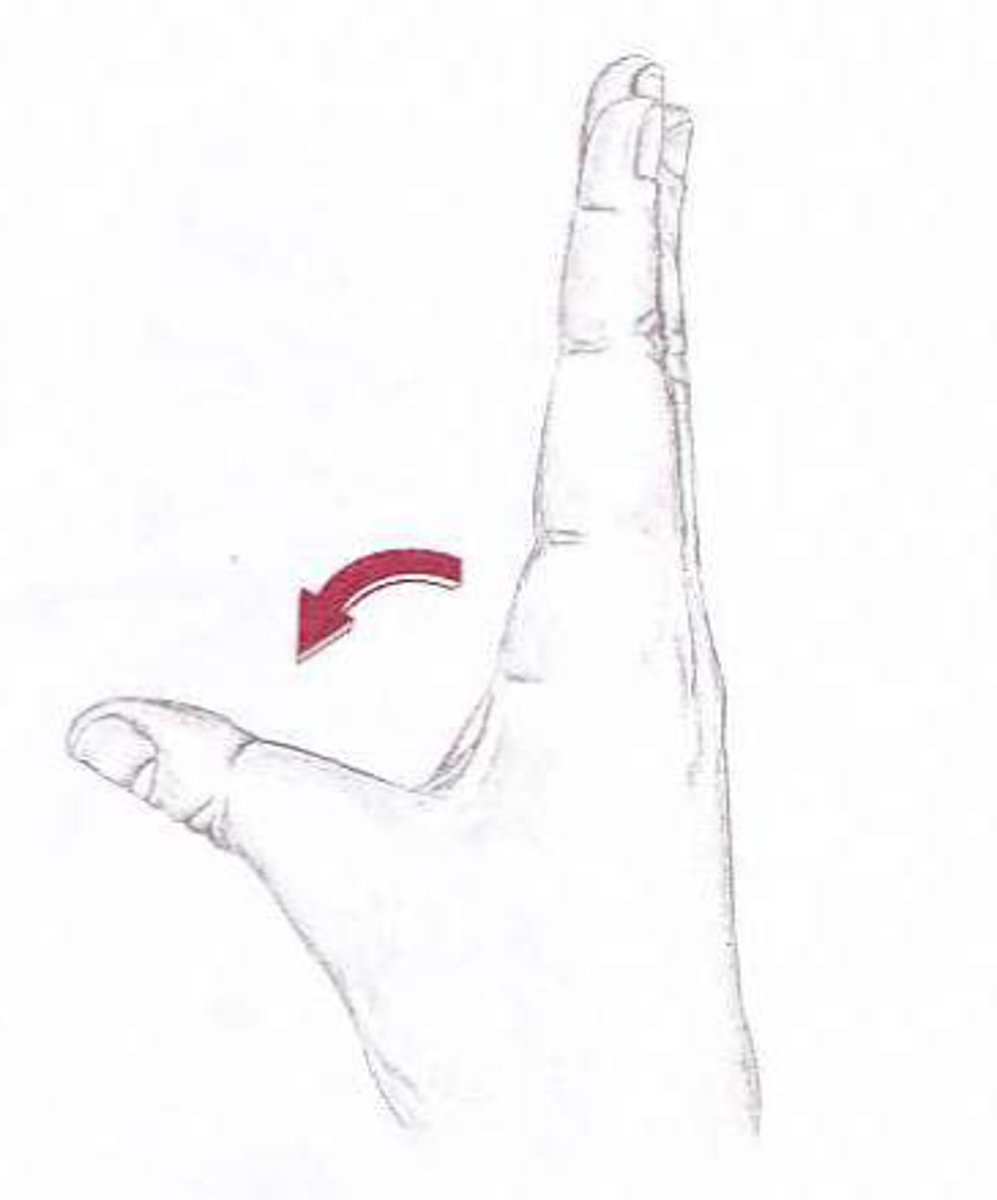
abduction of the thumb
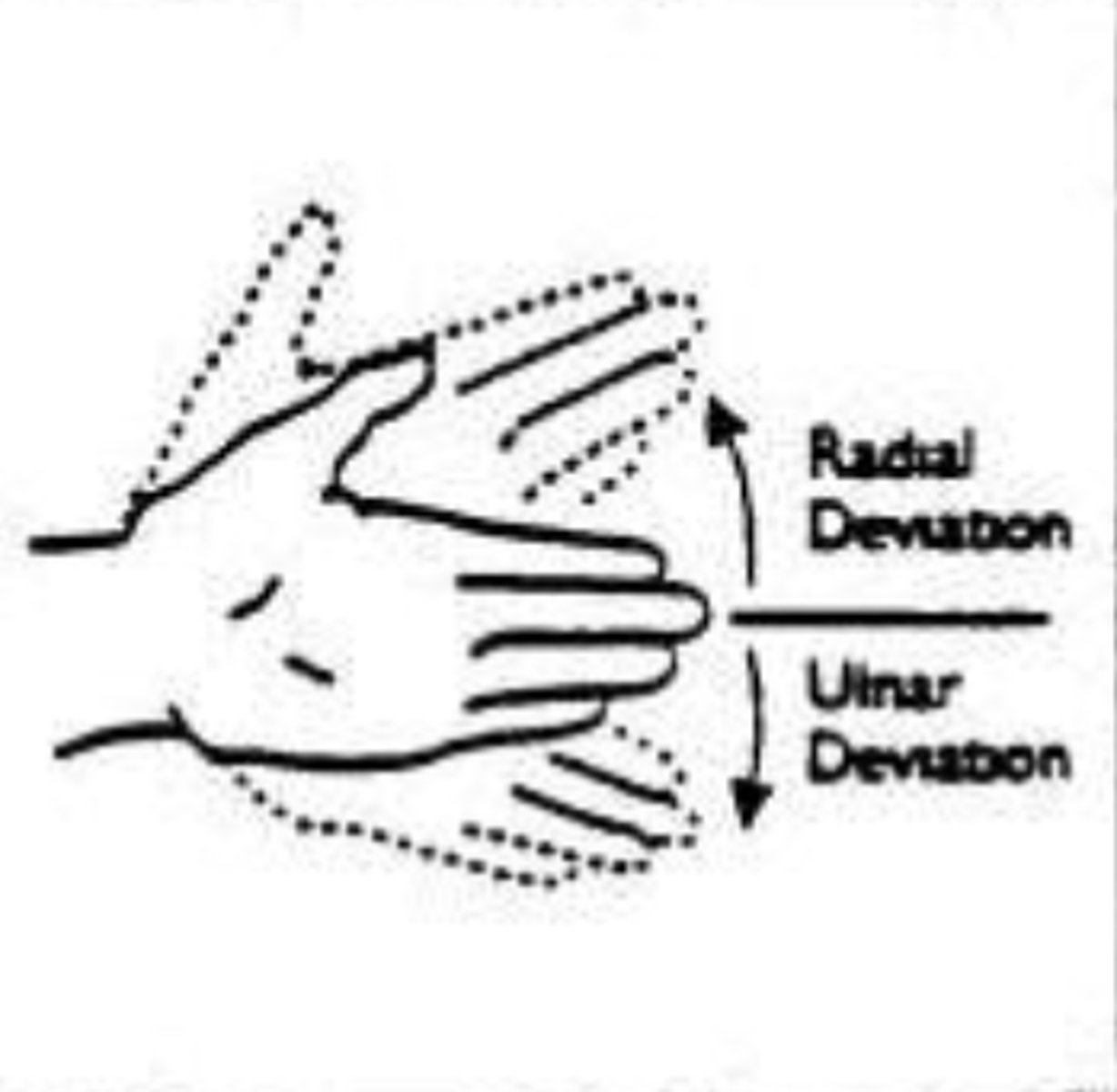
radial deviation
Movement of the wrist towards the radius or lateral side, towards the thumb side
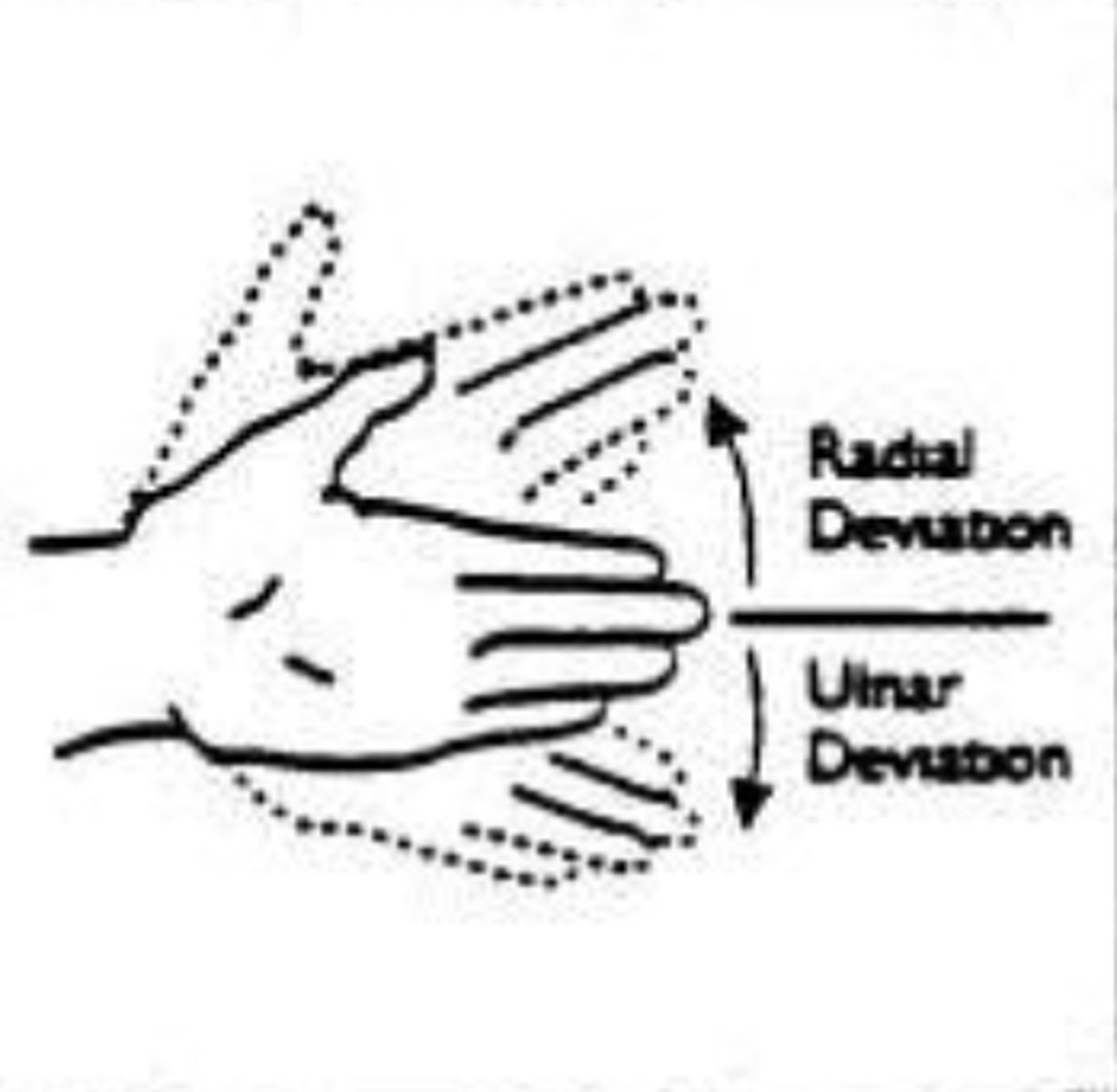
ulnar deviation
Movement of the wrist towards the ulna or medial side, towards pinky side
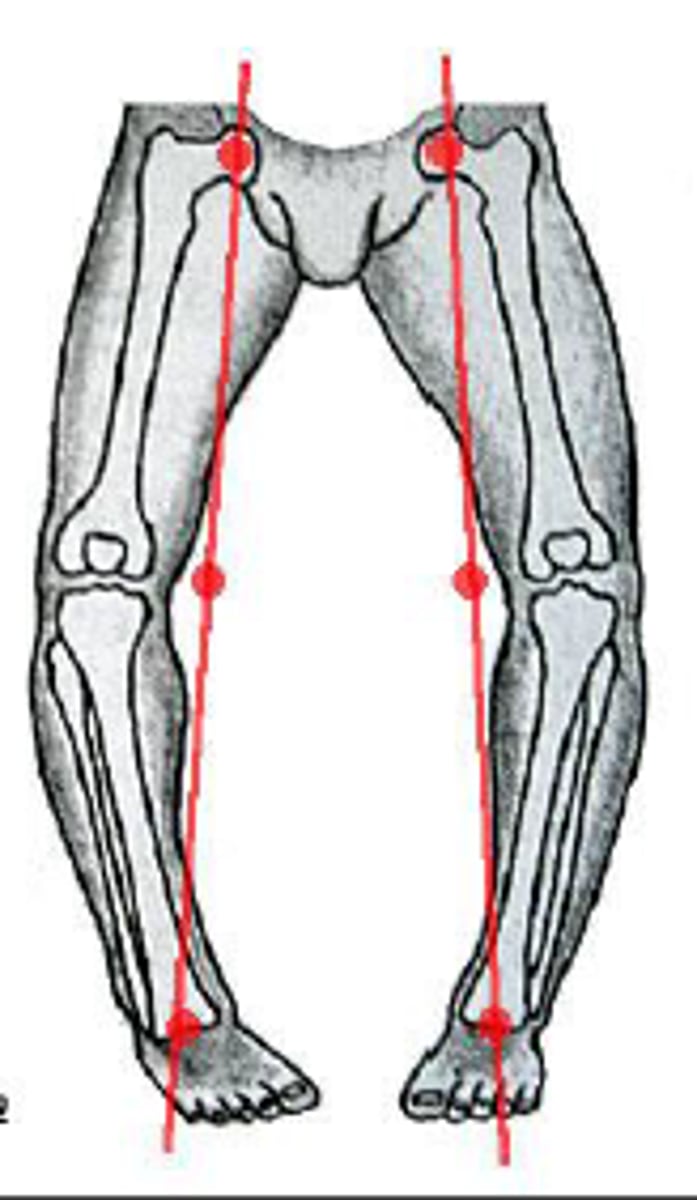
genu varum (varus)
bow-legged arch (outward bend)
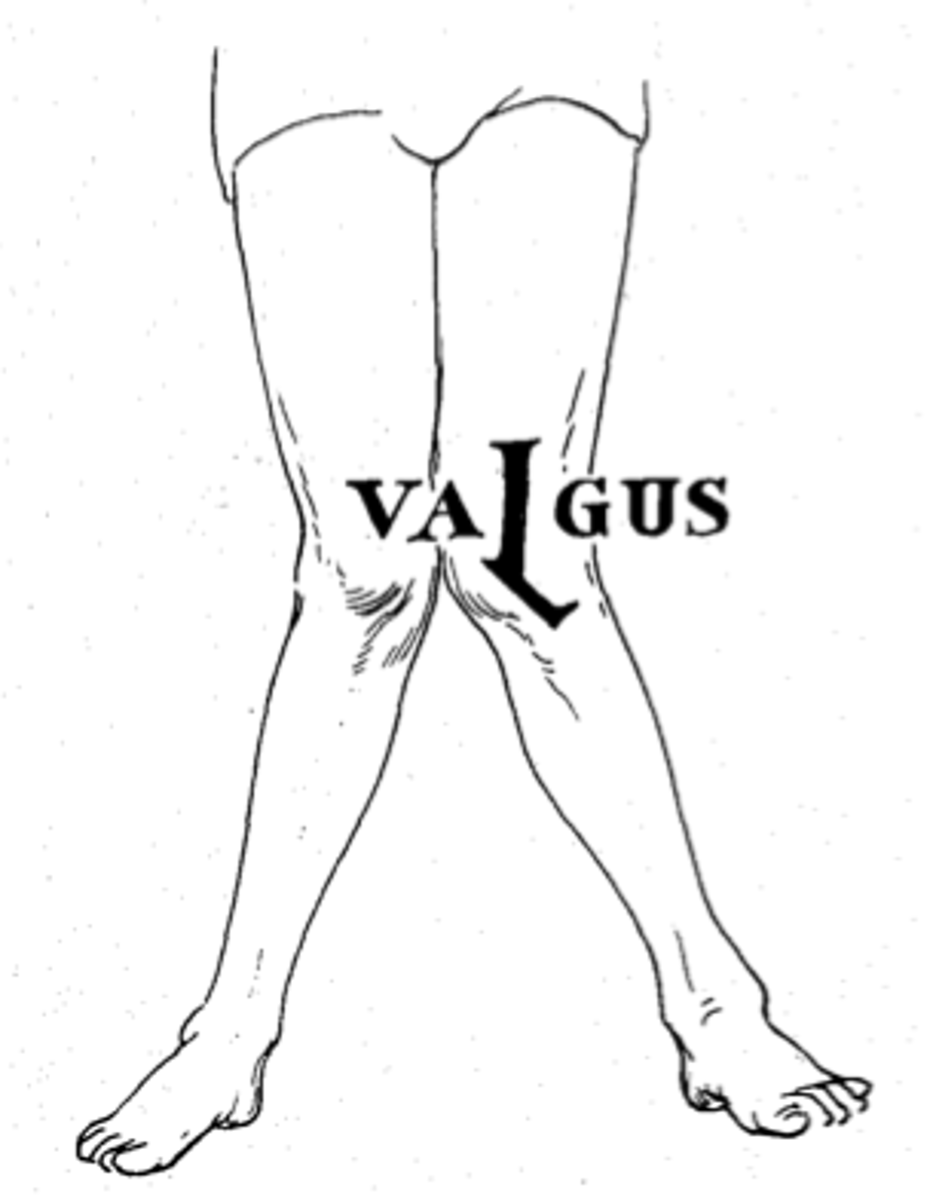
genu valgum (valgus)
knock-kneed
rickets disease leads to what?
genus varum
pes cavus
high arch
pes planus
flat footed
equinis deformity
"walking on toes"
talipes
referring to foot and ankle
talipes equinovarus
clubfoot
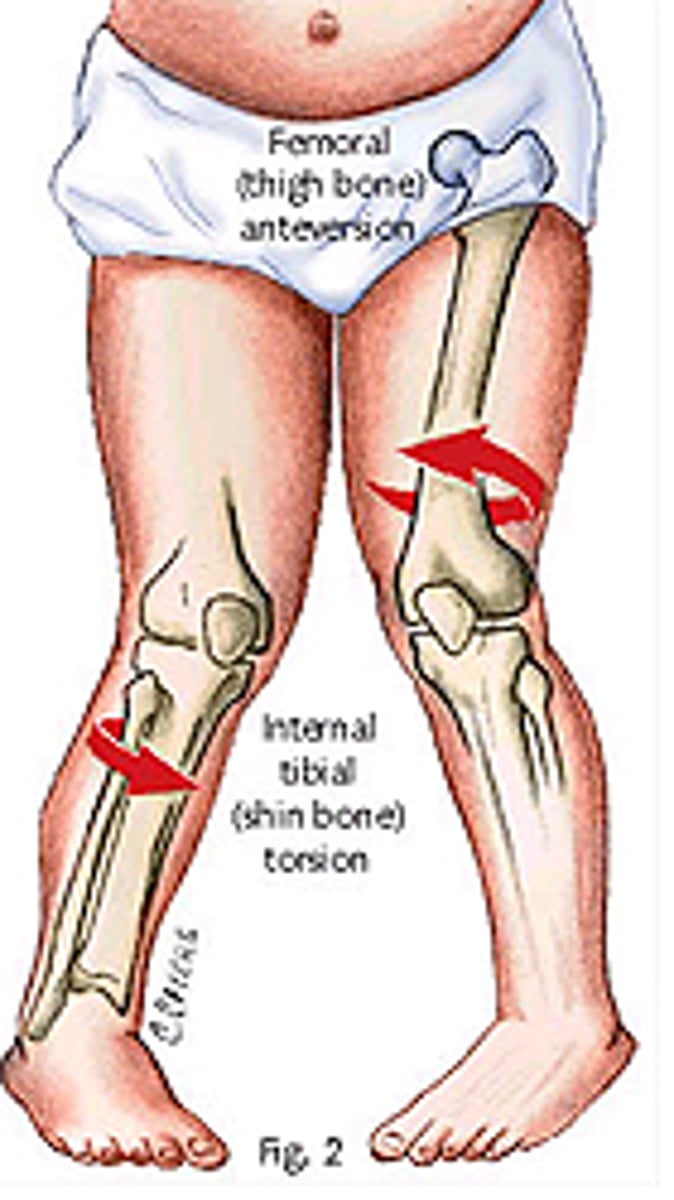
femoral anteversion
pigeontoed
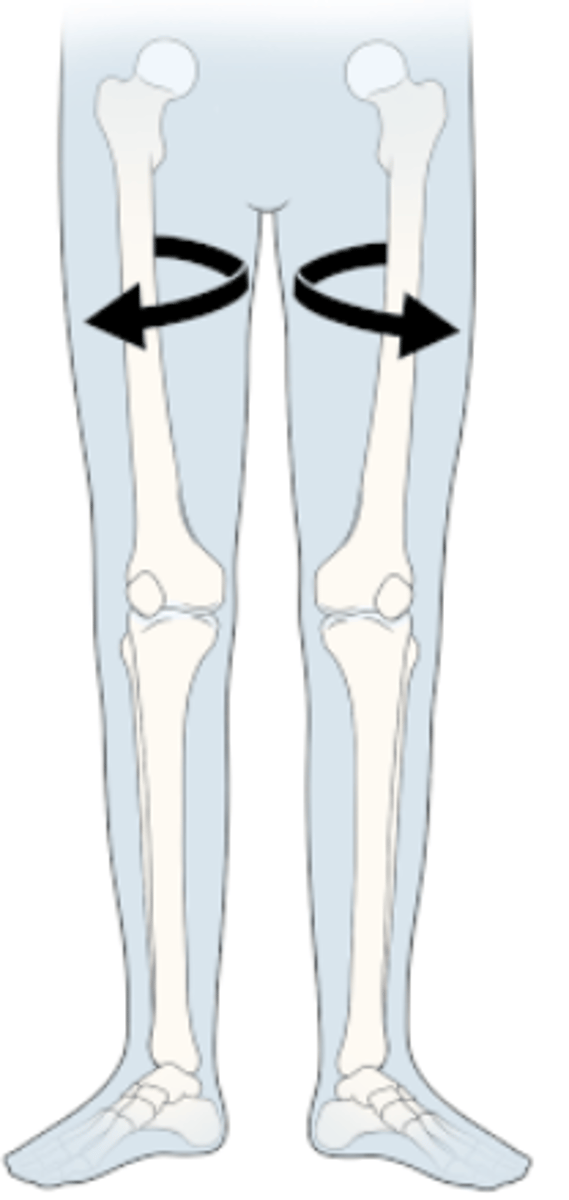
femoral retroversion
duck walking
cubital
elbow
carpal
wrist
palmar
palm of hand
volar
palm of hand or sole of foot
digital
fingers, toes
pedal
pertaining to the foot
tarsal
ankle region
plantar
bottom of foot
talar
referring to the talus
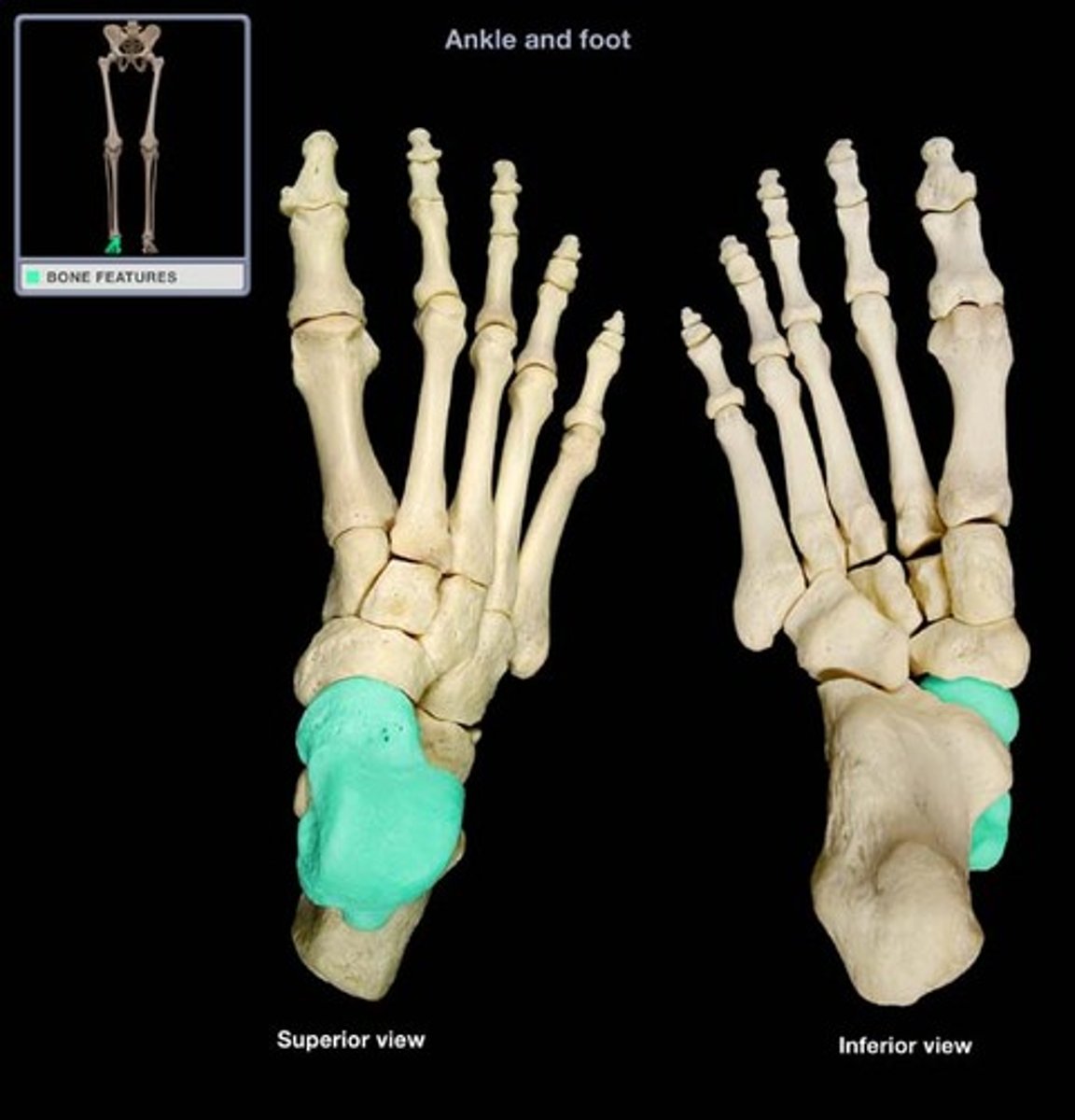
calcaneal
pertaining to the heel
cutaneous
pertaining to the skin
peroneal
pertaining to the fibula
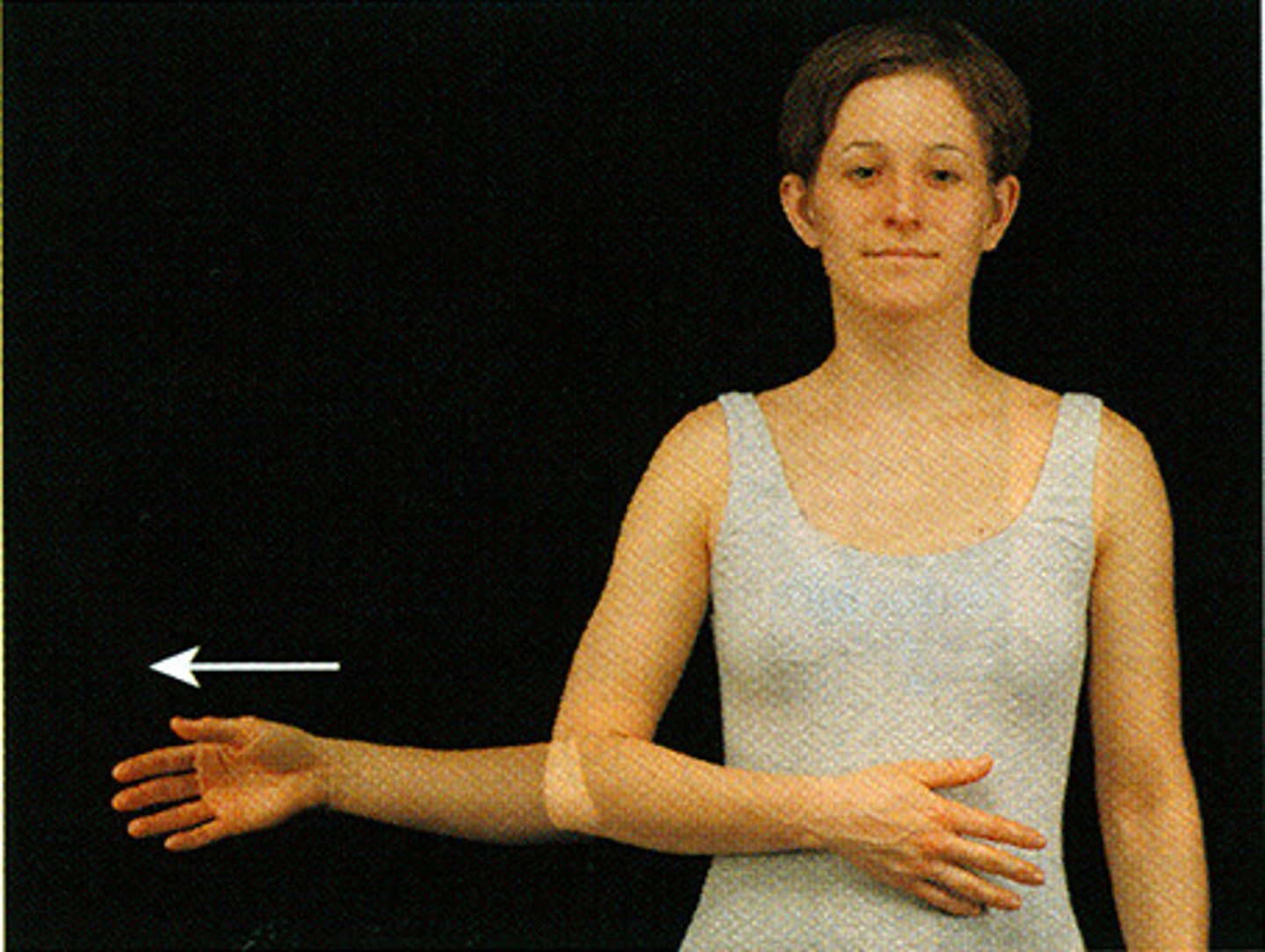
internal rotation
Rotation of a joint toward the middle of the body.
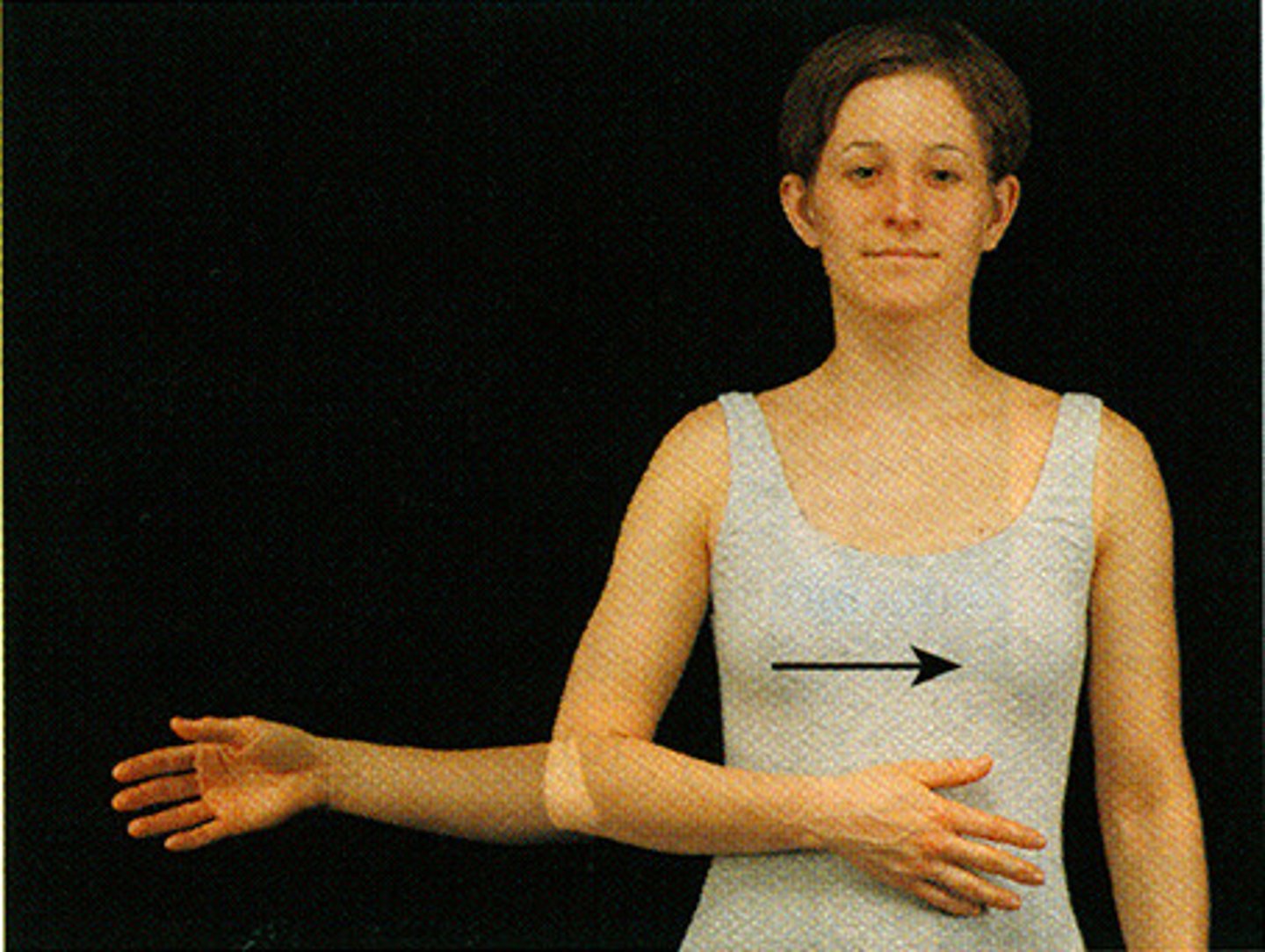
external rotation
Rotation of a joint away from the middle of the body.
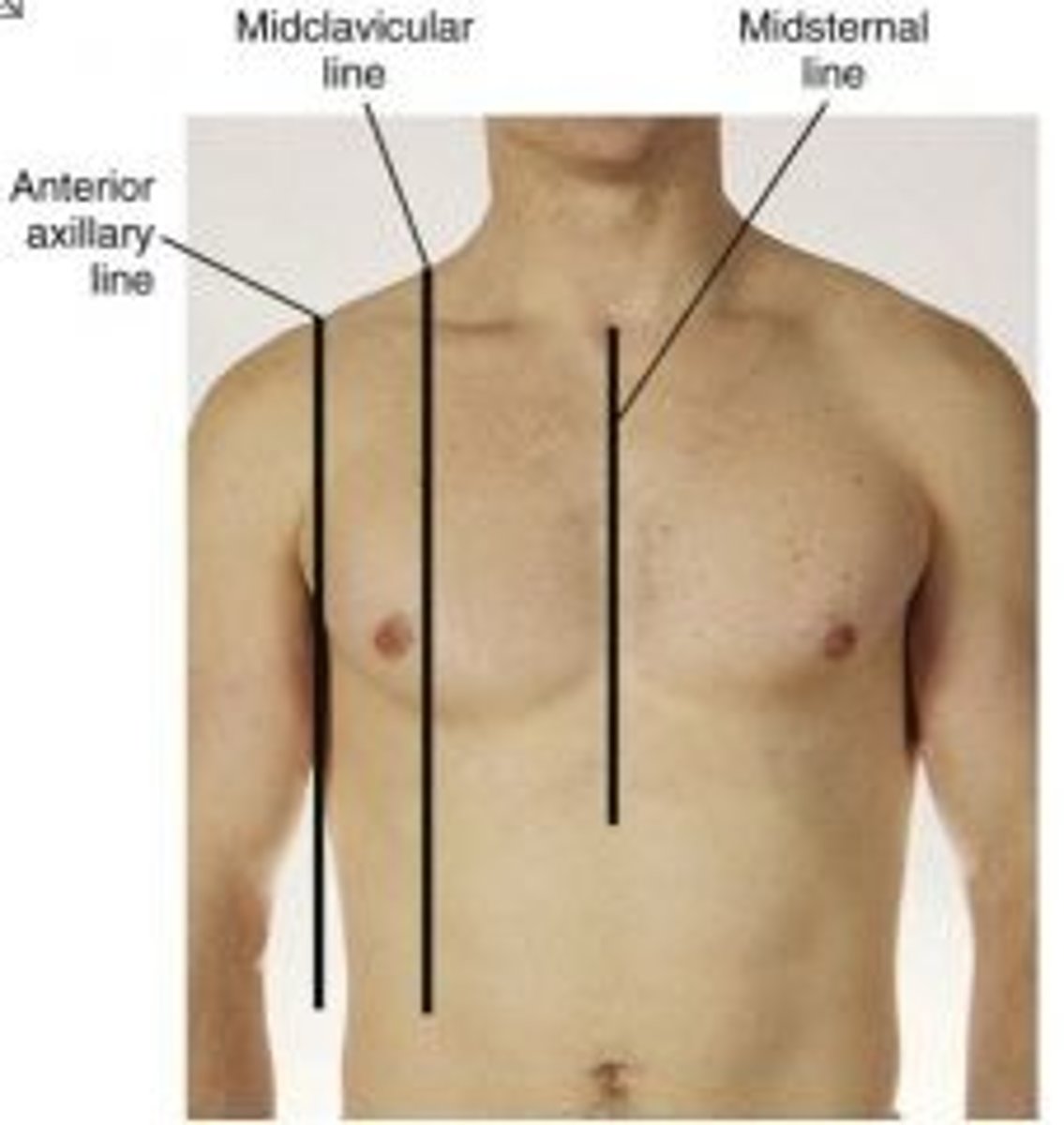
mid clavicular line
the line through the center of each clavicle
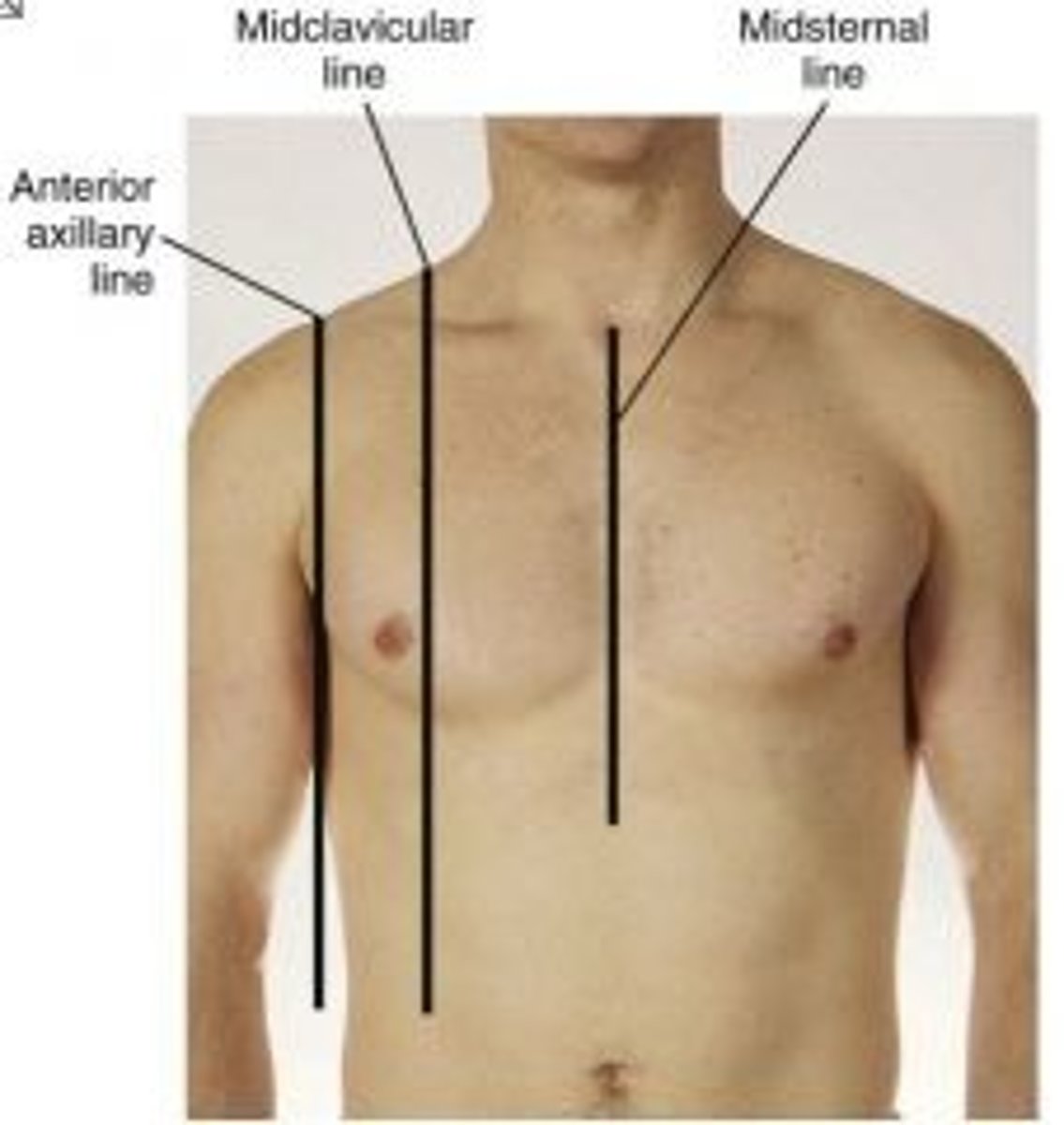
mid sternal line
A line running vertically down the surface of the body passing through the middle of the sternum
manubrio-sternal angle
angle of louis
articulation between manubrium and sternal body
what underlying structures are beneath the angle of louis
level of rib 2, level of t4 and t5 vertebrae, end of aortic arch, level of tracheal bifurcation, azygos vein, thoracic lymphatic duct
where do chest tubes tend to go?
mid axillary line
how to find 5th intercostal space?
nipple line in men, below breast for women