The Lophotrochozoans Study
 Call Kai
 Learn
Learn Practice Test
 Spaced Repetition
 Match
Match Flashcards
 Knowt Play
1/64

There's no tags or description
Looks like no tags are added yet.
Name | Mastery | Learn | Test | Matching | Spaced | Call with Kai |
|---|
No analytics yet
Send a link to your students to track their progress
65 Terms
lophotrochozoan clade
includes 18 animal phyla that are grouped together based primarily on molecular similarities.
What is the symmetry of all lophotrochozoans?
Bilateral
Most lophotrochozoans have 1 of 2 features…
Lophophore or Trochophore larva
what are lophotrochozoans names after, even though some lack these structures?
The lophophore and a trochophore
salinity
the dissolved water content of the water
brackish
water systems where salinities can change from almost fresh to almost marine in a matter of hours as tides move in and out.
osmoconformer
passively allows osmosis to occur until the animal’s internal ion concentration conforms or matches the outside salinity; the organism will gain or lose water
osmoregulator
actively adds or removes ions or water from their cells and bodies in an attempt to maintain a constant internal ion concentration no matter the salinity around them.
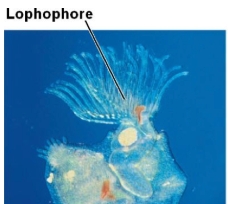
lophophore
feeding structure that bears tentacles, found in a few lophotrochozoan phyla
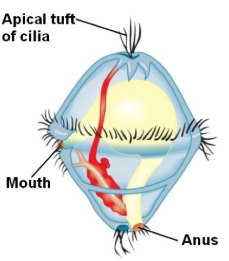
trochophore
a type of ciliated larvae found in some marine & aquatic lophotrochozoan
cephalization
development of a head with sensory organs
endoparasites
parasites found in digestive, respiratory, urinary and reproductive tracts of vertebrates
ectoparasites
parasites found on skin and gills
scolex
in tapeworms, attaches worm to host
proglottids
in tapeworms, segments filled with reproductive organs
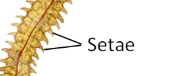
setae
hair-like bristles
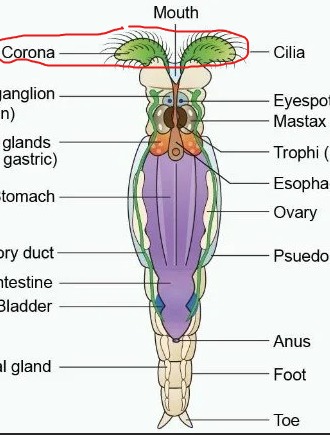
corona
ciliated wheels found on a rotifer's head, used for feeding and locomotion
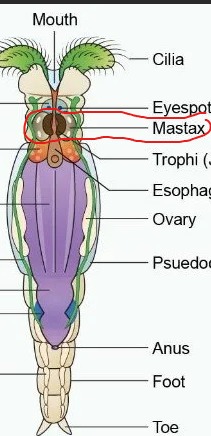
mastax
muscular pharynx of a rotifer that grinds up ingested food. Moves rhythmically and looks like a beating heart.
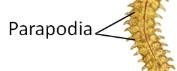
parapodia
leg-like, paired appendages used by errantians for movement.
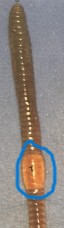
clitellum
thick external band of a sedentarian (earthworm) used for copulation.hirudin: in leeches, anesthetic and anticoagulant in saliva
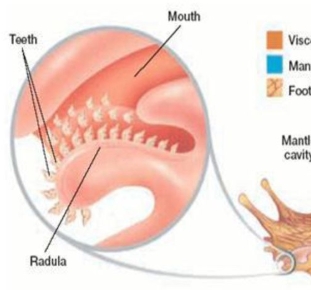
radula
rasping teeth of molluscs
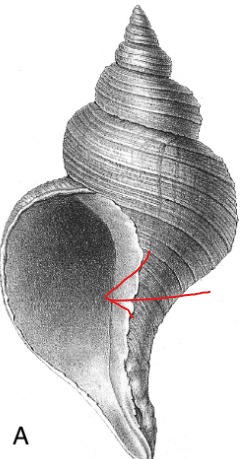
aperture
opening of a gastropod shell
operculum
plate on the back of foot in gastropod, closes aperture
venomous
organism that injects toxin
poisonous
organism that is toxic by ingestion
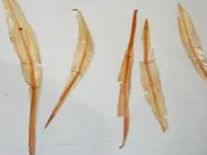
pen
internal chitinous reduced shell of squid
Pen Function
Provide structural support, aids in jet propulsion, enhance movement efficiency, protects internal organs, and contributes to buoyancy control
What happens in brackish environments?
animals can encounter rapid changes in salinity due to tidal movements, tidal inundation, and an influx of freshwater from flooding.
Osmoconformers examples
If the ocean salinity is 32, the animal’s internal ion concentration is 32.
How do osmoconformers make sure their internal ion concentration matches the environment?
By passively gain or lose water (and therefore mass) via osmosis
What animals are osmoconformers?
sponges, cnidarians, ctenophores, and some echinoderms
Where are osmoconformers usually found?
environments where salinity is relatively stable.
Osmoregulator Example
If the animal’s internal ion concentration is 25, but the environmental salinity changes to 18, the animal’s internal ion concentration will remain at 25.
How do osmoregulators maintain a constant internal ion concentration?
By actively add or remove ions from their cells in order to maintain their internal ion concentration
Where are osmoregulators usually found?
where salinity fluctuates, or in areas where salinity is stable.
What do osmoregulators have that osmoconformers don’t?
specialized organs that are used to maintain their internal ion concentration and do not gain or lose water (or mass) when the environmental salinity changes.
What animals are osmoregulators?
annelids, arthropods, and vertebrates
1st Osmoconformers Advantage
Don’t need specialized structures/organs for osmoregulation
2nd Osmoconformers Advantage
Don’t spend energy actively pumping ions/H2O
1st Osmoconformers Disadvantage
Very sensitive to salinity changes, can’t survive for too long
2nd Osmoconformers Disadvantage
Gain and lose H2O could damage cells
3rd Osmoconformers Disadvantage
Need a stable environment
1st Osmoregulators Disadvantage
Need specialized structures/organs for osmoregulation
2nd Osmoregulators Disadvantage
Requires more energy to actively maintain stable internal osmotic balance
1st Osmoregulators Advantage
Can survive in many habitats (broader range of salinities) including habitats with rapid fluctuations in salinity
2nd Osmoregulators Advantage