Philip II and The Rise of Macedon Week 10
 Call Kai
 Learn
Learn Practice Test
 Spaced Repetition
 Match
Match Flashcards
 Knowt Play
1/60

There's no tags or description
Looks like no tags are added yet.
Name | Mastery | Learn | Test | Matching | Spaced | Call with Kai |
|---|
No analytics yet
Send a link to your students to track their progress
61 Terms
What was the landscape of Macedon like?
Rich is resources
Lowlands
Mountains + hills w/ forests
Why was Macedon “chronically unstable”?
It was difficult for a king to assert dominance
There was no fixed rule for inheritance of a king
Kings were often murdered/challenged
Constantly attacked by their neighbors
Did the ancient Greeks think that Macedonians were Greeks?
No, were not accepted by greeks
What were court politics like in Macedonia?
Highly unstable
King was supreme authority but relied on his court
Many kings were killed by men from their own court for power as there was no rule for succession
Who are the Predecessors of Philip II?
The people that led macedon before philip were Peridiccas (brother of philip who died in battle)
Then it was Amyntas (child king) who was too young to rule effectively
Then Philip took over
Why was Philip held “hostage” in Thebes?
Macedon was politically unstable and needed to secure good relations with Thebes (strong after the defeating sparta)
Philip was sent to Thebes as a Guarantee of Macedonian Loyalty (a political hostage)
What greek kingdoms did Philip II conquer?
4 greek kingdoms
Paeonians
Illyrians
Epirus
Thrace
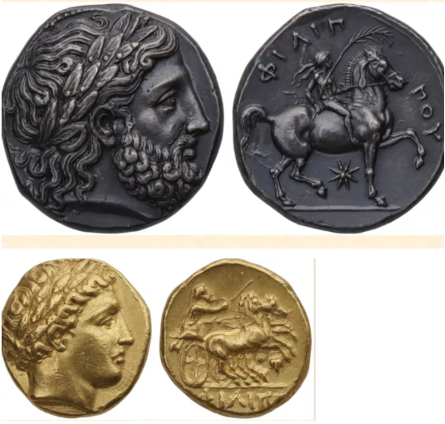
Who were these coins made in honour of?
King Philip II
What is Sarissa and the Syntagma?
Sarissa: Extremely long javelin like weapon
Syntagma: Military formation with spears and would plow into their opponents
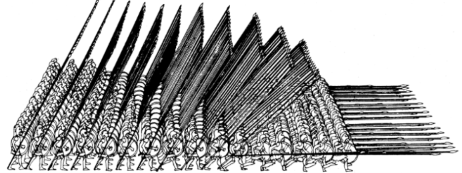
How was Cavalry used?
The cavalry would accompany the syntagma and would strike the opponents
Who are the Royal Companions?
Elite Macedonian nobles who were the king's closest advisors
What are the Royal Pages?
Teenage sons of Macedonian nobles who served at court
Trained to serve the king directly
What is the 3rd Sacred War?
A fight over the control of religious sanctuary, Delphi
Phocis seized delphi after refusing to pay a heavy fine imposed by the Delphic League (led by Thebes)
Macedon intervened in the war and used conflict to expand the Macedonian influence by supporting Thebes
War ended with Phocis surrendered and Philip demanding to be part of the Delphic Council
What is the Theoric fund of Athens?
Public money system in athens used to pay citizens so they could attens festivals and public events
Who is Demosthenes and what did his Philippics say?
An athenian politician who created speeches called the Philippics
The Philippics warned Athens about Philip II of Macedon and argued that public money from the Theoric Fund should be redirected from festivals to military defence.
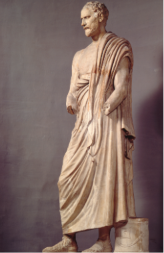
Who is this a statue of?
Demosthenes
What is the aftermath of the peace of philocrates?
The peace was a treaty between Athens and Philip
Peace broke down and Philip declared war on Athens
Who fought in the battle of Chaeronea?
Athens and Thebes vs Macedon
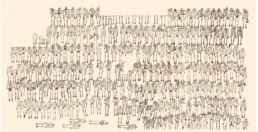
What is this drawing of?
The burial of the Thebans at Chaeronea
Document 10.2 - The Sacred band of Thebes
Elite military unit from Thebes, made up of 150 pairs of male lovers
What were Philip's plans for Greece?
He installed Macedonian garissons
Created the Corinthian League
What is the Corinthian league?
Philip insisted all Greek Polis must be a part of this league
There would be yearly meetings where laws could be discussed and disputed
What was the first order of business declared by the Corinthian League?
To declare war on Persia
What does Philip promote with the Corinthian league?
Panhellenism
How did Philip die?
Assassinated by a Pausanias, a member of his own bodyguard
Who is Alexander the Great
Successor after Philip
Son of Philip and Olympius
What did Alexander do to Thebes? What message was sent?
A rumour spread that Alexander died along with Philip so Thebes revolted
Alexander crushed a revolt by Thebes and “flattened” the city by destroying all buildings.
Served as a warning to other Greek states not to rebel against Macedonian rule.
What was the one building that Alexander did not destroy?
The building of a poet he looked up to
What are the Royal Tombs at Vergina?
Burial Place of Macedonian Kings
One tomb is believed to be Philips tomb
There are three tombs
What is a tumulus?
When a tomb is built into the side of a hill
What style was the royal tomb in?
Doric style
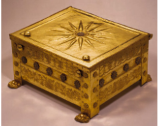
What is this object and what is its importance?
Larnax
Inside: cremated remains of man and woman
Possibly Philip
What were crowns often made of?
Parsley
How many people did Alexander bring to invade Asia?
37 000
How did Alexander plan on paying his troops?
With the money he gets from looting/invading due to having lack of funds
What is the Battle of Granicus?
The first major battle of Alexander the Great and Persia
Happened at the Granicus River
Persia (the satrap) tried to trap Alexander to prevent his retreat
What was the treatment of the Non greeks as Alexander conquered?
He often appointed local (including Persian) elites in positions of authority to build his empire
Greeks did NOT like this
What is the Battle of Issus?
Alexander the Great vs Persian king Darius III
Macedonia won
Persian king flees
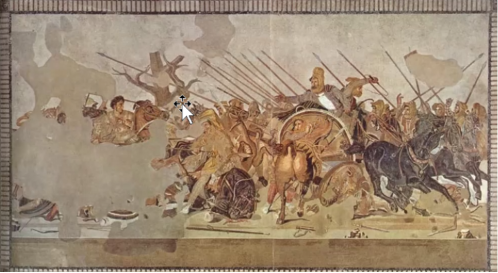
What is this battle of?
Battle of Issus
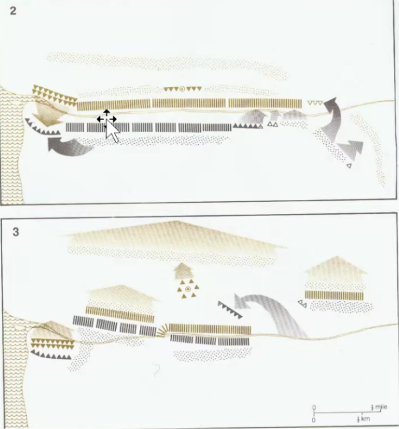
What does each symbol and colour rep?
Black = Alexanders forces
Gold = Persians
The straight long lines = infantry
Triangle = Cavalry
Dots = Protasts
Dot w/ circle = Persian King
Triangle w/ circle = Alexander
How did Alexander use his formation techniques to fight the Persians?
Since his infantry was smaller, he used the his cavalry and protasts to line up against Persia's infantry
What was Alexander's great innovation w/ his cavalry?
To use them to charge across battlefield, not to win the battle , but to cause confusion
Why did Alexander go to Egypt?
To capture every single harbour
What is the Gordian Knot?
Extremely complex knot tied in the city of Gordium
Legend: Whoever could untie the knot would be the ruler of Asia
Alexander's solution to untie it was to slice the knot with his sword
What was Darius III offer?
He will let Alexander marry one of his daughters
Make Alexander his heir
Give him half of the Persian empire
Alex. rejected
Battle of Gaugamela
Final battle between Alexander and Darius
Darius fled battlefield and was assassinated
Alexander won and became ruler of persia
Burning of Persepolis
Persepolis was burned by Alexander
Possible reason: gesture of revenge when they burned Athens
What was the struggle for Bactria and Sogdiana?
Prolonged war where alex faced lots of resistance from Central Asia
Why was there Macedonian unrest?
Troops became reluctant to advance into India as they had campaigned for so long and wanted to go home
Dissatisfaction among nobles caused by Alexanders long absence
Document 11.1 - The Divinity of Alexander
the growing perception that his power was so vast that he began to be treated like a divine figure, especially in eastern traditions.
What is Proskynesis?
Persian court ritual of bowing before king as an extreme sign of submission
Alexander tried introducing it to Greece but they resisted the idea
Battle of Hydaspes
Major battle in India fought between Alexander and Porus
Alexander won, but it was very difficult and costly
Porus was impressed w/ Alexanders bravery
Alexander allowed Prous to keep ruling as a subordinate king
The difficulty and cost caused Alexander to not conquer any farther
March down to the Indus River
His army refused to advance
Alexander marched south down the Indus River to secure his Indian conquests, reach the Indian Ocean, and prepare for the return to Persia.
The March through the Gedrosian desert
On the way back to persia, Alex decided to lead his army through the Gedrosian desert
Very difficult return and disastrous episode due to extreme heat, lack of water, and harsh terrain
Reorganization of the Empire
Alexander realized many of the satraps he appointed were corrupt so he had them executed
Uniting Greek and “Barbarian”
Alexander made his soldiers marry Asian women
He himself married many persian women
Tried to create a multicultural empire under his rule
Death in Babylon of Alexander
Alexander fell ill at a party
Suffered a fever
Passed away
Left no plans for who would be his successor
He said “when i die, the greatest competition the world has ever seen will take place”, aka WAR
Why was Alexander often depicted with horns?
They said he was the son of a god that had a face of a ram
Why did future kings depict themselves with horns?
They wanted to look/be like Alexander since he was the “gold standard”
What is Cosmopolis?
Alexander's concept of having a vast empire with different cultures under one empire
What is the Alexander Romance?
Collection of myths and fictional stories about Alexander the Great