AP Biology Unit 3
 Call Kai
 Learn
Learn Practice Test
 Spaced Repetition
 Match
Match Flashcards
 Knowt Play
1/42

There's no tags or description
Looks like no tags are added yet.
Name | Mastery | Learn | Test | Matching | Spaced | Call with Kai |
|---|
No analytics yet
Send a link to your students to track their progress
43 Terms
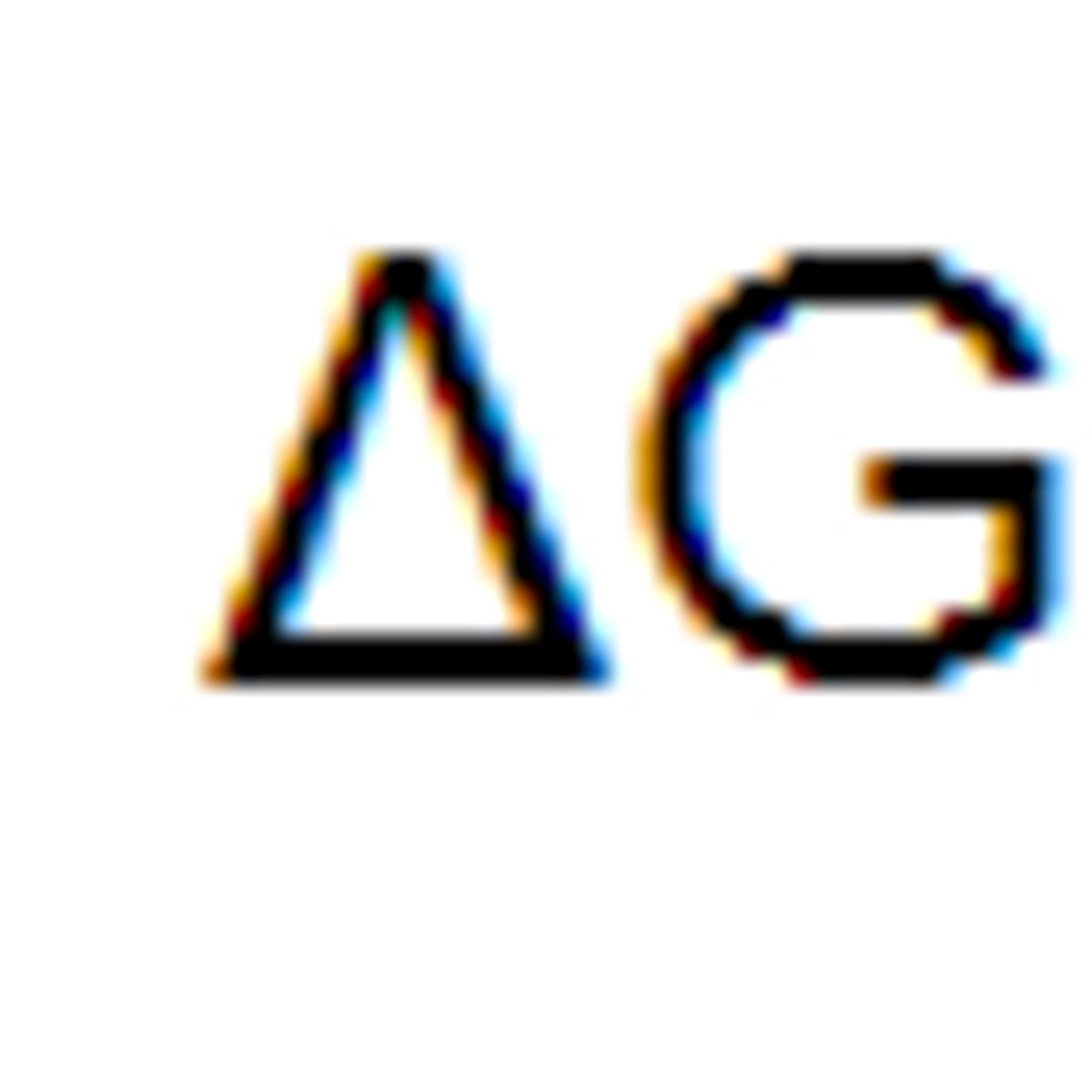
free energy
Chemical energy available to do work
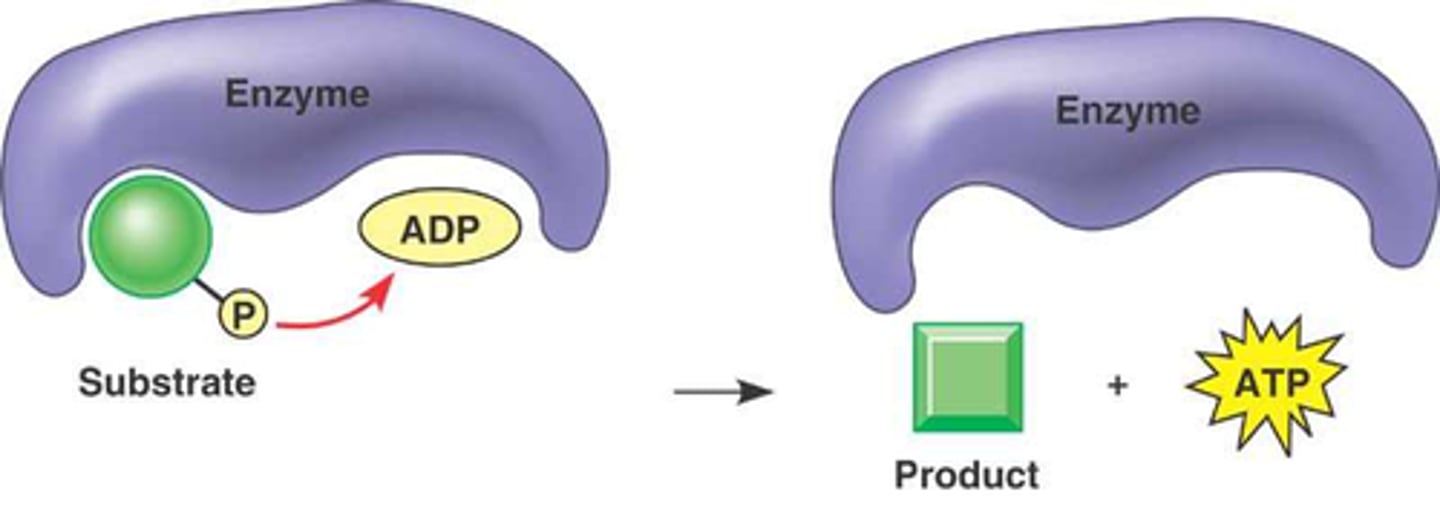
substrate level phosphorylation
The enzyme-catalyzed formation of ATP by direct transfer of a phosphate group to ADP from an intermediate substrate in catabolism.
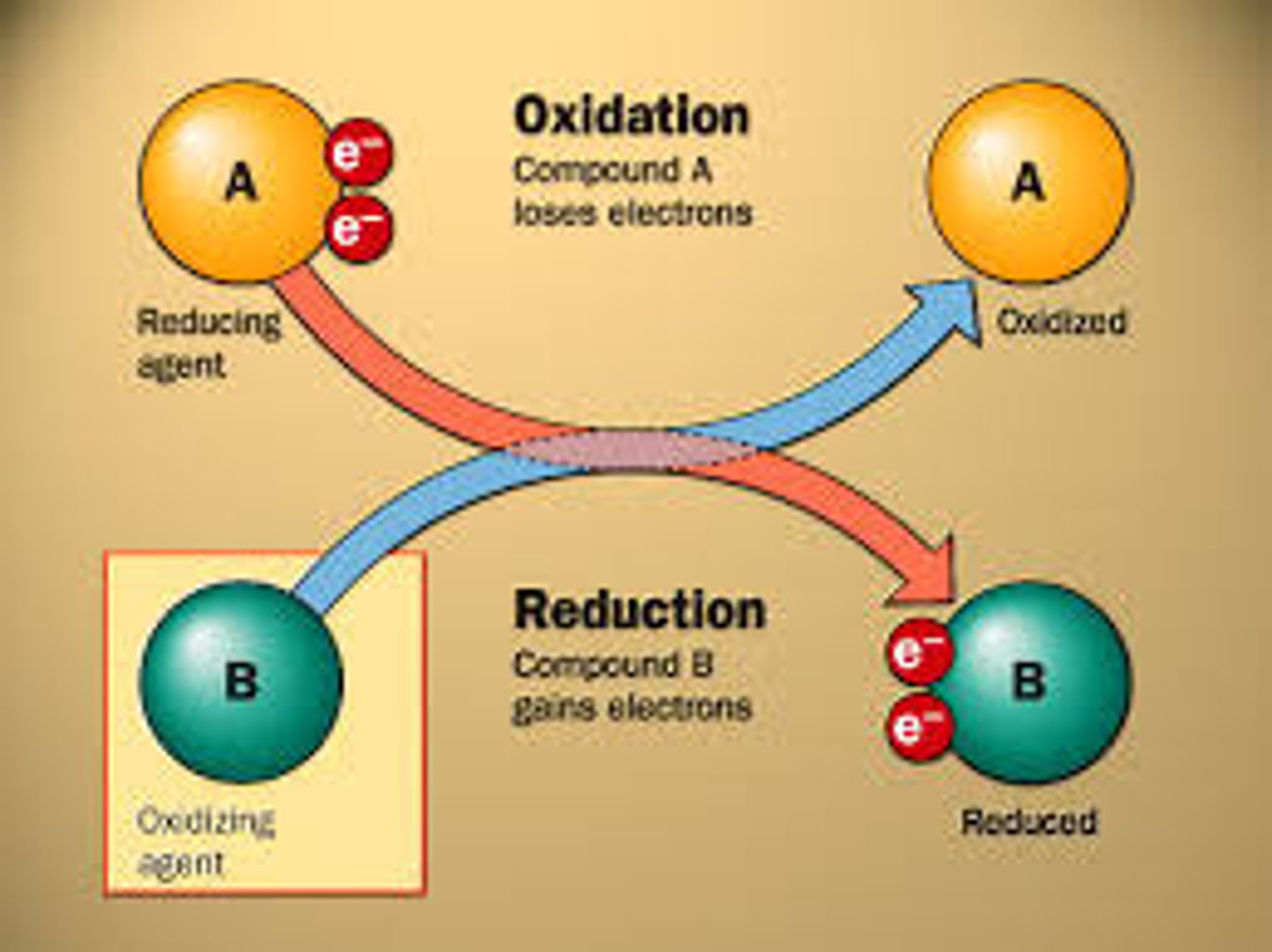
reduction
Gain of electrons by a chemical reactant; any reduction is accompanied by an oxidation.
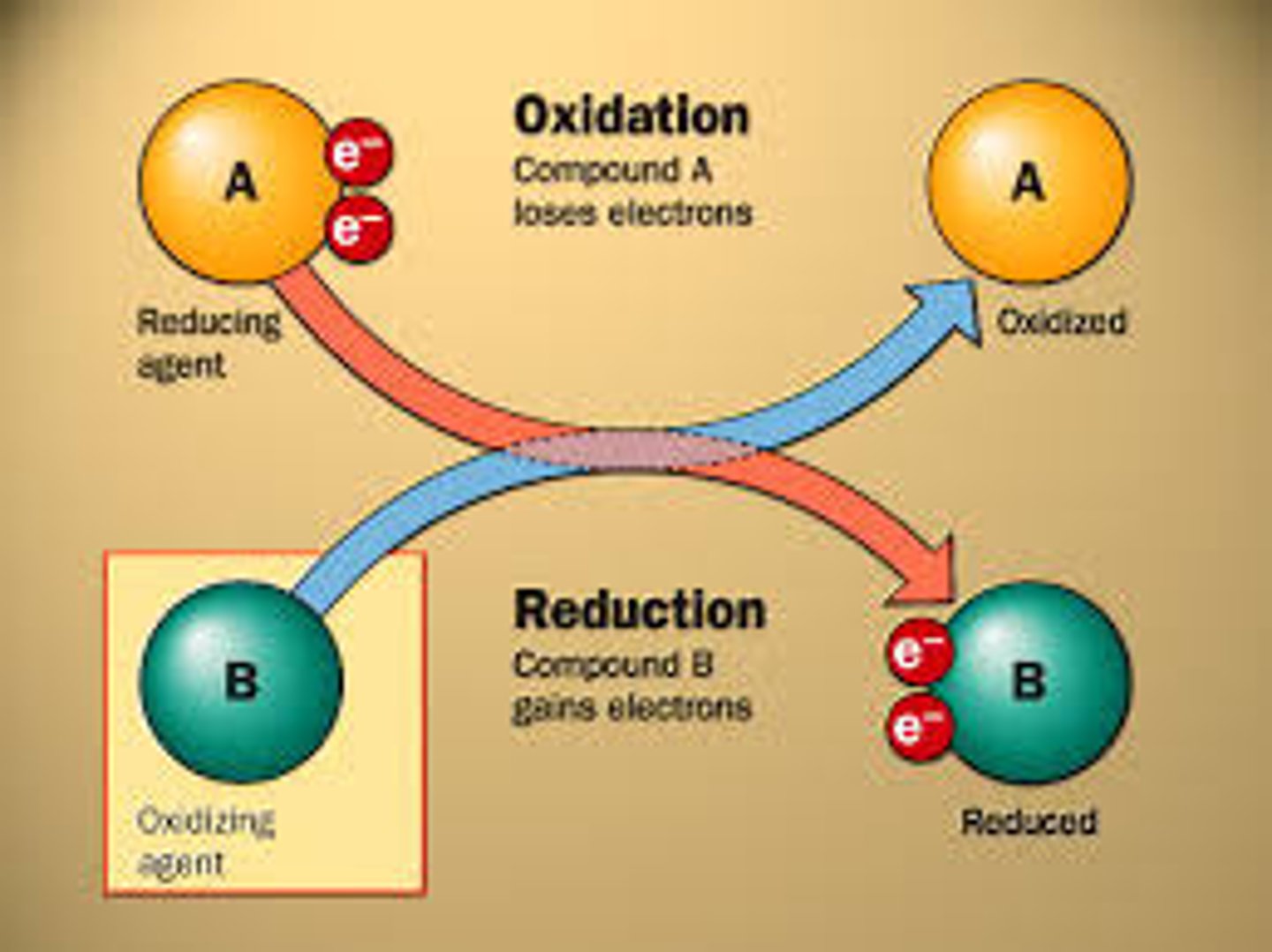
oxidation
Relative loss of electrons in a chemical reaction; either outright removal to form an ion, or the sharing of electrons with substances having a greater affinity for them, such as oxygen. Most oxidations, including biological ones, are associated with the liberation of energy.
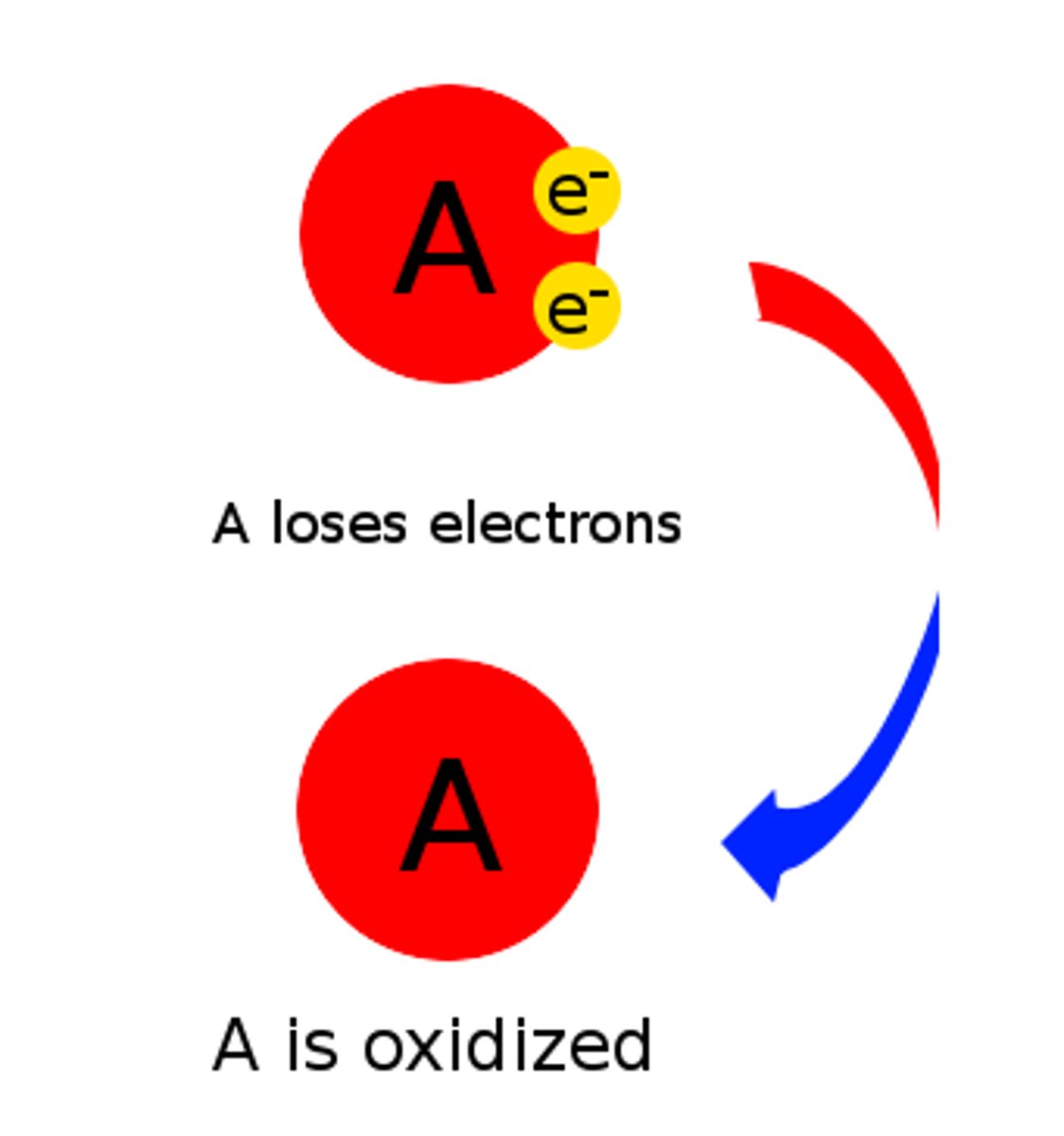
oxidized
loses electrons (becomes more positive)
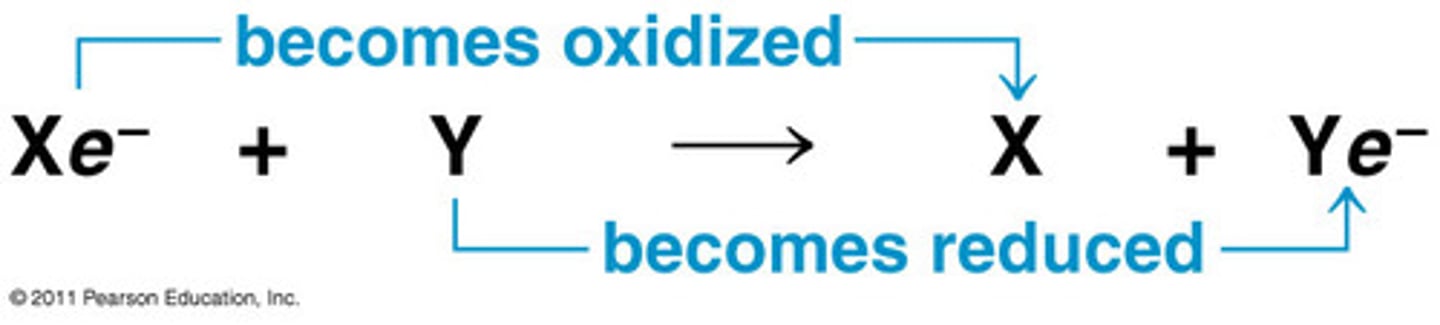
reduced
gains electrons, becomes more negative
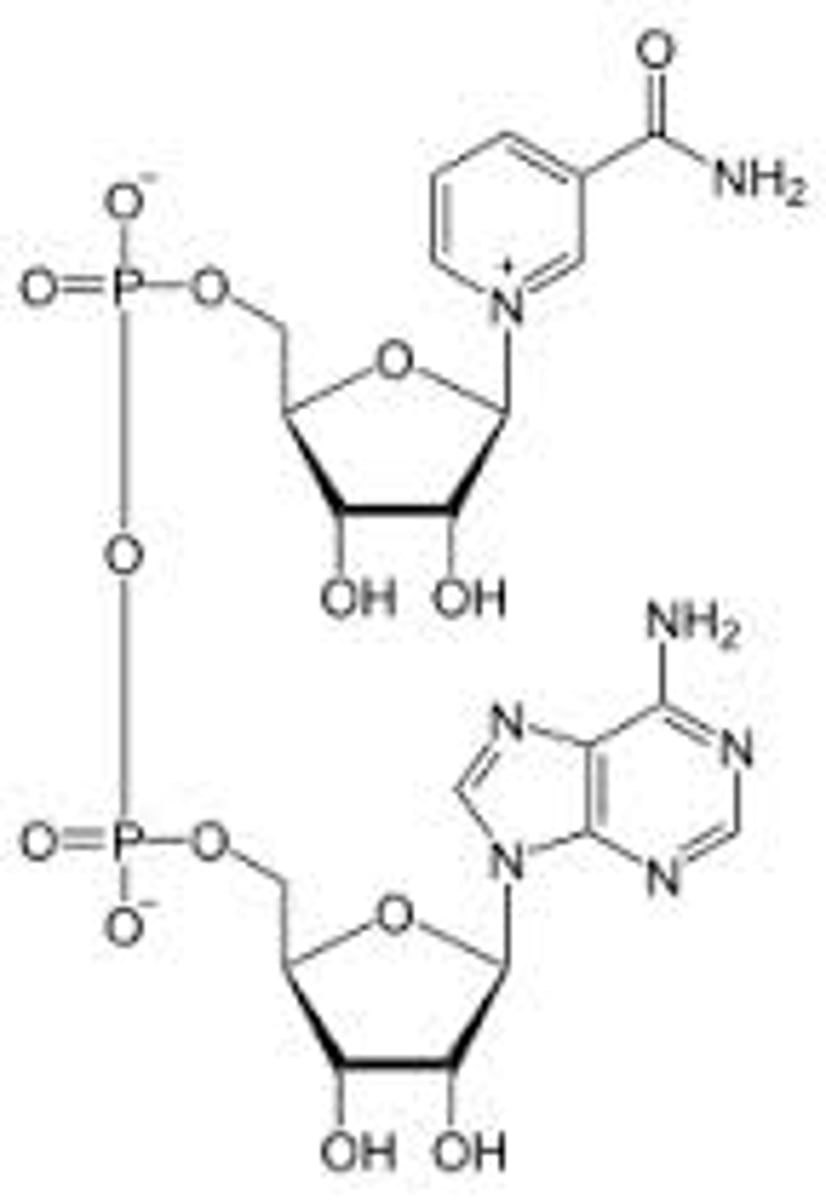
NAD
a coenzyme that is an electron carrier; NAD+ is oxidized, NADH is reduced: cellular respiration
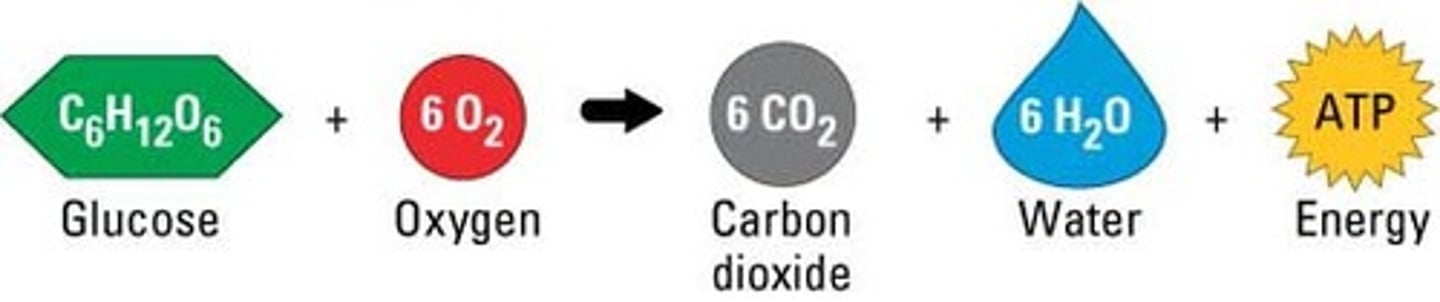
cellular respiration
The catabolic pathways by which electrons are removed from various molecules and passed through intermediate electron carriers to O2, generating H2O and releasing energy.
aerobic
Requiring molecular oxygen, O2
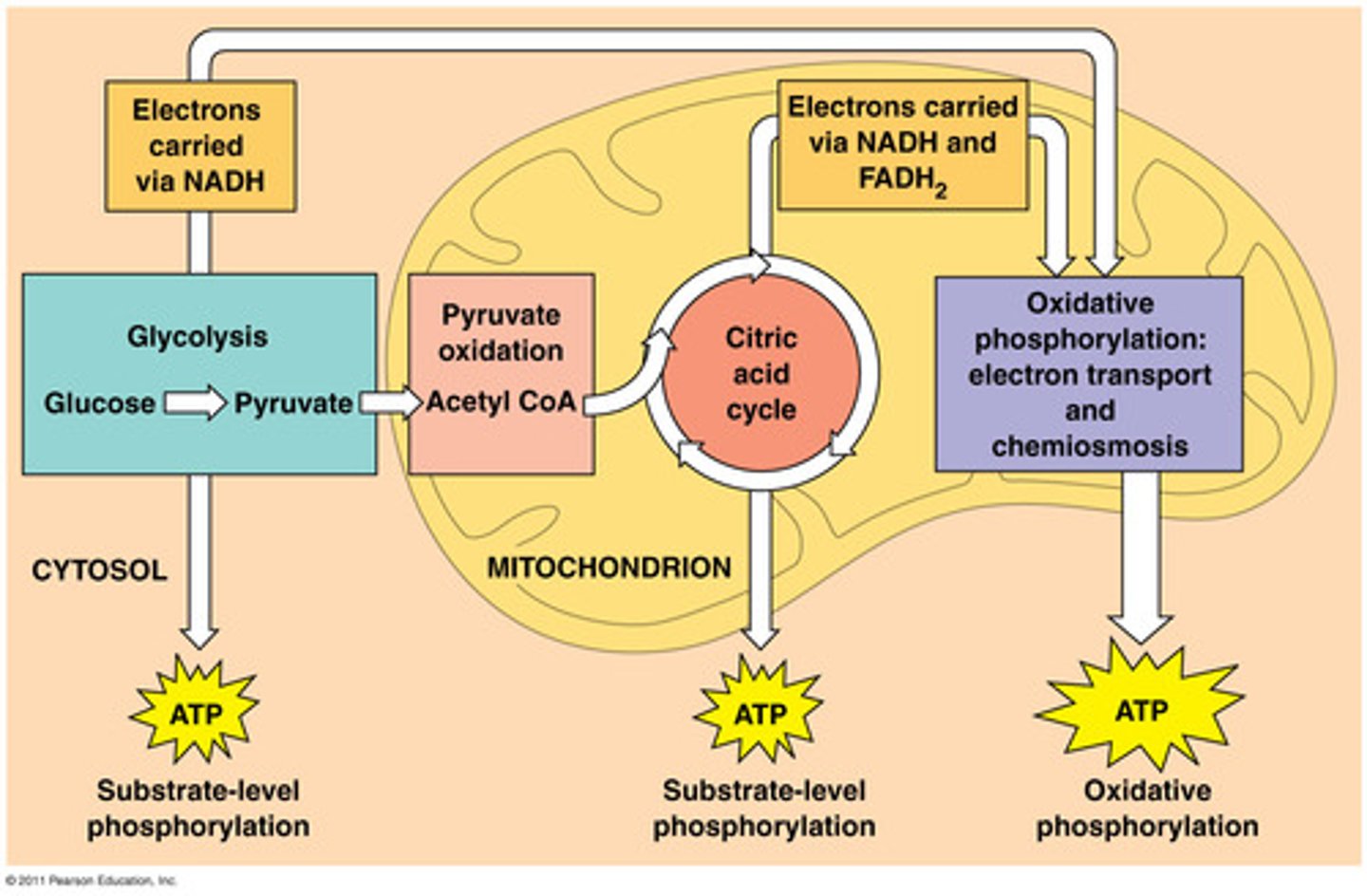
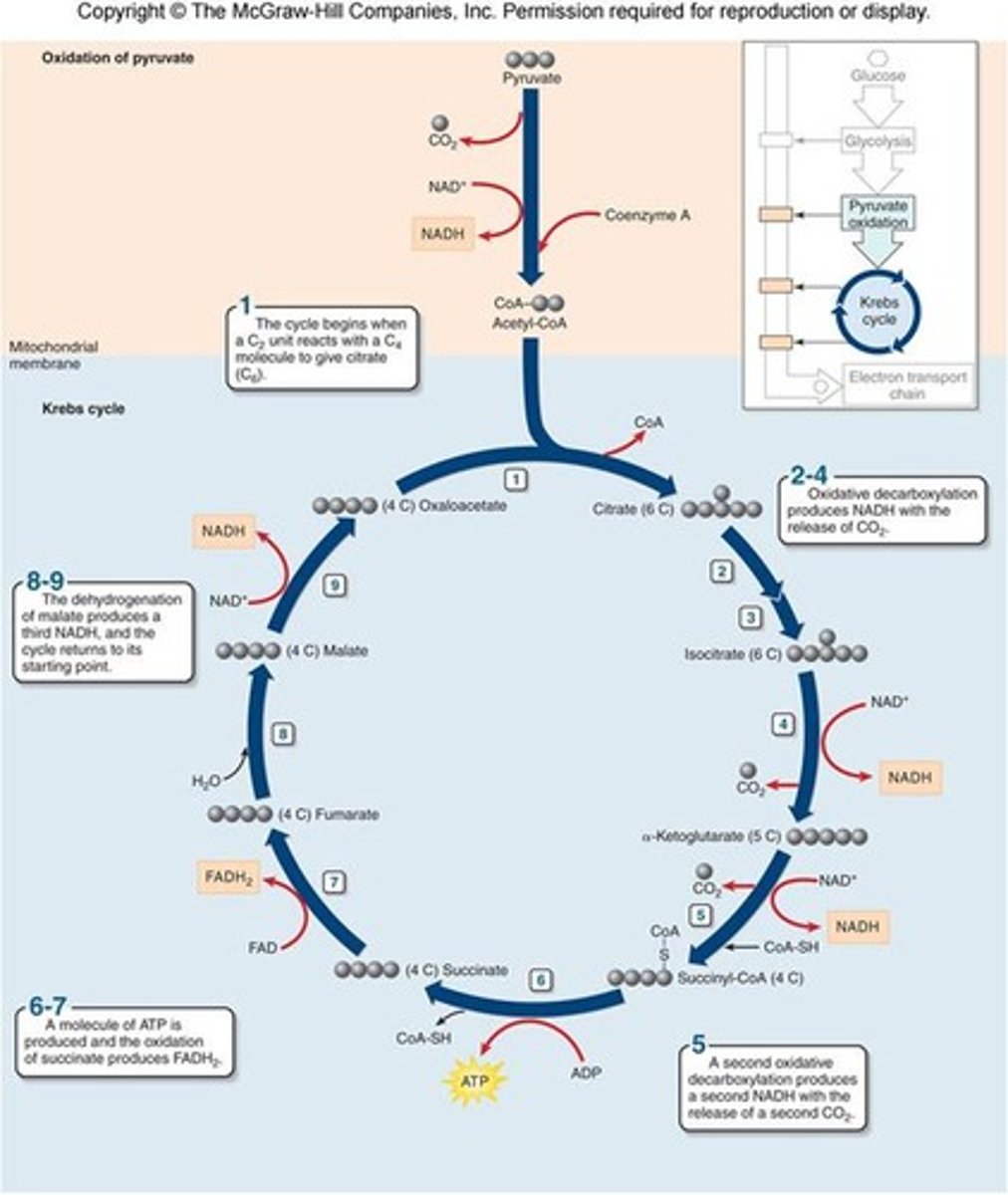
citric acid cycle
Cellular respiration: a set of chemical reactions where acetyl CoA is oxidized to carbon dioxide and hydrogen atoms are stored transferred to NADH and FADH2. Also called the Krebs cycle.
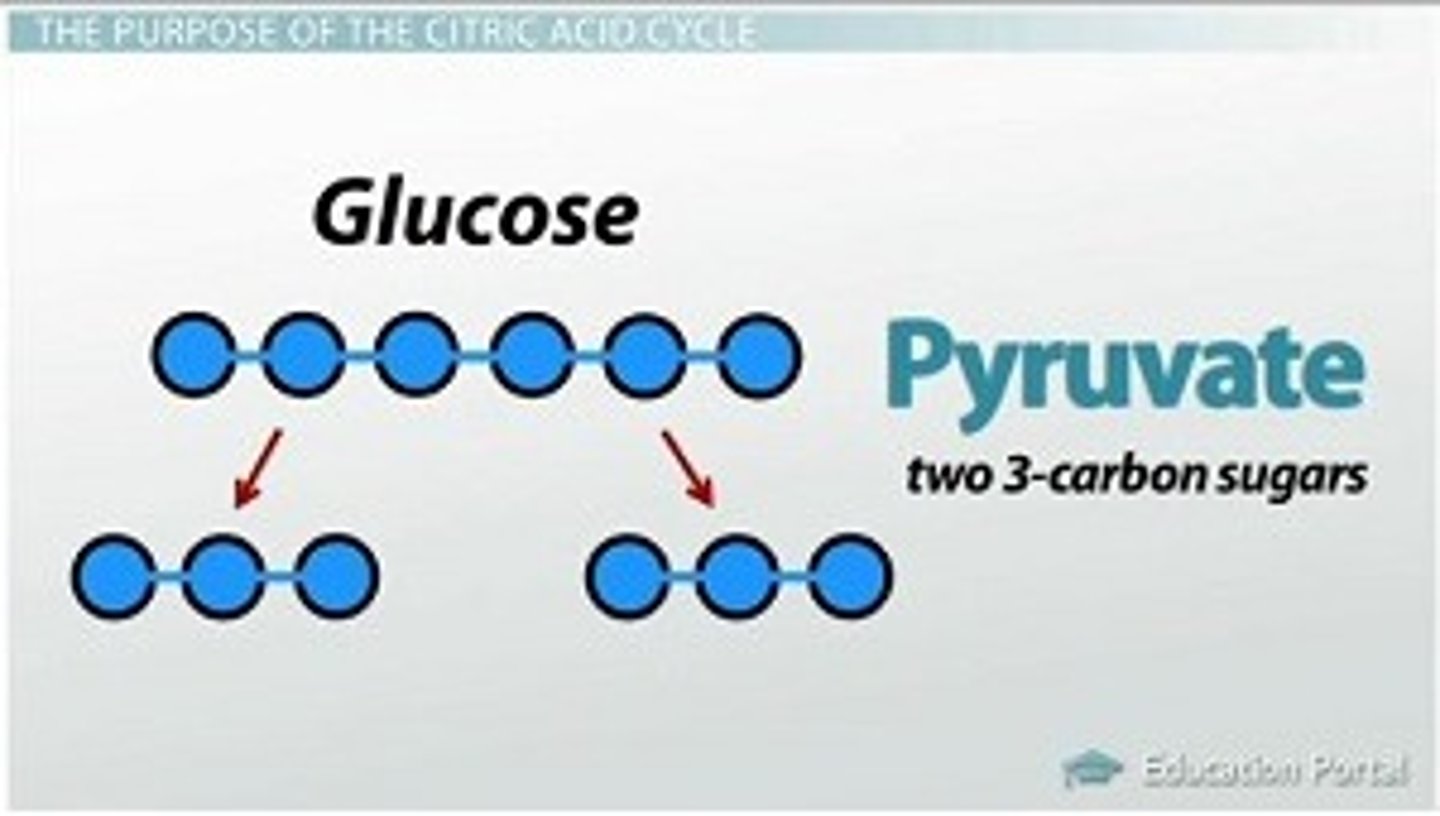
pyruvate
Three-carbon compound that forms as an end product of glycolysis.
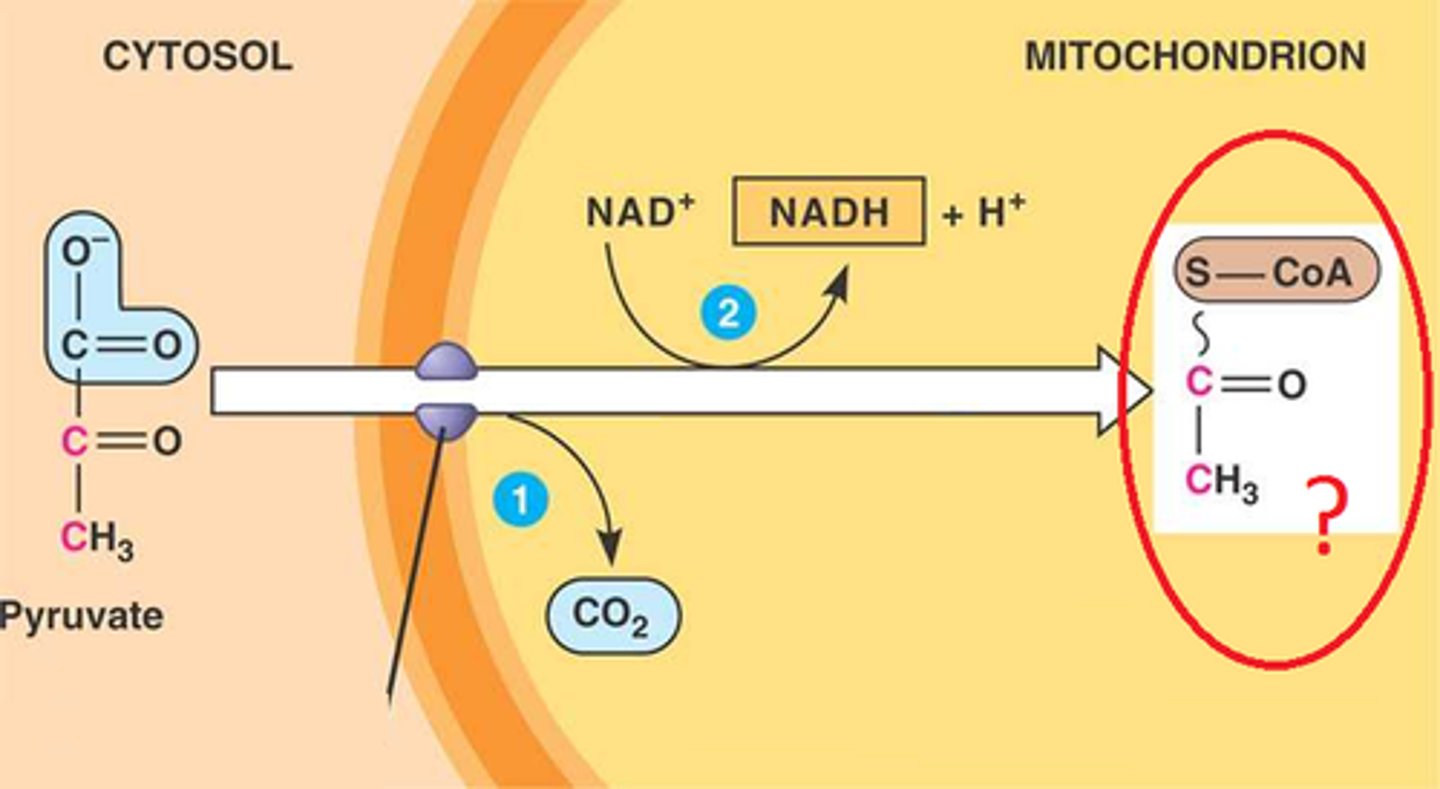
acetyl CoA
molecule formed during the prep reaction (from the oxidation of pyruvate)
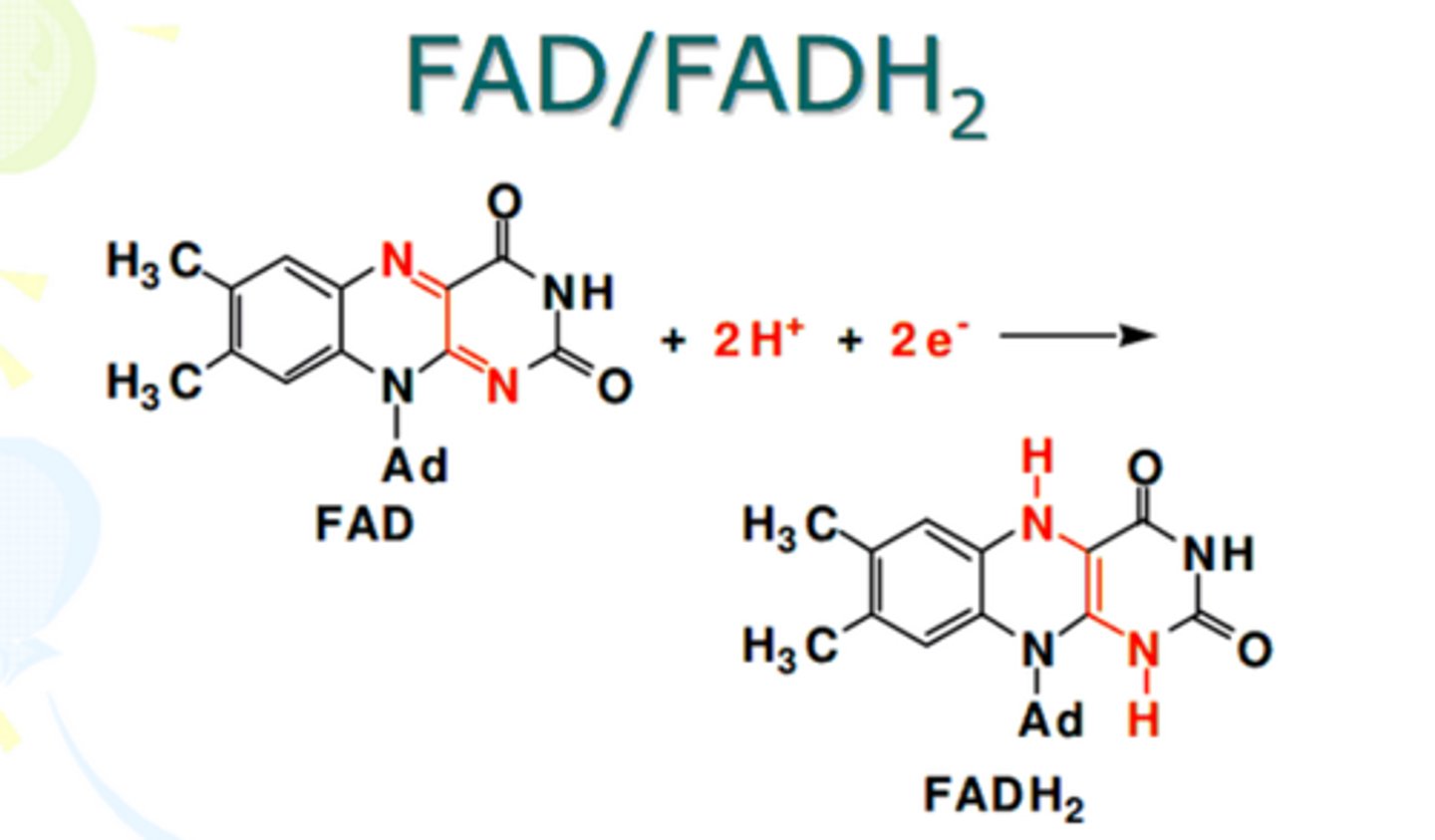
FADH2
a reduced coenzyme similar to NADH, an electron carrier
anaerobic
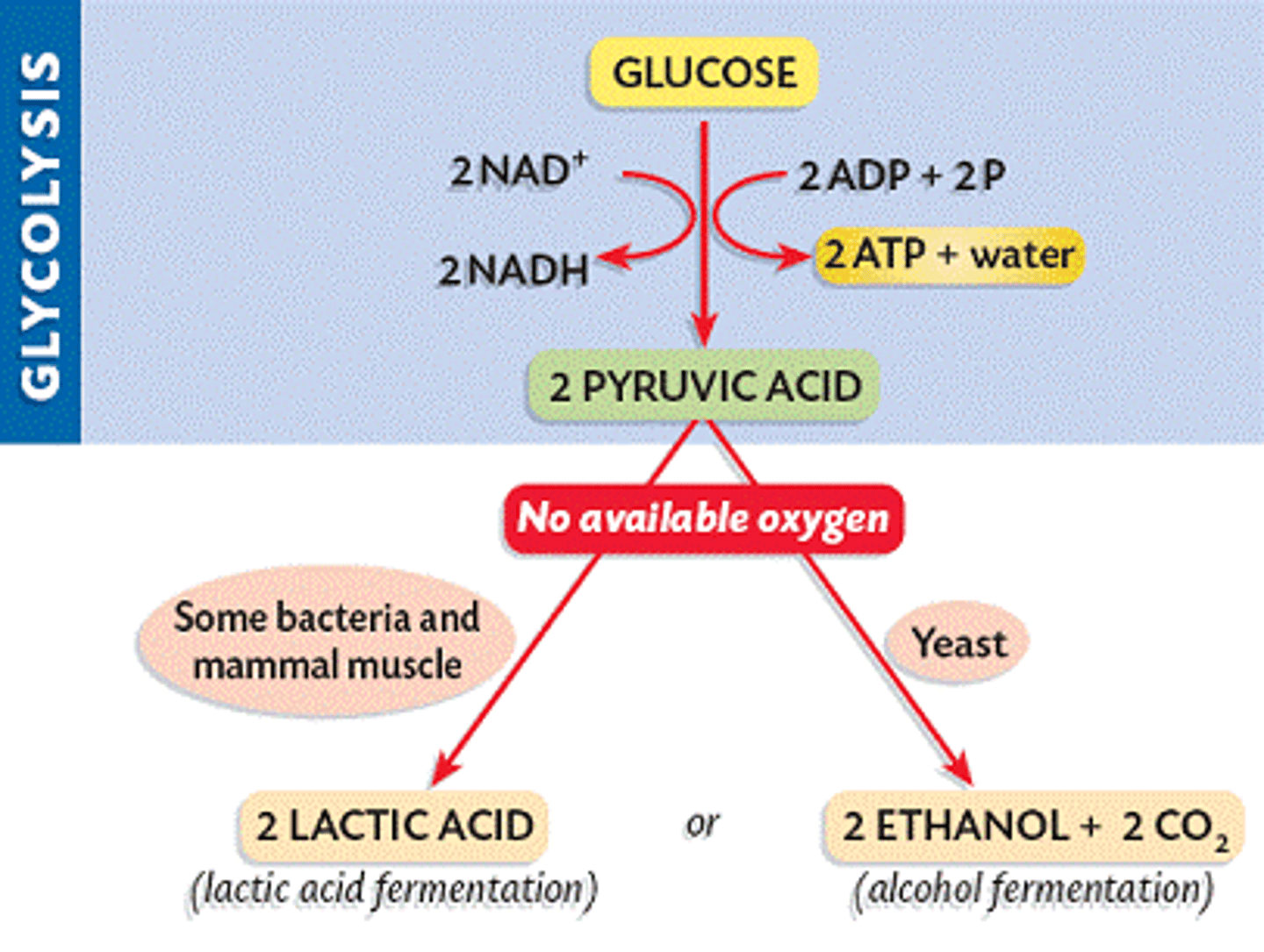
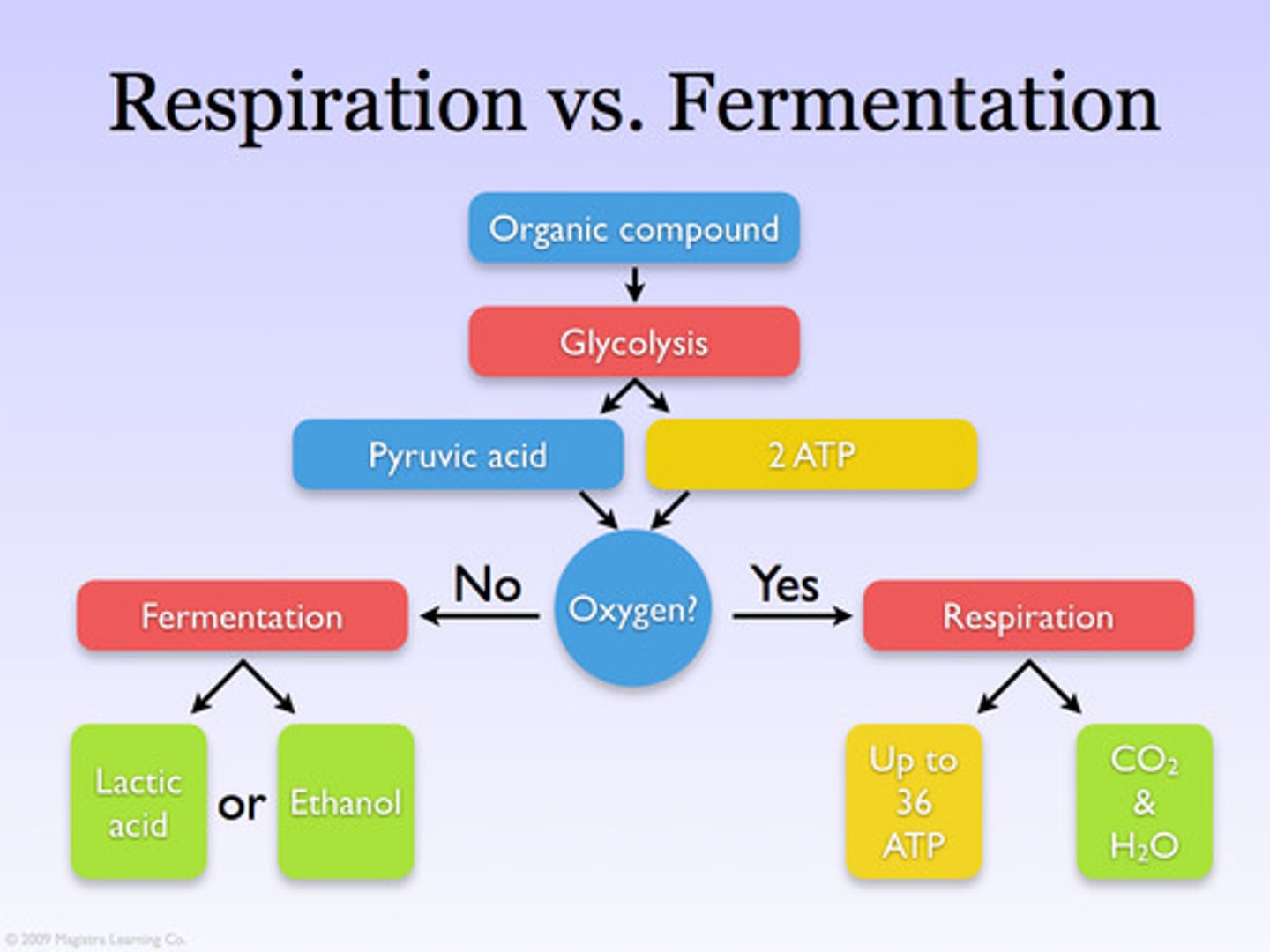
Occurring without the use of molecular oxygen, O2.
fermentation
glycolysis (the cellular respiration in absence of oxygen) produces lactic acid or ethanol (bacteria and yeast)
light dependent reactions
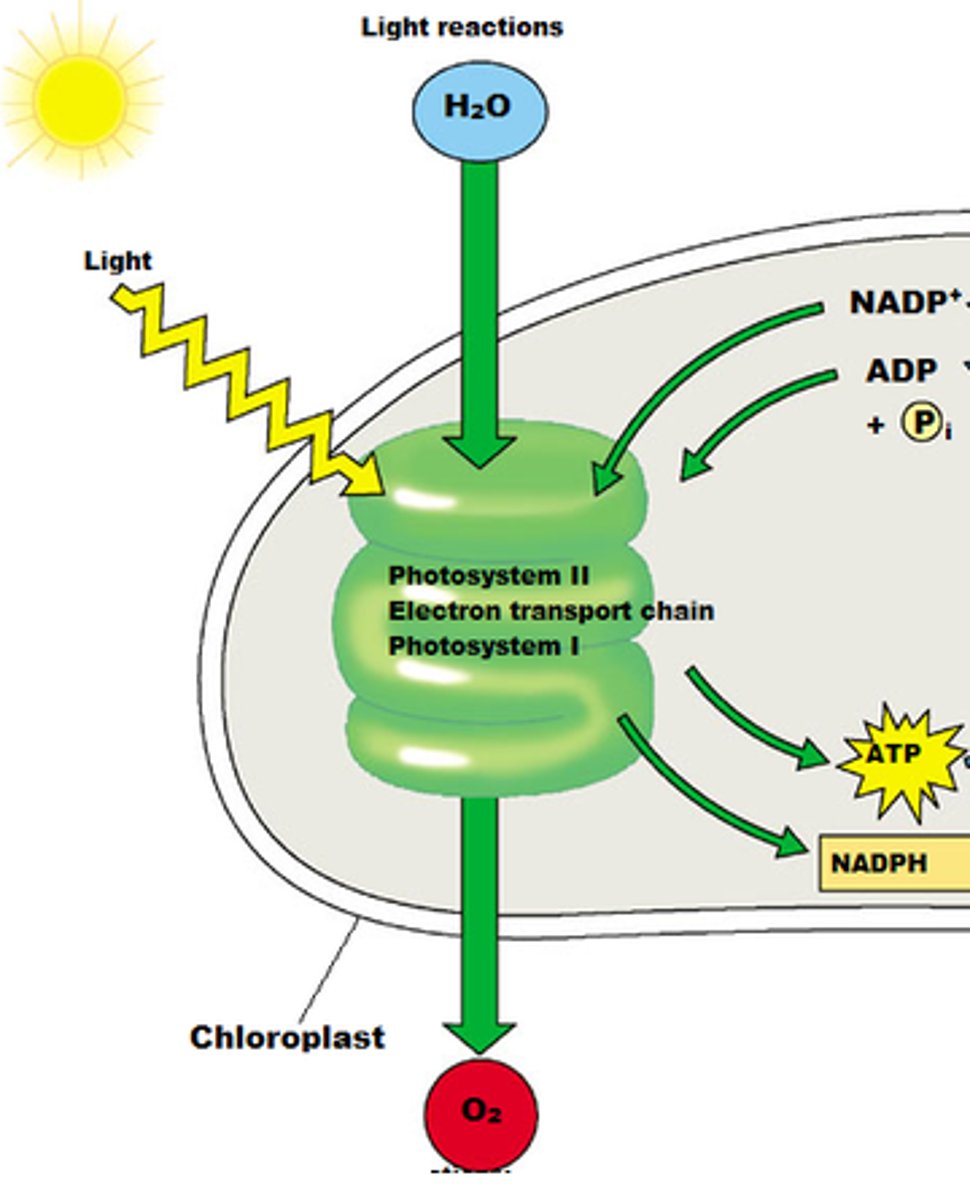
The initial phase of photosynthesis, in which light energy is converted into chemical energy.
pigment
A substance that absorbs visible light.
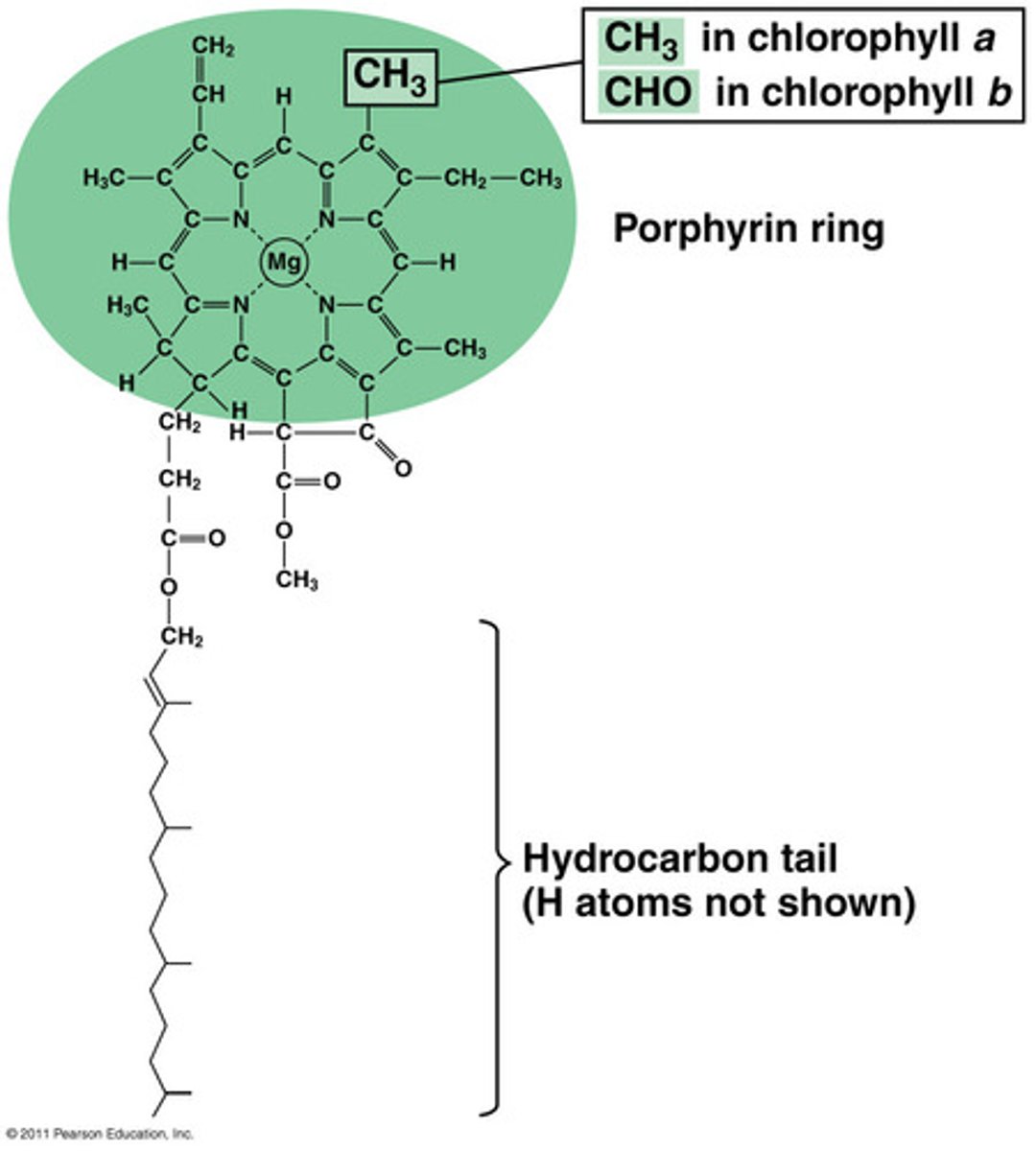
chlorophyll
Any of several green pigments associated with chloroplasts or with certain bacterial membranes; responsible for trapping light energy for photosynthesis.
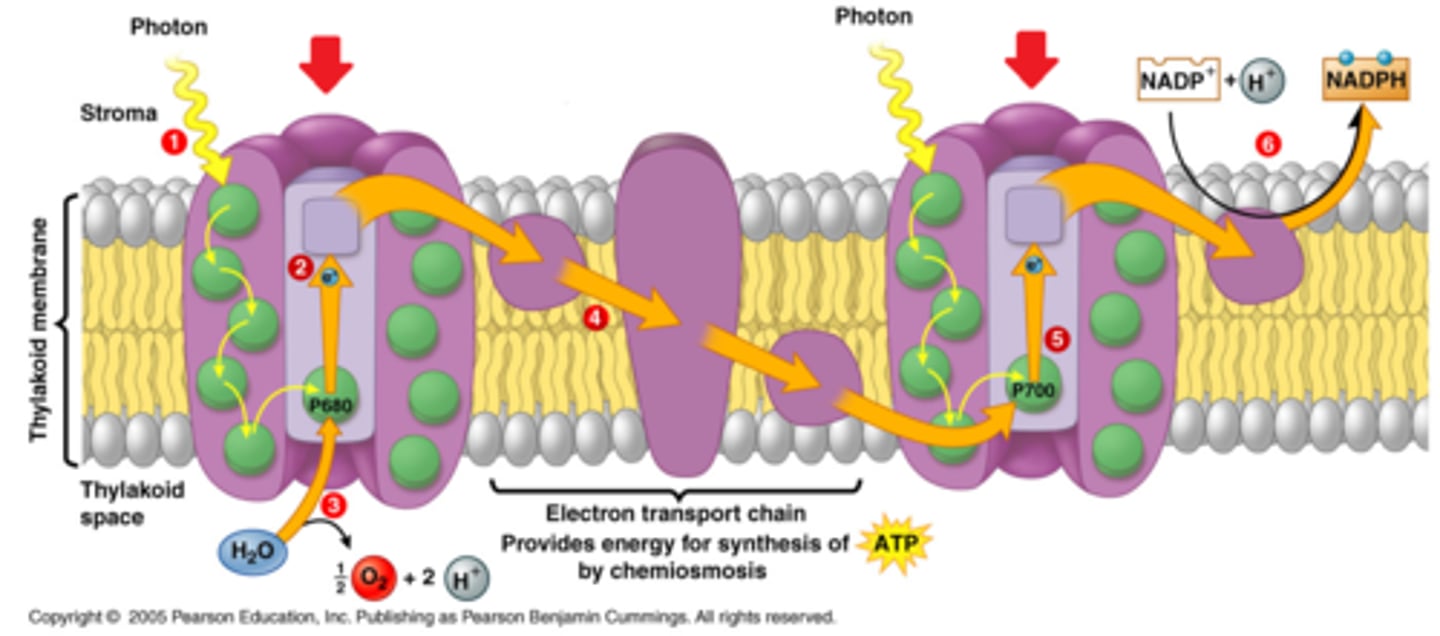
photosystem
A light-harvesting complex in the chloroplast thylakoid composed of pigments and proteins.
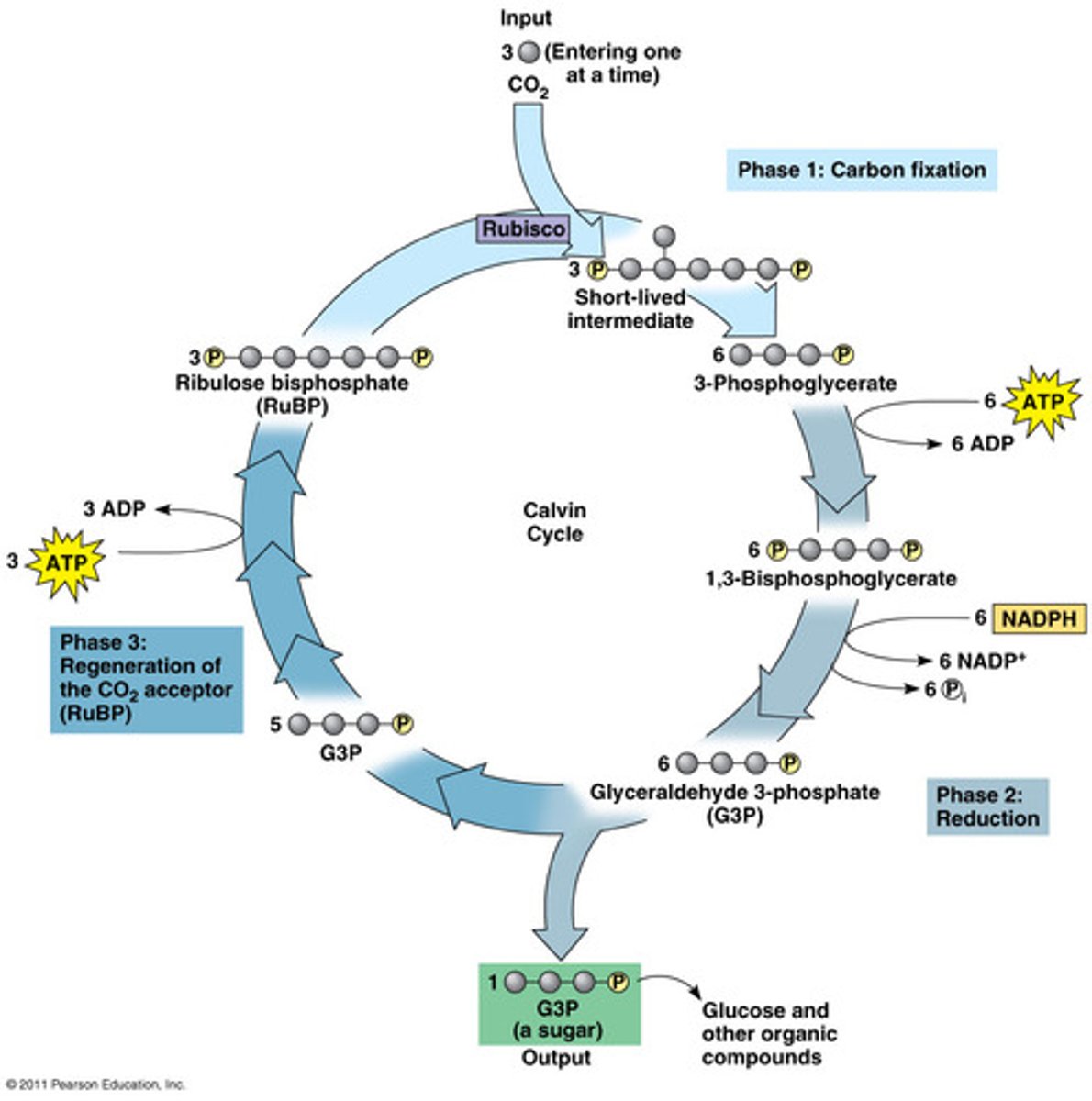
Calvin cycle
a series of enzyme-assisted chemical reactions that produces a three-carbon sugar
metabolism
The sum of the building & breaking reactions occurring in cells
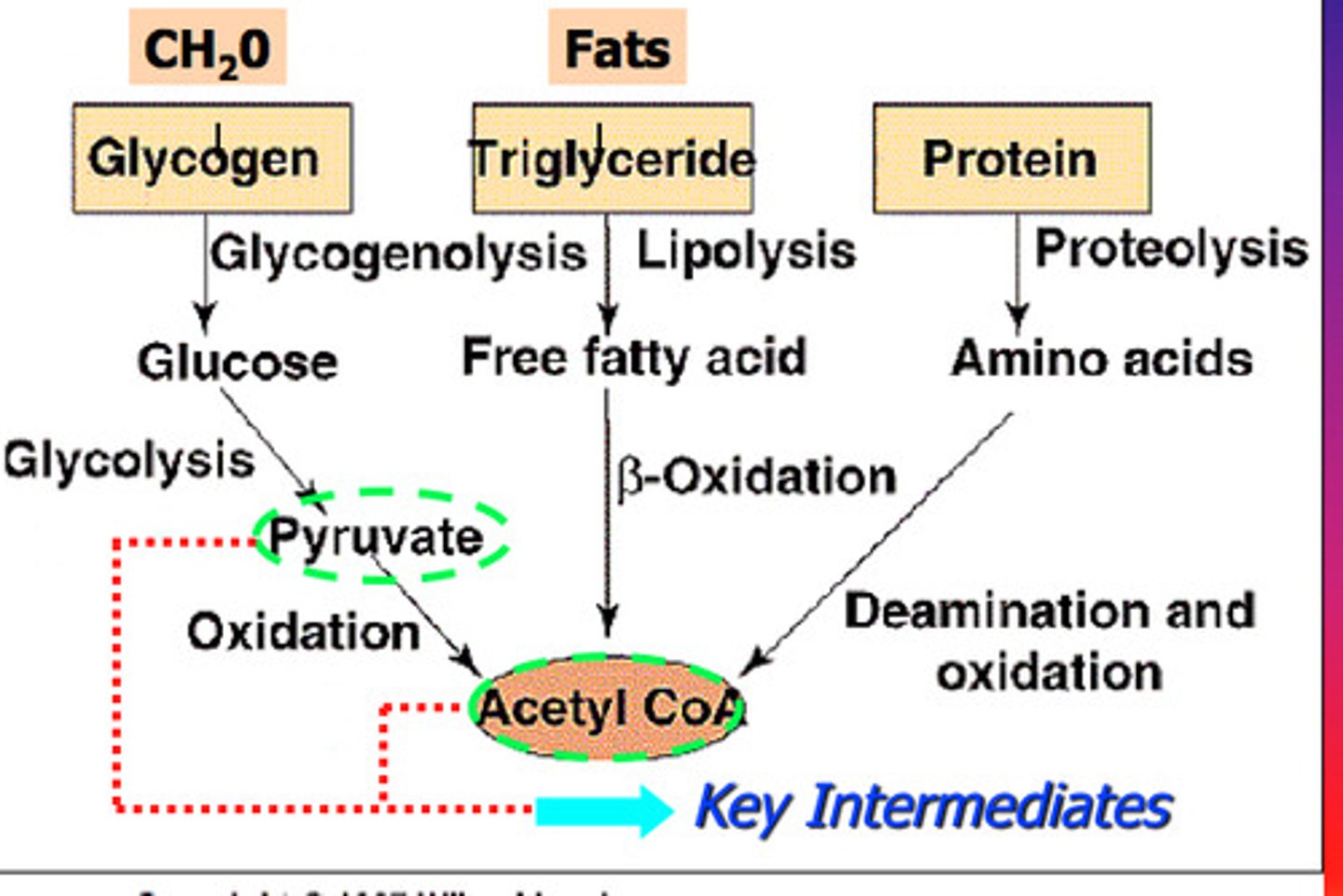
catabolic pathways
Series of reactions that release energy by breaking down complex molecules into simpler compounds.
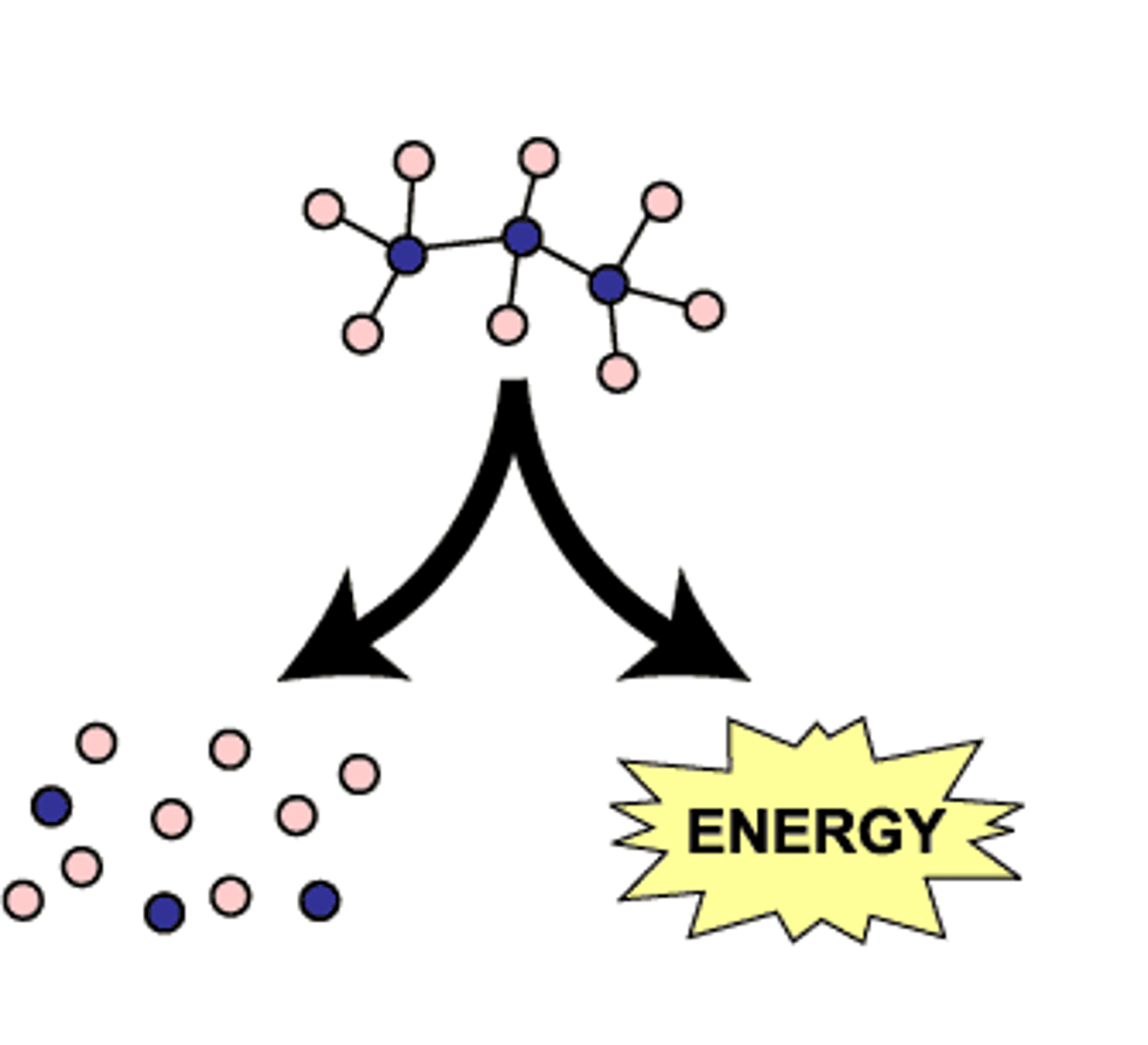
anabolic pathways
Series of reactions that consume energy to build complicated molecules from simpler ones.
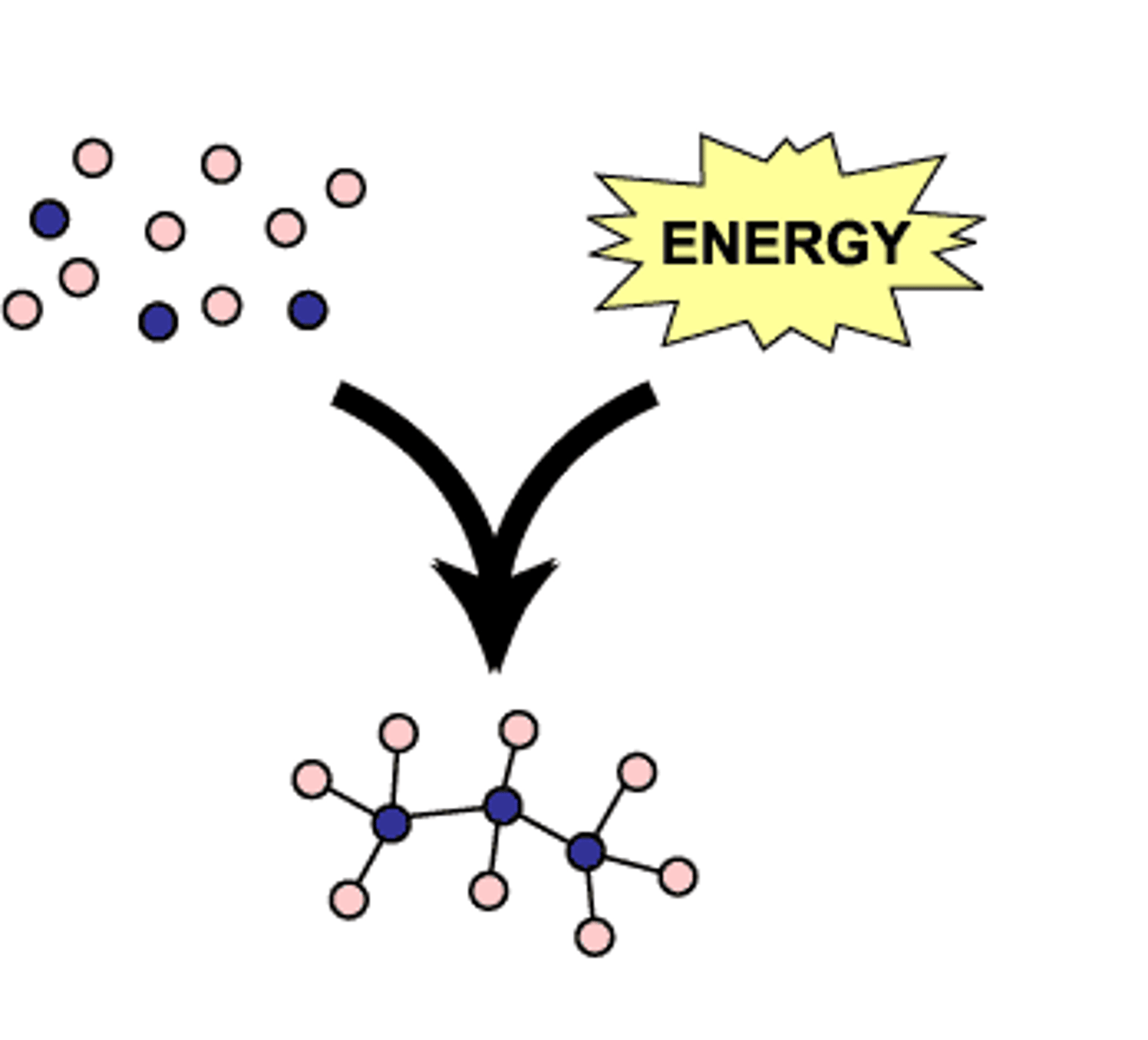
endergonic reaction
Reaction that absorbs free energy from its surroundings.
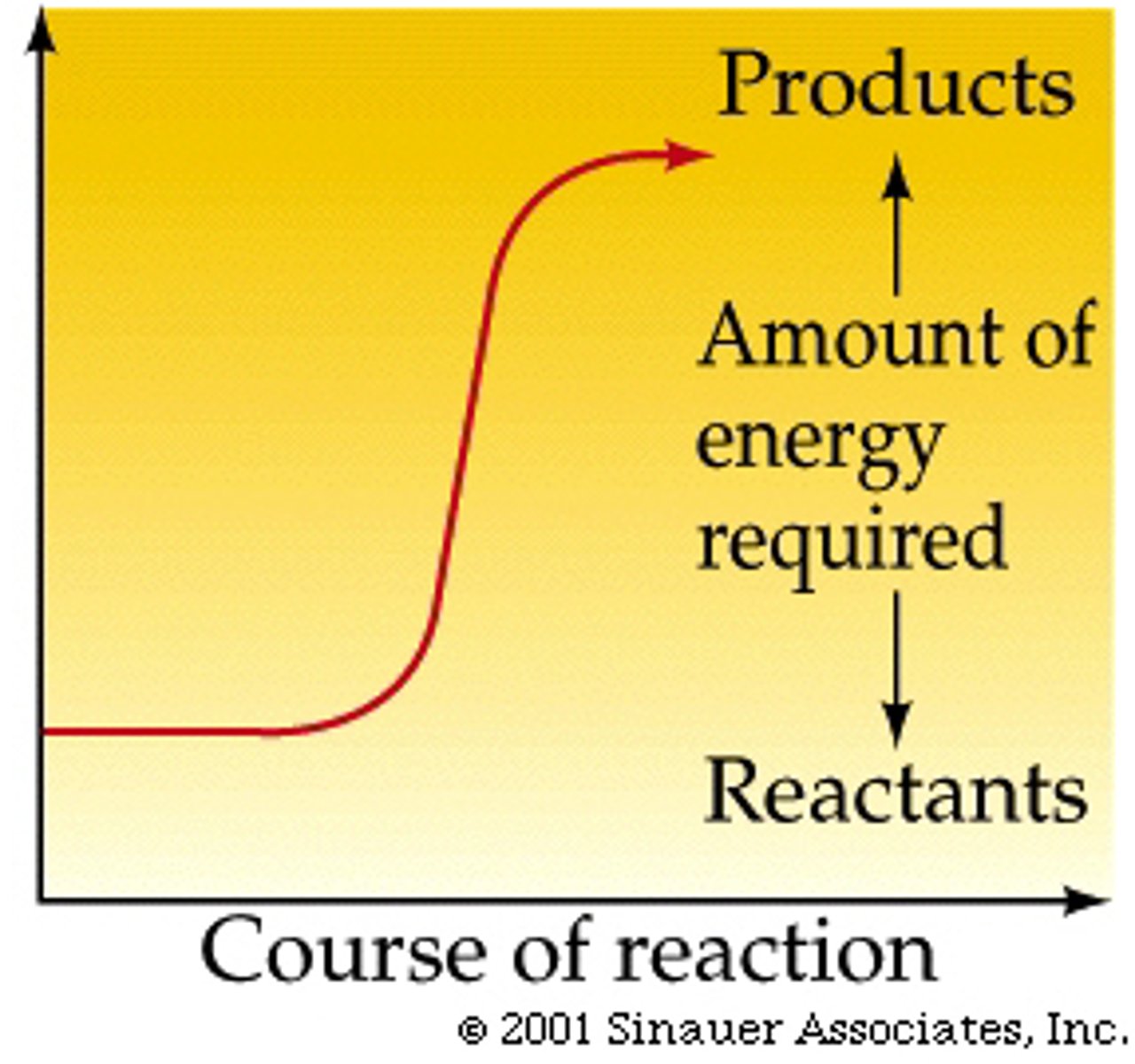
exergonic reaction
Reaction that proceeds with a net release of free energy.
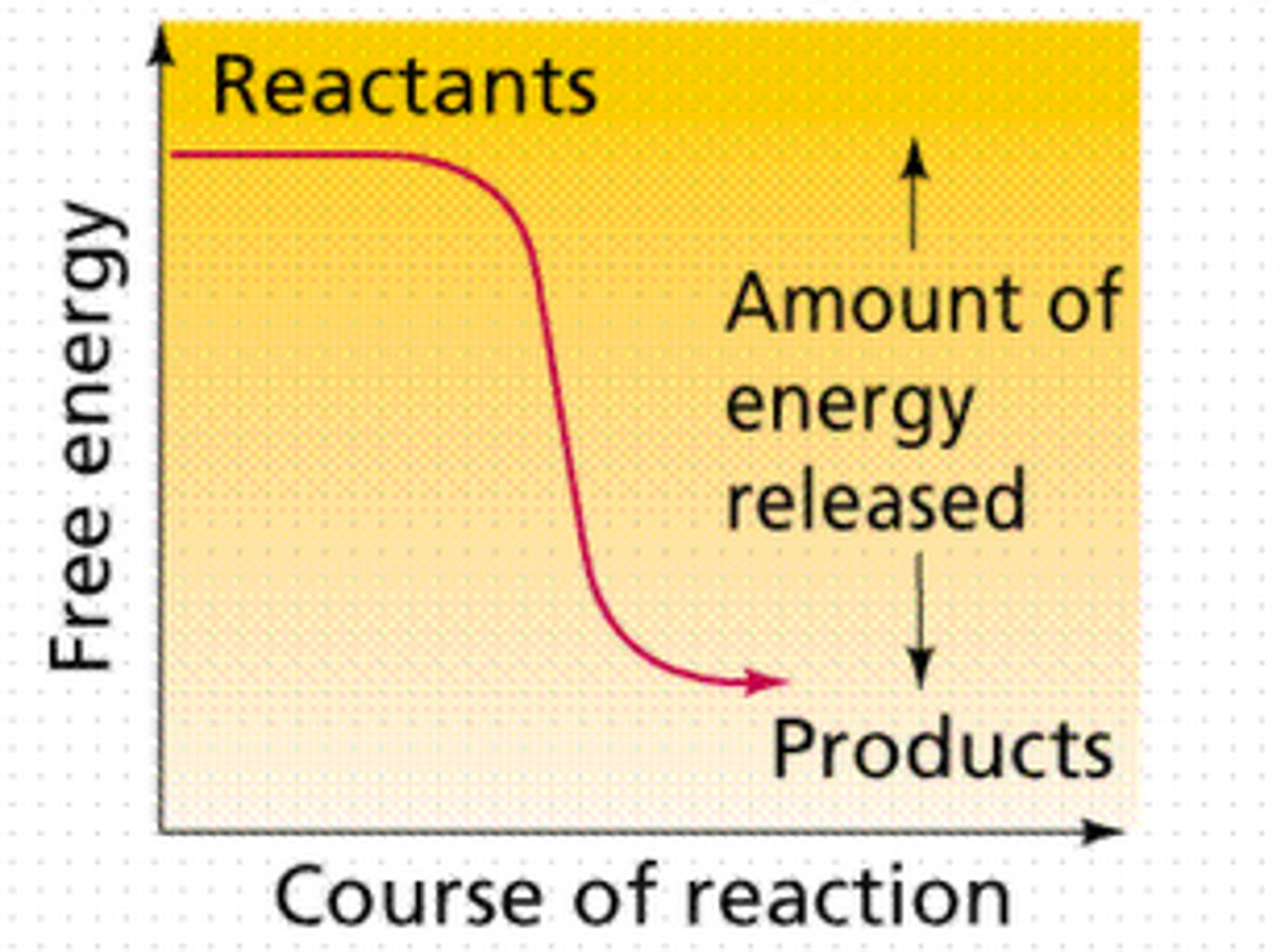
enzyme
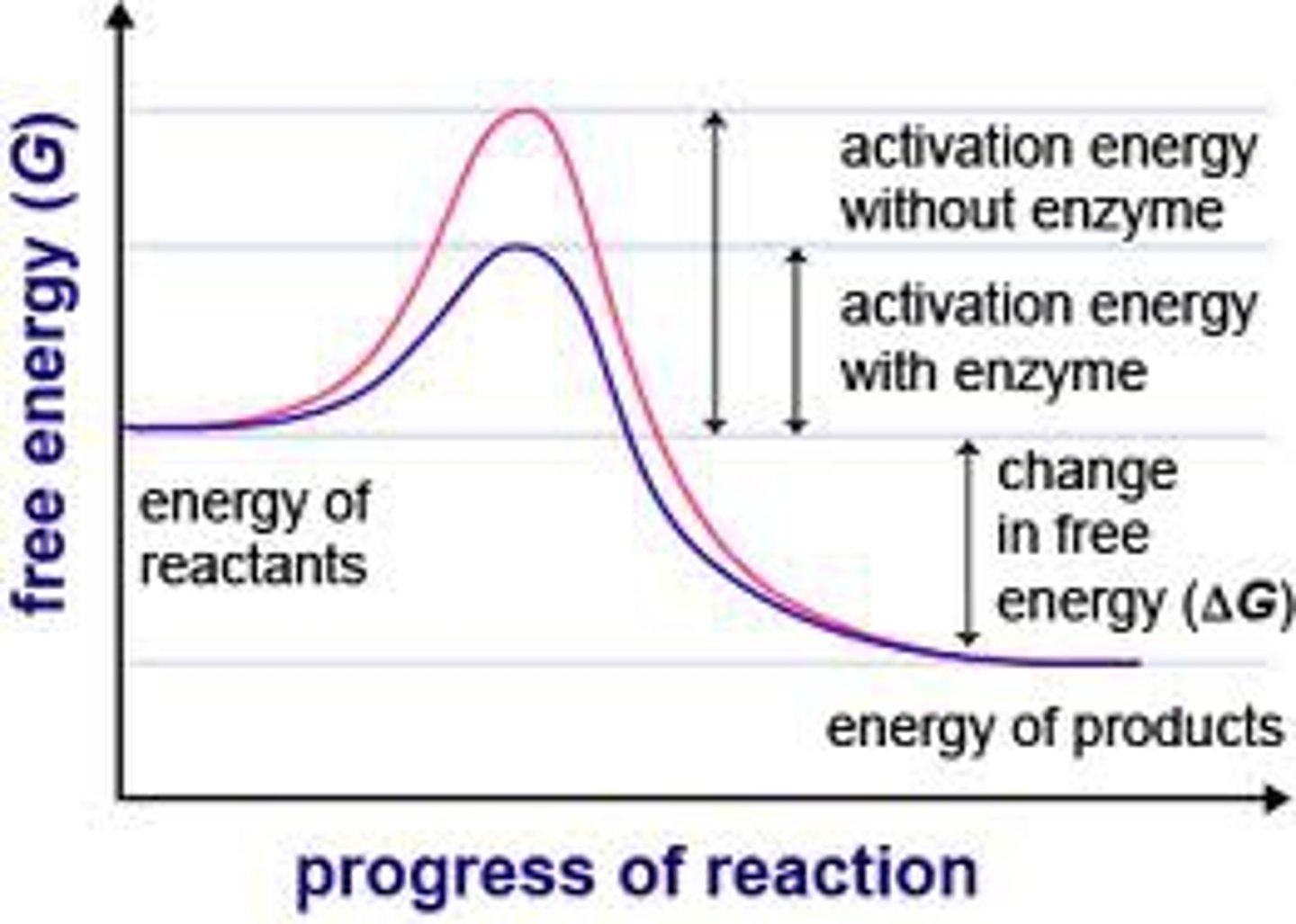
Protein that speeds up reactions. Typically end in "ase" (ex. Peroxidase, Lipase)

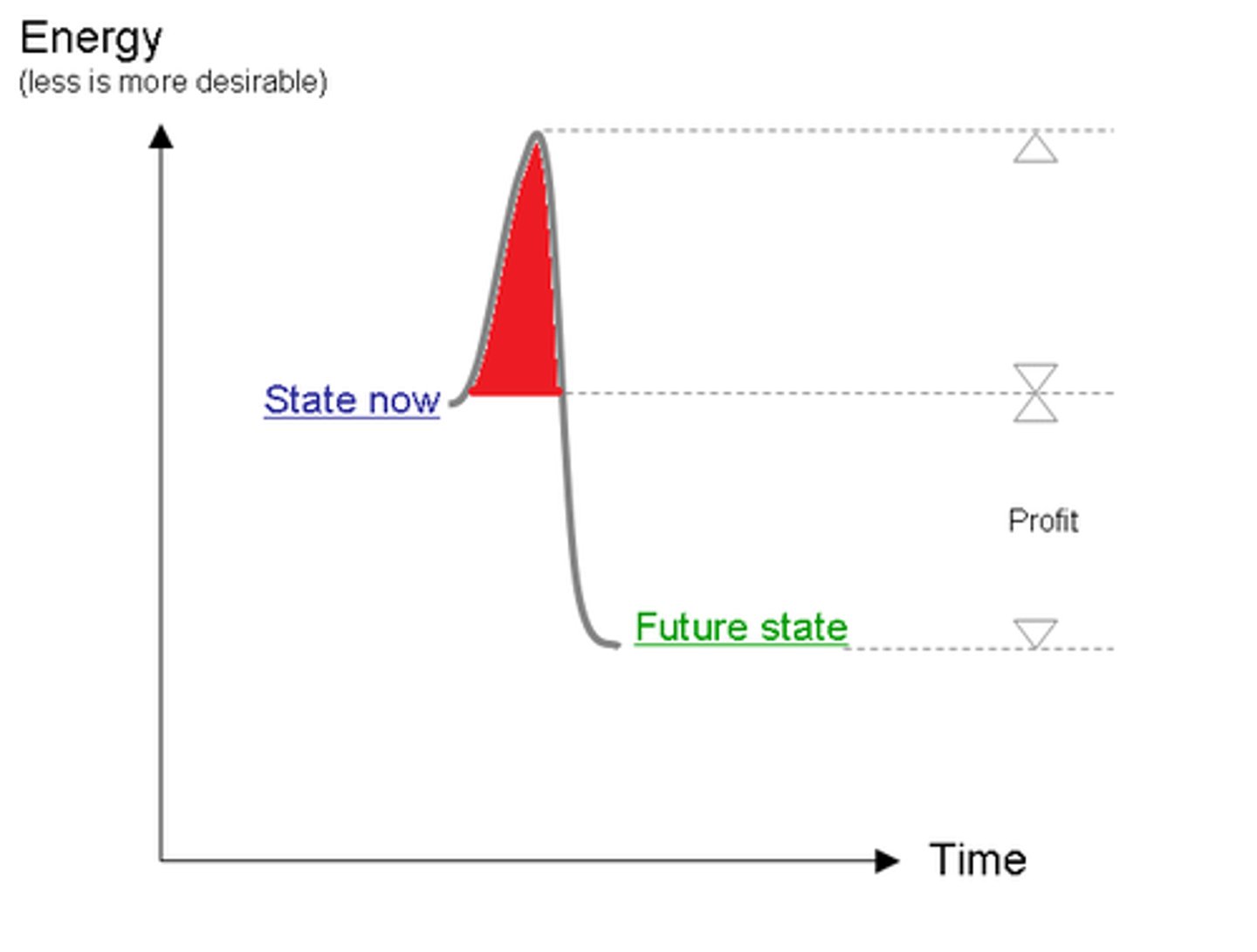
activation energy
The amount of energy needed to push the reactants over an energy barrier.
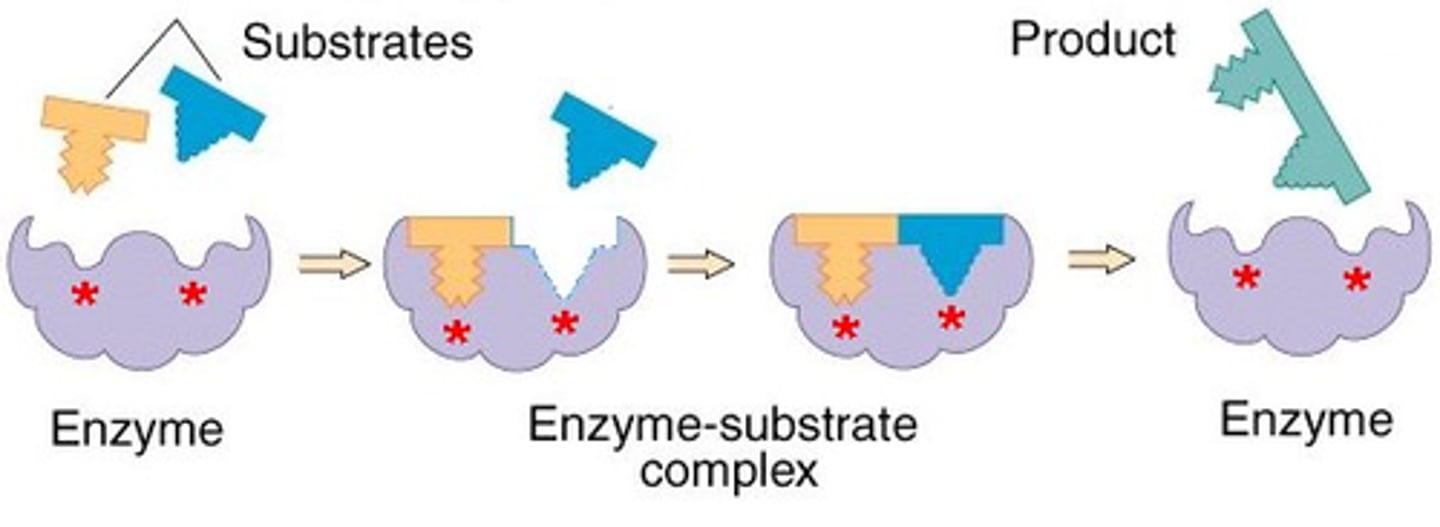
enzyme-substrate complex
When an enzyme binds to its substrate, it forms:

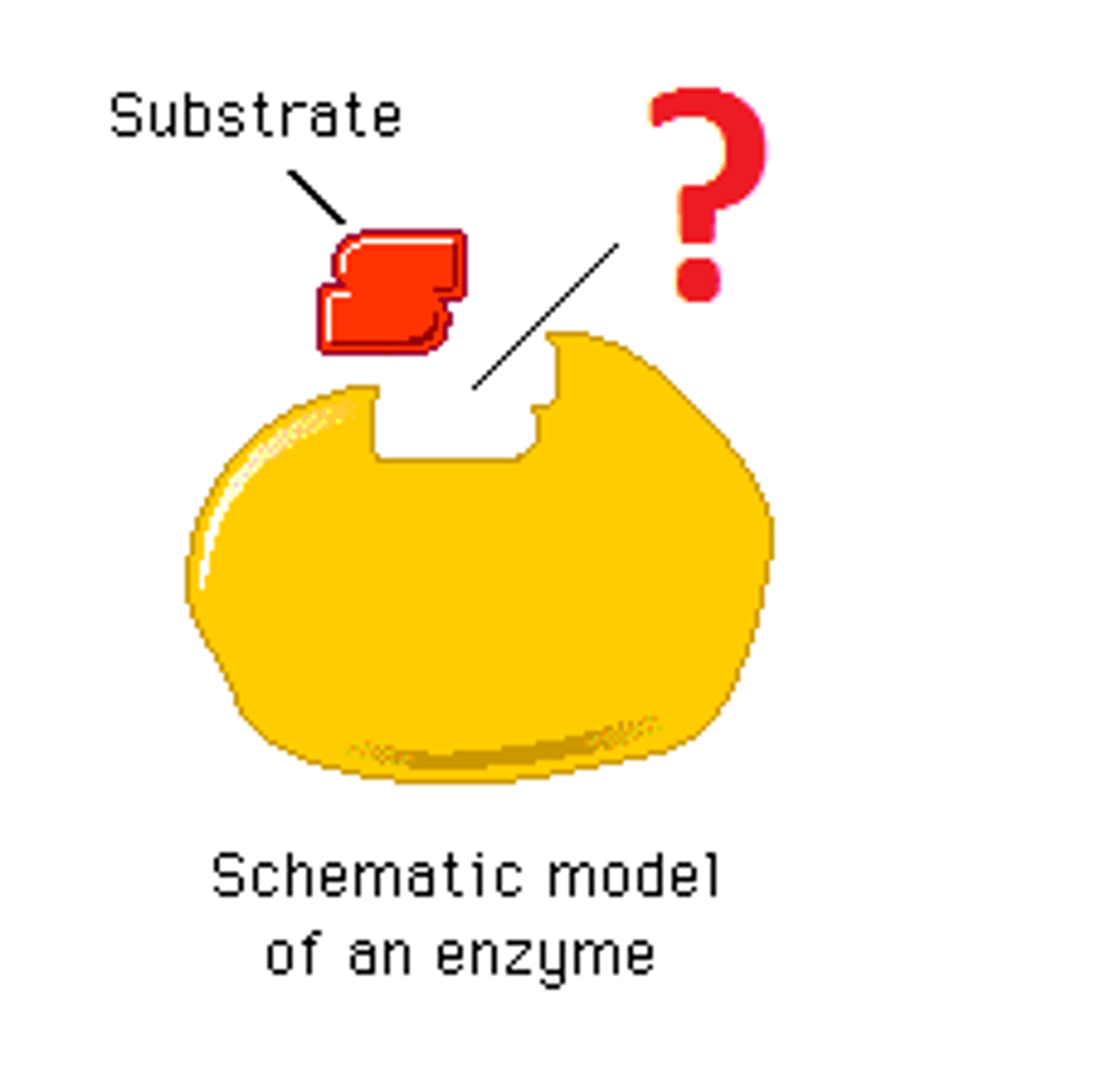
active site
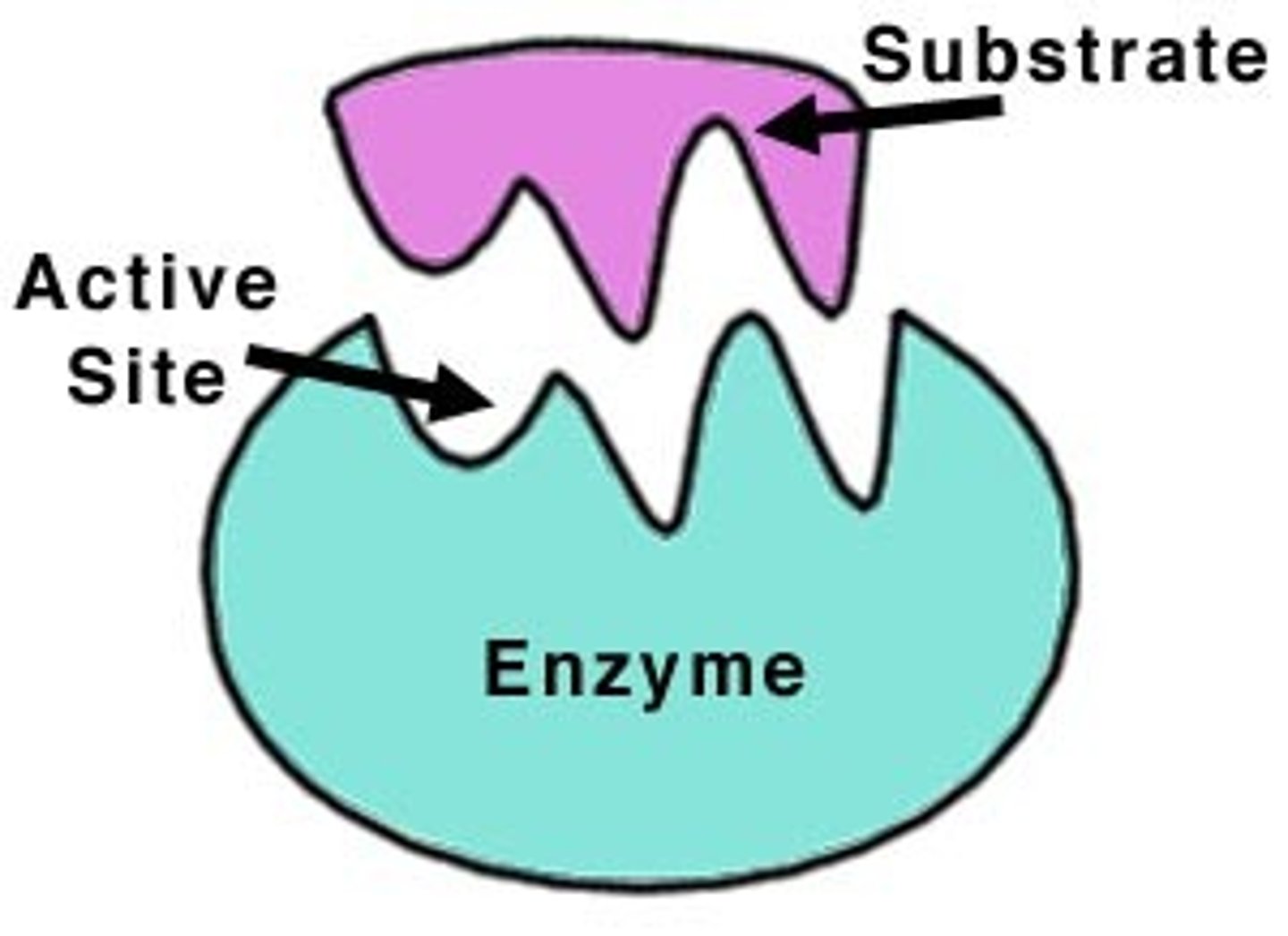
A pocket or groove on the surface of the enzyme where a substrate can bind.
induced fit model
States that the enzyme and substrate undergo conformational changes to interact fully with one another (as opposed to "Lock & Key"
competitive inhibitors
Reduce the productivity of enzymes by blocking substrates from entering active sites.
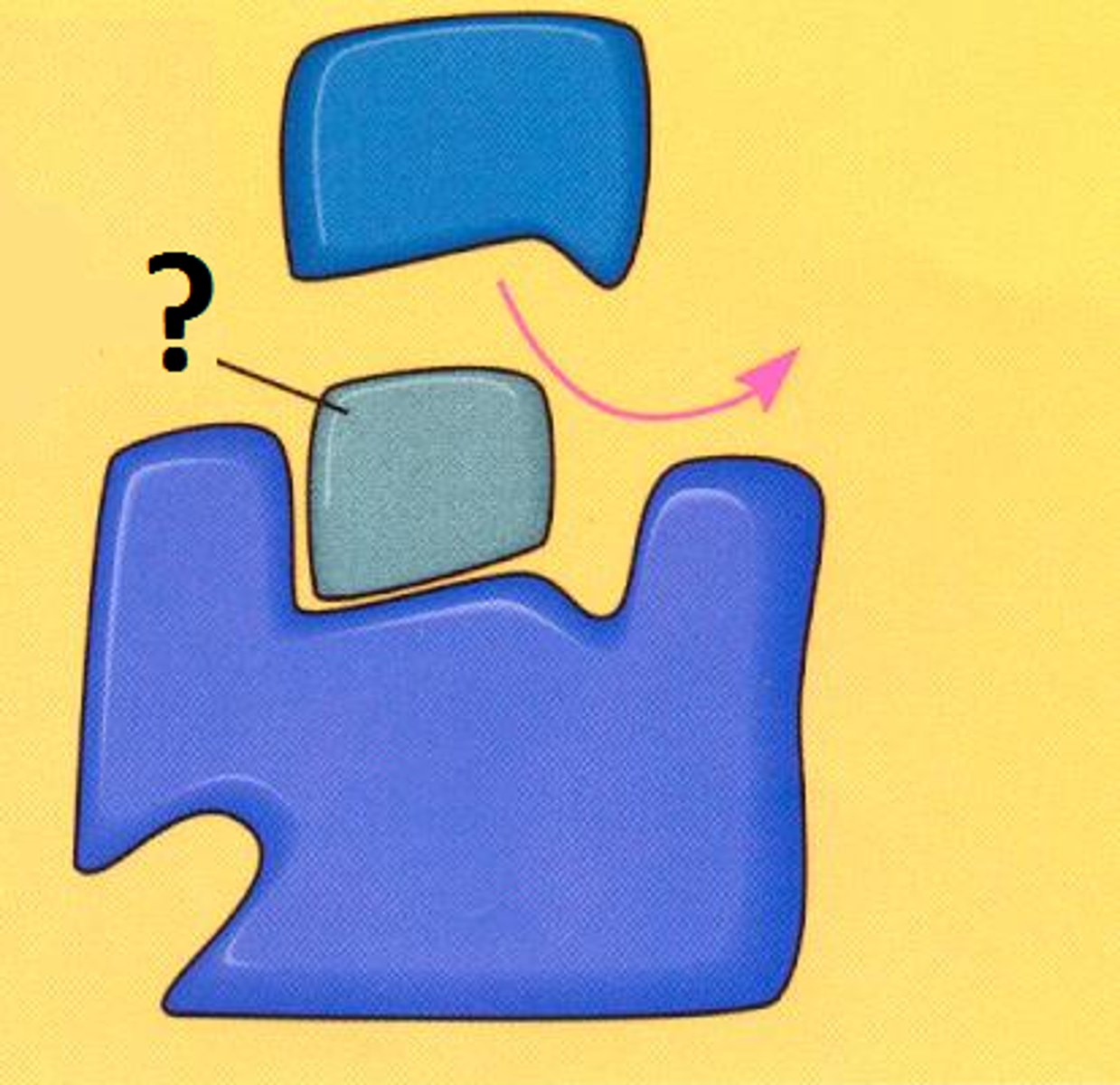
noncompetitive inhibitors
Impede enzymatic reactions by binding to another part of the enzyme (other than the active site).
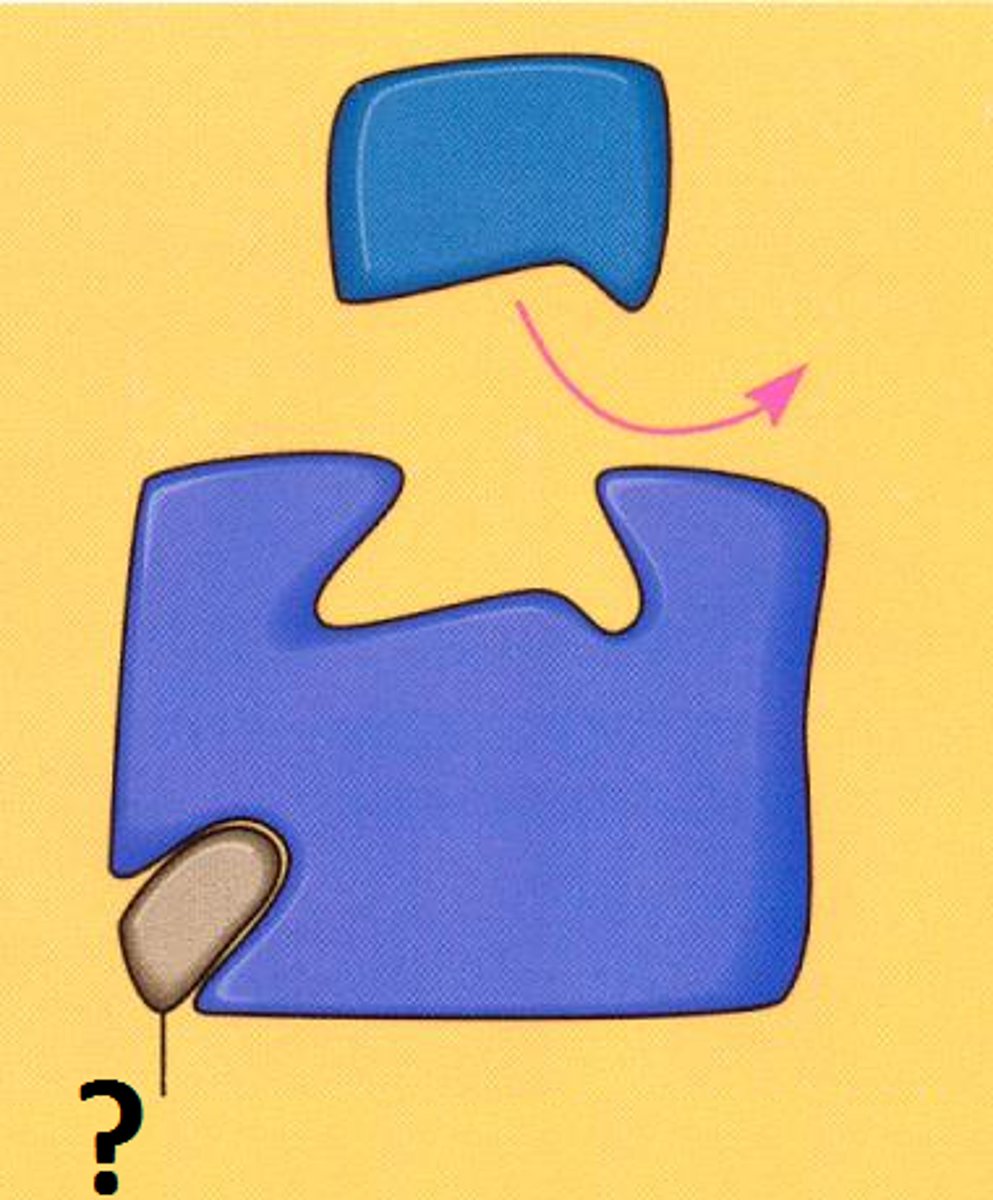
feedback inhibition/negative feedback
A metabolic pathway is switched off by the inhibitory binding of its end product to an enzyme that acts early in the pathway.
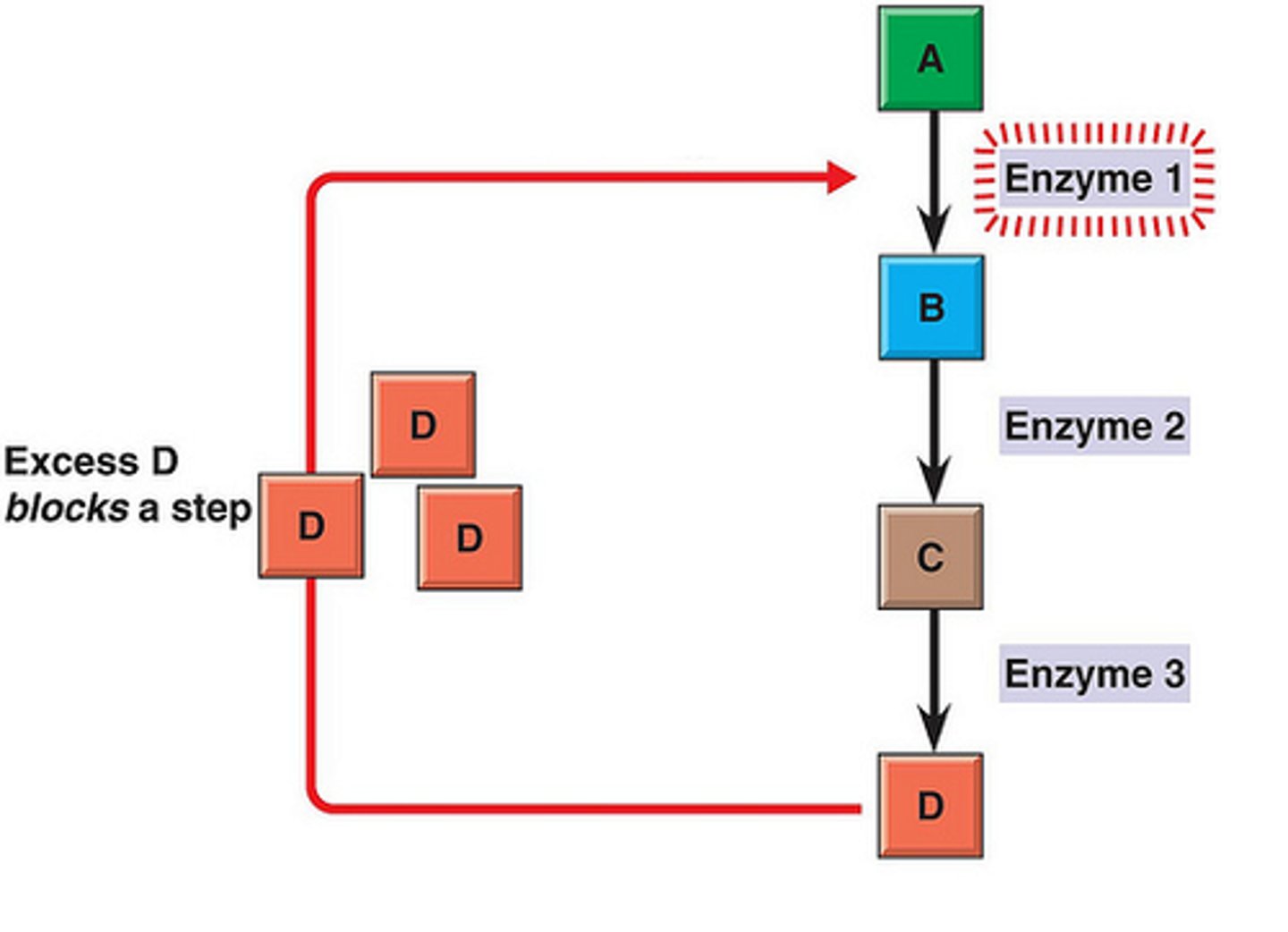
Chemical Energy
Potential energy trapped in molecular bonds.
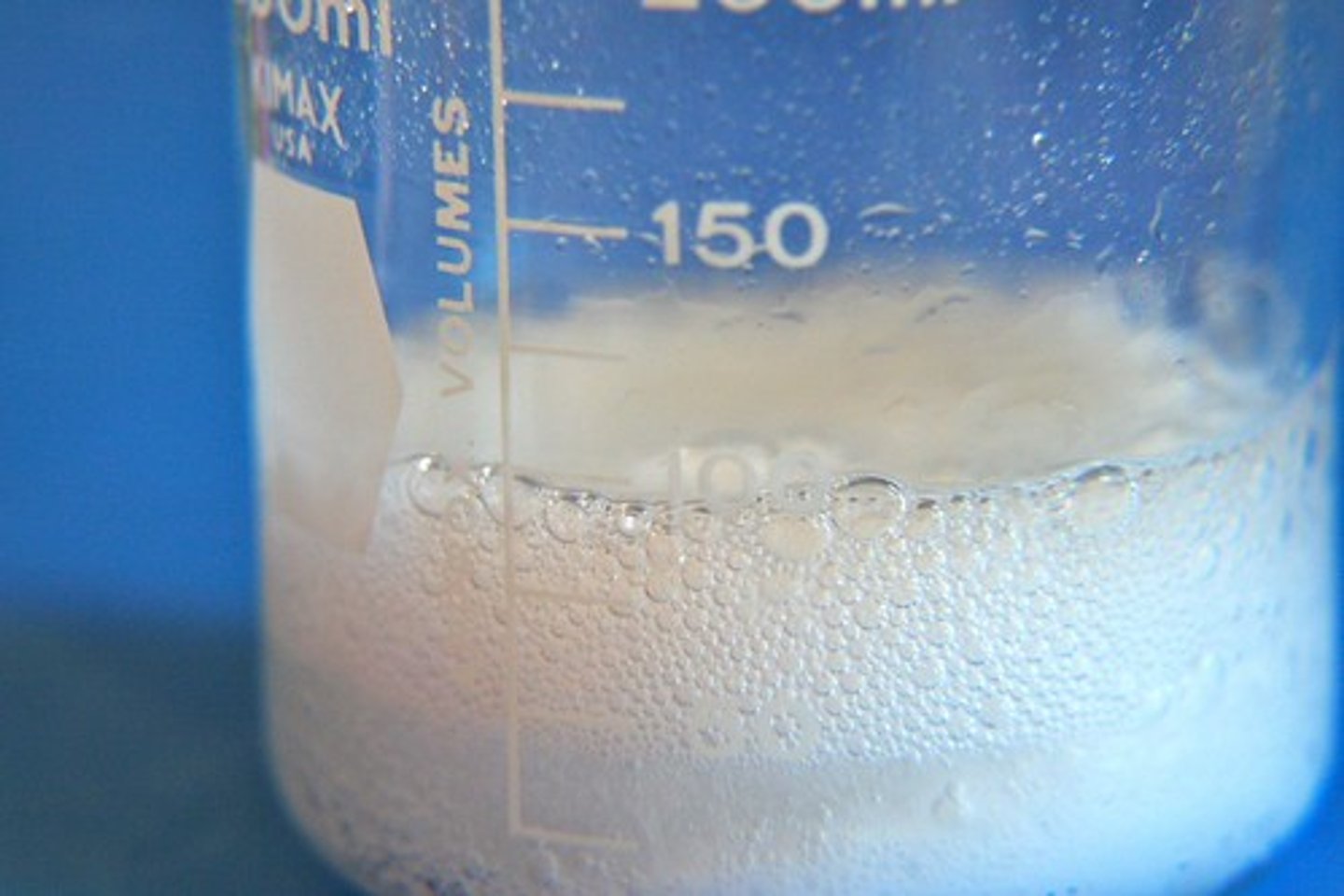
Spontaneous Reaction
When a reaction doesn't require energy to proceed it is said to be this - doesn't mean it will be FAST.
substrate
the substance an enzyme catalyzes, changes.
Denature
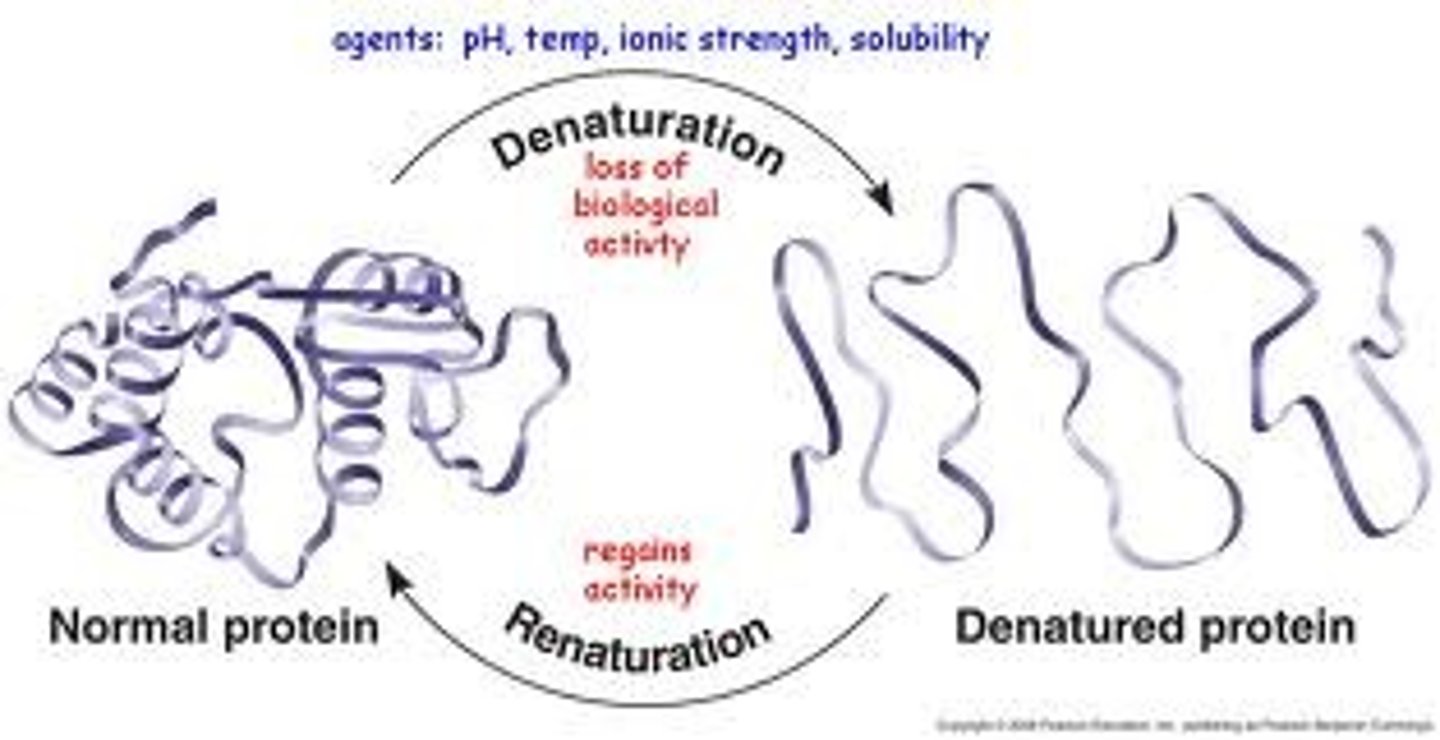
Characteristic of proteins; a change in shape that stops the protein from functioning.
Protein Kinases
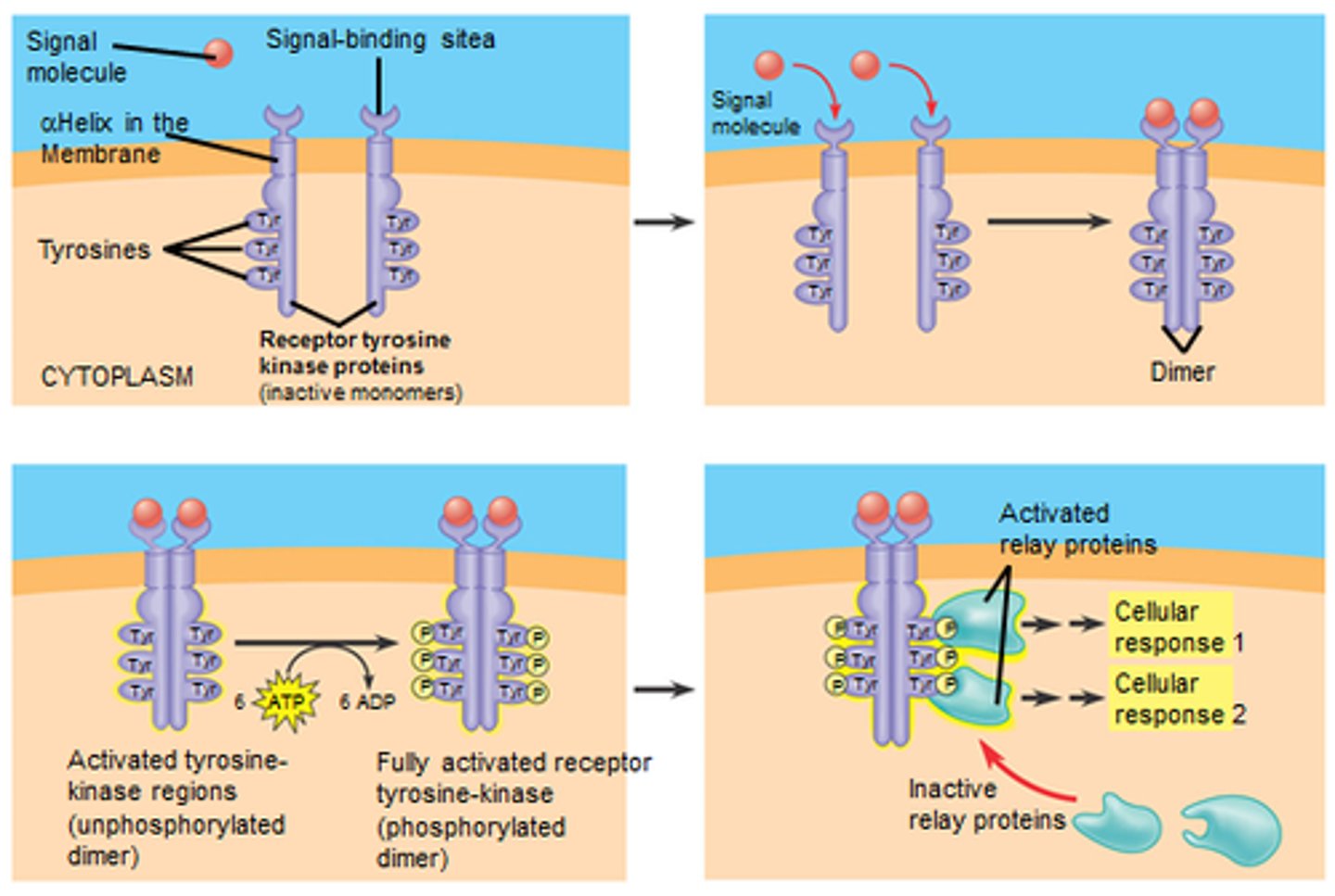
enzymes that reversibly activate or inactivate other proteins by adding phosphate groups to (phosphorylating) them
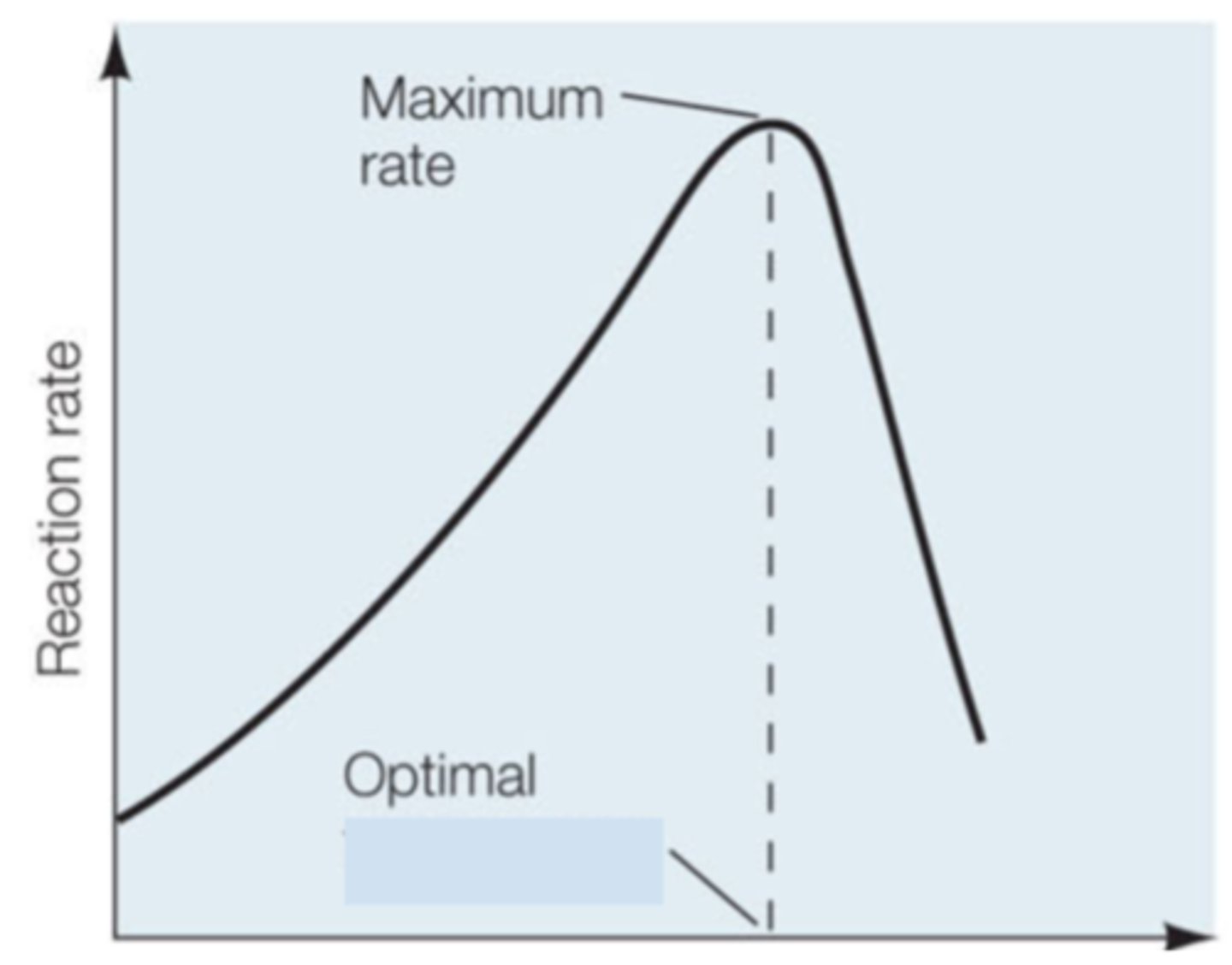
Temperature
After looking at the shape of graph the enzyme activity of this enzymes is being regulated by what variable:
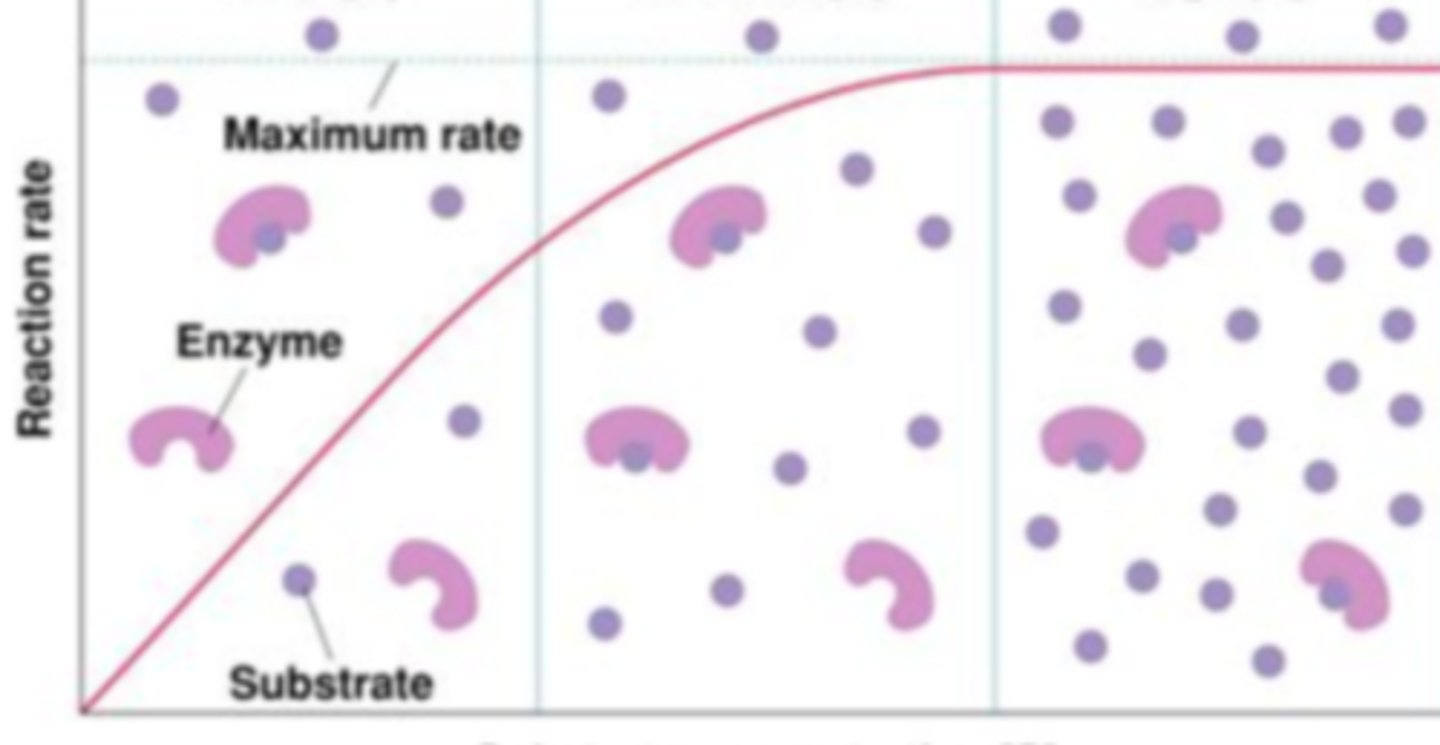
Substrate Concentration
After looking at the shape of graph the enzyme activity of this enzymes is being regulated by what variable:
Chemiosmosis
A process for synthesizing ATP using the energy of an electrochemical gradient and the ATP synthase enzyme.
ATP Synthase
Large protein that uses energy from H+ ions to bind ADP and a phosphate group together to produce ATP
Oxidative Phosphorylation
The production of ATP using energy derived from the redox reactions of an electron transport chain; the third major stage of cellular respiration.