Week 7 (midterm 3)
 Call Kai
 Learn
Learn Practice Test
 Spaced Repetition
 Match
Match Flashcards
 Knowt Play
1/40

There's no tags or description
Looks like no tags are added yet.
Name | Mastery | Learn | Test | Matching | Spaced | Call with Kai |
|---|
No analytics yet
Send a link to your students to track their progress
41 Terms
Carbon allotropes (most common)
diamond, carbons
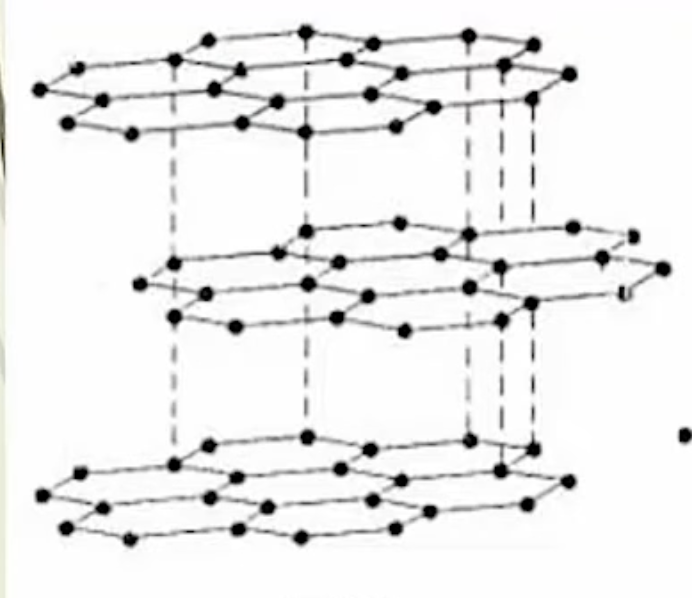
Graphite (shape, traits, what holds it together)
covalent network atomic solid, carbon allotrope
forms sheets that slide across each other
soft
LDFs, no covalent bonds between sheets
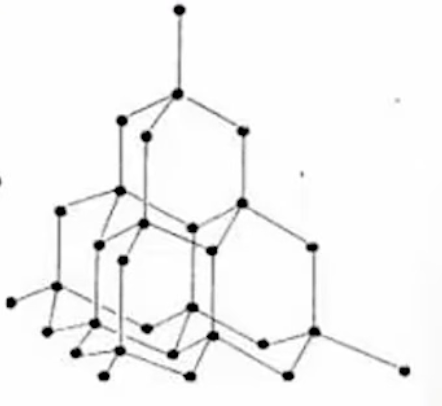
Diamond (shape, traits)
carbon allotrope, covalent network atomic solid
hard
strong covalent bonds in a 3D network
Why is diamond hard but graphite soft?
Diamond is tetrahedrally bound to 4 other carbons → creates covalently bonded 3D network (which is strong)
graphite sheets are mobile because there are NO covalent bonds between sheets, only weak LDFs
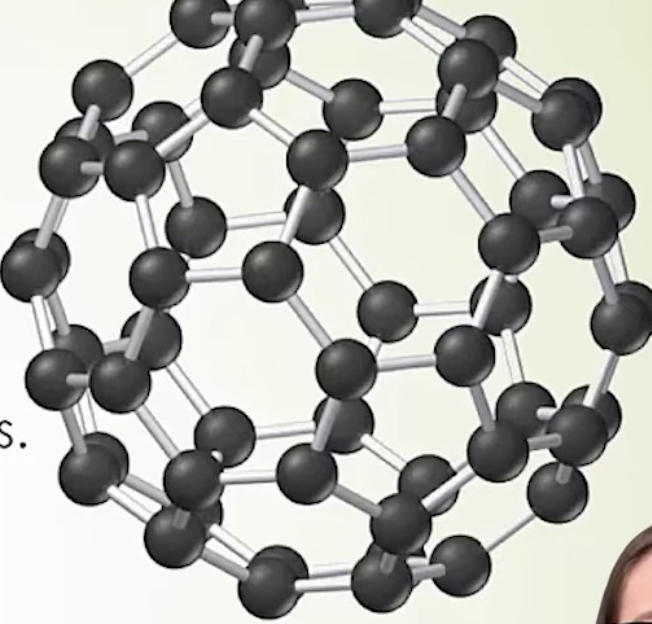
Buckminsterfullerene (“Bucky ball”) - shape, traits, what holds it together
covalent network atomic solid, Carbon allotrope
made of clusters of carbon, like C60, usually 36-100 carbons
bonded in spherical shapes
stuck together by LDFs
soft
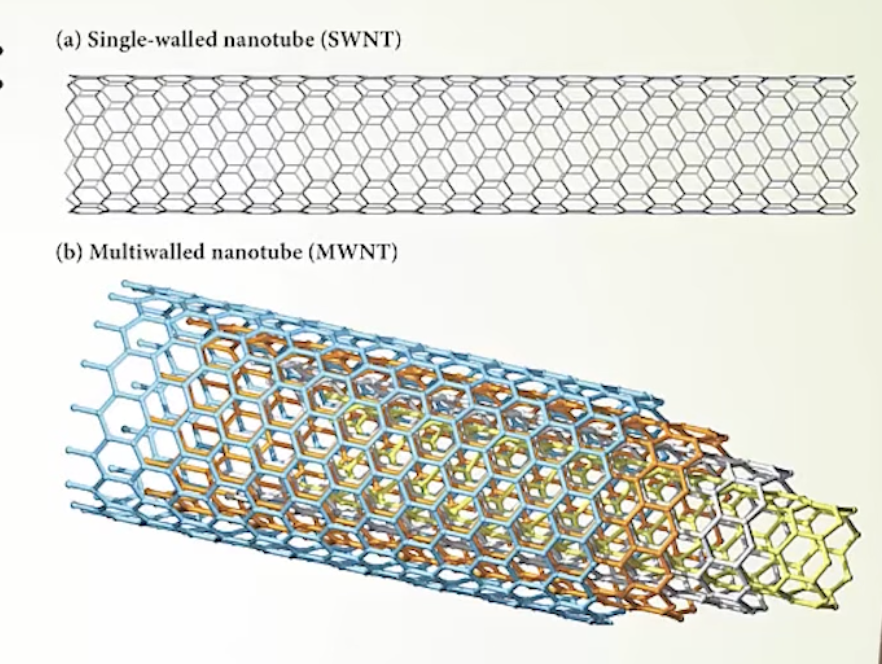
Carbon nanotubes (shape, traits)
carbon allotrope, covalent network atomic solid
light, strong
cylinder
Silicates (shape, traits, what happens when it’s heated)
Contains silicon and oxygen, covalent network atomic solid
silicon bonds to 4 oxygen (tetrahedral shape on each)
if heated → becomes an amorphous solid (no defined shaped)
are silicon and carbon similar or different
very different
Solution
homogenous mix of 2 or more things
not easily separated
Solute
Substance that gets dissolved, minority component(s) in a solution
Solvent
substance that does the dissolving, majority component(s) of the solution
aqueous solutions
solutions where liquid water is the solvent, and any other solid/liquid/gas is the solute
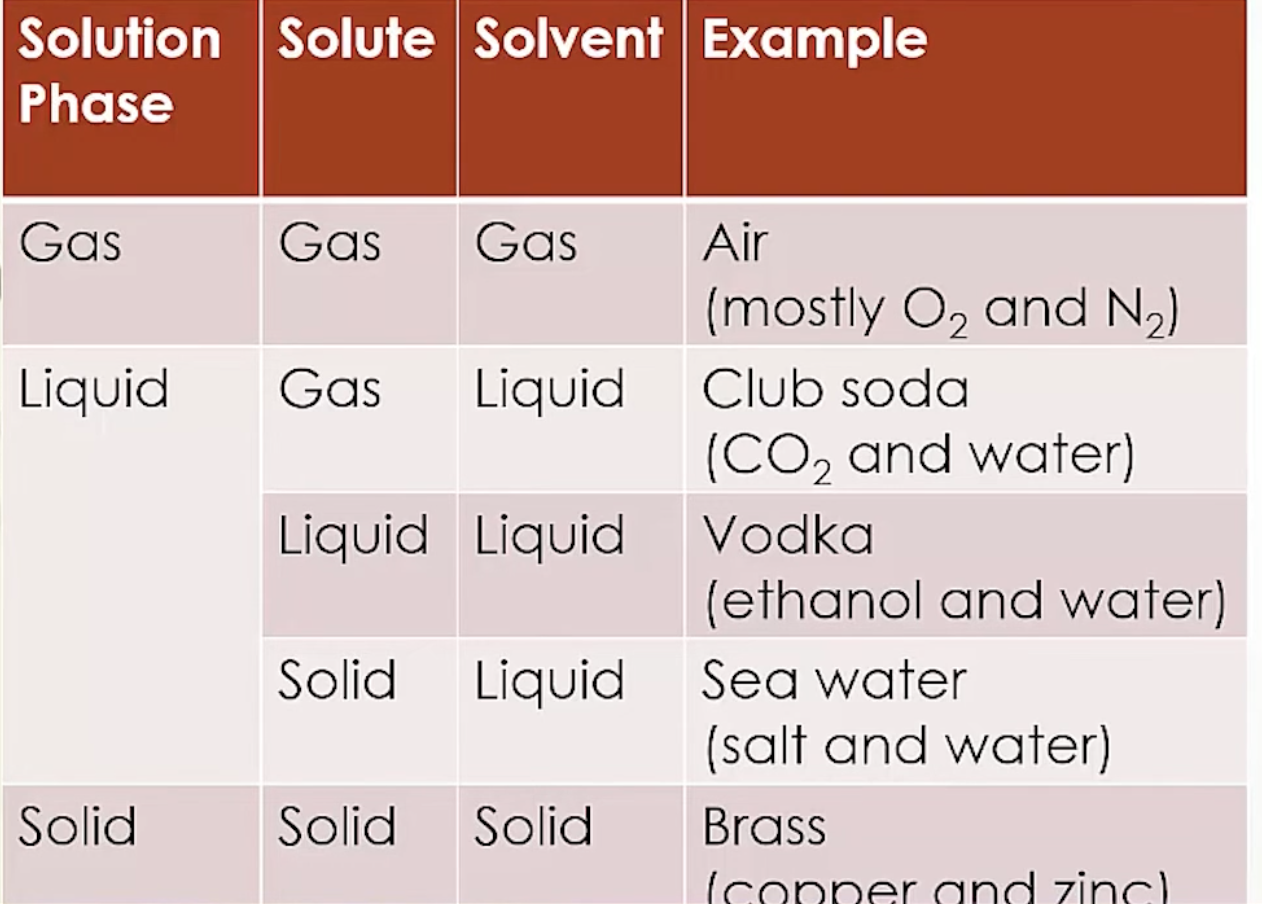
just memorize the first 2 columns
ok
Entropy
Measurement of energy randomization or energy dispersal in a system
What is the driving force behind the creation of solutions (IF THERE ARE NO OTHER FORCES PRESENT,)
IF THERE ARE NO OTHER FORCES PRESENT, entropy will cause mixtures to mix randomly and evenly
IMFs and entropy
Sometimes, IMFs stop solutions from forming - If IMFs of individual species are stronger than the forces of interspecies mixing, then a solution CAN’T occur
Reason for “like dissolves like”
Due to IMFs
What can dissolve ionic compounds?
Polar species
What do polar vs. non polar substances dissolve?
polar: dissolves polar, ionic
non polar: dissolves non-polar
When can solutions NOT form?
If IMFs of individual species are stronger than the forces of interspecies mixing, then a solution CAN’T occur
If solute/solute and solvent/solvent interactions are GREATER than solute/solvent interactions, sometimes solutions can’t form
What kind of solid dissolves in water?
Ionic solids
Insoluble
When compounds have very very low solubility (can’t dissolve all of the solute)
Soluble
When compounds have high solubility
Solubility
amount of substance that will dissolve in a given amount of solvent
Saturated solution
A solution that has dissolved the max amount of solute possible (at a given temp) + in dynamic equilibrium with any undissolved solute
Unsaturated solution
A solution that has NOT yet reached its max amount of dissolved solute, so it can still dissolve more (it is NOT a dynamic equilibrium)
Temperature’s effect on a solid inside a liquid
As temperature INCREASES, solubility of a solid in a liquid INCREASES (directly proportional)
because: higher temp → higher speed of molecules → IMFs easily broken
Temperature’s effect on a gas inside a liquid
As temperature INCREASES, solubility of a gas in a liquid DECREASES (inversely proportional)
bc: IMFs are broken easily due to high T → gases are able to escape into the surrounding air
Pressure’s effect on a gas inside a liquid
As pressure INCREASES, solubility of a gas inside a liquid INCREASES (directly proportional) aka Henry’s law
bc: increased P → gases have more forces pushing them into the liquid
Henry’s law + define formula
Sgas = kP
Sgas = solubility of a gas in a liquid
k = Henry’s law constant
P = partial pressure of the gas above the liquid
As pressure INCREASES, solubility of a gas inside a liquid INCREASES (directly proportional)
When are the rates of dissolution (dissolving) and recrystallization in a solution the same?
When a solution is in dynamic equilibrium
Dissolution
dissolving
Recrystallizaiton
Where dissolved solute particles come out of solution and form solid crystals again
Supersaturated solution
A solution that contains more dissolved solute than is normally possible at a given temperature.
In a dynamic equilibrium:
A solute is continually dissolving and precipitating AND the number of products and reactants stay the same
M = ?
1 mol/1 L
Practice: Sea water is about 600 mM of NaCl. How many grams of NaCl are in 250 mL of sea water?
Answer: Around 8.766 grams of NaCl
Colligative property
Property that depends on the number of particles dissolved in a solution rather than the type of particle
(Just list) colligative properties
vapor pressure lowering
freezing point depression
boiling point elevation
osmotic pressure
(generally) how do colligative properties change
If a substance breaks into multiple particles, it changes colligative properties
Van’t Hoff factor (i)
(i): ratio of particles in solution to formula unit
ex) NaCl (one unit) = Na+ Cl- (2 particles for every 1 formula unit)