8.1-8.3, 8.16-8.13, 8.15 Unit 8 Aquatic & Terrestrial Pollution
 Call Kai
 Learn
Learn Practice Test
 Spaced Repetition
 Match
Match Flashcards
1/47

There's no tags or description
Looks like no tags are added yet.
Name | Mastery | Learn | Test | Matching | Spaced | Call with Kai |
|---|
No analytics yet
Send a link to your students to track their progress
48 Terms
Point source pollution
Pollutants discharged from a single identifiable location (e.g., pipes, ditches, channels, sewers, tunnels, containers of various types).
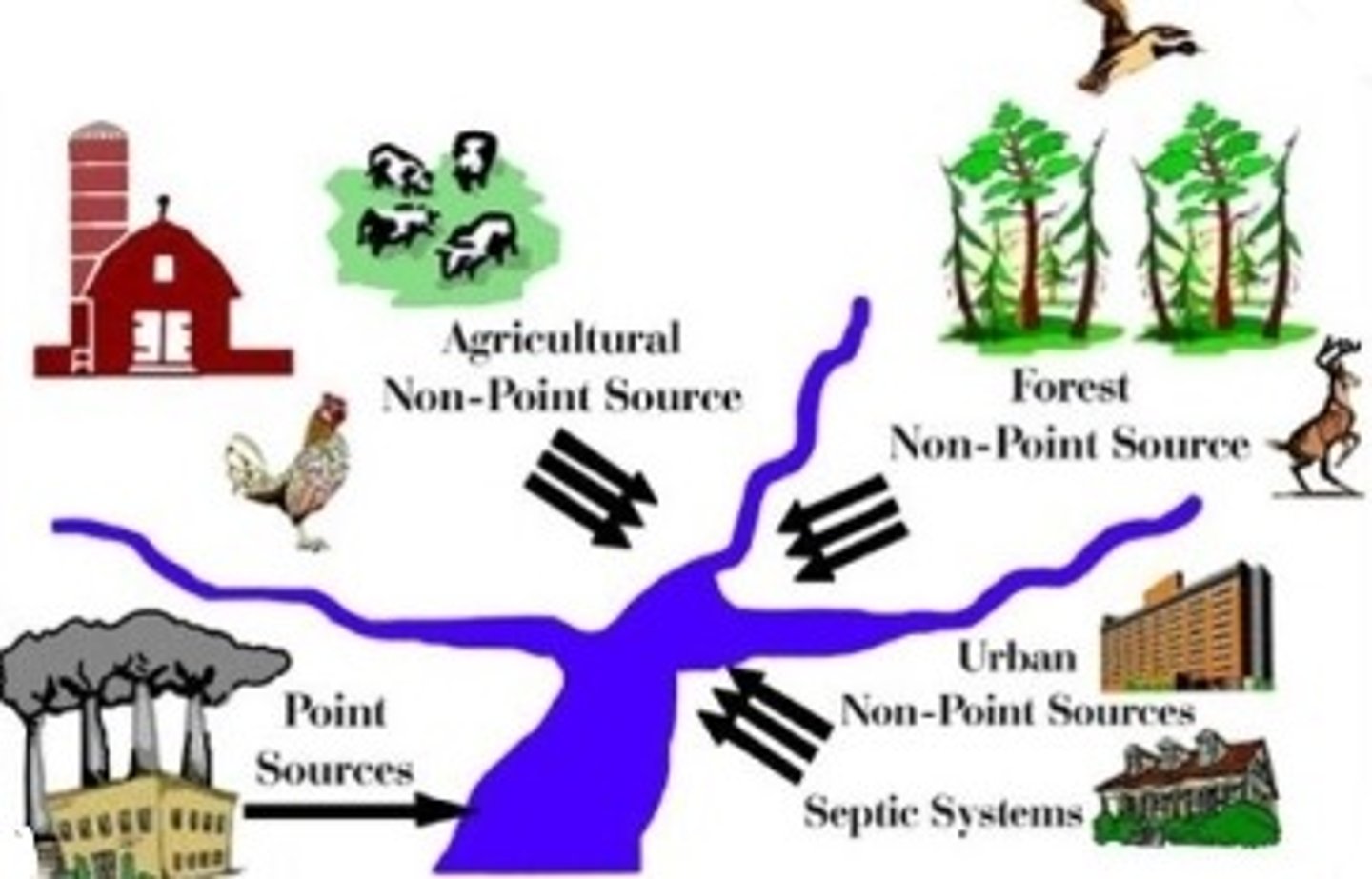
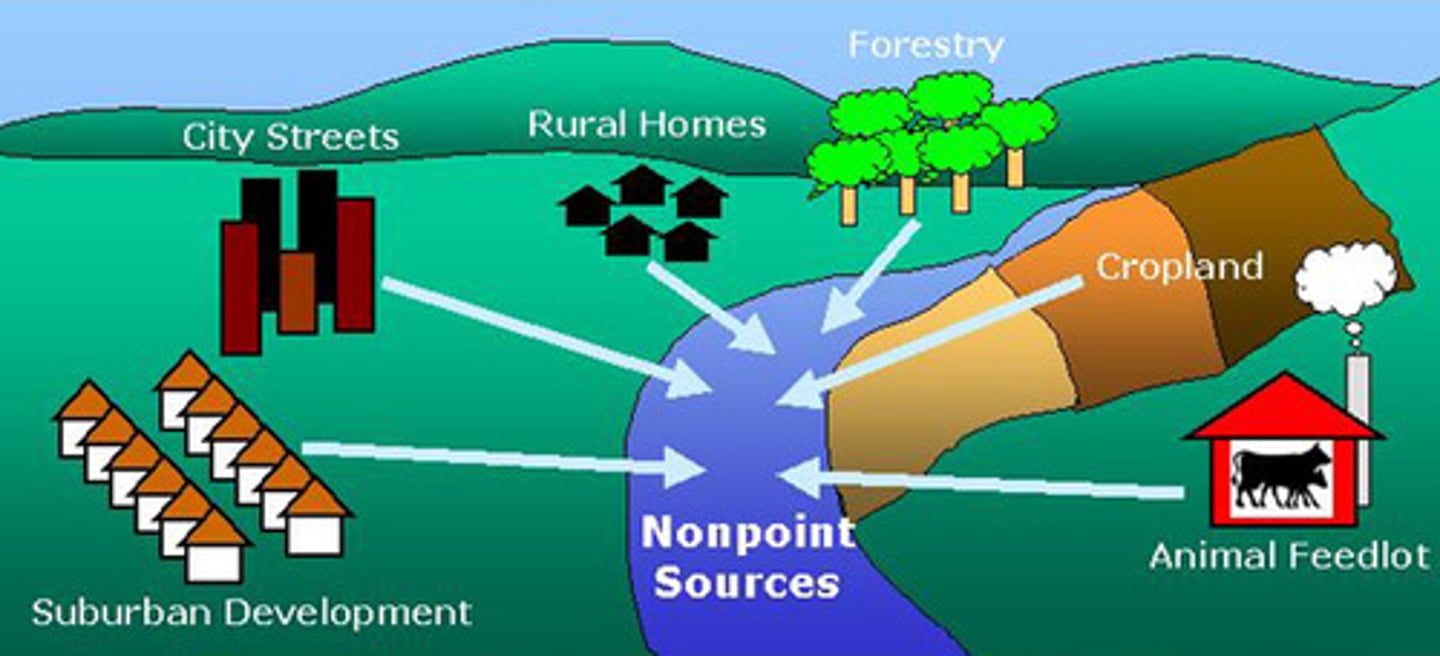
Nonpoint source pollution
pollution that comes from many sources rather than from a single, specific site
Runoff
Part of the water cycle where an excess of water runs down and does not sink into the soil and eventually makes it to the rivers, lakes, and oceans.
Oxygen sag curve
The curve obtained when the concentration of dissolved oxygen in a river into which sewage or some other pollutant has been discharged is plotted against the distance downstream from the sewage outlet
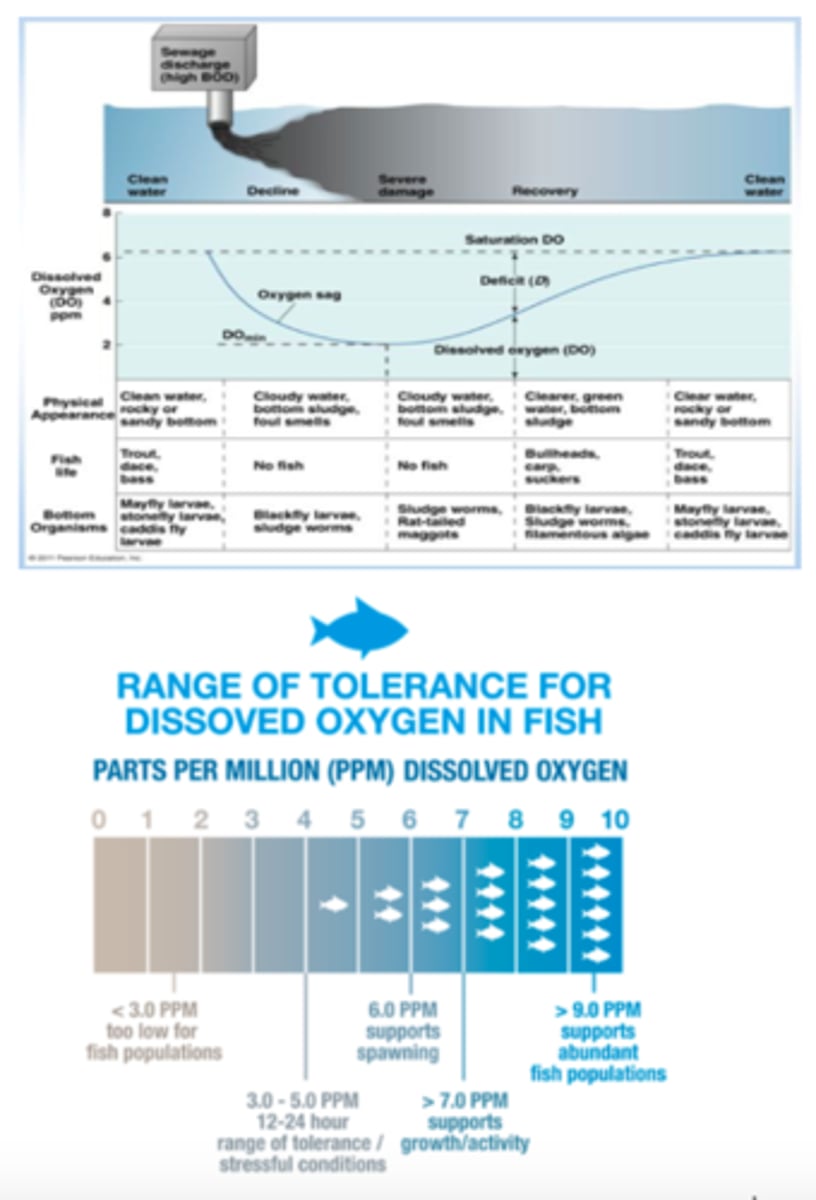
Dissolved oxygen
Measure of water quality indicating free oxygen dissolved in water.
Endocrine disruptors
chemicals that interfere with the normal functioning of hormones in an animal's body
Eutrophication
excessive richness of nutrients in a lake or other body of water, frequently due to runoff from the land, which causes a dense growth of plant life and death of animal life from lack of oxygen.
Fertilizers
a substance that provides nutrients to help crops grow better (NPK)
Algal blooms
rapid growth of algae encouraged by too many nutrients (nitrates/phosphates) in the water
Hypoxic
deficient in oxygen
Anthropogenic
derived from human activities
Wastewater
any water that has been used by humans. This includes human sewage, water drained from showers, tubs, sinks, dishwashers, washing machines, water from industrial processes, and storm water runoff.
BOD (biological oxygen demand)
A measure of the amount of oxygen necessary to decompose organic material in a unit volume of water. As the amount of organic waste in water increases, more oxygen is used, resulting in a higher BOD.
Thermal pollution
a temperature increase in a body of water that is caused by human activity and that has a harmful effect on water quality and on the ability of that body of water to support life, decreased DO in water
POPs
Persistent organic pollutants. Chemical compounds that persist in the environment and retain biological activity for a long time.
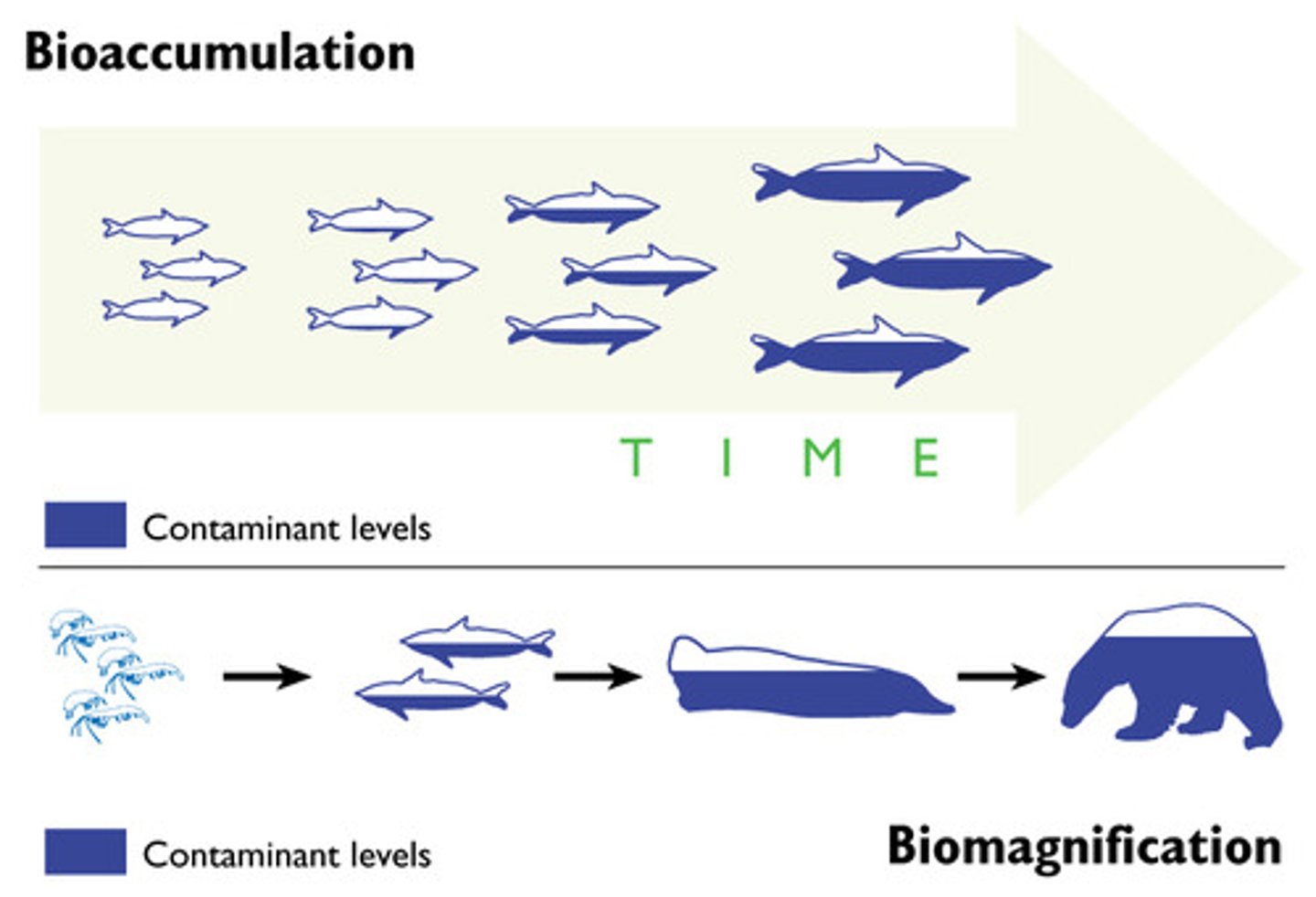
Bioaccumulation
The build up of a substance, such as a toxic chemical, in various tissues of a living organism.
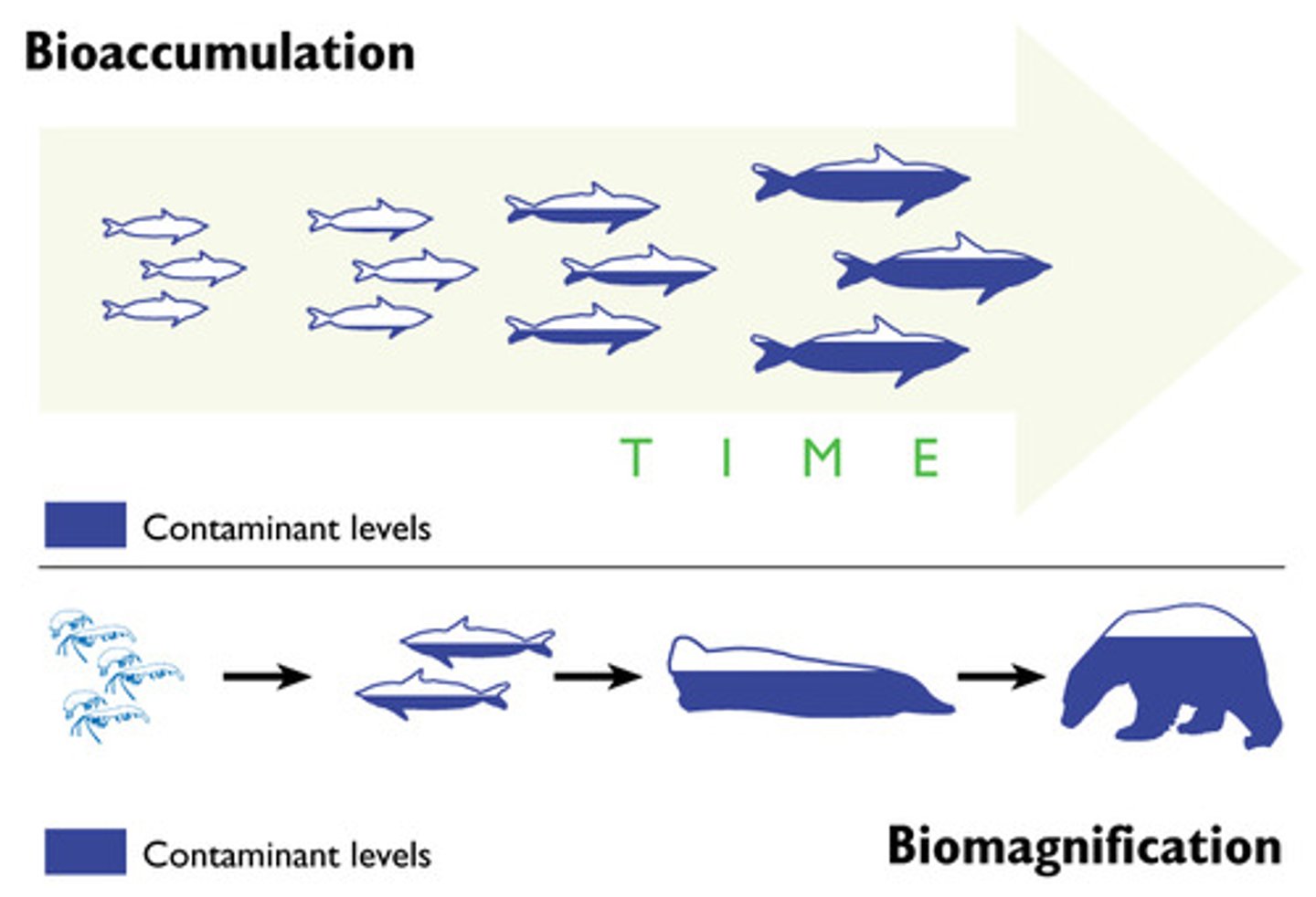
Biomagnification
The increase in chemical concentration in animal tissues as the chemical moves up the food chain
Mercury Pollution
A toxic metal released into the air and water mainly from coal-fired power plants and mining.
Hazardous Waste
Any material that can be harmful to human health or the environment if it is not properly disposed of
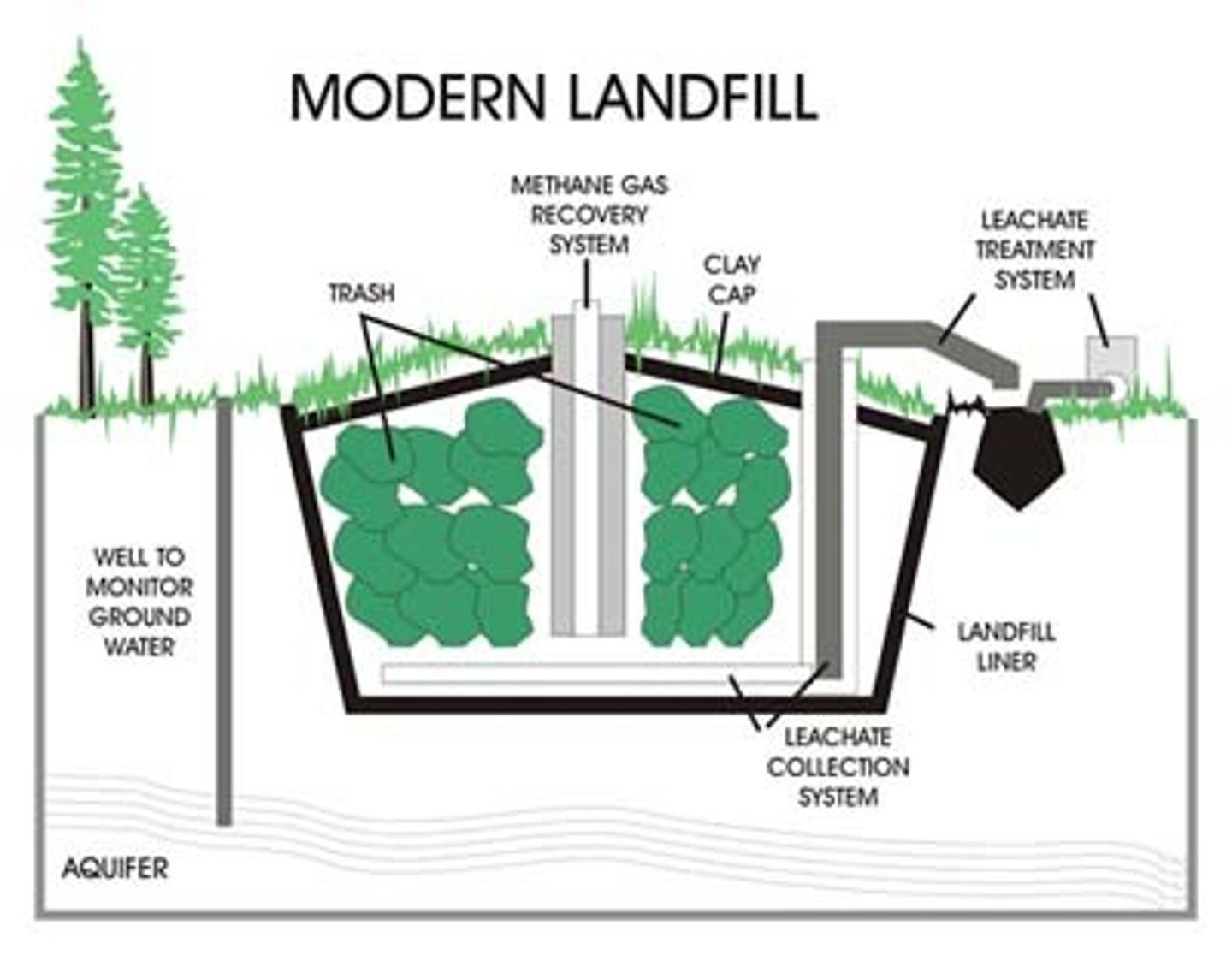
Landfills
Land disposal sites for solid waste; operators compact refuse and cover it with a layer of dirt to minimize rodent and insect infestations, wind-blown debris, and leaching by rain.
E-waste
discarded electronic equipment such as computers, cell phones, television sets, etc. contains potentially toxic heavy metals
Leachate
polluted liquid produced by water passing through buried wastes in a landfill
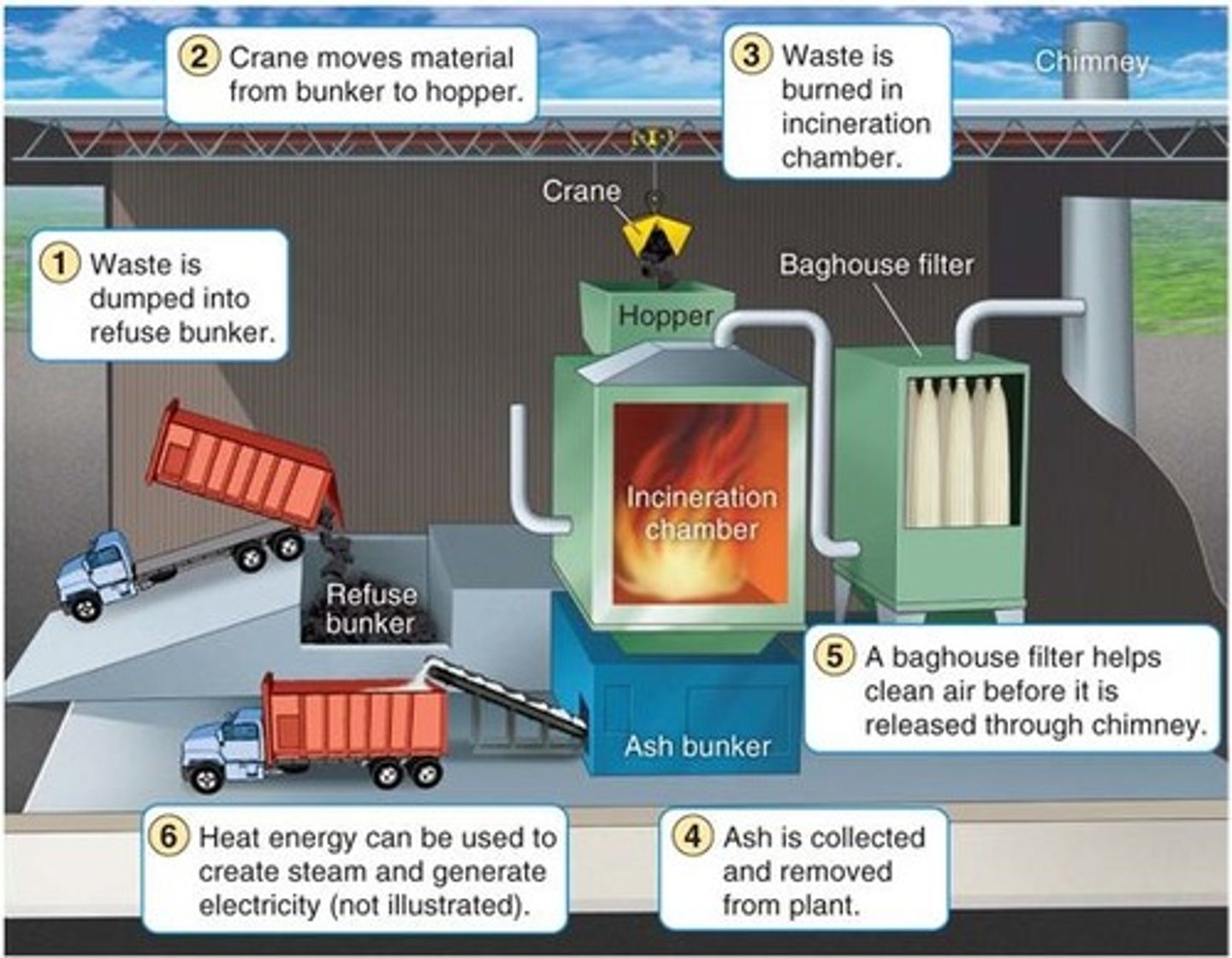
Incineration
The process of burning waste materials to reduce volume and mass, sometimes to generate electricity or heat
Reduce Reuse Recycle
three steps used to reduce the amount of waste produced and put in landfills
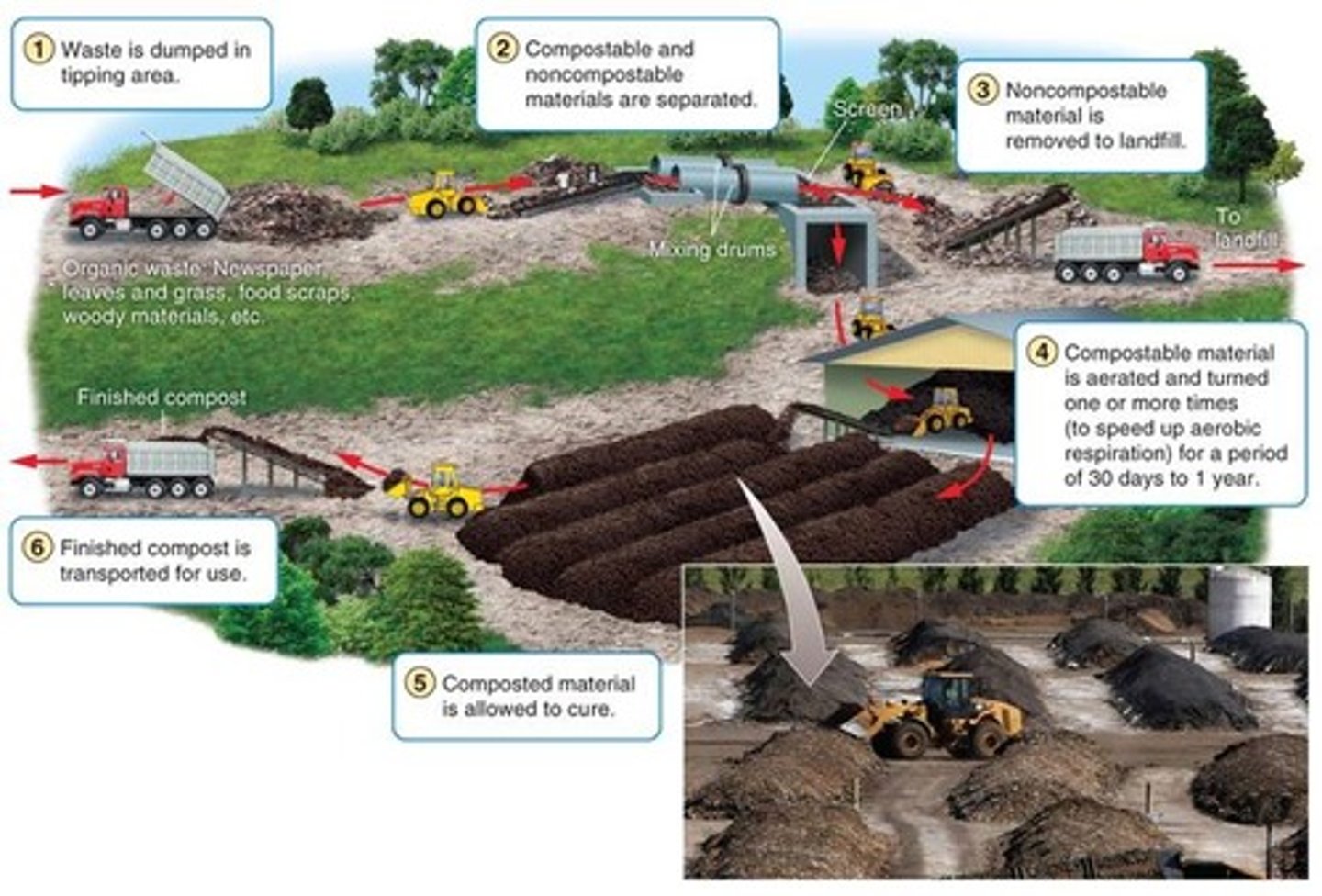
Composting
a process that allows the organic material in solid waste to be decomposed and reintroduced into the soil, often as fertilizer.
Sewage
solid and liquid waste from homes and other buildings that is carried away by sewers or drains
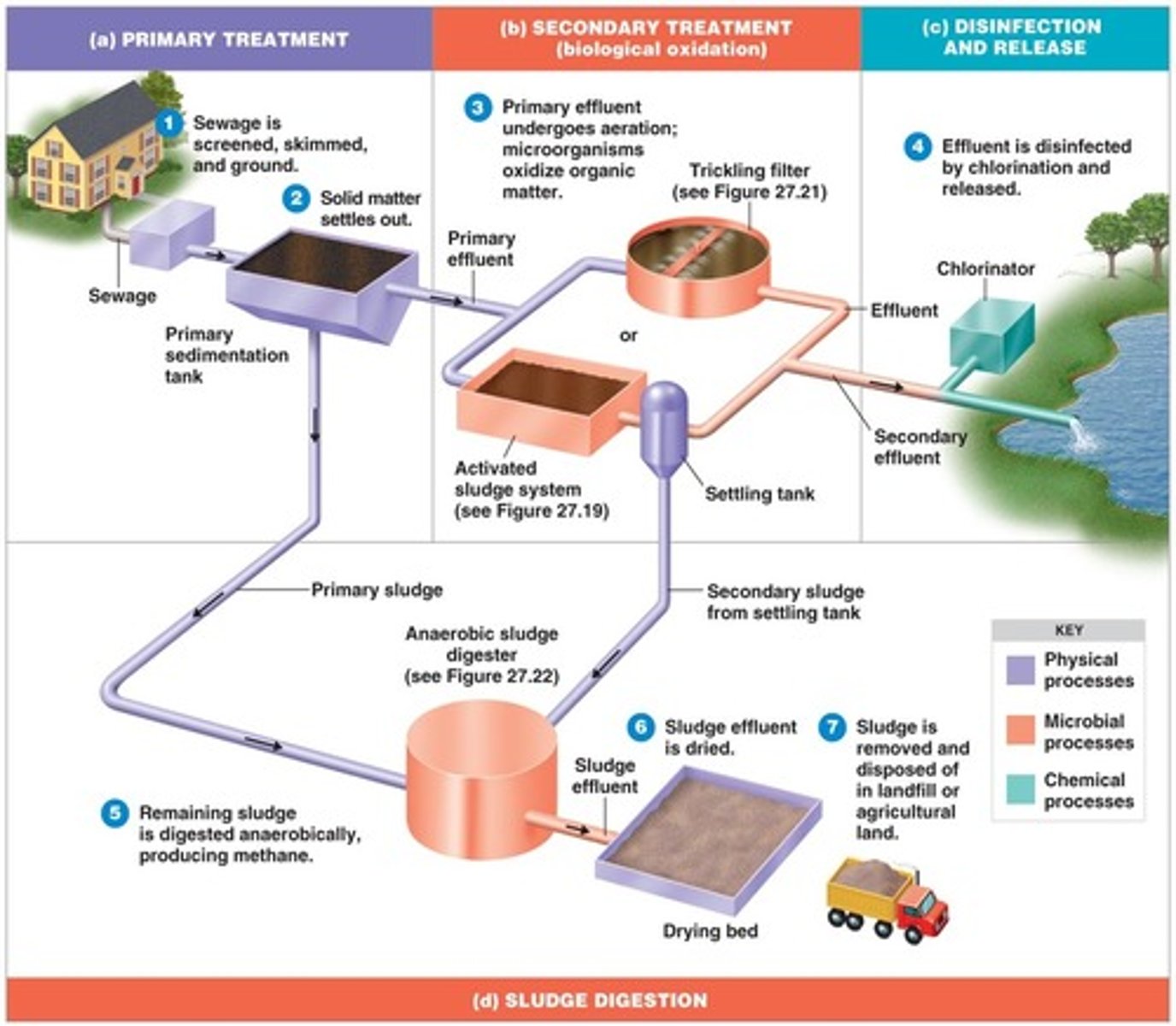
Primary sewage treatment
Eliminates most particulate material from raw sewage using grates, screens, and gravity (settling).
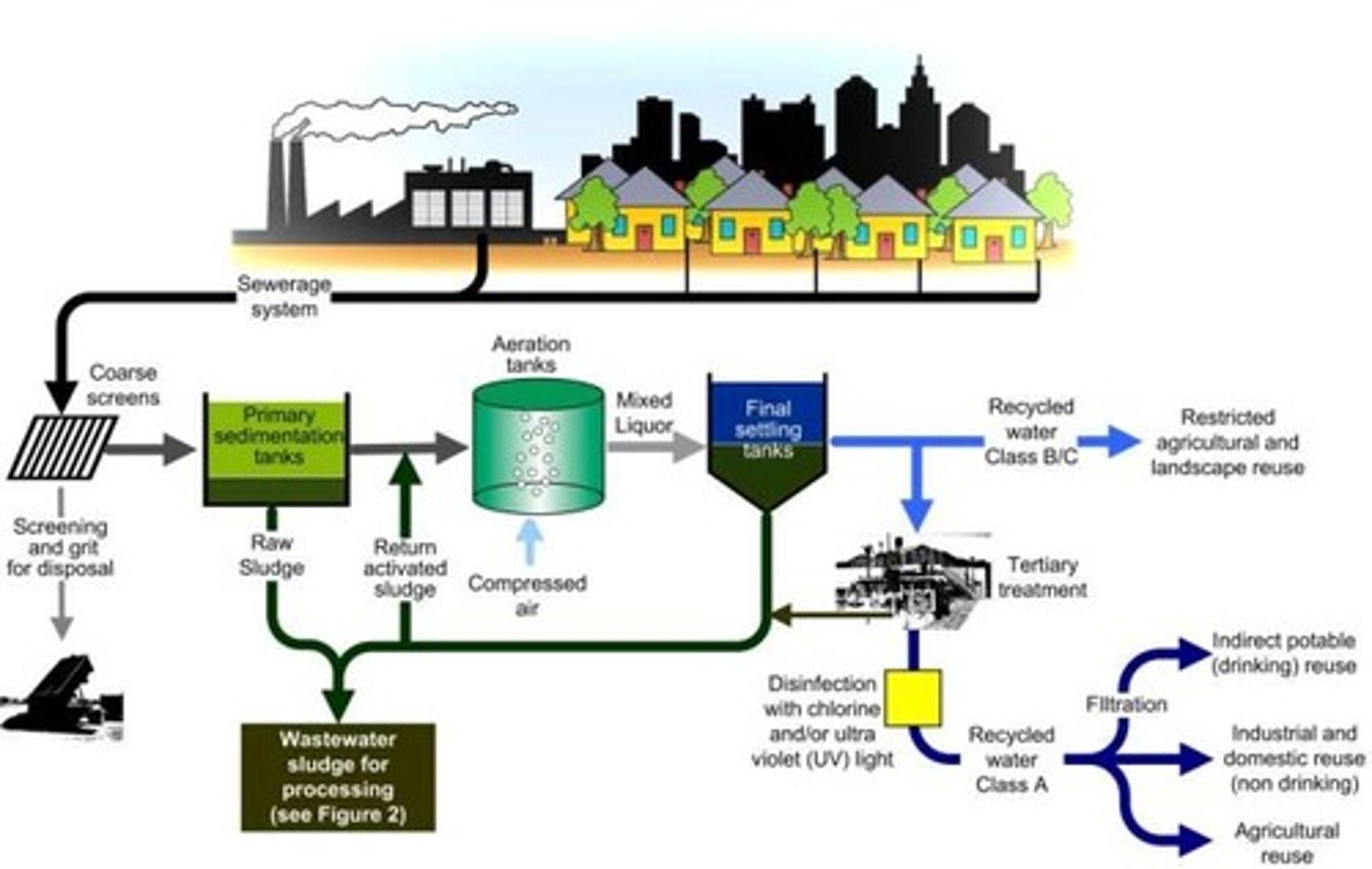
Secondary sewage treatment
Bacteria breakdown organic waste, aeration accelerates the process.
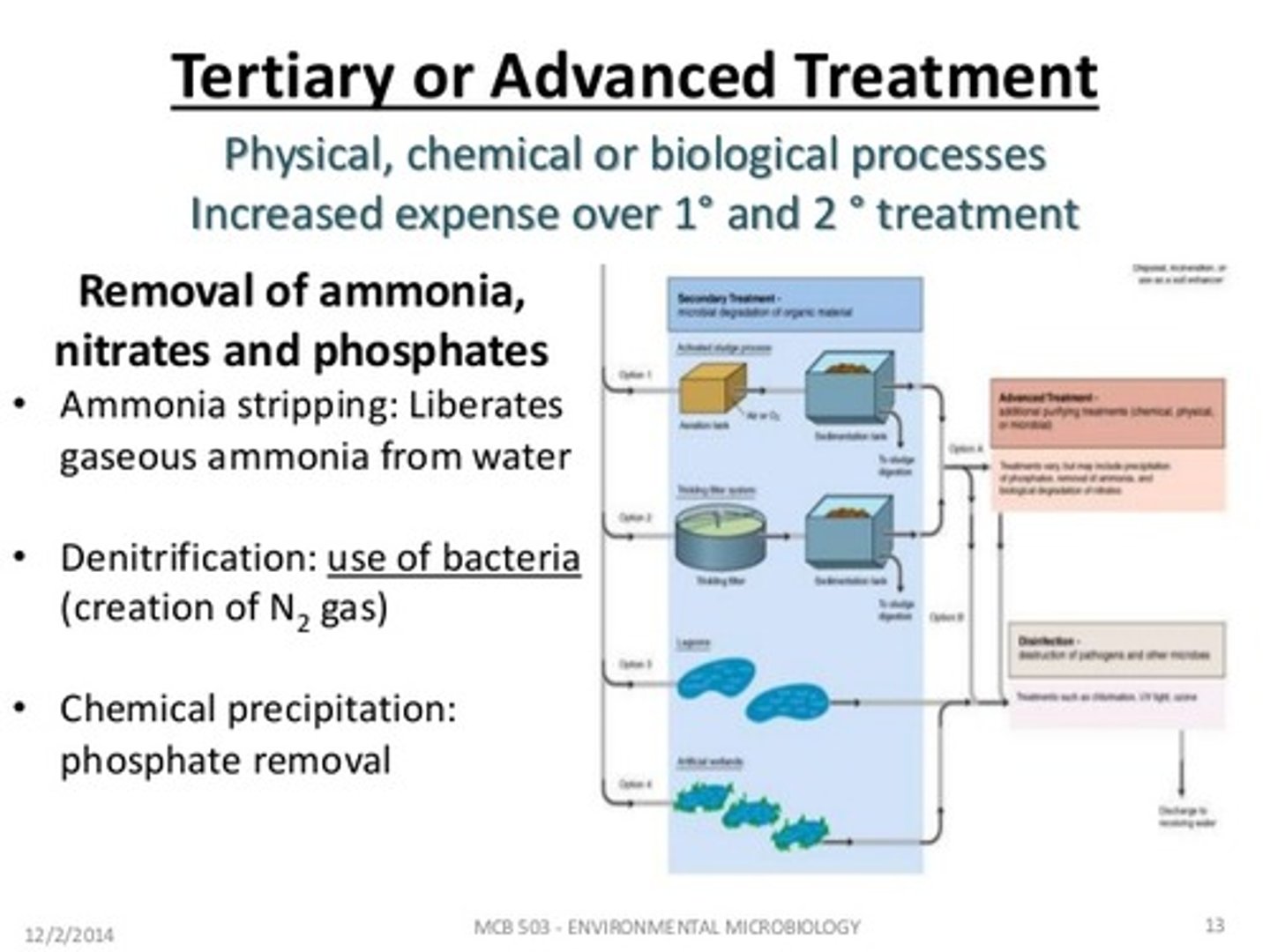
tertiary sewage treatment
Series of specialized chemical and physical processes used to remove specific pollutants (pathogens and/or nutrients) left in the water after primary and secondary treatment.
Sludge
Solid waste material from wastewater
Aerate
to fill with air; to expose to air
Disinfectants
Chemical products that destroy all bacteria, fungi, and viruses (but not spores) on surfaces.
Pathogenic/pathogen
Refers to a microorganism capable of or prone to causing a disease state
Fecal coliform
bacteria that are found in excrement or sewage contamination occurring naturally in the digestive tract of human beings and animals to aid in digestion.
Gray water
all of the wastewater that drains from washing machines, sinks, dishwashers, tubs or showers and can be reused for non-sanitary purposes
Effluent
liquid waste or sewage discharged into a river or the sea.
Lethal dose (LD50)
Dose required to kill 50% of animals tested
Dose response curve
Plot of data showing effects of various doses of a toxic agent on a group of test organisms.
Mortality
death rate
Vectors
An organism that transmits disease by conveying pathogens from one host to another
Bubonic Plague (Black Death)
Pathogen/Vector - bacteria via fleas on rats (other animals as well) ; Health impacts - flu-like symptoms such as fever, headache, chills, weakness, and swollen, tender lymph glands; Other info - Also spread through bodily fluids and tissues
Tuberculosis
Pathogen/Vector - bacteria; Health impacts - Damages lungs, Historically deadly; Other info - Spread by coughing, sneezes, breathing in bacteria or by body fluids, Antibiotics treat and cure, but resistant strains are coming back
Malaria
Pathogen/Vector - protozoa carried by mosquitos; Health impacts - Fever, chills, kills millions each year; Other info - Found mainly in Sub-Saharan Africa, Mosquito nets and DDT work to prevent spread
West Nile virus
Pathogen/Vector - virus carried by mosquitos; Health impacts - Fever, chills, can be deadly; Other info - Warming temps due to climate change are increasing cases in USA
MERS (Middle East Respiratory Syndrome)
Pathogen/Vector - virus; Health impacts - Respiratory problems similar to flu; Other info - Camels and bats might be the vector, Mainly in Middle East but a few in the US, caused by a coronavirus
SARS (Severe Acute Respiratory Syndrome)
Pathogen/Vector - virus; Health impacts - Form of Pneumonia/Lung damage; Other info - Spread by breathing in the virus or by body fluids, caused by a coronavirus
Zika virus
Pathogen/Vector - virus transmitted by mosquitos; Health impacts - fever, rash, headache, joint and muscle pain, red eyes, causes birth defects-small head; Other info - Also sexually transmitted, In many tropical areas
Cholera
Pathogen/Vector - bacteria in contaminated/untreated water/food; Health impacts - Diarrhea and death due to dehydration; Other info - Eliminated in USA, but still in developing countries without clean water due to lack of sanitation systems