Chapter 34 - Plant Form and Function
 Call Kai
 Learn
Learn Practice Test
 Spaced Repetition
 Match
Match Flashcards
 Knowt Play
1/31

There's no tags or description
Looks like no tags are added yet.
Name | Mastery | Learn | Test | Matching | Spaced | Call with Kai |
|---|
No analytics yet
Send a link to your students to track their progress
32 Terms
Surface Area to Vol Ratio Importance in Plants
High SA:V ratio increases efficiency of resource exchange
Leaves: flattened structures to maximize photosynthesis and gas exchange
Roots: highly branched/tubular, better contact with soil → better water/nutrient absorption
Challenge: increased water loss which requires regulation through stomata and protective cuticle
Phenotypic Plasticity & Its Importance
Ability of a single genotype to produce different phenotypes depending on environmental conditions
Plant form = flexible, not fixed
Optimize resource acquisition under varying conditions
Observed in roots (depth changes based on resource availability)
Observed in leaves (sun vs shade differences in size and thickness)
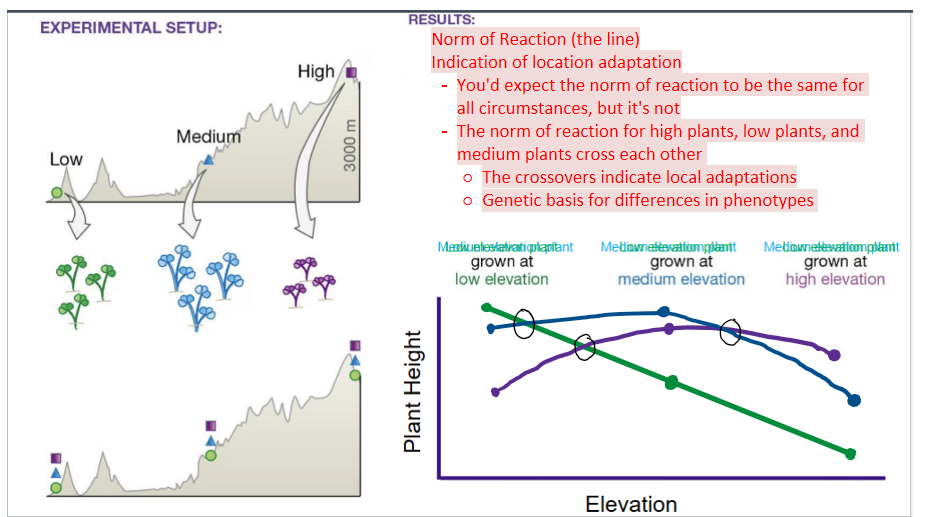
Phenotypic Plasticity: Research
Investigated how much a plant’s growth depends on its environment
Propagated genetically identical plants from plant cuttings; planted these new offspring in three different environments along the elevation gradient → reciprocal transplant experiment
Results represented a norm of reaction
Each norm of reaction line was different for the high, low, and medium plants
Where the lines crossed each other indicated local adaptations
Conclusion: environmental conditions have a profound influence on body size and shape: genetically identical plants looked different at each location
Root System Function & Characteristics
Anchors the plant (structural stability)
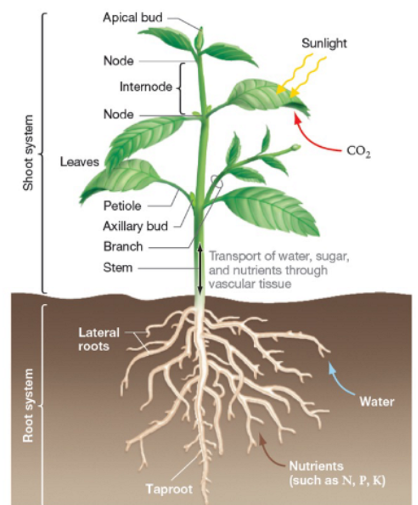
Absorbs water + dissolved minerals from soil via root hairs and epidermal cells
Can store CHO in specialized storage roots for later energy use
Often represents the majority of plant biomass
Exhibits phenotypic plasticity by growing toward resource-rich soil patches
Shoot System Structure and Function
Composed of stems, leaves, and buds that capture light and CO2
Photosynthesis, gas exchange, and reproduction
Stems contain nodes (sites of leaf attachment) and internodes (segments between nodes)
Apical buds drive vertical growth; axillary buds can develop into branches or flowers
Can adjust growth patterns based on environmental conditions
Modified Roots
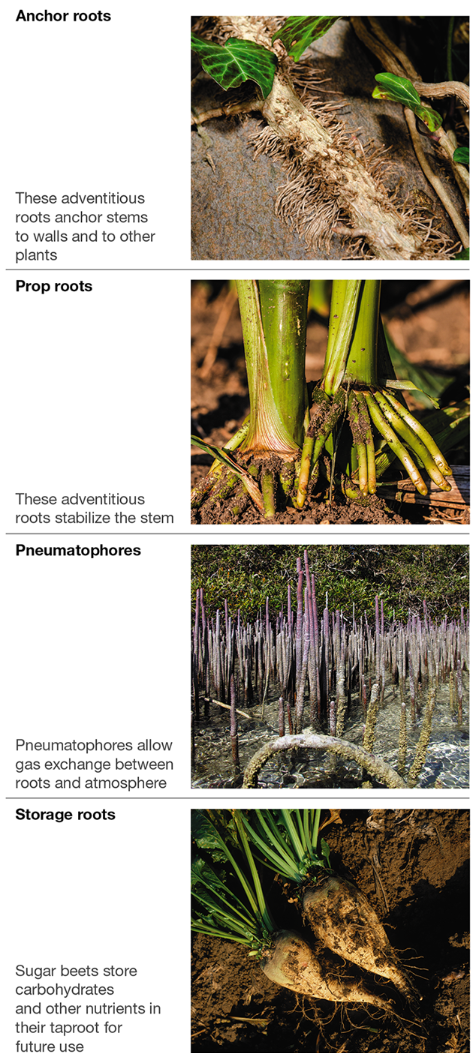
Prop roots (corn): provide additional support by anchoring the plant against wind
Pneumatophores (mangroves): grow upward to facilitate oxygen diffusion in waterlogged/low-oxygen soils
Storage roots (carrots, beets): accumulate CHO for later use during reproduction
Adventitious roots: arise from stems or leaves instead of the primary root, aiding in support or climbing
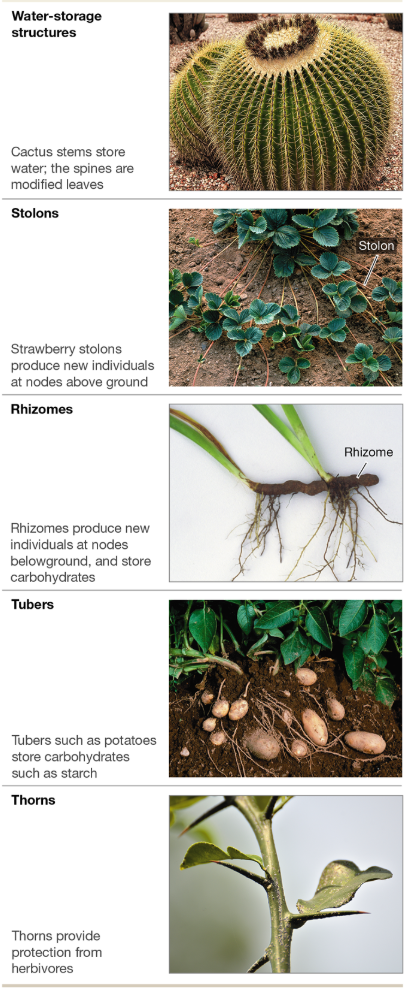
Modified Stems
Water-storage (cactus): stems store water, spines are modified leaves
Stolons (strawberry): produce new individuals at nodes above ground
Rhizomes: produce new individuals at nodes belowground, store CHO
Tubers (potatoes): store CHO like starch
Thorns: protection from herbivores
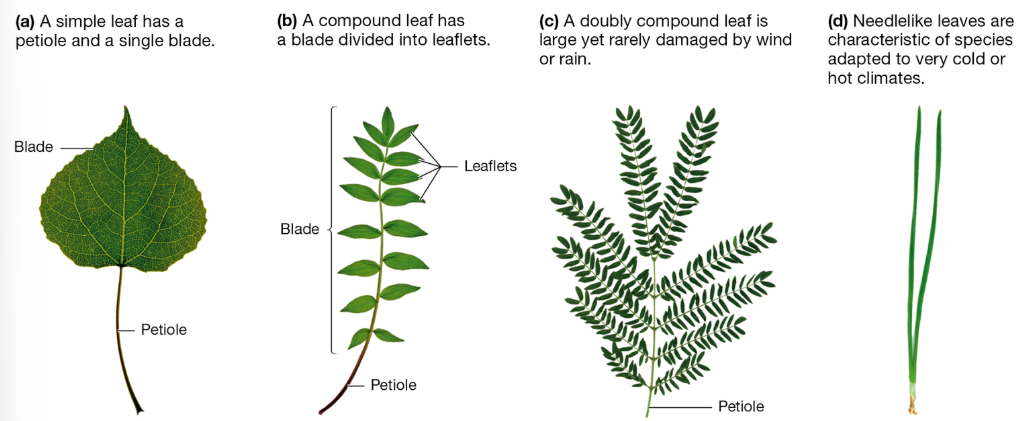
Leaf Structure: Key Component and Functions
Blade (broad, flattened surface) and petiole (stalk connecting to stem)
Large SA to maximizes light capture
Photosynthesis, gas exchange, transpiration
Axillary bud at base distinguishes a leaf from a leaflet in compound leaves
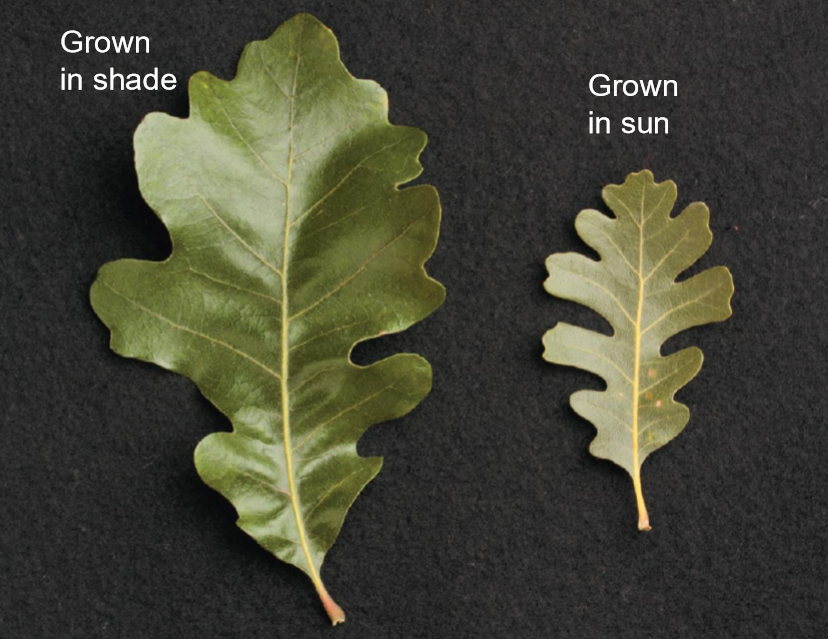
Leaf Adaptations & Response to Environment
Balances photosynthesis with water conservation; differences in leaves demonstrate phenotypic plasticity within the same species
Sun leaves: thicker w/ smaller SA to reduce water loss in high-light environments
Shade leaves: thinner and broader to maximize light capture under low-light conditions
Needle-like leaves reduce transpiration in dry or cold environments
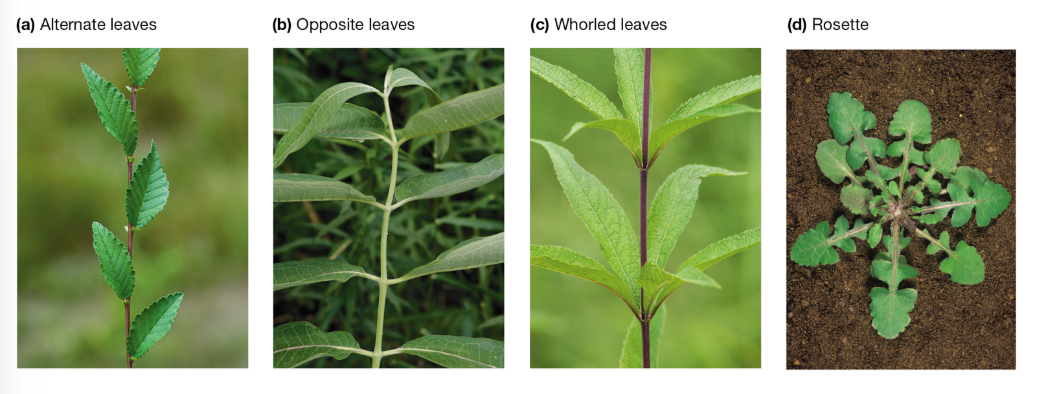
Main Types of Leaf Arrangements
Alternate leaves: staggered along the stem, reducing self-shading and maximizing light exposure
Opposite leaves: occur in pairs at the same node, allowing symmetrical growth
Whorled leaves: form rings of multiple leaves at a node, increasing light capture from multiple angles
Rosette arrangement: keeps leaves close to the ground, reducing water loss and wind damage
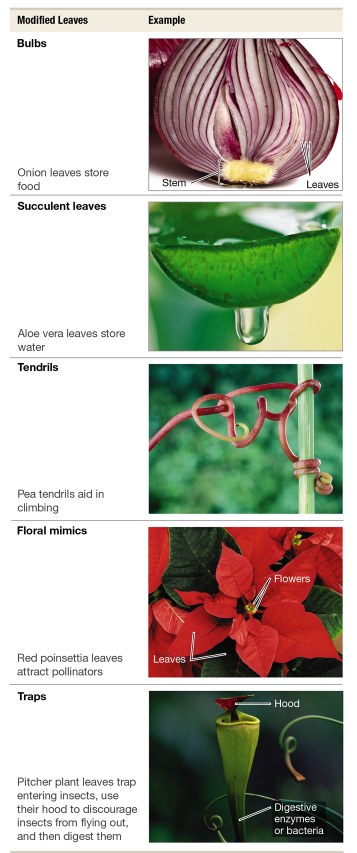
Examples & Functions of Modified Leaves
Bulbs (e.g., onion): thickened leaf bases that store nutrients for later growth
Succulent leaves: store water (allowing survival in arid environments)
Tendrils: wrap around structures to support climbing plants (i.e. ivy)
Pitcher plant leaves: modified into traps that capture and digest insects for nutrients
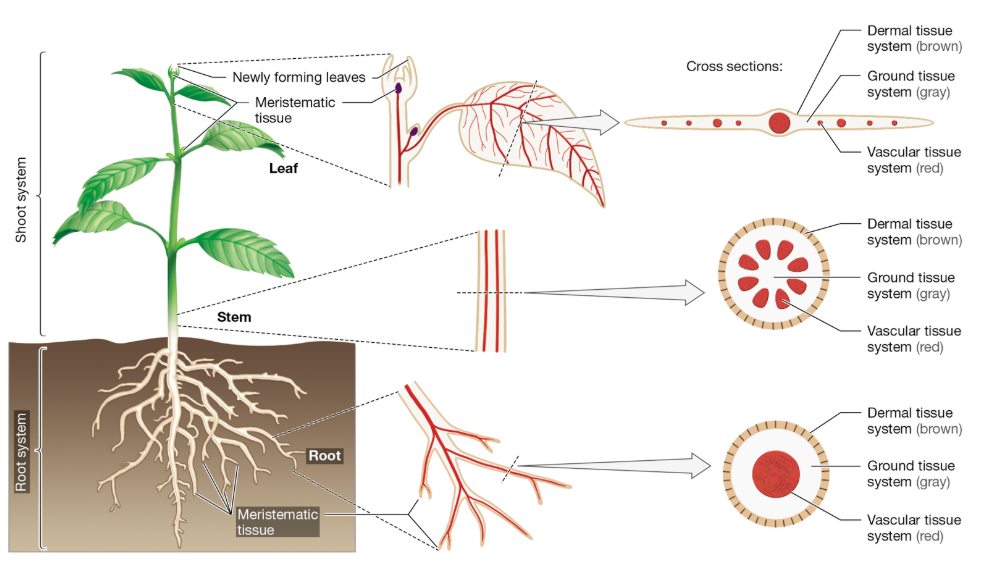
Three Major Types of Plant Tissue Systems
Dermal: forms the outer covering, regulates interaction with the environment
Ground: photosynthesis, storage, and support functions
Vascular: transports water, minerals, organic compounds throughout the plant
Grouped based on structure, location, and function; form an integrated system supporting plant survival and growth
Dermal Tissue Specializations/Adaptations
Help balance gas exchange with protection and water conservation
Guard cells regulate opening/closing of stomata (pores that allow for gas exchange but can lead to water loss via transpiration)
Cuticle = waxy, hydrophobic layer that reduces evaporation and protects against pathogens
Trichomes = hair-like structures that reduce water loss, reflect light, and deter herbivores
Ground Tissue Cell Types
Parenchyma cells: living; involved in photosynthesis, storage, and regeneration
Collenchyma cells: unevenly thickened walls; provide flexible support in growing regions
Sclerenchyma cells: thick, lignified secondary walls to provide rigid support (usually dead at maturity)
Ground tissue makes up the bulk of the plant body
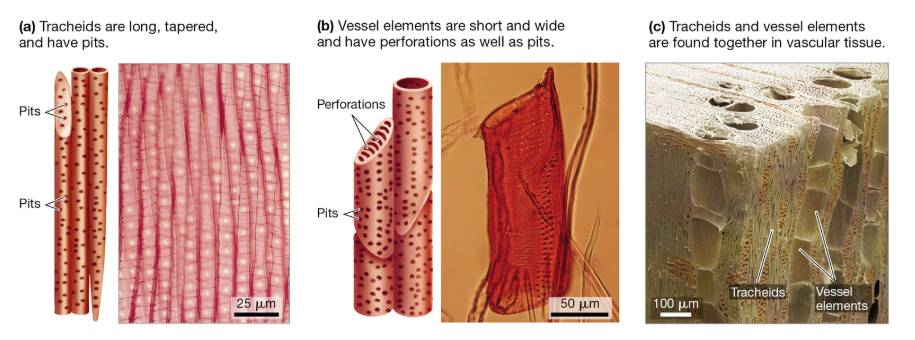
Xylem: Structure & Function
Transports water and dissolved minerals from roots to shoots via transpiration pull (negative pressure)
Composed of tracheids and vessel elements
Dead at maturity and lack cytoplasm
Thick, lignin-reinforced walls prevent collapse under tension
Pits and perforation that allow water movement between cells
Also contributes to structural support of the plant
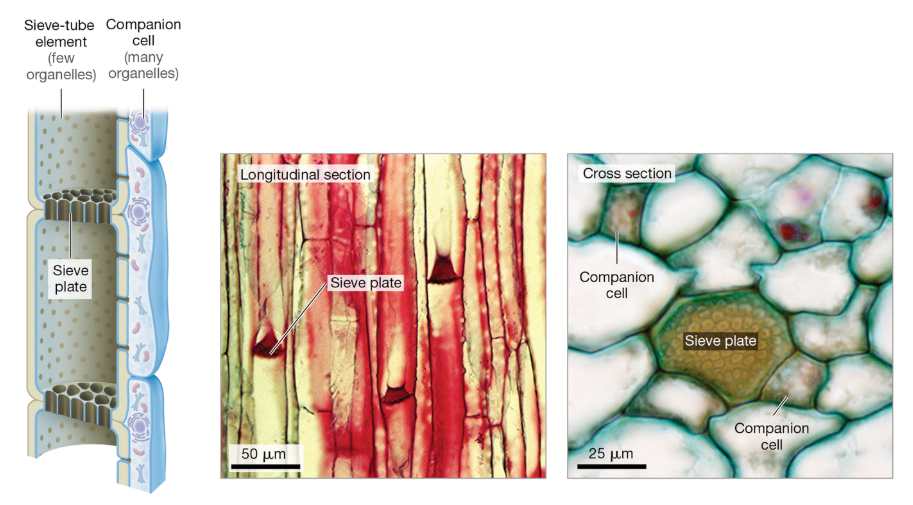
Phloem: Structure and Function
Transports sugars, amino acids, and hormones throughout the plant via a pressure-flow (positive pressure)
Sieve-tube elements and companion cells
Living specialized conducting cells
Support sieve tubes by maintaining metabolism and regulating transport
Bidirectional movement depending on source (sugar production) and sink (sugar use/storage)
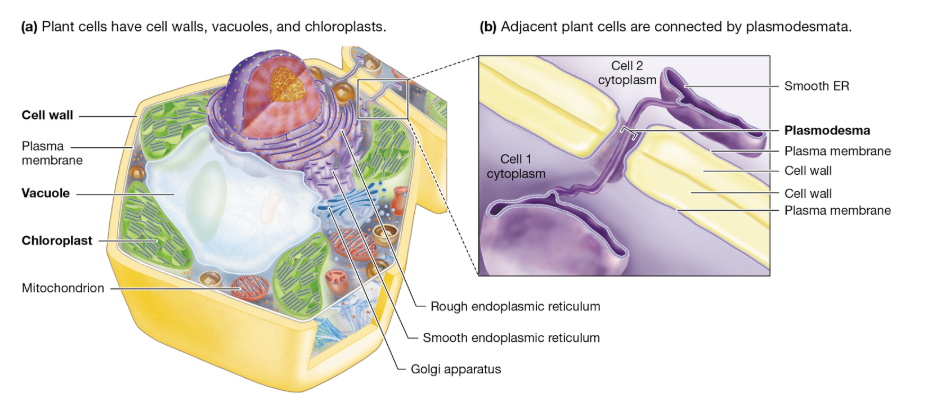
Plant Cell Structures: Key Components
Cell wall = made of cellulose; provides rigidity, defines cell shape
Plasmodesmata = cytoplasmic channels that connect adjacent cells for transport/communication
Chloroplasts = perform photosynthesis, converting light energy into chemical energy
Vacuole = stores water, ions, pigments, and toxins and maintains turgor pressure
Apical Meristems
Key drivers of primary growth (increase in length)
Regions of actively dividing, undifferentiated cells at root and shoot tips
Responsible for producing all cells of the primary plant body
Allow continuous growth throughout the plant’s life
Give rise to primary meristems that differentiate into tissue systems
Primary Growth
Essential for increasing plant length (i.e. height and root depth)
Involves cell division (mitosis), cell elongation (increase in size), and differentiation (specialization)
Occurs at apical meristems in roots and shoots
Produces primary tissues that form the primary plant body
Extends plant into new areas for resource acquisition
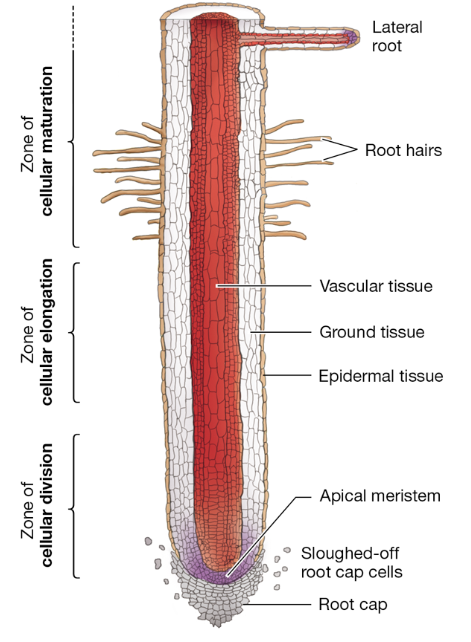
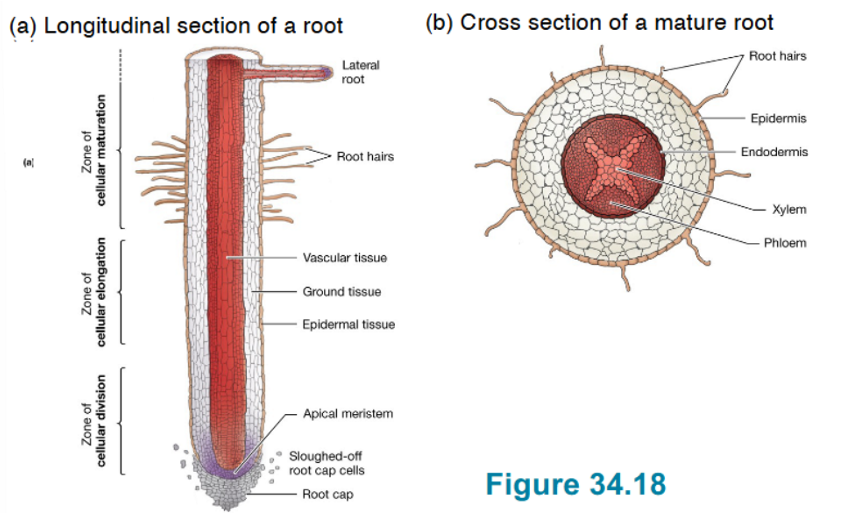
Root Growth Zones
Stages of cell development in primary growth
Division zone: apical meristem where cells actively divide
Elongation zone: has cells that increase in length, pushing root tip forward
Maturation zone: has fully differentiated cells specialized for absorption and transport
Root hairs form here → increase SA for water/nutrient uptake
Primary Meristems
Originate from apical meristems, est. basic structure of the plant body, give rise to the major tissue systems
Protoderm → dermal tissue system (epidermis)
Ground meristem → ground tissue system (parenchyma, collenchyma, sclerenchyma)
Procambium → vascular tissue system (xylem and phloem)
Vascular Arrangement: Monocots vs Dicots
Dicots: vascular bundles arranged in a ring, allowing for secondary growth
Facilitates formation of vascular cambium
Monocots: scattered vascular bundles (no secondary growth)
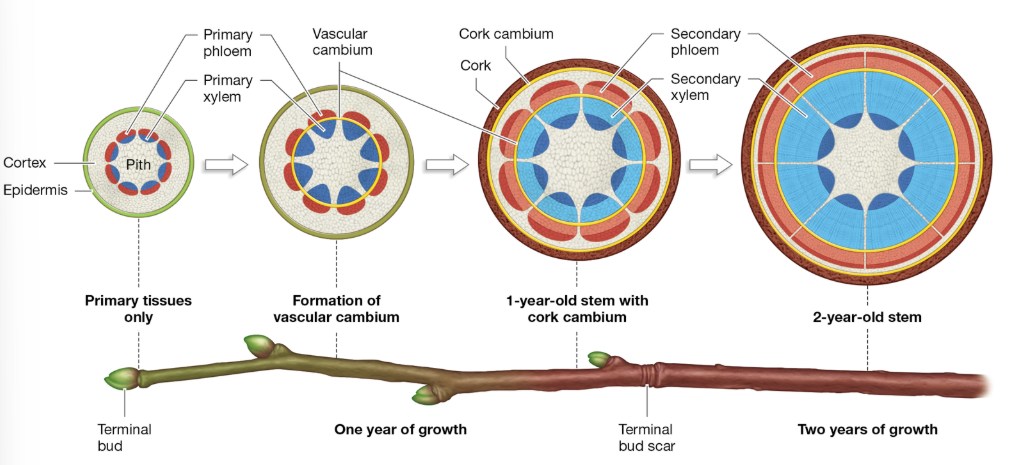
Secondary Growth
Increases plant diameter; enhances long-distance transport capacity and provides mechanical strength for large plant size
Occurs via lateral meristems (cambia)
Cylindrical regions of undifferentiated/actively dividing cells that extend along length of roots and stems
Vascular cambium produces secondary vascular tissues through repeated cell division
Secondary xylem forms wood (water transport)
Secondary phloem transports sugars, amino acids, and signaling molecules
Cork cambium produces cork cells that form bark, reduce water loss, protect against physical damage
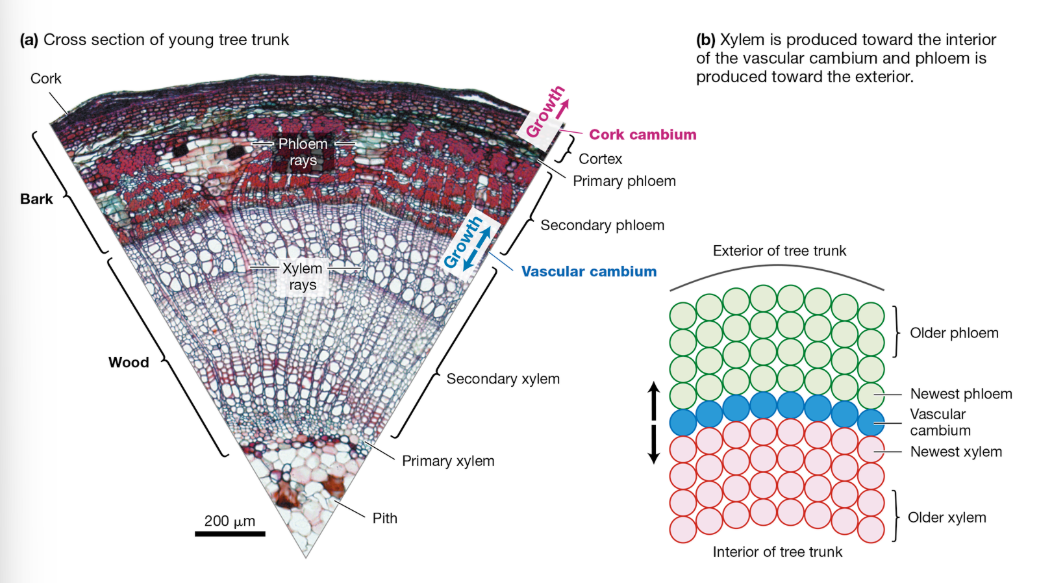
Vascular Cambium
Responsible for most of the increase in girth in woody plants
Located b/w primary xylem and phloem in stems and roots
Produces secondary xylem → inside and secondary phloem → outside
Asymmetrical cell division leads to accumulation of wood over time
Also produces supporting cells such as fibers and parenchyma
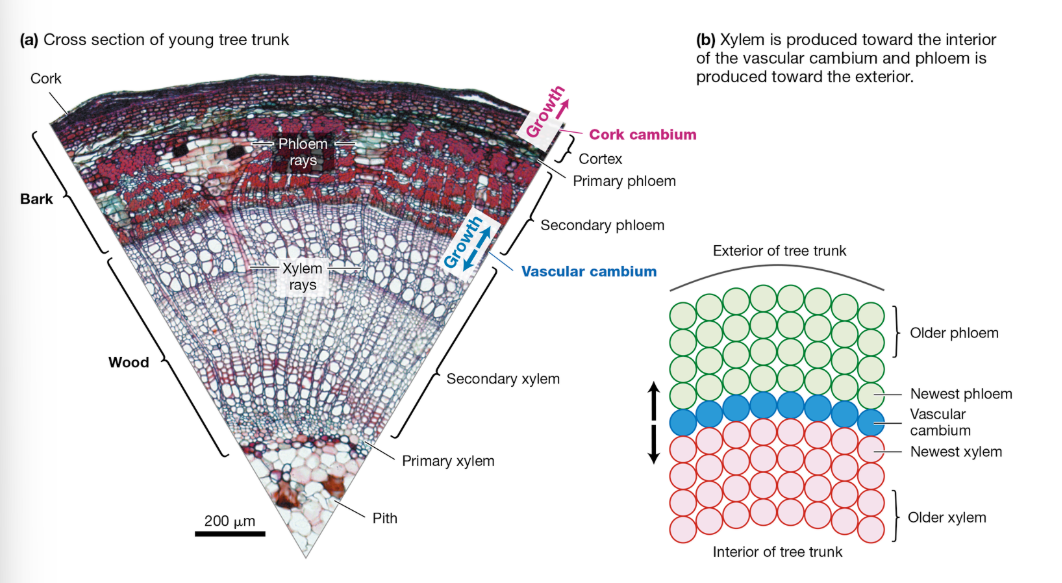
Cork Cambium
Located near the outer surface of stems and roots
Produces cork cells that are dead and coated with suberin, making them impermeable
Forms protective bark that reduces water loss/protects against pathogens + damage
Gas exchange occurs through lenticles in the bark
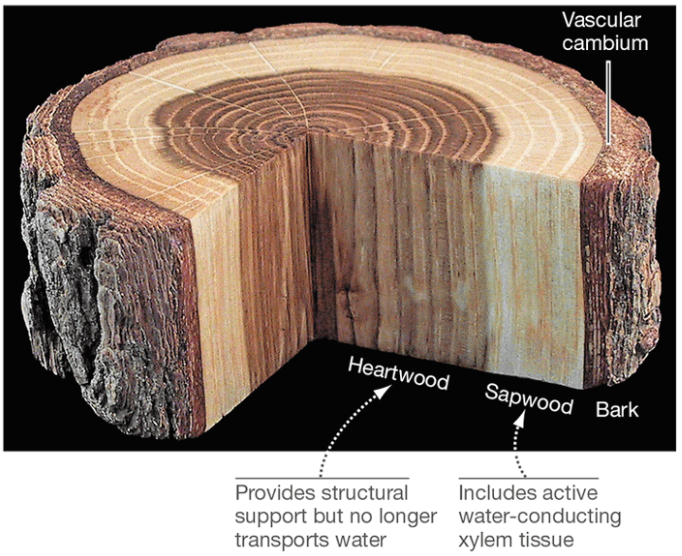
Wood Structure: Heartwood vs Sapwood
Sapwood = younger outer xylem that actively transports water
Heartwood = older inner xylem that no longer transports water
Accumulates resins and other compounds for protection
Secondary xylem provides structural support for the plant
Wood forms through continuous activity of vascular cambium
Bark Composition
Includes cork, cork cambium, and secondary phloem
Provides protection against physical damage, pathogens, and water loss
Cork cells are dead/impermeable (forms effective barrier)
Secondary phloem transports nutrients within bark layers
Lenticels allow gas exchange through bark
Annual Growth Rings
Form due to seasonal changes in vascular cambium activity
Early wood: large, thin-walled cells formed during favorable conditions
Late wood: small, thick-walled cells formed during stressful conditions
Alternating layers create visible growth rings; ring width reflects environmental conditions (i.e. water availability)
Totipotency
Ability of a single plant cell to regenerate into a complete plant
Requires specific hormones to trigger development
Common in parenchyma cells, which can divide and differentiate
Allows cloning and asexual reproduction in plants
Not a characteristic present in animals
Auxin: Role in Plant Growth
Hormone that regulates cell elongation in shoots
Uneven distribution causes phototropism (growth toward light)
Also regulates gravitropism (response to gravity)
Differential growth and directional growth responses
Shoot Growth: Response to Environment
Shoots grow toward light sources to maximize photosynthesis
Ex: increase branching in areas w/ more light
Demonstrates phenotypic plasticity
Controlled by hormones (auxin)
Parenchyma Totipotency and Function
Most versatile/abundant plant cell type
Can divide + differentiate into other cell types
Can form callus tissue during wound repair
Important for plant regeneration and cloning
Serve roles in storage, photosynthesis, and metabolism