Human Anatomy- Bones and Skeletal Tissues
 Call Kai
 Learn
Learn Practice Test
 Spaced Repetition
 Match
Match Flashcards
 Knowt Play
1/25

There's no tags or description
Looks like no tags are added yet.
Name | Mastery | Learn | Test | Matching | Spaced | Call with Kai |
|---|
No analytics yet
Send a link to your students to track their progress
26 Terms
Bones
provide support and shapeto body
serve as attachment sites for muscle
serves as a storage depsoit for essential minerals
site of blood cell formation
Cartilages
cushions abutting bone surfaces
joints
articulations between bones
Three types of cartilage
Hyaline cartilage
Elastic cartilage
Fibrocartilage
Where is cartilage generally found?
joints, ribcage, nose, ear, intervertebral discs
Cartilage tissue is made up of?
60% water, chondrocytes in lacunae within the extracellular matrix. It is resilient
Extracellular matrix
contains fibers and a gel-like ground substance. 35% organic components- primarily collagen 65% inorganic mineral salts, primarily calcium phosphate
Cartilage is surrounded by?
perichondrium
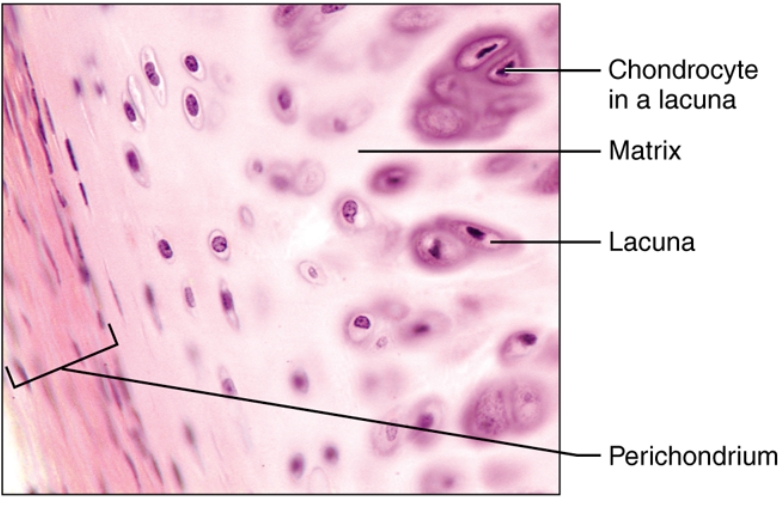
Hyaline cartilage
most abundant type, frosted glass appearance, thin collagen fibrils, high water content
Found un articulations of joints, costal cartilage, and in the respiratory system
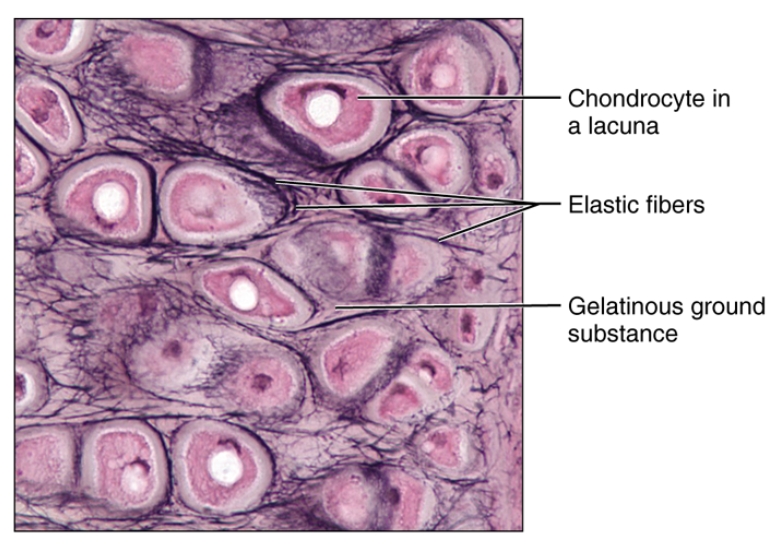
Elastic cartilage
contains elastic fibers, tolerates repeated bending, found in the epiglottis and the external ear
Fibrocartilage
contains thick collagen fibrils, resists both compression and strong tension forces. Found at the intervertebral discs some ligaments, and in some articular joints
Cartilage growth
appositional growth-chondroblasts in perichondrium produce new tissue, interstitial growth-chondrocytes within divide and secrete new matrix. Growth is rapid in fetal development and childhood stops growing in late teens
Appositional growth
“growth from outside”
Interstitial growth
“growth from within”
Functions of Bone
Support, Movement, Protection, Mineral storage, Blood cell formationm, Energy storage, Energy metabolism- produces osteocalcin
Osteocalcin
increases insulin secretion, influences adipose cells to store less fat
What kind of tissue is bone?
connective tissue
Bone composition
Osteoprogenitor cells, Osteoblasts, Osteocytes, Osteoclasts
Osteoprogenitor cells
stem cells
Osteoblasts
actively produce and secrete bony matrix (osteoid)
Osteoclasts
derived from macrophages
Bone classifications
long, flat, short, irregular
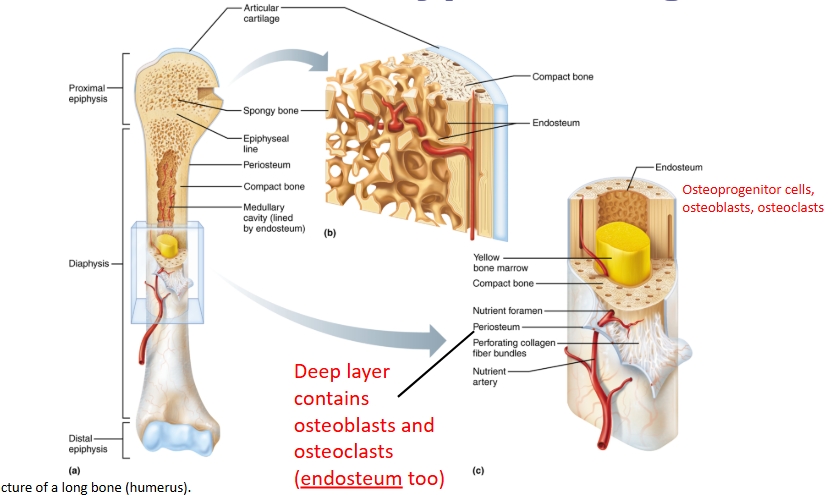
Structure of a typical long bone
Proximal and distal epiphysis on ends, middle contains diaphysis. Epiphysis contains spongy bone
Clinical Connection: Intramedullary Nails
critical component in the management of longe bone fractures, offering a stable fixation method with minimal damage to surrounding tissues
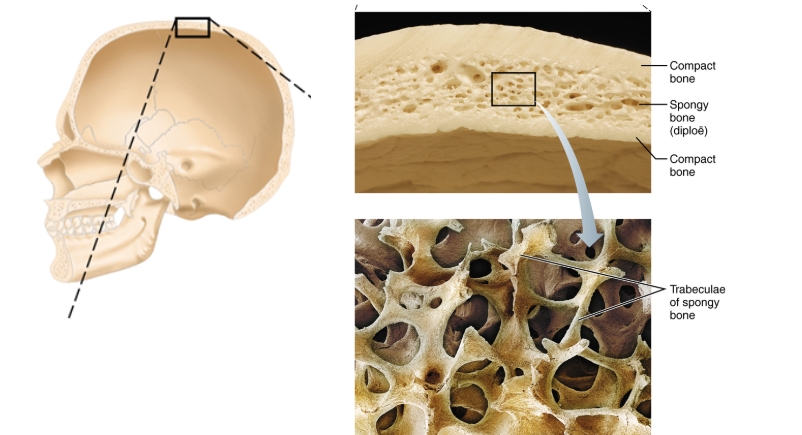
Structure of a Flat Bone
Compact bone borders, spongy bone inside (made of trabeculae of spongy bone)
Tuberosity
large rounded projection; may be roughened