My final set to study
 Call Kai
 Learn
Learn Practice Test
 Spaced Repetition
 Match
Match Flashcards
 Knowt Play
1/158

There's no tags or description
Looks like no tags are added yet.
Name | Mastery | Learn | Test | Matching | Spaced | Call with Kai |
|---|
No analytics yet
Send a link to your students to track their progress
159 Terms
Which of the following waveforms represents the electrical event that should initiate ventricular contraction?
a. P wave
b. QRS complex
c. T wave
d. U wave
Answer: b. QRS complex
Explanation: The QRS complex represents ventricular depolarization, which is the electrical event that triggers ventricular contraction. The P wave represents atrial depolarization, and the T wave represents ventricular repolarization.
A delayed conduction of the AV node is manifested by a:
a. prolonged PR interval
b. widened QRS
c. inverted P wave
d. absence of a P wave
a. prolonged PR interval
Symptoms that may be experienced by a patient who suddenly develops atrial fibrillation with a ventricular rate of 160 include:
a. palpitations
b. dyspnea
c. hypotension
d. all of the above
d. all of the above
When administering digoxin the nurse should?
a. assess for medications or conditions that affect serum digoxin levels
b. assess patient for clinical signs of toxicity
c. assess BUN and Cr prior to administration
d. all of the above
d. all of the above
Patient with trigeminy complains of sudden chest pain. What is the first nursing intervention?
a. Access the patient and perform an EKG
b. Place the patient on cardiac pads
c. Prepare to give prescribed Lidocaine
d. Notify the PCP immediately.
a. Access the patient and perform an EKG
IV cardizem is used to treat which of the following arrhythmias?
a. Pulseless V-tach
b. Sinus bradycardia with ventricular bygeminy
c. Atrial fibrillation
d. All of the above
c. Atrial fibrillation
Which of the following assessment findings are associated with this strip of V-tach?
a. hypotension
b. change in mental status
c. weak or absent pulse
d. all of the above
d. all of the above
NOT HEADACHE
Asystole strip shown…what would the nurse do?
Assess the patient.
Treatment for asystole is high quality CPR and EPI (sometimes transcutaneous pacing).
DO NOT SHOCK
V tachycardia strip shown (tumbstones). What would be your first assessment?
Check your patient for a pulse.
Which of the following assessment findings is associated with ventricular fibrillation?
a. anxiety
b. loss of consciousness
c. delirium
d. headache
b. loss of consciousness
Inefective atrial contractions are associated with which rhythm
a. normal sinus with PAC
b. normal sinus with PVC
c. ventricular fibrillation
d. atrial fibrillation
d. atrial fibrillation
When taking the pulse of a patient in atrial fibrillation the nurse would expect
a. an irregular pulse and pulse deficit
b. an irregular and bounding pulse
c. a regular pulse and pulse deficit
d. a regular and bounding pulse
a. an irregular pulse and pulse deficit
IRREGULAR RHYTHM AND PULSE DEFICIT = ATRIAL FLUTTER
Which of the following would you expect to see in a patient with SVT at a ventricular rate of 220?
a. hypotension
b. hypertension
c. headache
d. pulse deficit
a. hypotension
Which of the following is not an appropriate intervention for new onset symptomatic SVT?
a. cardioversion
b. adenosine
c. vagal maneuvers
d. av pacing
d. av pacing
The P wave corresponds to which event in the cardiac cycle?
The P wave on an ECG corresponds to atrial depolarization.
Meassure the following QRS complex. Think how you would do it exactly and what is a normal QRS.
Zoom in and count the boxes from Q to S, multiply by 0.04
Normal is less than 12 seconds (< 12 sec) and narrow. In most practice tests normal ones were about 0.06-0.08 (1 box and a half to 2 small boxes)
What is a normal PR interval?
0.12 to 0.20
What is a normal QRS interval?
< 0.12 and narrow
Which of the following describes a cells ability to spontaneously generate an impulse?
automaticity
A rhythm with 13 QRS’s will be shown. What is that rhythm?
Sinus Tachycardia
Which of the following waveforms represent the electrical event that should initiate ventricular contraction? (ventricular depolarization)
QRS complex
A strip with a wide and bizarre PVC will be shown. How much does the QRS measures? (unsure of this question, but strip has a purple circle)
> 0.12 wide and bizarre
Which of the following is a characteristic of premature ventricular contractions (PVC's)?
a. the QRS complex is greater than 0.12 sec
b. the P-wave is inverted
c. there is a prolonged PR interval
d. the QRS complex is less than 0.12 sec
a. the QRS complex is greater than 0.12 sec
wide and bizarre
SVT shown
SVT shown
FAST AND REGULAR + ONLY 2 WAVEFORMS PRESENT
Atrial flutter shown
Atrial flutter shown
SVT shown
SVT shown
Ventricular fibrillation shown
Ventricular fibrillation shown
PAC shown
PAC shown
HEART BLOCK shown
HEART BLOCK shown
HEART BLOCK shown
HEART BLOCK shown
Which of the following is a characteristic of atrial flutter?
Sawtooth pattern
In slide
Sawtooth pattern
More P’s than QRS’s
Which of the following is true about the R on T phenomenon
a. it may cause the atria to fibrillate
b. it may precipitate a run of ventricular tachycardia
c. it is only dangerous when the patient has a ventricular pacemaker
d. it is treated by administering a potassium supplement
b. it may precipitate a run of ventricular tachycardia
What is a common feature of 2nd degree heart block type 2?
The PR interval is constant
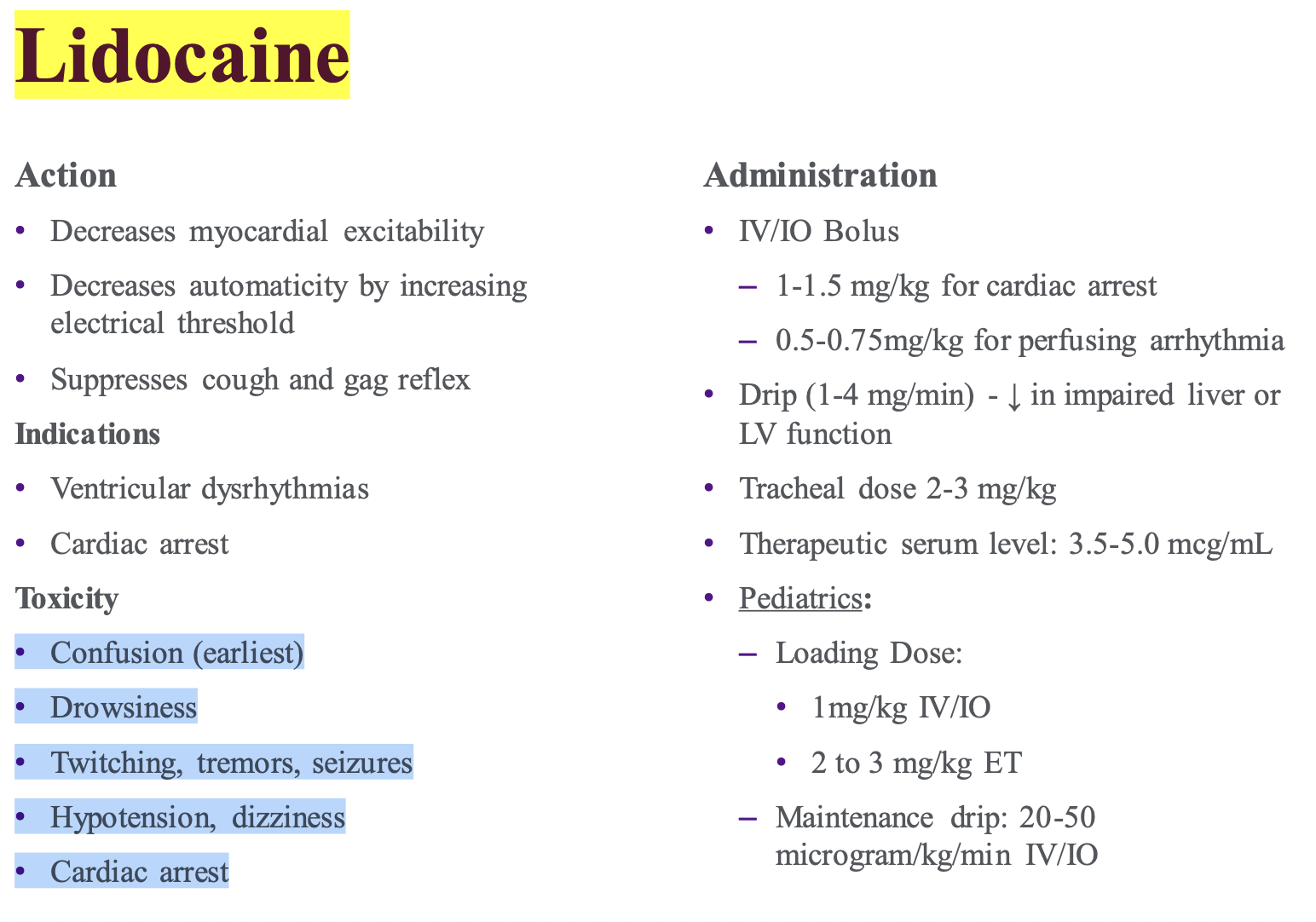
What is an early sign of Lidocaine toxicity?
Confusion
• Confusion (earliest)
• Drowsiness
• Twitching, tremors, seizures
• Hypotension, dizziness
• Cardiac arrest
A delayed conduction of the AV node is manifested by a:
a. prolonged PR interval
b. widened QRS
c. inverted P wave
d. absence of a P wave
a. prolonged PR interval
Which of the following waveforms represent the electrical event that should initiate ventricular contraction?
QRS complex
What is the normal range of the PR interval?
0.12 to 0.20
What is the normal length of the QRS interval?
below 0.12 and narrow
What bpm rate is Sinus Tachycardia on a strip?
101-160 bpm
Which of the following describes a cells ability to spontaneously generate an impulse?
automaticity
Which node independently conducts a rate of 40-60 in an adult patient?
AV node
Which node independently conducts a rate of 60-100 in an adult patient?
SA node
What does the T-wave represent?
ventricle repolarization
What is the normal PQRS ratio?
1:1
What is the rate on a strip for sinus bradycardia?
less than 60 bpm
How do you calculate the rate on a strip?
multiply the number of QRS's by 10
pay attention to marks on strip to count right
How to differentiate between normal sinus rhythm and sinus arrhythmia
the distance between each R (peak in QRS wave) is different and NOT the same within a strip
the activation of which system causes in a release in epinephrine which results in an increase in heart rate, blood pressure, and cardiac output
sympathetic nervous system
the QRS on an EKG corresponds to which of the following electrical events:
a. ventricular depolarization
b. ventricular repolarization
c. atrial repolarization
d. atrial depolarization
a. ventricular depolarization
Inefective atrial contractions are associated with which rhythm
a. normal sinus with PAC
b. normal sinus with PVC
c. ventricular fibrillation
d. atrial fibrillation
d. atrial fibrillation
How can you tell a strip with normal sinus rhythm with PAC (premature atrial contraction is occurring)?
The P wave comes EARLY.
P waves occur when the atria contracts followed by the QRS and T waves. You know a PAC is occurring when the PQRST segment happens too soon after the last PQRST.
Which of the following is a characteristic of atrial flutter?
sawtooth pattern
When taking the pulse of a patient in atrial fibrillation the nurse would expect
a. an irregular pulse and pulse deficit
b. an irregular and bounding pulse
c. a regular pulse and pulse deficit
d. a regular and bounding pulse
a. an irregular pulse and pulse deficit
In atrial flutter the atrial rate usually ranges between:
250 and 400 bpm
Which of the following would you expect to see in a patient with SVT at a ventricular rate of 220?
a. hypotension
b. hypertension
c. headache
d. pulse deficit
a. hypotension
Symptoms that may be experienced by a patient who suddenly develops atrial fibrillation with a ventricular rate of 160 include:
a. palpitations
b. dyspnea
c. hypotension
d. all of the above
d. all of the above
Which of the following is not an appropriate intervention for new onset symptomatic SVT?
a. cardioversion
b. adenosine
c. vagal maneuvers
d. av pacing
d. av pacing
Which of the following interventions is important to consider when a patient has a rhythm with ineffective atrial contractions?
a. keeping HOB above 45 degrees
b. anticoagulation
c. surgery consult
d. assessing for blurred vision
b. anticoagulation
Atrial kick accounts for how much of the total cardiac output?
25%
Which of the following assessment findings is associated with ventricular fibrillation?
a. anxiety
b. loss of consciousness
c. delirium
d. headache
b. loss of consciousness
heart rate is zero
For ANY strip that is shown, what is the FIRST response to the patient?
assess or check the patient
Which of the following is a characteristic of premature ventricular contractions (PVC's)?
a. the QRS complex is greater than 0.12 sec
b. the P-wave is inverted
c. there is a prolonged PR interval
d. the QRS complex is less than 0.12 sec
a. the QRS complex is greater than 0.12 sec
wide and bizarre!
Which of the following assessment findings are associated with this strip of V-tach?
a. hypotension
b. change in mental status
c. weak or absent pulse
d. all of the above
d. all of the above
If I show you a strip, how do you know it has ventricular bigeminy? Trigeminy?
Bigeminy
- every other beat in the strip is a PVC
Trigeminy
- every THIRD beat in the strip is a PVC
The term multifocal PVCs refers to PVCs which are:
a. frequently from the same ventricular focus
b. occur in a specific pattern
c. originate from different ventricular foci
d. occur in runs of 3 or more in a row
c. originate from different ventricular foci
Which of the following is true about V-fib?
a. it can be mimicked by artifact on the ECG
b. it is never accompanied by a peripheral pulse
c. it is treated with CPR and defibrillation
d. all of the above
d. all of the above
Which of the following is the treatment of choice for V-tach without a pulse?
defibrillation
Your patient complains of new onset chest pain (strip is shown) which is the appropriate nursing intervention?
assess your patient!!
When administering digoxin the nurse should?
a. assess for medications or conditions that affect serum digoxin levels
b. assess patient for clinical signs of toxicity
c. assess BUN and Cr prior to administration
d. all of the above
d. all of the above
IV cardizem is used to treat which of the following arrhythmias?
a. pulseless V-tach
b. sinus bradycardia with ventricular bygeminy
c. atrial fibrillation
d. all of the above
c. atrial fibrillation
Select the statement about cardio version which is correct
a. the delivery of electrical current must be synchronized to the T-wave
b. the patient should be awake and alert to be sure of the response to cardio version
c. cardio version may be utilized for unstable rapid atrial and ventricular dysrhythmias
d. a minimum of 200 joules must be delivered to achieve cardio version
c. cardio version may be utilized for unstable rapid atrial and ventricular dysrhythmias
Which of the following is true about the R on T phenomenon
a. it may cause the atria to fibrillate
b. it may precipitate a run of ventricular tachycardia
c. it is only dangerous when the patient has a ventricular pacemaker
d. it is treated by administering a potassium supplement
b. it may precipitate a run of ventricular tachycardia
Defibrillation is the treatment of choice for which of the following rhythms?
a. Asystole
b. SVT
c. V-tach with a pulse
d. V-fib
d. V-fib
Select the true statement about cardio version
a. the patient should be awake and alert to be sure of the response
b. a minimum of 200 joules must be delivered
c. you do not need to clear the patient
d. preparing for cardioversion should include premedication with pain medication whenever possible
d. preparing for cardio version should include premedication with pain medication whenever possible
You're about to shock your patient in V-fib with a biphasic sole defibrillator, what is the starting energy for an adult sized patient?
120 joules
What occurs during atrial flutter that is unique?
There is a pulse deficit
This means that the wrist pulse will be different from what is auscultated
First Degree Heart Block
PR interval
Treatment
1. Looks almost normal
2. BUT the distance between P and R is above 0.20
- normal range is between 0.12 and 0.20
Treatment
- monitor
- atropine
Second Degree Heart Block Type 1
PR interval
treatment
1. PR interval keeps getting longer longer longer
2. THEN will drop off and QRS will be missing
- sequence will repeat again
Treatment
- monitor
- atropine
Second Degree Heart Block Type 2
PR is either normal or prolonged BUT ALWAYS CONSTANT
Treatment
- pacemaker
- atropine
Third Degree Heart Block
PR Intervals and treatment
1. ALL PR intervals are different lengths
2. BUT they are all equal distance form each other
Treatment
- pacemaker
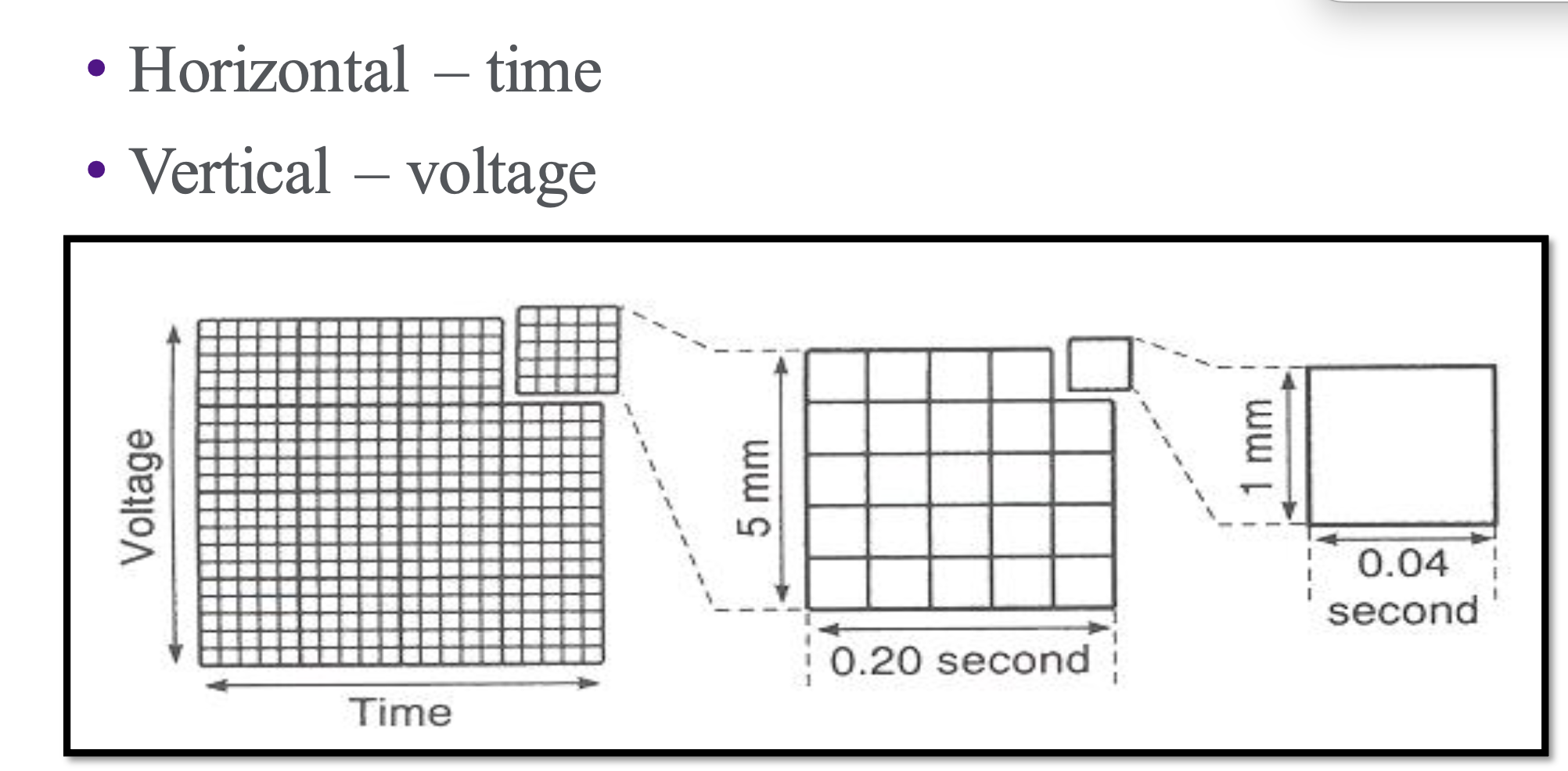
ECG paper
a. What does the vertical variable represent?
b. What does the horizontal variable represent?
c. How long does the smallest box possible represent?
d. How long does the big square (more defined) box represent?
ECG paper
a. What does the vertical variable represent? voltage
b. What does the horizontal variable represent? time
c. How long does the smallest box possible represent? 0.04 seconds
d. How long does the big square (more defined) box represent? 0.20 seconds
What is the impulse rate of the SA node?
Impulse rate:
SA Node: 60-100
What is the impulse rate of the AV node?
b. AV Node: 40-60
What is the impulse rate of the ventricles?
c. Ventricles: 20-40
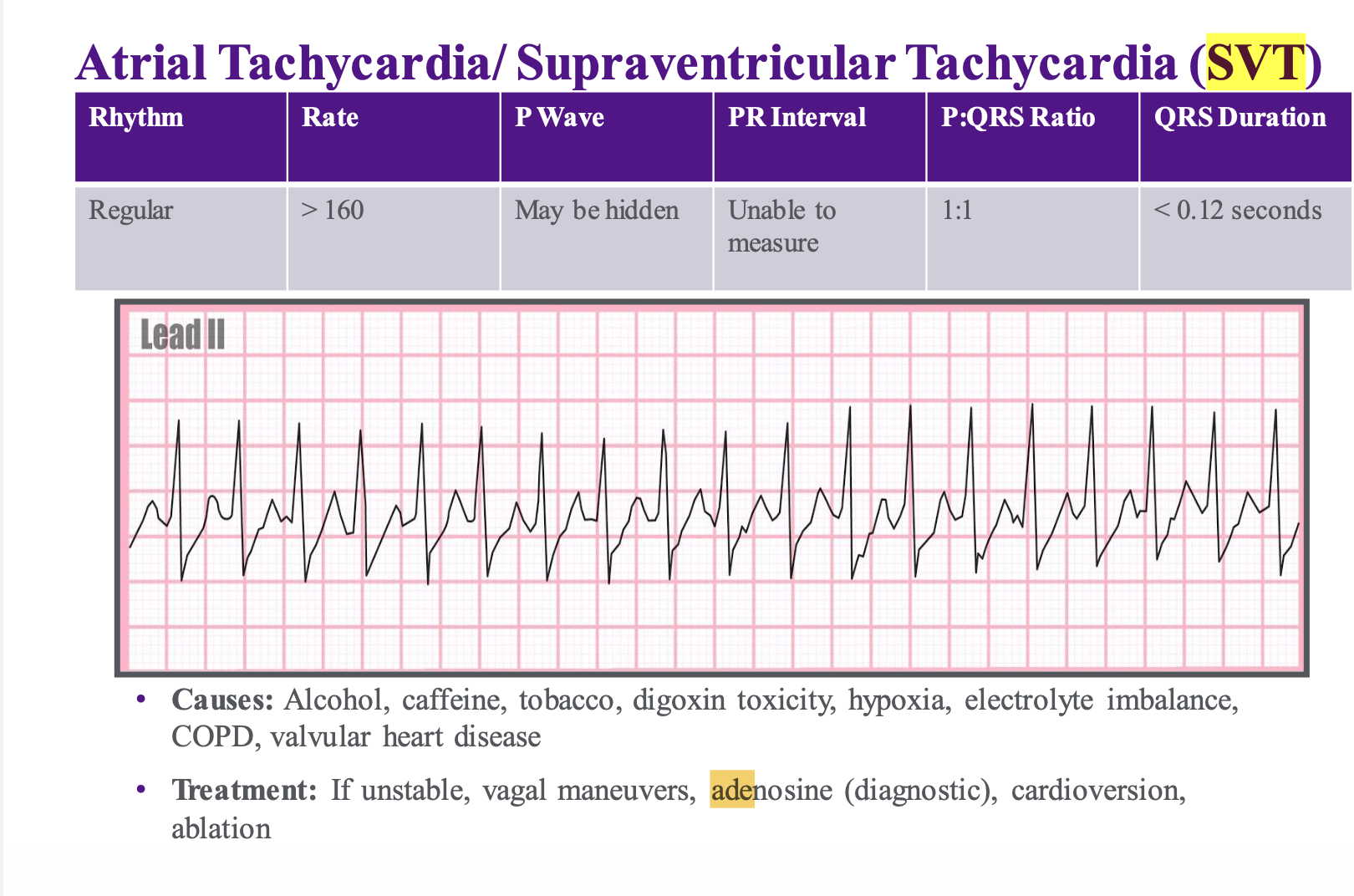
Atrial Tachycardia/ Supraventricular Tachycardia (SVT)
cause
treatment
• Causes: Alcohol, caffeine, tobacco, digoxin toxicity, hypoxia, electrolyte imbalance, COPD, valvular heart disease
• Treatment: If unstable, vagal maneuvers, adenosine (diagnostic), cardioversion, ablation
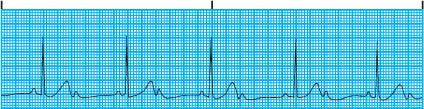
In 2nd Degree Heart Block Type I, the PR interval:
a. Varies according to the ventricular response rate.
b. Progressively lengthens until a QRS complex is dropped.
c. Remains constant despite an irregular ventricular rhythm.
d. Is unmeasurable.
b. Progressively lengthens until a QRS complex is dropped.
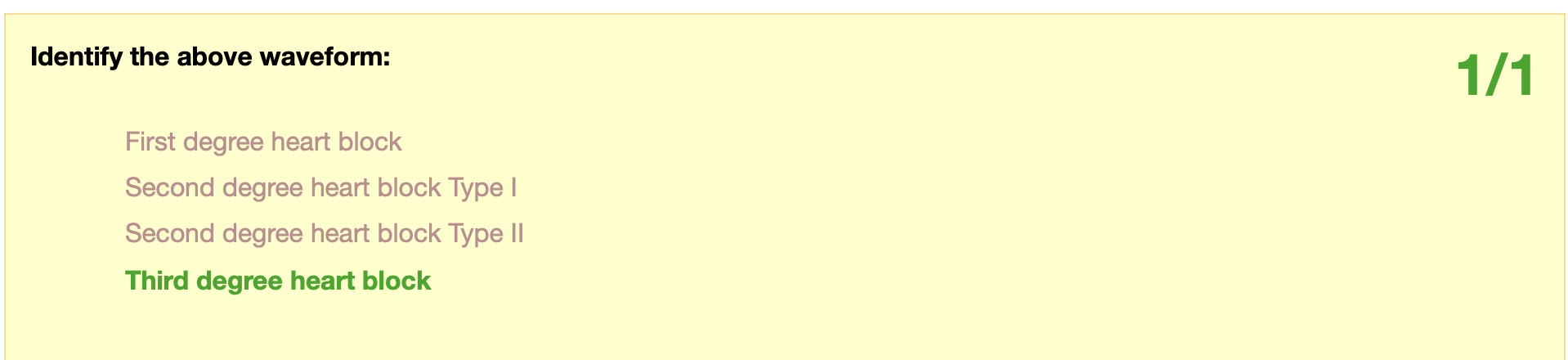
Identify the above waveform:
c. Second degree heart block Type I|
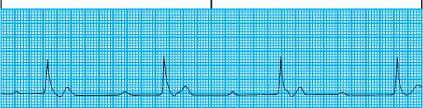
d. third degree heart block
Cannot be a 2nd degree type 2 if that is what you thought, because the PR intervals are NOT constant through the ECG
(p waves and QRS do not speak to each other)
Failure to capture is represented on the ECG as:
A. No pacemaker activity.
B. Spikes where they shouldn't be.
C. A spike on a T wave.
D. A spike without a complex.
D. A spike without a complex.
What does the Pacemaker malfunction: “Failure to sense” mean"?
Pacemaker fails to sense patient's intrinsic beats. Spikes appear in random places.
Atrial Tachycardia/ Supraventricular Tachycardia (SVT)
tx
vagal maneuvers
adenosine (diagnostic) → RAPID PUSH
cardioversion (starts 50 joules)
ablation
The term automaticity refers to the ability of a cell to:
A. Initiate an impulse on its own.
B. Send impulses in all directions.
C. Block impulses formed in areas other than the SA node.
D. Generate an impulse when stimulated.
A. Initiate an impulse on its own.
To gather information about impulse conduction from the atria to the ventricles, study the:
A. P wave.
B. PR interval.
C. ST segment.
D. T wave.
B. PR interval.
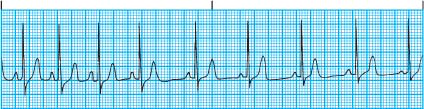
D. Sinus arrythmia
A delayed conduction of the AV node is manifested by a:
a.prolonged PR interval
b.widened QRS
c.inverted P wave
d.absence of a P wave
a.prolonged PR interval
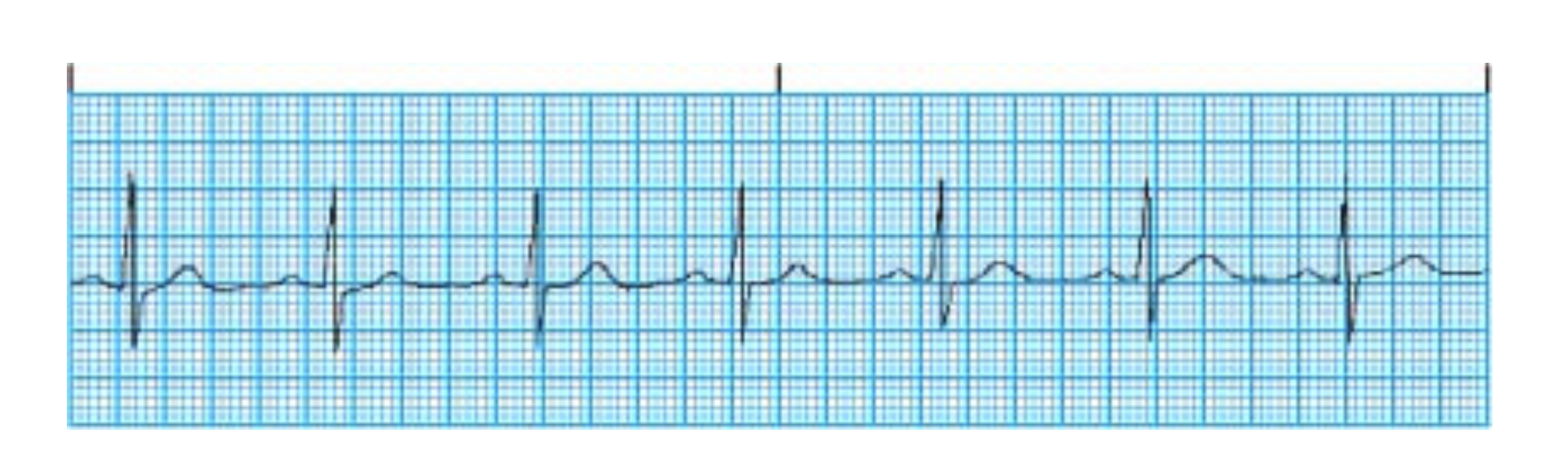
c. Normal sinus
While caring for a monitored patient, you notice the above rhythm. Which would be your initial intervention?
a. Initiate chest compressions. Call a cardiopulmonary arrest team.
b. Assess the patient and check leads.
c. Administer adenosine.
d. Obtain a 12-lead ECG.
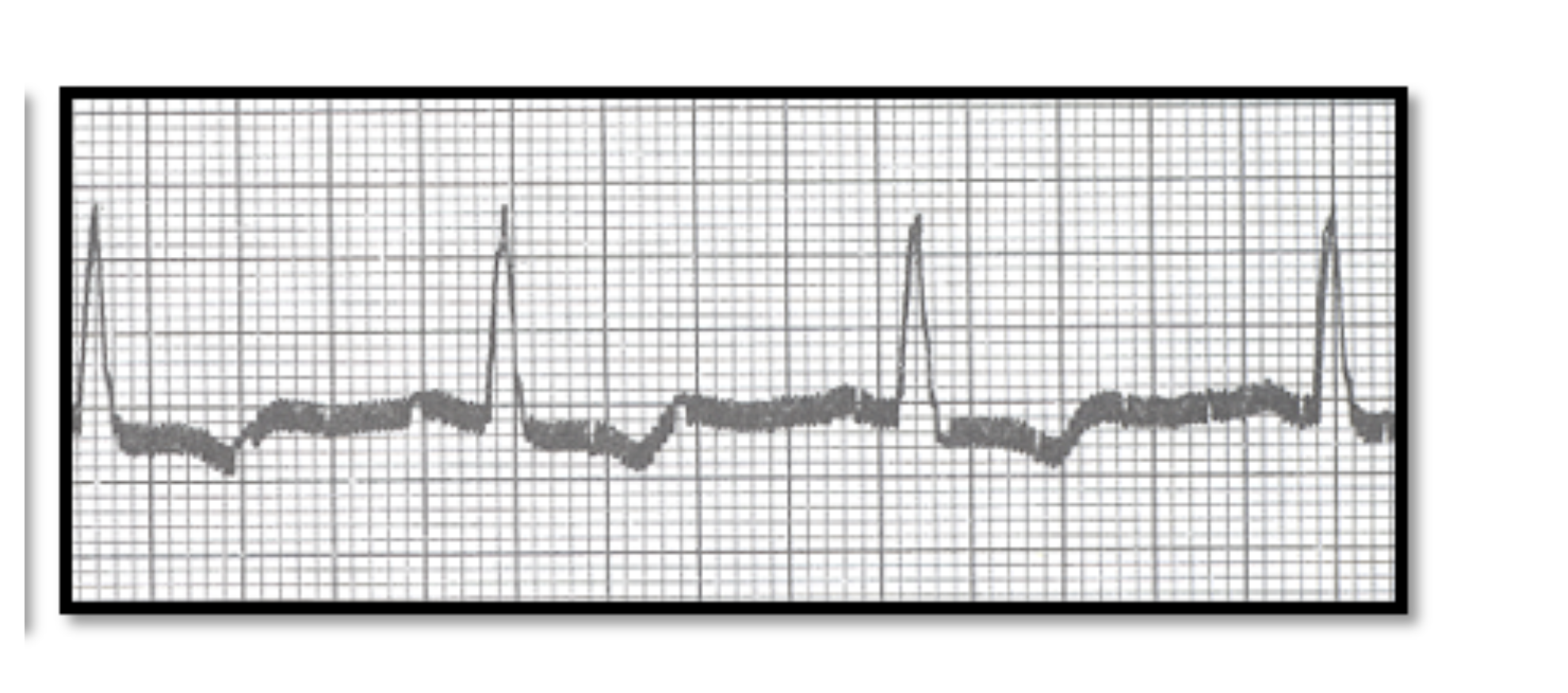
b. Assess the patient and check leads.
![]](https://assets.knowt.com/user-attachments/04b2efe5-b5f2-41ea-afb4-e4a2e8c27488.png)
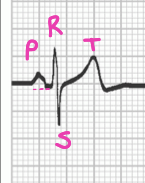
Identify the waves
While caring for a monitored patient, you notice the above rhythm. Which would be your initial intervention?
a. Initiate chest compressions. Call a cardiopulmonary arrest team.
b. Assess the patient and check leads.
c. Administer adenosine.
d. Obtain a 12-lead ECG.
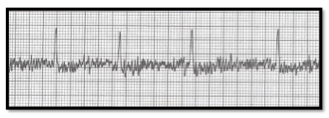
b. Assess the patient and check leads.
The strip is an example of a monitor problem/artifact
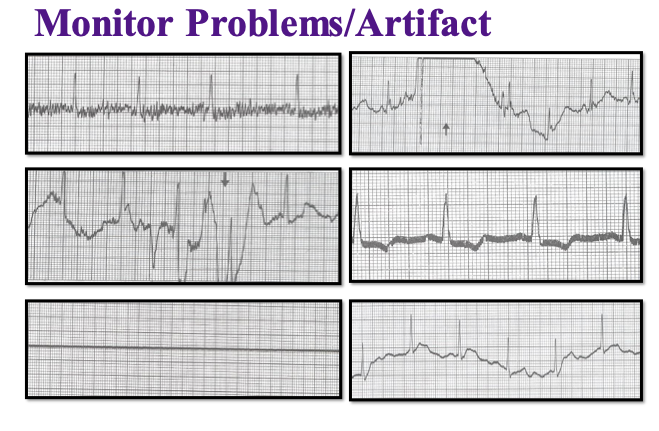
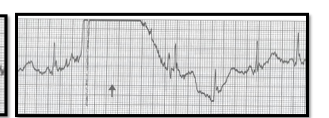
b. Assess the patient and check leads.
The strip is an example of a monitor problem/artifact