chem: urinalysis crystals and casts
 Call Kai
 Learn
Learn Practice Test
 Spaced Repetition
 Match
Match Flashcards
 Knowt Play
1/96

There's no tags or description
Looks like no tags are added yet.
Name | Mastery | Learn | Test | Matching | Spaced | Call with Kai |
|---|
No analytics yet
Send a link to your students to track their progress
97 Terms
what is nephrolithiasis
kidney calculi (stones)
what crystal is soluble in acetic acid with bubbling?
calcium carbonate
amorphous urates are formed from urate salts of Na, K, Mg, and Ca usually during ___________
refrigeration (not usually seen in freshly voided urine
what crystal does this describe: appears following sample refrigeration (pink sediment), redissolved when heated to 60 degrees celcius
acid crystal: amorphous urates
what diseases/ disorders is uric acid associated with
gout
Lesch-Nyhan syndrome
chemotherapy
leukemia
may be associated with kidney stone formation
can be normal
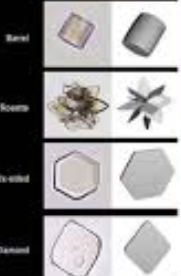
what crystal is this? is it alk or acid?
uric acid crystal; acidic
amorphous urates can change to uric acid crystals in the presence of?????
concentrated HCl
what urine crystal is formed from oxalic acid in food (tomatoes, asparagus, spinach, berries, oranges)
calcium oxalate
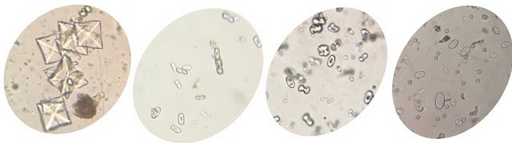
what crystal is this? is it alk or acid?
calcium oxalate; acidic
what is the most common form of calcium oxalate?
dihydrate octrahedral (envelope shape)
what acidic crystal may be misidentified as red blood cells
ovoid forms of calcium oxalate
what is a chemical property of calcium oxalate and how would it help in identifying this crystal?
insoluble in acetic acid; if we are questioning what the crystal is we can add dilute acetic acid which will lyse rbcs but not calcium oxalate as they get mixed up when calcium oxalate is in its ovoid form.
what is the clinical significance of calcium oxalate in urine
can be normal
major component of renal calculi
what acidic crystal is the major component of renal calculi (kidney stones)
calcium oxalate
what crystal is seen in patients with ethylene glycol poisoning/ antifreeze poisoning
long form of monohydrate calcium oxalate
long form of monohydrate calcium oxalate are seen in patients dealing with what?
ethelyne glycol/antifreeze poisoning
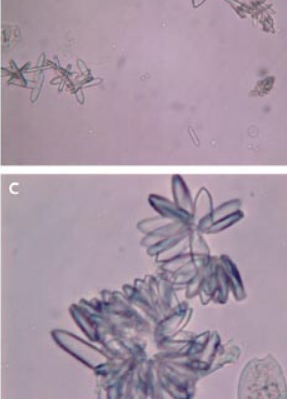
what crystal is this? acid or alk?
long form monohydrate calcium oxalate
bilirubin crystals are soluble in?? insoluble in??
soluble in
acetic acid
HCl
NaOH
acetone
insoluble in
alcohol
if you see a bilirubin crystal under the mic, but the dipstick is neg for bilirubin, what must you report?
re test. if neg again, dont call it a bilirubin crystal. bili crystals should always be accompanied by pos bili dipstick
clinical significance of bilirubin crystals
seen in many hepatic disorder (liver)
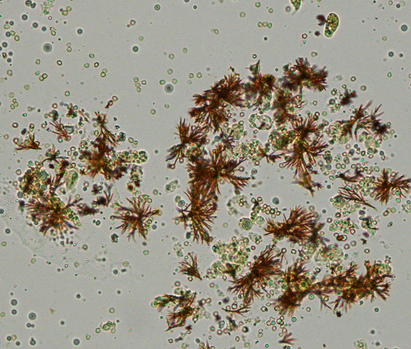
what crystal? acid or alk?
bilirubin; acidic crystal
most frequent cause of calculi in kids
cystine crystals
which crystal is being described: colourless, thin, hexagonal plates. exhibit slight/ no birefringence
cystine
cystine is soluble in??? insoluble in???
soluble in:
HCl
ammonia
insoluble in:
acetic acid
how can you confirm that a crystal in the urine is a cystine crystal?
confirmed by a positive CYANIDE NITROPRUSSIDE TEST (purple/blue); if the test turns clear it is a negative result and the crystal is likely uric acid.
clinical significance of cystine crystals
IEM: cystinura
kidney stones in kids
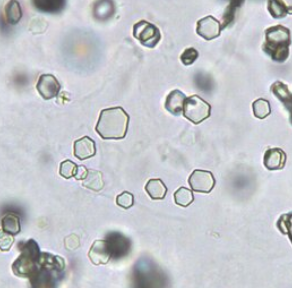
what crystal is this? acidic or alk?
cystine; acidic
what crystal is being described: fine colourless to yellow/brown single needles. also seen as sheaves or rosettes
tyrosine
what are the key findings also found when tyrosine crystals are seen?
often accompanied by pos BILI on dipstick
Leucine crystals seen as well
clinical significance of tyrosine crystals
associated w severe liver disease
IEM: tyrosinemia
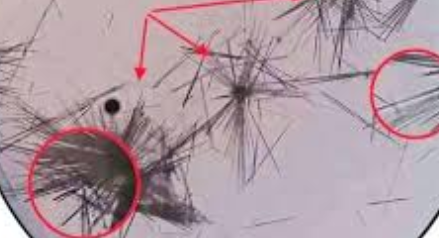
what crystal is this, is it acidic or akaline?
tyrosine; acidic
what crystal is being described: oily looking yellow brown spheroids with concentric rings around the outer edge and radial striations
leucine
key findings seen when leucine crystals are present
often accompanied by positive bili on dipstick
tyrosine crystals usually seen
clinical significance of leucine crystals
associated with severe liver disease
amino acid metabolism impairement
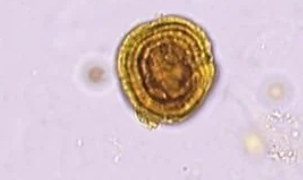
what crystal; acidic or alk?
leucine; acidic
what crystal: clear, flat plates w notched corners
cholesterol (no other crystal looks like dis)
what is the clinical significance of cholesterol crystals
associated w nephrotic syndrome
associated with disorders that produce lipiduria
what other findings are seen along side cholesterol crystals
can appear when urine is refrigerated
usually accompanied by pos protein on urine test pad
oval fat bodies, fatty casts, free fat droplets may also be seen in the sediment
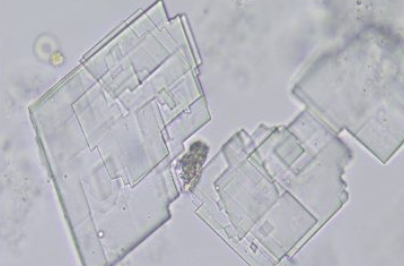
what crystal; acid or alk?
cholesterol; acid
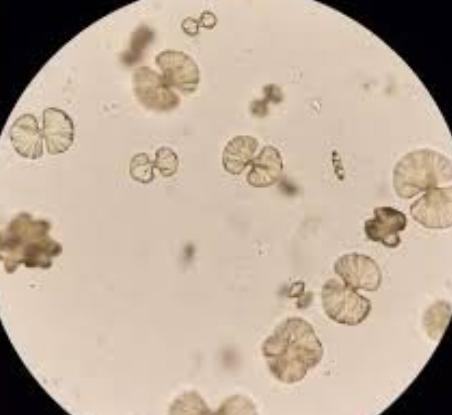
what crystal; acid or alk?
sulfonamide (antibiotic); acid
what crystal is being described: flat needles, sheaves of small needles or as spheroids. often brown in color
sulfonamide
if suspecting sulfonamide crystals what must you do confirm that these crystals are actually there?
should consult the floor to see if said drug is/was being administered
biochemically test urine for sulfa before reporting. sulfa must be pos
what crystal is being described: flat needles or sheaves accompanied by round globules but are variable in form
radiopaque dye/ contrast dye
what is the specific gravity of urine when it has radiopaque dye in it (measured by refractometer)
>1.035
what must you do before reporting that there is radiopaque dye in a patient’s urine
must confirm via the ordering location that the patient recieved contrast media
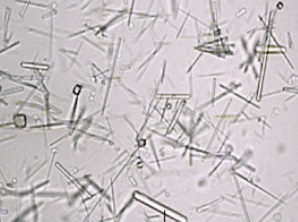
what crystal; acid or alk
radiopaque dye; acidic
how do we tell the difference between amorphous urates and amorphous phosphates
they are identical visually but amorphous phosphates are soluble in acetic acid while urates are not.
upon refrigeration, amorphous phosphates precipitate out white while urates are pink
when heated at 60 degrees celcius they do not redissolve unlike urates
what crystal: coffin lid or fern leaf (if freshely formed) form
triple phosphate/ struvite
struvite/ triple phosphate is formed from?
ammonium
magnesium
phosphate
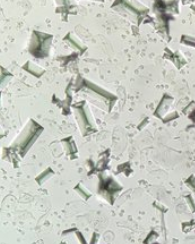
what crystal ; acid or alk?
struvite/triple phosphate; alkaline
what crystal: large, flat shaped rectangular plates or wedge shaped prisms, often appearing in rosettes.
calcium phosphate
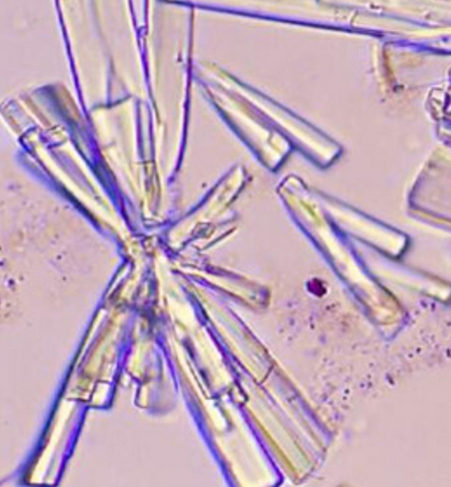
what crystal; acid or alk
calcium phosphate; alk
what crystal: yellowish brown “thorn apple” shape (round with thorny projections) or in spherical form
ammonium biurate crystal
presence of ammonium biurate crystals indicates what? how would you report it
old/ poorly preserved urine specimen. reject and request recollect
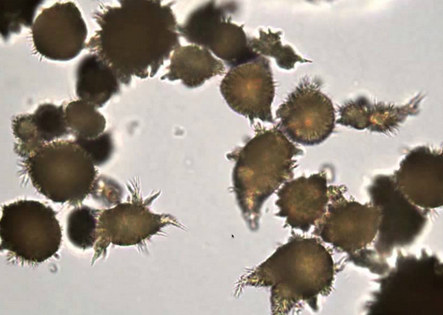
what crystal; acid or alk
ammonium biurate; alkaline
what alkaline crystal is often misidentified as RBCs
calcium carbonate
what crystal: small, colourless granules/dumbells
calcium carbonate
what crystal effervesces w HCl or acetic acid ? *
calcium carbonate
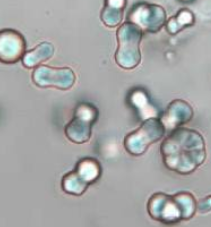
what crystal; alk or acid
calcium carbonate; alk
what crystal is seen as long thin needles following a certain antiviral therapy
acyclovir (antiviral drug) crystals
we find what looks like a circular crystal in the urine of an elderly male patient. under a polarized microscope it looks to have a maltese cross pattern. what is this likely
starch crystal
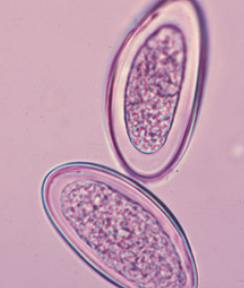
what is this
pinworm ova
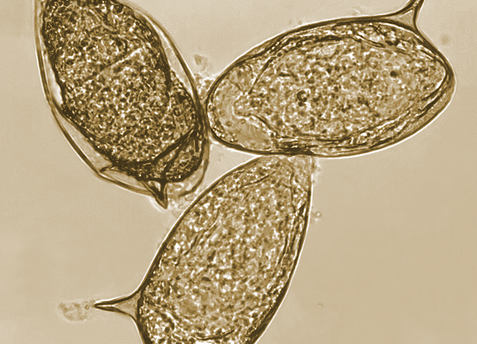
what dis
schistosoma ova (parasite)
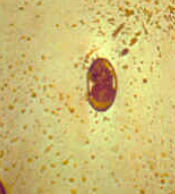
what dis
pollen
what is the major constituent in a cast?
tamm horsfall (TH) protein aka: uromodulin
factors promoting cast formation
increased amts of plasma proteins entering tubules
decreased pH
decreased urinary flow rate
increased urine concentration
sodium and calcium present
what cast: clear, colourless; parallel sides and rounded ends.
hyaline cast (most commonly seen)
normal amt of hyaline casts in urine
0-2/ lpf (can be a product of exercise)
pathological reason for increased hyaline casts
increased acute glomerulonephritis
ALL cellular casts arise from the _____ tubules. what is it made of?
distal tubules; TH protein matrix with rbcs, wbcs, renal tubular epi cells (always clinically significant)
rbc casts indicate?
bleeding w in nepherons
what are the other key findings associated with rbc casts
free rbcs
pos blood dipstick
pos pro dipstick
what is the most diagnostic element in urinary sediment?
rbc cast
rbc casts are primarily indicative of what disease/ state?
glomerulonephritis (exception: if hit in the kidneys rlly hard or vvv strenuous exercise)
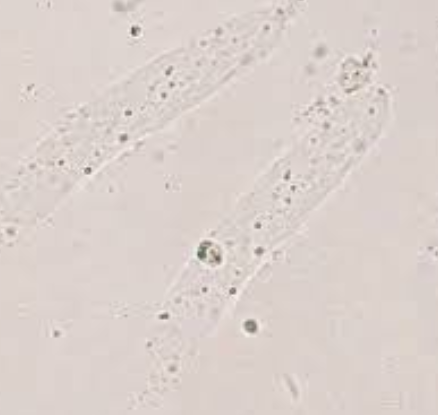
what cast
hyaline cast
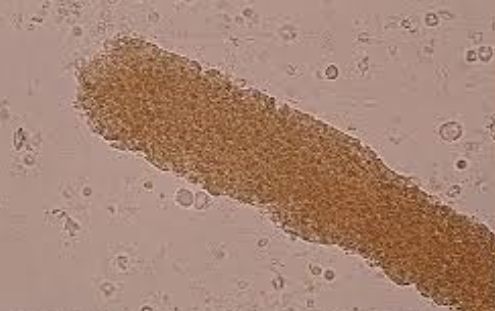
what cast
rbc cast
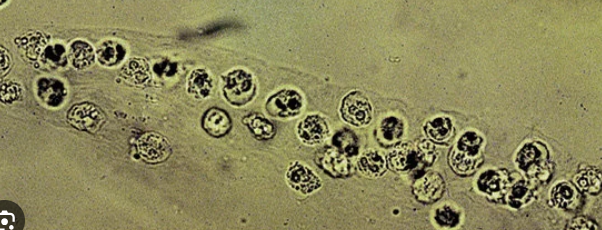
what cast
wbc cast
what is the clinical significance of wbc casts
associated w inflammation or infection w in the nephron
pyelonephritis (upper UTI of pelvis and parenchyma of the kidney
what is the primary marker to distinguish between pyelonephritis and lower UTIs
WBC casts
present in pyelonephritis and not present in lower UTIs
what does the presence of epithelial casts indicate
renal tubular damage
heavy metal toxicity/ chemical induced toxicity
viral infections
may be seen w wbc casts in pyelonephritis
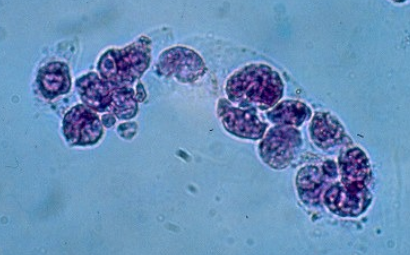
what cast
epithelial cell cast
what cast: composed of plasma protein aggregates and cellular remnants that look like granules incorporated into cast matrix
granular casts
what do granular casts represent
disintegration of cellular casts
if granular casts are seen with hyaline casts, what is the significance? what if they are seen with cellular casts?
normal;disease
what do granular casts in urine specifically mean pathologically?
not indicative of any specific renal disorder, just lets us know that there is something happening in the kidneys
if there is a waxy cast in patient urine what would it indicate
represent increased urine stasis
indicates chronic to end stage renal disease= kidney failure
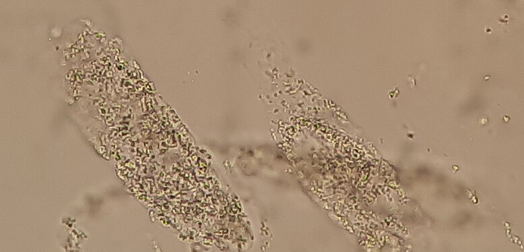
what cast
granular cast
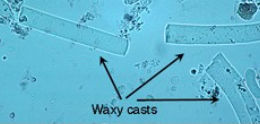
what cast
waxy cast
what are broad casts
aka renal failure casts
represents extreme urine stasis (anuria) and destruction/ widening of the tubule
when are fatty casts seen
usually associated with nephrotic syndrome (rot= protein)
acute glomerulonephritis urinalysis findings
test strip: POS BLOOD, POS PRO
microscopic: rbcs, wbcs, rte cells, hyaline casts, granular casts, rbc casts
chronic glomerulonephritis urinalysis findings
test strip: POS BLOOD , POS PRO
microscopic: rbcs, wbcs, rte cells, hyaline casts, granular casts, rbc casts, waxy, and broad casts
describes what disease: immune response to strep infection resulting in hematuria, proteinuria, casts in urine
acute glomerulonephritis
what state does this describe: end stage glomerular damage with loss of renal function
chronic glomerulonephritis
what disease/ state: increased permeability of the glomerulous causedby toxins/ drugs, diabetes mellitus, infections, etc (loss of lots of alb)
nephrotic syndrome
urinalysis findings of nephrotic syndrome
test strip: POS PROTEIN (BC ALB IN URINE), MAY SEE POS BLOOD
microscopic: wbc, fat droplets, oval fat bodies, fatty casts, waxy casts, cholesterol crystals (can see rbcs)