BIOLOGY PRETEST
 Call Kai
 Learn
Learn Practice Test
 Spaced Repetition
 Match
Match Flashcards
 Knowt Play
1/43

There's no tags or description
Looks like no tags are added yet.
Name | Mastery | Learn | Test | Matching | Spaced | Call with Kai |
|---|
No analytics yet
Send a link to your students to track their progress
44 Terms
True or False? All animals rely on diffusion for the exchange of gases with their various environments.
true
Consider the various structures animals have for exchanging gases. In order to maximize the diffusion for gases from one area to another, you would want _____________________.
Large surface area, large difference in partial pressures between the two areas, and a thin barrier of diffusion
Organisms with which of the following respiratory organs use countercurrent exchange to maximize gas exchange?
Organisms with gills
Oxygen will diffuse from blood to tissues faster in response to which of the following conditions?
A decrease in the partial pressure of oxygen in the tissue
Which of the following is the destination for blood traveling through the pulmonary artery?
the right atrium
Match the animal chemical signal with its description.
A non-nerve cell secretes a chemical signal to a target cell found in a very close proximity (a neighboring cell).
A nerve cell secretes a hormone that travels through the blood to act upon a target cell at another location within the animal’s body.
A chemical signal is released into the environment where the target cell is found in another organism.
A non-nerve cell secretes a chemical signal in which the target cell is itself.
A non-nerve cell secretes a hormone that travels through the blood to act upon a target cell at another location within the animal’s body.
paracrine, neuroendrocrine, Pheromone, autocrine, endocrine
Match the following characteristics of hormones with the chemical class described.
Binds to an intracellular receptor.
Requires signal amplification after bound to a receptor.
Binding usually results in a change of gene expression.
Binds to an extracellular receptor.
Steroid Hormone, Peptide or Amino Acid Derivative Hormone, Steroid Hormone, Peptide or Amino Acid Derivative Hormone
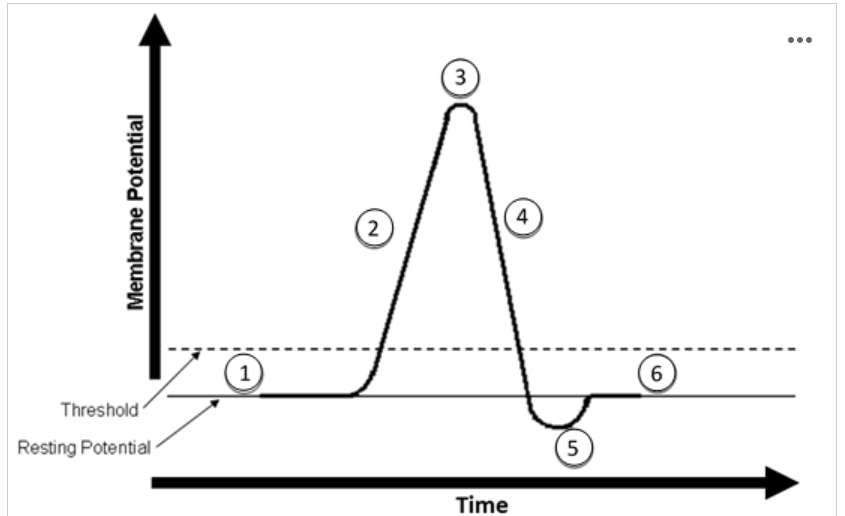
Label the diagram of an action potential below (#1-6) with the events that lead to each marked area of the curve (A-E). You can use each answer provided once, more than once, or not at all.
membrane at rest
K+ channels are closed while Na+ channels are opened. Na+ floods into the membrane.
Na+ channels close, while some K+ channels begin to open.
Na+ channels are closed while K+ floods out of the cell membrane.
Hyperpolarization occurs.
the membrane is at rest
Place the following list of events in the correct order to describe blood flow within a 4-chambered heart. Some steps may be missing, but begin with blood flowing into the heart from the superior vena cava:
I. Oxygen rich blood passes an atrioventricular valve.
II. Oxygen deficient blood flows from the right atrium to the right ventricle.
III. Oxygen rich blood moves through the left ventricle to the aorta.
IV. Oxygen rich blood flows into the left atrium through the pulmonary vein.
V. Oxygen deficient blood flows through the pulmonary artery.
II, V, IV, I, III
For a neuron at rest with a membrane potential of –65 mV, an increase in the movement of potassium ions out of that neuron's cytoplasm would result in the ________.
hyperpolarization of the neuron
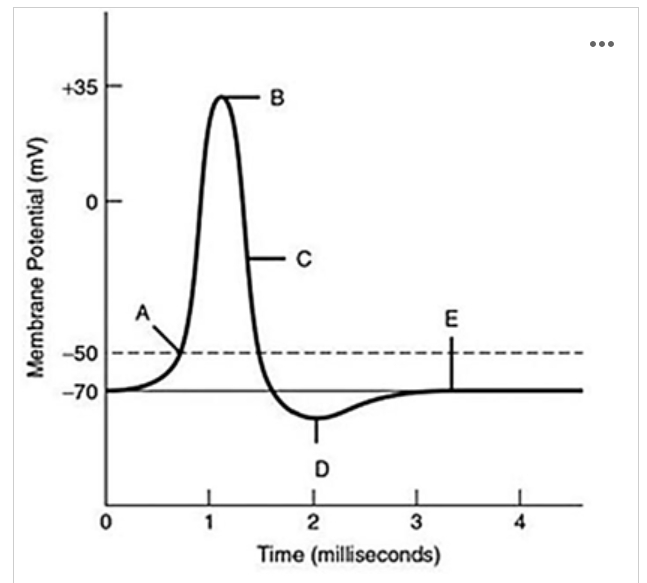
The minimum depolarization needed to open all the voltage-gated sodium and potassium channels is indicated by the label ________.
A
The repolarization phase of an action potential requires _____. Select all that apply.
a K+ concentration gradient across the membrane, opening of K+ channels in the membrane
Which of the following is TRUE about summation?
Excitatory Post-synaptic Potentials (EPSPs)
Inhibitory Post-synaptic potentials (IPSPs)
EPSPs must be greater than the IPSPs in order for an action potential to occur.
Why does the presence of a myelin sheath increase the speed at which a nerve impulse travels?
Myelin insulates the axons, allowing nerve impulses to jump from one node of Ranvier to another.
Tetrodotoxin blocks voltage-gated sodium channels and ouabain blocks sodium/potassium pumps. If you added both tetrodotoxin and ouabain to a solution containing neural tissue, what responses would you expect?
immediate loss of action potential with gradual loss of resting potential.
Which of the following statements best describes T cells?
Cells that are activated to destroy infected cells, mature in the thymus, and act in the cell-mediated immune response.
A boy falls while riding his bike. A scrape on his hand almost immediately begins to bleed and becomes red, warm, and swollen. What response is occurring?
inflammatory response
An epitope is ________.
the part of an antigen that actually binds to an antibody, B-Cell receptor, or T-Cell receptor
How does the immune system of vertebrates utilize a chemical concentration gradient?
The immune system releases chemical signals called chemokines, which create a chemical gradient that leukocytes use in migrating toward the infection site.
How are cytotoxic T cells produced?
CD8+ T cells divide and differentiate into cytotoxic T cells
The activation of helper T cells is likely _____.
when an antigen is displayed by a dendritic cell (antigen presenting cell)
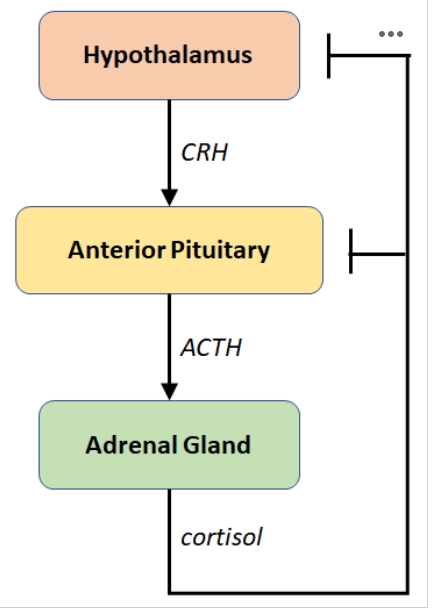
Imagine the following situation: The hypothalamus creates a hormone known as CRH. When present, CRH will stimulate the anterior pituitary to create a hormone known as ACTH. ACTH has the ability to act on the adrenal glands, which then produce cortisol. Cortisol has the ability to affect both the hypothalamus and anterior pituitary by stopping each from producing more hormones.
True or False? If cortisol levels are low, the production of CRH will be low.
False
Male and female gametogenesis results in the same number of functional gametes being created from one original diploid precursor cell. true or false.
false
The following steps refer to various stages in how an electrochemical signal is sent from one neuron to the next across a synapse.
1. Neurotransmitter binds with receptors associated with the postsynaptic membrane.
2. Calcium ions rush into the neuron's cytoplasm.
3. An action potential reaches the end of a presynaptic neuron’s axon and causes depolarization.
4. The ligand-gated ion channels open.
5. The synaptic vesicles release a supply of neurotransmitter into the synaptic cleft.
Which sequence of events is correct?
3 → 2 → 5 → 1 → 4
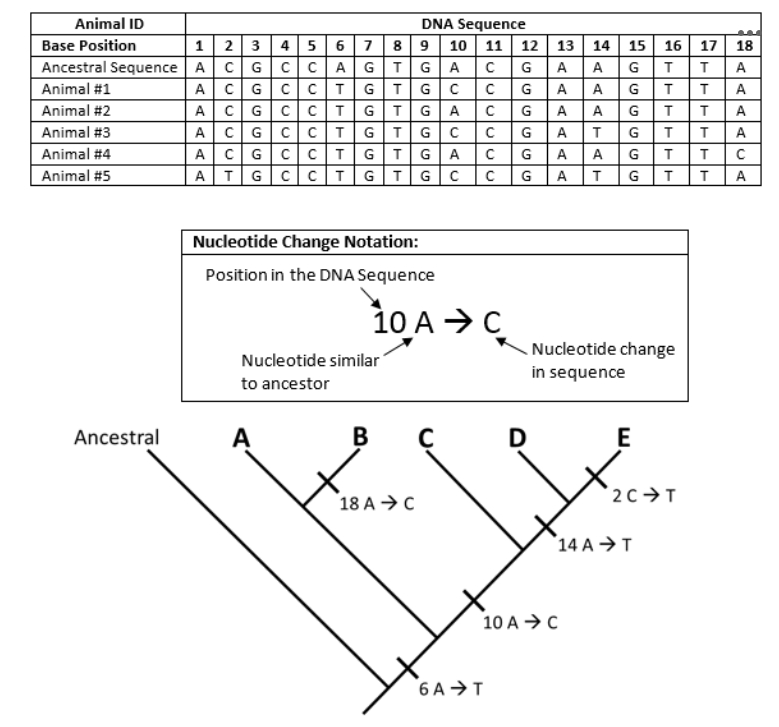
Below is a table containing the DNA sequence of a particular gene found in five different species of animals and their common evolutionary ancestor. A second table explains the notation used in building the phylogenetic tree.
Using this information, determine the correct placement of Animal #2 on the phylogenetic tree provided.
A
Fill in the blanks. In plants, sporophytes produce _________ and grow from _______.
Spores / Gametes
True or False? Acclimations are phenotypic and short-term, while adaptations are genotypic and long-term.
true
Which of the following characteristics are found in ALL land plants? Select all that apply.
Option A
vascular tissue
Option B
pollen
Option C
cell wall made of cellulose
Option D
participate in alternation of generations
Option E
seeds
Option F
presence of nucleus in cells
Option G
spores
spores, presence of nucleus in cells, participate in alternation of generations, cellulose in cell walls
Mammals secrete urea as their nitrogenous waste because urea ________.
is more metabolically intermediate to synthesize than other excretory products, balancing metabolic costs and water loss
Which of the following statements is true of fishes that live in freshwater?
Water enters epithelial cells in their gills via osmosis.
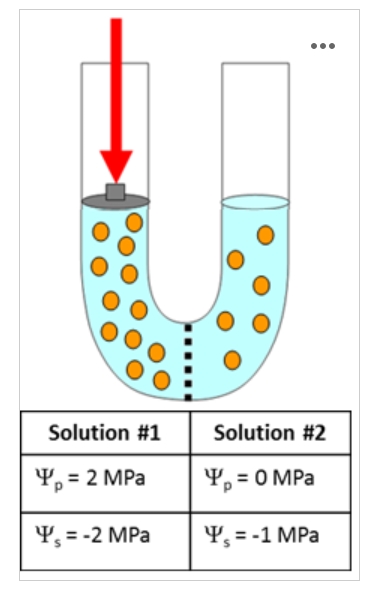
If enough solute was added to Solution #2 to change the solute potential by 2 MPa, in which direction would osmosis then occur?
From Solution #1 into Solution #2.
Match the structure of the nephron to its function. Not all answers will be used.
thin ascending limb
descending limb
proximal tubule
collecting duct
Bowman’s capsule
passive transport of salts, passive transport of water, reabsorbs electrolytes nutrients and water, regulates water retention, size-selective filtration of water waste nutrients and electrolytes
Which of the following is thought to be first type of living organism on earth?
Non-photosynthesizing prokaryotes
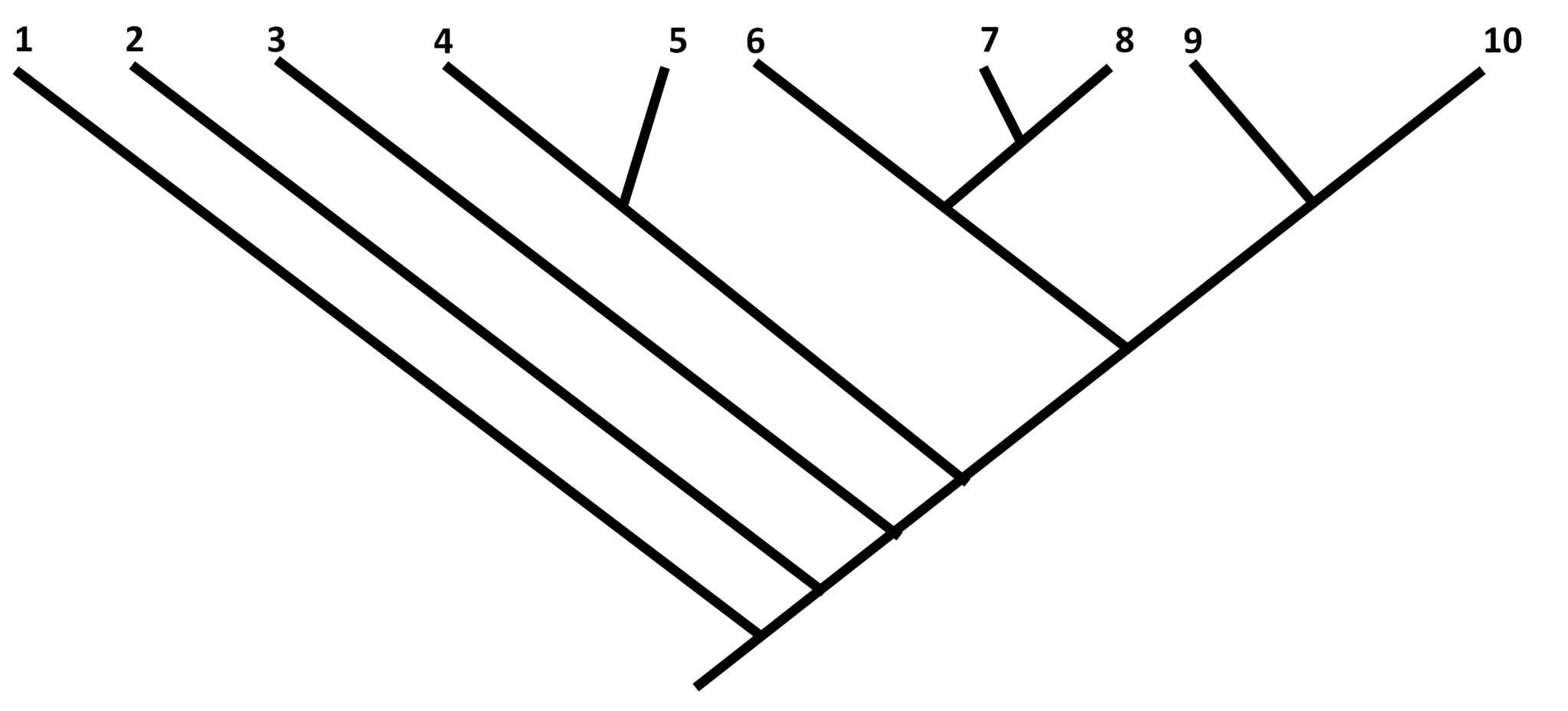
According to the phylogenetic tree below, how could we best describe a group of organisms that includes taxa 6, 7, 8, and 9?
Paraphyletic
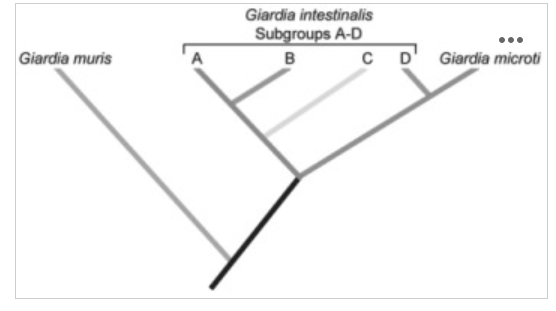
According to the phylogenetic tree above, G. intestinalis Subgroups A-D constitute a ________ group.
Paraphyletic
Which of the following describes secondary growth?
Development of wood and bark
Match the following genes to their developmental roles within a regulatory cascade.
Cells organized into individual segments
Triggers apoptosis
Establishes anterior and posterior ends of a developing organism
Responsible for the correct placement of appendages/structures
pair-rule
master regulator
homeotic
effector
Ichthyosaurs, now extinct, were aquatic reptiles with dorsal fins and tails, similar to those of fish. Their most recent ancestors were terrestrial reptiles that had neither dorsal fins nor aquatic tails. The dorsal fins and tails of ichthyosaurs and fish are ________.
adaptations to a common environment and examples of convergent evolution
Which of the following groups could be identified using the biological species concept?
Select all that apply.
Option A
bacteria living today
Option B
extinct dinosaurs
Option C
lizard species living today
Option D
sunflower species living today
C and D
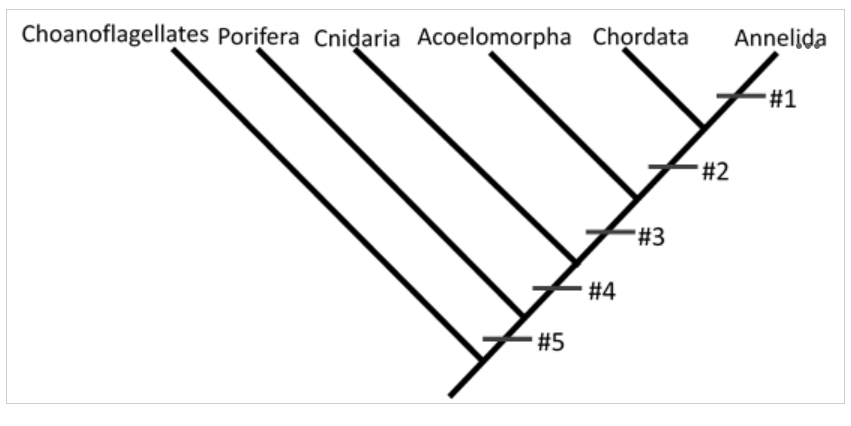
Use the following cladogram to match each characteristic to its appropriate tick mark based upon the phyla present.
proteosome development
true coelom
bilateral symmetry
true tissues
multicellularity
Birds secrete uric acid as their nitrogenous waste because uric acid ________.
requires little water for nitrogenous waste disposal, thus conserving water and reducing body mass
Question 42
Which of the following classification of animals can be described as radially symmetric animals with true tissues and specialized stinging cells known as nematocytes?
Cnidaria
Question 41
Which of the following classification of animals can be described as nonsymmetrical acoelomates with no true tissues and specialized cells knowns as choanocytes?
Porifera
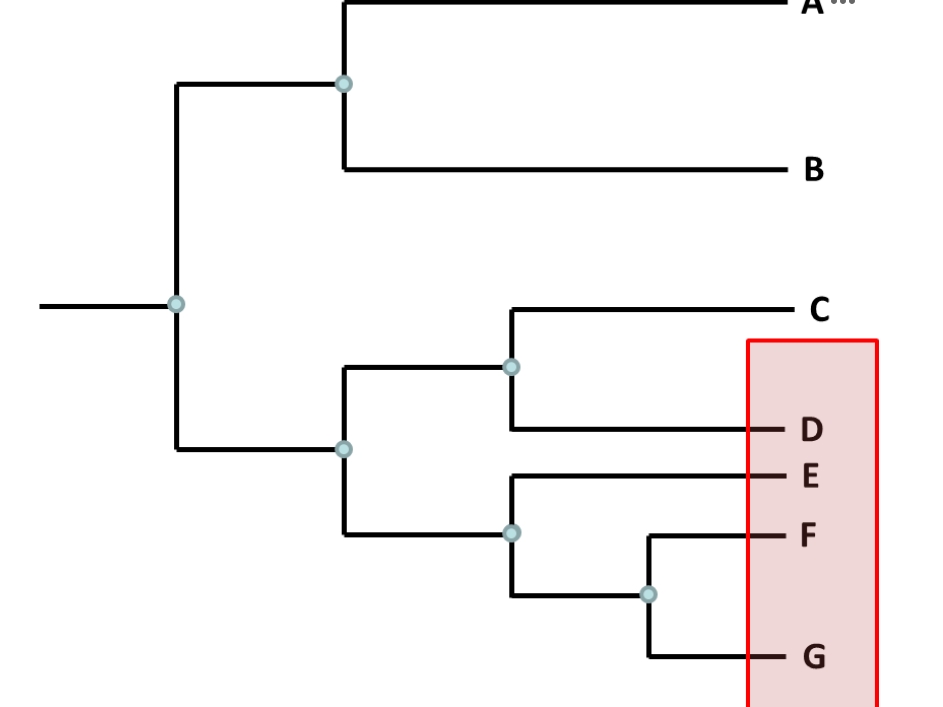
Question 38
If I were to consider a group on this tree that includes taxa D, E, F, & G, how would we best describe this group?
polyphyletic