MODULE 4: Personal Hygiene
 Call Kai
 Learn
Learn Practice Test
 Spaced Repetition
 Match
Match Flashcards
 Knowt Play
1/37

There's no tags or description
Looks like no tags are added yet.
Name | Mastery | Learn | Test | Matching | Spaced | Call with Kai |
|---|
No analytics yet
Send a link to your students to track their progress
38 Terms
What are some actions that can contaminate food?
scratching skin
sneezing
coughing
touching a pimple or infected wound or boil
touching hair or mouth
rubbing ear
not washing hands after using the restroom
wiping or touching nose
wearing a dirty uniform
spitting
Is human skin free from bacteria?
no, human skin is never free from bacteria, even after washing hands
What is staphylococcus aureus?
a food poisoning bacteria found on skin, nose, mouth, ears, and throat of 50-70% of healthy people
not toxic at low levels
higher concentrations found on pimples, acne, skin wounds, and inflamed skin
food workers who touch a contaminated area and touch food an transfer the bacteria
What is your role as a manager when it comes to personal hygiene?
ensure a hygiene program is in place and that it is followed by workers though training
be a model for behavior
ensure proper signage is displayed
revise program as needed to ensure good practices or regulatory policy changes
What are some good basic personal hygiene habits?
bathe daily with soap and water
arrive to work clean
when possible change into work clothes at the work location
keep fingernails short, well-trimmed, and clean
avoid fake fingernails and nail polish
What are some activities we want to limit at the workplace?
chewing gum
chewing tobacco
smoking
eating or drinking
using electronic devices
touching money
What are some good personal hygiene best practices for the workplace?
restrain hair
avoid hair accessories that are not secure
wear clean clothes
do not wipe hands on aprons or clothing
remove all bracelets and jewelry except plain band
cover wounds or boils with an impermeable (leak-proof) cover
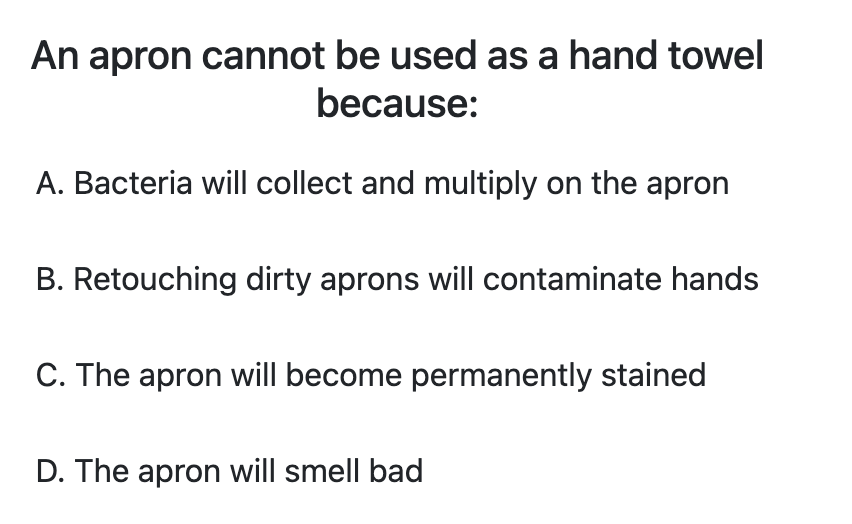
A and B
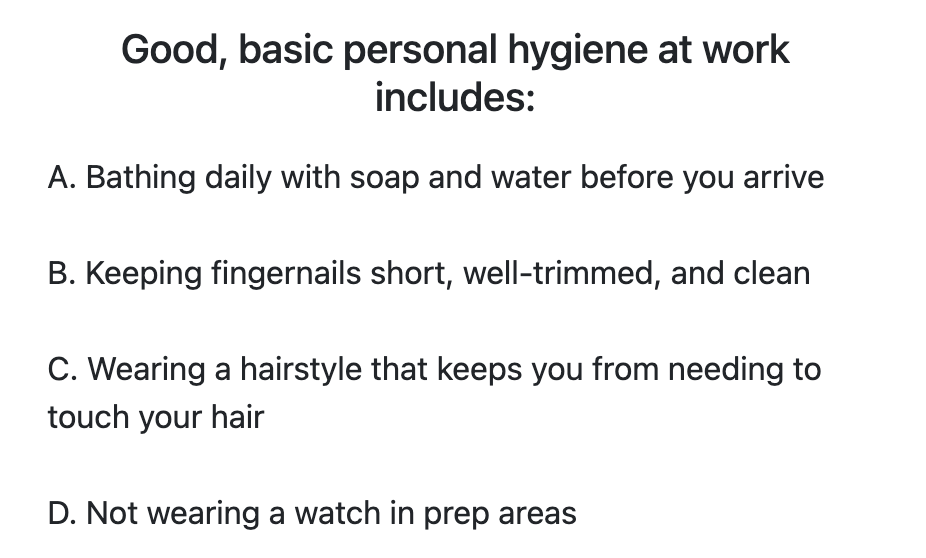
A, B, C, and D
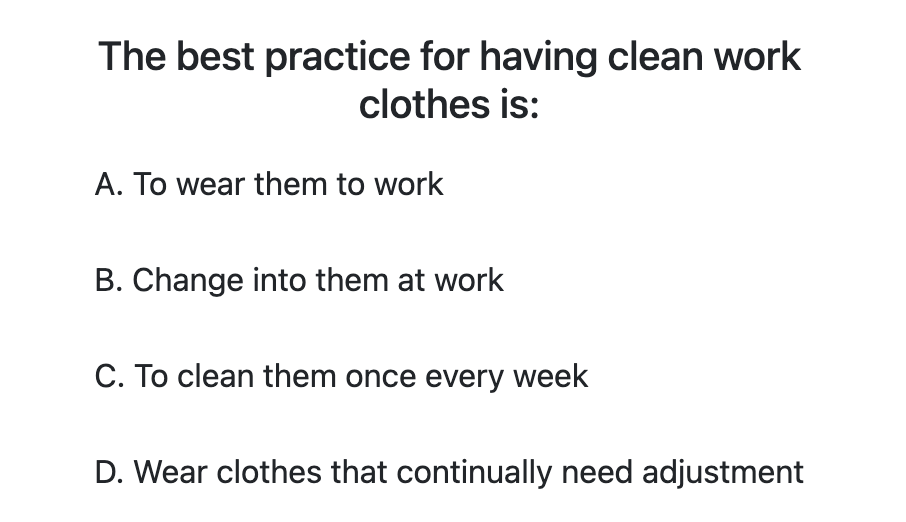
B
Where do contaminants mostly come from?
often come from hand-to-food transfer
dirt under nails
not washing hands after using the restroom
not washing hands after touching raw meat
chemical residue from cleaning product
How do we prevent hand-to-food transfer of contaminants?
frequent handwashing
the entire handwashing process should take at least 20 seconds
When should hands be washed?
using the restroom
touching body or clothing
coughing, sneezing, blowing nose, or using a tissue
eating, drinking, smoking, chewing gum or tobacco
handling soiled items
taking out garbage
touching anything that may be contaminated
handling raw meats, seafood, and poultry
changing tasks
leaving or returning to prep area/kitchen
handling money
using electronic devices
handling service animals or aquatic animals
handling chemicals
Where should workers wash their hands? What is needed in this stations?
only wash hands in designated hand-washing stations
do not wash in sinks for washing cookware, prepping food, or utility sinks
sinks must have a supply of drinkable (potable) water
must have signage in restrooms and handwashing stations
What are some criteria needed for proper handwashing?
warm water (85ºF/29ºC)
wet arms below the elbow
apply approved hand soap and rub for at least 10-15 sec
pay attention to the area between your fingers, under your nails, and fingertips
dry hands and arms with paper towels/air-drying machines and use a paper towel to turn off the faucet and open the restroom door
How should prosthetic devices be treated?
should be treated the same as natural skin
need to be washed the same as natural skin
Can hand antiseptics be used to replace handwashing?
no
can be used WITH handwashing to reduce bacteria on the skin
What is the manger’s responsibility when it comes to handwashing?
monitor handwashing processes of employees
immediately address problems
dispose of potentially contaminated food and clean equipment
retrain employees on proper techniques, and continue to monitor them
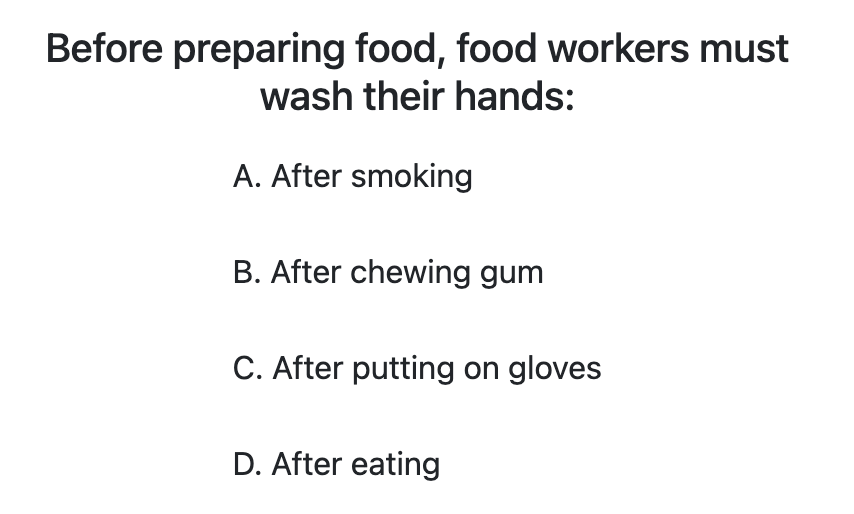
A, B, and D
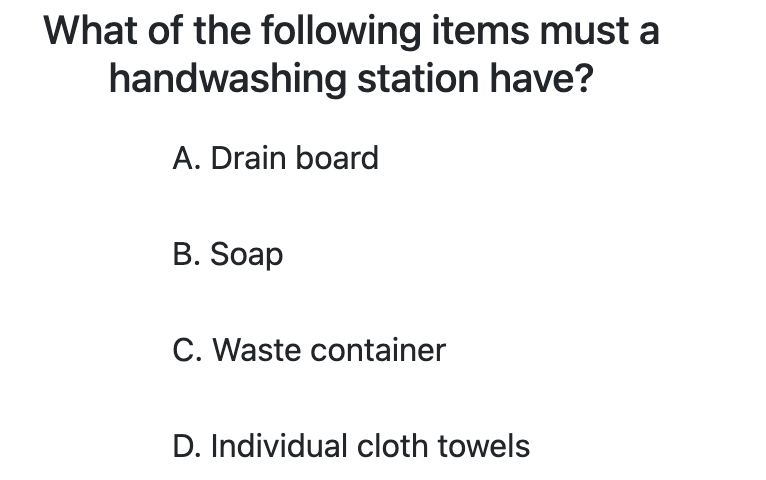
B and C
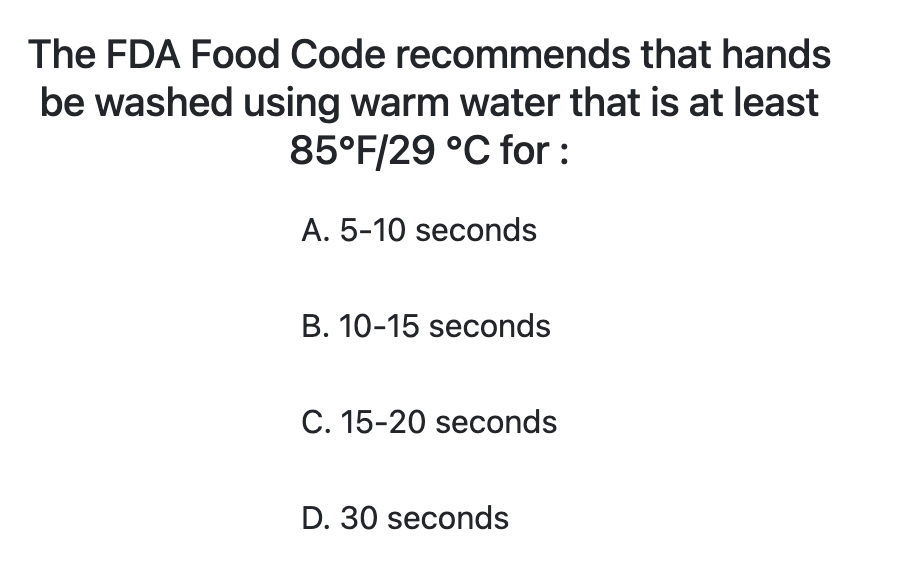
B
When should we avoid using bare hands?
when in contact with ready-to-eat foods
more important if working with highly susceptible populations
however policies on bare-hand contact with some foods vary in each jurisdiction
best to use gloves, deli tissues, or serving utensils
When is it typically allowed to use bare hands when handling food?
can be safe if food will be cooked after contact to required minimum temperatures
What are some characteristics of single-use gloves?
used along with handwashing, cannot replace
help to provide an additional barrier between skin and food
should be used only once then discarded
should be used with ready-to-eat foods that will not be cooked again
What kind of gloves should you have in the workplace?
gloves approved for food prep with different sizes
offer non-latex alternatives
cut resistant gloves (reusable but must be cleaned and sanitized between tasks)
If you are changing tasks from a non-TCS food to another non-TCS food, do you need to change gloves?
not needed unless it has been more than four hours since the gloves were last changed
When should you change gloves?
if dirty or torn
when starting a new task
after interruption during which contaminated items were touched
after handling raw meat, poultry, or seafood
before handling ready-to-eat foods
after four hours of continuous use
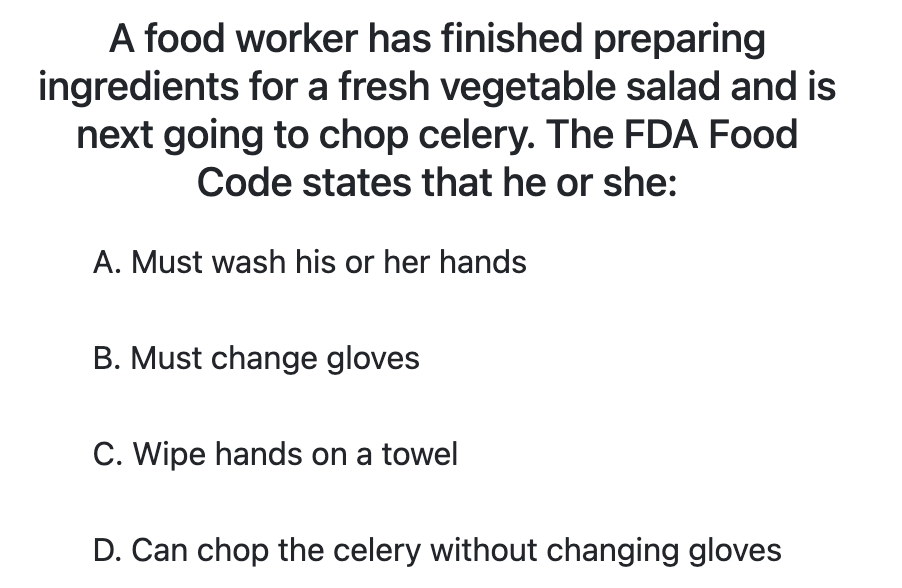
D
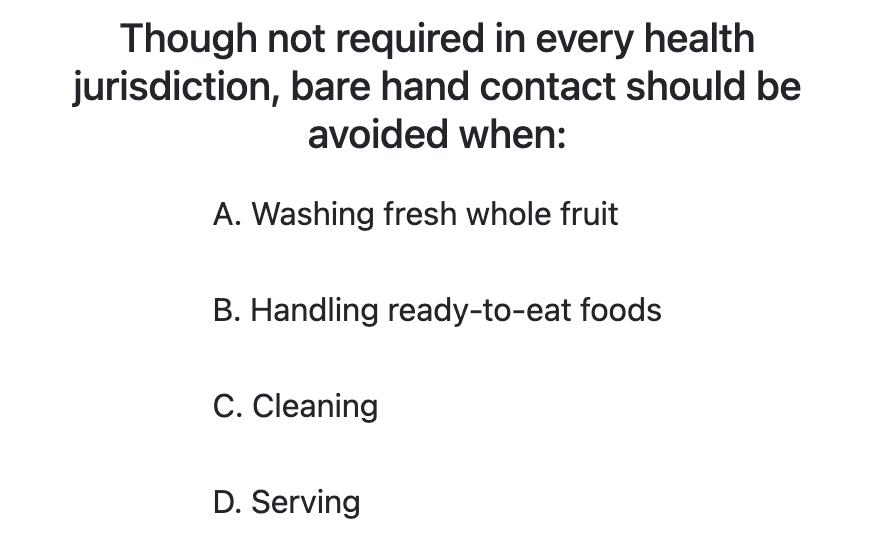
B
What are signs of staff illness?
coughing
sneezing
nasal discharge
cold sweats or chills
vomiting
excessive trips to the restroom
yellowing of skin
What should a manager do if a worker has an infected wound/boil?
require the worker to cover the wound and potentially use additional barriers (ex. gloves)
if not covered, restrict the worker’s activity
What should a manger do if a worker has a sore throat with fever?
restrict activity
exclude if working with HSPs
require medical note to return to work
What should a manger do if a worker has a persistent sneeze, cough, runny nose with discharge?
restrict activity
What should a manger do if a worker experiences vomiting or diarrhea?
exclude form operation
must have no symptoms for 24 hours and or a medical release to return from work
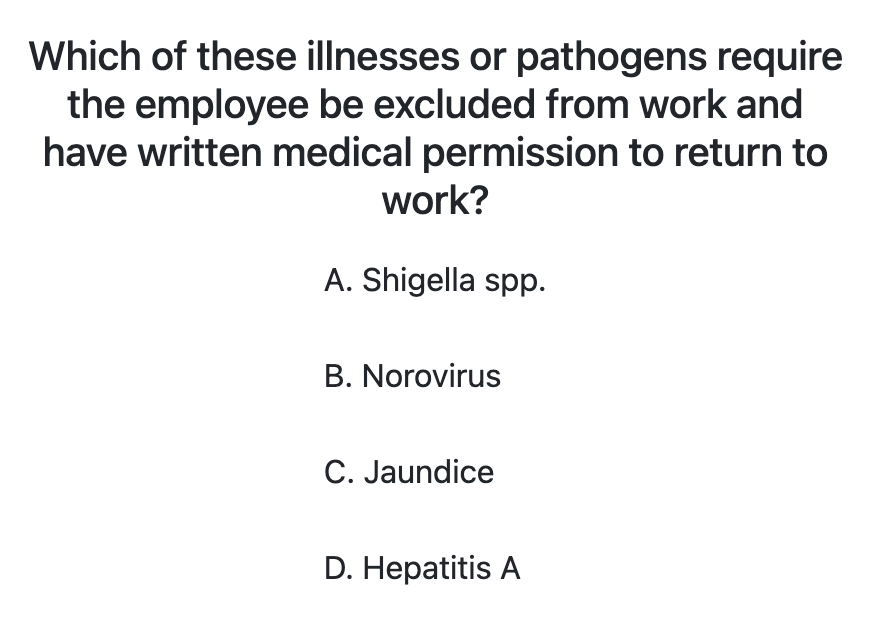
What should a manager do if a worker experiences jaundice?
exclude from operation if symptoms have been occurring for 7 days or less
report to regulatory agency
must have a written medical release and regulatory approval needed to return to work
What should a manager do if a worker has an illness caused by the CDC’s “big six”?
exclude from operation
report to regulatory agency
written medical release and regulatory approval needed to return to work
What is the difference between a chronic condition vs. a contagious illness?
chronic: one that lasts three or more months that generally cannot be prevented by vaccines or cured by medication
Americans with Disabilities Act (ADA) protects individuals with HIV and Hepatitis B as they are still able to handle food as the virus is not spread through food
contagious: can be transmitted to another person by physical contact or by causal contact with secretions, objects touched by an infected person, or thorough the air
all the above