epigenetics
 Call Kai
 Learn
Learn Practice Test
 Spaced Repetition
 Match
Match Flashcards
 Knowt Play
1/15

There's no tags or description
Looks like no tags are added yet.
Name | Mastery | Learn | Test | Matching | Spaced | Call with Kai |
|---|
No analytics yet
Send a link to your students to track their progress
16 Terms
what does epigenetics involve
changes in gene function, without changes to the base sequence of dna
what is the epigenome
all chemical modifications to all histone proteins + dna in an organism
in eukaryotic cells, where do we find DNA in the nucleus?
wrapped around proteins called histone
how can histone proteins be chemically modified
addition of acetyl groups
how can dna be chemically modified
addition of methyl groups without changing the base sequence
are the epigenome and genome heritable?
yes
what is the difference between what the epigenome and genome can do
epigenome can undergo change
why do identicaly twins become more distinguishable with age?
same dna, epigenomes change independently = differences
what are changes in the epigenome caused by?
changes in the environment like smoking, stress, exercise, diet, internal signalling from the bodys cells
what does the chemical modification of histones control? what does this result in?
how tightly the dna is bound- intermolecular bonding between histones + DNA changes. if DNA wound more tightly in certain area, genes in this section switched off- gene + promotor regions hidden from transcription factors and RNA polymerase
is the modification of histones reversible and irreversible? what does this mean?
reversible therefore can be different in different cell types and can vary with age
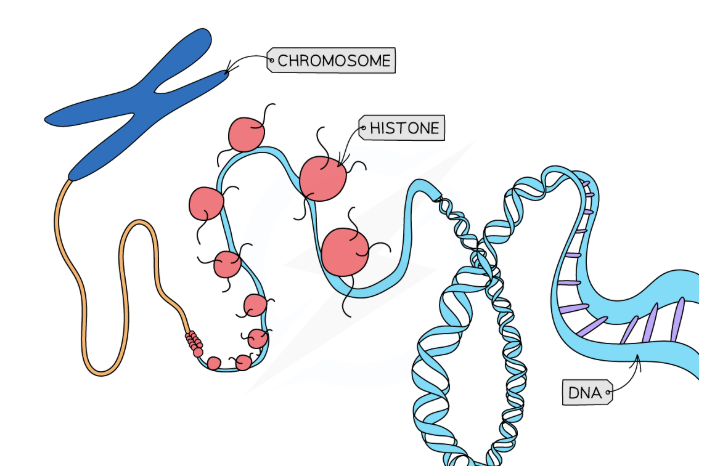
what does this image show
dna wrapped around histone proteins which form a nucleosome, which coil tightly around each other to form chromosome structure
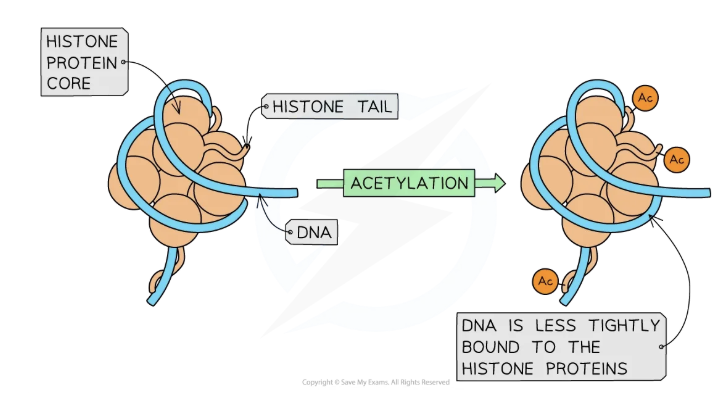
explain the process of acetylation of histones
lysine has positively charged R group which forms ionic bonds with negatively charged phosphate backbone of DNA. adding acetyl groups (COCH3) to lysine amino acids on histone proteins removes the positive ion and therefore removes a bond between the histone protein and the DNA. results in dna wrapping less tightly around the histones
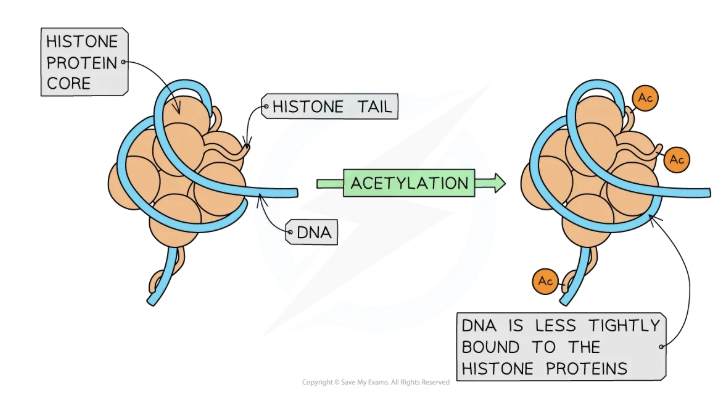
when DNA is less tightly wrapped around the histones, what happens to RNA polymerase and transcription factors?
RNA polymerase and transcription factors can bind more easily and gene expression is switched on
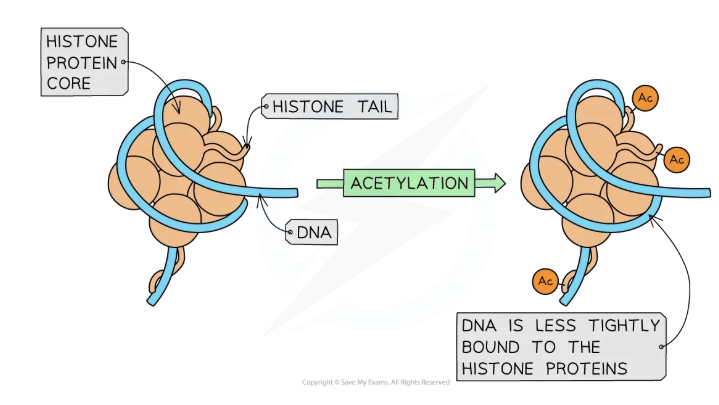
what does removal of acetyl groups (deacetylation) cause?
inhibits transcription
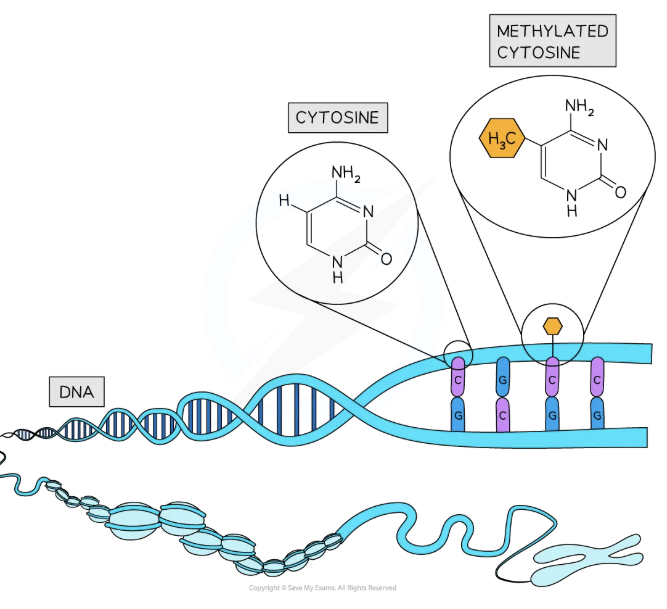
explain the methylation of DNA
methyl groups (CH3) added to carbon molecule on cytosine bases. this suppresses transcription of the affected gene. this is because methylated bases attract proteins that bind to the dna and inhibit transcription