Parasitology Test 1 Review
0.0(0)
Studied by 0 people Call Kai
 Learn
Learn Practice Test
 Spaced Repetition
 Match
Match Flashcards
 Knowt Play
Card Sorting
1/62

Earn XP
Description and Tags
Last updated 7:05 AM on 2/16/23
Name | Mastery | Learn | Test | Matching | Spaced | Call with Kai |
|---|
No analytics yet
Send a link to your students to track their progress
63 Terms
1
New cards
African Sleeping Sickness
Phase IV: Caused by Trypanosomes.
severe headaches, emaciation, mental dullness, apathy (toxicity in spinal fluid causes lethargy), drowsiness/coma, death (heart failure, meningitis, misfortune, ect.).
Tryps never invade host cells, but damage them, host agglutinates (clump together) erythrocytes
severe headaches, emaciation, mental dullness, apathy (toxicity in spinal fluid causes lethargy), drowsiness/coma, death (heart failure, meningitis, misfortune, ect.).
Tryps never invade host cells, but damage them, host agglutinates (clump together) erythrocytes
2
New cards
Pathogenicity
Is linked with the parasite's ability to evade nonspecific resistance mechanisms, specific acquired immune responses, and to prevent induction and expression of host immunity. (ex. Histomonas meleagridis and black head disease in turkeys and other domestic birds- causes sever necrosis in the liver and other submucosa tissue.)
3
New cards
Glossina
Species of flies (tsetse) that transmits African trypanosomiasis.
4
New cards
Waterbottom sign
Phase III: Large bulge at the base of the cervical spine. Caused by Trypanosomes collecting in lymph nodes and channels (lymph nodes enlarge). No cell invasion, but a proliferation of endothelial cells, leukocytes infiltrate; fever, headache, delayed sensation to pain, weakness. Duration of phase several years w/ *T. gambiense*; 4 mos. to 1 yr. w/*T. rhodesiense*
5
New cards
Chagas disease
Transmitted through *T.cruzi* via African kissing bug*.* Wild and domestic animals serve as reservoirs. Has two phases the acute (Romana’s) and chronic.
6
New cards
Romana’s sign
edema of eyelid/swelling of preauricular lymph nodes. Acute phase (invasion of cells/tissues) can be rapidly fatal, most common in young children, but disease may stay “dormant” for years and then show acute symptoms
7
New cards
*Trypanosoma*
Parasitic in a species of vertebrates. Kineoplastides, unicellular, monophyletic.
*Trypanosoma brucei* - sub species *T. b. brucei*, *gambiense* and *rhodesiense.* (morphologically indistinguishable but present differently clinically). Can cause African Sleeping Sickness.
*Trypanosoma brucei* - sub species *T. b. brucei*, *gambiense* and *rhodesiense.* (morphologically indistinguishable but present differently clinically). Can cause African Sleeping Sickness.
8
New cards
Parasitism
The most common way of life on the planet. A relationship in which one of the species (the parasite), harms or lives at the host's expense ---> ex. tissue damage, causing an acute immune response, co-opting nutritive resources, etc.
9
New cards
Hyperparasitism
When parasites have parasites.
10
New cards
Endoparasite
An internally infective form (ex. cat tapeworm)
11
New cards
Ectoparasite
An externally infective form (ex. fleas)
12
New cards
Obligate Parasite
Must be parasitic to complete the life cycle (tapeworm)
13
New cards
Facultative Parasite
Not normally parasitic, but may become so if they enter the host. (ex. The amoeba *Naegleria* *fowleri* normally found in ponds, can enter humans & cause death by massive brain destruction.)
14
New cards
Accidental Parasite
Parasitic individual enters the "wrong" host; will not survive, but can cause damage to the "accidental" host. (ex. dog hookworm can cause cutaeneous larval migrans in humans (aka creeping eruption)
15
New cards
Parasitoid
Immature insect species enter host, develop & feed on host, finally kill the host
16
New cards
Definitive host
Host in which the parasite reaches sexual maturity & reproduces
17
New cards
Intermediate host
A host is required for development ( ex. mice and squirrels in cat tapeworms)
18
New cards
Paratenic/transport host
A host that may house a larval form of a parasite, transferred from its intermediate host, may function as an "ecological bridge." ( ex. thorny headed worm of owl develops to infective stage in insects. \*\*ex. the nematode species complex *Trichinella* *spiralis* can occur in almost any warm blooded vertebrate)
19
New cards
Ecological niche
Can be measured by quantifying aspects of a habitat (multi-dimensional).
A parasitic species niche could consists of:
* where adult lives
* where larval forms live
* where dispersal stages exist
(ex. ground, pond, stream,
ect.)
A parasitic species niche could consists of:
* where adult lives
* where larval forms live
* where dispersal stages exist
(ex. ground, pond, stream,
ect.)
20
New cards
Relative density
Average number parasites per host in a single population (=the sample mean)
21
New cards
Prevalence
Number of hosts in a sample parasitized by a single species.
22
New cards
Macroparasites
(Tapeworms, nematodes) occur as aggregated (overdispersed) populations, not as normal (bell shape) distributions
23
New cards
Overdispersed populations
Distribution pattern of macroparasites (tapeworms/nematodes)
24
New cards
Microparasites
ex. parasitic protozoans; do not follow the macroparasite distribution patterns
25
New cards
Transmission adaptations
ex. larvae of the trematode *Leucochloridium* (found in snails) are elongated and have pigmented brown and green bands, pulse, and look like caterpillars (and thus "tasty" to birds) the definitive host.
26
New cards
Co-evolution
Process in which two species evolve in response to changes in the environment/ each other. Will influence each others fitness and evolution.
27
New cards
Susceptible
Condition when host cannot eliminate parasite
28
New cards
Antibody
Immunoglobulin protein that binds with an antigen. Made of: Four polypeptide chains (two “light” & two “heavy” chains). Variable regions at the end of each chain determine the antigen the antibody will bind with. Antigen binding is a PHYSICAL event, specificity akin to “lock and key”
The action of enzymes and substrate constant region of the heavy chain determines the CLASS of antibody.
The action of enzymes and substrate constant region of the heavy chain determines the CLASS of antibody.
29
New cards
Innate defense
First line of defense, non-specific response, non-adapted
30
New cards
Acquired immunity
Adapted immunity, immunity gained from the development of antibodies in response to antigen exposure.
31
New cards
Immunodiagnosis
A variety of tests have been developed to use the host’s immune response as a method of diagnosis. (ex. ELISA)
32
New cards
ELISA
Enzyme-Linked Immuno-Sorbent Assay
1. known antigen placed in a test well
2. potential host serum was added, then rinsed
3. enzyme-linked antibody added, then rinsed
4. enzyme-substrate added
5. if the enzyme binds to the substrate (pos. color test), there is an indication of antibody/antigen interaction
1. known antigen placed in a test well
2. potential host serum was added, then rinsed
3. enzyme-linked antibody added, then rinsed
4. enzyme-substrate added
5. if the enzyme binds to the substrate (pos. color test), there is an indication of antibody/antigen interaction
33
New cards
Phagocytosis
Phagocyte cells eat/consume the invader. ‘Non-self’ method of recognition. Vertebrates possess both fixed (ex. macrophages) and mobile (ex. neutrophils, eosinophils, basophils & monocytes) phagocytes.
34
New cards
Cytokine
Proteins important in immune cell communication & transportation.
Interleukin-1: produced by activated macrophages, involved in inflammatory responses and activation of T and B cells. IL- 4 & IL-6: growth factor for B cells
Interleukin-1: produced by activated macrophages, involved in inflammatory responses and activation of T and B cells. IL- 4 & IL-6: growth factor for B cells
35
New cards
Antigen
Foreign substance that stimulates immune response (commonly proteins). /Any substance that prompts an immune response.
36
New cards
Trophozoite
Feeding, growing stage (vegetative), found generally in gut of host \*ectoplasm- thin, clear outer plasm \*endoplasm- granular, dense, has inclusions (food vacuoles, nucleus, organelles)
\*endosome is central part of the nucleus (a general term for aggregation of nuclear particles), structure differs among species (of taxonomic use)
\*endosome is central part of the nucleus (a general term for aggregation of nuclear particles), structure differs among species (of taxonomic use)
37
New cards
Cyst
A capsule-like sac or wall that encloses parasites in the dormant or infective stage.
They have a characteristic number of nuclei (ex. *Entamoeba* *histolytica* has 4, *E. coli* has 8)
They have a characteristic number of nuclei (ex. *Entamoeba* *histolytica* has 4, *E. coli* has 8)
38
New cards
*Entamoeba* *histolytica*
Morphology : trophozoites normally
20-30 μm (range 10-60 μm), w/ central
endosome & evenly dispersed chromatin
granules, cysts 5-20 μm
Life cycle: trophozoites dwell in colon of humans (mainly), dogs, pigs, & monkeys, cysts survive in warm, moist environments, mature cysts include 4 nuclei (a metacyst)
Symptoms: diarrhea (can contain blood), cramps, vomiting, malaise (esp. in pathogenic strains)
Pathology: hydrolyzing of host tissue (intestinal lesions in cecum, appendix, & colon) form flask-like ulcers, potential penetration of sub-mucosa, muscle layers and serosa (perforated colon), blood transfer of amebas to ectopic sites (formation of secondary lesions, ex. on liver, lungs) dysentery dehydration (can alone be fatal)
20-30 μm (range 10-60 μm), w/ central
endosome & evenly dispersed chromatin
granules, cysts 5-20 μm
Life cycle: trophozoites dwell in colon of humans (mainly), dogs, pigs, & monkeys, cysts survive in warm, moist environments, mature cysts include 4 nuclei (a metacyst)
Symptoms: diarrhea (can contain blood), cramps, vomiting, malaise (esp. in pathogenic strains)
Pathology: hydrolyzing of host tissue (intestinal lesions in cecum, appendix, & colon) form flask-like ulcers, potential penetration of sub-mucosa, muscle layers and serosa (perforated colon), blood transfer of amebas to ectopic sites (formation of secondary lesions, ex. on liver, lungs) dysentery dehydration (can alone be fatal)
39
New cards
*Entamoeba* *histolytica*
Diagnosis: Demonstration of cysts or trophs in stools, immunological or liver tests, molecular ID tests.
Epidemiology: promotion of disease: bad water supplies (cyst can live up to a month in cool water), unwashed food, contamination by flies & roaches, use of human excrement as fertilizer
Treatment: Metronidazole (Flagyl) is drug of choice (but carcinogenic), tetracycline/diiodohydroxyquinoline also used, ornidazole and tinidazole cure liver abscesses
Prognosis: good- if treated
Epidemiology: promotion of disease: bad water supplies (cyst can live up to a month in cool water), unwashed food, contamination by flies & roaches, use of human excrement as fertilizer
Treatment: Metronidazole (Flagyl) is drug of choice (but carcinogenic), tetracycline/diiodohydroxyquinoline also used, ornidazole and tinidazole cure liver abscesses
Prognosis: good- if treated
40
New cards
Night soil
Human __excrement__ collected at night from buckets, __cesspools__, and __outhouses__ and sometimes used as manure.
41
New cards
Zoonosis
Transmission of animal parasites to humans.
42
New cards
Red Queen Hypothesis
Each species has to run (evolve) as fast as possible just to stay a float, because predators, competitors, and parasites continuously evolve. “resource competition”
43
New cards
Immune evasion
A strategy used by pathogenic organisms and tumours to evade a host's immune response to maximize their probability of being transmitted to a fresh host or to continue growing, respectively.
44
New cards
Genetic Arms Race
Many hosts (es. vertebrates) have sophisticated immune systems, thus strong selection was most likely a result of individuals that developed phenotypes for such immunological “weaponry.” (ex. different/ interesting methods of invasion/ infection) (ex. *Trypanosoma* *spp*. display a continuous variation of antigenic coats & as the host mounts antibodies against one, another proliferates)
45
New cards
Monoxenous
One host (ex. amoebas)
46
New cards
Heteroxenous
Two hosts (ex. human kinetoplasts)
47
New cards
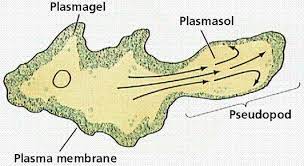
Pseudopod
A temporary protrusion of the protoplasm, as of certain protozoans, usually serves as an organ of locomotion or absorbing food. “false foot”
48
New cards
Flagellum
A slender threadlike structure, especially a microscopic __appendage__ that enables many __protozoa__, bacteria, __spermatozoa__, etc. to swim.
49
New cards
Reservoir host
The infectious agent in which the parasite normally lives/grows and multiples. May or may not be the transmission source. Can often show no symptoms.
50
New cards
Undulating membrane
(in trypanosomes) holds flagellum in relatively fixed position.
51
New cards
Kinetoplast
(unique to order Kinetoplastida) a single large mitochondrion, associated with kinetosome, contains own DNA
52
New cards
*Giardia* *lamblia (Giardia* *duodenalis*)
“Beaver Fever,” lacks mitochondria, placed “between” prokaryotes & eukaryotes on the evolutionary tree.
Aerotolerant anaerobes. 2 nuclei, multi flagellated.
Life cycle: cyst ingested by host, mature cysts contain “twinned” flagellates,
excystation in small intestine, reproduction by binary fission to AMAZING numbers
(14,000,000,000 cysts released in a single stool sample), trophs can be found
outside only in watery stools
Symptoms: mucus production, intense diarrhea, dehydration, intestinal
cramping, fatty stools, loss of weight (parasite feeds on mucus secretions)
Aerotolerant anaerobes. 2 nuclei, multi flagellated.
Life cycle: cyst ingested by host, mature cysts contain “twinned” flagellates,
excystation in small intestine, reproduction by binary fission to AMAZING numbers
(14,000,000,000 cysts released in a single stool sample), trophs can be found
outside only in watery stools
Symptoms: mucus production, intense diarrhea, dehydration, intestinal
cramping, fatty stools, loss of weight (parasite feeds on mucus secretions)
53
New cards
Kinetoplastida
A group of flagellated protists belonging to the phylum Euglenozoa, and characterised by the presence of an organelle with a large massed DNA called kinetoplast.
54
New cards
Amastigote
Flagellum very short, body small, diagnostic of *Leishmania.*
55
New cards
Trypomastigote
Kinetoplast near posterior of body, flagellum placed along the surface of the body (undulating membrane), continuing free anterior to body, diagnostic of *Trypanosoma.*
56
New cards
Epimastigote
Kinetoplast near posterior of the body, undulating membrane short, in the life cycle of *Trypanosoma*
57
New cards
Promastigote
Flagellum placed and directed forward (“normal”), in the life cycle of *Leishmania*
Kinetoplast is anterior to the flagellum and no undulating membrane.
Kinetoplast is anterior to the flagellum and no undulating membrane.
58
New cards
*Leishmania donovani*
Causes kala-azar and Dum-dum fever.
Morphology: amastigotes of *Leishmania* spp. look similar (rounded, 2- 3 μm, w/ large nucleus & kinetoplast), test for id. may be serological or molecular.
Life cycle: sandflies (*Phlebotomus* spp.) arthropod host takes in amastigotes from an infected vertebrate---> transformation into promastigotes + multiplication in gut move anteriorly in fly- --> infected into new host---> engulfed by macrophage---> binary fission and host cell rupture ---> new cell infection
Symptoms: intermittent headache & fever, occasional bleeding, dysentery, bloating of organs, wasting, anemia
Morphology: amastigotes of *Leishmania* spp. look similar (rounded, 2- 3 μm, w/ large nucleus & kinetoplast), test for id. may be serological or molecular.
Life cycle: sandflies (*Phlebotomus* spp.) arthropod host takes in amastigotes from an infected vertebrate---> transformation into promastigotes + multiplication in gut move anteriorly in fly- --> infected into new host---> engulfed by macrophage---> binary fission and host cell rupture ---> new cell infection
Symptoms: intermittent headache & fever, occasional bleeding, dysentery, bloating of organs, wasting, anemia
59
New cards
*Leishmania donovani*
Pathology: destruction of phagocytic cells (tremendous amt. of cells produced to fight infection, the destroyed), damaged caused by secondary bacterial infections, enlargement of spleen & liver (hepatosplenomegaly, see Fig. 5.22!!), body emaciation, eventually, bone marrow function is lost, death if untreated (90-95% of cases)
Treatment: injection of antimony compounds such as Pentostam, but some strains may be resistant to drugs, plant derivatives may show promise (see pg. 79). Anti-leishmanial activity has been shown for plants of the dogbane family. Miltefosine reported to cure 98% of visceral leish cases, may also be effective against cutaneous forms.
Prognosis: good if drugs and care are given, incomplete treatment may lead to Post-kala-azar dermal leishmanoid some 2 to 3 yrs. after, condition responds to treatment.
Treatment: injection of antimony compounds such as Pentostam, but some strains may be resistant to drugs, plant derivatives may show promise (see pg. 79). Anti-leishmanial activity has been shown for plants of the dogbane family. Miltefosine reported to cure 98% of visceral leish cases, may also be effective against cutaneous forms.
Prognosis: good if drugs and care are given, incomplete treatment may lead to Post-kala-azar dermal leishmanoid some 2 to 3 yrs. after, condition responds to treatment.
60
New cards
*Phlebotomus*
Transmittal sandfly species of *Leishmania*. Not all flies make good hosts
61
New cards
Hepatosplenomegaly
Enlargement of both the liver and spleen
62
New cards
Oriental Sore
Old World cutaneous *leishmaniasis*.
*Leishmania tropica/L. major-* Similar life cycle to L. donovani. Amastigotes reside in cells associated with skin near area of fly bite. Symptoms: small red sores, near the bite.
*Leishmania tropica/L. major-* Similar life cycle to L. donovani. Amastigotes reside in cells associated with skin near area of fly bite. Symptoms: small red sores, near the bite.
63
New cards
Mucocutaneous Leishmaniasis
Lesion around mucus membranes, increases in size, and often leads to a disfigurement.