Ch. 7 ~ States of Consciousness
 Call Kai
 Learn
Learn Practice Test
 Spaced Repetition
 Match
Match Flashcards
 Knowt Play
1/44

There's no tags or description
Looks like no tags are added yet.
Name | Mastery | Learn | Test | Matching | Spaced | Call with Kai |
|---|
No analytics yet
Send a link to your students to track their progress
45 Terms
What does our attentional system do?
filters out all the unnecessary things that happen so we aren’t overwhelmed, allowing us to focus on the tasks at hand
What is the filter theory?
created by Donald Broadbent
filter only allows certain information through further processing
e.g. question: you’re watching the lecture but the TV is playing in the background, what is allowing you to acknowledge it but not be attentive to it: aware of it, but not meaningful
How does the Cocktail part effect defy the statements of the filter theory?
even in background noise, you hear your name called
filter would say all meaningful things would be blocked, so why does hearing your name in all the noise alert you
What is the attenuation theory?
Developed by Ann Treisman (1967)
the things in the background aren’t blocked, just weakened
What is subliminal advertising?
uses sensory stimuli (like quick flashes of images or quiet audio) that fall below the threshold of conscious awareness.
What was the faulty of subliminal advertising?
wasn’t really effective
had little influence
What is implicit priming?
view a list of words with no explicit instruction to remember the words
later given a word-stem completion task
most likely to fill with a word you’ve previously seen
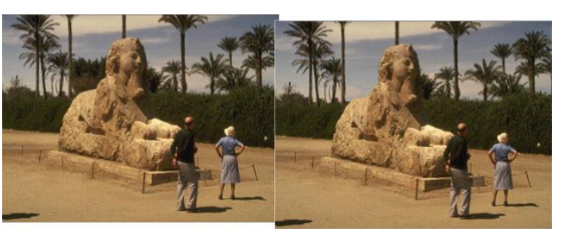
What is inattentional blindness?
we attend to what we expect to see
unexpected events go unnoticed
Why is listening to music with lyrics while trying to read sometimes distracting?
our brain is divided into two halves, some tasks are more dependent to process in one hemisphere than the other
language is heavily on the left side
so lyrics and reading will interfere
What is the purpose of split-brain surgery?
involves the complete severing of the corpus callosum
separates the left hemisphere from the right
done in those with severe epilepsy
What is spatial attention?
how we process the space around us
lots of it operates at the unconscious level
majority of our estimates are slightly to the left
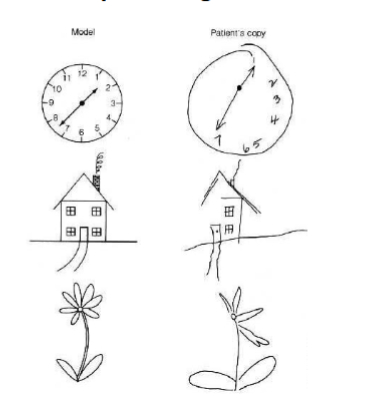
Spatial neglect
left side of the brain is unaware of
crossing lines out example
What are the two broad pathways that we process signals?
Dorsal
travels to parietal lobe
allows us to identify WHERE/HOW of the object
Ventral
travels to temporal lobe
allows us to identify WHAT we’re seeing
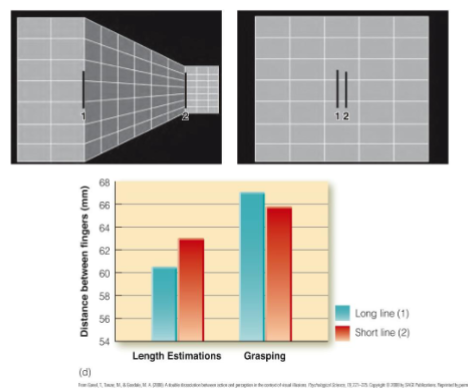
*reaching out to a cup
What are some examples of the ventral and dorsal pathways?
Just judging (ventral) doesn’t affect grasping and grabbing the lines (dorsal)
dorsal wants us to not think too hard on a motor task
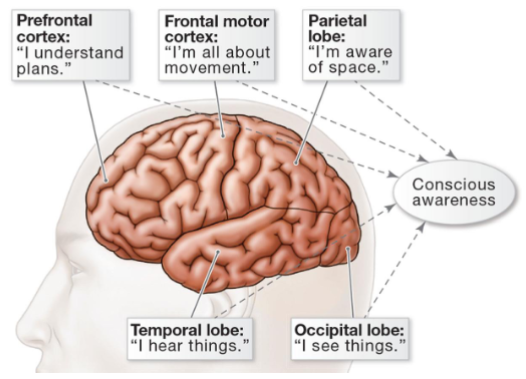
What is consciousness?
associated with brain activity
occur naturally but can be manipulated
What is the Global Workplace Model?
What are some ways that consciousness can be altered?
Traumatic Brain Injury
effect ranging from mild to severe and that depends on the degree of arousal and awareness
What are the two factors that determine the severity of brain injury?
Arousal: the fact that they person is awake
Aware: how aware is the person of the things going on around them
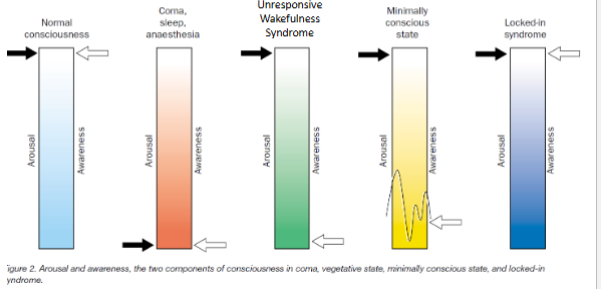
What is unresponsive wakefulness syndrome?
results from extensive brain damage
formerly known as persistent vegetative state
Terri Schiavo
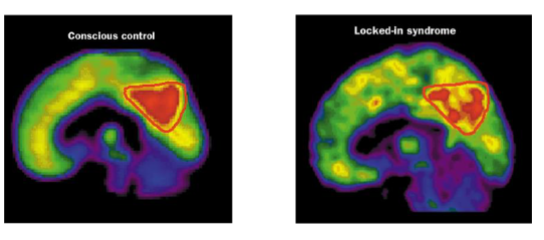
What is a locked-in syndrome?
as a psychological state, has been compared to being buried alive
full conscious awareness
What is hypnosis?
a state between sleep and wakefulness in which a person becomes highly suggestable
What are the two theories about how hypnosis works?
Neodissociation Theory
person is actually in this state but don’t do things that are out of character for them
Sociocognitive
fancy way of saying it’s not real, conforming to social expectation of what they feel a hypnotized person should feel like
How does mediation alter consciousness?
concentrative meditation: very relaxed state, focusing on one thing; person shuts out a lot of things around them
Mindfulness: lets their thoughts flow freely but don’t react to them
What is your circadian rhythm
24hr clock
biological, produced in our brains and body
visual signals traveling from eyes to hypothalamus and allow light to influence rhythmic activity of the SCN
How does melatonin contribute to our sleep?
gets signals from SCN to pineal gland influencing it’s production
when enters our bloodstream, we feel drowsy
when it gets dark outside we start to feel sleepy
What are the three ways of measuring sleep?
EEG: brain-wave activity
EMG: persons muscle tone and how much they can move their body
EOG: eye movements change, entering REM sleep eye movement can inc
What can the two stages of sleep be divided into?
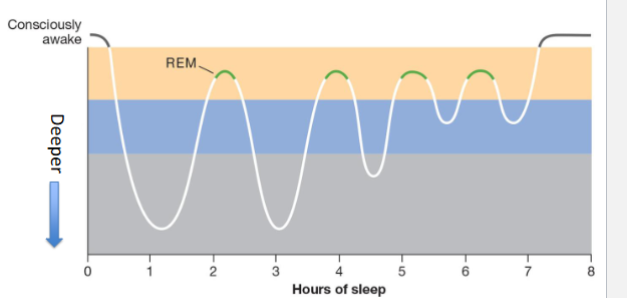
REM; reached after two hrs, brain is really aware
non-REM
*kinda like you have to earn your way into it, the longer you sleep it’s easier to go into REM sleep
What is REM rebound?
catching up on REM sleep one was deprived of
the next night one goes into that stage faster and stays there longer
What is the diff between REM dreams and non-REM dreams?
REM are more vivid areas linked to motivation, emotion and vision are active in this time
prefrontal cortex (reasoning) is inhibited so it can be very crazy
Atonia
What is atonia?
*signals sent from brain stem to diff parts of brain and spinal cord
lack of muscle tone in the body, people are essentially paralyzed during REM sleep
What is sleepwalking?
very little conscious awareness of what is going on around them
What are night terrors?
usually happen in childhood, grow out of it
seeing scary things in dreams
What is insomia?
Onset: very hard to fall asleep
Maintenance: can fall asleep but hard to stay asleep
Terminal: can fall asleep and stay asleep but wake up and can’t fall back asleep
What is narcolepsy?
Cateplexy: all lose of muscle control
Orexin neurons in hypothalamus
Waking up allows signaling in which areas of the brain?
forebrain and spinal cord
RAS is a mixture of nuclei and fibers in the brainstem
What are benzodiazepines?
treating anxiety (anti-anxiety)
minor tranquilizers, calm them down
What are barbiturates and Alcohol
produce sedation (a sedative) and can induce sleep
What is MSMA (Ecstasy)
*a stimulant
slow to act because it’s in pill form
Lasts up to 4 hours
strong sense of euphoria and heightened sense of awareness
Acts on serotonin, dopamine and norepinephrine
What are opioids effect?
they are addictive since their effects are pleasurable
Naturally derived from seeds of opium poppies for thousands of years.
What is morphine?
*an opioid
synthesized from the active ingredient found in opium
Named after “Morpheus” a Greek god of dreams
What is heroin?
*an opioid
first used to treat bad coughs
synthesized from morphine in late 1800’s
very potent paid reliever but highly addictive, too much can slow respiratory action down and cause failure
What is fetanyl?
a slow release drug
about 80 times that of morphine
What are hallucinogens?
alter sensory perception and produce vivid hallucinations
a type is LSD
first discovered by Swiss chemist Albert Hofmann
What are some experiences with the usage of hallucinogens?
some have a very pleasurable experience (euphoric)
some have very frightening
*was criminalized
What could LSD be a good thing for now that researchers are looking at it again?
think they may be beneficial in palliative care
addition rates are actually quite low