Kinesiology and Biomechanics: Movement, Forces, and Joint Mechanics
 Call Kai
 Learn
Learn Practice Test
 Spaced Repetition
 Match
Match Flashcards
 Knowt Play
1/30

There's no tags or description
Looks like no tags are added yet.
Name | Mastery | Learn | Test | Matching | Spaced | Call with Kai |
|---|
No analytics yet
Send a link to your students to track their progress
31 Terms
Biokinetics
Study of forces and their effects (static & dynamic)
Biodynamics
Scientific study of the nature and of all organisms behaviour during motion
Kinesiology
Study of the science of human movement and human movement problematics; factors affecting human movement; same as biodynamics but only applies to humans
Kinematics
Study of motion without forces
Kinetics
Study of motion with forces
Flexion & Extension
Movement in the Sagittal Plane about the x-axis
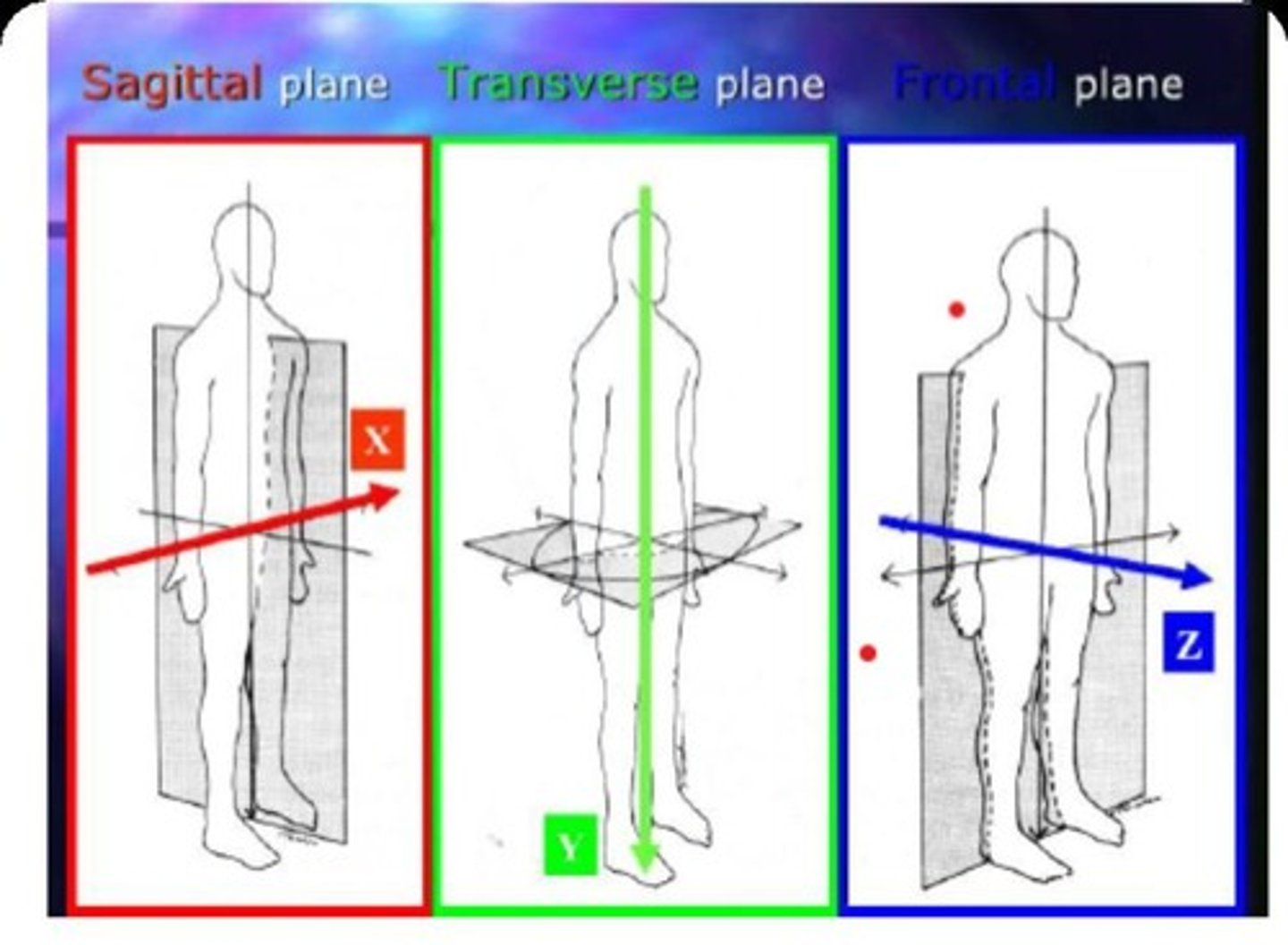
Rotation
Movement in the Transverse plane about the y-axis
Lateral Flexion
Movement in the Coronal Plane about the z-axis
Translation/Linear Motion
Movements which occur along a fixed or relatively fixed axis where all points in the object move in the same direction to the same extent
Curvilinear Motion
Movements as a result of combined rotation and translation
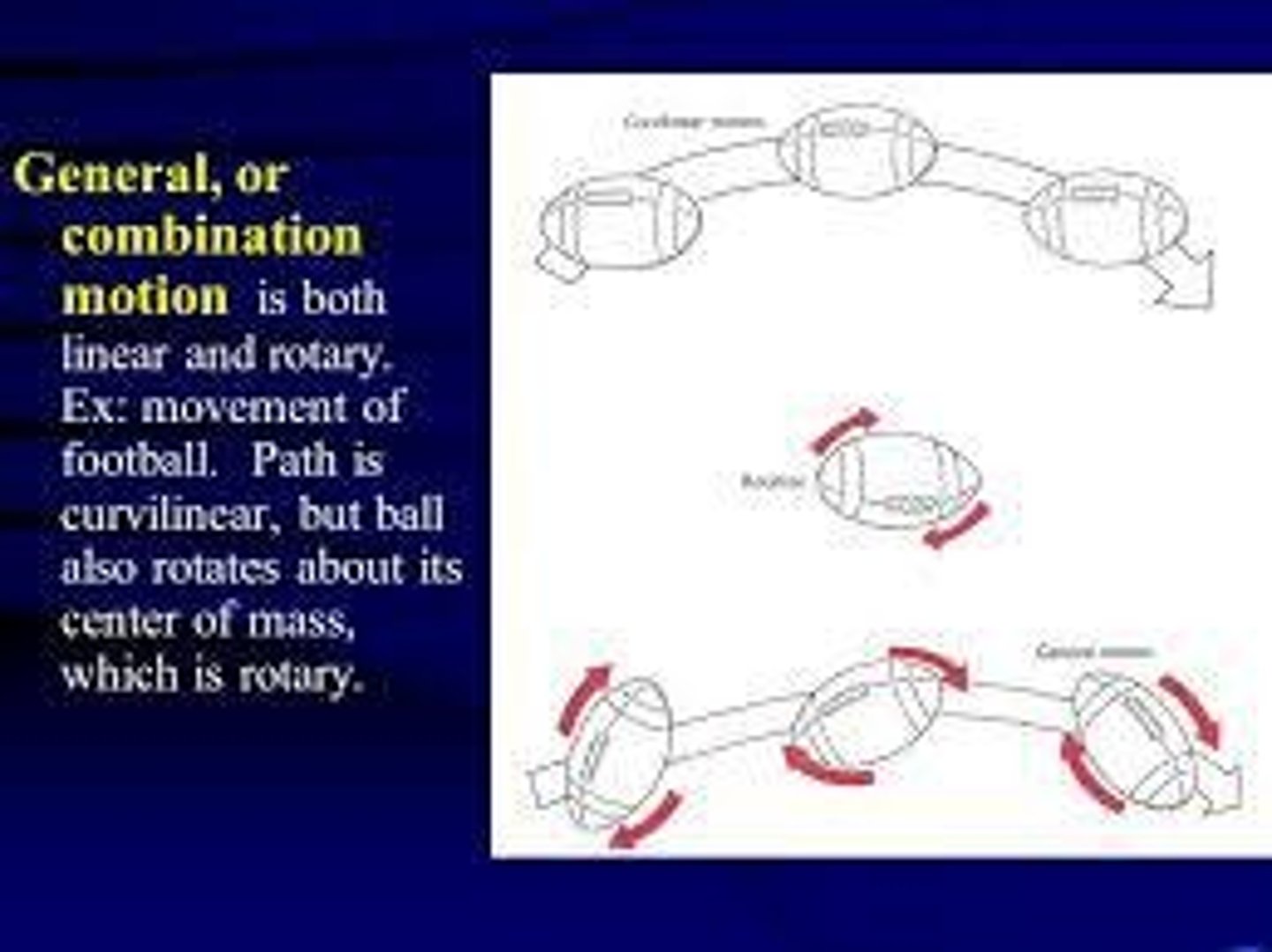
General Plane Movement
Special type of curvilinear motion where an object or limb is free to rotate around or translate along its own axis
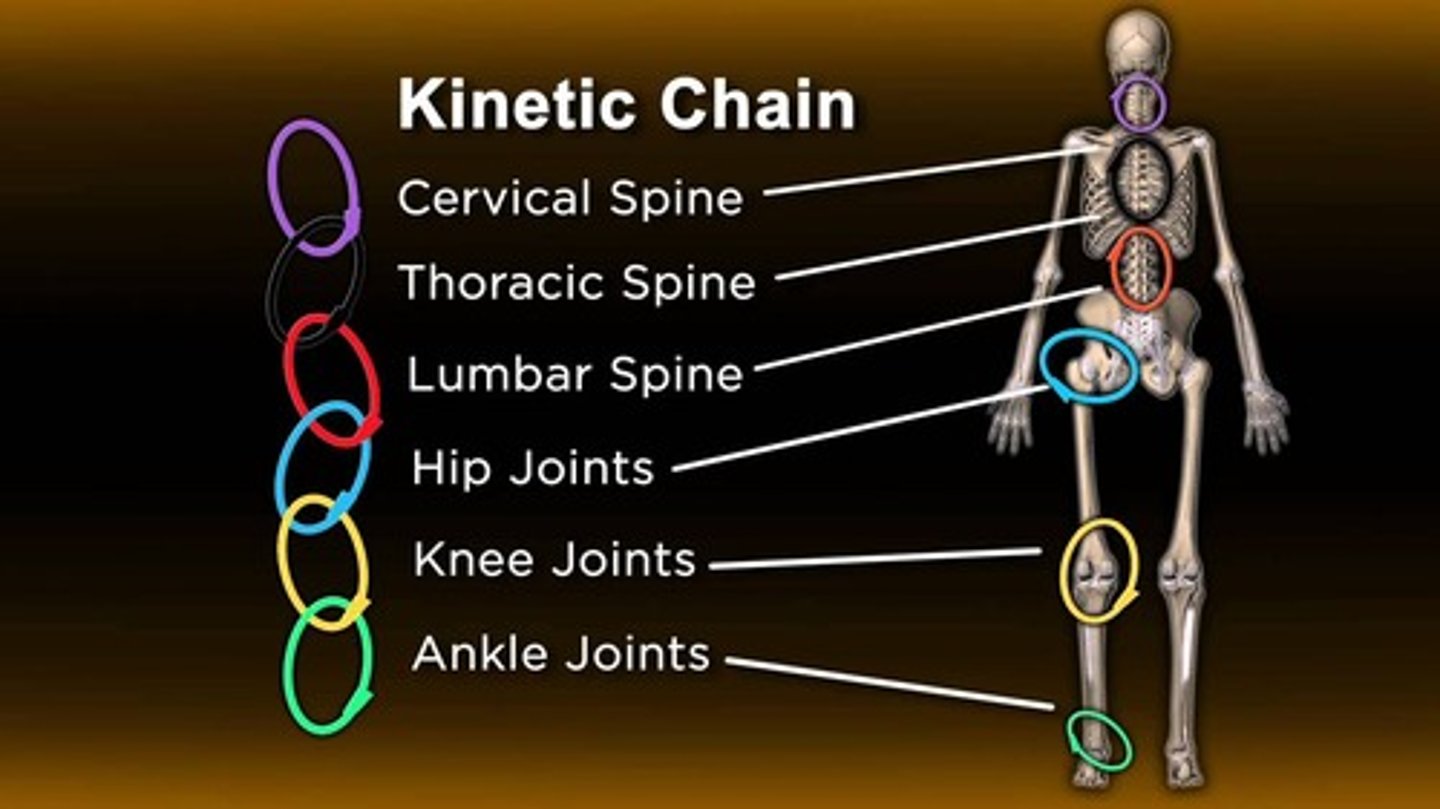
Kinematic Chains
Combination of several joints uniting several segments, important for coordinated movement
Open Kinematic Chain
A chain in which the distal segment ends free in space
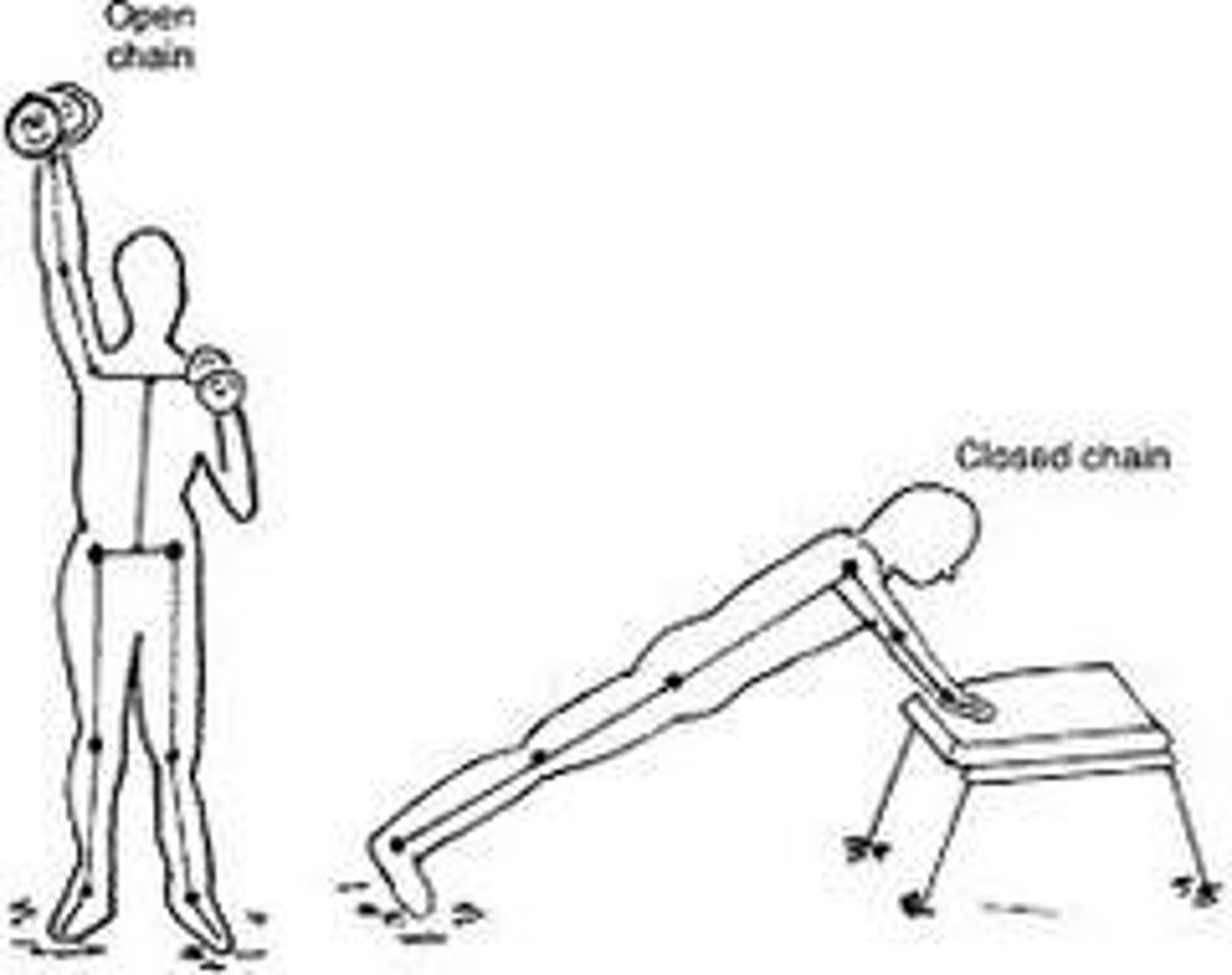
Closed Kinematic Chain
A chain in which the distal segments are fixed
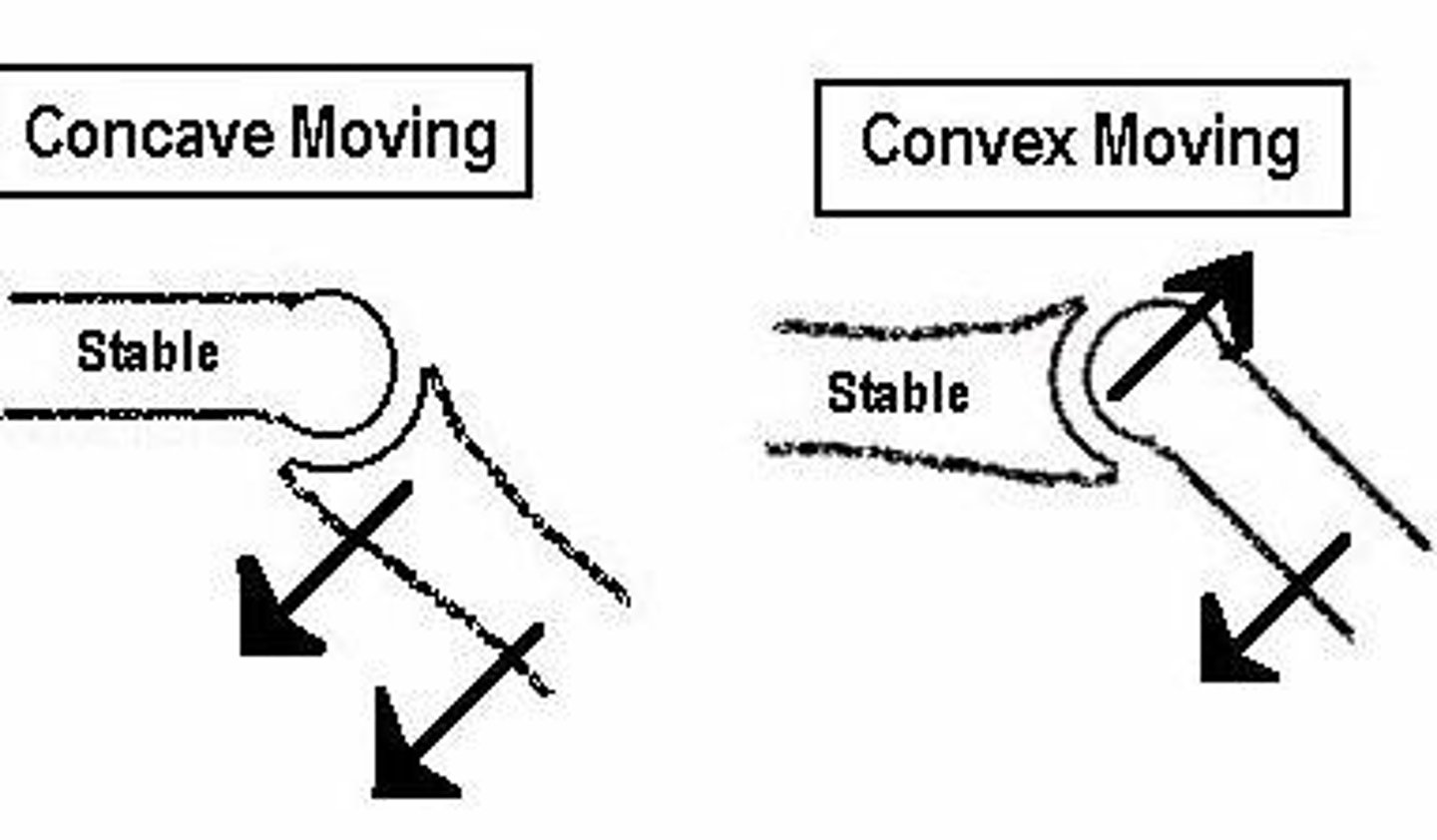
Convex-Concave Rule
Rule that improves the fit and stability of a joint and guides the joint's motion
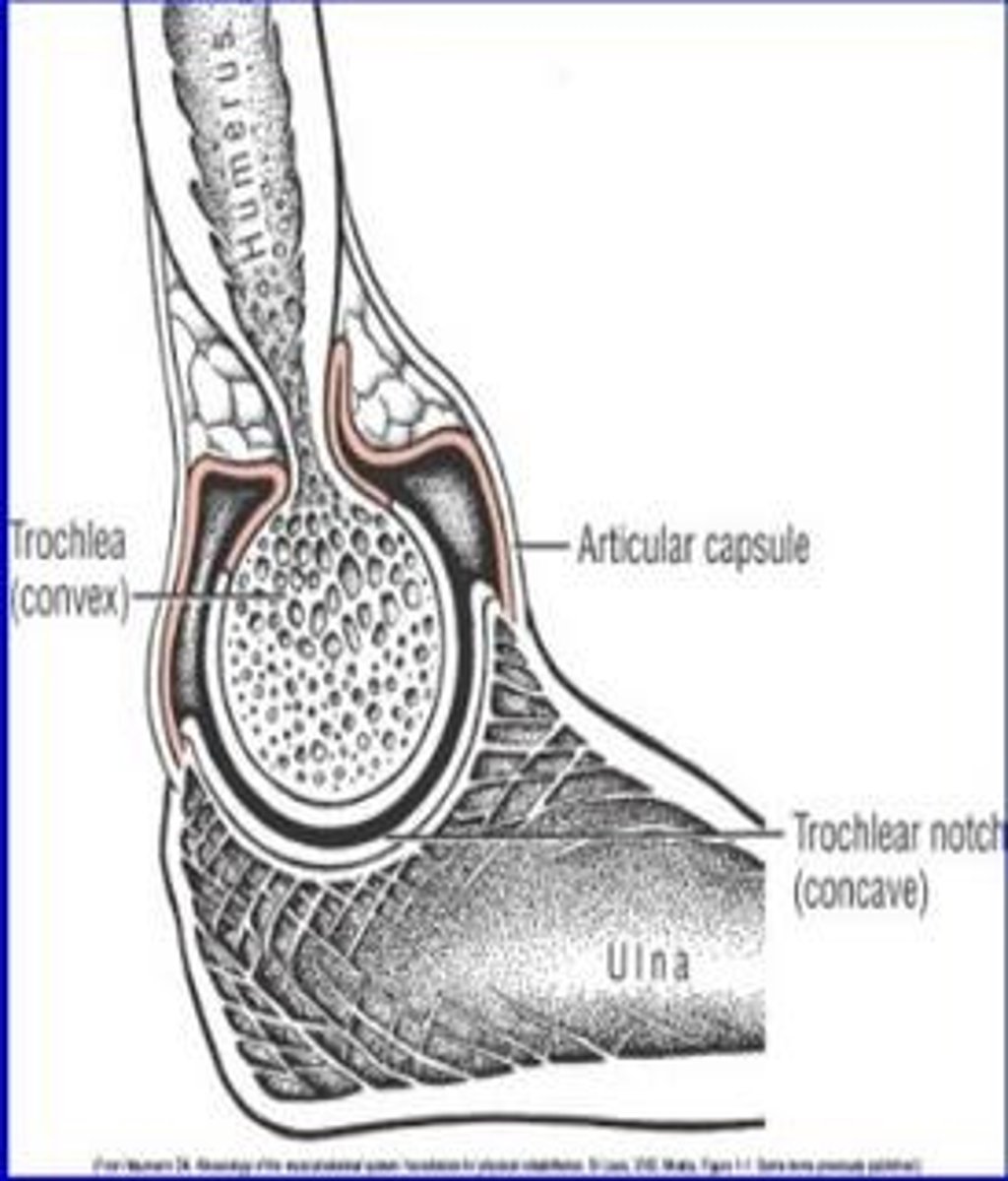
Congruency
Manner in which opposing joint surfaces match with each other during movement
Incongruency
Joint surfaces that do not fit perfectly together
Joint Play
Accessory movement to normal movement that cannot be performed voluntarily
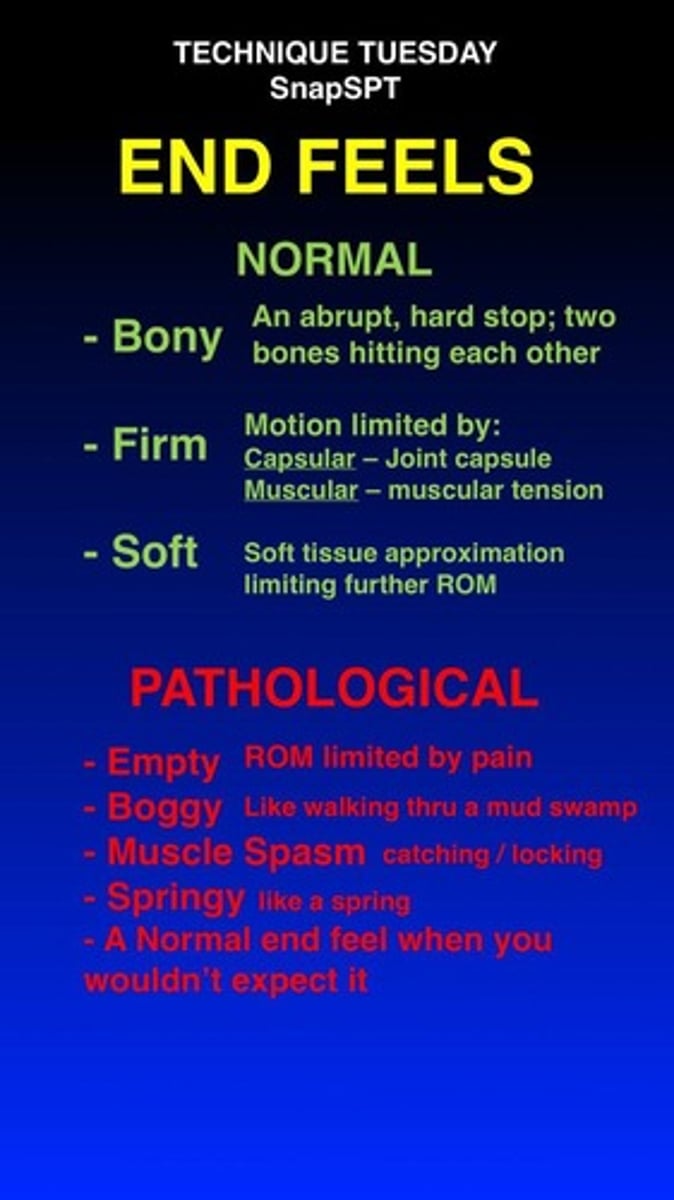
End Feel
Sensation an examiner feels at the end of passive range of motion
Stress
A force or load that the body or its parts resist
Strain
The deformation that occurs in a structure as a result of an externally applied force
Creep
Tissues that undergo elongation with the application of a low level load over time
Lever
A rigid bar that can rotate about a fixed point when a force is applied
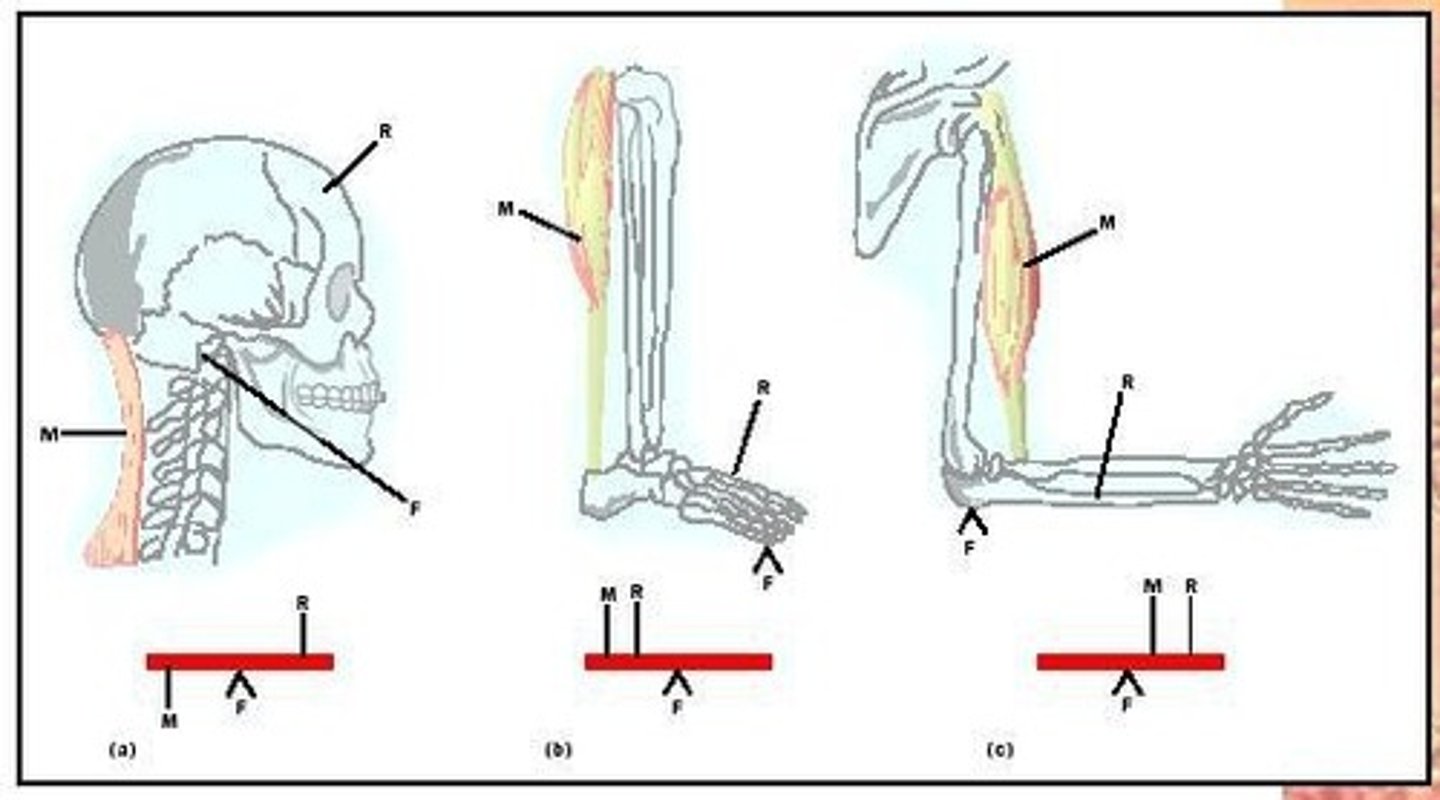
1st Class Levers
Levers designed for balance/equilibrium, magnifying the effect of effort
2nd Class Levers
Levers that save force/effort, magnifying the effects of effort with less force required
3rd Class Levers
Levers that produce large motion at the resistance with small motion by the effort
Stable Equilibrium
Effort to disturb an object requires its centre of gravity to be raised
Unstable Equilibrium
Exists when a slight push can destroy it
Neutral Equilibrium
Exists when an object's centre of gravity is neither raised nor lowered when disturbed
Factors Affecting Stability
Size of base of support, height of centre of gravity, line of gravity, mass, friction, segmental alignment, visual factors, physiological factors
Mobility vs. Stability
Great stability makes it difficult to start; great mobility makes it difficult to stop