INST104: Concept 3 - Root Problems + Grand Challenges
 Call Kai
 Learn
Learn Practice Test
 Spaced Repetition
 Match
Match Flashcards
 Knowt Play
1/14

There's no tags or description
Looks like no tags are added yet.
Name | Mastery | Learn | Test | Matching | Spaced | Call with Kai |
|---|
No analytics yet
Send a link to your students to track their progress
15 Terms
A Grand Challenge is an ambitious, complex problem that:
Affects many people or has broad societal impact
Requires innovation across multiple disciplines
Doesn’t have an obvious or simple solution, they are very very hard to solve
Inspires collaborative problem-solving
Recognized by funders, universities, business as requiring work
Examples of Grand Challenges
Climate Change: Reducing carbon emission and adapting to environmental shifts
Clean Water Access: Ensuring safe drinking water for all communities
Healthcare Equity: Making quality healthcare accessible and affordable
Education: Providing learning opportunities for everyone
UMD’s Grand Challenges 2022
Climate change
Social injustice
Global health
Education disparities
Poverty
Threats to democracy
The Grand Challenge Problem Solving Access
Define the Challenge: What’s the core problem? Who does it affect?
Research & Understand: What do we know? What don’t we know?
Identify Stakeholders: Who is impacted? Who can help solve it?
Brainstorm Solutions: Generate diverse ideas from multiple angles
Prototype & Test: Try solutions, learn from failures, iterate.
Step 1: Define the Challenge
A Bit Too Vague: “How can we solve hunger?” (Too broad, no clear scope or context)
Good: “How might we reduce food waste in our campus dining halls while ensuring students have enough to eat?” (Specific, actionable. considers constraints)
Ask: What exactly is the problem? Where does it happen? Who experiences it? What are the boundaries?
Step 2: Research & Understand
You can’t solve what you don’t understand
Gather Data: Statistics, studies, existing research
Talk to People: Interviews, surveys, observations
Find Root Causes: Why does this problem exist?
Step 3: Identify Stakeholders
Who cares about this problem'? (Primary Stakeholders)
Secondary Stakeholders (Organizations, institutions, or groups involved)
Solution Providers (Experts, innovators, or those with resources to help)
Remember: The people experiencing the problem often have the best insights into solutions.
Interdisciplinary Collaboration: Grand Challenges need diverse expertise.
Example: Designing a Community Garden
Environmental Science: Soil health, native plants
Engineering: Irrigation systems, structures
Design: Layout, accessibility, aesthetics
Social Science: Community needs, engagement
Business: Funding, sustainability model
Communication: Outreach, education programs
What is a Root Problem?
The fundamental, underlying cause that triggers a chain of effects leading to the symptoms we observe.
Why We Miss Root Problems
We May Jump to Conclusions
Our brains want quick answers, and is always using heuristics to get there.
We see a problem and immediately think of fixes.
We May Accept the Obvious
The first explanation often seems sufficient so we stop digging
We May Solve for Ourselves
We assume others’ problems match our own experiences (going back to thinking critically about design and biases)
We May Fact Time Pressure
Deep analysis takes time, and deadlines push us toward quick fixes.
"Good Enough” is often pushed in the manufacturing of goods.Root
Root Problems are Typically…
Systemic (not individual choices)
Structural (policies, contracts, organizational design)
Often uncomfortable (they implicate decisions made by institutions, not just users)
About misaligned incentives (different stakeholders with competing interests)
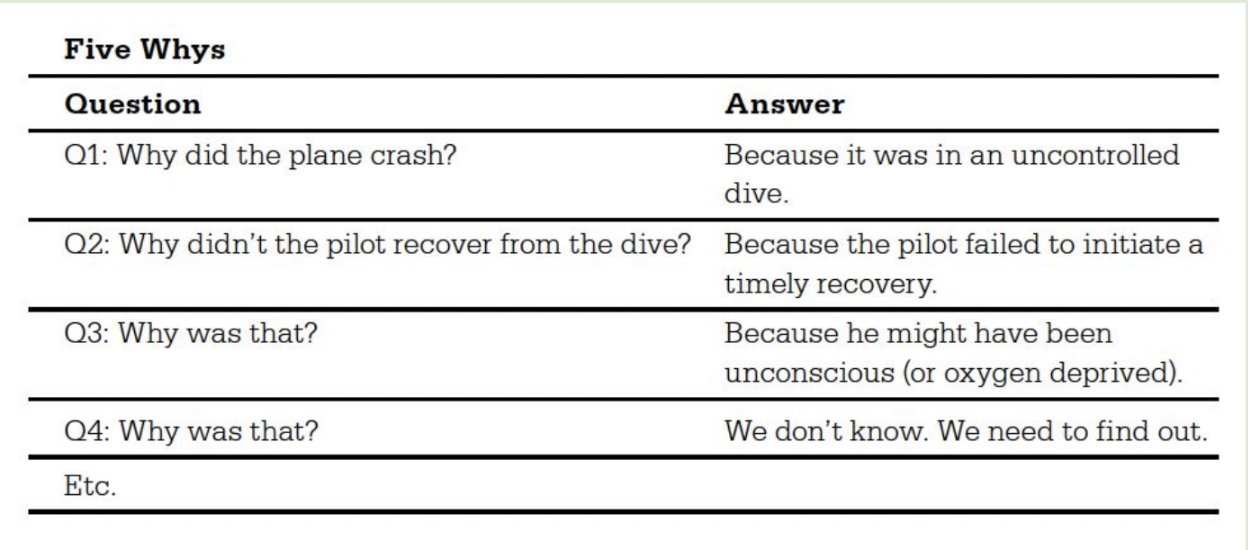
The Five Why’s: Understanding Why There is Error
How Many “Whys” Do You Need?
Usually between 3 and 7 questions
Superficial Solutions
Problem: Students are falling asleep in class
Deeper Problem: Students work night shifts to afford tuition
Superficial Solution: Play loud music, install brighter lights
Root Question: Why do students need to work night shifts to afford tuition?
ROOT: Economic accessibility of education
Solutions: Redesign financial aid, address structural costs, advocate for policy change
Problem: The campus cafe is always running out of coffee by noon
Why? → Because demand is higher than expected
Why is demand higher? → Because students need coffee between classes
Why do they need it then specifically? → Because their early classes start at 8am
Why is that a problem? → Because they don’t have time for breakfast before
Why not? → Because campus housing doesn’t having kitchen facilities
Why no kitchens? → Housing designed for density/cost, not student needs
ROOT PROBLEM: Housing infrastructure prioritizes space efficiency and liability concerns over supporting students’ basic daily needs
Systems Thinking
Understanding interconnections and feedback loops