Model of the timing of events & Feature model
 Call Kai
 Learn
Learn Practice Test
 Spaced Repetition
 Match
Match Flashcards
 Knowt Play
1/3

There's no tags or description
Looks like no tags are added yet.
Name | Mastery | Learn | Test | Matching | Spaced | Call with Kai |
|---|
No analytics yet
Send a link to your students to track their progress
4 Terms
Model of the timing of events
▪ Development depends on the timing of certain events in people's lives.
▪ Normative life events normally occur at certain times of life.
▪ Existence of a social clock → societal norms and what is considered appropriate.
▪ Cultural and generational influence on the social clock.
▪ If events in time → uniform development.
▪ If unexpected, untimely or non-occurring events > stress.
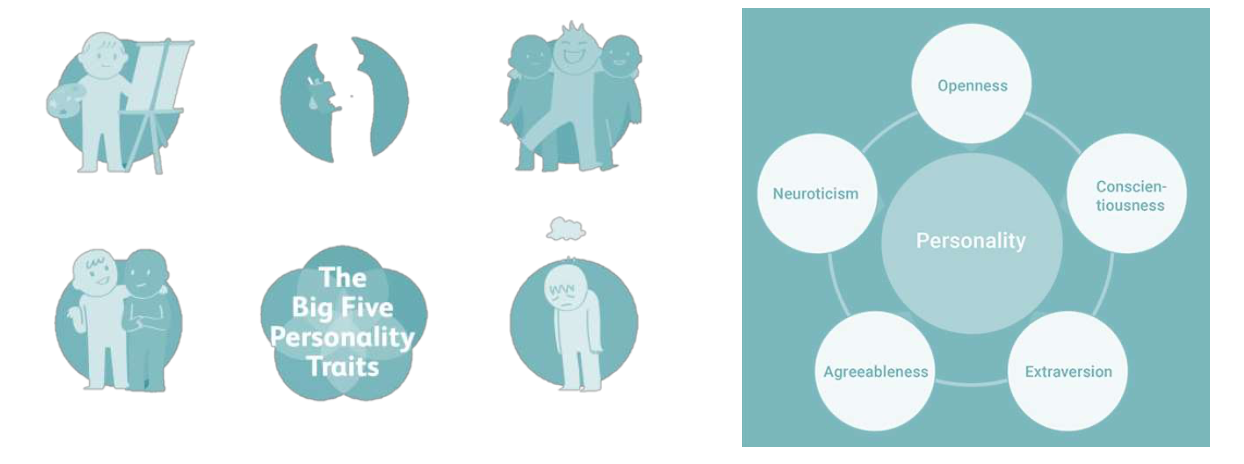
Big 5 personality traits
OCEAN:
1. Openness to Experience
How open a person is to new ideas, creativity, and experiences.
High openness
Imaginative
Curious
Creative
Enjoys trying new things
Low openness
Prefers routine
More traditional
Less interested in change
Example:
Someone who enjoys art, travel, and exploring new ideas.
2. Conscientiousness
How organized, responsible, and self-disciplined a person is.
High conscientiousness
Reliable
Careful
Goal-oriented
Good self-control
Low conscientiousness
Disorganised
Impulsive
Less dependable
Example:
A student who plans ahead and submits work on time.
3. Extraversion
How social, energetic, and outgoing a person is.
High extraversion
Talkative
Sociable
Energetic
Enjoys groups
Low extraversion (introversion)
Quiet
Reserved
Prefers smaller groups or solitude
Example:
Someone who enjoys parties and meeting new people.
4. Agreeableness
How compassionate and cooperative a person is toward others.
High agreeableness
Kind
Helpful
Trusting
Empathetic
Low agreeableness
Competitive
More critical
Less cooperative
Example:
A person who easily helps others and avoids conflict.
5. Neuroticism
How emotionally stable or unstable a person is.
High neuroticism
More anxious
Easily stressed
Emotionally reactive
Low neuroticism
Calm
Emotionally stable
Handles stress well
Example:
Someone who worries frequently versus someone who stays calm under pressure.
Changes during emerging adulthood
• Increases in assertiveness, conscientiousness and emotional stability.
• Lack of evidence of genetic or maturational causes → importance of life experiences:
- People with prosperous and rewarding careers → increases in emotional stability and conscientiousness.
- People who are slacking in their careers → deterioration of these traits.
Slow changes during middle adulthood and old age
• Increases in agreeableness and conscientiousness.
• Decreases in neuroticism, extraversion and openness to experience.
▪ Traits and health/well-being.
• High scrupulousness→ hygienic behaviours that contribute to a long term life.
• High neuroticism → anxiety and depression.
• Low extraversion → agoraphobia and social phobia.