Chapter 3 Kinematics in Two Dimensions
 Call Kai
 Learn
Learn Practice Test
 Spaced Repetition
 Match
Match Flashcards
 Knowt Play
1/9

There's no tags or description
Looks like no tags are added yet.
Name | Mastery | Learn | Test | Matching | Spaced | Call with Kai |
|---|
No analytics yet
Send a link to your students to track their progress
10 Terms
scalar
A scalar is a physical quantity that is described by a single numerical value and has magnitude only, without any direction. Examples include mass, temperature, and speed
vector
a quantity that encompasses both magnitude and a direction, such as velocity, force, electric or magnetic fields
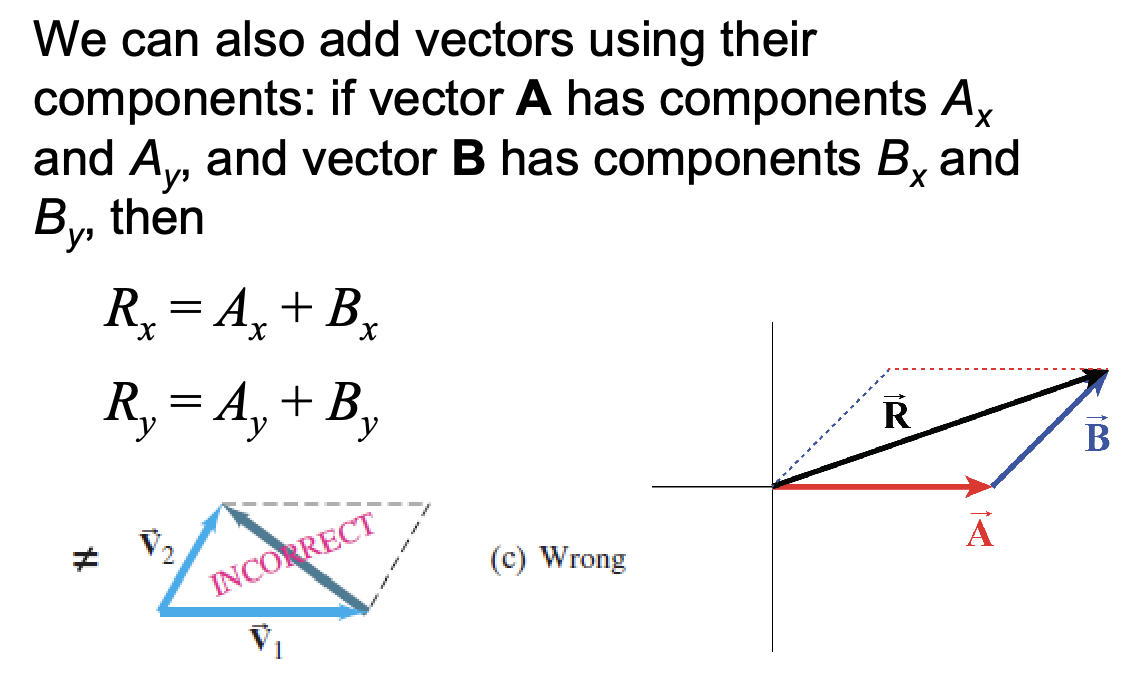
vector addition
The process of combining two or more vectors to produce a resultant vector, taking into account both their magnitudes and directions. This can be done graphically or mathematically
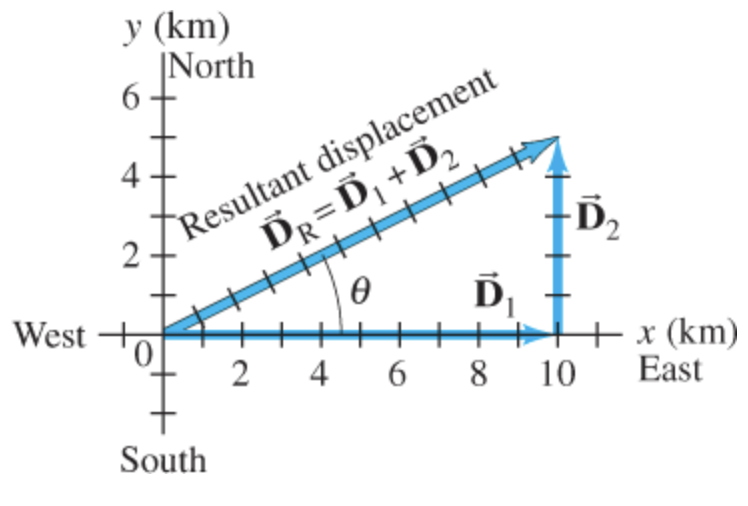
resultant displacement
The overall change in position of an object from its initial to final point, calculated as the vector sum of all individual displacements
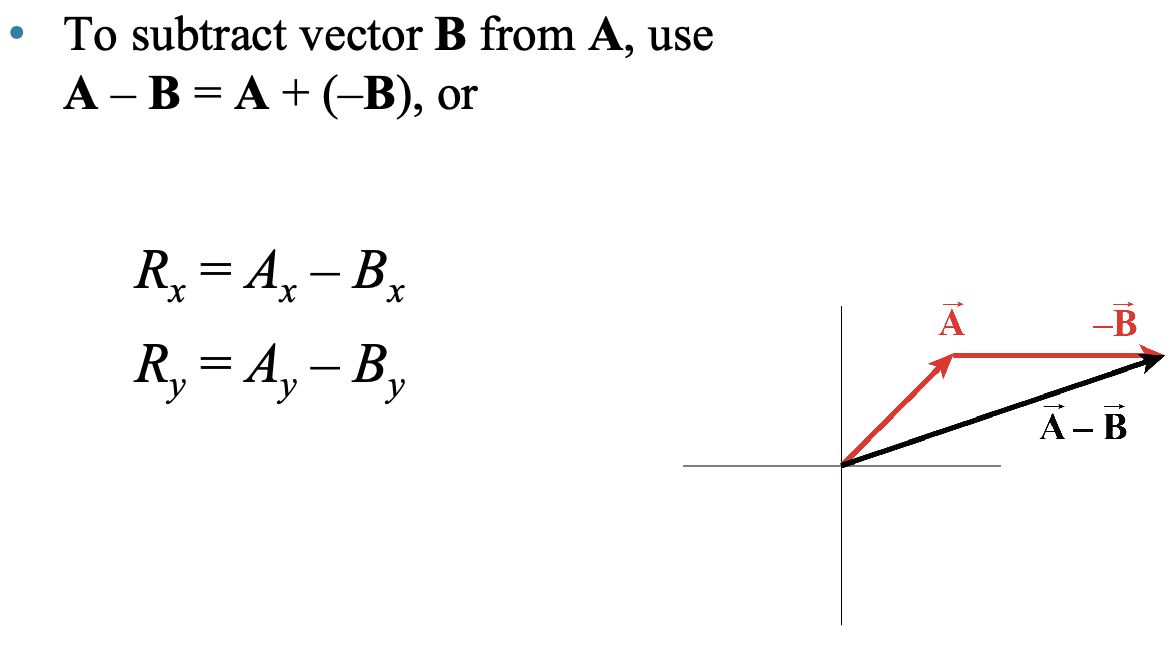
vector subtraction
The process of finding the difference between two vectors by reversing the direction of the vector to be subtracted and then adding it to the other vector. This operation considers both magnitude and direction
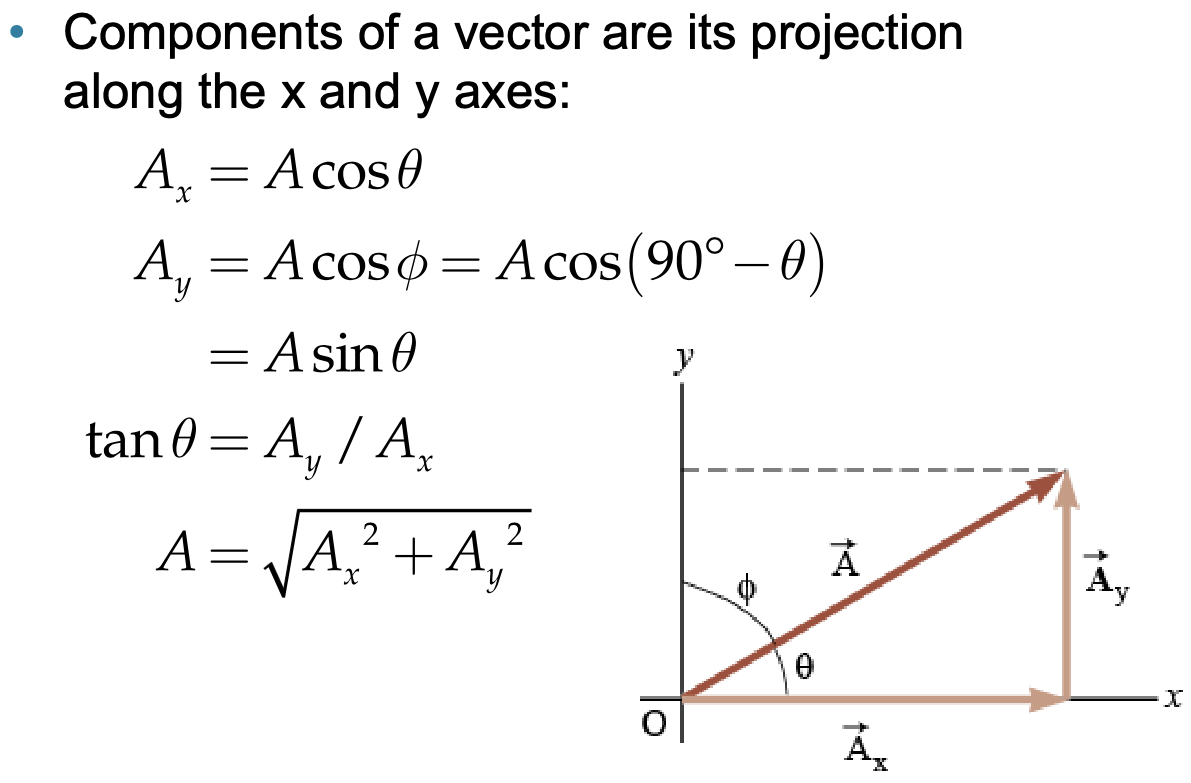
vector components
The projections of a vector along the axes of a coordinate system, usually represented as horizontal and vertical components. These components allow for the analysis of the vector's behavior in two-dimensional space
vector multiplication by a scalar
The operation of scaling a vector by multiplying it with a scalar quantity, which results in a vector whose direction is the same (or opposite if the scalar is negative) and whose magnitude is scaled by the absolute value of the scalar
changing the length of a vector
projectile motion
a combination of a horizontal component and a vertical component
the speed in the x-direction (horizontal) is constant
the object moves with constant acceleration g in the y-direction (vertical)
projectile
an object moving in two dimensions under the influence of Earth’s gravity; its path is a parabola
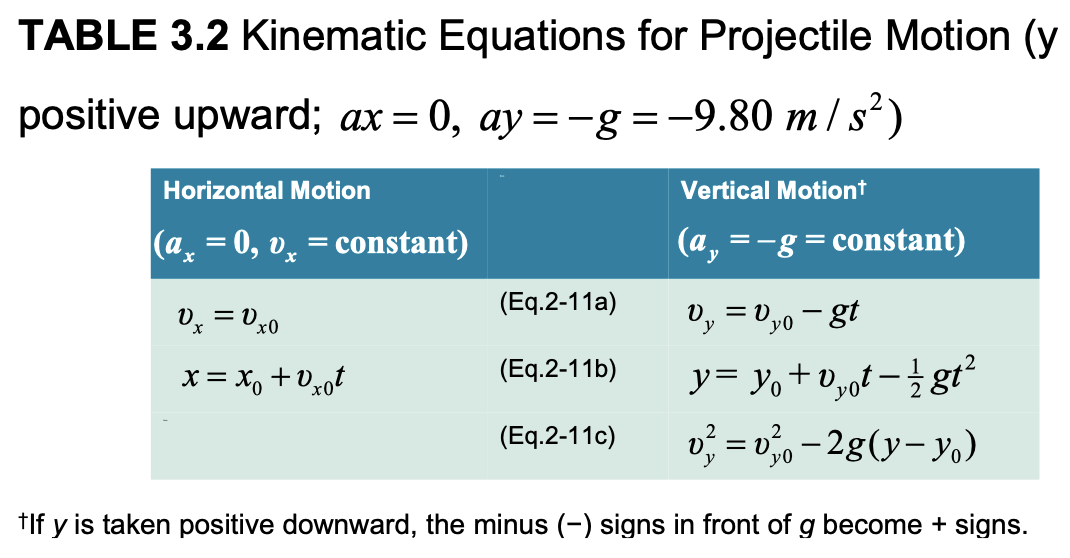
kinematic equations for projectile motion