vaccine formulation and delivery
 Call Kai
 Learn
Learn Practice Test
 Spaced Repetition
 Match
Match Flashcards
 Knowt Play
1/20

There's no tags or description
Looks like no tags are added yet.
Name | Mastery | Learn | Test | Matching | Spaced | Call with Kai |
|---|
No analytics yet
Send a link to your students to track their progress
21 Terms
what is immunisation
where an individual's immune system becomes strengthened against an agent (known as the immunogen/antigen)
what is vaccination
a method of giving antigen to stimulate the immune response through active immunisation
what is a vaccine
an immuno-biological substance designed to provide specific protection against a disease. A vaccine is "antigenic" but not "pathogenic".
‘Any preparation intended to produce immunity to a disease by stimulating the production of antibodies’ - WHO
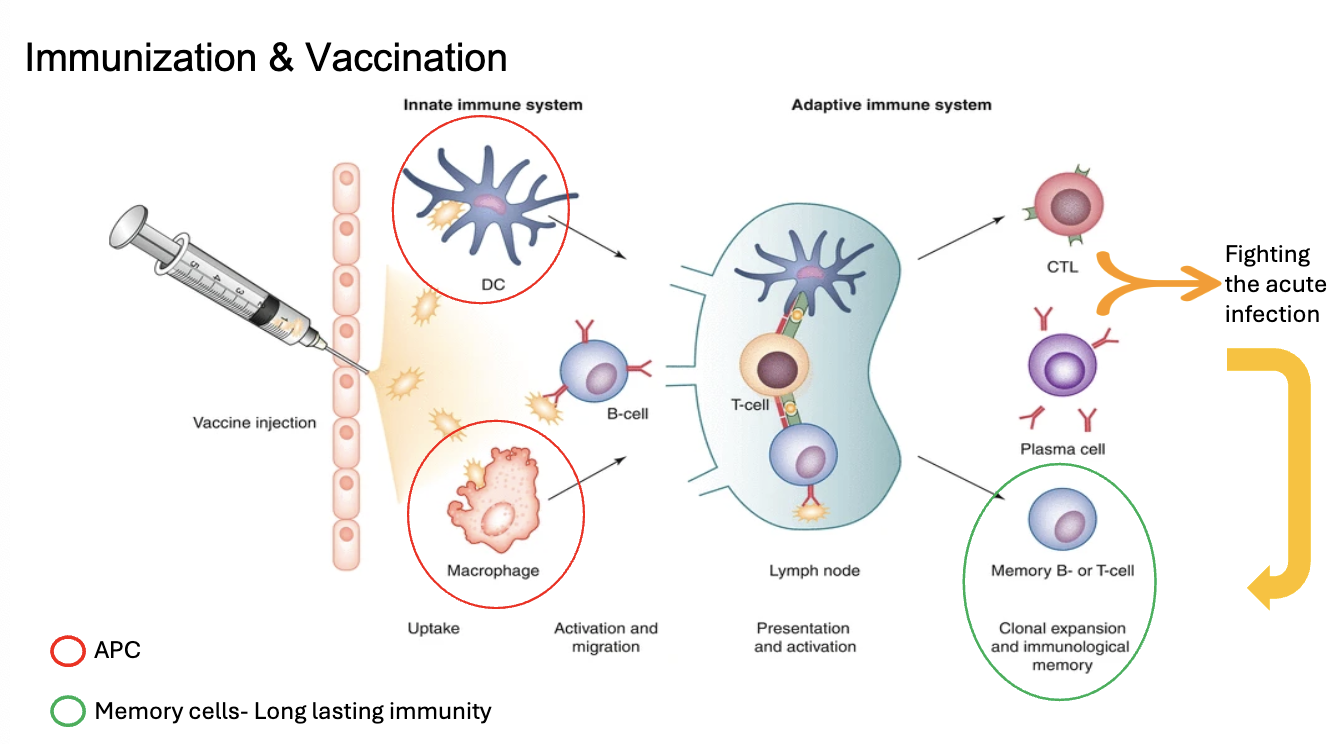
how does a vaccine trigger the immune system
vaccine enters the body
activation of innate immune system
antigen-presenting cells (dendritic cells and macrophages) process the antigen, then migrate to lymph nodes
activation of adaptive immune system in lymph nodes
APCs present antigen to T cells
T cells activated into cytotoxic T lymphocytes
B cells activated and turn into plasma cells
fights acute infection
memory cells produced for long-term immunity
what are the properties of an ideal vaccine formulation
development speed → fast production
storage temperature → cold-chain independent
facility of production → LMICs/Transferable technology
effectiveness → effective after a single dose
administration → needle delivery fit for all age groups
scale-up speed → easy to scale-up and affordable
what is a vaccine delivery system
vaccine formulation + delivery device/route administration = vaccine delivery system
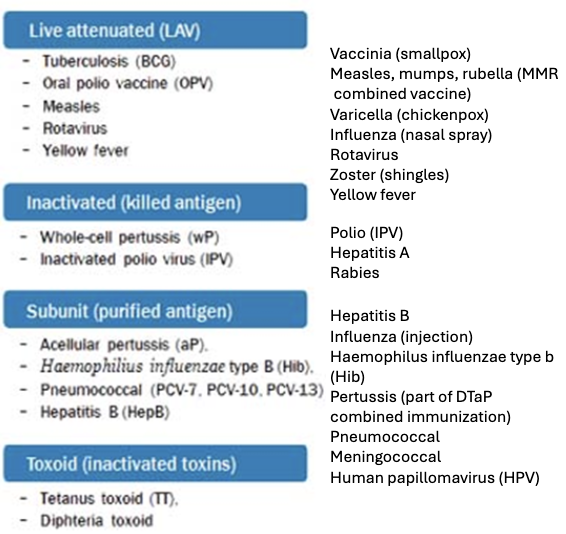
what are the types of vaccines (antigen type)
live attenuated vaccine (LAV)
inactivated vaccine(killed antigen)
subunit vaccine (purified antigen)
toxoid vaccine (inactivated toxins)
live vector vaccine
virus-like particles vaccine
nucleic acid vaccine
summary of vaccine types and their examples
what are adjuvants and mechanism
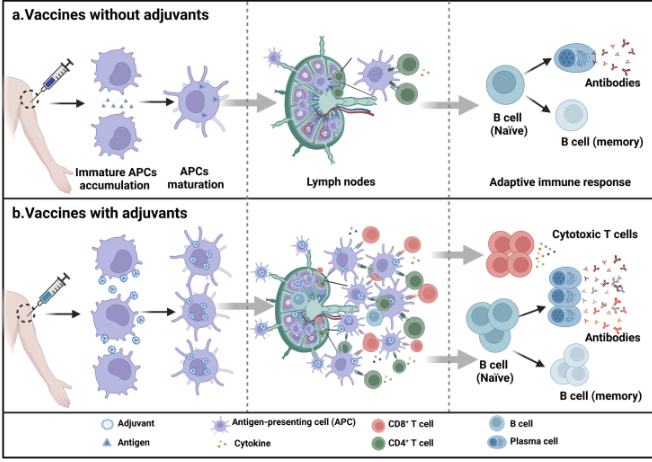
activate the innate immunity by acting like pathogen or having similar molecular patterns → can enhance or restore the ability of the immune system to identify a vaccine antigen with subsequent activation of APCs and adaptive immunity
vaccine without adjuvants → weaker and shorter immune response
vaccine with adjuvants → stronger and longer-lasting immune response as it attracts more immune cells to the site
what are the roles of adjuvants
increase the immunogenicity of weak antigens (to trigger an immune response)
increase the speed and duration of the immune response
strengthens the immune response
saves money by reducing the required antigen dose
increases mucosal immunity
stimulates cellular immunity
increases the antigen affinity with the antibody
eliminates antigen competition in combination vaccines
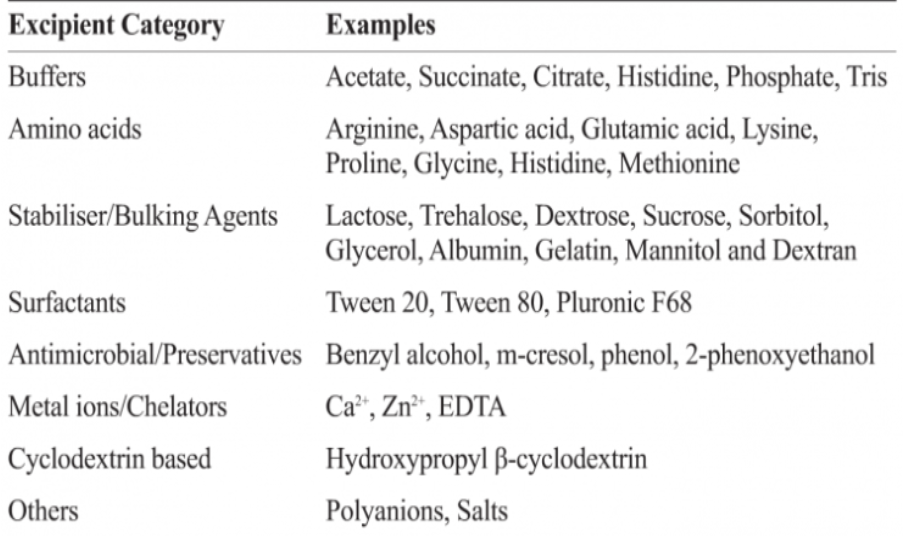
types of excipients in vaccine formulations
what are the different routes for vaccine delivery
nasal
lung
intramuscular
subcutaneous
intradermal
buccal/sublingual and oral
advantages and disadvantages of nasal and lung delivery
advantages
rapid mucosal 'local’ and systemic immune
responseincreased compliance
no risk of infection upon injection
Painless/needleless
no trained personnel required
disadvantages
formulation for mucosal barrier
low bioavailability
fast clearance and degradation
mucosal irritation
spray formulation
advantages and disadvantages of intramuscular delivery
advantages
traditional parenteral route
clear guidelines
high bioavailability
development and manufacture well established
acceptable route for adjuvant vaccine formulations
disadvantages
risk of infection upon needle cross-contamination
need trained personnel and healthcare infrastructure
advantages and disadvantages of subcutaneous delivery
advantages
high bioavailability
development and manufacture well established
clear guidelines
golden standard for live attenuated vaccines delivery
disadvantages
risk of infection upon needle cross-contamination
need trained personnel and healthcare infrastructure
high reactogenicity (physical inflammatory response)
advantages and disadvantages of intradermal delivery
advantages
can vector needleless vaccination
high bioavailability and immunogenicity
disadvantages
lack of established guidelines to manufacture and approval
need trained personnel and healthcare infrastructure
necessity of specialised material for delivery
what are the advantages and disadvantages of buccal/sublingual and oral delivery
advantages
simulation of GIT mucosal immune response
increased compliance
needleless
no trained personnel required
disadvantages
formulation for mucosal barrier
low bioavailability
fast clearance and degradation
need high antigen concentration
why is mucosal vaccination important
most major pathogens enter through mucosal surfaces:
respiratory
enteric → oral-faecal route of infection
sexually transmitted
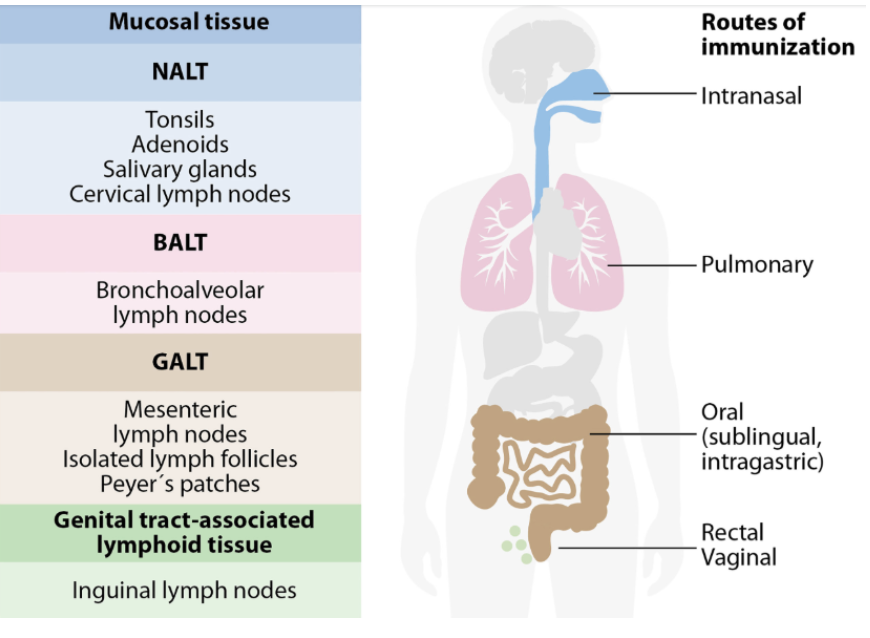
routes for mucosal immunisation
what is the lipid-based nanoparticle delivery system
a way of packaging and delivering vaccine components (such as antigens, mRNA, or adjuvants) inside tiny particles
nanoparticles are small carriers that contain lipids, polymers, virus-like particles (VLPs) etc
nanoparticles act as vehicles that deliver vaccine components into the body more efficiently than if the antigen were used alone.
how do lipid nanoparticles (LNP) mRNA vaccines work
mRNA coding for the desired antigen protein
mRNA released into the cells to produce antigen proteins
activates the immune response against any future attack by the immunogen