Public goods
 Call Kai
 Learn
Learn Practice Test
 Spaced Repetition
 Match
Match Flashcards
 Knowt Play
1/15

There's no tags or description
Looks like no tags are added yet.
Name | Mastery | Learn | Test | Matching | Spaced | Call with Kai |
|---|
No analytics yet
Send a link to your students to track their progress
16 Terms
what are the two characteristics of public goods
non -rivalrous
non-excludable
define non-rivalrous
one persons enjoyment of a good doesn’t diminish another person’s enjoyment
define non-excludable
the benefit derived from the good/service is unable to be excluded from certain individuals
give an example of a non-rivalrous good
radio broadcasts, fireworks
give an example of a non-excludable good
street lights
what is the free rider problem
non-excludable goods are subject to the free-rider problem
consumers don’t pay for a good but as they can’t be prevented from using it still benefit from it
what is the problem with the free-rider problem
there is an entirely missing market unless gov.t provided them (complete market failure)
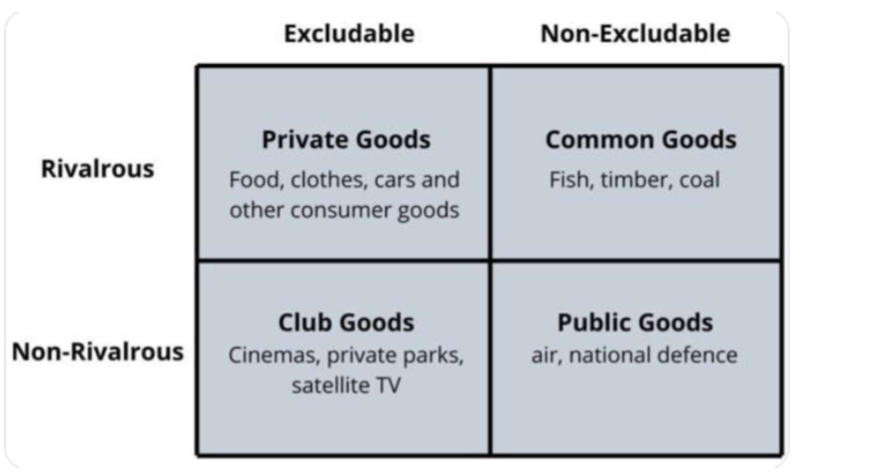
what are the 4 categories for goods
private
common
club
public
describe the 4 types of good
how does the gov.t afford public goods
tax revenue
why do buyers and sellers fail to make rational decisions
lack of information
misunderstanding of the benefits
complex information
uncertainty over the benefits
what is meant by asymmetric information
a situation where one economic agent knows more than another, giving them more power in a market transaction
give an example of asymmetric info
dentist recommending treatment to a patient
could be the right course of action but the patient wouldn’t know, instead it could be to gain a fee
when might consumers use asymmetric info
consumers may conceal something about themselves in order to get lower insurance
what is meant by moral hazard
once protected e.g. insurance consumers are more likely to take risks
why does asymmetric information result in market failure
One side in the market has more information than the other, leading to poor decisions and inefficient allocation of resources.