Biology 12 Lab Practical: Fetal Pig Dissection
 Call Kai
 Learn
Learn Practice Test
 Spaced Repetition
 Match
Match Flashcards
 Knowt Play
1/44

There's no tags or description
Looks like no tags are added yet.
Name | Mastery | Learn | Test | Matching | Spaced | Call with Kai |
|---|
No analytics yet
Send a link to your students to track their progress
45 Terms
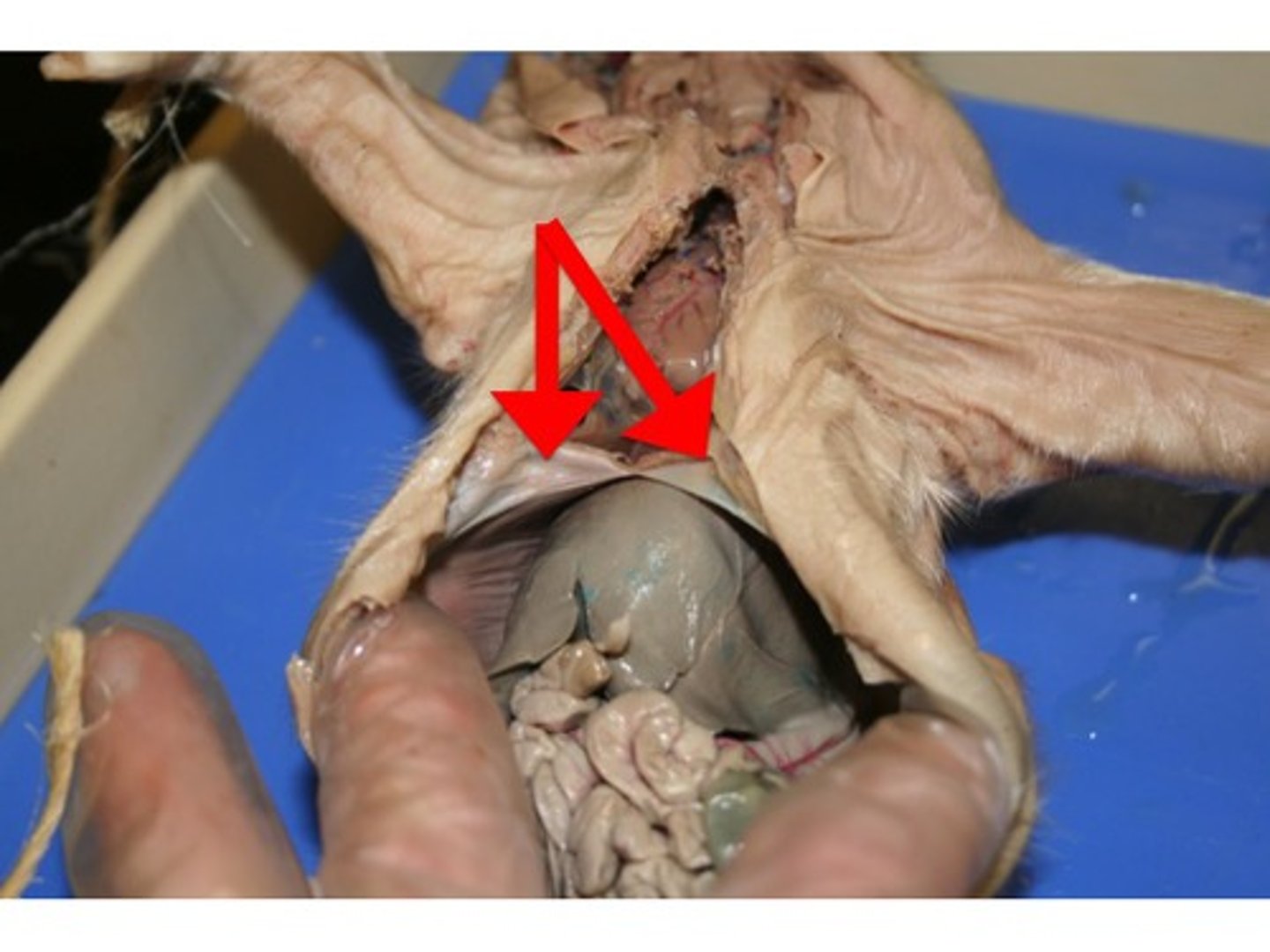
Diaphragm
This muscles separates the thorax from the abdomen and is responsible for breathing.
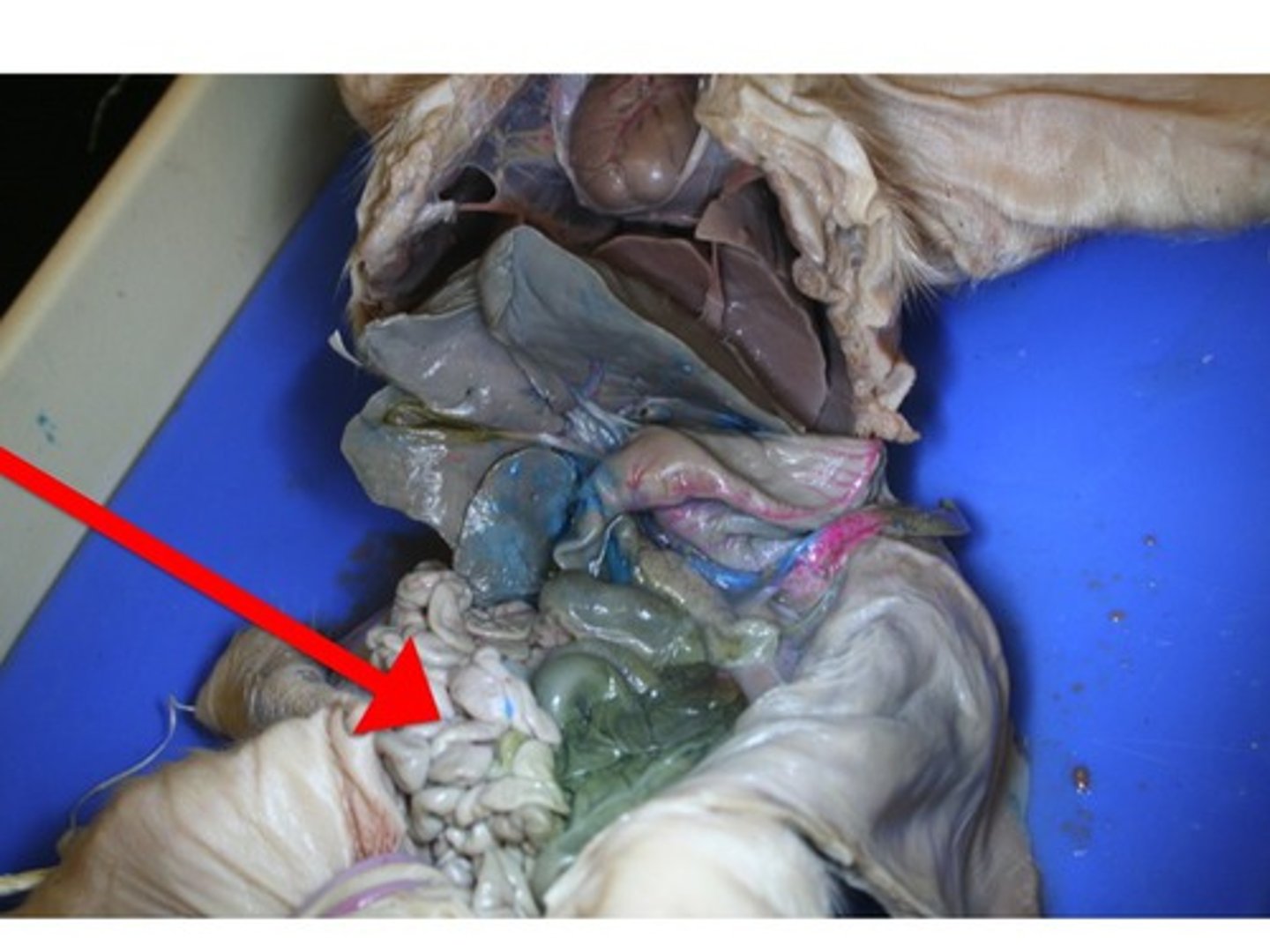
Small Intestine
Digestive organ where most chemical digestion and absorption of food takes place.
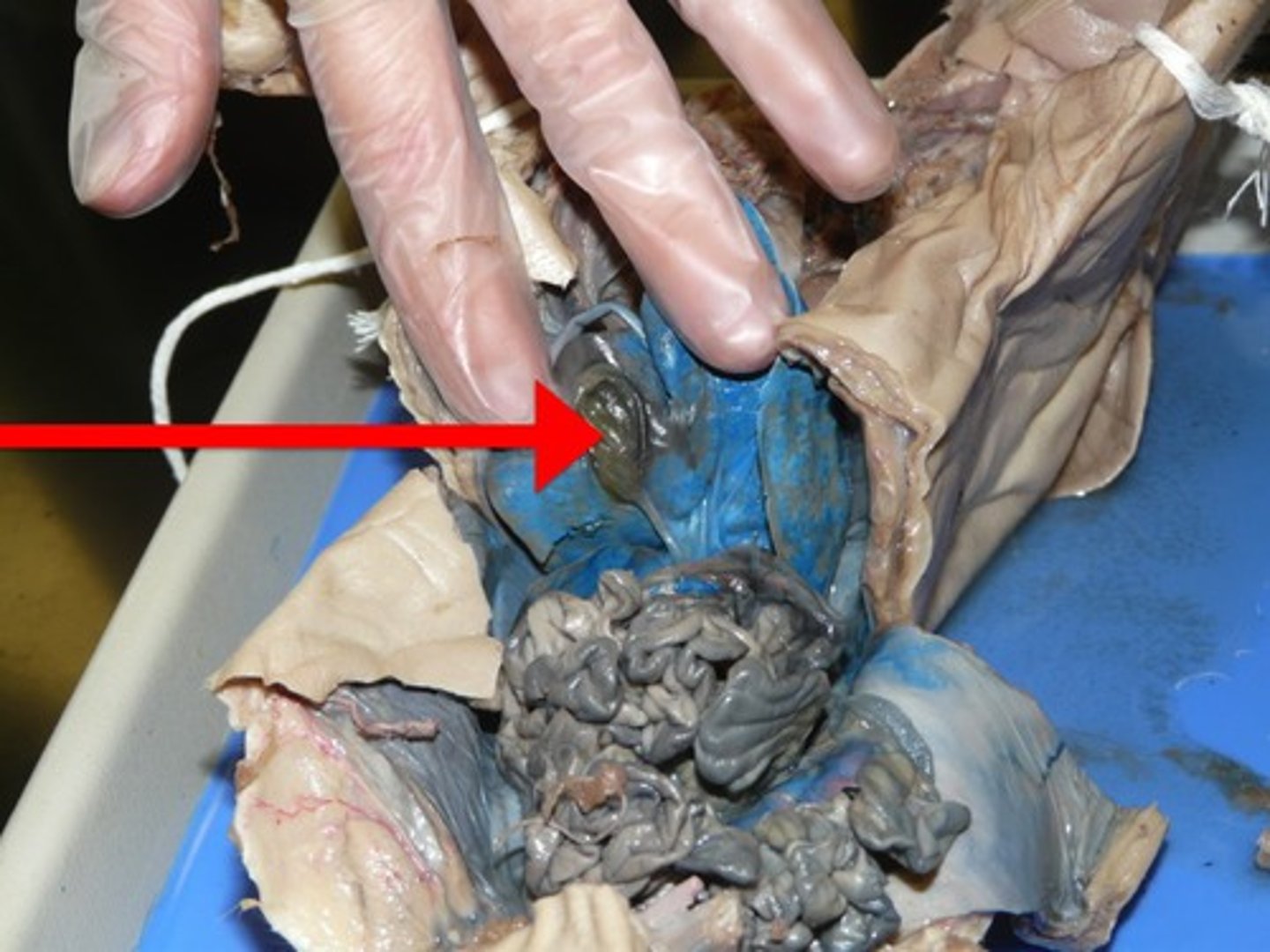
Gall Bladder
This organ stores the bile produced by the liver.
Duodenum
Leads to small intestine
Bile is sent from the gall bladder to this structure in order to emulsify fat. enzymatic breakdown of food
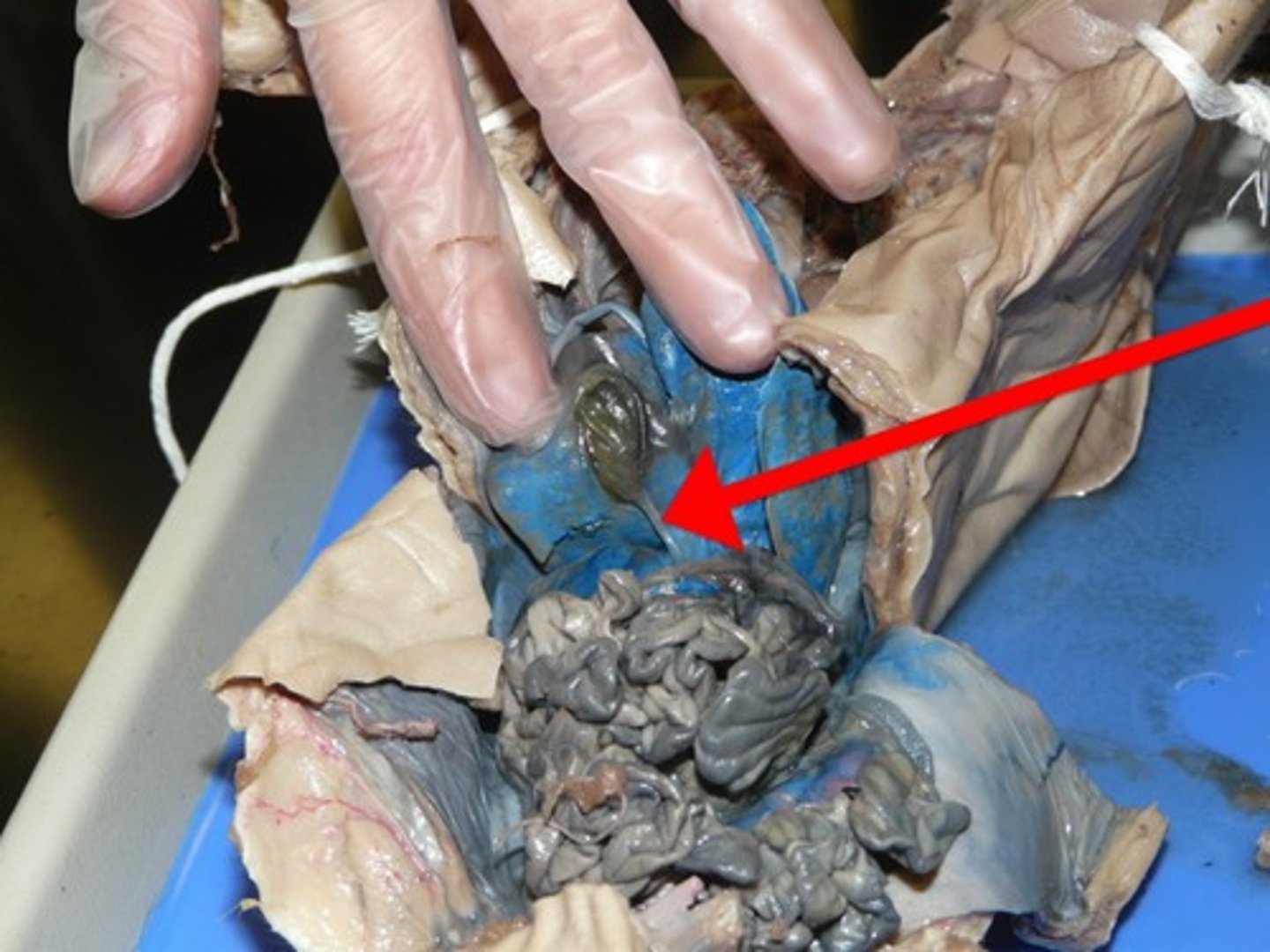
Spleen
This organ filters blood of old red blood cells.
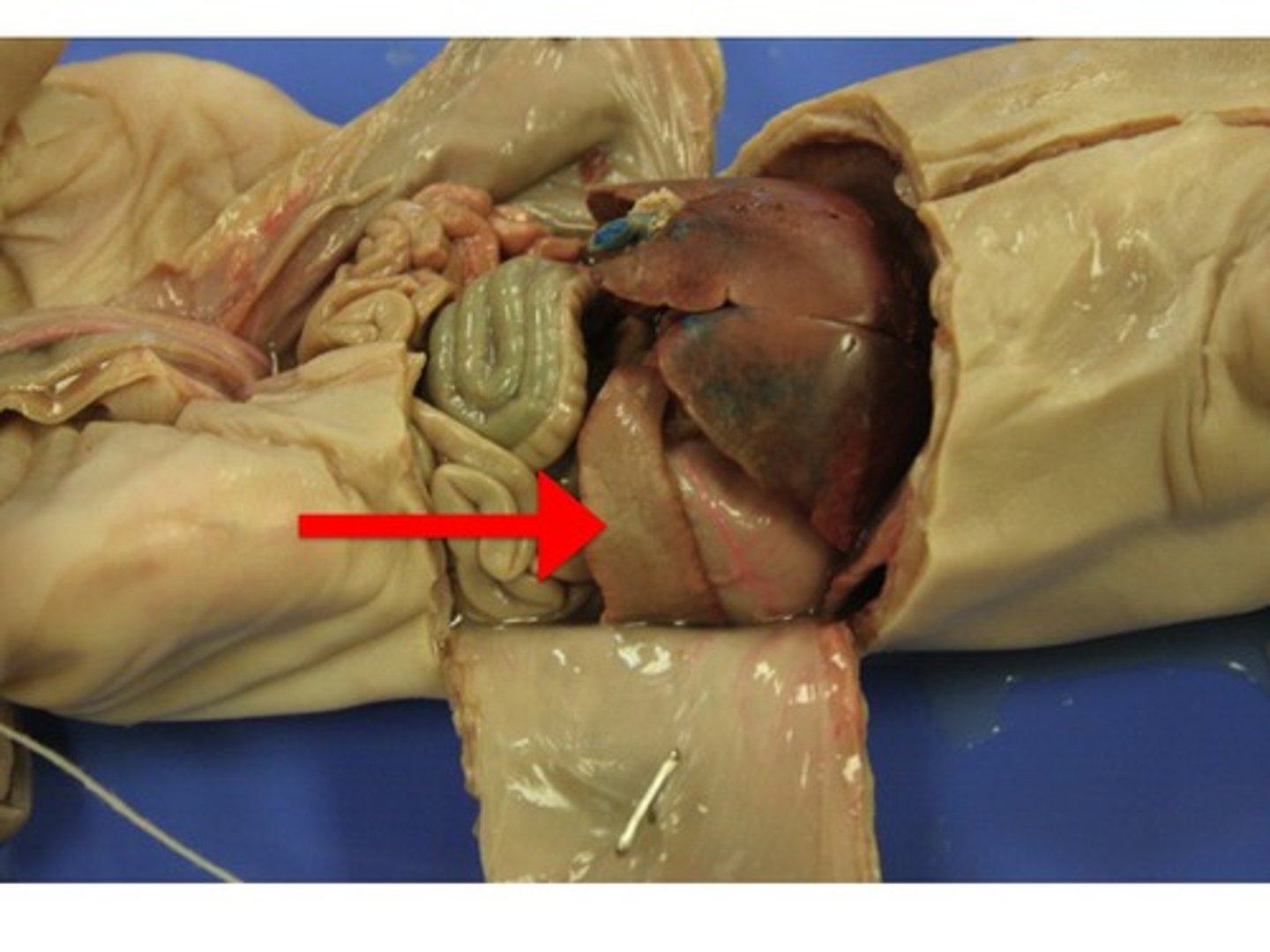
Liver
This organ breaks down ingested toxins and the byproducts of protein metabolism and is also a storage site for glycogen.
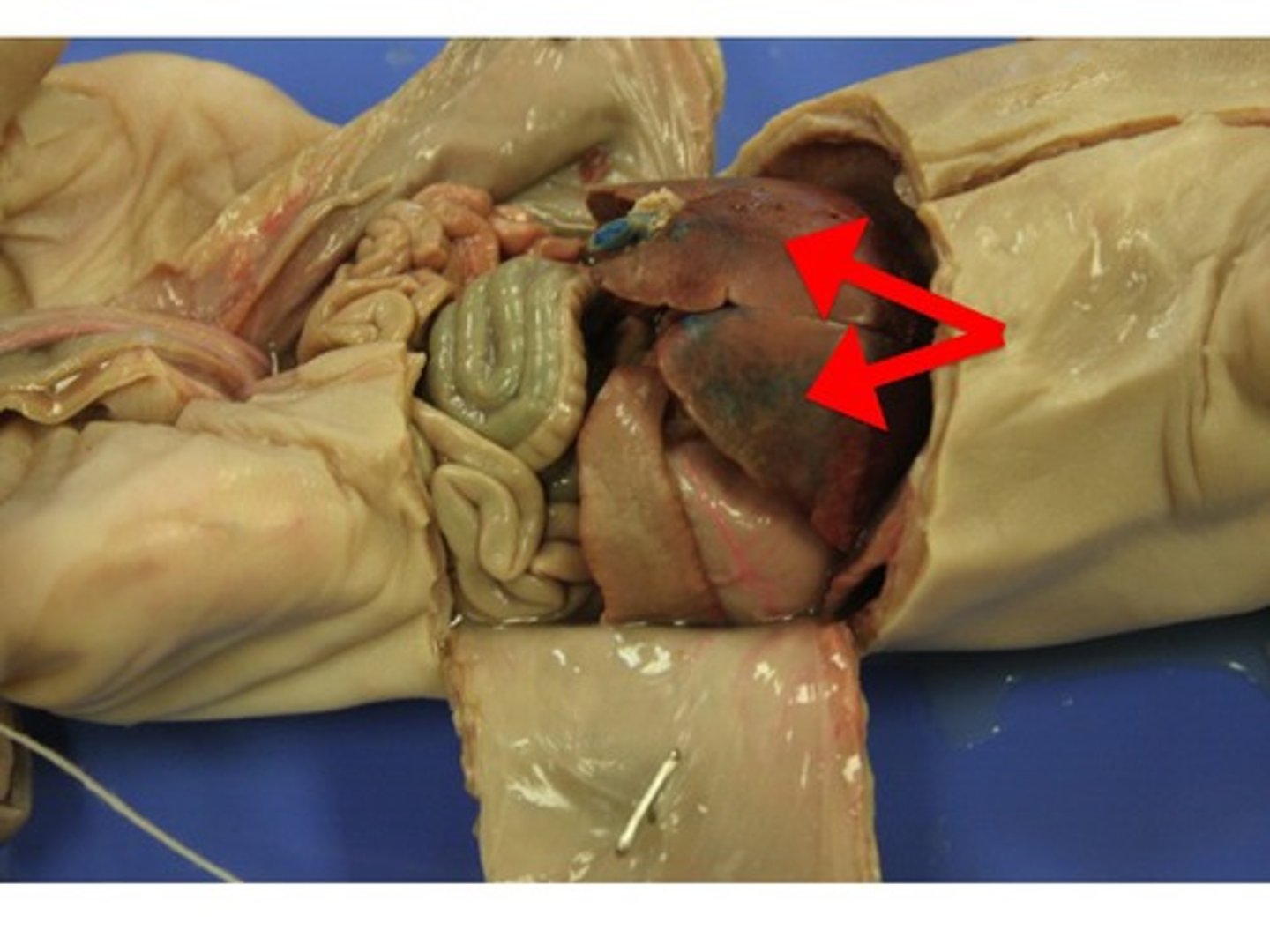
Stomach
A muscular and elastic sac that serves mainly to store food, break it up mechanically, and begin chemical digestion of proteins and fat.
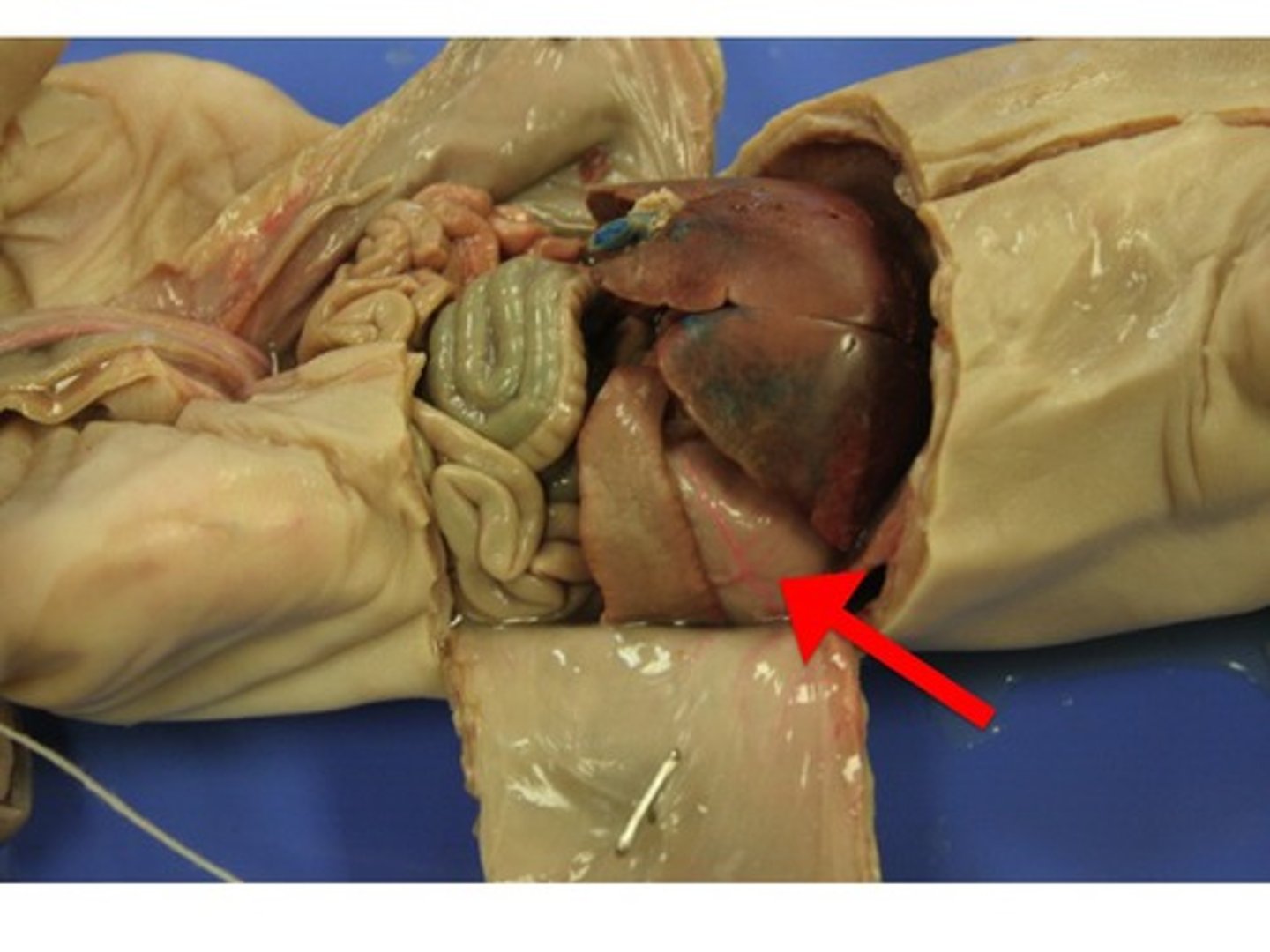
Pancreas
An organs in the abdominal cavity with two roles. The first is an exocrine role: to produce digestive enzymes and bicarbonate, which are delivered to the small intestine via the pancreatic duct. The second is an endocrine role: to secrete insulin and glucagon into the bloodstream to help regulate blood glucose levels.
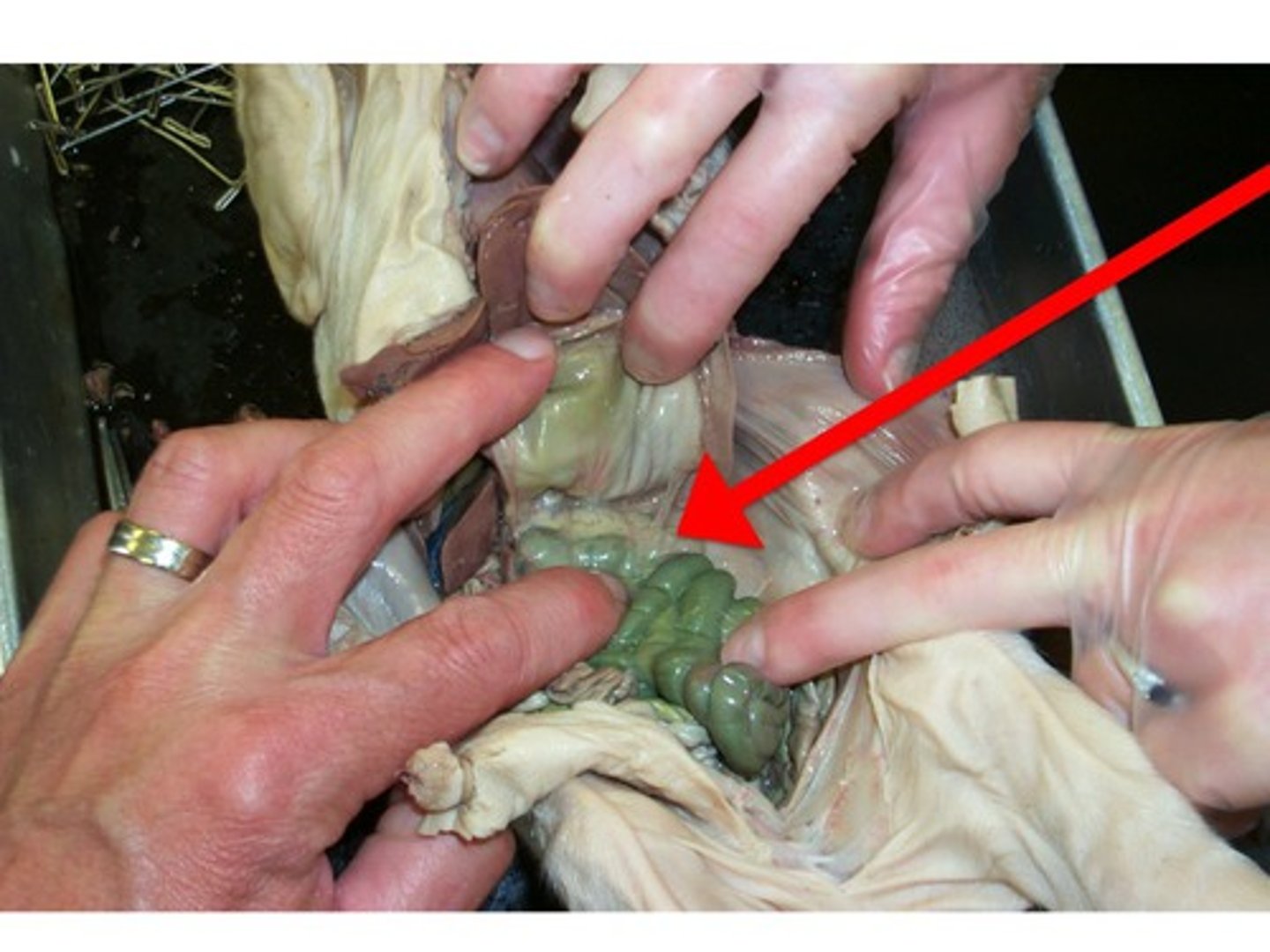
Heart
A hollow, muscular organ that pumps blood throughout the body.
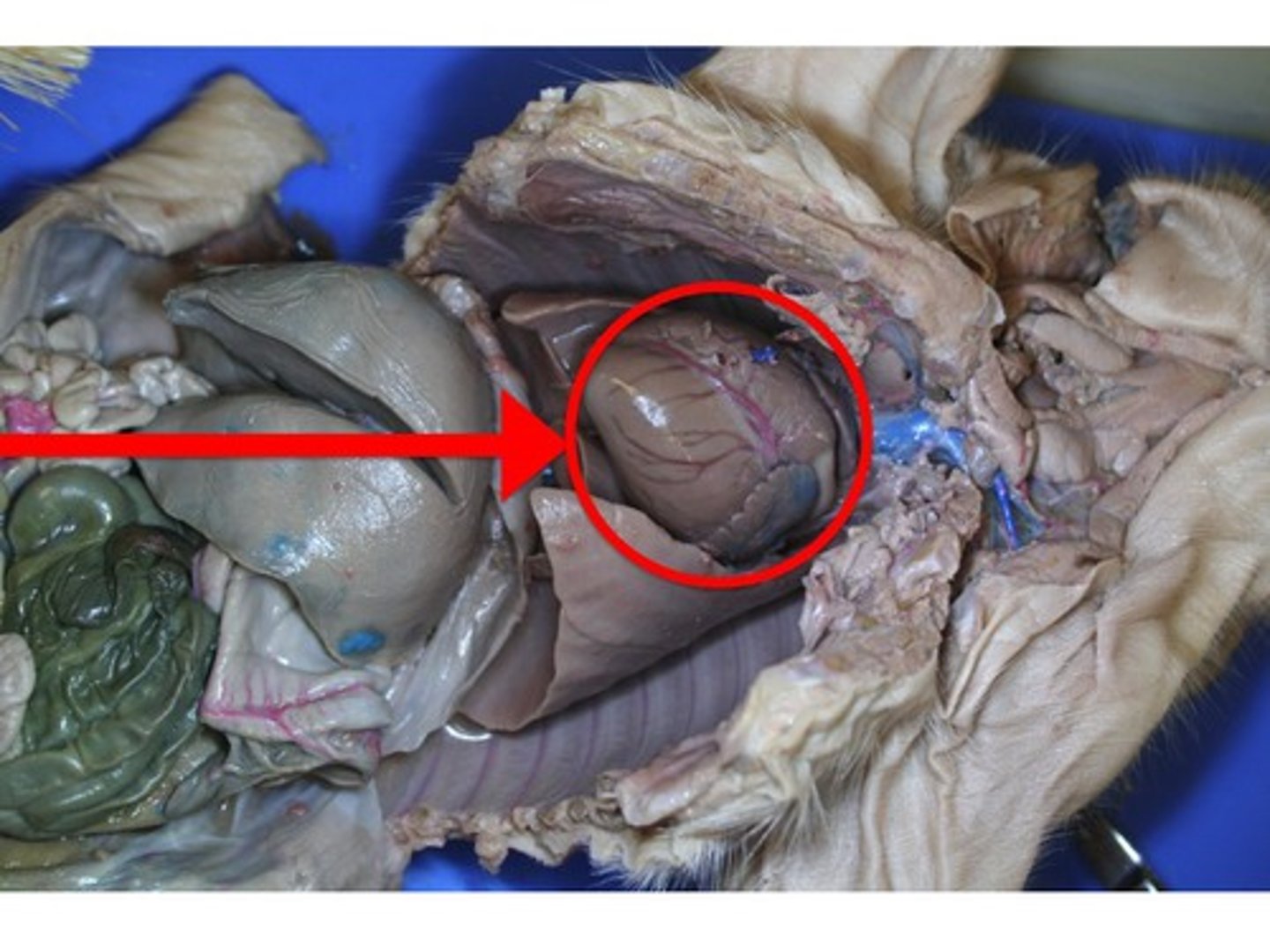
Lungs
Locate them by looking underneath and behind the heart and liver. They are two spongy organs. House tiny air sacs called alveoli.
An organ found in air-breathing vertebrates that exchanges oxygen and carbon dioxide with the blood.
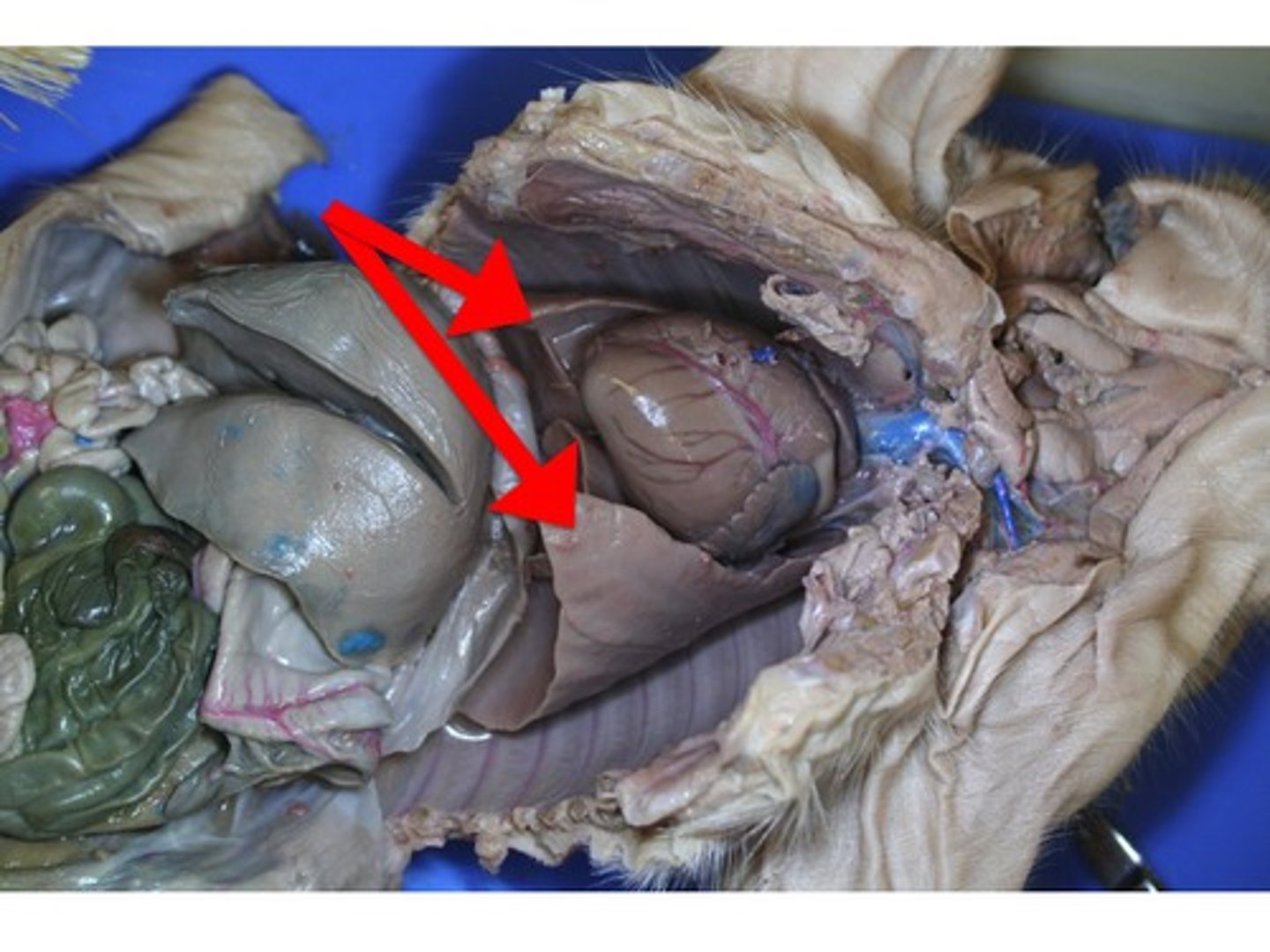
Aorta
The large arterial trunk that carries blood from the heart to be distributed by branch arteries through the body.
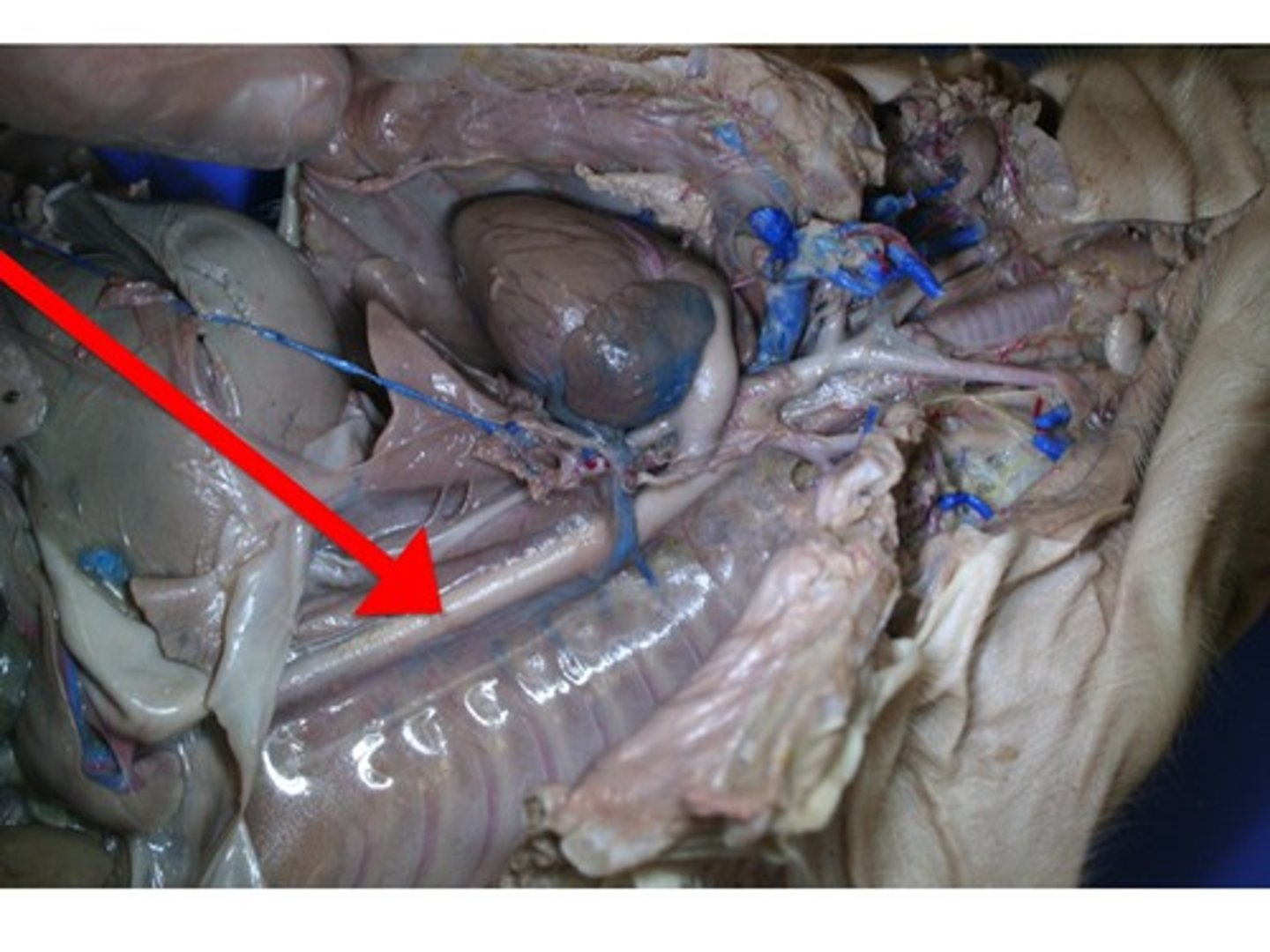
Pulmonary
carries deoxygenated blood from the right ventricle to the lungs.
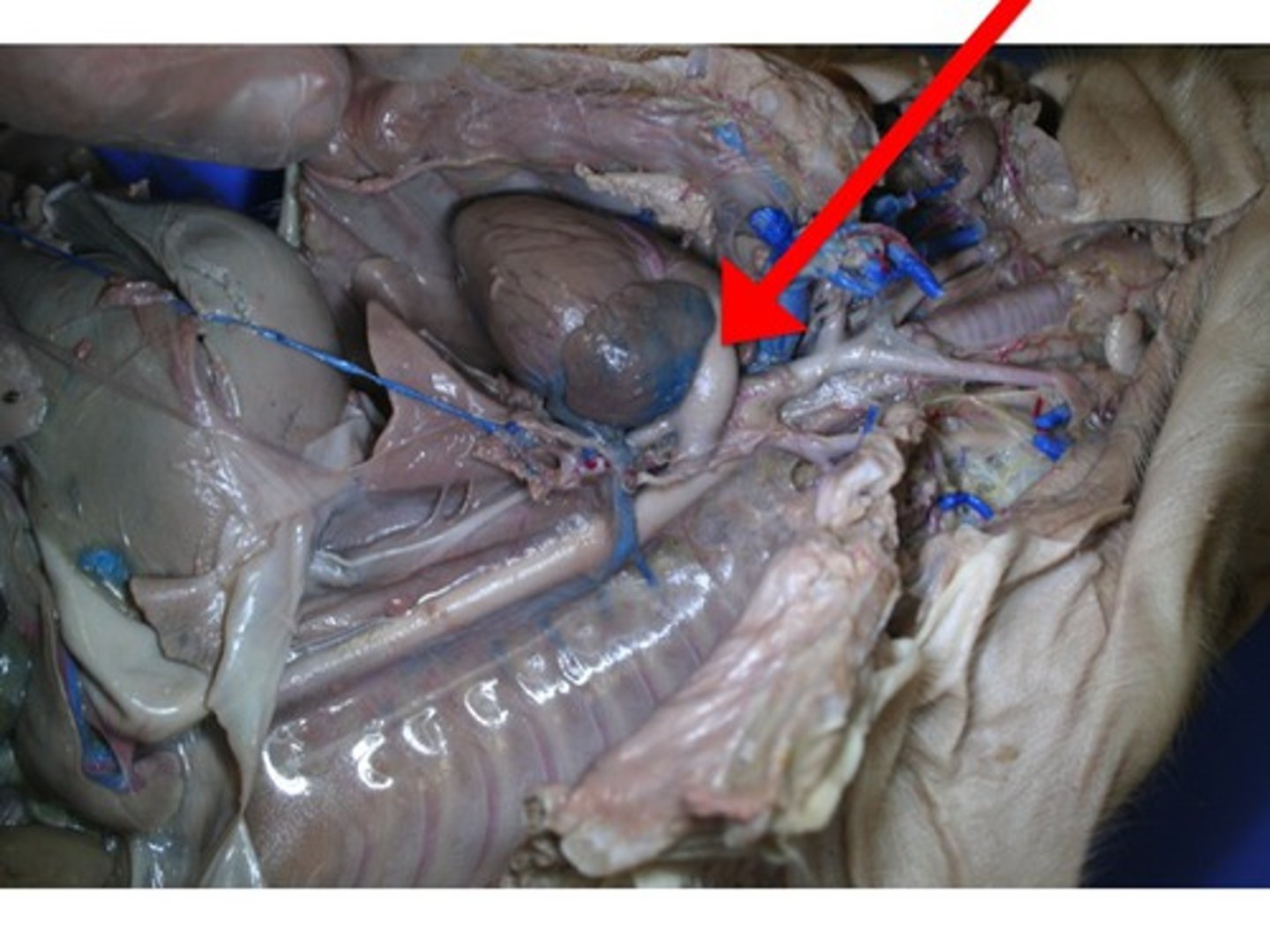
Coronary Artery
Either of two arteries that arise one from the left and one from the right side of the aorta immediately above the semilunar valves and supply the tissues of the heart itself.
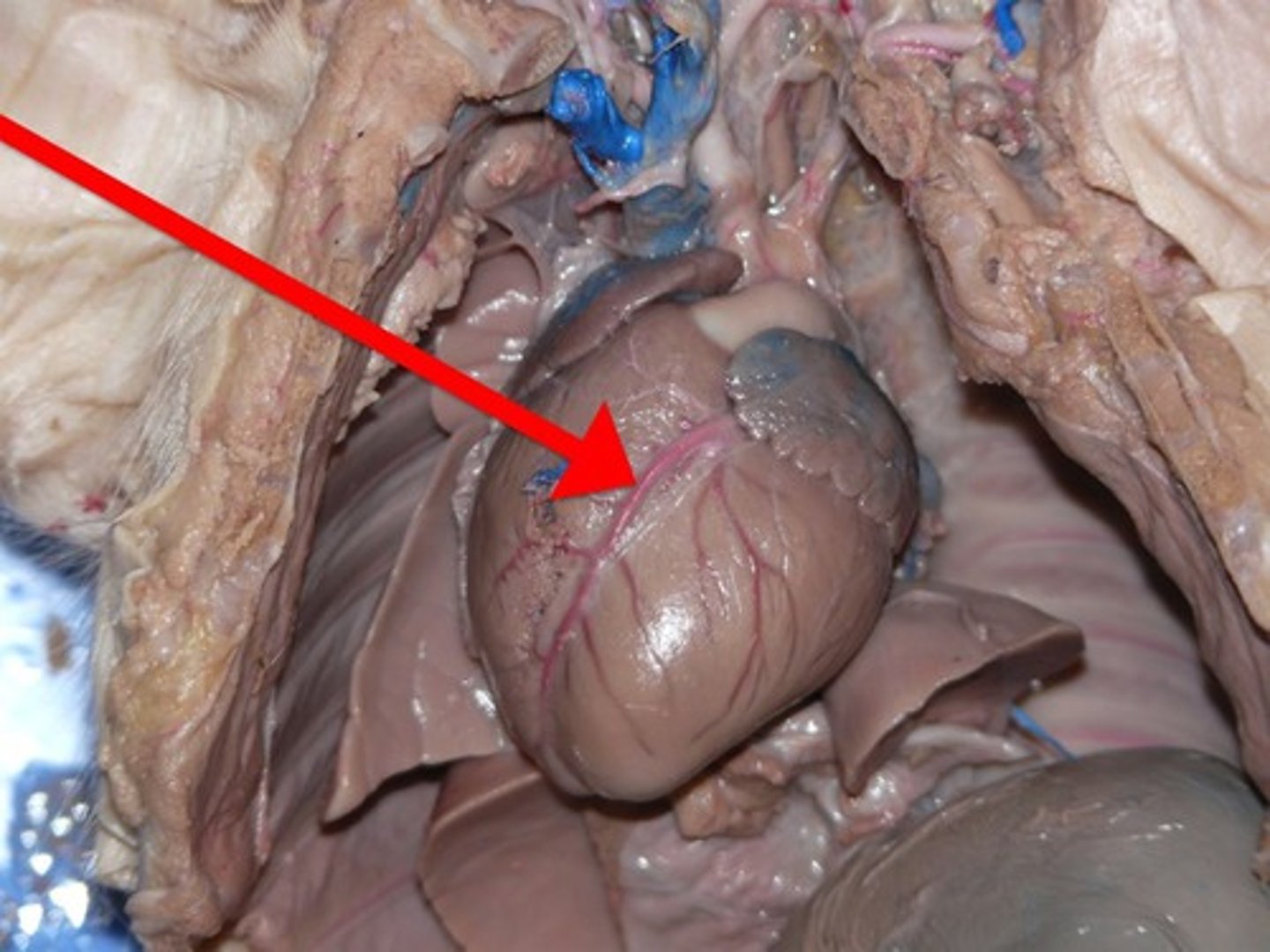
Left Atrium
Chamber that receives oxygenated blood from the pulmonary veins and pumps it into systemic circulation.
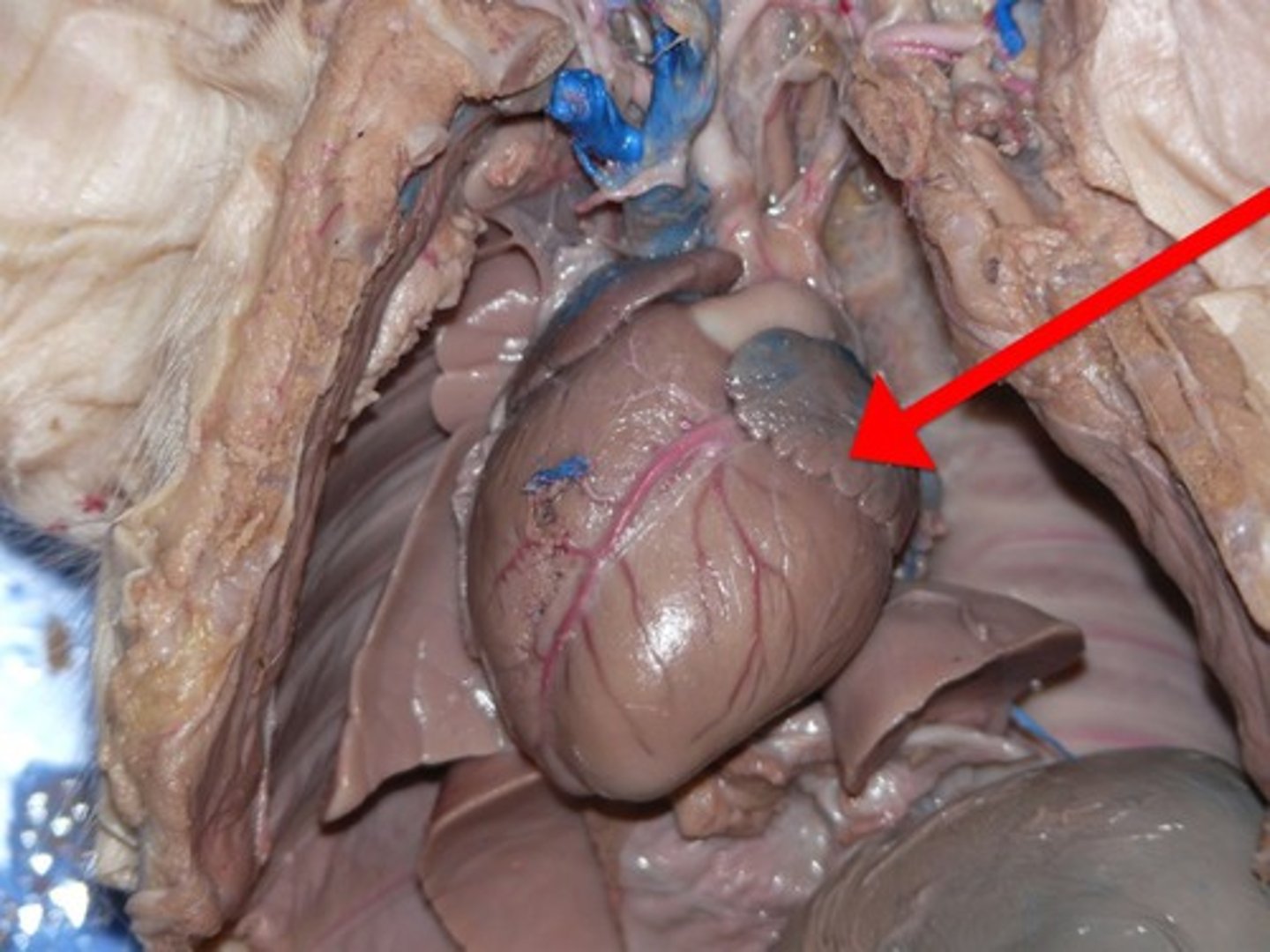
Left Ventricle
The chamber of the heart that receives arterial blood from the left atrium and pumps it into the aorta.
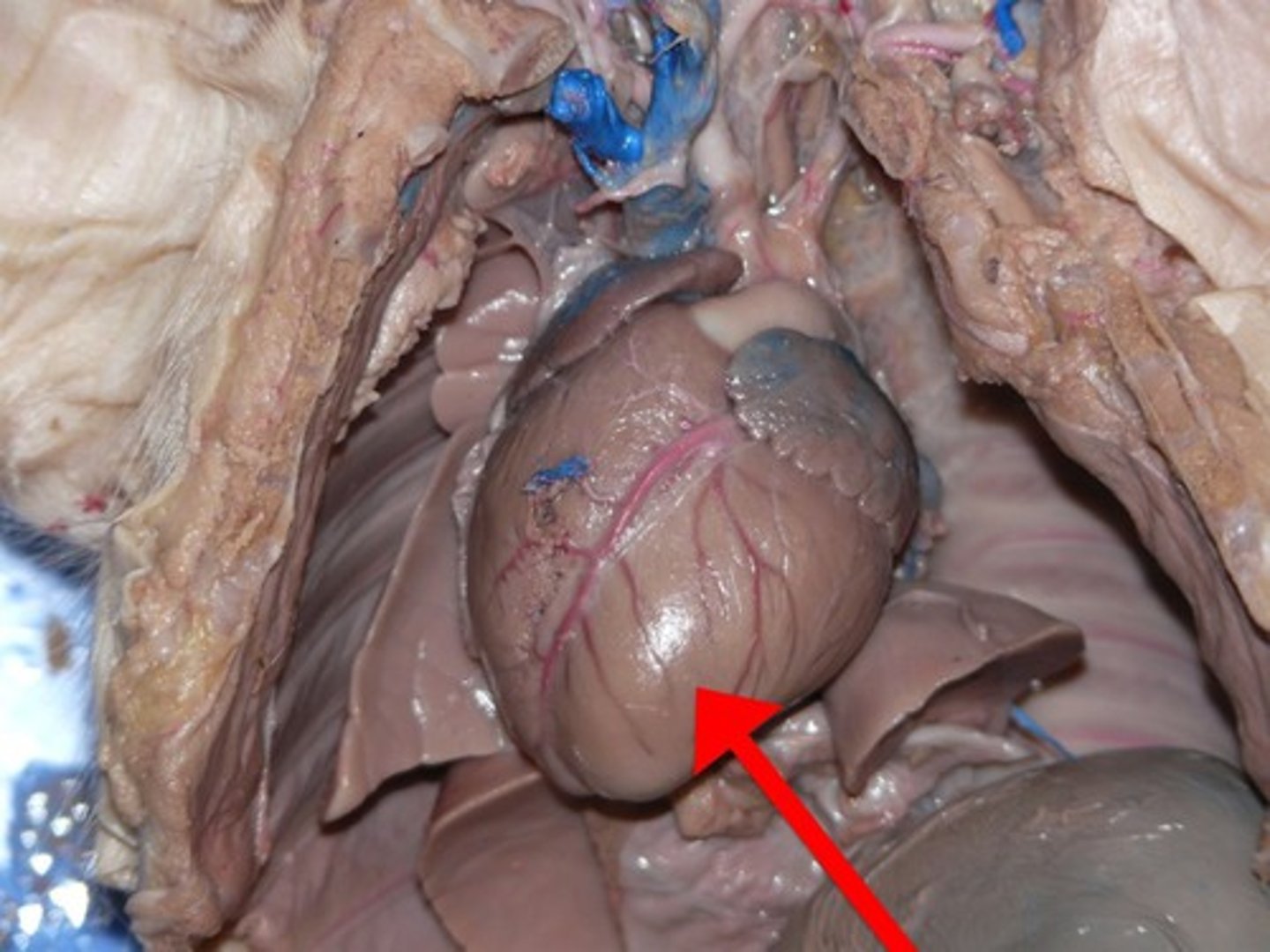
Right Ventricle
The chamber of the heart that receives venous blood from the right atrium and pumps it into the pulmonary artery.
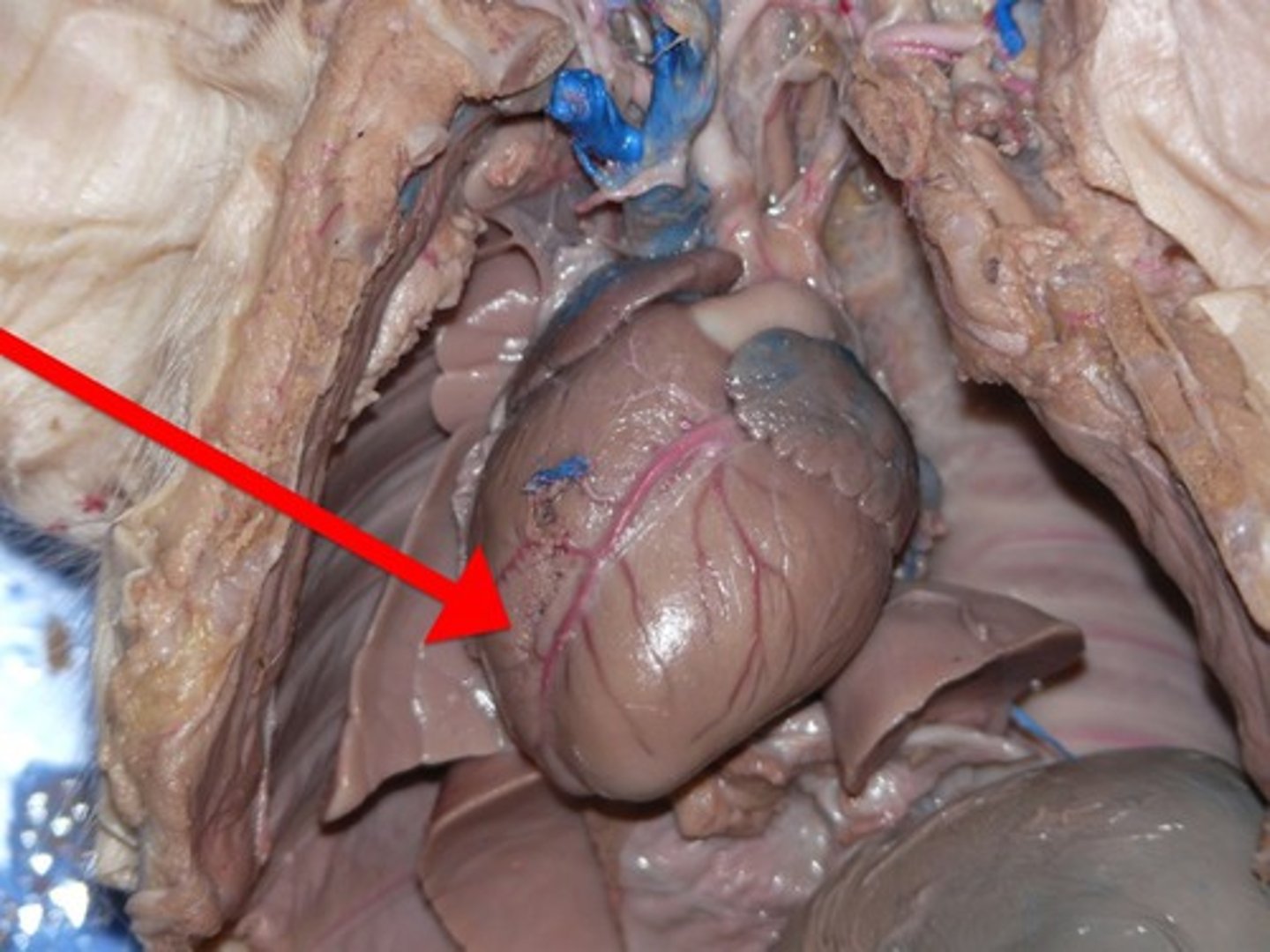
Pulmonary trunk
The major artery leading from the right ventricle of the heart to the lungs; it carries oxygen-poor blood.
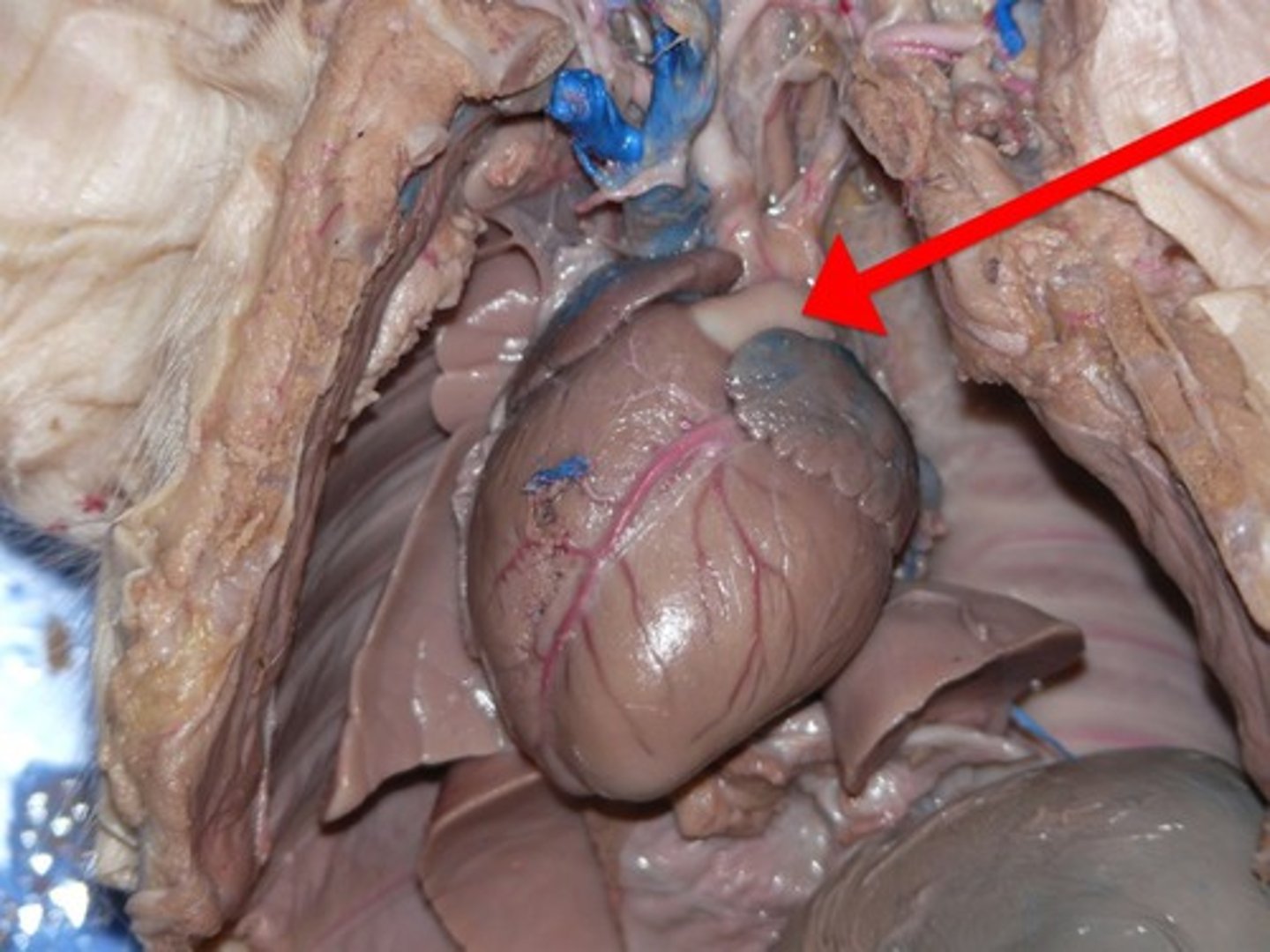
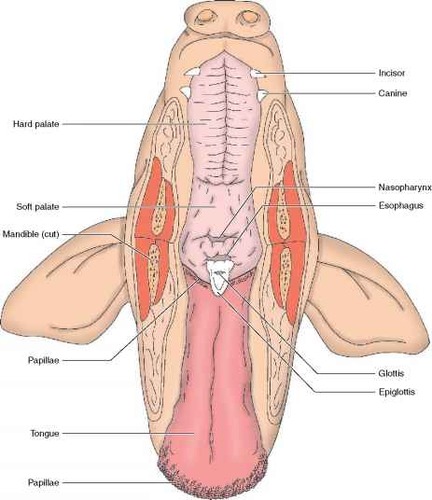
Soft Palette
Allows food to slide down throat and separates nasal and oral cavities.
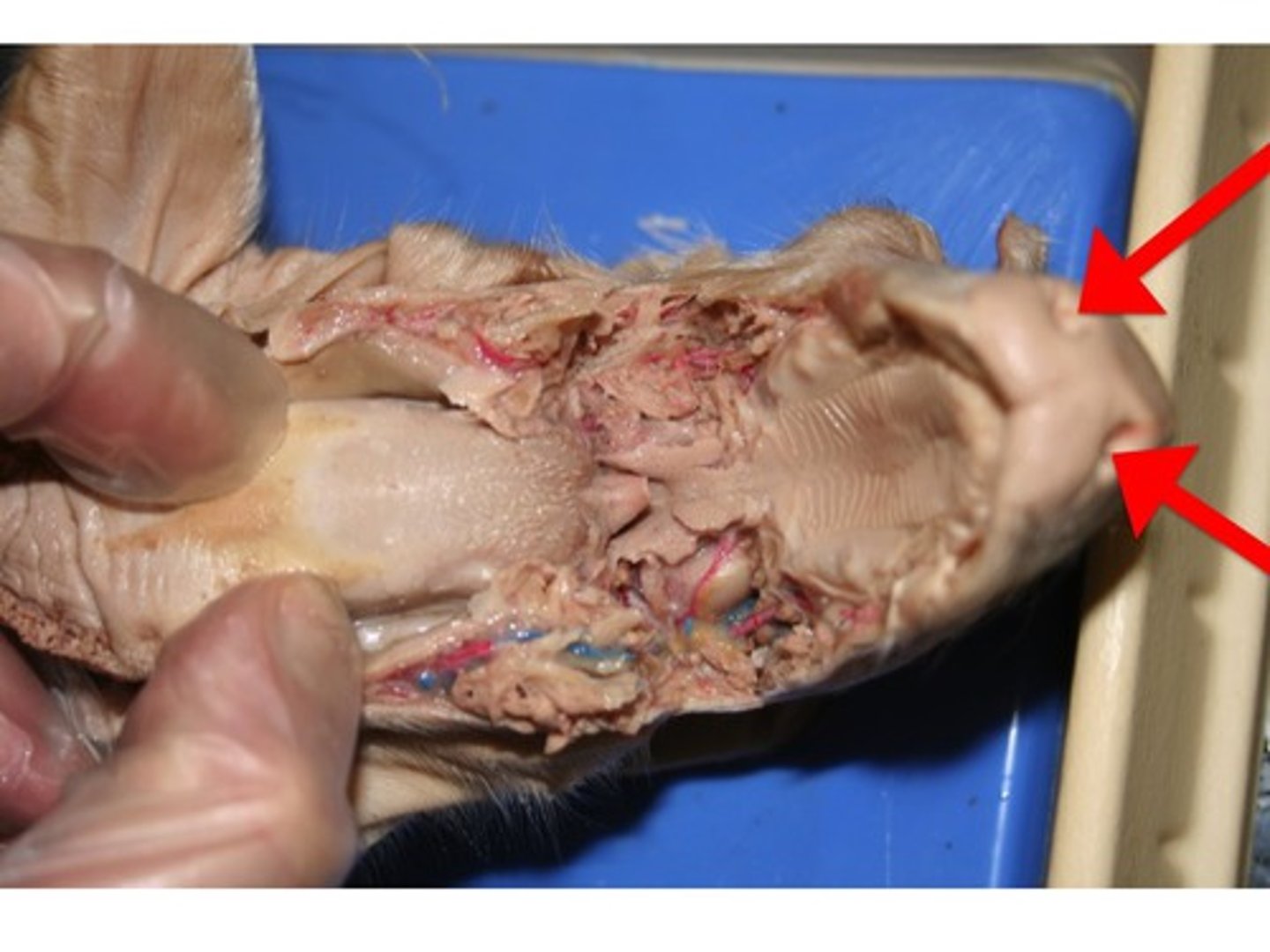
Nares
Openings through the nose carrying air into the nasal cavities
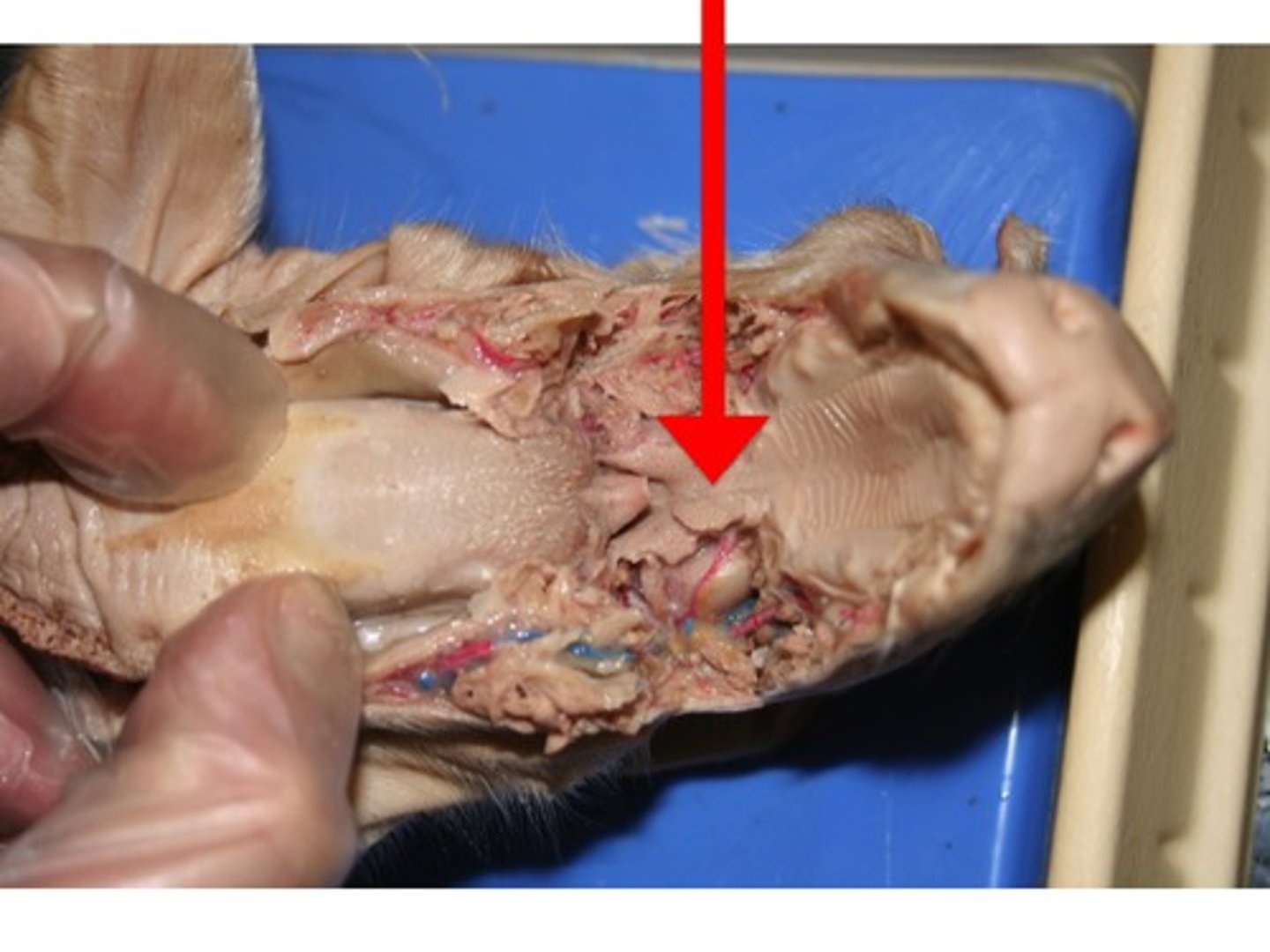
Epiglottis
A flap of tissue that seals off the windpipe and prevents food from entering.
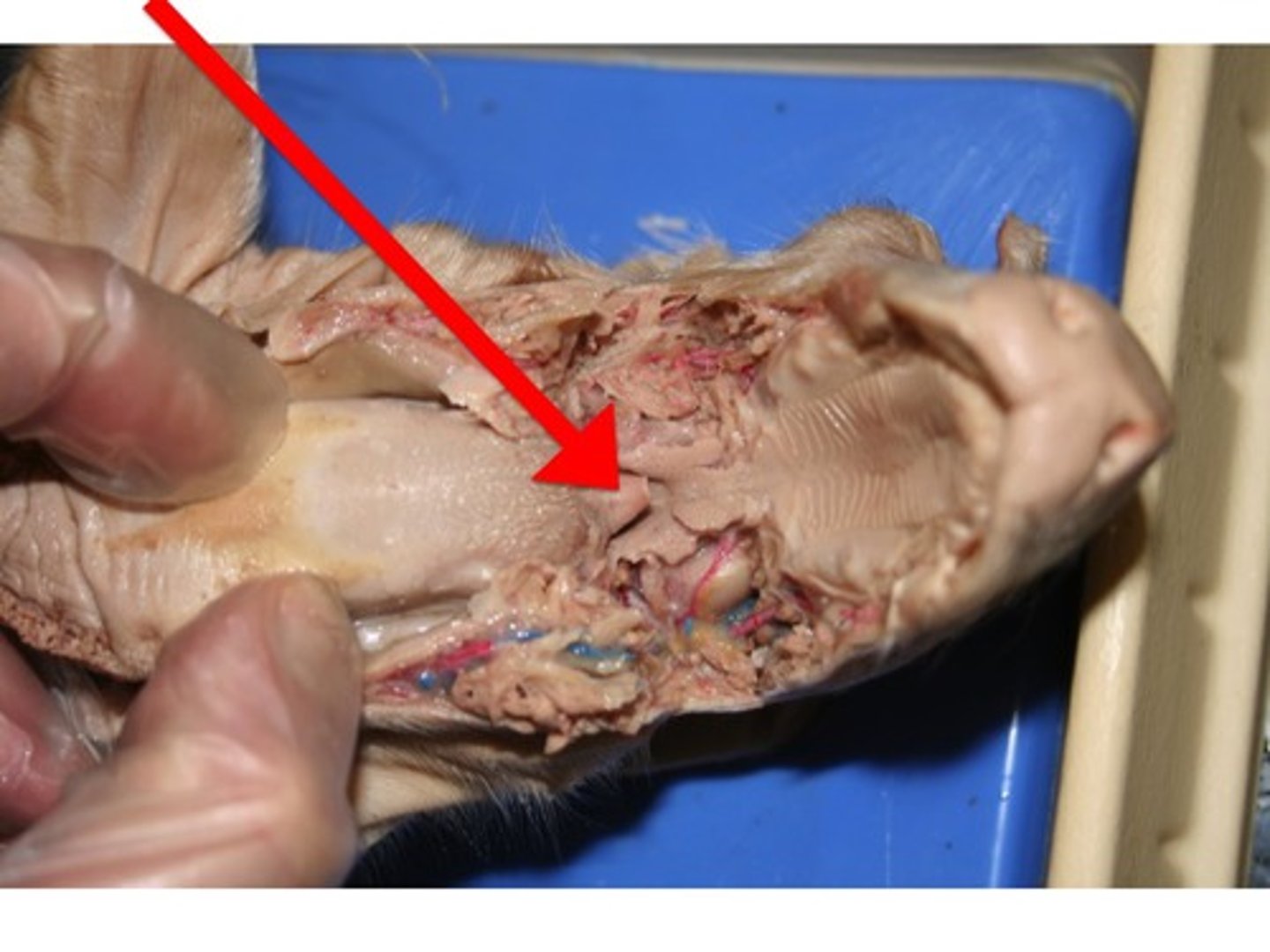
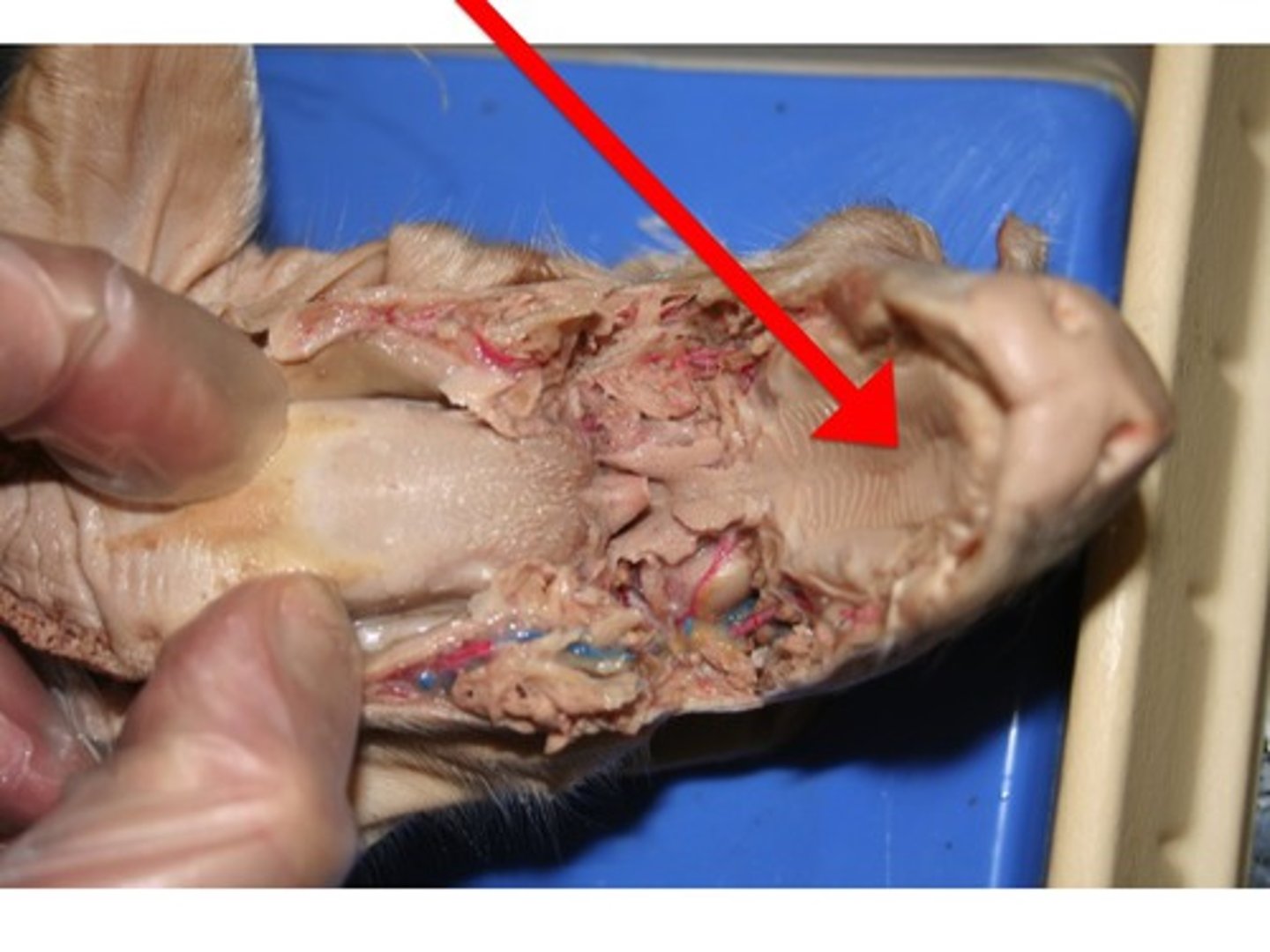
Hard Palette
Helps with mechanical digestion.
Speech and feeding from interaction with the tongue, separates oral cavity from nasal cavity.
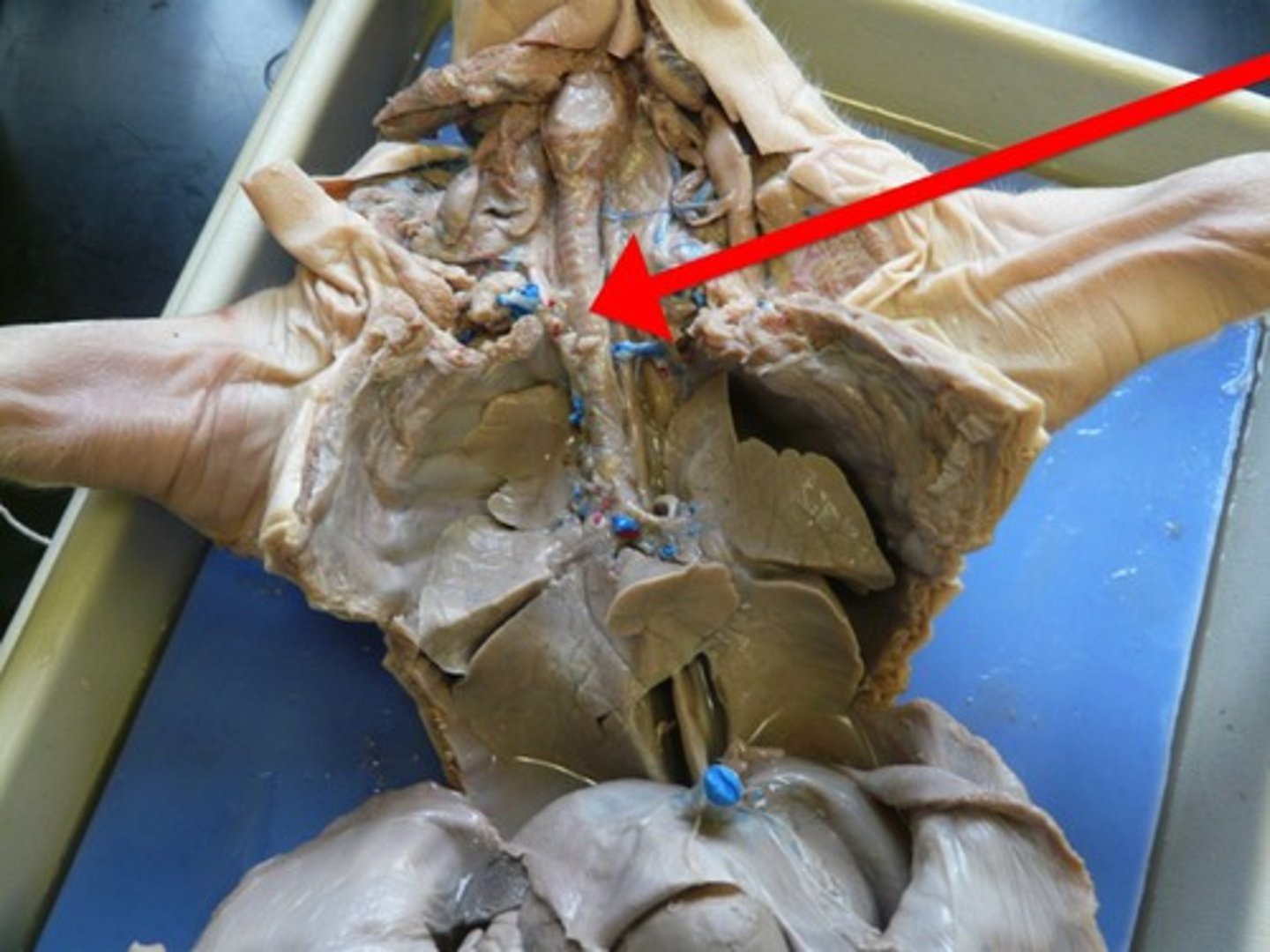
Trachea
Allows air to pass to and from lungs.
Air passageway; has cartilage rings to help keep the air passage open as air rushes in; branches into right/left bronchus. Between larynx and bronchi.
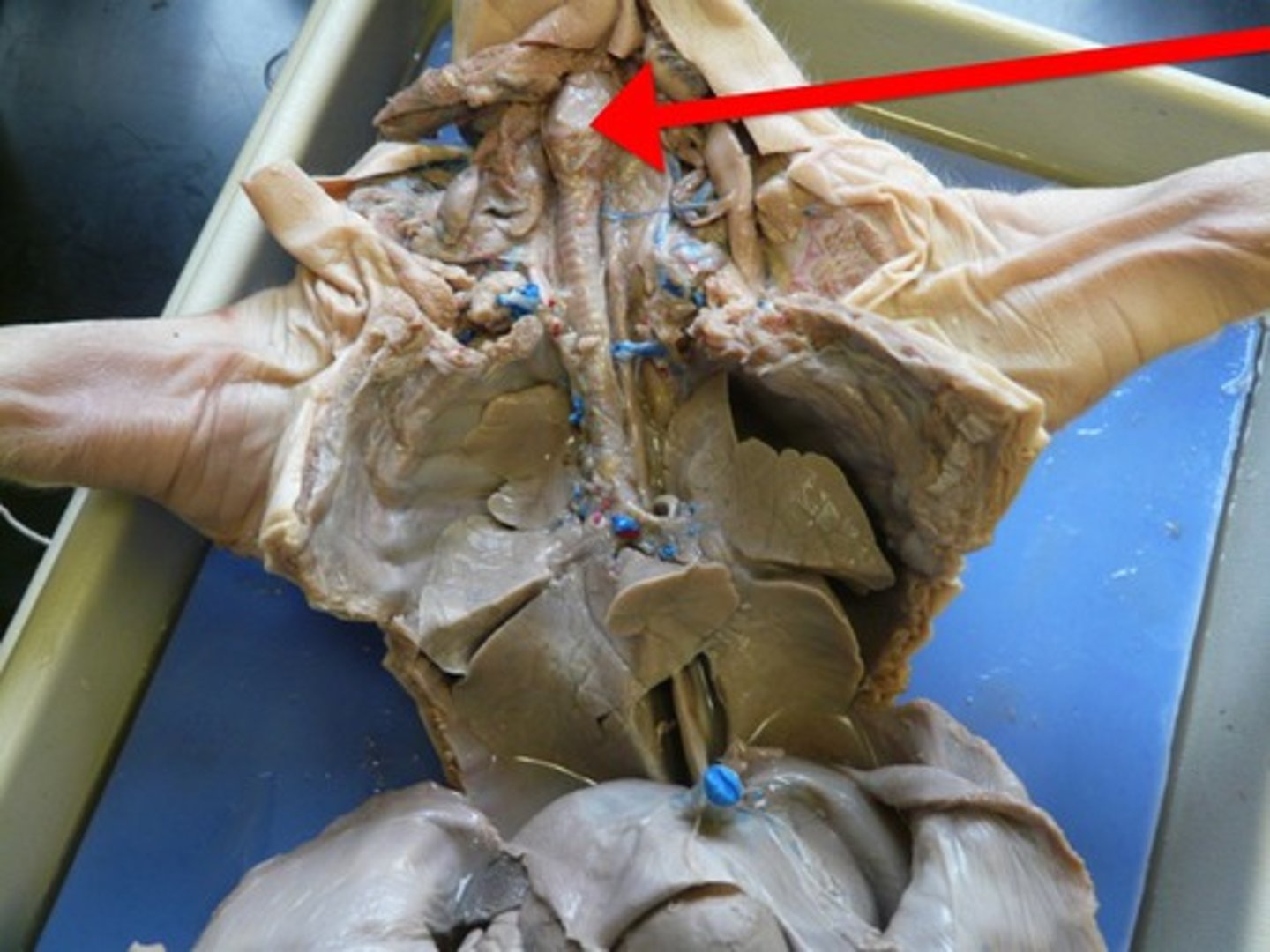
Larynx
Contains the vocal cords-voice box.
Male
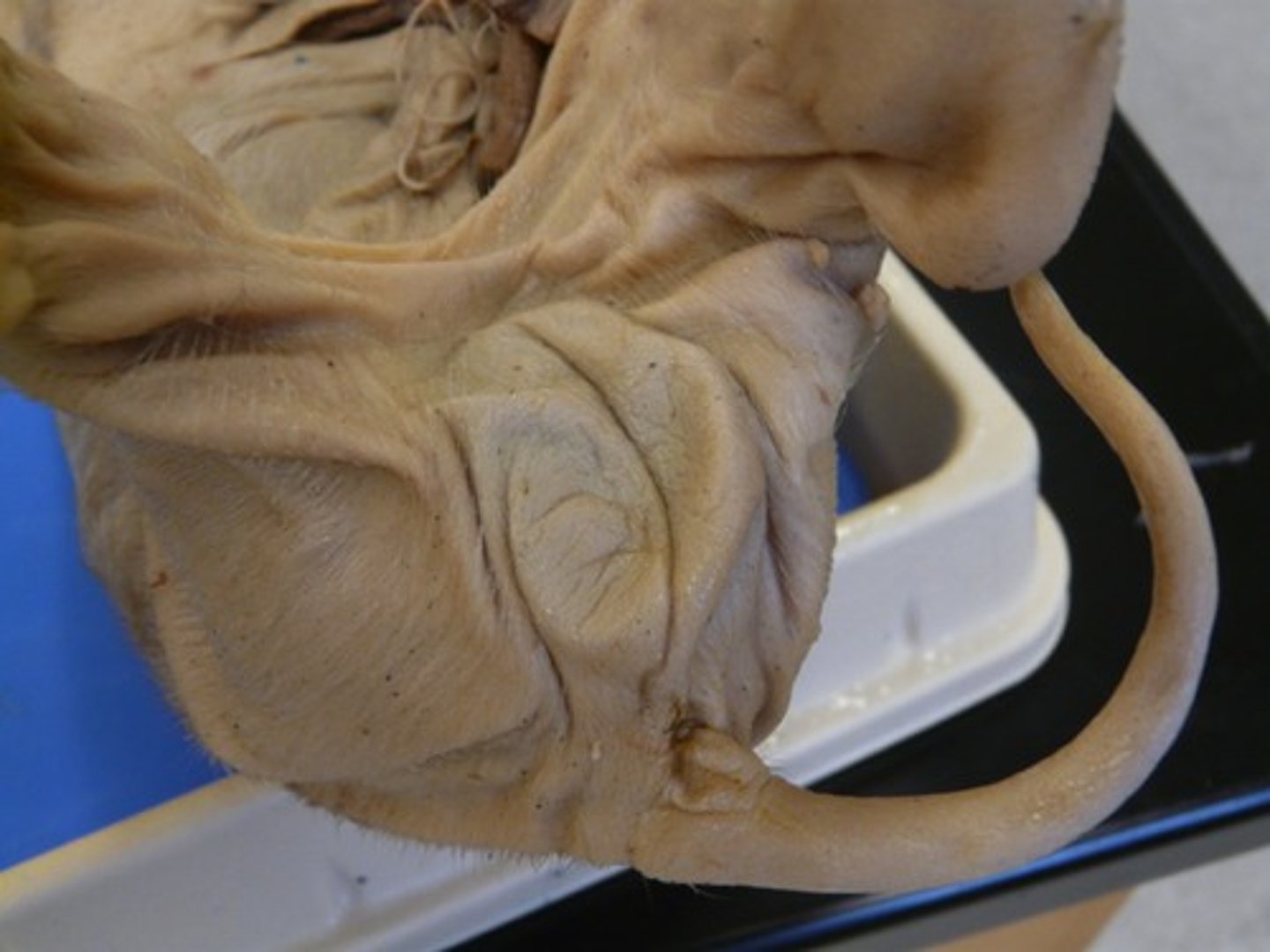
Umbilical cord
Connects the vasculature of the fetus to the placenta. A cord or funicle connecting the embryo or fetus with the placenta of the mother and transporting nourishment from the mother and wastes from the fetus.
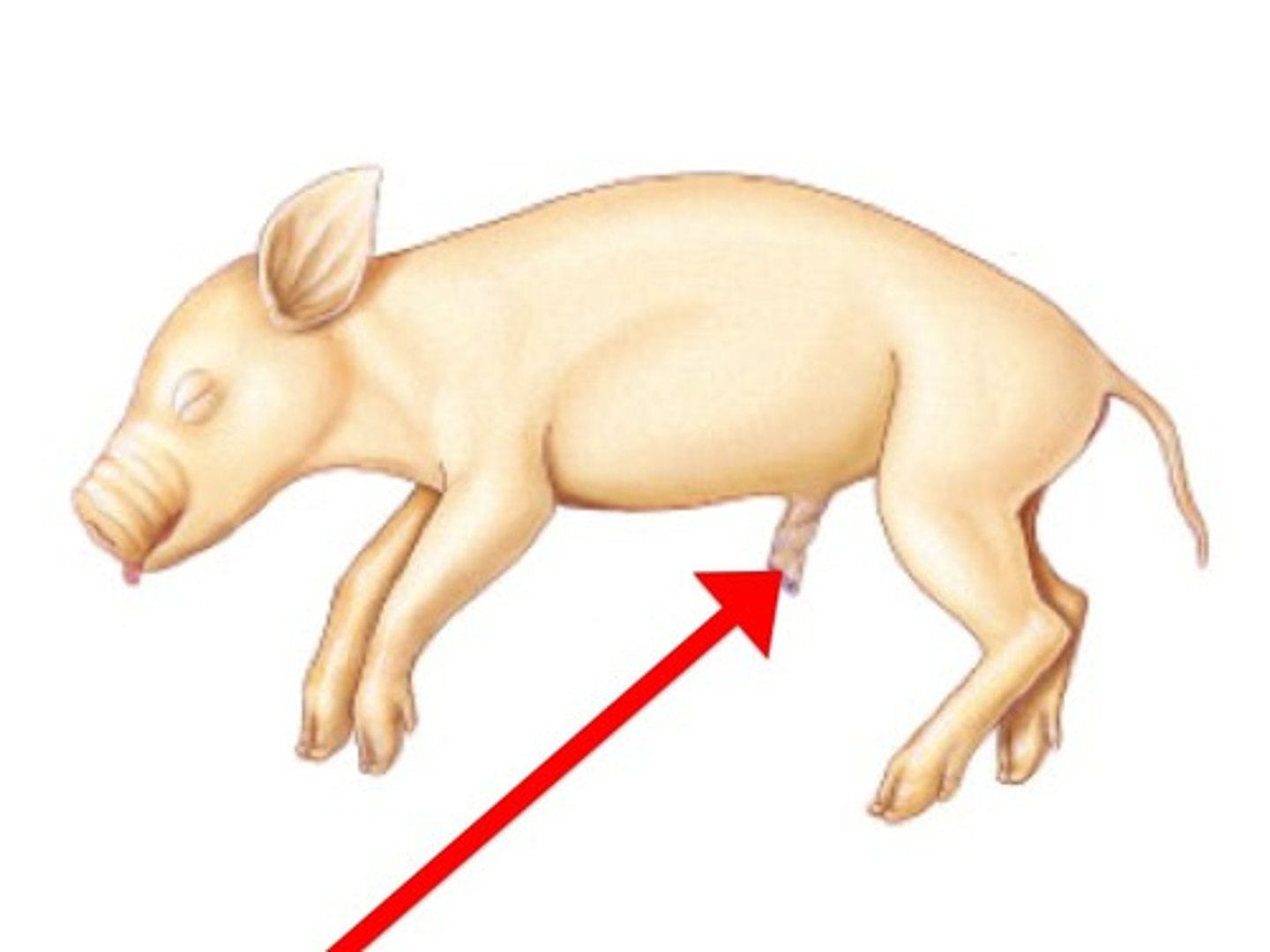
Urinary Bladder
The pouch where urine is stored prior to elimination.
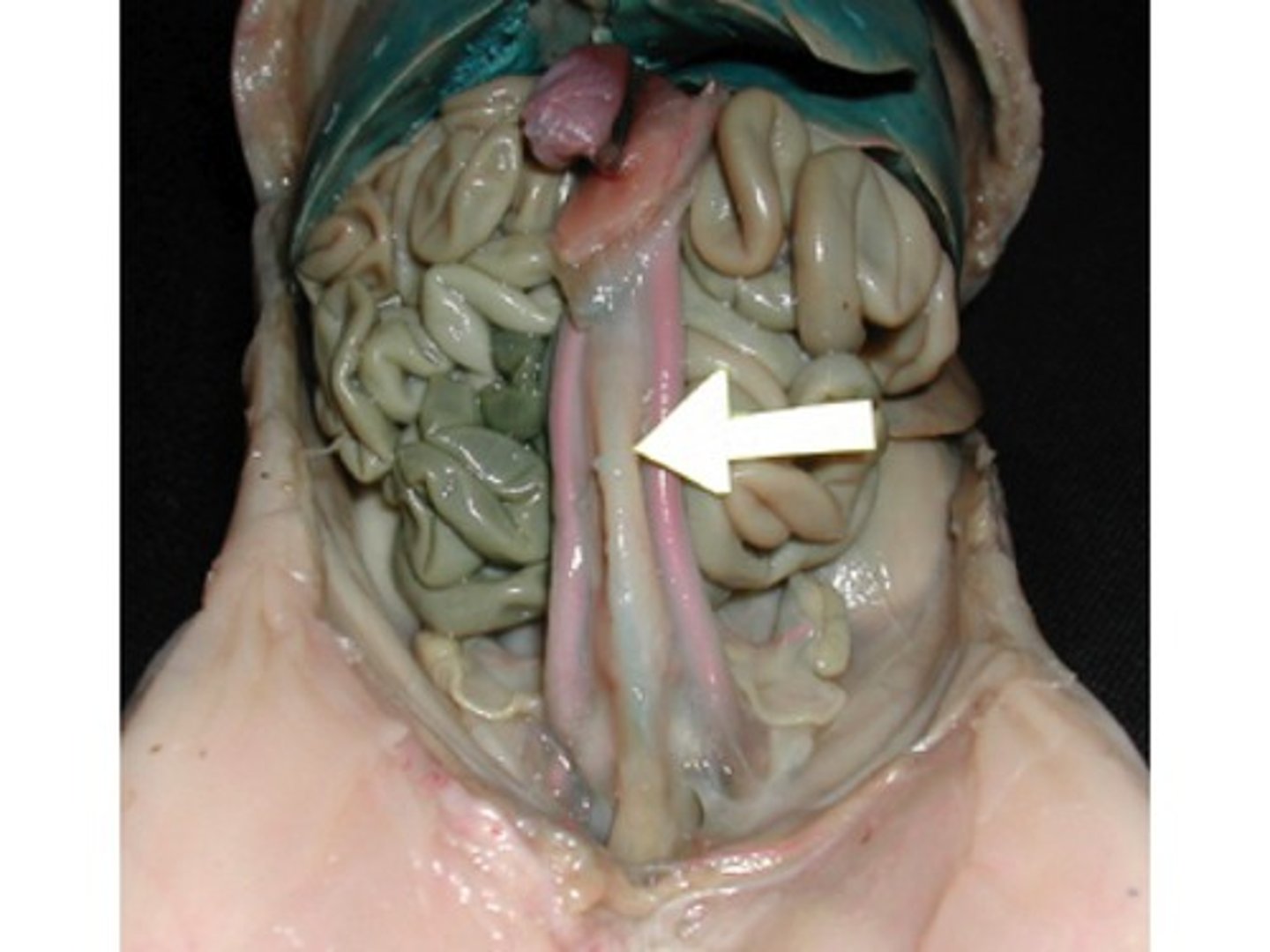
Kidney
Filters waste from the blood like urea, water, salt and proteins.
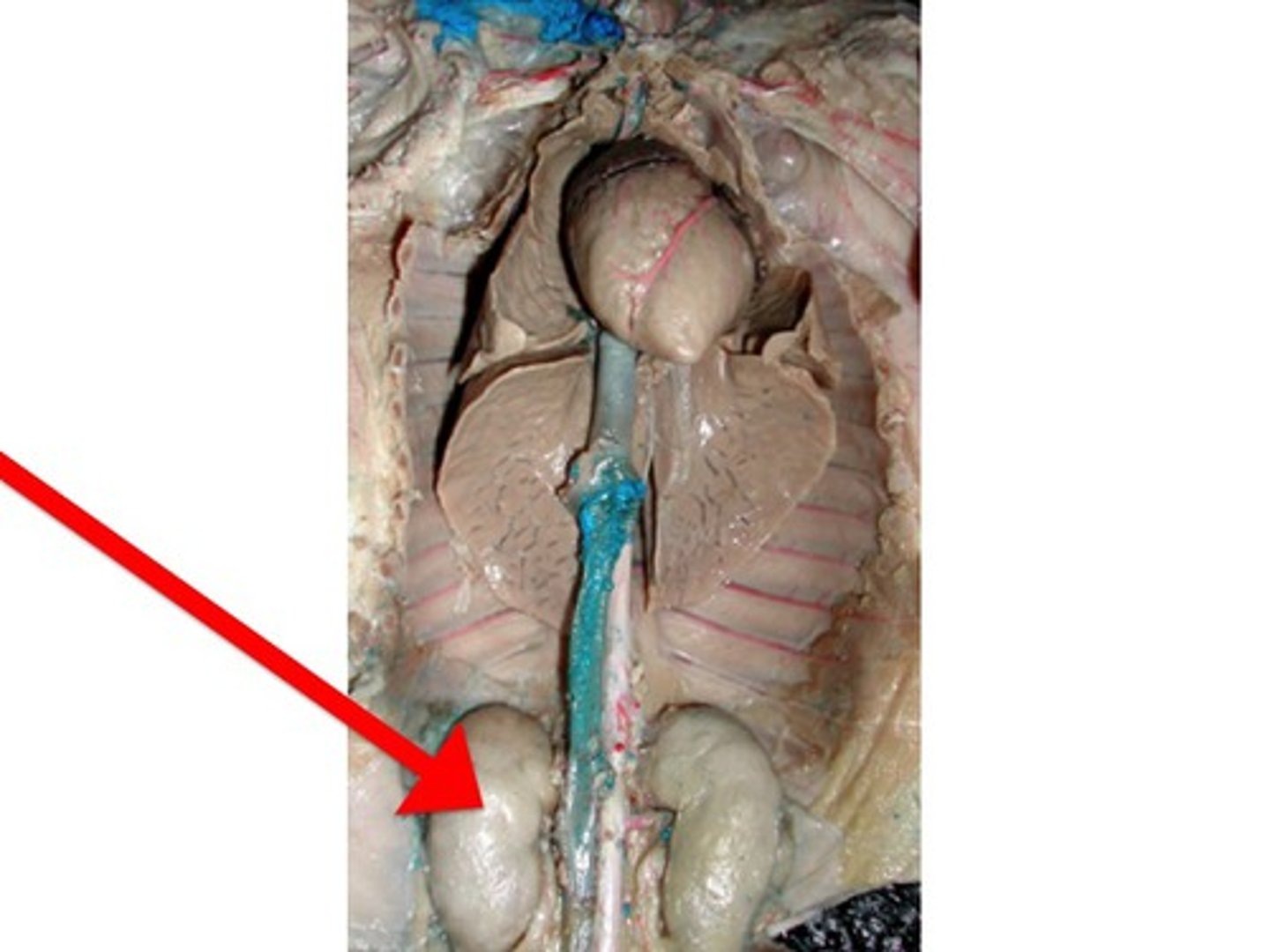
Large Intestine
Absorbs water and forms feces.
The last section of the digestive system, where water is absorbed from food and the remaining material is eliminated from the body.
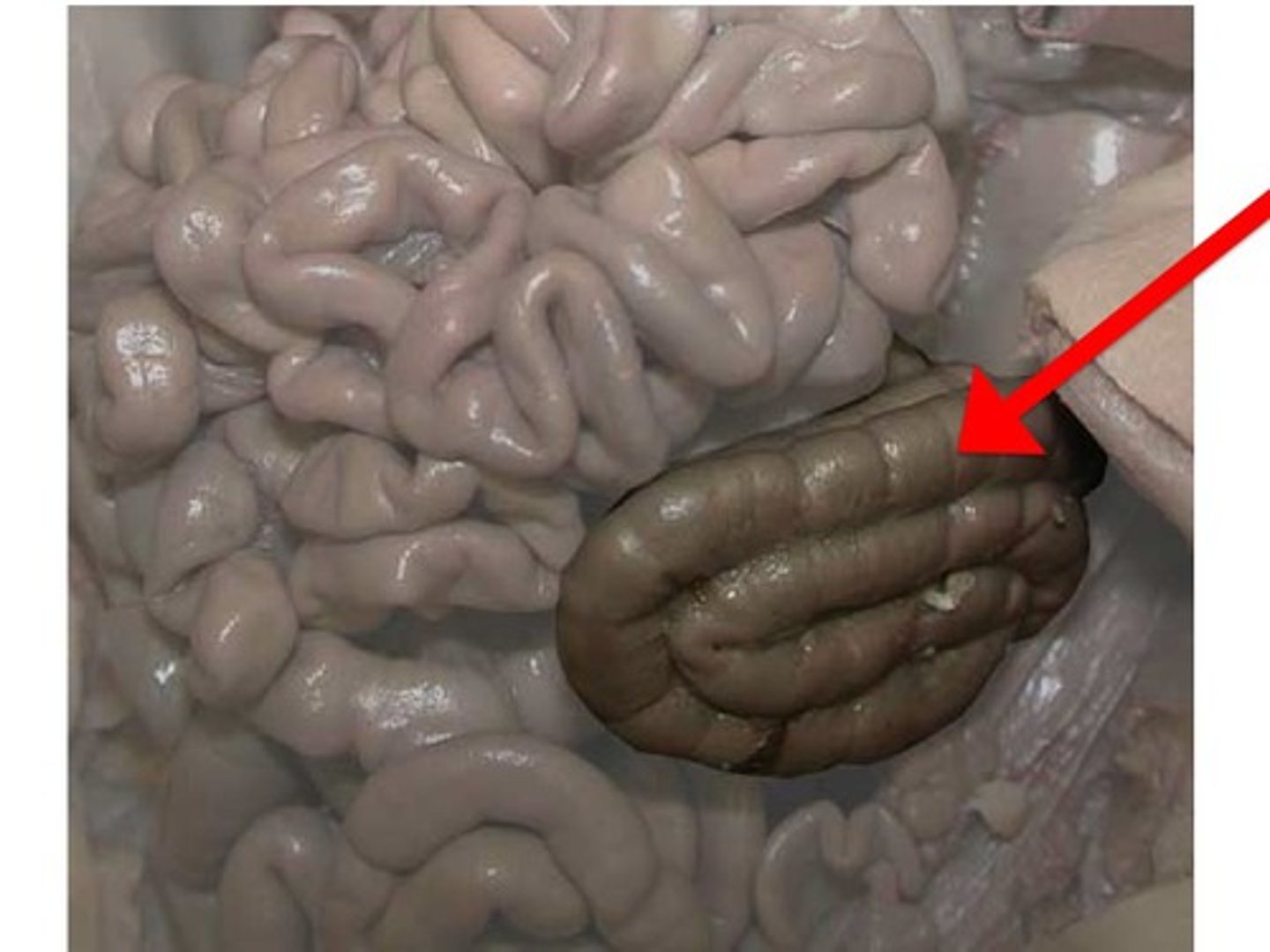
Ovaries
Glands that produce the egg cells and hormones.
Egg-producing organs within the female reproductive system.
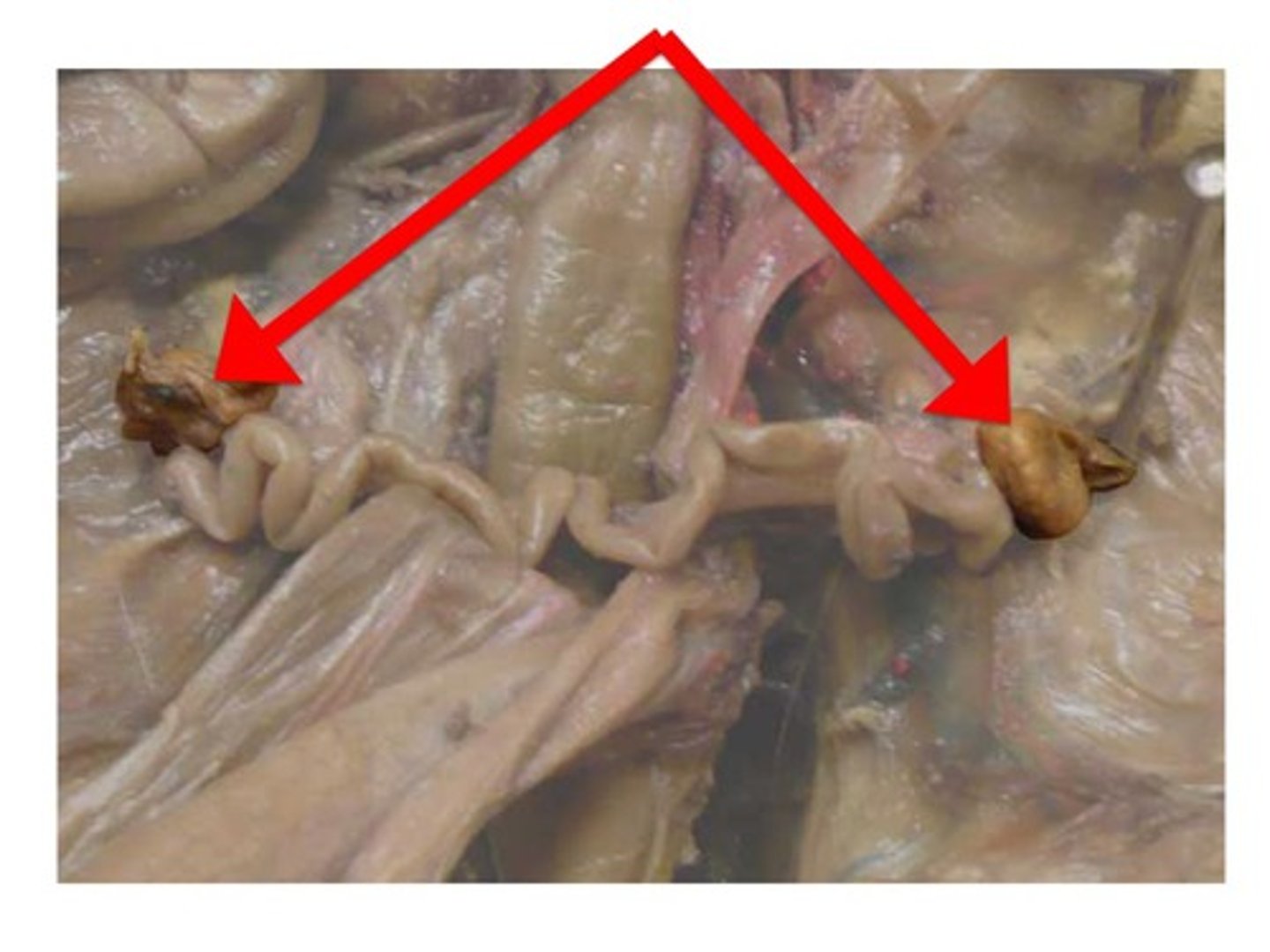
Uterine Horns
Point where uterus & uterine tubes meet; connect body of uterus & ovaries; in the pig, fetus develops here.
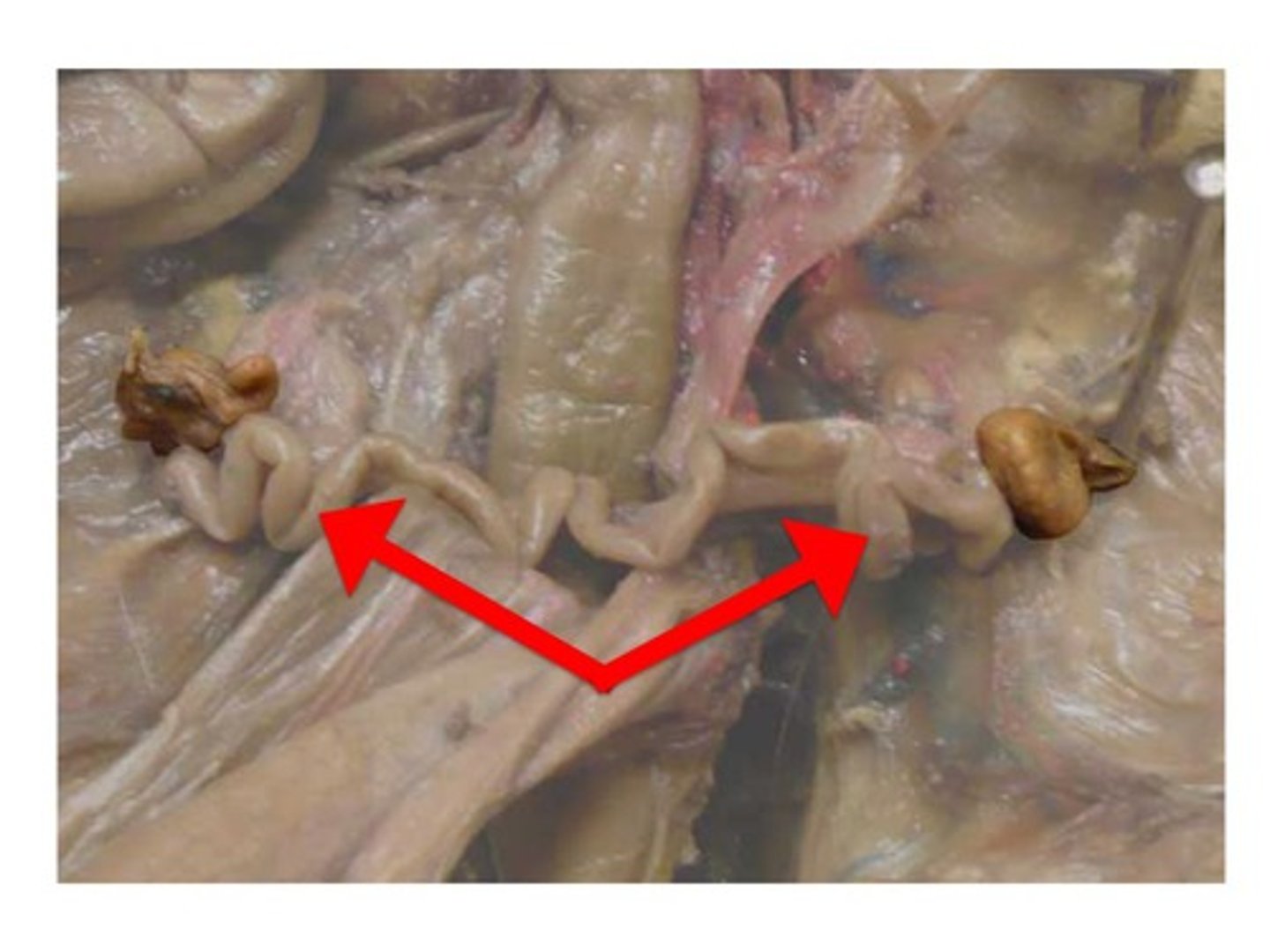
Rectum
A short tube at the end of the large intestine where waste material is compressed into a solid form before being eliminated.
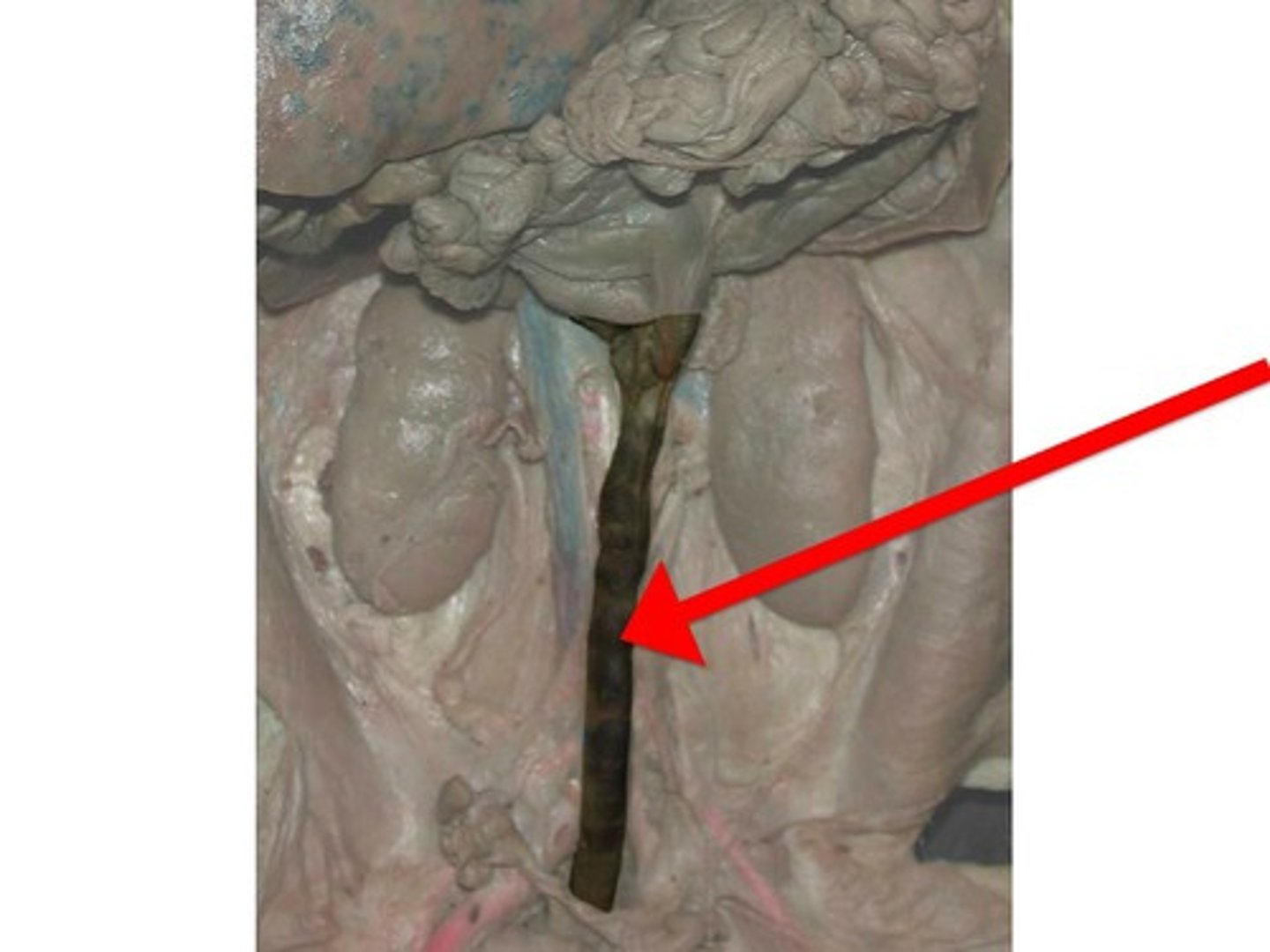
Umbilical Artery
Brings DEOXYGENATED blood and nutrients from fetus to mother.
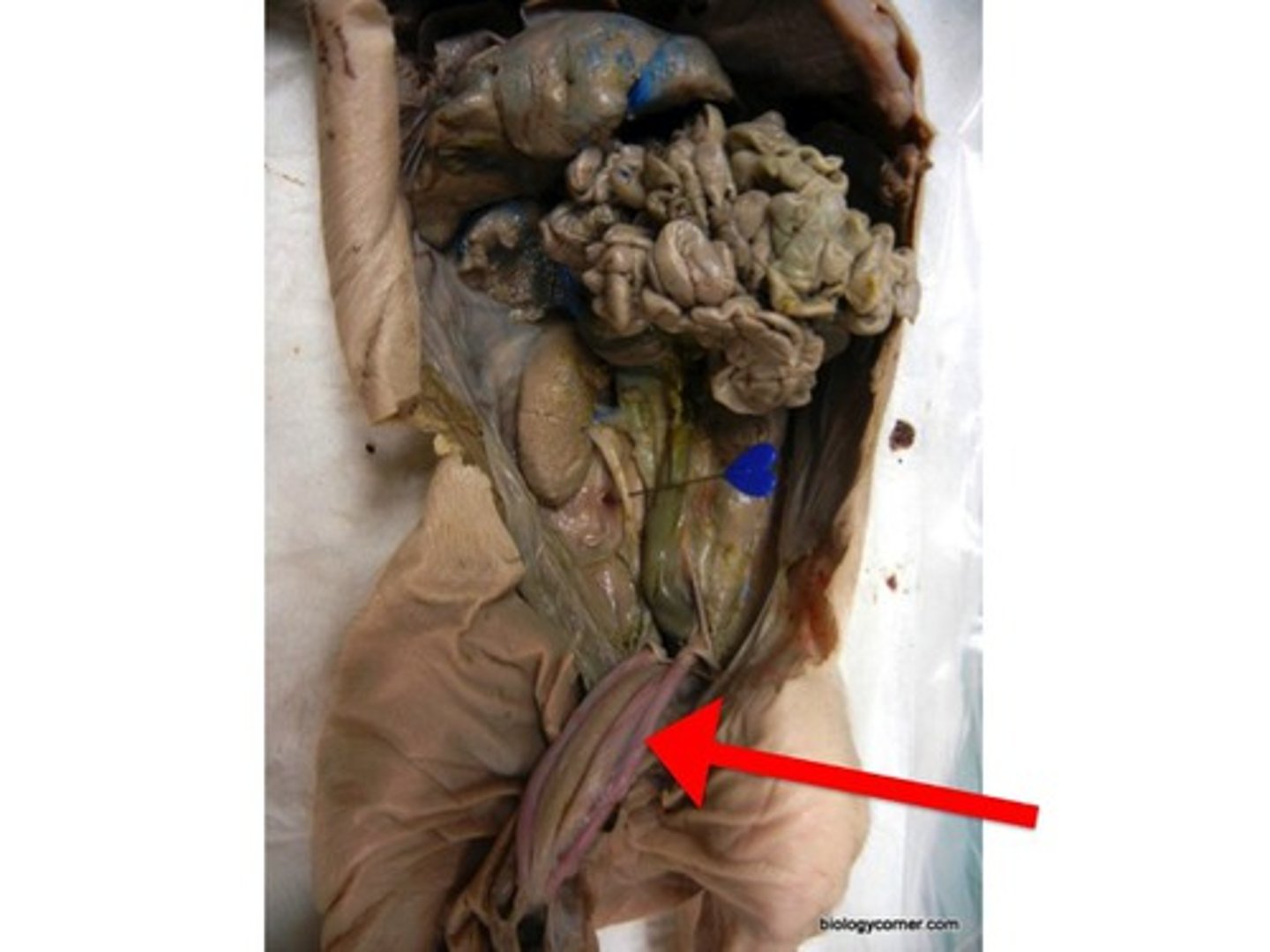
Ureter
A duct leading from the kidney to the urinary bladder. Carries urine duh.
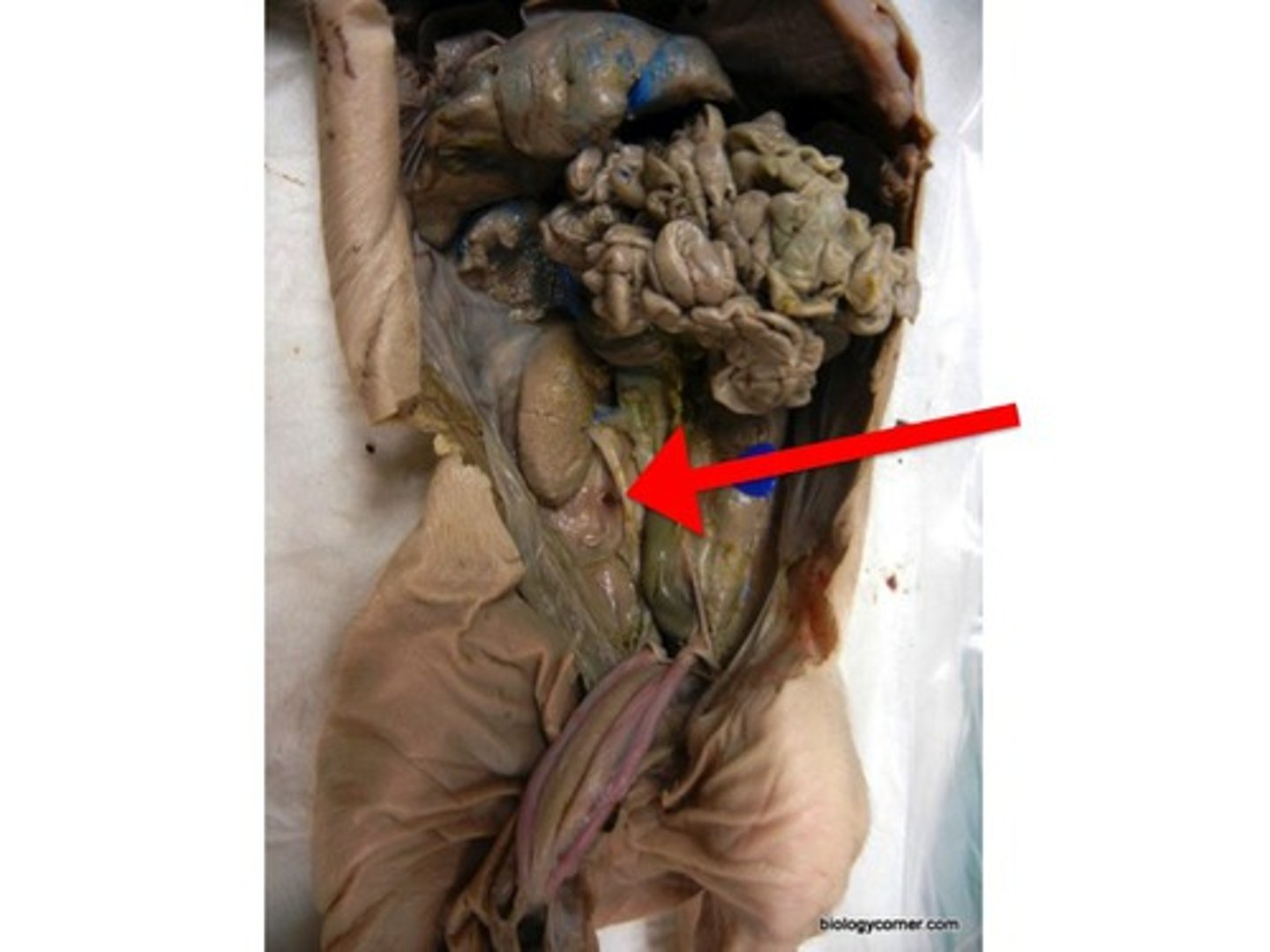
Testes
Male sex glands or gonads that produce the male sex cells - sperm. (Primary)
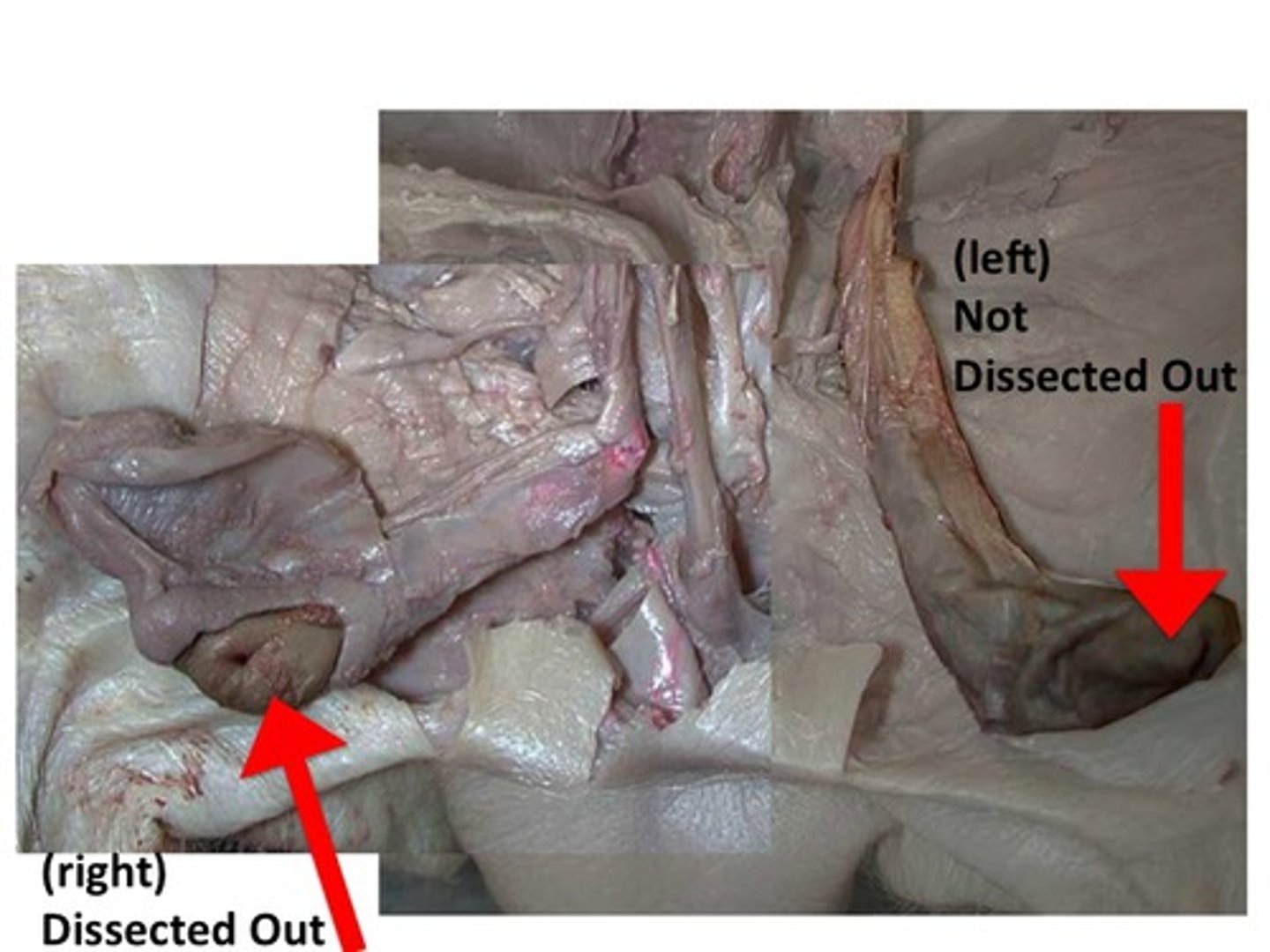
Ureter
A duct leading from the kidney to the urinary bladder.
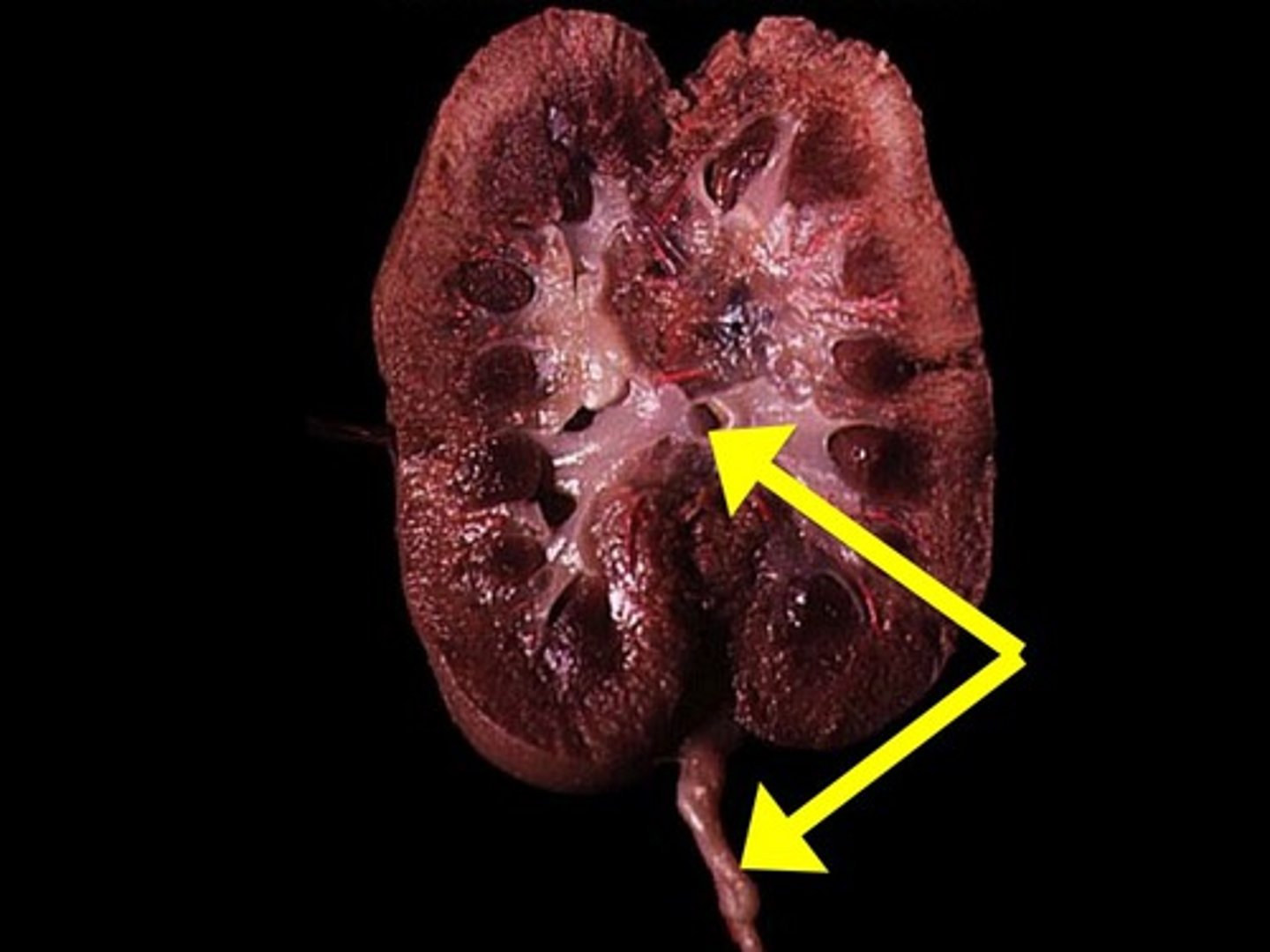
pharynx
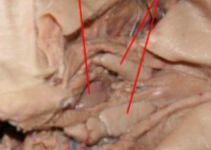
thymus
site of maturation of t-cell lymphocytes. thyroid is in the middle of this structure
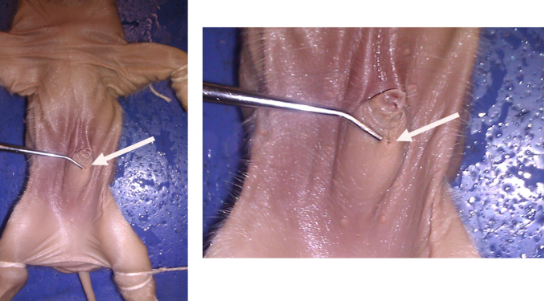
male urogenital opening
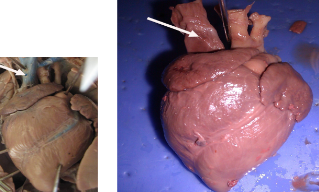
cranial vena cava
carries blood back to the right atrium
esophagus c
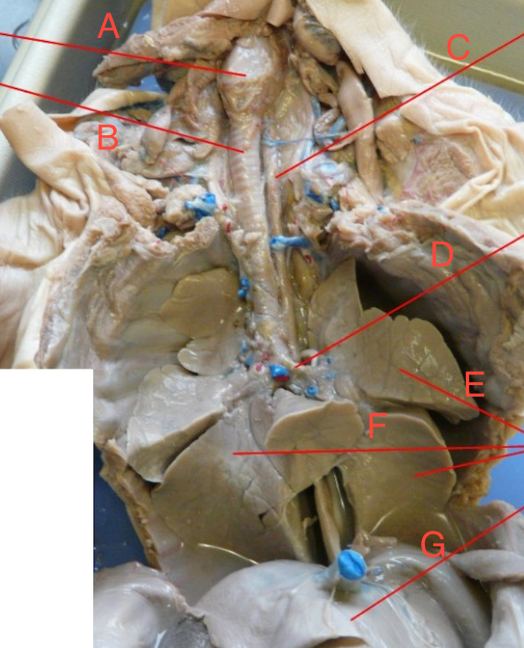
umbilical vein
carries blood from placenta to developing fetus
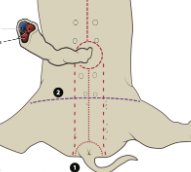
pyloric valve
a thick ring of smooth muscle located at the base of the stomach, where it conenects to the duodenum. controls release of stomach contents to duodenum
jejuno-ilium
the long, coiled, posterior portion of the small intestine following the duodenum. responsible for the absorption of digestion products
colon (large intestine)
reabsorption of water from waste
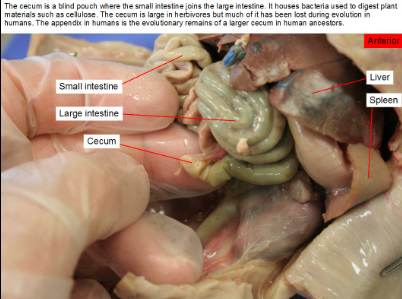
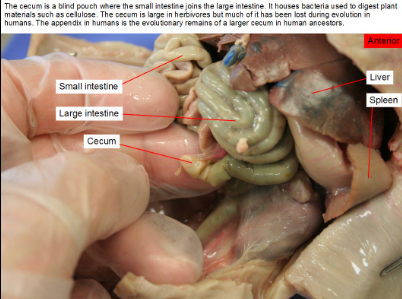
caecum
under the large intestine/colon. connects the small intestine to the colon.