CHEM
 Call Kai
 Learn
Learn Practice Test
 Spaced Repetition
 Match
Match Flashcards
 Knowt Play
1/207

There's no tags or description
Looks like no tags are added yet.
Name | Mastery | Learn | Test | Matching | Spaced | Call with Kai |
|---|
No analytics yet
Send a link to your students to track their progress
208 Terms
Matter
Anything that has mass and takes up space (volume).
States of matter
Solid, liquid, gas
Physical property
A characteristic that can be observed or measured without changing the substance's identity (e.g., color, melting point, density).
Chemical property
A characteristic that describes a substance's ability to change into a new substance (e.g., flammability, reactivity with acid, susceptibility to rusting).
Physical change
A change where the identity of the substance stays the same; only its state, shape, or size changes (e.g., ice melting, chopping wood).
Chemical change
A change where the original substance is transformed into one or more new substances with different properties (e.g., burning wood, baking a cake).
Law of Conservation of Mass
The principle stating that matter cannot be created or destroyed in a chemical reaction; total reactant mass equals total product mass.
Pure substance
A form of matter that has a constant chemical composition and distinct properties throughout (comprising only elements or compounds).
Element
A pure substance that cannot be broken down into simpler substances by chemical means, consisting of only one type of atom.
Compound
A pure substance composed of two or more different elements chemically bonded together in a fixed ratio (e.g., water, H
2 O).
Mixture
A combination of two or more substances that are physically blended but not chemically bonded; each substance retains its own identity.
Homogeneous mixture
A mixture that has a uniform composition throughout; you cannot see the individual components (e.g., salt water, air). Also called a solution.
Heterogeneous mixture
A mixture that does not have a uniform composition; the different components are visibly distinct (e.g., salad, sand in water).
Separation of mixtures
physical seperation of compounds
Separation of compounds
Impossible by physical means; they can only be broken down into their basic elements through chemical changes.
Atom
The basic unit of a chemical element; the smallest particle of matter that retains the properties of that element.
Subatomic particles
Protons, neutrons, and electrons.
Nucleus
The dense, positively charged center of the atom containing protons and neutrons.
Electrons
Negatively charged (–) particles located in the vast space outside the nucleus (often called the electron cloud).
Protons and Neutrons
Protons carry a positive (+1) charge and neutrons carry a neutral (0) charge; both have a mass of approximately 1 amu.
Atomic number
The number of protons in the nucleus of an atom, which uniquely identifies the element.
Mass number
The total number of protons plus neutrons in the atom's nucleus.
Electrical neutrality
The state of an unbonded, isolated atom having an equal number of protons and electrons, causing the charges to cancel out.
Isotopes
Atoms of the same element that have the same number of protons but a different number of neutrons (resulting in different mass numbers).
Molecule
A neutral group of two or more atoms held together by chemical bonds (specifically covalent bonds).
Molecules of elements vs. compounds
Element molecules feature the same kind of atoms (e.g., O 2), while compound molecules feature different kinds of atoms (e.g., CO 2).
Diatomic molecule
A molecule composed of exactly two atoms (e.g.,H 2, O 2, CO).
Chemical formula
A notation (like H 2O) that shows the types of elements present and the exact number of atoms of each element in the smallest unit of the substance.
Compounds vs. Molecules relationship
True statement: All compounds are molecules, but not all molecules are compounds (e.g.,O 2is a molecule but not a compound).
Ion
An atom or group of atoms that has a net electric charge due to the loss or gain of one or more electrons.
Positive ion formation
Occurs when an atom loses one or more electrons, leaving it with more protons than electrons.
Negative ion formation
Occurs when an atom gains one or more electrons, leaving it with more electrons than protons.
Cation
A positively charged ion (e.g., Na +). (Tip: The "t" looks like a plus sign).
Anion
A negatively charged ion (e.g., Cl −). (Tip: "A Negative Ion" = Anion).
Polyatomic ion
A tightly bound group of atoms that behaves as a single unit and carries a net charge (e.g., Ammonium NH 4+, Sulfate SO 4 2−).
Periodic Table
An organized arrangement of the chemical elements, ordered by their atomic number, electron configuration, and recurring chemical properties.
Periods
The horizontal rows on the periodic table; elements in the same row have the same number of electron shells.
Groups (Families)
The vertical columns on the periodic table; elements in the same column have similar chemical properties and the same number of valence electrons.
Valence electrons
The electrons located in the outermost shell of an atom that determine its chemical reactivity and bonding behavior.
Metals
Elements typically located on the left and center of the periodic table that are shiny, malleable, ductile, and good conductors of heat and electricity.
Nonmetals
Elements located on the upper right side of the periodic table that are generally brittle, dull, and poor conductors of heat and electricity.
Alkali metals
Group 1 elements (excluding Hydrogen) that are highly reactive, soft metals with exactly one valence electron.
Metalloids
Elements found along the stair-step line between metals and nonmetals that possess a mixture of metallic and nonmetallic properties.
Alkaline earth metals
Group 2 elements that are reactive metals with two valence electrons.
Transition metals
Elements found in Groups 3 through 12 that are characterized by their ability to form compounds with various oxidation states and often produce colored solutions.
Halogens
Group 17 elements that are highly reactive nonmetals needing just one more electron to achieve a full outer shell.
Noble gases
group 18 elements that are extremely stable and unreactive gases due to having a completely full valence electron shell.
Periodic trends
Predictable patterns in elemental properties across periods and down groups on the periodic table.
Atomic radius
The distance from the center of the nucleus to the outermost stable electron cloud; it increases down a group and decreases left-to-right across a period.
Effective nuclear charge
The net positive charge experienced by valence electrons from the nucleus; it increases across a period, pulling electrons closer.
Shielding effect
The reduction of attractive force between the nucleus and valence electrons caused by inner-shell electrons; it increases down a group.
Ionization energy
The amount of energy required to remove an electron from a gaseous atom; it decreases down a group and increases left-to-right across a period.
Electronegativity
A measure of an atom's ability to attract shared electrons within a chemical bond; it decreases down a group and increases left-to-right across a period (excluding noble gases).
Electron affinity
The energy change that occurs when a neutral atom gains an electron; it generally becomes more negative (more favorable) across a period.
Metallic character
A measure of how easily an atom loses electrons; it increases down a group and decreases left-to-right across a period.
Chemical bond
The attractive force that holds atoms or ions together to form more stable chemical structures.
Octet rule
The tendency of atoms to gain, lose, or share electrons in order to acquire a stable set of eight valence electrons (like a noble gas).
Ionic bond
A type of chemical bond formed through the electrostatic attraction between oppositely charged ions, usually involving a transfer of electrons from a metal to a nonmetal.
Ionic compound
A compound composed of positive and negative ions structured in a rigid, repeating three-dimensional network called a crystal lattice.
Properties of ionic compounds
High melting and boiling points, brittleness, and the ability to conduct electricity when dissolved in water or melted.
Covalent bond
A chemical bond formed when two nonmetal atoms share one or more pairs of valence electrons to satisfy the octet rule.
Covalent (Molecular) compound
A compound formed by atoms sharing electrons, typically existing as discrete, individual molecules with lower melting and boiling points.
Single, double, and triple bonds
The sharing of one, two, or three pairs of electrons between two atoms, respectively, increasing in strength and decreasing in bond length.
Nonpolar covalent bond
A covalent bond where electrons are shared equally between atoms because the atoms have identical or very similar electronegativities.
Polar covalent bond
A covalent bond where electrons are shared unequally due to a difference in electronegativity, creating a partial positive side (δ+) and a partial negative side (δ−).
Kinetic Molecular Theory (KMT)
A set of assumptions stating that gas particles are in constant, random motion, have negligible volume compared to their container, experience no intermolecular attractions, and undergo perfectly elastic collisions.
Gas pressure
The force exerted by gas particles colliding with the walls of their container per unit of surface area.
Atmospheric pressure
The pressure exerted by the weight of the Earth's atmosphere, commonly measured as 1 atmosphere (atm) or 760 mmHg at sea level.
Boyle's Law
The gas law stating that pressure and volume are inversely proportional if temperature and amount of gas remain constant
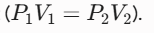
Charles's Law
The gas law stating that volume and absolute temperature (in Kelvin) are directly proportional if pressure and amount of gas remain constant
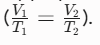
Avogadro's Law
The gas law stating that the volume of a gas is directly proportional to the number of moles of gas present if temperature and pressure remain constant

Gay-Lussac's Law
The gas law stating that pressure and absolute temperature (in Kelvin) are directly proportional if volume and amount of gas remain constant

Ideal Gas Law
The unified equation of state that relates pressure, volume, moles, and absolute temperature of a theoretical ideal gas ($PV = nRT$, where $R$ is the universal gas constant).
Ideal gas vs. Real gas
Ideal gases perfectly follow KMT assumptions at all conditions, whereas real gases deviate at high pressures and low temperatures due to particle volume and intermolecular forces.
Dalton's Law of Partial Pressures
The principle stating that the total pressure of a mixture of non-reacting gases is equal to the sum of the partial pressures of each individual gas (Ptotal} = P_1 + P_2 + P_3 + ...).
Diffusion
The gradual mixing of gas molecules due to their random motion, moving from an area of higher concentration to an area of lower concentration.
Effusion
The process by which gas molecules escape from a container into a vacuum through a tiny opening or pinhole.
Graham's Law of Effusion
The principle stating that the rate of effusion or diffusion of a gas is inversely proportional to the square root of its molar mass (lighter gases effuse faster).
Standard Temperature and Pressure (STP)
A standard set of conditions for gas measurements defined as a temperature of 0°C (273.15 K) and a pressure of 1 atm.
Molar volume at STP
The volume occupied by exactly one mole of any ideal gas at STP, which is equal to 22.4 liters.
Chemical equation
A written representation of a chemical reaction using chemical formulas for the reactants on the left and the products on the right.
Reactants
The starting substances consumed during a chemical reaction, positioned before the yield arrow
Products
The new substances formed as a result of a chemical reaction, positioned after the yield arrow ($\rightarrow$).
Coefficients
The full numbers placed in front of chemical formulas in a balanced equation to satisfy the Law of Conservation of Mass.
Synthesis (Combination) reaction
A type of reaction where two or more simple substances combine to form a single, more complex product ($A + B \rightarrow AB$).
Decomposition reaction
- A type of reaction where a single compound breaks down into two or more simpler substances($AB \rightarrow A + B$).
Single-replacement reaction
A type of reaction where one element takes the place of another element within a compound ($A + BC \rightarrow AC + B$).
Double-replacement reaction
A type of reaction where the positive and negative ions of two ionic compounds exchange partners to form two new compounds ($AB + CD \rightarrow AD + CB$).
Combustion reaction
A rapid chemical reaction between a substance (often a hydrocarbon) and oxygen gas, producing heat, light, carbon dioxide ($CO_2$), and water vapor ($H_2O$).
Precipitate
An insoluble solid substance that separates out from a liquid solution during a chemical reaction.
Stoichiometry
The branch of chemistry that deals with the quantitative relationships and weight ratios between reactants and products in a balanced chemical reaction
Mole ratio
A conversion factor derived from the coefficients of a balanced chemical equation used to relate the number of moles of one substance to another.
Limiting reactant
The reactant that is completely consumed first in a chemical reaction, thereby determining and limiting the maximum amount of product that can be formed.
Excess reactant
The reactant that remains left over after a chemical reaction comes to a complete stop because the limiting reactant has been entirely consumed.
Theoretical yield
The maximum calculated amount of product that could possibly be obtained from a chemical reaction if the limiting reactant reacted perfectly.
Actual yield
The real, measured amount of product that is physically collected or produced when a chemical reaction is performed in a laboratory.
Percent yield
he ratio of the actual yield to the theoretical yield, expressed as a percentage, indicating the efficiency of a reaction

Endothermic reaction
A chemical reaction that absorbs thermal energy from its surroundings, resulting in a net increase in chemical potential energy