Endocrinology: Hormones, Feedback Systems, and Disorders
 Call Kai
 Learn
Learn Practice Test
 Spaced Repetition
 Match
Match Flashcards
 Knowt Play
1/47

There's no tags or description
Looks like no tags are added yet.
Name | Mastery | Learn | Test | Matching | Spaced | Call with Kai |
|---|
No analytics yet
Send a link to your students to track their progress
48 Terms
What is the primary function of the endocrine system?
To regulate bodily functions through hormones.
What distinguishes endocrine hormones from exocrine hormones?
Endocrine hormones are released directly into the bloodstream, while exocrine hormones are released through ducts.
How is the endocrine system integrated with the central nervous system?
The endocrine system works with the central nervous system to maintain homeostasis and respond to stress.
What are the two types of feedback systems in the endocrine system?
Positive feedback and negative feedback.
What is the role of a sensor in a feedback loop?
To detect changes or deviations from a set point.
What does the integrating center do in a feedback loop?
It compares the current state to the set point and determines the necessary response.
What is the function of effectors in a feedback loop?
To enact changes that correct deviations from the set point.
What is homeostasis?
A stable internal environment maintained through coordinated physiological processes.
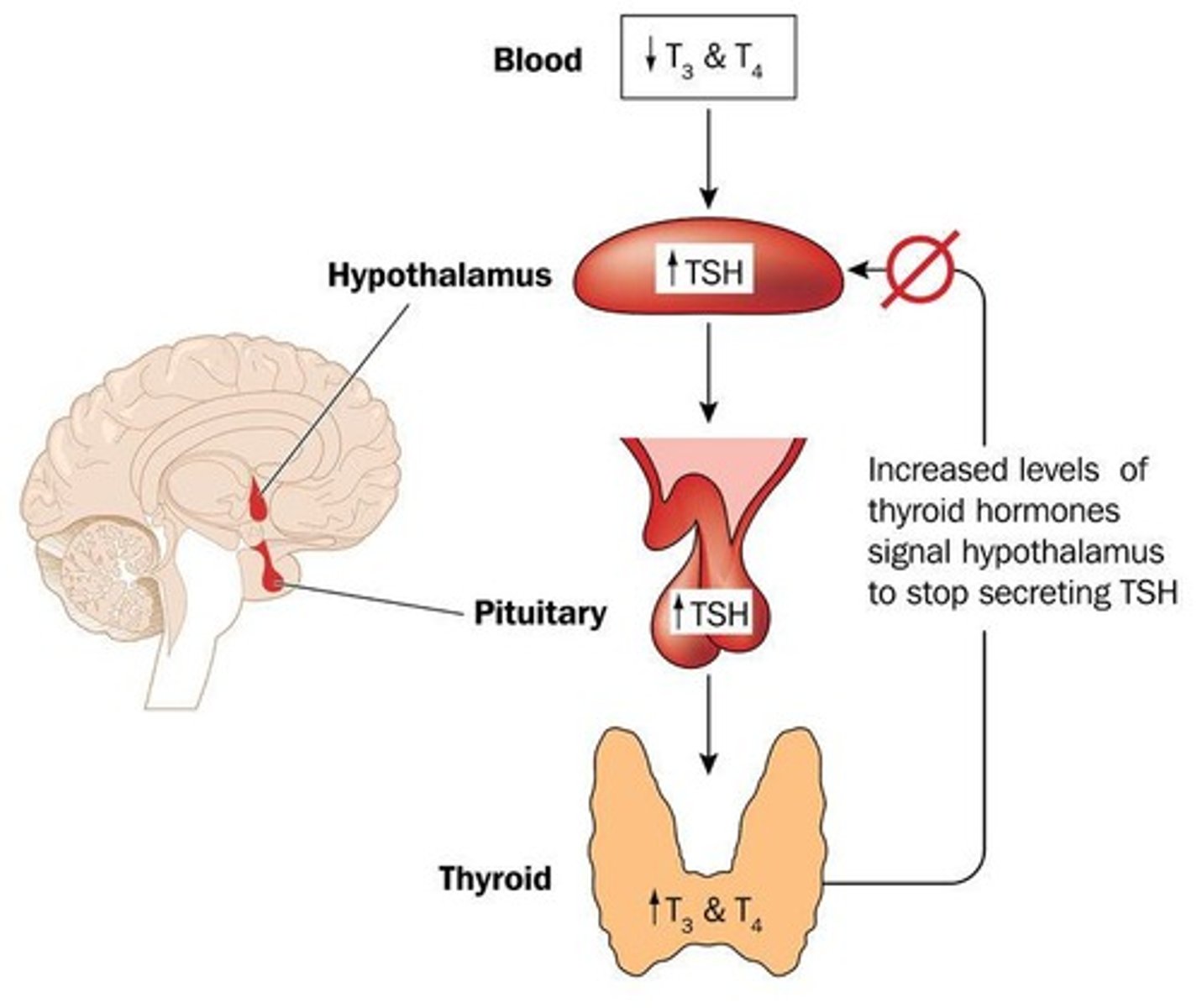
What is an example of a negative feedback mechanism in the endocrine system?
The regulation of thyroid hormone levels via TSH from the anterior pituitary.
What happens during positive feedback?
The stimulus accelerates the process, amplifying the change rather than counteracting it.
What is the significance of stress in the context of homeostasis?
Stress can disrupt homeostasis and initiate integrated responses by multiple control systems.
What is the deficiency syndrome of thyroid hormone characterized by?
Low levels of thyroid hormone leading to symptoms like fatigue, weight gain, and cold intolerance.
What is the excess syndrome of thyroid hormone characterized by?
High levels of thyroid hormone leading to symptoms like weight loss, heat intolerance, and anxiety.
What hormone is released by the posterior pituitary during breastfeeding?
Oxytocin.
What is the role of prolactin in breastfeeding?
To stimulate milk production in the breast.
What is the role of vasopressin?
To regulate water balance in the body by affecting kidney function.
What hormones are produced by the anterior pituitary?
LH, FSH, ACTH, and Prolactin.
What is the function of aldosterone?
To regulate sodium and potassium levels in the blood.
What is the primary function of growth hormone?
To stimulate growth and cell reproduction.
What is the role of cortisol in the body?
To manage stress responses and regulate metabolism.
What is the function of testosterone?
To regulate male reproductive functions and secondary sexual characteristics.
What is the role of insulin?
To lower blood glucose levels by facilitating cellular uptake of glucose.
What is the function of epinephrine and norepinephrine?
To prepare the body for 'fight-or-flight' responses during stress.
What hormone stimulates additional milk production?
Prolactin
What is the effect of decreased Vasopressin (ADH)?
It leads to increased urine output and potential dehydration.
What is the consequence of increased Vasopressin (ADH)?
It can cause water retention and hyponatremia.
What are the signs of Growth Hormone deficiency in children?
Short stature and delayed growth.
What condition is caused by excess Growth Hormone in children?
Gigantism
What condition is caused by excess Growth Hormone in adults?
Acromegaly
What inhibits the production of Prolactin?
Hypothalamic dopamine
What stimulates the production of Prolactin?
Estrogen and TRH (thyrotropin releasing hormone)
What is the primary cause of hypothyroidism?
Hashimoto's thyroiditis
What is the most common cause of hyperthyroidism?
Graves disease
What does Aldosterone regulate?
Sodium retention and potassium excretion
What is the role of Cortisol?
To increase serum glucose levels and help cope with stress.
What is Addison's Disease?
A condition of adrenal insufficiency leading to low cortisol levels.
What are the effects of excess Epinephrine?
Increased heart rate, blood pressure, and vasoconstriction.
What is the function of Androgens secreted from the adrenal cortex?
They contribute to the development of secondary sexual characteristics.
What are the signs of Testosterone deficiency?
Reduced libido, fatigue, and loss of muscle mass.
What is the effect of excess Insulin?
Hypoglycemia
What is the role of ACTH in the body?
To stimulate the adrenal cortex to produce cortisol.
What is the primary function of Parathyroid Hormone?
To regulate calcium levels in the blood.
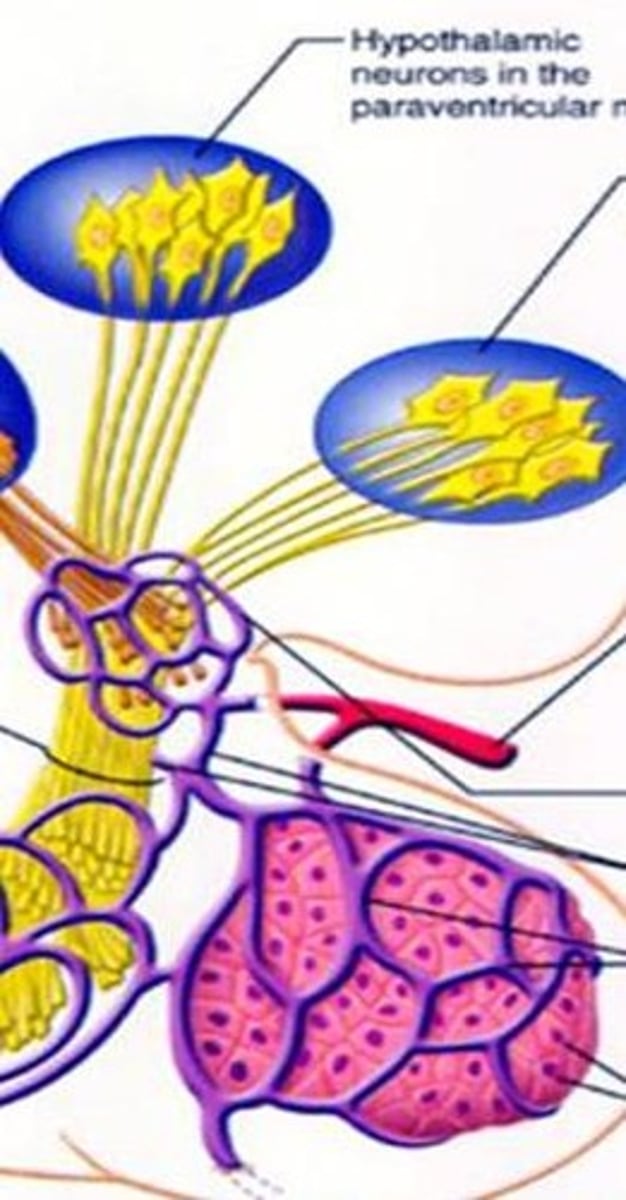
What is the relationship between the Hypothalamus and the Pituitary gland?
The Hypothalamus regulates the Pituitary gland's hormone secretion.
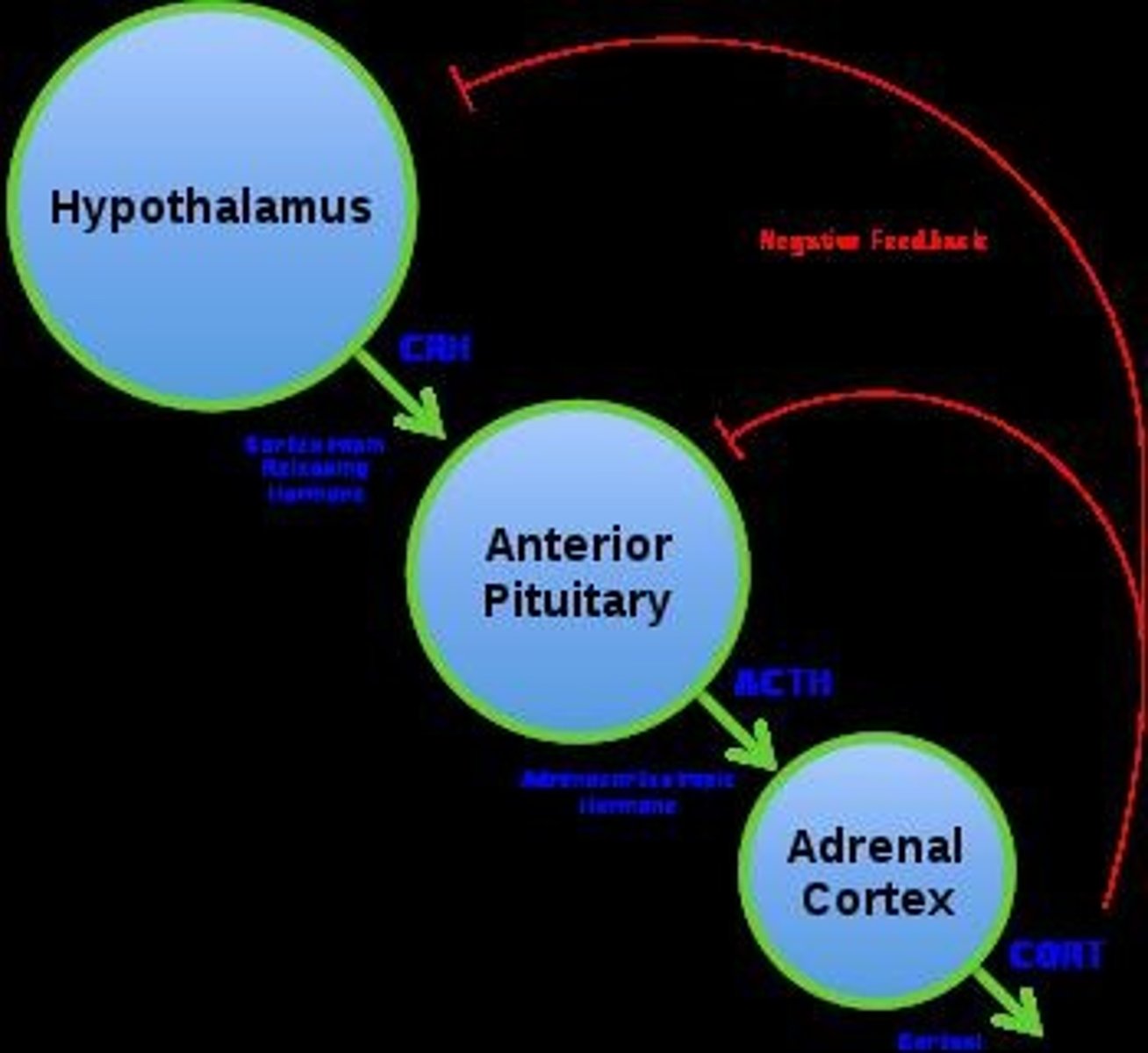
What is the role of the Hypothalamic-Pituitary-Adrenal Axis?
It regulates stress responses and hormone release.
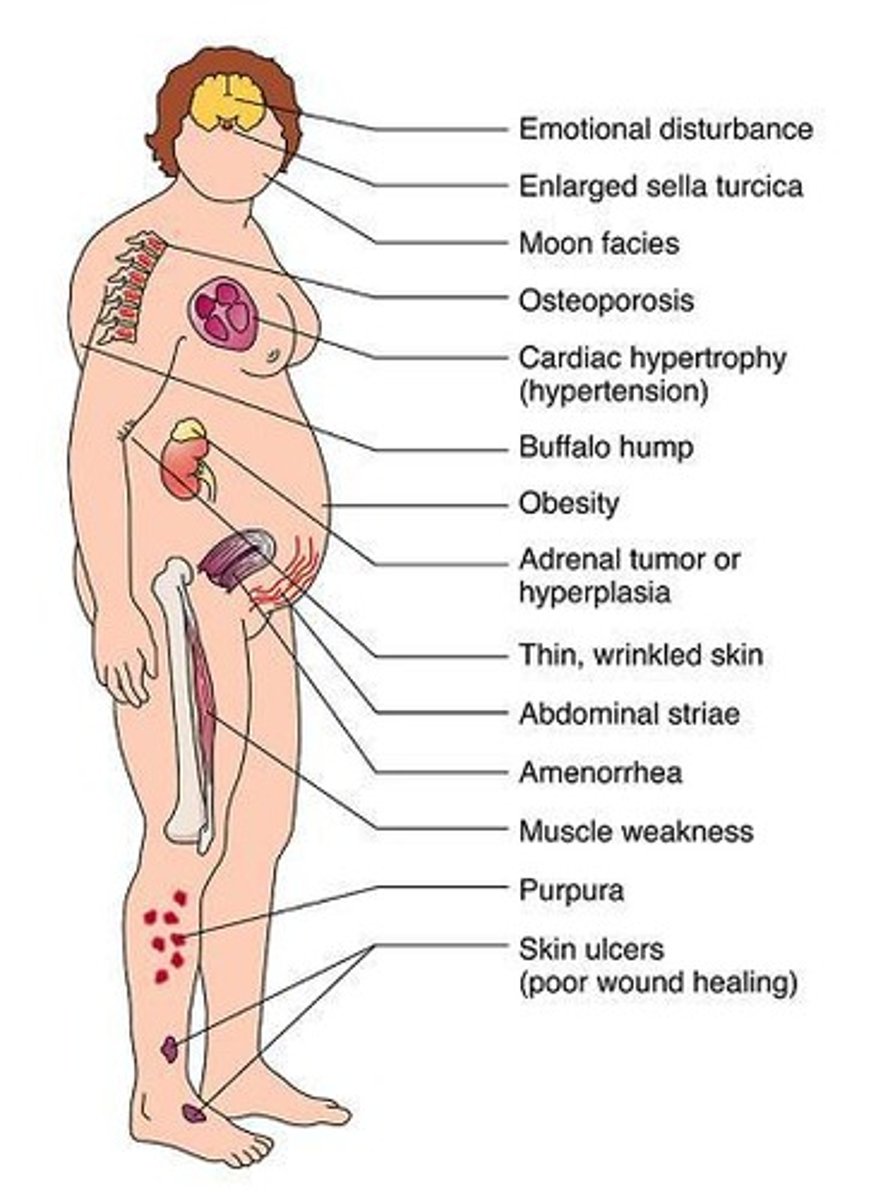
What are the symptoms of Cushing's syndrome?
Weight gain, hypertension, and increased blood sugar levels.
What is the effect of increased Aldosterone?
Hypertension and hypokalemia due to sodium retention.
What can cause secondary hypothyroidism?
Pituitary or hypothalamic disorders.
What is the significance of episodic secretion in hormone regulation?
It allows for precise control of hormone levels in response to physiological needs.