Wada A&P II Endocrine System
 Call Kai
 Learn
Learn Practice Test
 Spaced Repetition
 Match
Match Flashcards
 Knowt Play
1/43

There's no tags or description
Looks like no tags are added yet.
Name | Mastery | Learn | Test | Matching | Spaced | Call with Kai |
|---|
No analytics yet
Send a link to your students to track their progress
44 Terms
Endocrine System Functions
Maintains homeostasis
Influences metabolic activities
Integrates and regulates growth and development
Controls, maintains and instigates sexual reproduction, including gametogenesis (generating gametes), coitus, fertilization, fetal growth and development, nourishment of the newborn)
Nervous vs Endocrine Duration of Effect
Nervous System- Short-term crisis management
Endocrine System- Long-term crisis management
Nervous vs Endocrine system Signal
Nervous- Neurotransmitters
Endocrine- Hormones
Nervous vs Endocrine speed of response
Nervous- Very fast (milliseconds)
Endocrine- Take minutes to hours to act
Nervous vs Endocrine distribution of effect
First, both act through receptors
Nervous- Localized effect
Endocrine- Systemic (hormones travel in the blood stream)
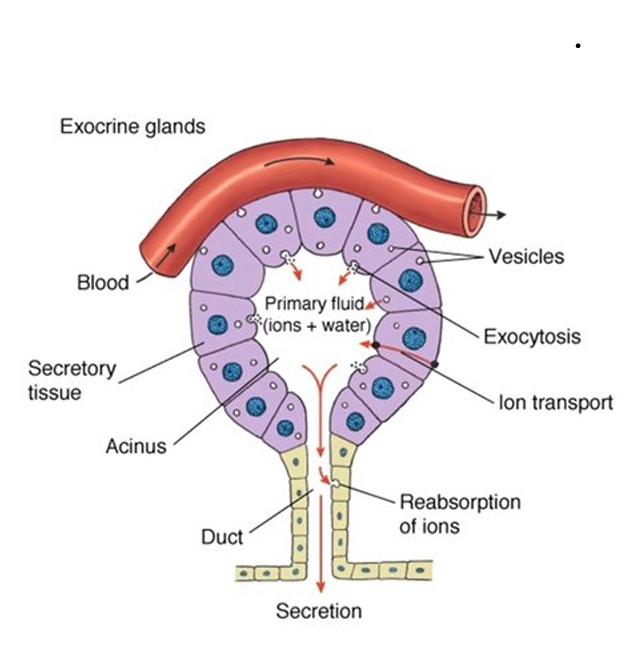
Exocrine Glands
Excrete non-hormonal products (ex. enzymes) to a membrane surface
Have ducts
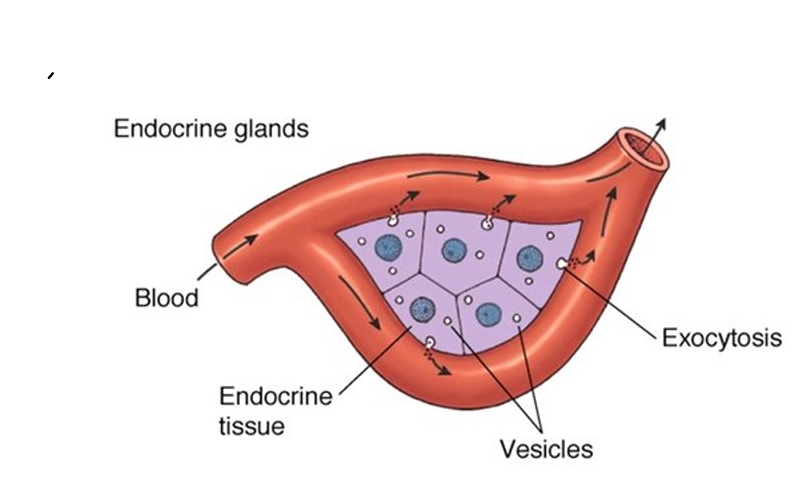
Endocrine Glands
Secrete hormones
Ductless glands
Into the bloodstream
Most hormone release are controlled by ______
Negative Feedback (in rare cases, it’s positive feedback)
The hormone feeds back to inhibit its own secretion
Hypothalamus hormones
Produces antidiuretic hormone (ADH) and oxytocin
- Hypothalamic neurons extend into the posterior pituitary gland
Produces regulatory hormones (regulates hormone secretion from anterior pituitary gland)
*Portal system: Capillary bed→Vein→Capillary bed
Posterior Pituitary Gland hormones
Secretes ADH and oxytocin (produced in hypothalamus)
Anterior Pituitary Gland hormones
(Secretion is regulated by hypothalamic regulatory hormones)
Produces LH, FSH, ACTH, TSH, GH
Pineal Gland hormones
Produces and secretes melatonin which regulates the biological clock
Thyroid gland hormones
Produces and secretes T3 (triiodothyronine) and T4 (thyroxine)
Parathyroid gland hormones
Produces and secretes parathyroid hormone
Parathyroid hormone affects calcium and phosphate levels in the body
Heart hormones
Produces and secretes Atrial natriuretic peptide (ANP)
ANP decreases renin, aldosterone, and ADH
Digestive System hormones
Produce and secrete gastrin, secretin, somatostatin, and cck
Pancreas hormones
Produce and secrete insulin (lowers blood glucose) and glucagon (increases blood glucose)
Both endocrine and exocrine glands
Kidney hormones
Erythropoietin, which stimulates red blood cell production
Adrenal Cortex hormones
Cortisol (stress), aldosterone (Na+ reabsorption and K+ secretion)
Adrenal Medulla hormones
Epinephrine and Norepinephrine (fight or flight response)
Adipose Tissue hormones
Leptin- regulates food intake and energy expenditure in the long term
Gonad hormones
Testes: androgen, inhibin
Ovaries: estrogen, progesterone, inhibin
3 Types of Hormones
Amino Acid derivative- Epinephrine and thyroid hormone
Peptide derivative- TRH, ADH, oxytocin, LH, and FSH
Lipid derivative- Estrogen and testosterone
Amino Acid and Peptide derivative hormone characteristics
Water soluble (cannot cross cell membrane and dissolves well in blood)
No binding proteins
Bind to membrane receptors on the cell membrane
Activate second messenger, such as cAMP (activate or inactivate enzymes in a cell)
Exception: Thyroid hormones- are from tyrosine BUT act as lipid derivative
Thyroid and Steroid hormone characteristics
Lipid soluble- CAN cross cell membrane, doesn’t dissolve well in blood
Bind to binding proteins for transport in the blood
Bind to intracellular receptors (inside cell), TH- receptors in mitochondria
Hormone-receptor complex enters the nucleus, binds to DNA and start/stop making a protein by transcription and translation
Hormone action depends on
Blood levels of the hormone
- Rate of hormone synthesis by endocrine cells
- Levels of binding proteins (when hormones are bound to receptors they cannot enter the cell)
- Clearance rate (how quickly hormones are removed from blood/body)
Number of receptors present on target cells
- Can increase by up-regulation of receptors (more action by hormone)
- Can decrease by down-regulation of receptors (less action by hormone)
Affinity (strength of hormone and receptor interaction) of those receptors for the hormone
Target cells of hormones from Anterior Pituitary Gland
Prolactin: Mammary glands (Milk production)
Growth Hormone: Bone Growth
LH and FSH: Gonads (Steroid synthesis and gametogenesis)
Thyroid Stimulating hormone (TSH): Thyroid gland (to produce T3 and T4)
ACTH: Adrenal gland (to produce cortisol, aldosterone, androgens)
Target Cells of hormones from posterior pituitary gland
ADH: Kidney- inserts aquaporins to increase water reabsorption
Oxytocin: Mammary Gland and Uterus- Milk release and uterus contraction during childbirth
Acute Stress Response
Hormone: Epinephrine/Noepinephrine (adrenal medulla)
Brain sends signal down the spinal cord
Sympathetic nerves stimulate adrenal medulla to secrete epinephrine and norepinephrine
Those hormones trigger a fight or flight response
- Increases HR and BP
- Vasoconstriction of some vessels
- Vasodilation in skeletal muscle and heart
- Suppression of digestive system and urine output
- Dilation of bronchioles=more air into the lungs
Long-Term Stress Response
Hormone: Cortisol and aldosterone
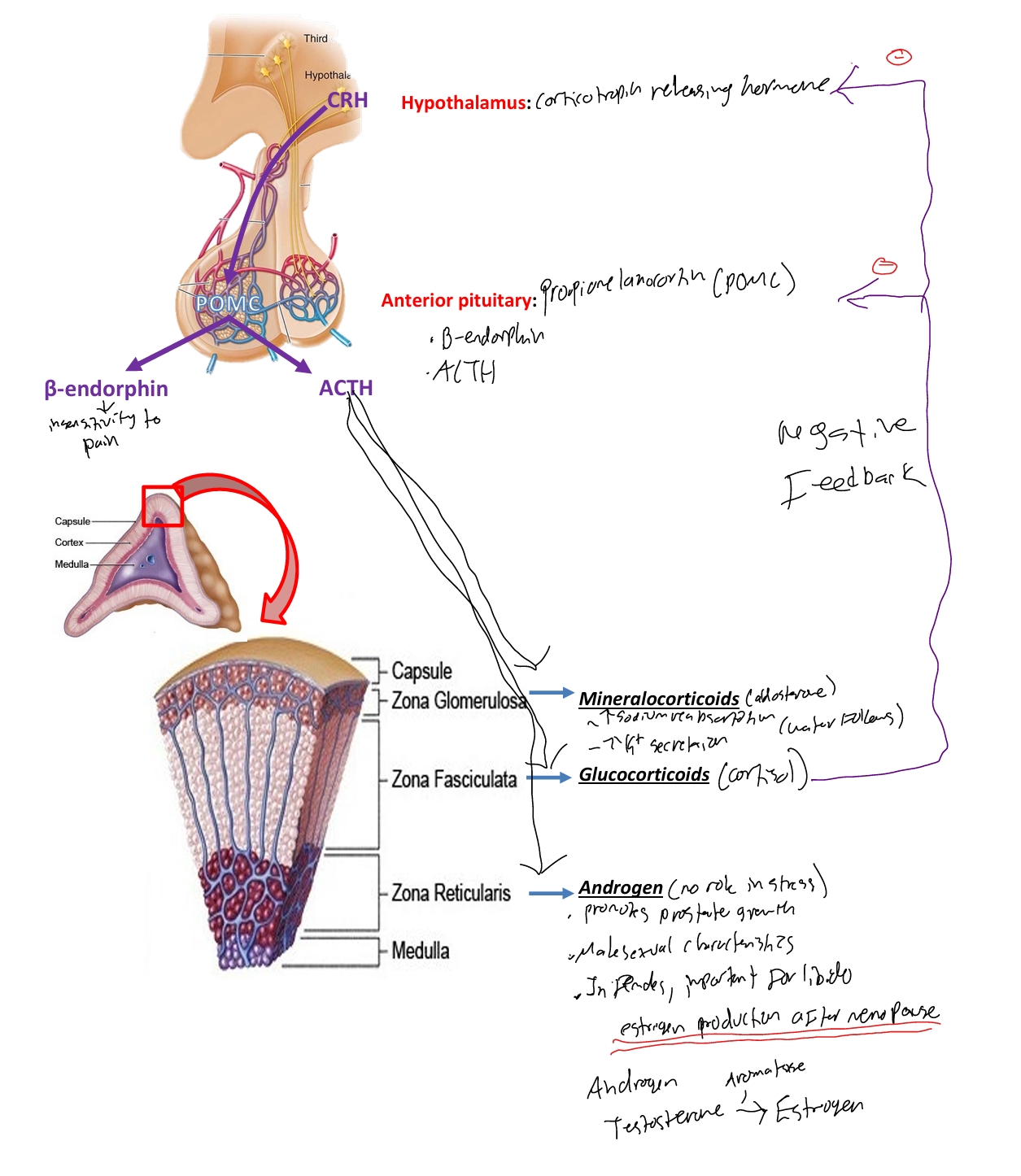
In response to a stressor, hypothalamus secretes corticotropin releasing hormone (CRH)
CRH stimulates anterior pituitary to secrete ACTH
ACTH travels through blood to adrenals
ACTH stimulates the secretion of cortisol, aldosterone, and androgens
Cortisol feedback negatively to decrease CRH+ACTH
Look at this page
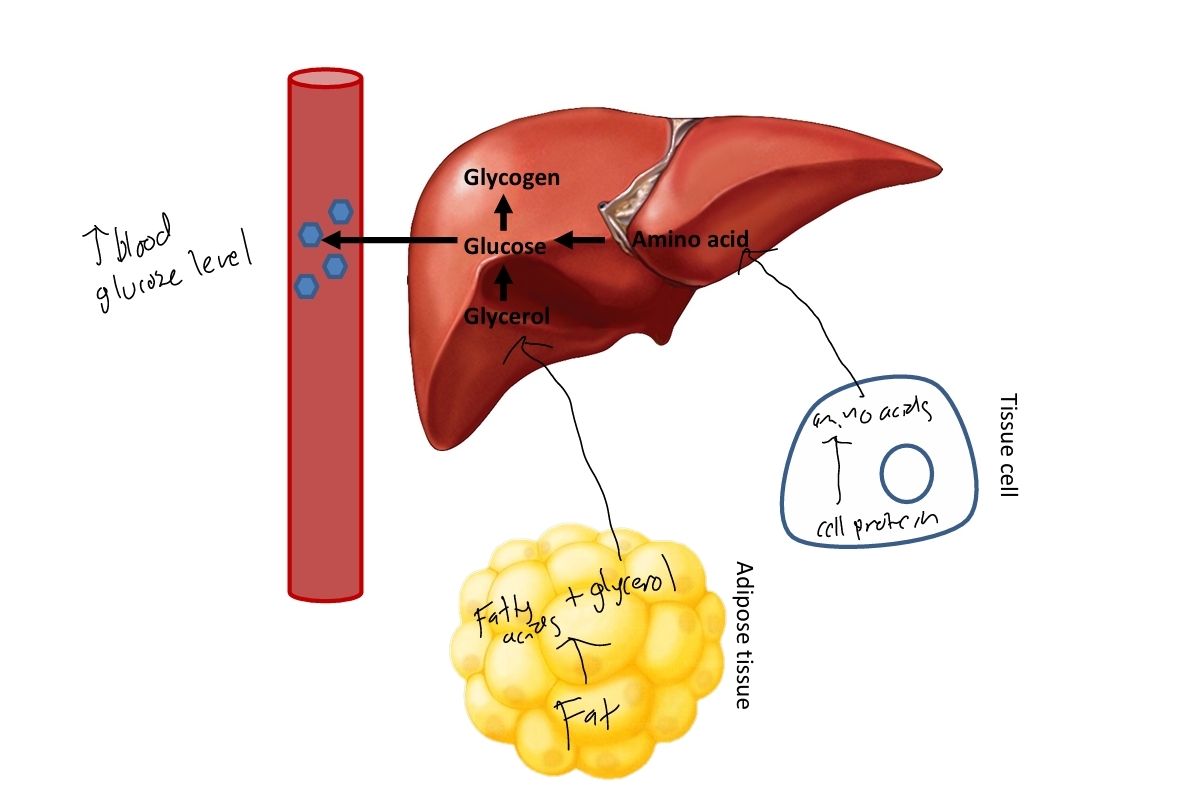
Cortisol
Can lead to hyperglycemia and eventually diabetes
Increases glycogen synthesis
Protein catabolism/breakdown of proteins
increases gluconeogenesis (make new glucose from aa+glycerol)
Can lead to hypertension, infection/disease, and infertility
Insulin resistance
Fat deposition around abdomen
Increase in blood pressure
Suppresses immune system
Suppresses reproductive system (decrease in testosterone from testes)
Elevated or Depressed hormone levels are caused by:
Failure of f