3- sedation and treatments under GA
 Call Kai
 Learn
Learn Practice Test
 Spaced Repetition
 Match
Match Flashcards
 Knowt Play
1/21

There's no tags or description
Looks like no tags are added yet.
Name | Mastery | Learn | Test | Matching | Spaced | Call with Kai |
|---|
No analytics yet
Send a link to your students to track their progress
22 Terms
What does the decision as to whether a patient should be treated with sedation depend on? (5)
age of the child
degree of surgical trauma involves
perceived anxiety
complexity of the operative procedure
medical status of the child
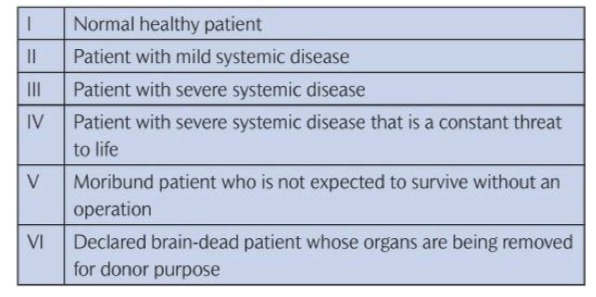
ASA physical status classification
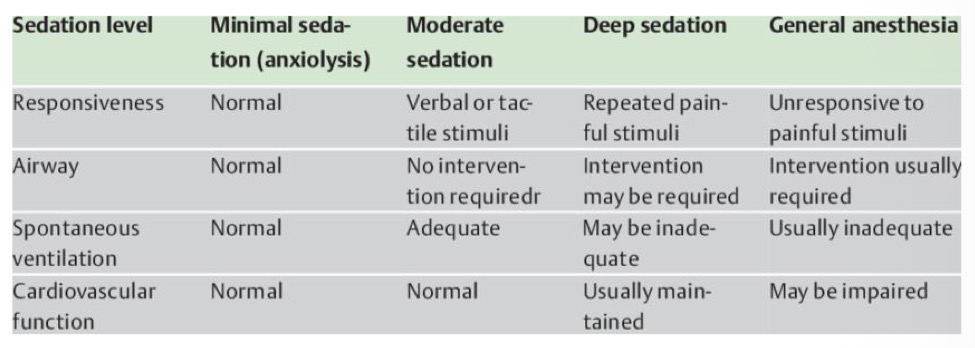
Sedation levels
What is conscious sedation?
Drugs produce state of depression of CNS allowing treatment to be carried out
Verbal contact with patient is maintained, retains protective reflexes, able to understand and respond to commands
Before conscious sedation instructions (give verbally and writing in advance)
Include possible side effects
Escort should be over 18 and able bodied
Fasting not required before nitrous oxide inhalation or IV Midazolam
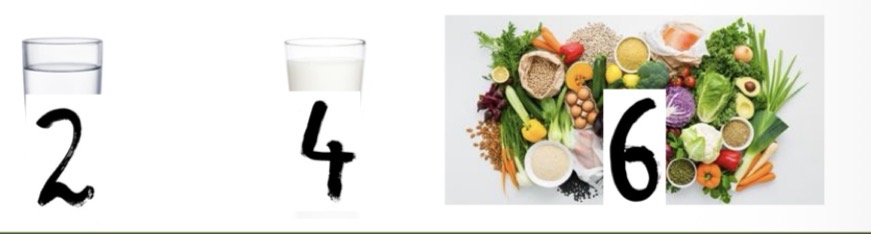
2-4-6 for oral sedation = 2 hrs fast for clear fluids, 4hrs for milk, 6hrs for solids
How should you monitor a sedated child?
Clinical monitoring- alertness, verbal contact, skin colour, response to stimuli, ability to keep mouth open, swallow, maintain independent airway, normal radial pulse
Use of pulse oximeter- except for nitrous oxide sedation
10 management rules of unexpected loss of consciousness
1. Stop operative procedure immediately
2. Ensure mouth is cleared of all fluids by using high-volume suction
3. Turn the patient on their side in the ‘recovery position’
4. Consider administration of 100% O2
5. If IV sedation is being used- leave the cannula in place so that emergency drugs can be administered
6. Consider monitoring pulse, bp and respiration. Be ready to start resuscitation
7. Dentist should stay with patient until full signs of being awake
8. Follow up the patient by review within 3 days
9. Document the incident fully
10. Inform patient’s general medical practitioner about the incident
What are the drugs and routes of conscious sedative drugs?
Oral- dosage determined by body weight, flavoured drink may be added to sedative
Inhalation
IV
Transmucosal- nasal, rectal, sublingual
Why is fasting required before oral sedation?
Variable absorption from GI tract
Affected by rate of gastric clearance, amount of food in stomach, time of day
Midazolam (oral)- usage, indications, contraindications, dosage, antagonist
Not specifically licensed for oral admin- unpredictable in children- CNS be paradoxical making them hyperactive
For ASA 1 or 2, under 30kg, short procedures (single extraction)
Same as IV sedation
0.3-0.7mg/kg , max 20mg
Flumazenil- give 0.3mg, if degree of consciousness not achieved in 60secs- give another 0.1mg at 60sec intervals- max 2mg
What other drugs are used for oral sedation?
Choral hydrate- sedative hypnotic
May cause nausea, vomiting due to gastric irritation or myocardial depression and arrhythmia
Depresses bp and respiratory rate
Use with hydroxyzine and promethazine hydrochloride- have anti-emetic, antihistamine, antispasmodic effect
Ketamine- powerful- dissociation but maintains protective reflexes- side effects include hypertension, vivid hallucinations, physical movement, risk of laryngospasm
Nitrous oxide inhalation sedation- conc, what type of child, 7 indications
20-50% conc nitrous oxide
Child must be able/ willing to collaborate (breathe in and out of nose) mainly in school age children- no lower age limit- depends on development
mildly anxious children
unpleasant procedure
medically compromised
needle phobia
gag reflex
other sedation methods contraindicated
alternative to GA
What safety features of dedicated dental machines (for nitrous oxide)?
Oxygen cylinder is black in UK, turquoise in the USA, white in Spain.
Nitrous oxide cylinder is blue
Pin index system ensures that the nitrous oxide cylinders cannot be inadvertently fixed to the oxygen delivery side
Nitrous oxide is cut out if the oxygen cylinder empties completely
No less than 30% oxygen can be given
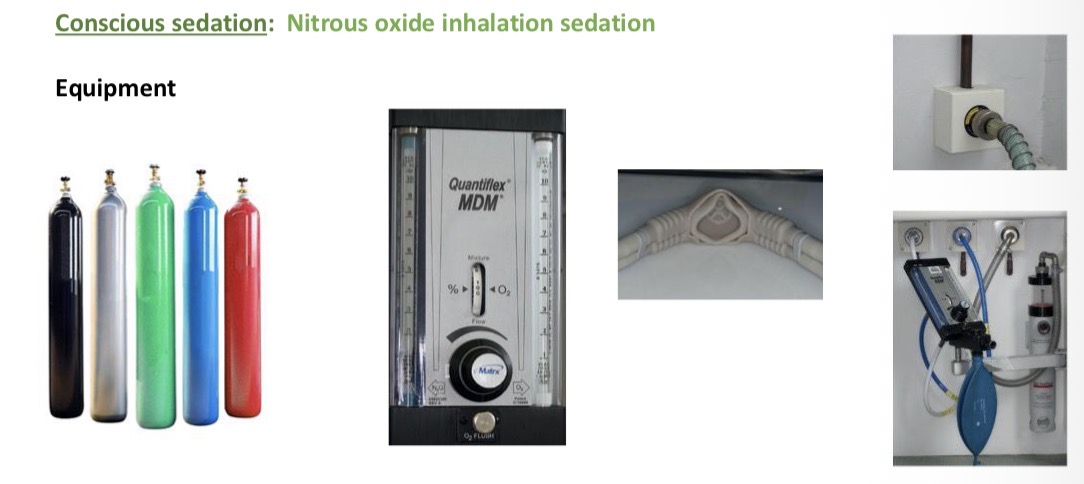
10 steps in inhalation sedation technique?
Carry out the safety checks
Select the appropriate size of nasal mask
Connect the scavenging pipe
Set the mixture dial to 100% oxygen
Settle the patient in the dental chair whilst reassuring them
Turn the mixture dial vertically to 90% oxygen (10% nitrous oxide)
Turn the mixture dial to 80% oxygen (20% nitrous oxide). Wait for 60 seconds. Above this level consider whether further increments
At the appropriate level of sedation, start dental treatment
To bring about recovery turn the mixture dial to 100% oxygen for 2 minutes
The patient should breathe room air for a further 5 minutes before leaving the dental chair
8 Signs of a sedated child
reduced body and facial tension
reduced frequency of blinking
slowed responses
laughing/giggling
glazed eyes
relaxed feet
tingling in the fingers and toes (parasthesia)
visual changes
Environmental pollution
Potential damage to reproductive, hepatic, renal, CNS and hemaopoeitic systems
Regular use in unventilated room can cause megaloblastic anaemia, distal renal tubule calcification, neuropathy, problems with conception and pregnancy
How to combat environmental pollution?
2 types of scavenging systems- passive and active- incorporate nasal mask
What does IV sedation usually involve the use of and indicated when? (4)
Midazolam (BDZ)
Usually confined to mature adolescents
emotionally mature adolescents
an unpleasant or complicated procedure
treatment too lengthy for GA
ASA I or II
What should be included in the information leaflet for conscious sedation?(5)
preop prep including fasting
overview of the proposed treatment- benefits, minor and major risks
Sedation procedure
Adult escort should bring the child patient—no other child should accompany them
Postop arrangements- suitable transport home, postop care and pain control
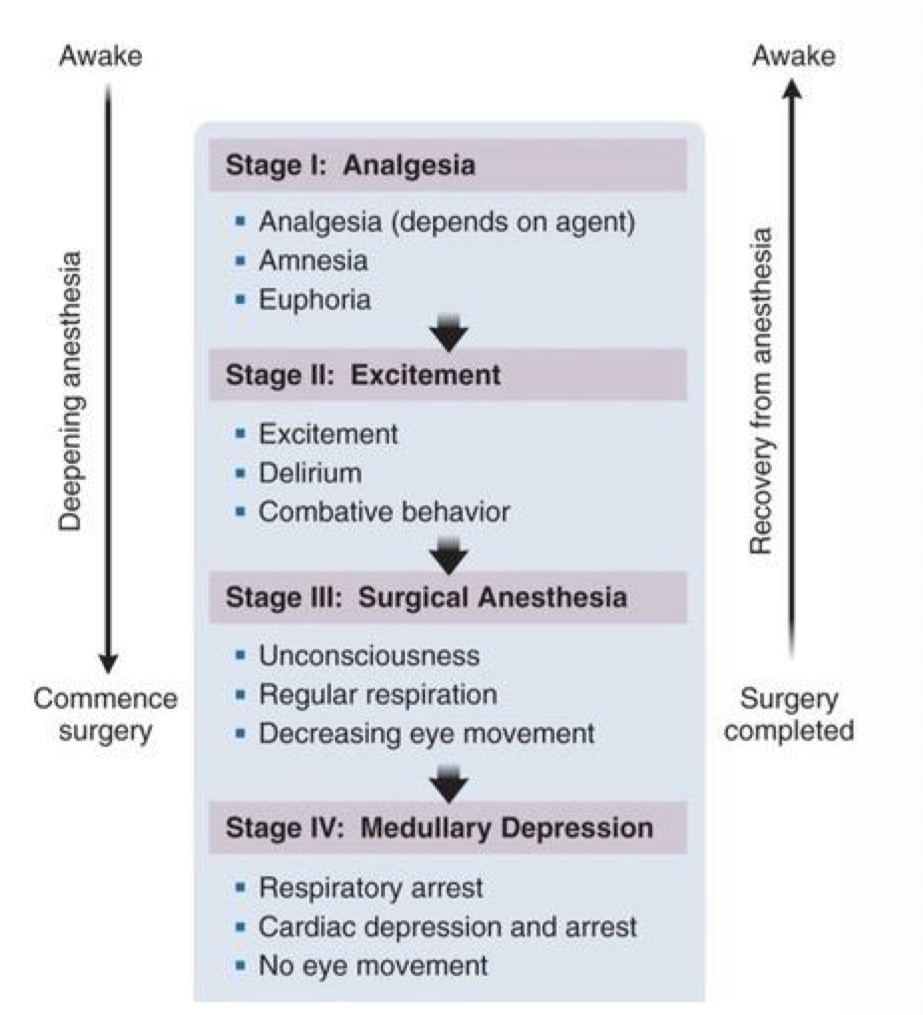
What is general anesthesia? Major vs minor risks?
Controlled unconsciousness when you feel nothing
Drugs injected into vein or gases inhaled- carried to brain and stops recognising messages
Major risk - 1:400,000
Minor risk- pain, headache, sore nose or throat, nausea, upset, anxiety
2 indications of GA for Paeds
Patient too young, anxious or uncooperative
Surgeon needs guarantee of completely still patient (complex procedure)
What must you monitor for GA?(4)
good oxygen saturation
blood pressure- systolic and diastolic blood pressure
electrocardiogram (ECG)
carbon dioxide output