Immuno Week 10 lab
 Call Kai
 Learn
Learn Practice Test
 Spaced Repetition
 Match
Match Flashcards
 Knowt Play
1/26

There's no tags or description
Looks like no tags are added yet.
Name | Mastery | Learn | Test | Matching | Spaced | Call with Kai |
|---|
No analytics yet
Send a link to your students to track their progress
27 Terms
what does ELISA stand for
Enzyme Linked Immunosorbent Assays (ELISAs)
what are ELISAs
sensitive, cost-effective, plate-based assays that are versatile, and reliable
what is a hybridoma
a hybrid cell line produced by fusing a specific antibody-producing B lymphocyte with a cancerous myeloma cell
what does this fusion do
it combines the antibody-producing capability of B-cells with the longevity and rapid proliferation of a myeloma cell
what are Hybridomas essential for
producing large, uniform quantities of mAbs for research, diagnostics, and therapeutic uses
what do qualtitative ELISAs do
detect the presence or absence of an antibody or antigen in patient samples such as serum, plasma, or stool, producing a simple “yes” or “no” result similar to a dot blot
how are quantitative ELISAs performed
are performed alongside a standard curve generated by serially diluting a protein of known concentration
what does stronger colour development in the wells indicate
more antibody present
what is the optical density (OD) value used for
to calculate the amount of antigen present in the sample based on the standard curve
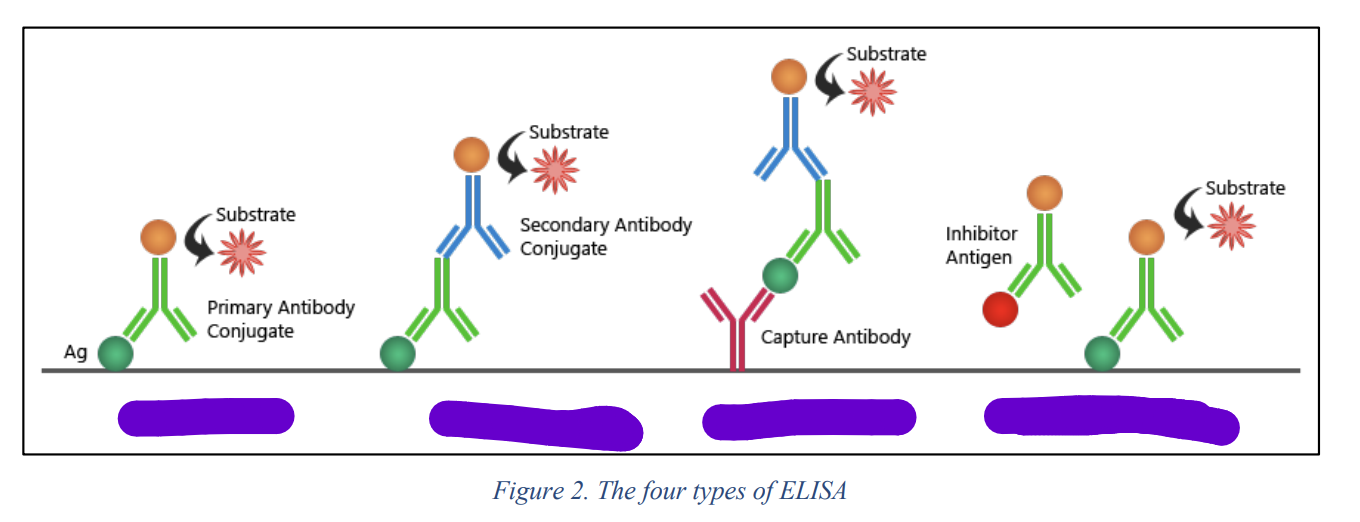
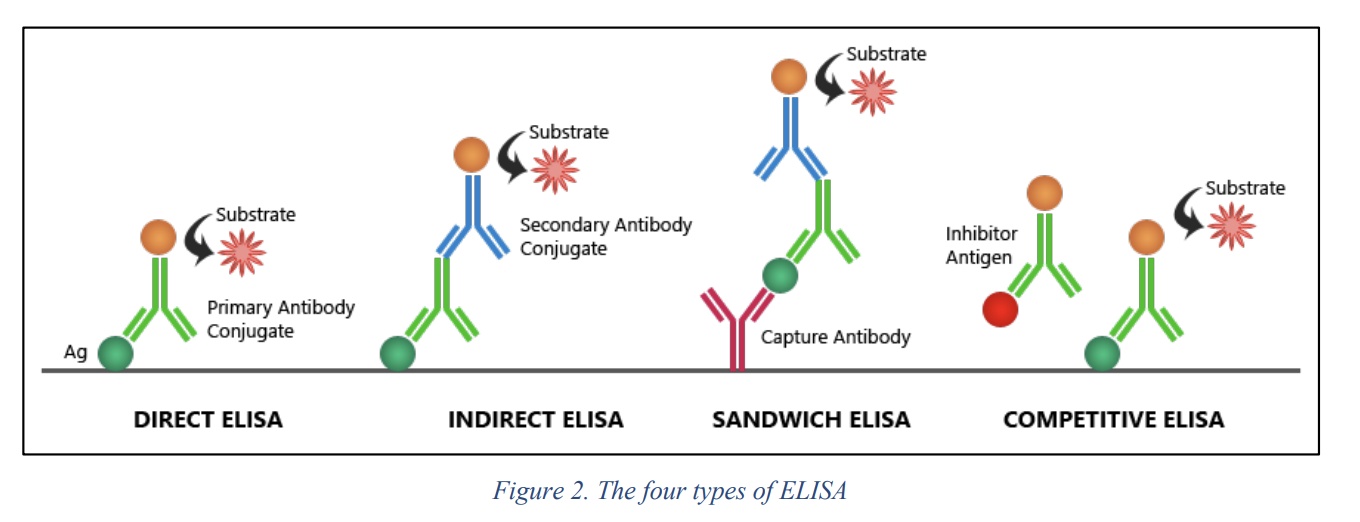
what are the 4 types of ELISAs
direct
indirect
sandwich
competitive
how does the direct ELISA work
Uses an enzyme-labelled antibody for detection of a specific analyte (antigen, antibody, protein, hormone, peptide, etc.) within a complex biological sample
what does the indirect ELISA do
Detects antibodies in a sample to quantify immune responses
how does the indirect ELISA work
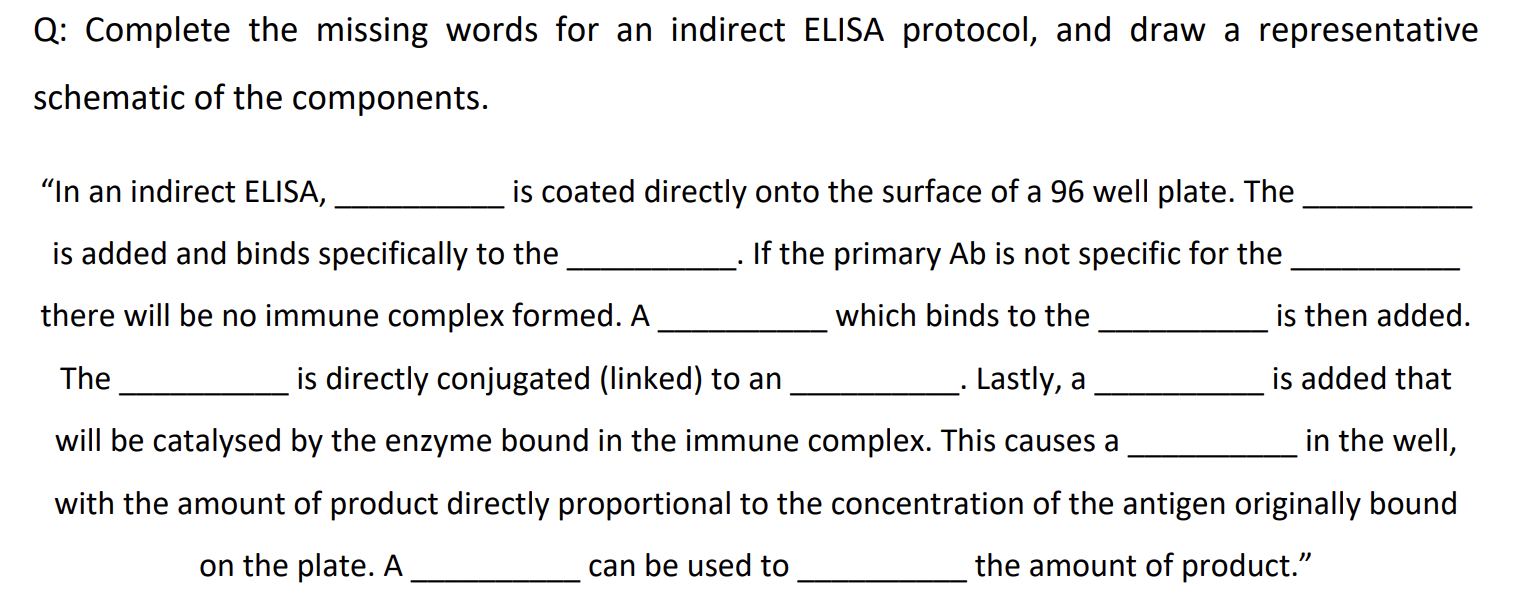
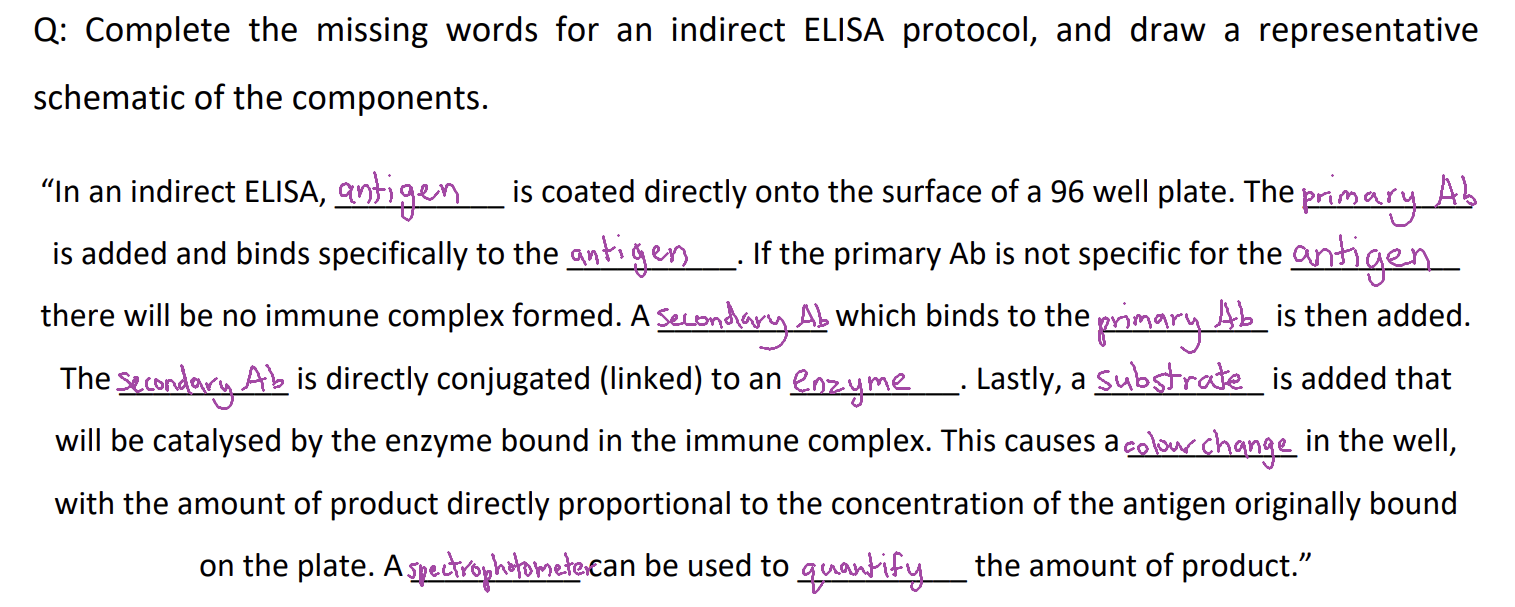
the plate is first coated with a specific capture antigen, which immobilises the target antibody (from a biological sample), and the Ag-Ab complex is then detected using a secondary antibody
how does the sandwich ELISA work
A capture antibody is bound to the plate, which is followed by the antigen and then a secondary antibody. This method improves sensitivity and specificity
how does a competitive ELISA work
Antibodies are first incubated in solution with a sample containing antigen
This is then added to a plate coated with antigen
High amounts of antigens present in a biological sample create competition for antibodies from the same sample to bind to antigens coated to the plate
what is influenza A virus (IAV)
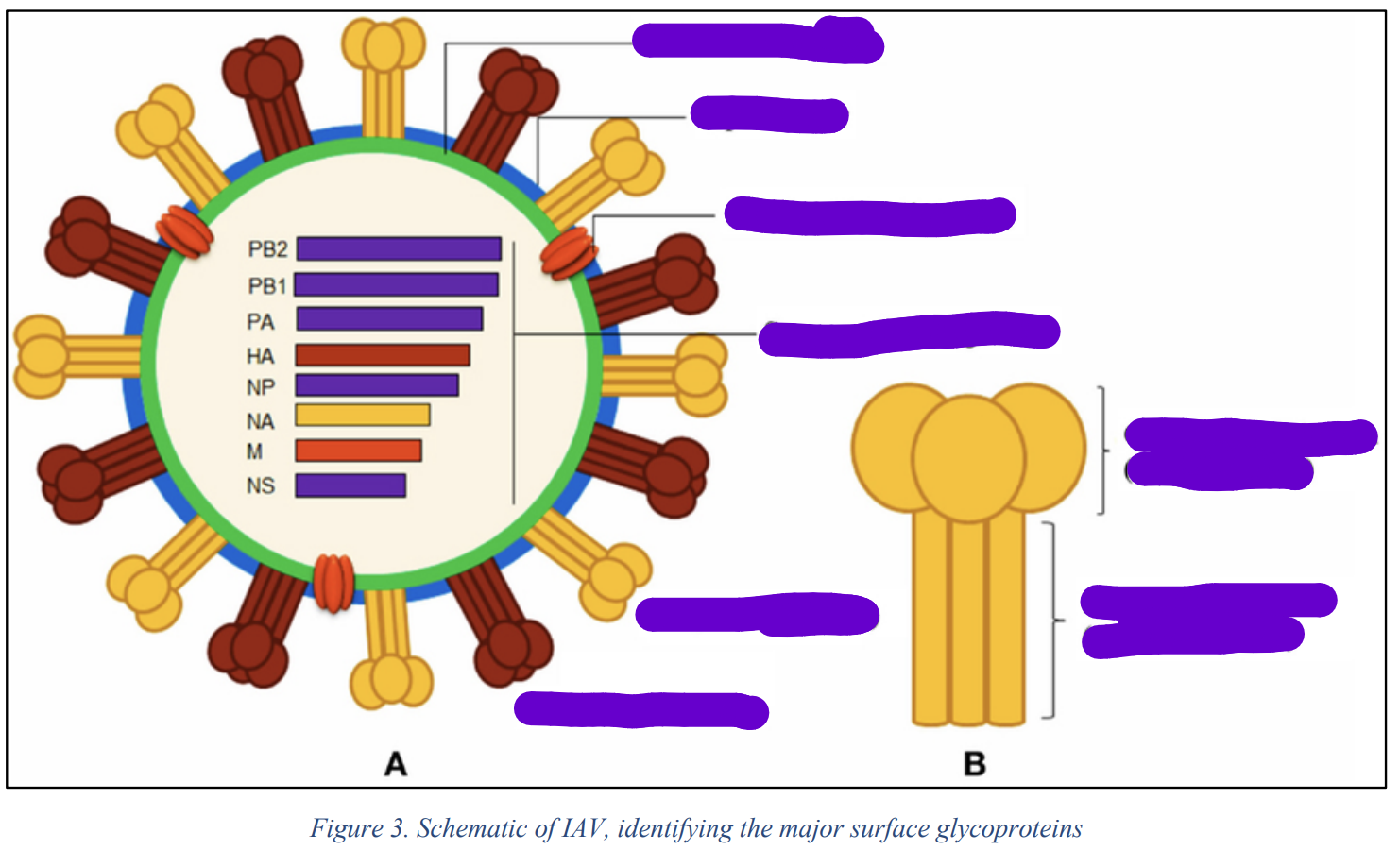
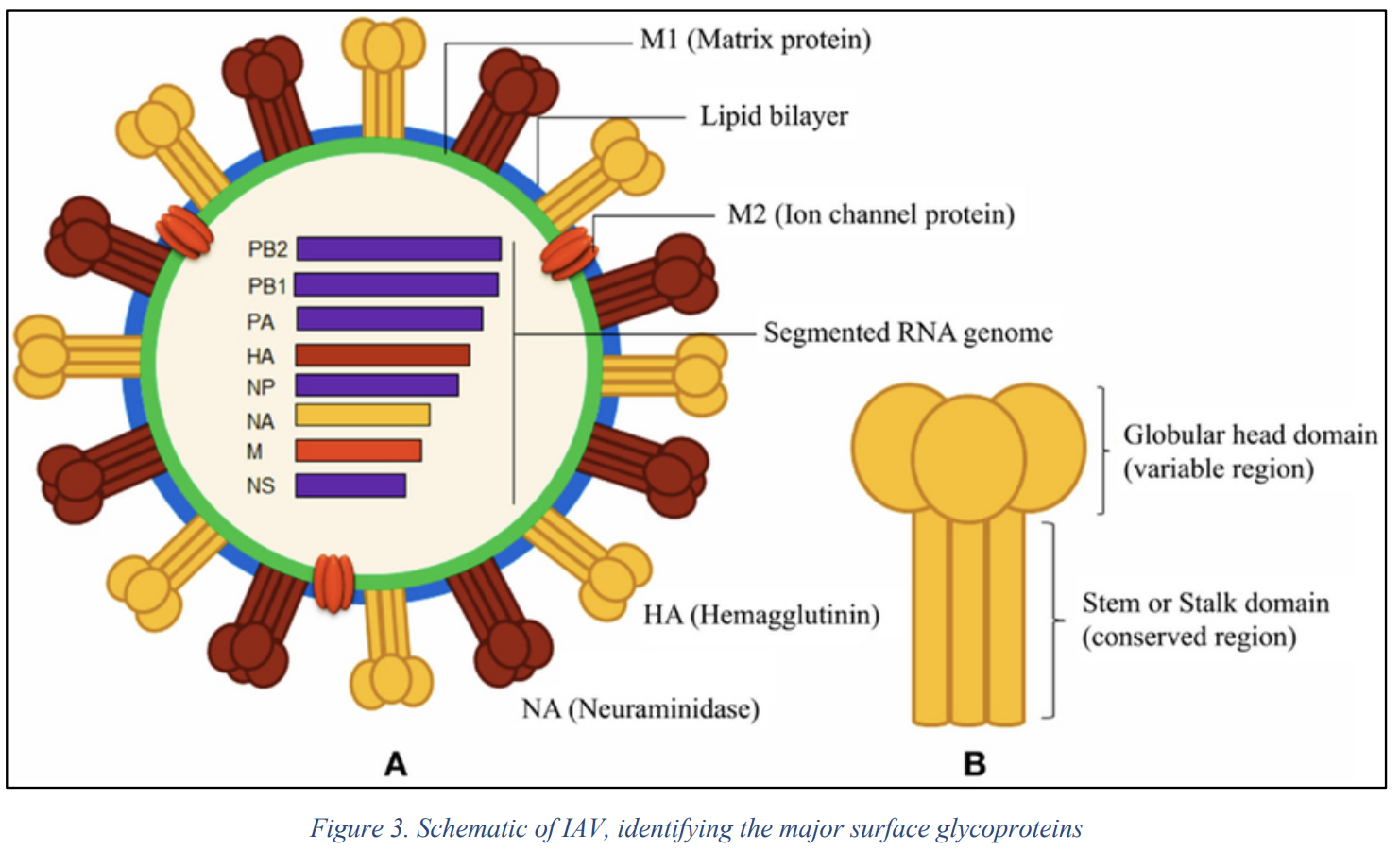
a common human pathogen that cause seasonal outbreaks of respiratory disease and secondary complications such as pneumonia
what are the 2 main surface glycoproteins IAV expresses
hemagglutinin (HA) and Neuraminidase (NA)
what is the HA protein involved with
entry of the virus into the host epithelial cell
what is the NA protein involved with
release of viruses from the infected host cell
how do Abs help the immune system neutralise IAV
opsonisation, where the immune complexes can be cleared by macrophages
how is conformation of IAV infection done
ELISA where virus-specific proteins (e.g. HA or NA) can be coated onto the ELISA plate and patient serum tested for presence of anti-influenza specific Abs
what are some advantages of an indirect ELISA
Multiple secondary antibodies can bind to one primary antibody, increasing the signal
The same secondary antibody can be used for many different primary antibodies
cost-effective
ELISA plates can be coated with either specific protein or Abs which bind to specific sites on the plate. However, the entire surface will not be covered. That means when you add another protein to the well, they will be able to bind to those other “unbound” sites. How do we overcome this problem, to prevent false positive ELISA readings?
Blocking – using a blocking buffer containing an irrelevant protein (e.g., skim milk powder, BSA, or casein) to coat all remaining unbound surfaces on the plate.
What is the purpose of PBS-Tween 20 in an ELISA?
PBS-Tween 20 is used as a wash buffer to remove unbound reagents and reduce non-specific binding