Bio 1B, Organismal Biology (UC Berkeley, Baldwin) questions and answers
 Call Kai
 Learn
Learn Practice Test
 Spaced Repetition
 Match
Match Flashcards
1/73

There's no tags or description
Looks like no tags are added yet.
Name | Mastery | Learn | Test | Matching | Spaced | Call with Kai |
|---|
No analytics yet
Send a link to your students to track their progress
74 Terms
3 domains of life
eukaryotes, bacteria, archaea
Eukaryotes
possesses membrane-bound nucleus and organelles
include protists, animals, plants, and fungi
Bacteria
highly diverse group, representing every major mode of nutrition and metabolism
Archaea
Halophiles
live in highly saline enviroments
Thermophiles
Live in very hot envrioments
Methanogens
Live in anaerobic guts
Photo-autotroph
capture energy from light
cyanobacteria
capable of photosynthesis
Autotroph
generate frood from inorganic carbon
Heterotroph
fees on organic substances
algae (tree of life)
generally used to refer to all of the disparate assemblages of photosynthetic organisms except for the land plants (polyphyletic)
Land Plants (tree of life)
polyphyletic
Fungi (tree of life)
clade, more closley related to animals than land plants
-seen in posterior flagellum sharec by animals and fungi
-share a common ancestor ~1 billion years ago
Characteristics of Fungi
-unicellular and multicellular
- large reproductive structure (top)
- eukaryotes (have nucleus and mitochondria)
- bodies are non-motile (can't move)
- multicellular fungi are filamentous (hyphae making up mycelium)
- hyphae: tubular filaments of high surface area/volume ratio(enhances absorption)
- cell walls are present, contain chitin
- store carbon as glycogen
- life cycle includes spores
Hyphae
tubular filaments of high surface ares/volume ratio
5 major clades of fungi
Chytridiomycota
Zygomycota
Glomeromycota
Ascomycota
Basidiomycota
Chytridomycota
diverge early in history, motile spores and gametes
- responsible for massive amphibian decline (chytromiotis)
Zygomycota
produce tough,resistant resting structure in which several spores are produced
- includes common bread mold
- moslty asexual production, until reasources get scarece then do sexual reproduction
- makes gamete then sexual hyphae travel to gamete, fuse together to get zygosporangium
- Pilobolus: asexual sporangia produce majority of spores, can be explosivley ejected
Glomermycota
cardiovascular mycorrhizal fungi are associated with 80-90% of plant families
- may have been key to the success of land plants
Ascomycota
most diverse group in terms of recognized species
- sac fungi, highly diverse, w/ destructive sacs (asci) in which sexual spores are formed
- asci often borne in fruiting bodies
- ex. Truffles, yeasts
- good relationship with tree roots
Bassidiomycota
club fungi (~30,00 species described)
- mushrooms, puff balls, brackets are among different fruiting bodies of this group
- fruiting bodies are often produced at leading edge of radiation mycelium, where resources are richest (creating fairy ring)
- ex. The Humongous Fungus: mycelia are main bulk of fungal body, may cover vast area
Deuteromycota
imperfect fungi
asexual
difficult to determine relationships based on morphology if sexual fruiting bodies are absent
Mycorrhizal associations
mutalism between fungi and plant roots. fungus obtains organic nutrients from the plant, the plant benefits frm enhanced uptake of water and other nutrients
Ectomycorrhizal fungi
form a dense network of hyphae that cover a plant's roots and extend into the soil but do not enter the root cells
Arbuscular mycorrhizal fungi
extend hyphae through the cell walls of root cells and contact the plasma membrane
Lichen
Association between fungus and a unicellular photosynthetic green alga or cyanobacterium
-3 general categories: foliose (leaf), fruticose (branched), crustose (flaky crust)
Other fungi and plant mutualisms
Fungi commonly live in plant leaves
- help plants resist pathogens, repel herbivores, improve tolerance to extreme environments
Meiosis
Beginning with a diploid cell, 1 round of DNA replication and crossing-over between each pair of chromosomes, followed by 2 rounds of cell division (independent assortment in 1st); results in 4 cells, each with half the nuclear-genetic content of original cell --- and recombined chromosomes (1n)
Haploid
1 set of chromosomes (1n)
Fertilization
fusion of gametes (haploid, 1n) to form a zygote (diploid, 2n)
Mitosis
mitosis is a process involving 1 round of DNA replication and 1 round of cell division, without recombination (normally), and resulting in 2 cells with DNA content and genetic constitution identical to one another and to the original parent cell. Mitosis can happen in haploid cells or in diploid cells or in both
-process responsible for growth (cellular replication) of a multicellular organism from a spore or from a zygote
Animal life cycle
Only haploid stage is gametes (sperm, eggs), fertilization occurs just after meiosis, with no mitosis in between meiosis and fertilization, mitosis occurs after fertilization, meiosis leads to production of gametes
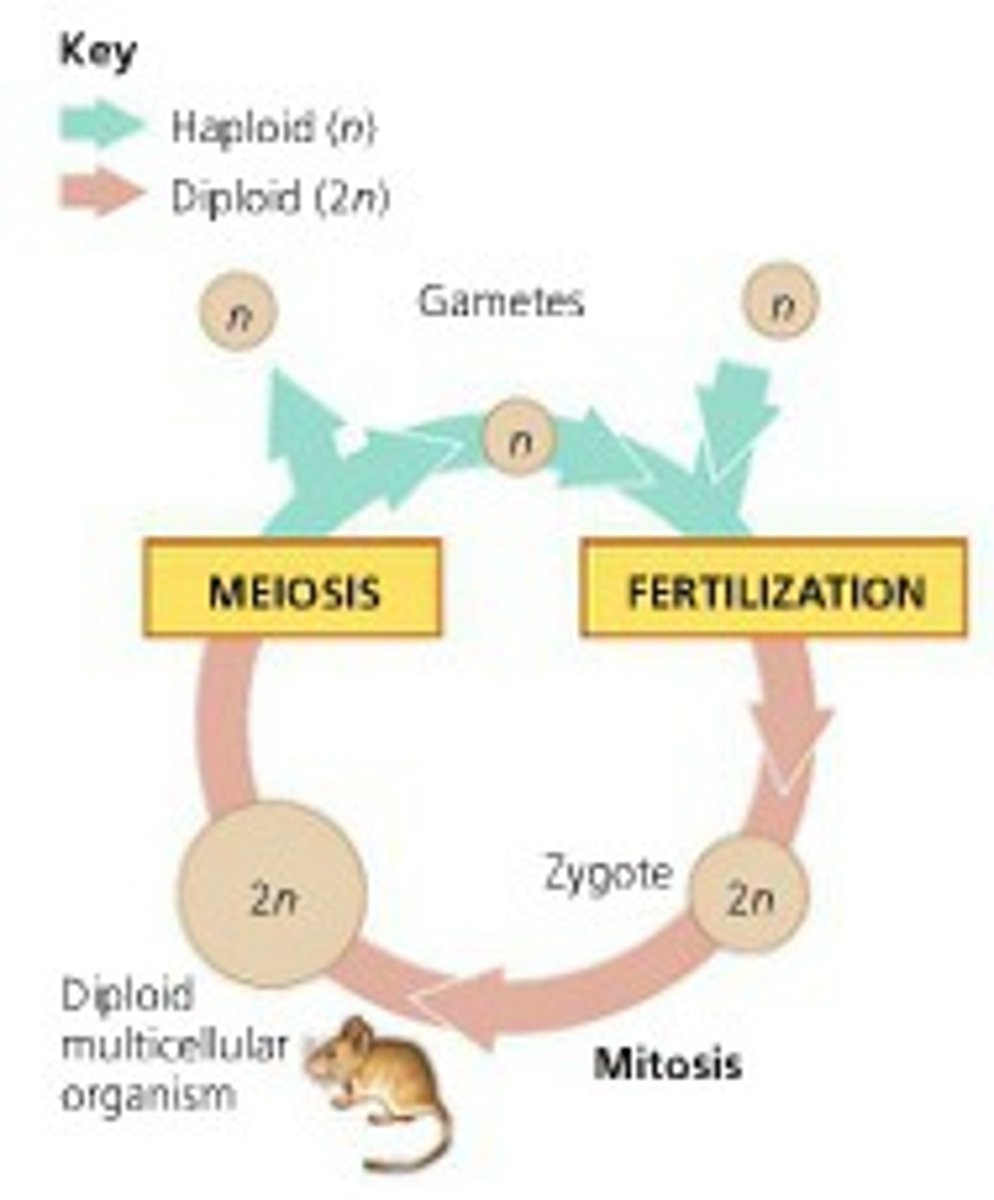
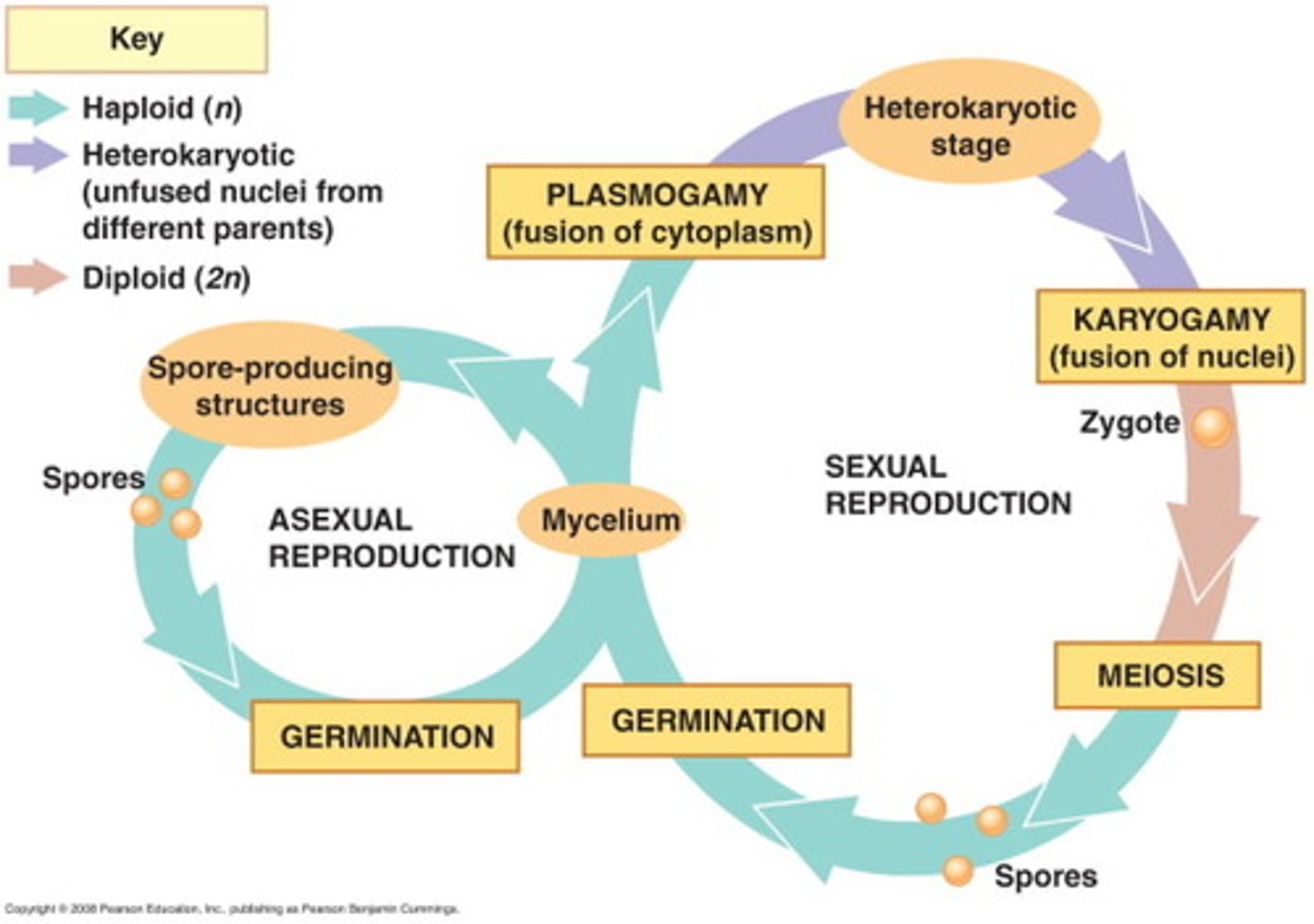
Fungi life cycle
the only diploid stage is the zygote; meiosis occurs after fertilization is complete, with no mitosis in-between fertilization and meiosis.
-mating tyoes rather than distinct males or females
-no swimming gametes, no need for free-standing water 0
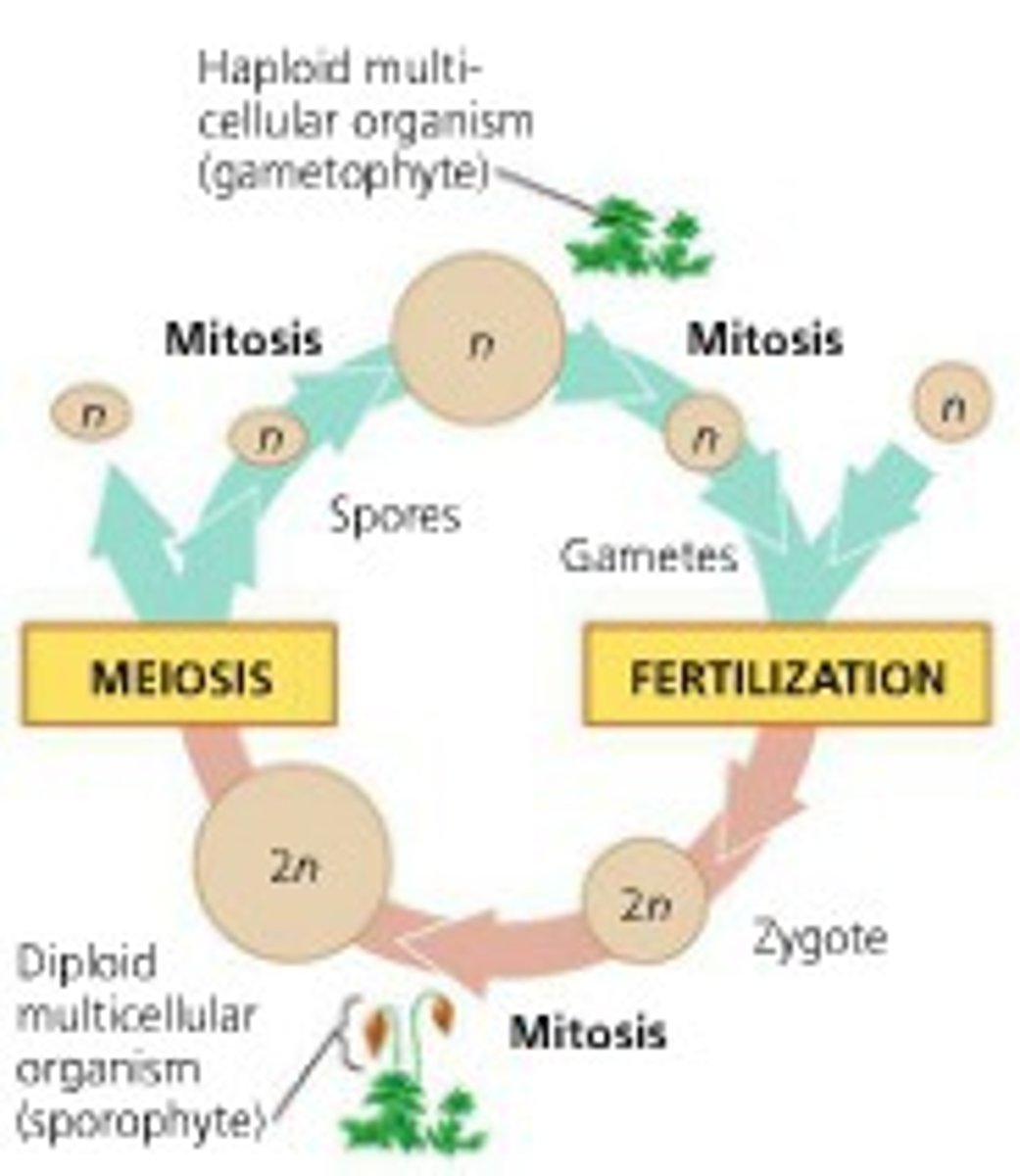
Plant life cycle
mitosis (resulting in production of a new individual organism) occurs after meiosis (resulting in a haploid organism)
and
after
fertilization (resulting in a diploid organism)
, so that two different kinds of organisms (one haploid and one diploid) alternate within the same life
cycle of a single species.
In sexual life cycles
spores and gametes are both haploid, unicellular reproductive cells --- but a spore germinates directly to form a new
haploid organism (involving mitosis) whereas a gamete fuses with another gamete to form a (diploid) zygote
Oomycota
water molds
-no longer considered fungi (unlike fungi, water molds have diploid hypae as well as small sperms nad large non-motile eggs)
Endosymbiosis
Process of incorporation of one organism within the cell
of another. A multi-step process: 1st step -- early eukaryote (with
cytoskeleton) engulfed prokaryote that became the mitochondrion.
Evidence for theory of endosymbiosis
- Size: size and internal structure of mitochondria and plastids similar to putative closely related bacteria
- Replication: mitochondria and plastids reproduce by binary fission, like bacteria (if plastids in cells are destroyed, they will not regenerate)
- Ribosomes: inside mitochondria and plastids are more similar to bacterial ribosomes than to those outside in the cytoplasm of a eukaryotic cell
- Antibiotics: some bacteriostatic antibiotics that target protein synthesis in bacteria are also toxic to organellar ribosomes but not those of eukaryotic cytoplasm
- Genomes: mitochondria and plastids have genomes separate from the nuclear genomes. Mitochondria and plastid genomes are circular and genetically similar to those of some bacteria
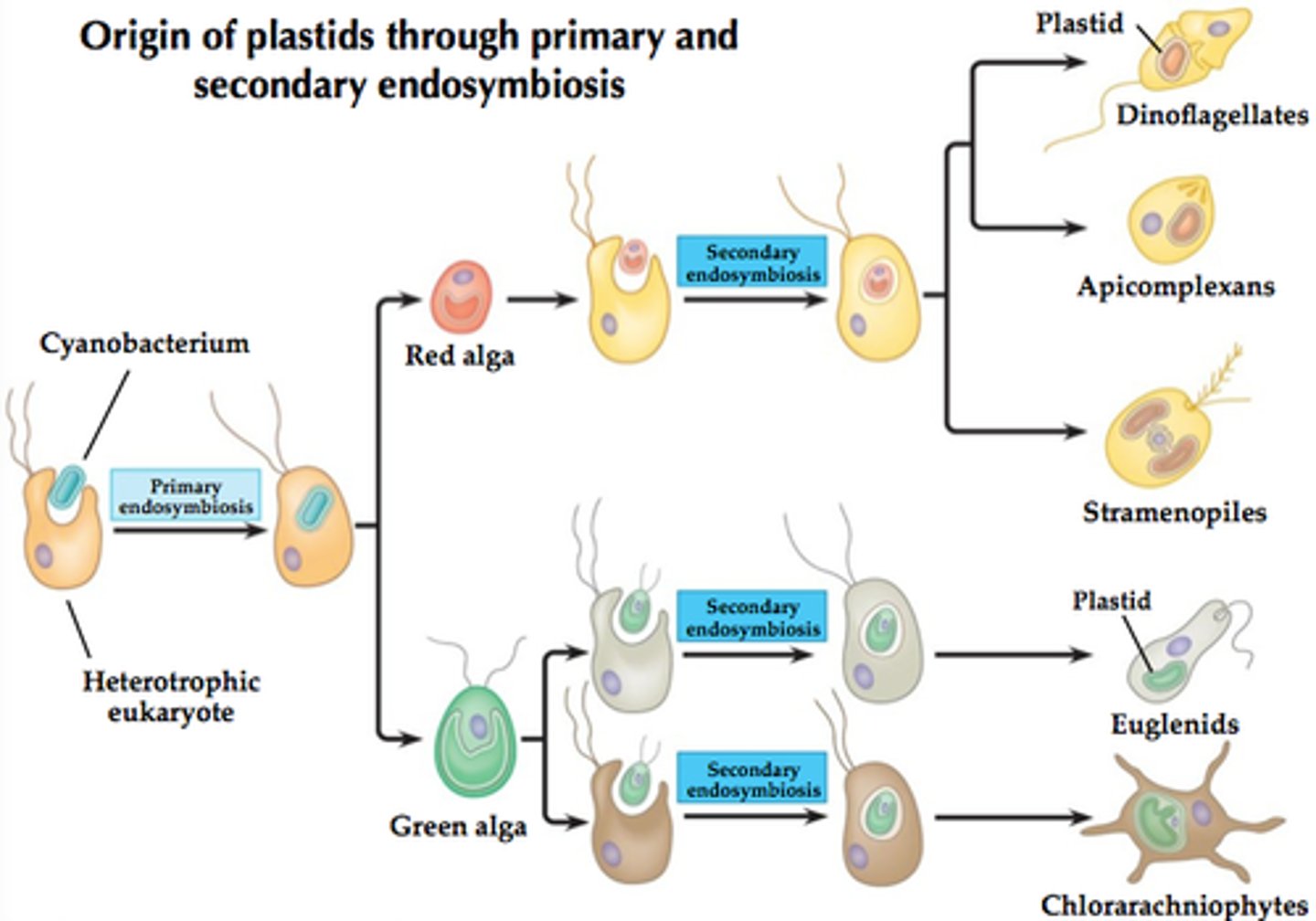
primary endosymbiosis
The engulfment of a cyanobacterium by a larger eukaryotic cell that gave rise to the first photosynthetic eukaryotes with chloroplasts.
secondary endosymbiosis
A process by which protist diversity is hypothesized to have evolved from a symbiotic association that arose when an autotrophic eukaryotic protist was engulfed by a heterotrophic eukaryotic protist.
Major Groups of Algae
Unicellular
1. Blue-green bacteria
2. Dinoflagellates
3. Euglenoids
4. Diatoms
5. Golden Algae
Multicellular (some or all)
6. Brown Algae
7. Red Algae
8. Green Algae
Blue-green bacteria
-cyanobacteria: unicellular but commonly occur as filaments; some occur in terrestrial in addition to aquatic habitats
- filamentous cyanobacteria have specialized cells where nitrogen fixation takes place
- though diverse, only one lineage gave rise to plastids of other algae (endosymbiosis)
Dinoflagellates
- external armor of cellulose plates with 2 flagellae, one encircling their body like a belt, causing them to spin through water
- blooms are responsible for red tides and toxins
Euglenids
- photosynthetic taxa acquired chloroplast from unicellular green alga( 2ndary endosymbiosis)
- most are still heterotrophic(engulf prey)
- have unique flagellum and storage polysaccharides
Diatoms
- most diverse and ecologically important algae
- may account for 25% of Earth's primary productivity
- cell walls of hydrated silica in organic matrix, like 2 halves of a petri dish
- marine and freshwater
- sink after they die → removing carbon from ecosystem and helping reduce atmospheric carbon dioxide
- animal-like life cycle (only gametes are haploid)
- mostly reproduce asexually
Golden Algae
- unicellular or colonial
- closely related to diatoms or brown algae, appear to descend from the same ancestor that engulfed red algae
- freshwater and marine
Brown Algae
- marine algae, include kelps
- occur in intertidal zone and in deep water
- keystone taxa in aquatic ecology
Red algae
- mostly seaweeds, often reddish from pigments that mask green color of chlorophyll
- can live in water up to 850 ft deep
- closely related to green algae
- reddish pigments absorb light in blue/green wavelengths, which penetrate deepest in water
Gree Algae
- unicellular → multicellular
- close relatives to land plants
- occur in wide range of habitats
- ex: "watermelon snow" unicellular Chlamydomonas nivalis had red pigments
Alternation of generations
having a multicellular organism in the haploid phase of the life cycle and a multicellular organism in the diploid phase of the life cycle
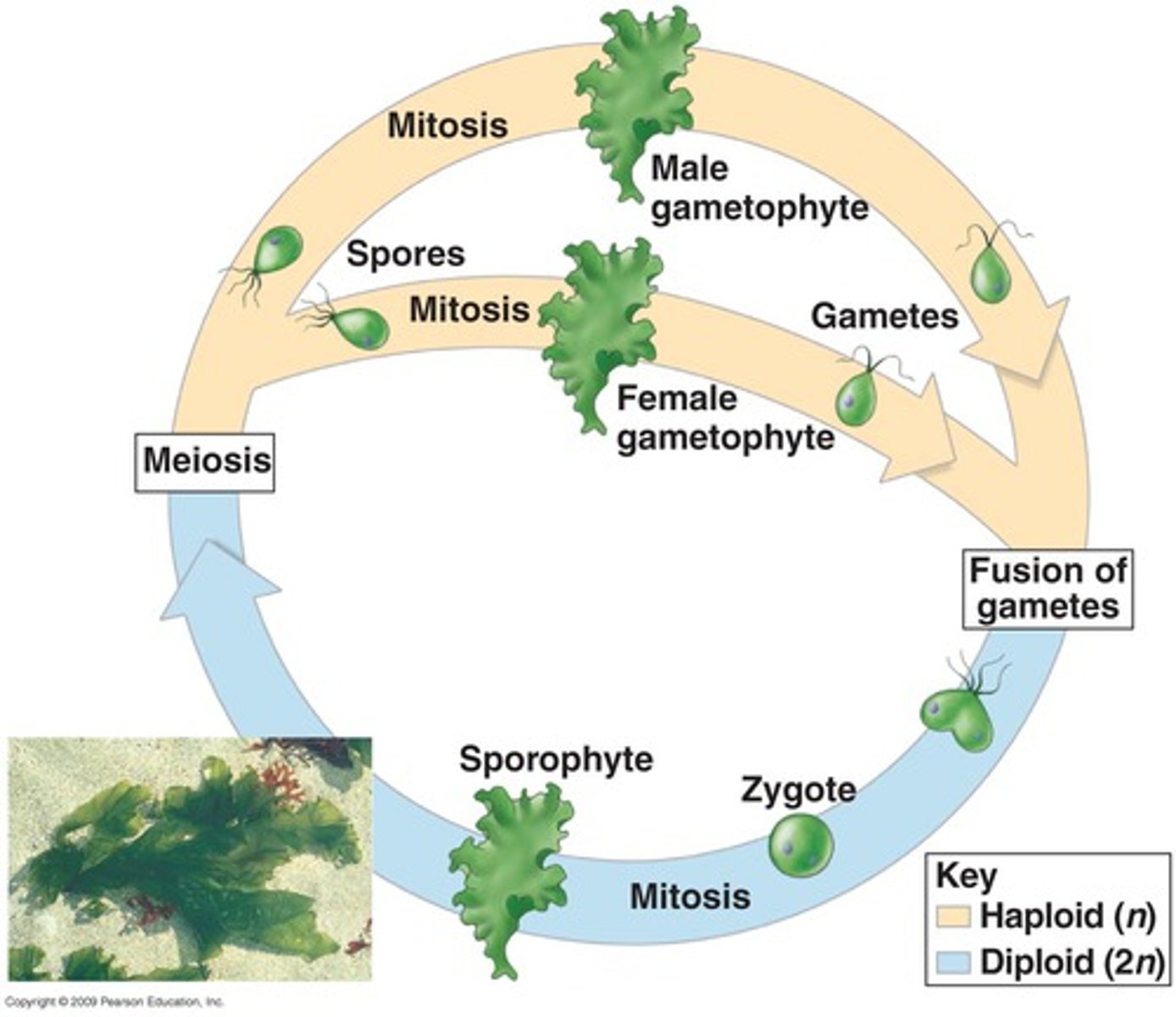
Vascular plant innovations
- dominant sporophyte generation: allowed for complex genetic expression and buffering of mutations
- well developed cuticle (waxy outer covering)
- vascular tissue (xylem and phloem): specialized conducting tissue for water and inorganic and organic nutrients, allows for large plant bodies
- tracheids (lignified xylary conducting cells): rigid, decay-resistant conducting tissue
- Branched sporophyte
- roots: allow for efficient uptake of water and nutrients from deep in the soil, and anchorage
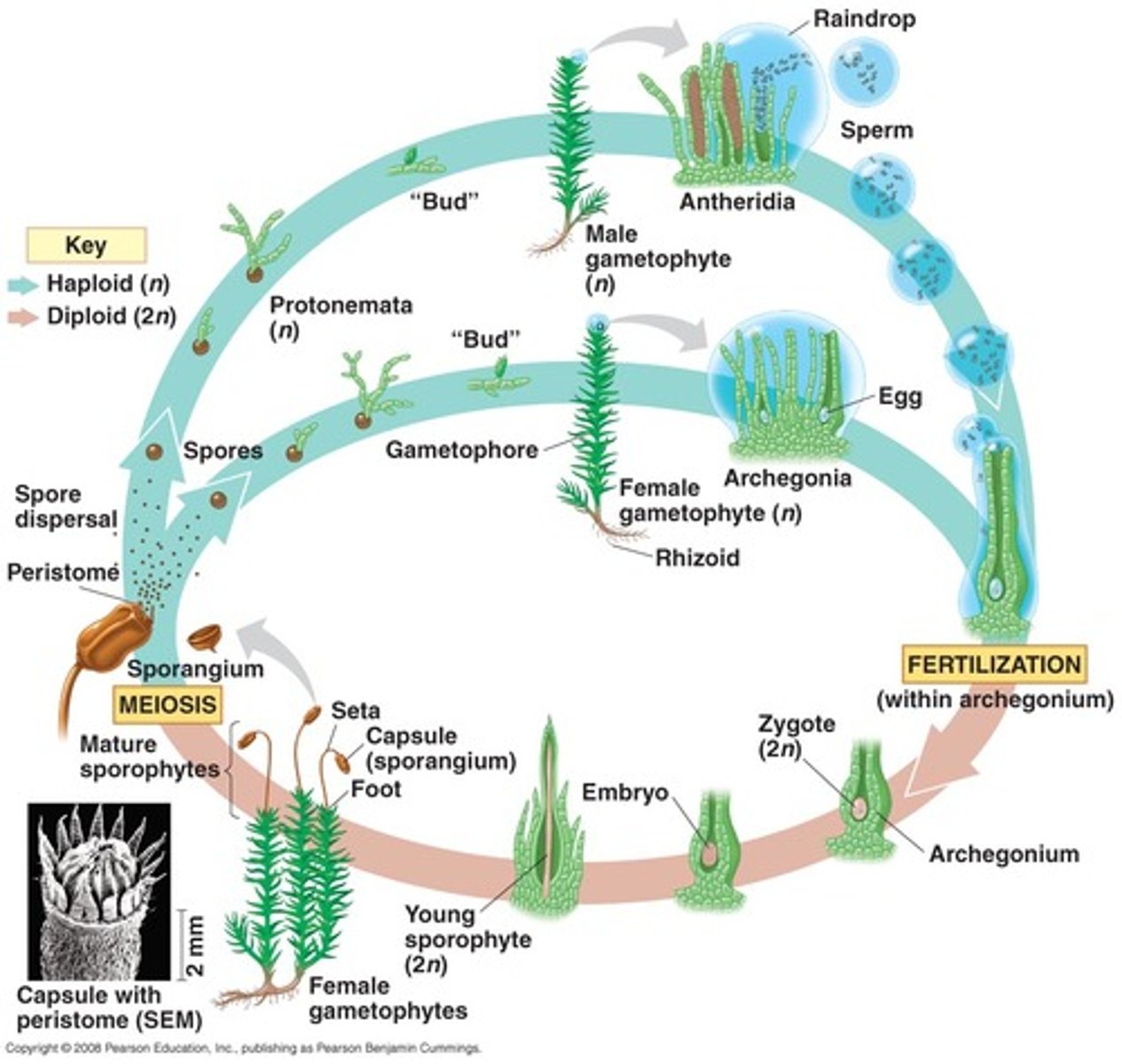
moss life cycle
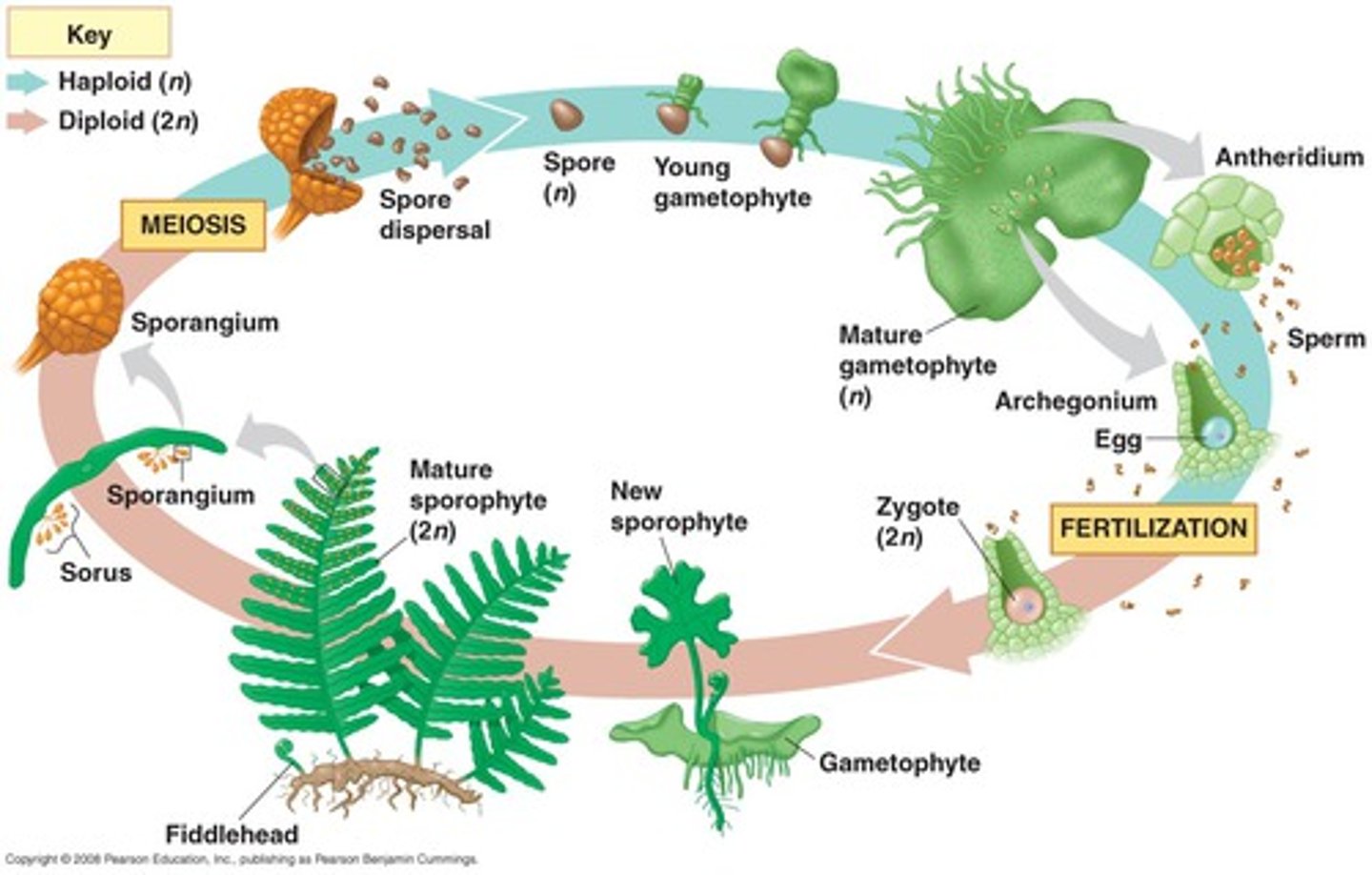
fern life cycle
one type of gametophyte bearing both types of gametangia (antheridia, which
produce sperm, and archegonia, which produce eggs).
-requires free-standing water
- sporophyte is the dominant generation
sorus
cluster of sporangia in ferns. Shape, location and presense of indusium are important in identification of different taxa of ferns
Heterospory
production of 2 different types of spores, which become unisexual gametophytes
- promotes protection of the vulnerable gametophyte generation and allowed for evolution of seeds and pollen in plants seeds
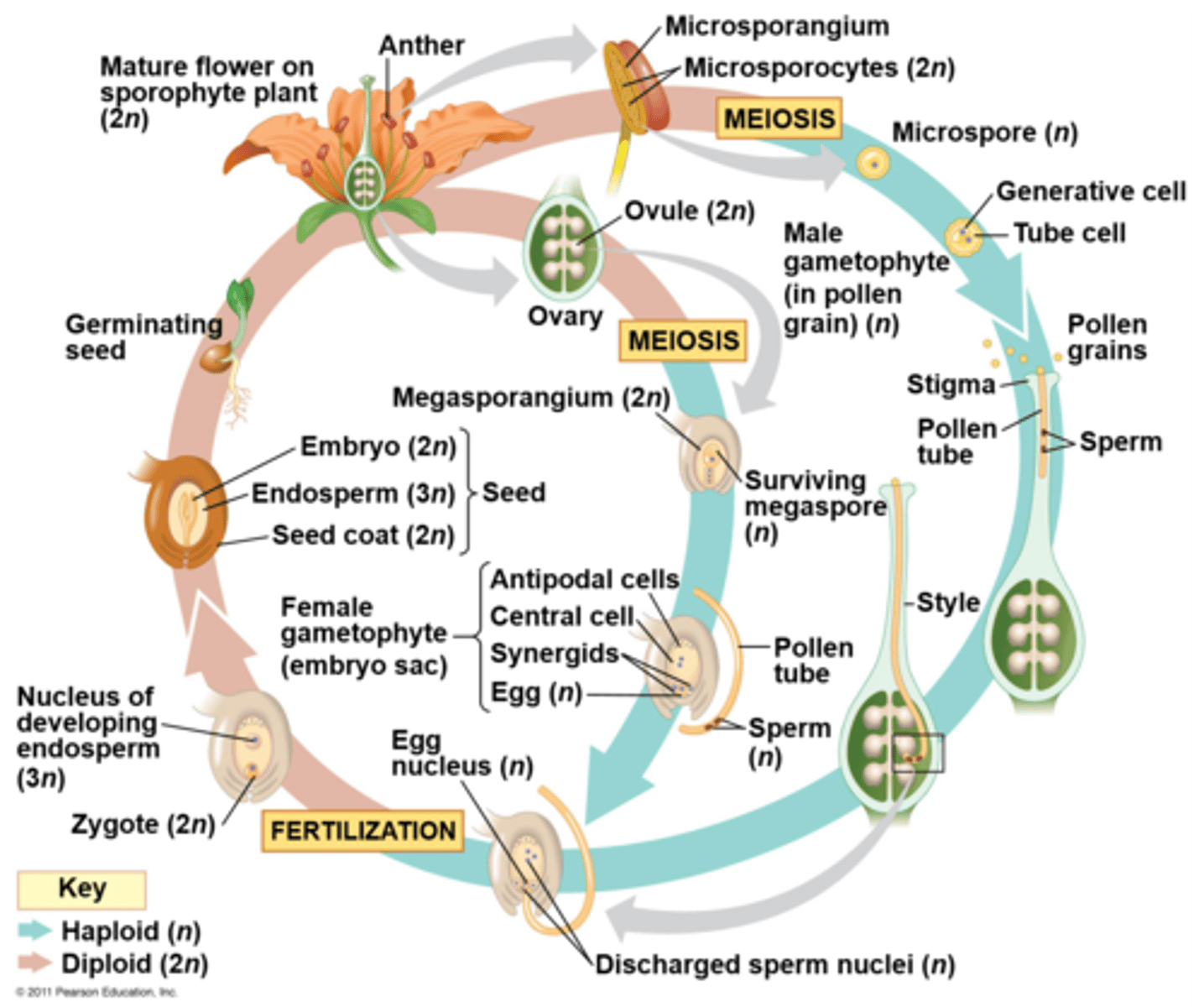
Angiosperm life cycle
Gymnosperm life cycle
Sporophyte is dominant
Contains male and female cones
Gametophyte is completely dependent on sporophyte structures; female in ovulate cone, male develops in pollen
Pollen (and seeds) dispersed by wind
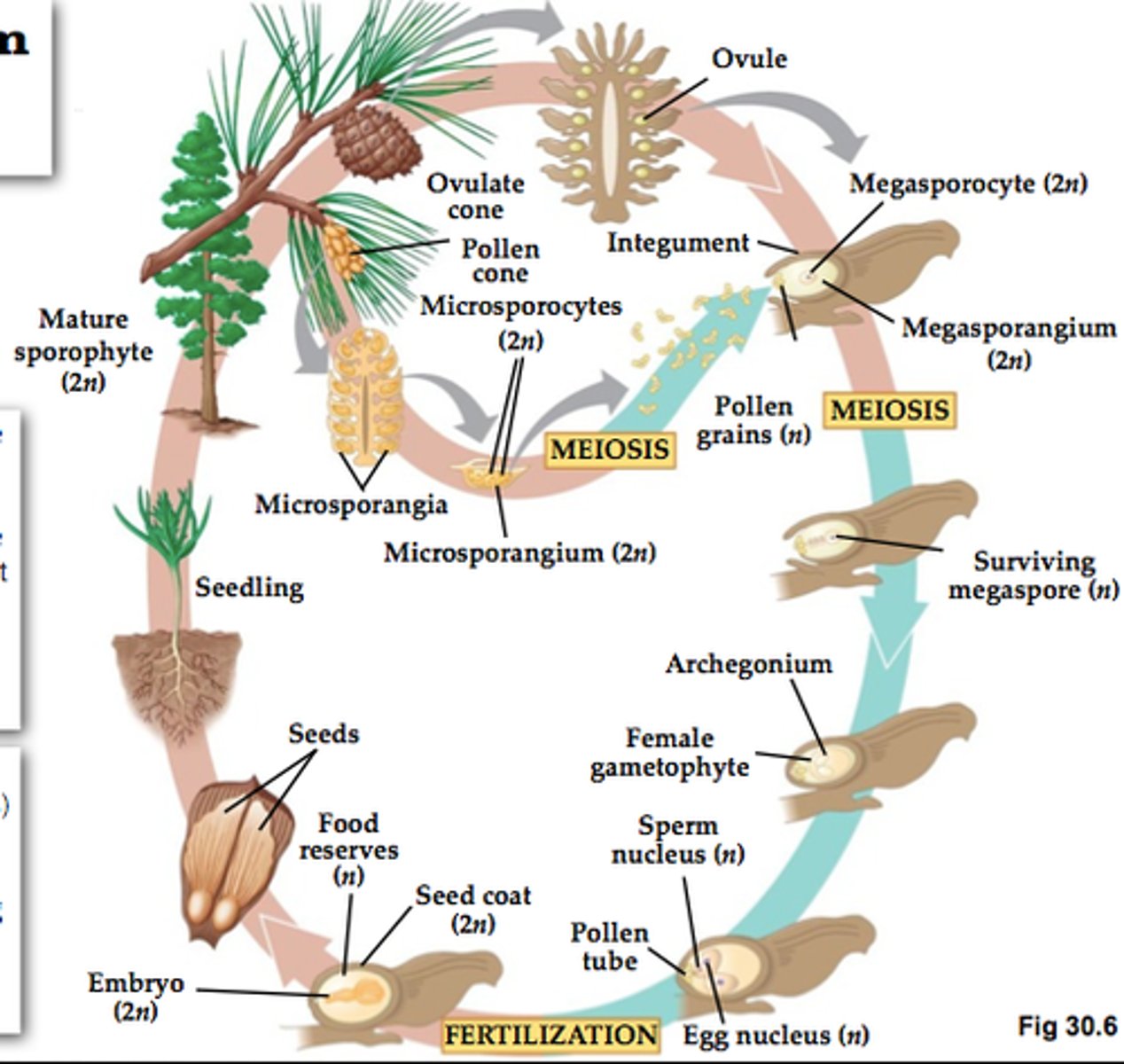
Gymnosperms
include all seed plants except the flowering plants
angiosperms
flowering plants
Flower Morphology
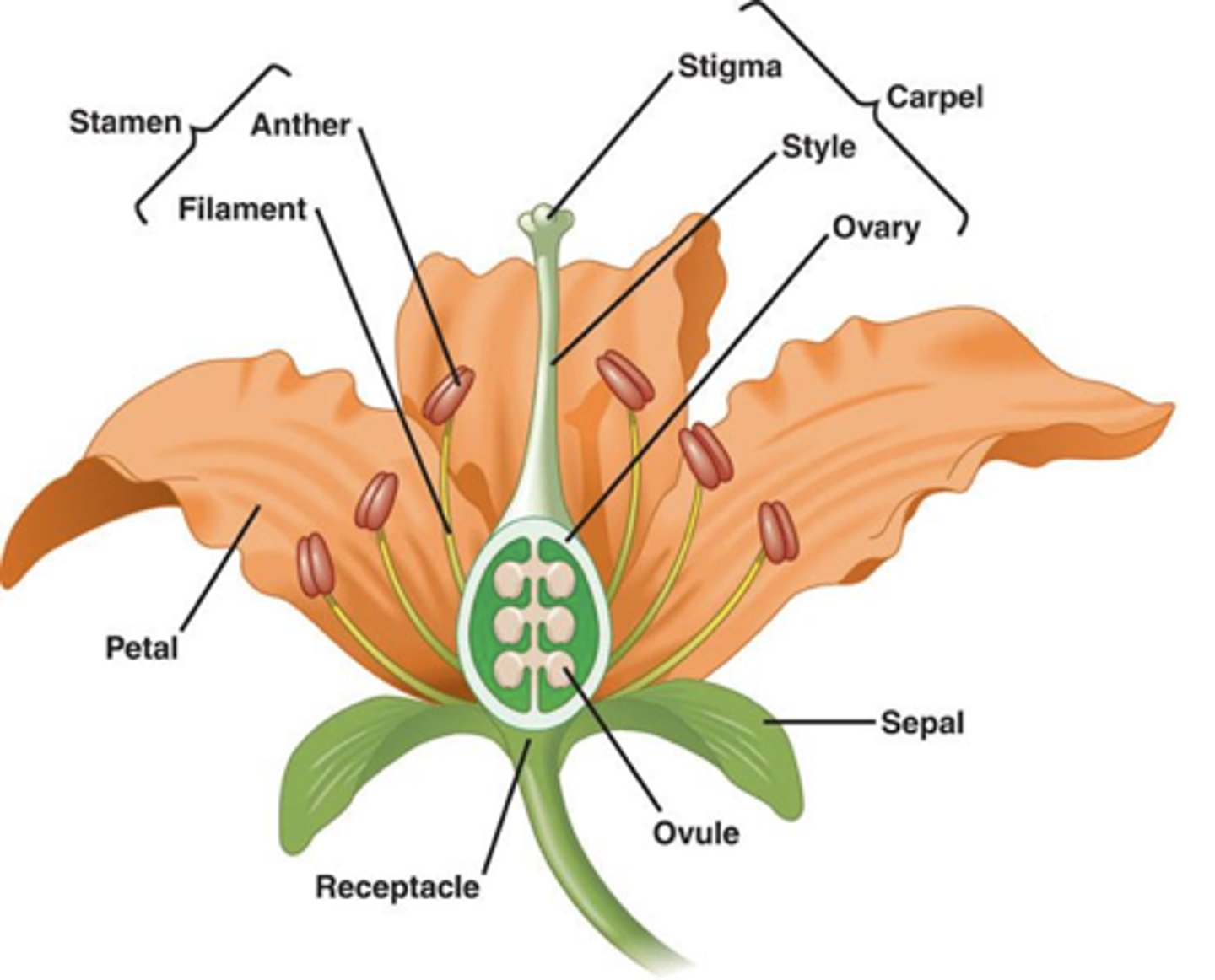
Carpels
a modified leaf that contains immature seeds= ovules
Generally have 3 parts:
- the stigma, a sticky surface where pollen is recieved and germinates
- the style, pollen tubes grow down through to reach ovules
- the ovary, the chamber containing the ovules
Mechanisms against selfing
-Self-Incompatibility (SI)
- Monoecious or Dioecious angiosperms
-spatial separation
-separation in time
Self-incompatibility (SI)
a genetically based system that allows plants to recognize pollen that shred one or both alleles of the "s" gene and to prevent those male gametophytes from reaching the ovules
- many plants have lost this
Monoecious angiosperms
individual plant has to types of flowers; flowers with stamens but no functional carpels AND flowers with one or more carpels but no functional stems
Dioecious angiosperms
individual plants has only one type of flower; flowers with stamens but no functional carpels OR flowers with one or more carpels but no functional stamens
- generally incapable of selfing
Bee pollination
flower colors: blue or yellow
- flower sent: various
- often have patterns and guidelines
- often have landing platform
Moth pollination
- color: whitish
-visible under low-light
- sweet
- no landing platform
- narrow nectar tubes
Butterfly pollination
- color: colorful (bright colors)
- sent: present (often sweet)
- have a flat surface
- narrow nectar tubes
Bird Pollination
- color: colorful, often reddish
- scent: none
- produce relatively large amounts of nectar
- thick, rigid parts
- ones that use hummingbirds do not have landing platforms
Bat Pollination
- color: white or pale
- scent: fruity or musky
- both pollen and nectar
- often large and tough
Fly pollination
- deceit pollination
- color: reddish and light spotted (often fleshy textured)
- scent: rotten
Wind Pollination
-No attractants or rewards
- flowers either pistillate or staminate
- petals are small or absent
- anthers open in dry weather
- enlarged stigmatic surface
- pollen dry, with smooth surface
Bee Orchids
deceit pollinatiors, look and smell like a female bee