Cognitive Beliefs ch.8
 Call Kai
 Learn
Learn Practice Test
 Spaced Repetition
 Match
Match Flashcards
 Knowt Play
1/33

Earn XP
Description and Tags
Week 4
Name | Mastery | Learn | Test | Matching | Spaced | Call with Kai |
|---|
No analytics yet
Send a link to your students to track their progress
34 Terms
Cognitive Beliefs
Convictions held as true
Influence and influenced by occupational, personal, and environmental factors
OTPs can address cognitive beliefs to positively influence occupational participation and performance
Theoretical Assumption
1. Deeply held core beliefs influence our thoughts, emotions, behavior, and
physiological arousal
2. Beliefs and their dynamic interaction with behavior, emotions, physiological states, and the environment comprise human functioning
3. Beliefs are instrumental in how we perceive, appraise, and attach meaning to information from ourselves and the environment (our beliefs are our filter)
4. Beliefs that are true or held to be true often act as self-fulfilling prophecies
5. Beliefs develop from childhood through adulthood
6. Beliefs affect relationships, group affiliations, and society, and these social contexts also affect beliefs
Levels of Beliefs
Beliefs are on a continuum of overlapping levels
o Automatic thoughts- surface level, spontaneous, flexible, situational, arise
from core beliefs
o Assumptions/rules for living- intermediate assumptions, values, conditional rules, arise from core beliefs
o Core beliefs or schemas- deepest level; templates of absolutes about self, others, or the world; rigid; global
• Exist in a dynamic feedback loop where core beliefs generate intermediate and surface level thoughts, and intermediate and surface level thoughts reinforce core beliefs
Levels of Beliefs: Feedback Loop
Surface beliefs or automatic thoughts
Intermediate beliefs: values, attitudes, and rules for living
Core beliefs or schemas: about self, world, future
Depression: Cognitive Beliefs
Cognitive triad of negative beliefs
1. Self
2. The world or environment
3. The future
o May lead to a pessimistic world-view, self-deprecation, unpleasant feelings, maladaptive behaviors
Anxiety Disorders: Cognitive Beliefs
Beliefs tend to focus on threats and catastrophic interpretations of situations
o Intolerance of Uncertainty Model
o In OCD, distorted beliefs lead to inflated responsibility for negative events and need for control
o In PTSD, distorted beliefs center around self-blame
Eating Disorders: Cognitive Beliefs
Distorted beliefs about self and eating
Emphasis on appearance and eating habits on self worth
Substance Use Disorders: Cognitive Beliefs
Anticipatory beliefs - expectation of reward
Relief-oriented beliefs - using will alleviate discomfort
Facilitative beliefs - permissive in spite of potential consequences
Schizophrenia: Cognitive Beliefs
Defeatist beliefs
Self stigma
Cognitive Beliefs and Stigma
Stigma is rooted in personal and public beliefs
• Experiencing stigmatized beliefs from others and/or holding stigmatizing beliefs about oneself may hinder recovery
• Restructuring beliefs about mental illness to focus on hope and the ability to live a successful, meaningful life can support recovery
Cognitive Beliefs Assessment
Structured:
Pain Self Efficacy Questionnaire
Self Efficacy Gauge
Semi-Structured:
Socratic Questioning
Dysfunctional Thought Records
TIC-TOC
ABC
Pain Self Efficacy Questionnaire
Adults with chronic pain
10 item Likert scale survey measuring confidence in ability to perform daily tasks with pain
Self Efficacy Guage
For adults with occupational performance dysfunction
27 item Likert scale survey measuring confidence to perform occupational performance tasks
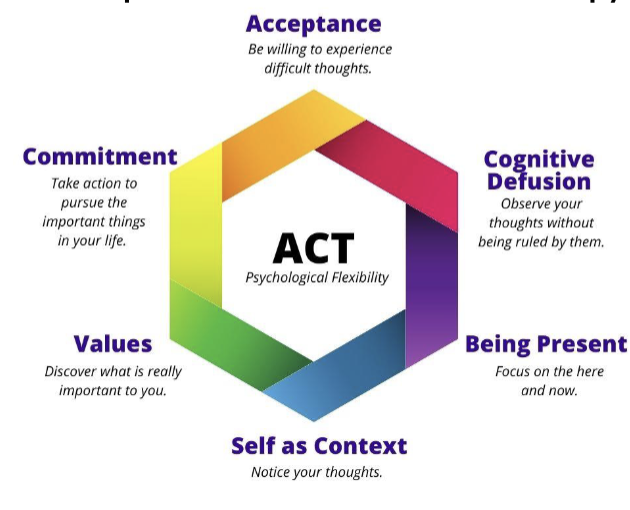
Acceptance and Commitment Therapy Practice Model
Acceptance: be willing to experience difficult thoughts
Cognitive Defusion: observe your thoughts without being ruled by them
Being Present: focus on the here and now
Self as Context: notice your thoughts
Values: discover what is really important to you
Commitment: take action to pursue the important things in your life
CBT Effectiveness
Reducing anxiety
Improving mood and reducing relapse rates in bipolar disorder
Decreasing symptoms of depression
Targeting underlying pathology associated with eating disorders
Substance use treatment, particularly when combined with motivational and skill building approaches
Addressing SOME aspects of functioning in schizophrenia
CBT and OT
When using CBT (or related approaches) in OT, we should consider the relationship between cognitive beliefs and occupational participation and performance
o How do beliefs shape our participation and performance?
o How do participation and performance shape our beliefs?
CBT: Cognitive Restructuring
Socratic Questioning
Guiding Discovery
TIC_TOC
Self-Talk and Affirmations
Thought Records
Coordinated Anxiety Learning and Management (CALM)
Ellis’s Rational Emotive Behavior Therapy (REBT)
TIC-TOC
focuses on identifying and reframing cognitions that interfere with tasks (Task-interfering Cognitions → Task-Oriented Cognitions)
o Identify task-interfering cognitions (TICs)
o Identify the associated though distortions
o Reframe to task-oriented cognition (TOCs)
Thought Records
Worksheet to organize and evaluate thoughts, beliefs, and emotional responses during distress
o May help to challenge cognitive distortions
Cognitive Distortions
All or nothing
Magnifying or minimizing
Catastrophizing or fortune-telling
Mental filter
Emotionalizing or emotional reasoning
Personalizing
Coordinated Anxiety Learning and Management (CALM)
Model for treating anxiety in primary care settings
8 week computer guided program w educational videos, opportunities to practice new skills, and homework
Ellis’s Rational Emotive Behavior Therapy (REBT_
Core tenet: irrational beliefs about how things “must” and “should” be for
people to be happy actually lead them to make themselves miserable
o Participants first identify, evaluate, and challenge irrational beliefs and then restructure and replace these beliefs using a graded approach
o ABC Model
▪ Activating event
▪ Irrational beliefs
▪ Emotional and behavioral consequences
CBT: Behavior/Learning Methods
Behavioral Experiments
Behavioral Activation and Activity Scheduling
Self-Monitoring
Behavioral Experiments
Collaborative strategy where client has opportunities to test thoughts, attitudes, beliefs, and behaviors
o Involves developing a hypothesis, predicting the outcome, engaging in the behavior, evaluating results, and revising beliefs and behaviors
Behavioral Activation and Activity Scheduling
Inactivity/avoidance may result from negative beliefs
o Behavioral activation aims to increase activity, counteract avoidance behavior, increase access to positive resources
o May include activity scheduling like making a list, chart, or calendar of activities to increase commitment and engagement
Self Monitoring
A self-regulatory or self-management process that involves attending to aspects of one’s beliefs, emotions, or behaviors
o May involve tallying frequency or rating degree of pleasure associated with the belief or behavior
o Use this information to guide participation
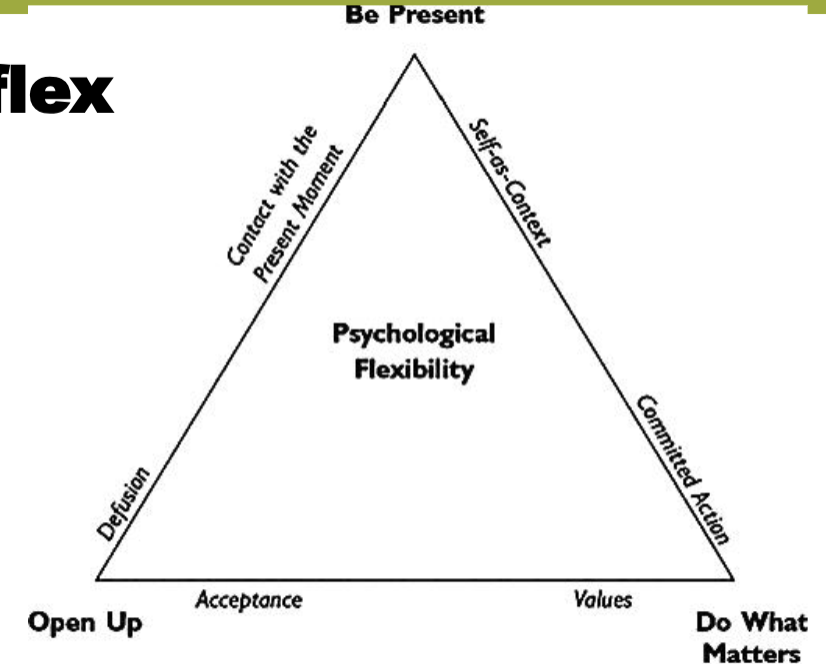
Acceptance and Commitment Therapy (ACT)
Falls under the CBT umbrella
• Uses a variety of strategies to address cognitive beliefs
o Become “unstuck” from rigid cognitive beliefs
o Reduce experiential avoidance
o Act in alignment with personal values
• Focuses on increasing psychological flexibility by helping individuals change their relationship with difficult thoughts and feelings (rather than eliminating them) so they can take meaningful action in the context of their life and values
ACT: Core Processes
1. Acceptance: I can approach problems instead of avoid them
2. Cognitive Defusion: It is just a thought, let it pass.
3. Contact with the Present Moment: Focusing on and engaging fully in
whatever I am doing.
4. Self-as-Context: What am I thinking and doing?
5. Values: What do I stand for? What is important to me?
6. Committed Action: I can do what matters to me, even if it is difficult
ACT Interventions: Ways of Speaking
But vs. And
Want vs. Willing
I’m having the thought..
Thanks, mind!
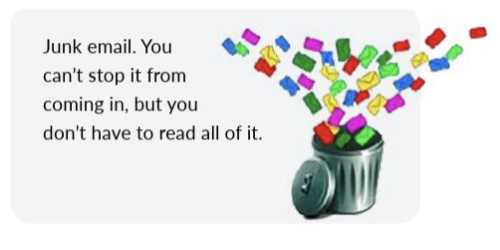
ACT Interventions: Defusions Methaphors
Thoughts are like: junk email. You can’t stop it from coming in, but you don’t have to read all of it
ACT Interventions: Values Clarification
Life Deviation
Birthday Party Speech
Mastery Experiences
Performance successes and accomplishments help increase self-efficacy
o Low self-efficacy beliefs can be compounded by difficulties with problem-solving, coping, assertiveness, and stress management
o Need to understand strengths and deficits in addition to clients’ beliefs about their strengths and deficits to guide treatment planning
Psychoeducation
Process of teaching relevant psychological principles, knowledge, and skills
o Can include information about cognitive beliefs and why modifying distorted beliefs can improve mental health and behavioral problems
o Can utilize a didactic approach, workbooks, or reading materials
Other Considerations: Cognitive Beliefs
Metacognitive Demands
o Cognitive restructuring requires the ability to reflect on one’s thinking,
identify and evaluate one’s beliefs, differentiate between beliefs and reality,
and consider the influence of beliefs on feelings and behavior
o For people with difficulty employing metacognition, behavioral or social
cognitive strategies may be more effective
• Cultural Considerations