Topic C - Biology
 Call Kai
 Learn
Learn Practice Test
 Spaced Repetition
 Match
Match Flashcards
 Knowt Play
1/40

Earn XP
Description and Tags
Rf
Name | Mastery | Learn | Test | Matching | Spaced | Call with Kai |
|---|
No analytics yet
Send a link to your students to track their progress
41 Terms
What do catalysts do and how?
Increases the rate of the reaction by reducing the activation energy (the energy required to start a reaction)
Enzyme
Protein based biological catalyst. Globular, soluble, folds to a specific shape
Anabolic vs catabolic reactions
Anabolic - uses condensation reactions, uses energy, builds up molecules. An example is photosynthesis
Catabolic - uses hydrolyses, releases energy, breaks down molecules. An example is cell respiration
Induced fit model
Proteins are not a perfect fit for the substrate, rather, the active site changes slightly (conformational change) to fit it
What are substrates and active sites?
The substrate is what bonds to the enzyme, and the active site is the area on the enzyme where it bonds
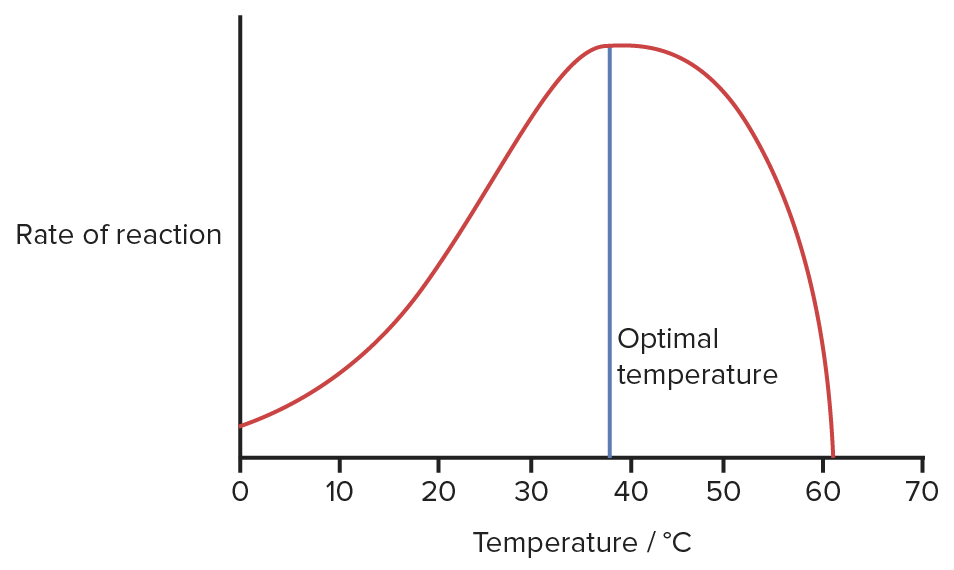
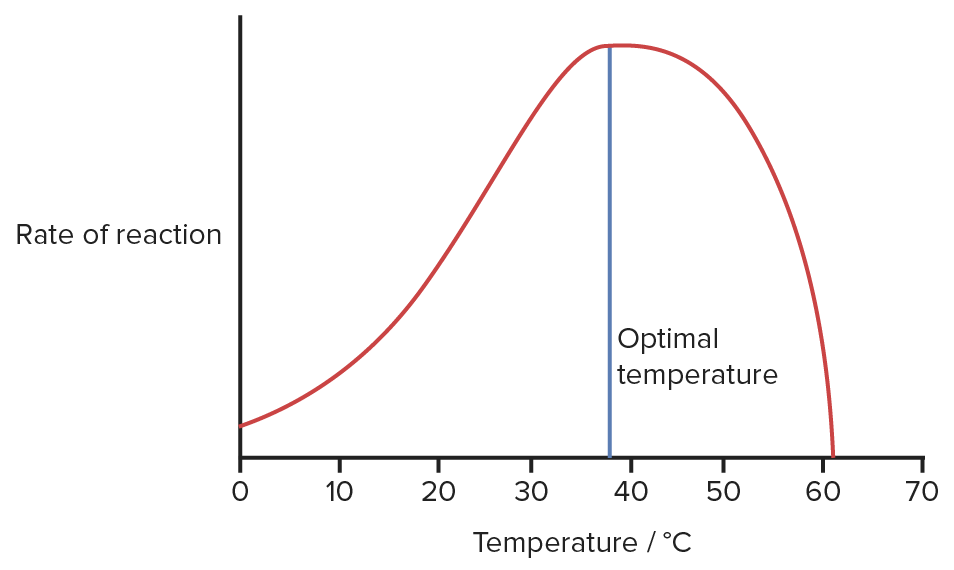
Effect of temperature on an enzyme (know the graph)
At colder temperatures, enzymes are less active due to the lack of energy and collisions. They work best at an optimal temperature, and then denature after that
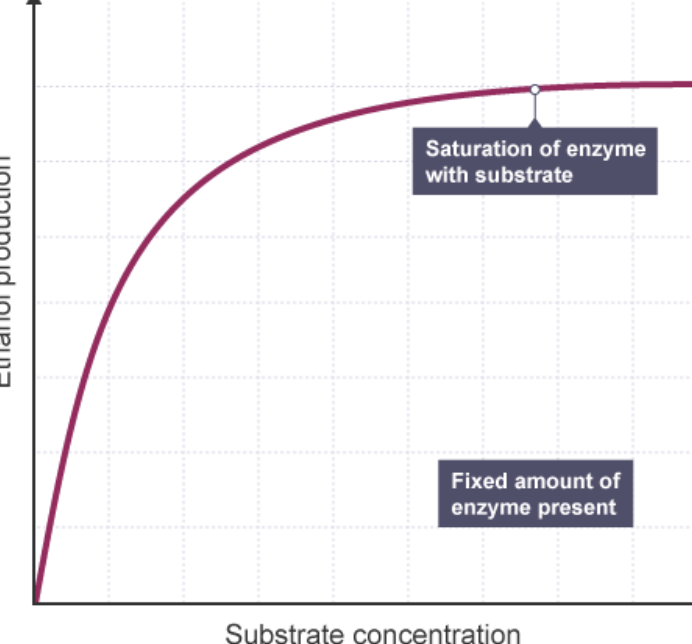
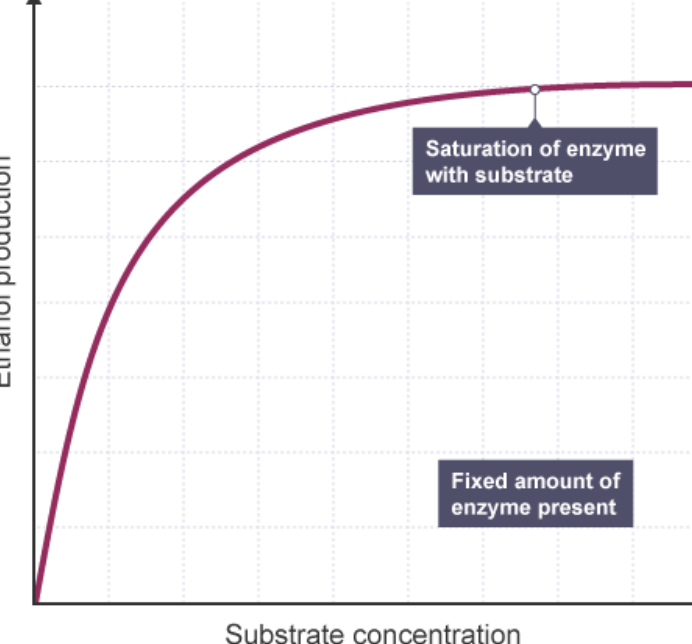
Effect of substrate concentration on an enzyme (know the graph)
With more substrate, there’s more collisions and more enzyme activity. However, at a certain point all the active sites will be filled and productivity will not increase
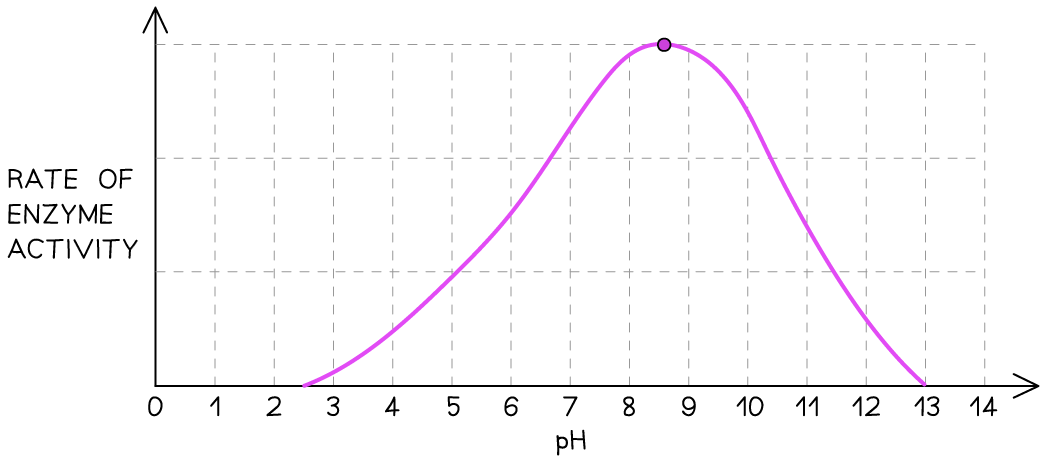
Effect of pH on an enzyme (know the graph)
Denaturation occurs when the pH is not optimal
ATP - how it works and usages
A break is made in the phosphorous chain that releases energy. ATP is used for active transport, movement and synthesizing molecules
ADP
After the ATP chain breaks, it leads just two phosphorous, making ATP.
Traits of aerobic respiration
Glucose breaks down into CO2 + H2O
In the cytoplasm and the mitochondria
Makes 30 ATP
Traits of anaerobic respiration
In yeast, CO2 and ethanol is produced, and lactate is produced in animals
Only in the cytoplasm
Makes 2 ATP
Oxygen debt
The amount of O2 needed to breakdown leftover lactate
Photosynthesis equation
H2O + CO2 → C6H12O6 + O2
Action spectrum
Shows photosynthesis rates at different wavelenghts
CO2 concentration on photosynthesis
CO2 is a substrate, so the reaction levels up after a while
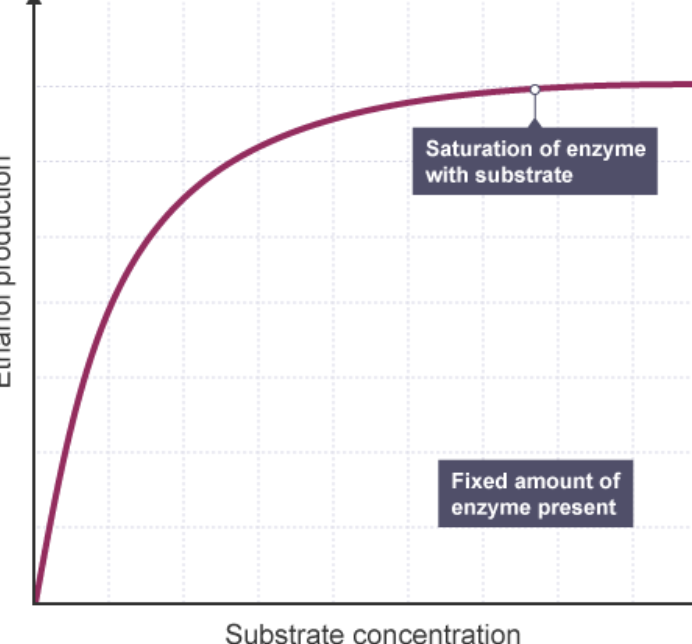
Light intensity on photosynthesis
Temperature on photosynthesis
Chromotography
Separates leaf pigments and shows which pigments are are and how much. Used to calculate the Rf, which is the distance the pigment traveled/the distance the solvent traveled
Absorption spectrum
Graph showing how pigments absorb different wavelengths
Colors vs pigments
Colors are how we perceive light, pigments absorb certain wavelengths
System integration
Integrates multiple levels of the organism
Tissue
2+ types of cells, specialized
Organ
2+ types of tissue
Organ system
Group of organs
Organism
All its systems together
How do the body systems communicate?
Hormonal and nervous signaling
Hormones
The pineal gland signals the endocrine glands to release hormones. They are slow acting and move through the bloodstream. Binds with whatever has the correct receptor. Lasts until it is broken down.
How does the nervous system work?
Communicates with electrical impulses across neurons
Reflex arc
receptor → sensory neuron → interneuron → motor neuron → effector muscle
White matter in the spinal cord
Transmits signals from the body
Gray matter in the spinal cord
Has cell bodies and synapses, processes info and helps make decisions
Motor cortex
Where motor neurons originate from
What is a nerve?
A nerve fiber bundle surrounded by a sheath
Cerebellum
Coordinates muscle contractions and balance
Melatonin
Released by the pineal gland, helps to regulate the circadian rhythm
Epinephrine/adrendaline
Flight or fight reactions, effects glucose/oxygen intake
Osmoregulation
Receptors detect the pH and concentration and stuff of the blood and ensure that its stable
What does the brain release during puberty?
Hypothalamus releases Gn, RlT, LH and FSH
SA node
Sinoatrial node, in the heart, pacemaker/regulates heart beat