HBio Bones, Muscles, and Anatomical Terms
 Call Kai
 Learn
Learn Practice Test
 Spaced Repetition
 Match
Match Flashcards
 Knowt Play
1/51

There's no tags or description
Looks like no tags are added yet.
Name | Mastery | Learn | Test | Matching | Spaced | Call with Kai |
|---|
No analytics yet
Send a link to your students to track their progress
52 Terms
Anterior/Ventral
Front of body
Posterior/Dorsal
Back of body
Superior
Above/Towards the head
Inferior
Below/Towards the feet
Proximal
Closer to where arm or leg inserts into the body (ONLY ON THE SAME ARM OR LEG)
Distal
Further away from where arm or leg inserts into the body (ONLY ON THE SAME ARM OR LEG)
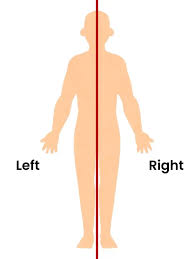
Medial
Closer to midline/Sagittal plane
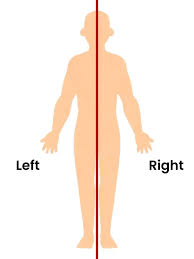
Lateral
Further from midline/Sagittal plane
Exoskeleton
Skeleton outside of body (think beetle)
Endoskeleton
Skeleton inside of body (think human)
Bones that form the head and abdomen
Axial Skeleton
Bones that form the limbs
Appendicular Skeleton
Axial Skeleton function
Protects internal organs
Appendicular Skeleton function
Motion
Purpose of spongy bone
Flexibility, shock absorption, and bone marrow for red blood cells
Purpose of compact bone
Structural support, strength, and protection
Red Marrow
Produces red blood cells and some white blood cells
Yellow Marrow
Energy reserve
Five Functions of Bones
Rigid framework
Protects organs
Stores minerals (calcium, etc.)
Produces white and red blood cells
Stores fat
Ball and Socket Function
Full circle (shoulder)
Gliding Joint Function
Slide over another (wrist)
Saddle Joint Function
Rotation and grasping (thumbs)
Hinge Joint Function
Forward and backward (elbow)
Pivot Joint Function
Side to side (neck)
Fixed Joint Function
Prevent movement (cranium)
Tendon
Fibrous connective tissue, muscle to bone
Ligament
Fibrous connective tissue, connects bone to bone
Osteocyte
Living bone cells in the gaps of protein layers
Haversian Canal
Brings nutrients to living bone tissue
Periosteum
Connects blood vessels — nutrients, and nerves — pain/sensation
Epiphyseal Line
Where cells divide and form columns — pushes older cells to the middle (where they die later)
Ossification
Where cartilage forms into bone (when you are a baby)
Separation of abdominal and thoracic cavities
Diaphragm
Cardiac Muscle
Pumps blood (heart)
Skeletal Muscle
Enables bones to move/Motion in general
Smooth Muscle
Moves food through digestive tract, blood vessels, and uterus
How muscles contract
Thick myosin filaments pull thin actin filaments to shorten sarcomeres within muscle fibers
Voluntary Muscles
Muscles you can control
Involuntary Muscles
Muscles you can’t control (heart)
Two parts of muscle pair
Flexor and Extensor
Strain
When a muscle or tendon is stretched too far
How the diaphragm helps you breathe
It contracts and pulls down so air can fill your lungs
5 Properties of Muscle
Excitable or Irritable
Contractible
Extensible
Elasticity
Adaptability
Hypertrophy
Enlarging the muscle (working out)
Atrophy
Weakening the muscle (paralysis/lack of movement)
Structures in the Integumentary System
Skin, hair, and nails
4 Functions of IS
Absorption of Vit. D
Keeps bacteria/foreign bodies out
Sensation
Thermoregulate
Epidermis
Top layer of skin
Dermis
Middle layer of skin
Subcutaneous Tissue
Fat layer
Importance of collagen and keratin to the IS
They provide fundamental structural integrity, strength, and elasticity.
How hair is formed
Produced in follicles located in the skin's dermal layer, where rapidly dividing cells are fed by blood vessels, packed with keratin protein, and die as they are pushed upward