Geography FINAL
 Call Kai
 Learn
Learn Practice Test
 Spaced Repetition
 Match
Match Flashcards
 Knowt Play
1/92

Earn XP
Description and Tags
Last test, You can do this!! LOCK IN!
Name | Mastery | Learn | Test | Matching | Spaced | Call with Kai |
|---|
No analytics yet
Send a link to your students to track their progress
93 Terms
South Asia
includes: Pakistan, India, Nepal, Bangladesh, Bhutan, and Sri Lanka
pretty rural
lots of people
arranged marriage is fairly common
India
capital: New Delhi
Lots of spices
Shape of the country is interesting
Touches China
Pakistan
very diverse population
Indo-Gangetic Plain
A plain of loose soil that helps people
Monsoon
A seasonal reversal in surface wind direction; associated primarily with South, East, and Southeast Asia
Environmental Challenges
Air pollution - dry season problem
Water access - 5% renewable water resources
Ganges River
sacred river for Hindus
Longest river in India
Very polluted
Hinduism
Dominant religion
polytheistic
33 gods or 330 million gods
Oldest Religion
All gods come from one god: Brahman
What is the trinity worship of Hinduism?
Brahma - Creator
Vishnu - Preserver
Shiva - Destroyer
What are the main 4 branches of the Caste System?
Brahmins - priests/teachers (Head/mouth)
Kshatriyas - warriors and rulers (arms)
Vaishyas - farmers, traders & merchants (thighs)
Shudras - laborers (feet)
What group were the “outcastes”?
The Dalits - street sweepers, latrine cleaners (not even on Brahma’s body)
Buddhism
founded by Buddha Shakyamuni - a prince in 624 BC
There are 4 Noble Truths
There is also the Eightfold path
What are the 4 Noble Truths?
All life is suffering
Suffering is caused by selfish desire
Suffering ends when desire ends
Overcome misery through the eightfold path
What is the Eightfold Path?
Right Understanding
Right Intent
Right Speech
Right Action
Right Livelihood
Right Effort
Right Mindfulness
Right Concentration
Sikhism
Founded by Guru Nanak
Monotheistic
~20 million Sikhs
Who are Kesh?
Men let their hair grow long in Sikhism
Jainism
Most in India
Originates in India from Mahavira
Everything has a soul - souls are equal in value
Self-help religion - not gods or spiritual beings
Vegetarian
There are Three Jewels
What are the 3 Jewels in Jainism?
Right Belief - seek the truth
Right Knowledge - accurate knowledge of universe
Right Conduct - harmless life
Great Britain and South Asia
British gained indirect control of India
Colonial government - 1858
Sepoy Rebellion
Indian troops rebelled against British
Colonial Cash Crops
Mahatma Gandhi
lived from 1869-1948
Hindu
Western education - lawyer
Peaceful protests - Dandi Salt March
Mother Teresa
Real name - Anjeze Gonxhe Bojaxhiu (Albanian-Indian)
lived from 1910-1977
Catholic missionary
Known as St. Terese of Calcutta
Worked with poor
raised funds for hospice
Caste System
social hierarchy
Vedas
collection of holy, sacred texts - “written by god”
Dharma
force that provides order - moral force
Karma
your works or your deeds
Reincarnation
being reborn into a new life as a new being after this life ends
Brahma (Brahman)
supreme spirit
West Pakistan and East Pakistan
Controlled by British
1947 - Indian Independence
Pakistan was created for Muslims for religious purposes
1971 - East Pakistan becomes Bangladesh
West Pakistan = Middle East
East Pakistan = Asian Culture
Kashmir
contested area between China, India, and Pakistan
Gained independence from Britain in 1947
Majority Muslim population wanted to join Pakistan
The Maharaja (Hindu) wanted to join India
Which countries currently have nuclear weapons?
U.S.
Russia
France
UK
Israel
India
Pakistan
China
North Korea
Nepal
Has Mt. Everest
Capital Kathmandu
Bangladesh
used to be East Pakistan
Extreme poverty - after war with Pakistan
Grameen Bank
microlending institution that targets poor women
spatially expanded communication
fertility rate declined
2000 branches
Sri Lanka
island country
Independence from Britain in 1948
74% are Buddhist, rest are Hindu
Civil War 1983 -2009 - displaces a lot of people
Terracotta Warriors
8,000 soldier statues
all unique
They were built to accompany the emperor of the time into the afterlife
China’s First Emperor
Qin Shi Huang
China’s Landforms and Climate
Fertile floodplains around the major rivers
Tibetan Plateau - largest plateau, really cold
Monsoon conditions
Typhoons - between Shanghai and Hong Kong
Who was predominantly responsible for the building of the Great Wall of China?
The Qin Dynasty
Mandate of Heaven
The idea that there could be only one legitimate ruler of China at a time, and that this ruler had the blessing of the gods. They used this mandate to justify their overthrown of the Shang, and their subsequent rule.
Qin Dynasty
Name China comes from this dynasty
Role of legalism
legacy - The Great Wall
2 occupations: farmer, or soldier
banned books
Ming Dynasty
lots of work on the Great Wall of China
Contributions to the the literature and art world
poetry and prose
Confucianism
Made by: Confucius 551-479 BC
This religion takes off during the Han Dynasty
There are 5 key relationships within this religion (hierarchy)
What are the 5 key relationships for Confucianism?
Ruler and Subject
Father and Son
Husband and Wife
Elder brother and Younger brother
Friend and Friend
Opium War
During the Qing Dynasty
Lasted from 1839-1842
this is made from poppies and acts as an addictive pain-killer
British introduced this to the Chinese
Chinese tried to stop this trade!
Boxer Rebellion
groups called Boxers, or “society of harmonious fists” wanted to expel foreign influence
1900 - 55 day rebellion
foreign troops aided in ending the rebellion
other countries still wanted access to China
Marxism
is a branch of socialism, a theory that holds more powerful classes oppress and exploit the less powerful by denying them their fair share of the surplus they create
Communism comes from this
Socialism
a political and economic theory of social organization that advocates that the means of production, distribution, and exchange should be owned or regulated by the community as a whole
top-down someone is in charge
Communism
a political theory derived from Karl Marx, advocating class war and leading to a society in which all property is publicly owned and each person works and is paid according to their abilities and needs.
bottom-up people own everything
Proletariat
Workers or working-class people, regarded collectively
NOT PEASANTS!
Bourgeois
a member of the middle class; a person whose political, economic, and social opinions are believed to be determined mainly by concern for property values and conventional respectability.
Marx didn’t like them
What are differences between North and South Korea?
North:
Soviet sphere of influence
Chinese economic and political model
food shortages and famine
South:
Incredible economic growth
U.S. sphere of influence
Role of external and internal factors for development
What is the DMZ?
The Demilitarized Zone
Where is the DMZ?
The border between North and South Korea
Why is the DMZ so significant?
It is currently at a peace-treaty between North and South Korea, and it is a place for the North and South Korean leaders to meet and discuss things.
Agent Orange
herbicide that causes terrible mutations in humans
Vietnam War
Between North and South Vietnam
called the American war in North Vietnam
58,000 American deaths
Over 2 million Vietnamese deaths
conventional army in the North Viet-Kong (Guerilla style fighting)
Hiding in the jungle
Korean War
Between Communist North Korea and non-Communist South Korea aimed at reunifying the peninsula under opposing ideologies
North Korea tried invading the South by force in 1950
North and South together used to be “United Korea”
What are territorial waters?
These are the waters closest to the bay of land, and it is 12 nautical miles out. This is where ships can park and bring goods in the waters that the land controls
What are contiguous waters?
This area is the waters that are 24 nautical miles away from the bay area. Other countries can be in it
What is the exclusive economic zone?
This zone is 200 nautical miles out from bay, on the edge of it is the high seas and international waters.
Vietnam History
Strong Chinese influences - originally lived in S. china
Two sides: North Vietnam & South Vietnam
Vietnam War - 58,000 American Deaths, 2 million Vietnamese Deaths
In North Vietnam, its called the American War
Vietnam Post-War Period
Forced movement of people - refugees
Doi Mei - allowed for foreign investment
growth of the economy
However, no reconciliation with the South
Tet Offensive
1968 - 70,000 Northern Vietnamese soldiers coordinated attacks on numerous cities and towns
Turning point in the war
Foreign Direct Investment
An investment in the form of a controlling ownership in a business in one country by an entity based in another country
Human Trafficking
The action or practice of illegally transporting people from one country or area to another, typically for the purposes of forced labor or commercial sexual exploitation.
Human Rights
The rights possessed by all individuals by virtue of being human, regardless of their status as citizens of particular states or members of a group or organization.
What is UDHR?
The Universal Declaration of Human Rights
Adopted by the United Nations General Assembly in 1948, this declaration defines a “common standard of achievement for all peoples” and forms the foundation of modern human rights law
30 human rights
What are the 4 pillars of Human Rights?
Dignity
Equality
Liberty
Brotherhood
What is the ICCPR?
International Covenant on Civil and Political Rights
The agreement completed in 1966 and in force from 1976 that details the basic civil and political rights of individuals and nations
very vague
West = very political
What is the ICESCR?
International Covenant on Economic, Social, and Cultural Rights
The agreement completed in 1966 and in force in 1976 that specifies the basic economic, social, and cultural rights of individuals and nations
Eastern = social/cultural
What is the International Bill of Rights?
Refers collectively to the UDHR, the ICCPR, and the ICESCR. Together, these 3 agreements form the core of the international human rights regime
Made by Eleanor Roosevelt
Indonesia
Largest country in Southeast Asia
5 main islands: Sumatra, Java, Kalimantan (Borneo), Sulawesi, and Papua
Most populous Islamic country in the world (Sunni)
Wahat are 2 population related problems for Indonesia?
Growth - growing fast
Distribution
Philippines
7,000 islands
Colonized by Spain
Prevalence of Catholicism
Ceded to the U.S. in 1898
Independence in 1946
Martial Law in 70s and 80s - negatively impacts the economy
Cambodia
Smaller than the state of Oklahoma
Homogenous population (same/similar people)
Khmer Empire - 1200s to 1400’s
French colony
Spillover from Vietnam War - destabilizing effect
Khmer Rouge
Pol Pot - 1963-1981
Cambodian Genocide “killing fields of Cambodia”
forced relocations
torture
Mass executions
forced labor
Australia (Landforms and Climate)
Smallest Continent
Geographically isolated
mostly flat and dry
large desert
very coastal
marsupials are unique to here!
New Zealand (Landforms and Climate)
mountainous
lush
livestock wealth
lots of flora (plants) and fauna (animals)
Australia (History and British)
Captain James Cook - first European to survey the Australian coast 1770
1850s Gold rush
Settlement of convicts in Australia - it was a PRISON!
Britain encouraged immigration
Independence in 1901
Great Barrier Reef
World’s largest coral reef - not just one
3000 reef systems!
one of the 7 wonders of the NATURAL world
only living thing visible from space
Haka
intimidation ritual against enemies
also done to honor people
weird faces, rhythmic patting and slapping
Mariana Trench and Challenger Deep
A huge trench, and its deepest part is Challenger Deep
If you flipped Mt. Everest upside down and stuck it in Challenger Deep, it still wouldn’t reach!
36,070 FEET!
Easter Island
aka Rapa Nui
Part of Chile
Nearly 900 stone statues, or Moai are there
Discovered by Dutch explorers on Easter
What is Latitude?
Horizontal (lat-flat)
Y-Coordinate
What is Longitude?
Vertical
X-Coordinate
What is the Prime Meridian?
a line that passes through Greenwich and it marks the starting point for longitude 0 degrees!
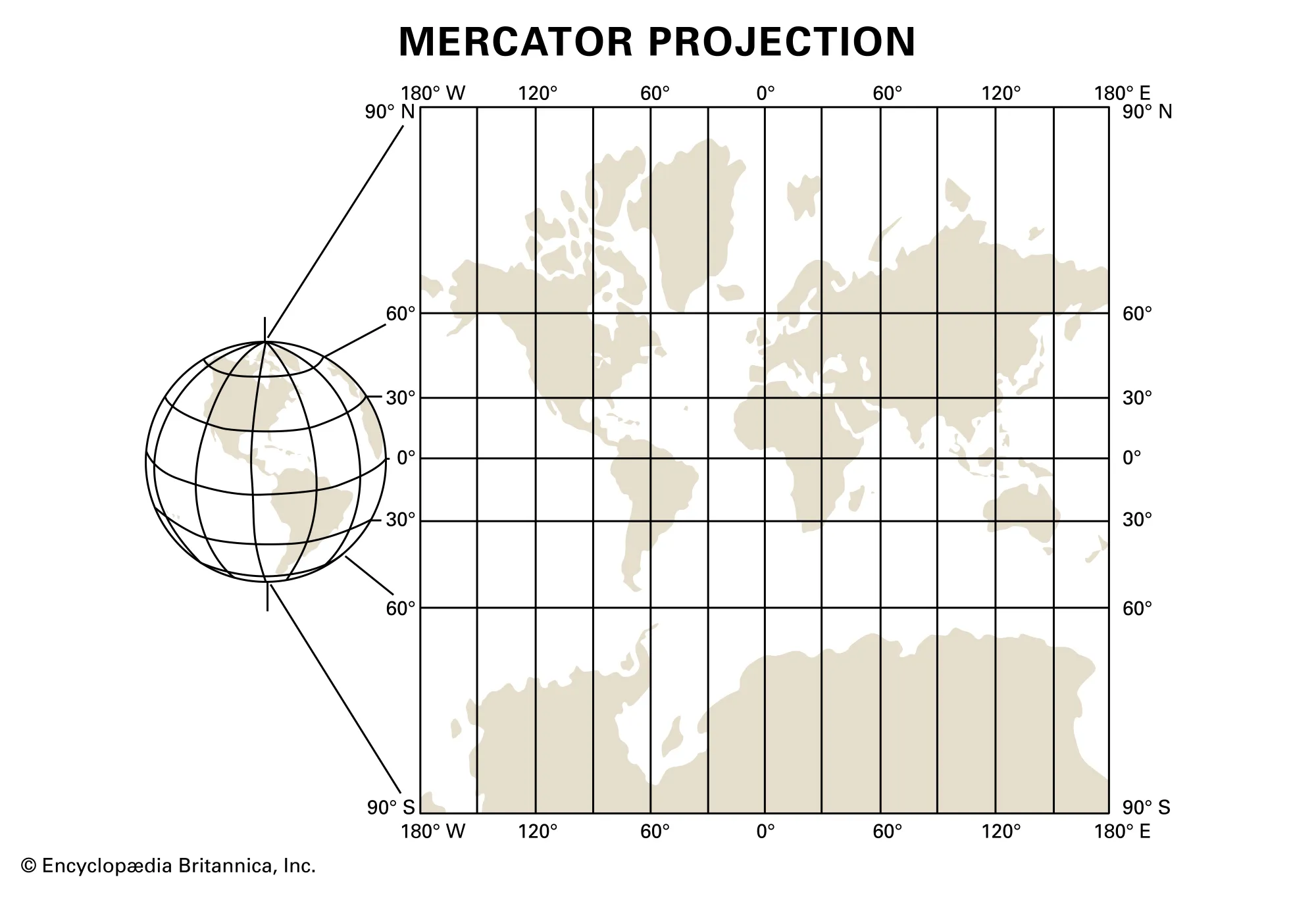
What is the Mercator Projection?
Parallel longitude and latitude
used for nautical navigation
direction is true
area is distorted
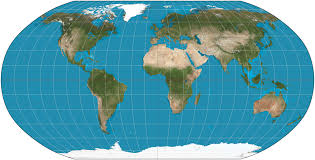
What is the Robinson Projection?
used for world maps
acts as a compromise between shape, area, distance, and direction
NOT TRUE FOR ANY!
Visually appealing
What is a Geiod?
The surface of the earth’s gravity field, which is approximately the same as mean sea level
What is a Spheroid? Give examples
The Earth is an oblate spheroid
Examples: Clarke 1866, GRS80, WGS 1984
What is the Datum? (Give examples)
includes the local changes in elevation
Examples: NAD 1927, NAD 1983, WGS 1984