COGNITIVE NEURO EXAM 1 (AUBURN UNIVERSITY Dr. Teubner-Rhodes
 Call Kai
 Learn
Learn Practice Test
 Spaced Repetition
 Match
Match Flashcards
 Knowt Play
1/111

There's no tags or description
Looks like no tags are added yet.
Name | Mastery | Learn | Test | Matching | Spaced | Call with Kai |
|---|
No analytics yet
Send a link to your students to track their progress
112 Terms
Anterior
front of the body
Posterior
back of body
Dorsal
toward the back
Ventral
Toward the belly
Caudual
toward the feet
Rostral
toward the head
Neuron
a nerve cell; the basic building block of the nervous system
cell body (soma)
contains the nucleus and other parts of the cell needed to sustain its life
Nucleus
Control center of the cell
Axon
A threadlike extension of a neuron that carries nerve impulses away from the cell body.
axon hillock
the cone-shaped area on the cell body from which the axon originates
Dendrites
Branchlike parts of a neuron that are specialized to receive information from other cells
dendritic tree
all the dendrites of a single neuron
axon terminal
The endpoint of a neuron where neurotransmitters are stored
Nodes of Ranvier
gaps in the myelin sheath
myelin sheath
A layer of fatty tissue segmentally encasing the fibers of many neurons; enables vastly greater transmission speed of neural impulses as the impulse hops from one node to the next.
Neurotransmitters
chemical messengers that cross the synaptic gaps between neurons
Synapse
A junction where information is transmitted from one neuron to the next.
synaptic cleft
a gap into which neurotransmitters are released from the axon terminal
glial cells (glia)
Cells of the nervous system that support, regulate, and augment the functions of neurons.
sensory neurons
neurons that carry incoming information from the sensory receptors to the brain and spinal cord
motor neurons
neurons that carry outgoing information from the brain and spinal cord to the muscles and glands
Interneurons
Central nervous system neurons that internally communicate and intervene between the sensory inputs and motor outputs
spinal cord
a major part of the central nervous system which conducts sensory and motor nerve impulses to and from the brain
Autonomic nervous system (ANS)
the part of the peripheral nervous system that controls the glands and the muscles of the internal organs (such as the heart). Its sympathetic division arouses; its parasympathetic division calms.
central nervous system
consists of the brain and spinal cord
grey matter in brain
consists of unmyelinated cell bodies and dendrites
grey matter of spinal cord
Unmyelinated Nervous Tissue
Collection of Cell Bodies
white matter of brain
myelinated axons
white matter of spinal cord
This area surrounds the gray matter. It is composed of both myelinated and unmyelinated axons. It has three regions, anterior, lateral, and posterior columns.
cerebral cortex
outer region of the cerebrum, containing sheets of nerve cells; gray matter of the brain
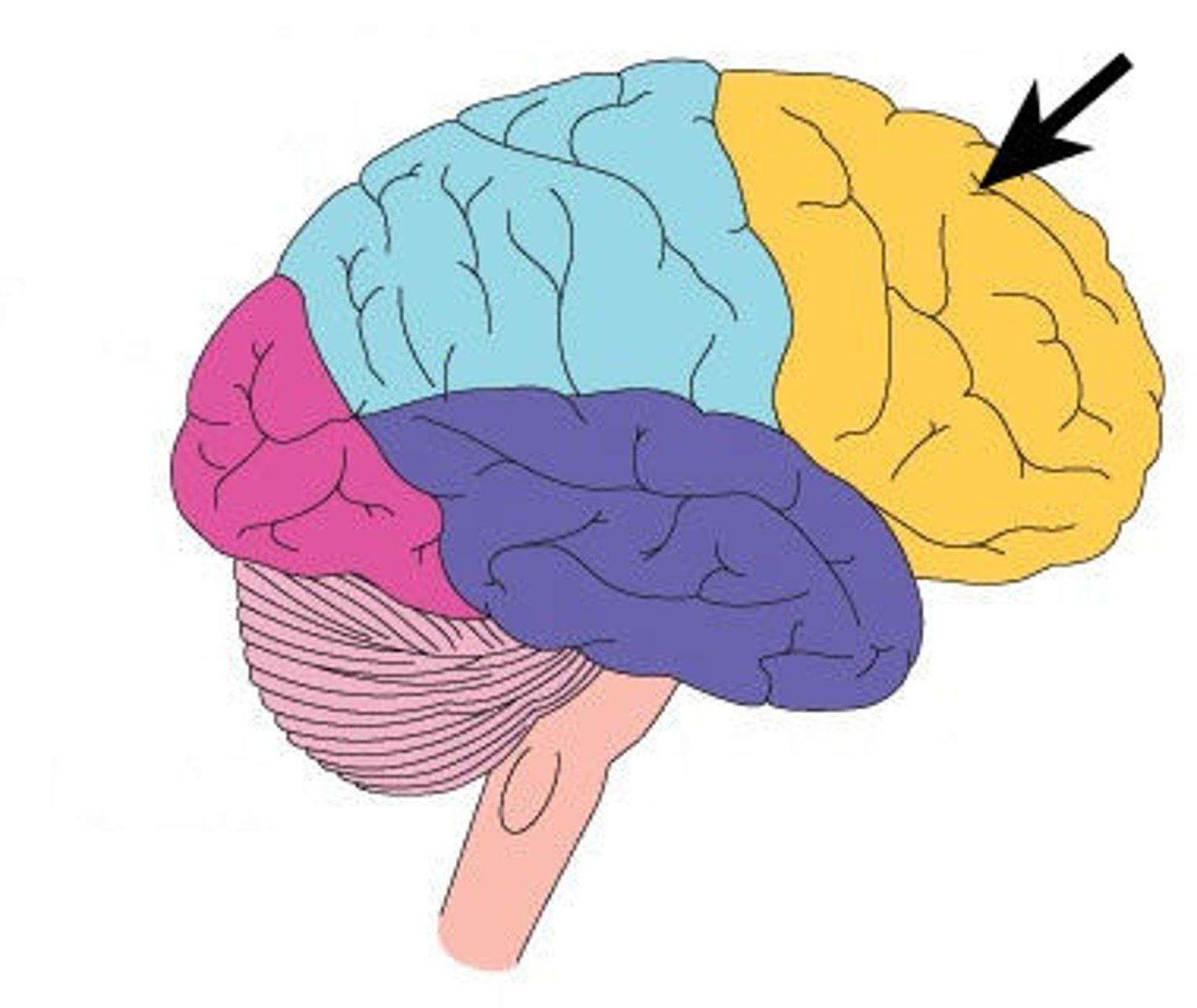
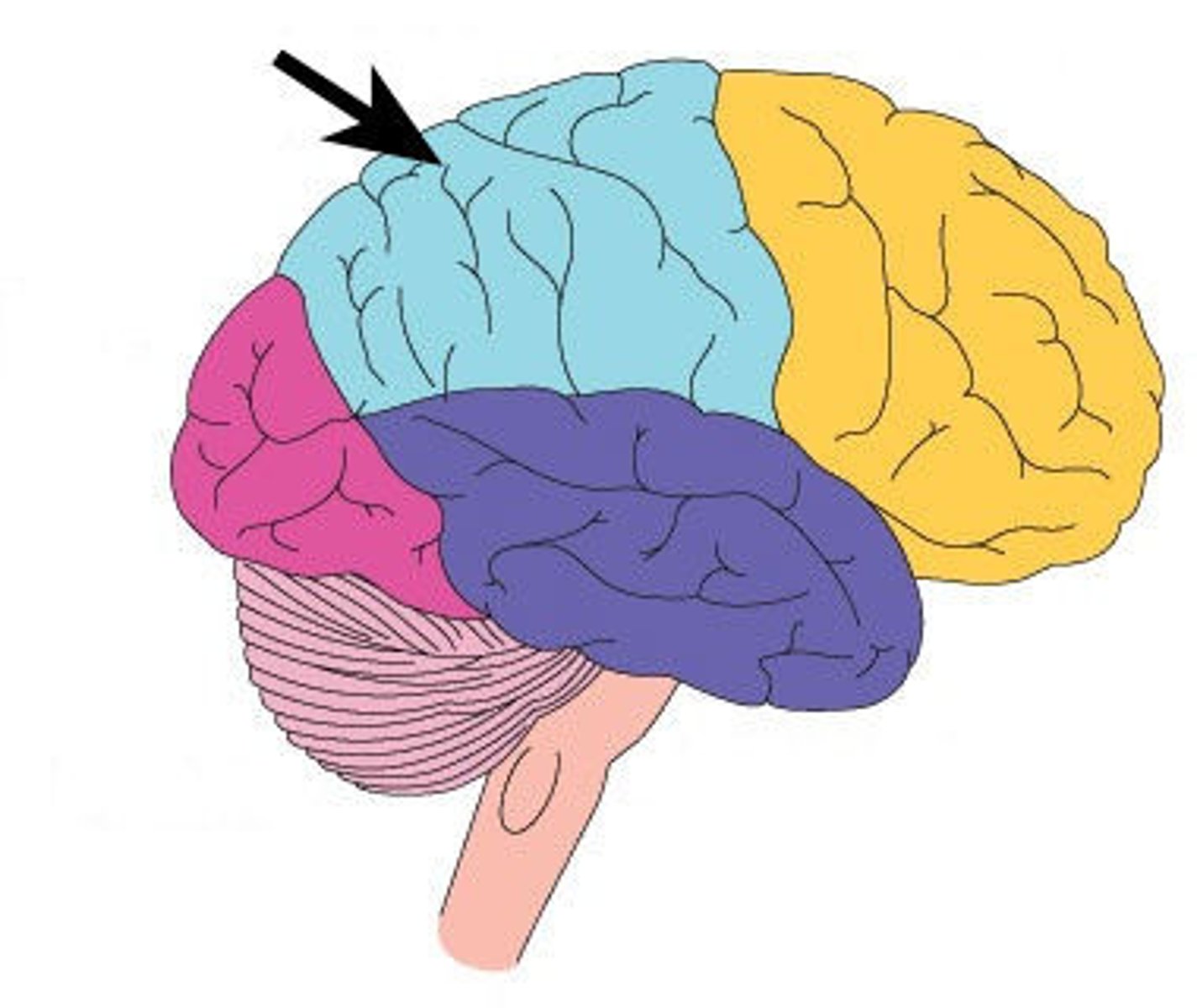
frontal lobe
The lobe at the front of the brain associated with movement, speech, and impulsive behavior.
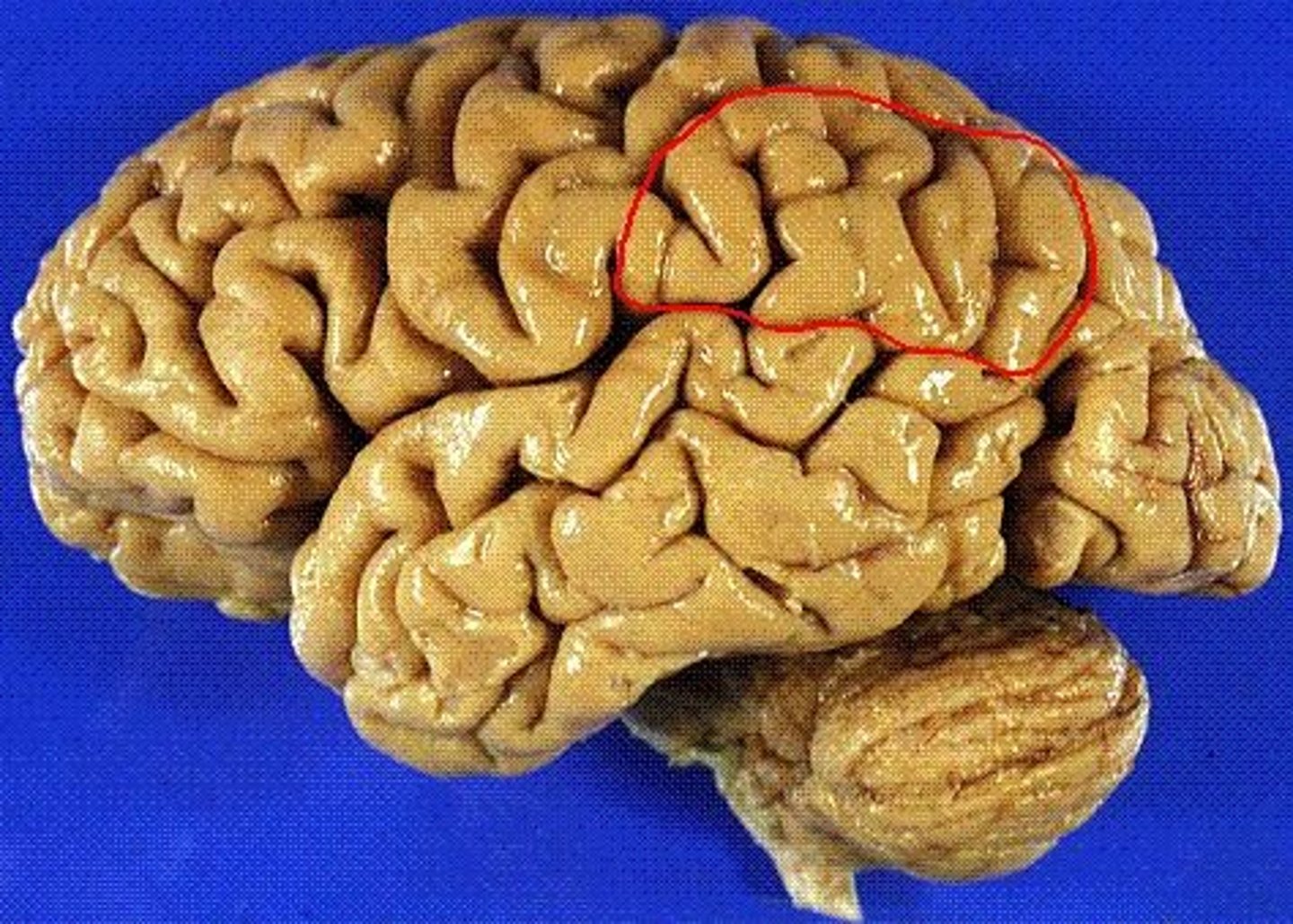
parietal lobe
A region of the cerebral cortex whose functions include processing information about touch.
Thalamus
relays messages between lower brain centers and cerebral cortex
Hypothalamus
a neural structure lying below the thalamus; directs eating, drinking, body temperature; helps govern the endocrine system via the pituitary gland, and is linked to emotion
corpus callosum
A thick band of axons that connects the two cerebral hemispheres and acts as a communication link between them.
Cerabellum
Posterior to the brain stem, has a left and a right hemisphere, involved in coordinating your movements, puts all the motor commands into one command, used when you memorize a certain memory
Sulci
shallow grooves that separate gyri
Gyri
ridges of the brain
brain fissures
grooves on the surface of the brain
longitudinal fissure separates
right and left cerebral hemispheres
lateral fissure
separates temporal lobe from frontal and parietal lobes
Sylvian fissure
Separates the temporal from the frontal lobe, and the temporal from the parietal lobe
Midbrain
A small part of the brain above the pons that integrates sensory information and relays it upward.
Pons
A brain structure that relays information from the cerebellum to the rest of the brain
Medulla
an extension of the spinal cord into the skull that coordinates heart rate, circulation, and respiration
basal ganglia
a set of subcortical structures that directs intentional movement(located in the forebrain)
limbic system
neural system (including the hippocampus, amygdala, and hypothalamus) located below the cerebral hemispheres; associated with emotions and drives.
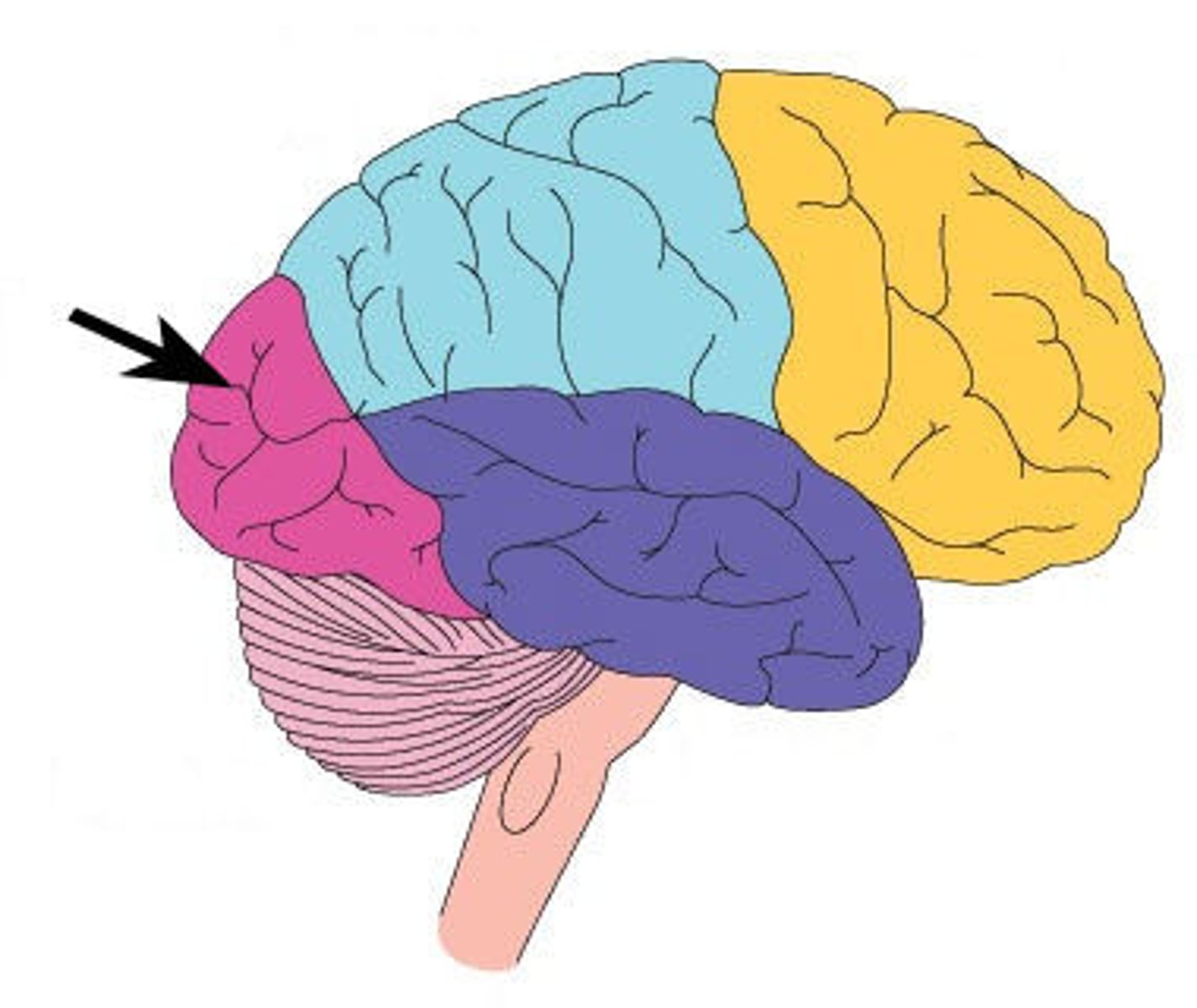
occipital lobe
A region of the cerebral cortex that processes visual information
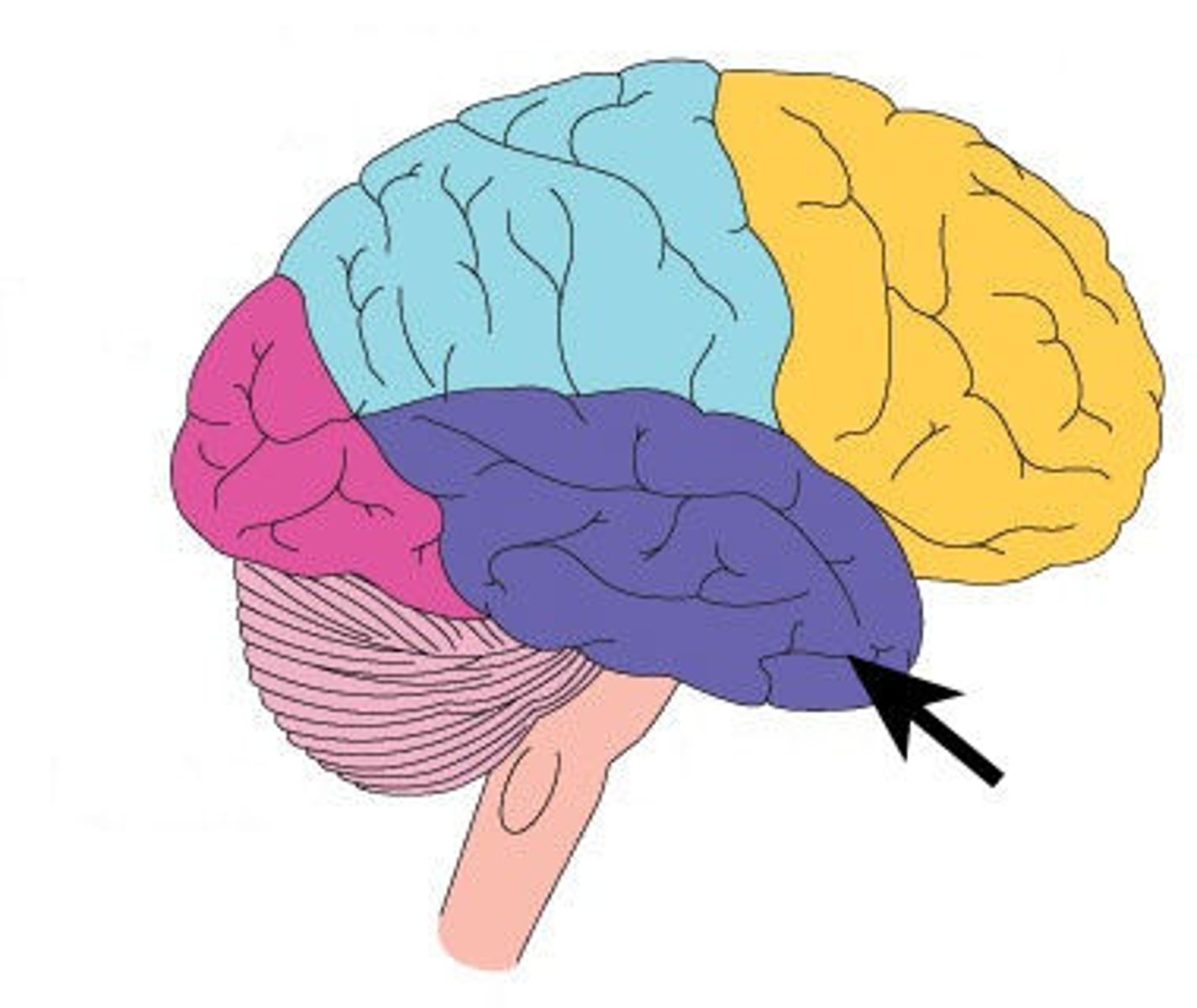
temporal lobe
A region of the cerebral cortex responsible for hearing and language.
cervical vertebrae
C1-C7
thoracic vertebrae
the second set of 12 vertebrae; form the outward curve of the spine and are known as T1 through T12
sacral vertebrae
S1-S5
lumbar vertebrae
L1-L5 lower back
coronal view of brain
An imaginary plane where the body is cut into front and back parts.
Horizontal view of the brain
a plane that shows brain structures as seen from above
sagittal view of brain
means "side;" shows cortex; shows brain from the side
Axial view of brain
horizontal
Proximal
Closer to the origin of the body part or the point of attachment of a limb to the body trunk
Distal
farther from the origin of a body part or the point of attachment of a limb to the body trunk
How are neurotransmitters removed from the synaptic cleft?
Diffusion
Reabsorption
Enzymatic Breakdown
Na/K pump
Active transporter that moves three Na+ out of a cell and two K+ into the cell against their respective concentration gradients.
Completes the return to resting potential
3Na out 2 K in
GABA (gamma-aminobutyric acid)
A major inhibitory neurotransmitter. Undersupply linked to seizures, tremors, and insomnia.
Glutamate
The most common neurotransmitter in the brain. Excitatory.
Dopamine
a neurotransmitter that regulates motor behavior, motivation, pleasure, and emotional arousal
Serotonin
A neurotransmitter that affects hunger,sleep, arousal, and mood.
spatial resolution
How close in physical proximity you can get to the target brain area
temporal resolution
how close in time you can get to when the neurons fire
TMS (transcranial magnetic stimulation)
a treatment that involves placing a powerful pulsed magnet over a person's scalp, which alters neuronal activity in the brain
MRI (magnetic resonance imaging)
a technique that uses magnetic fields and radio waves to produce computer-generated images of soft tissue. MRI scans show brain anatomy.
fMRI (functional magnetic resonance imaging)
A technique for revealing bloodflow and, therefore, brain activity by comparing successive MRI scans. fMRI scans show brain function.
DTI (diffusion tensor imaging)
Detects movement of water molecules in white matter pathways. Measures connectivity of different parts of the brain.
CT scan
a series of x-ray photographs taken from different angles and combined by computer into a composite representation of a slice through the body
PET scan (positron emission tomography)
A brain-imaging technique that reveals activity in various parts of the brain, based on patterns of blood flow, oxygen use, and glucose consumption.
neuronal signaling
Neuronal Signaling occurs within the cells of the nervous system and involves the release of hormones into localized areas of the nervous system called synapses.
EPSP (excitatory postsynaptic potential)
depolarizing graded potential in postsynaptic neuron in response to activation of excitatory synapse
IPSP (inhibitory postsynaptic potential)
an inhibitory hyperpolarization of the postsynaptic membrane of a synapse caused by the liberation of a neurotransmitter by the terminal button
split brain
a condition in which the two hemispheres of the brain are isolated by cutting the connecting fibers (mainly those of the corpus callosum) between them
Oligodendrocytes
Type of glial cell in the CNS that wrap axons in a myelin sheath.
Schwann cells
produce myelin in PNS
Action Potential (AP)
the change in electrical potential associated with the passage of an impulse along the membrane of a muscle cell or nerve cell. (-55Mv)
action potential propagation
the movement of an action potential along an axon; in myelinated axons, it occurs via saltatory conduction
resting potential
The difference in electric charge between the inside and outside of a neuron's cell membrane(-70Mv)
Wada test
Test in which one hemisphere is anesthetized to test for capacity/speed of processing of other
frontal lobe
temporal lobe
occipital lobe
parietal lobe
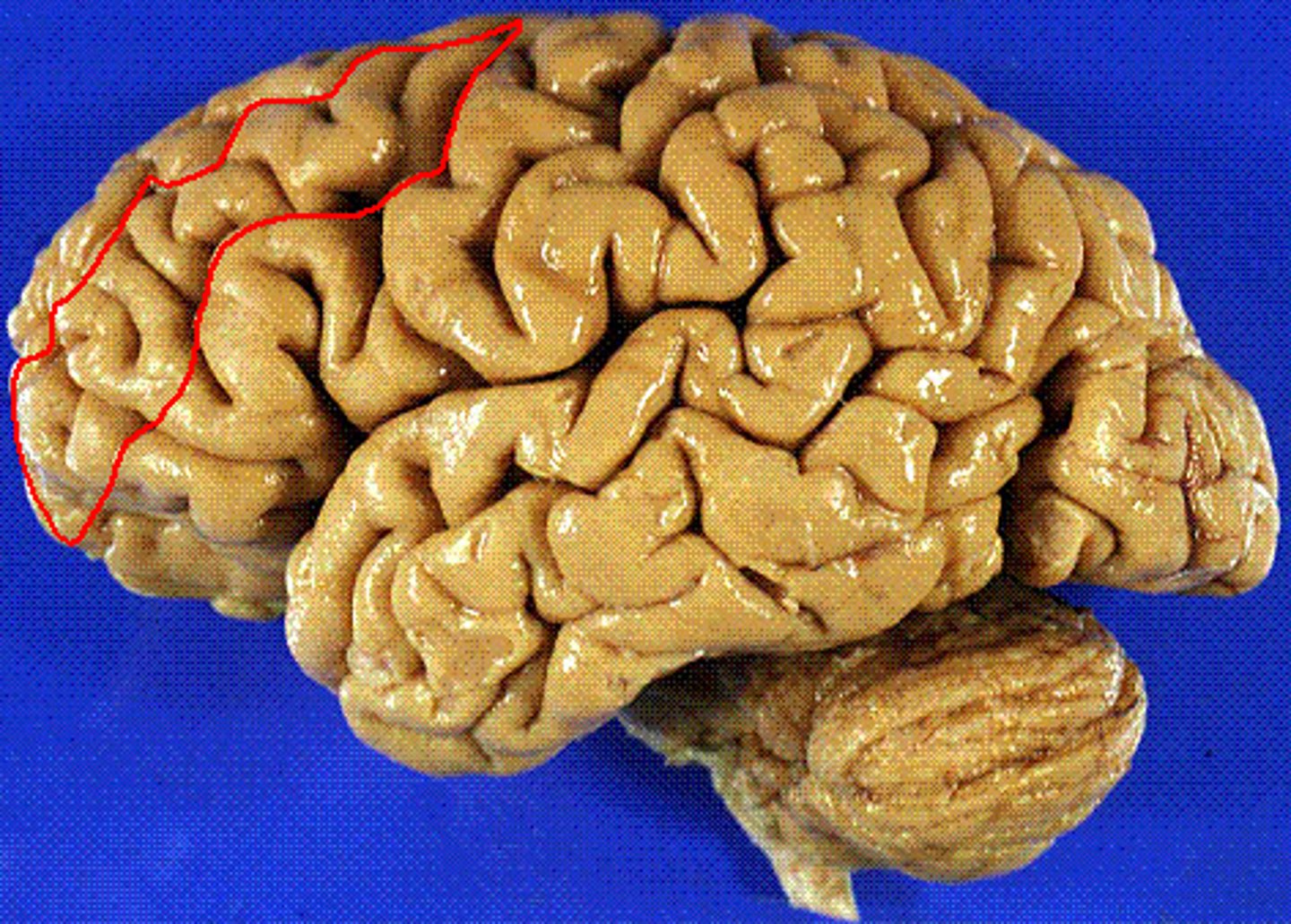
superior frontal gyrus
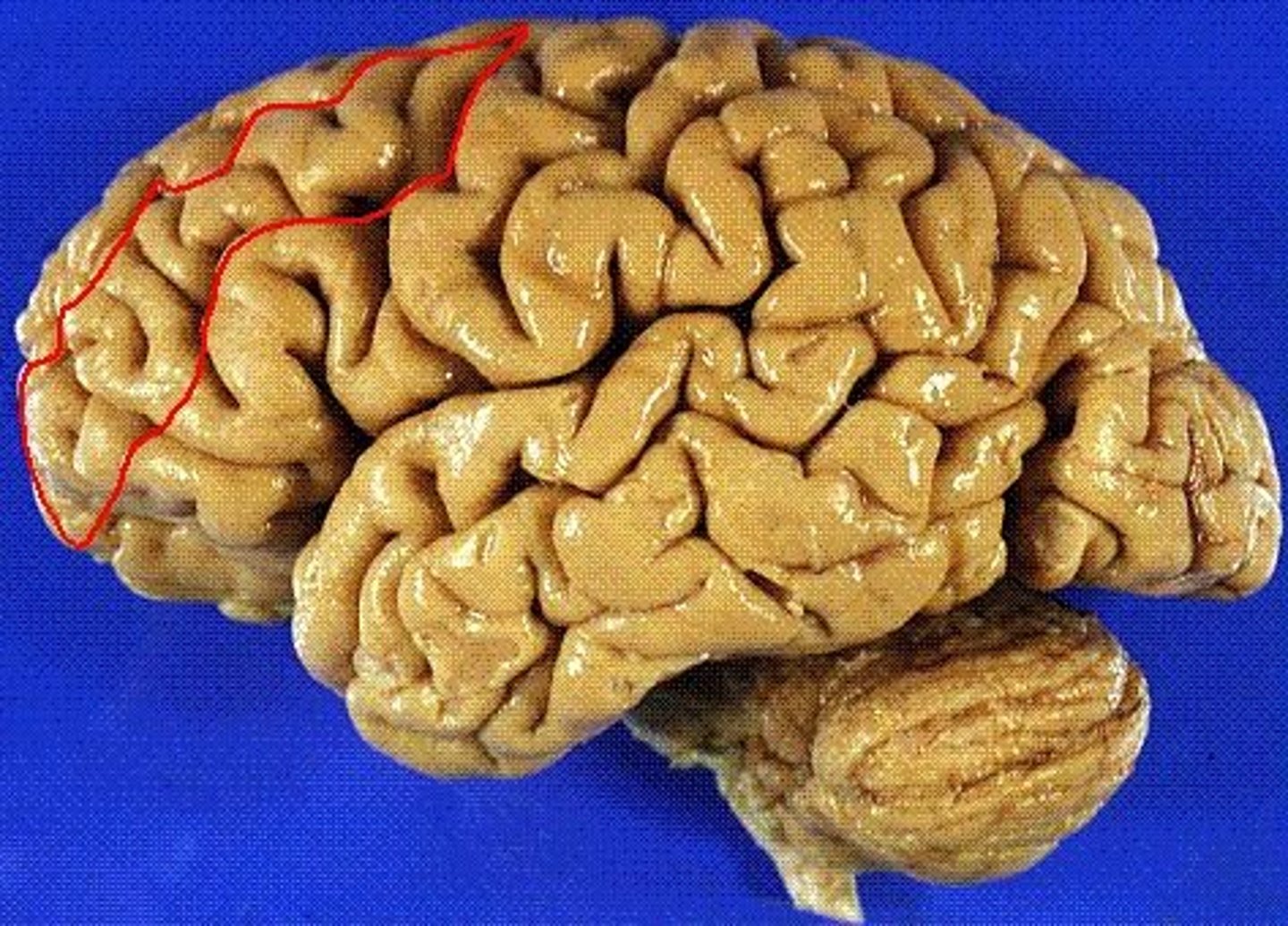
Middle frontal gyrus
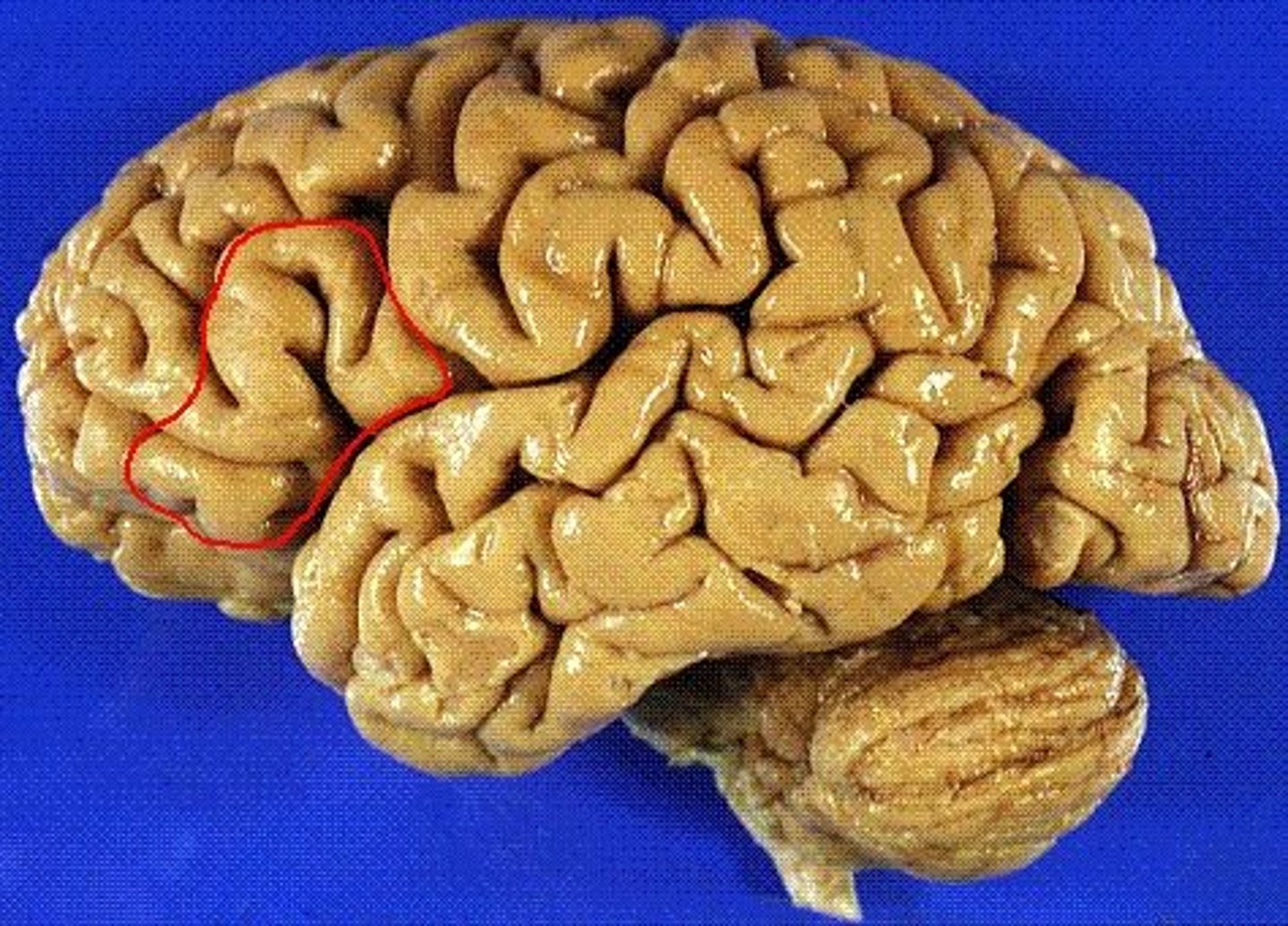
Inferior frontal gyrus
precentral gyrus
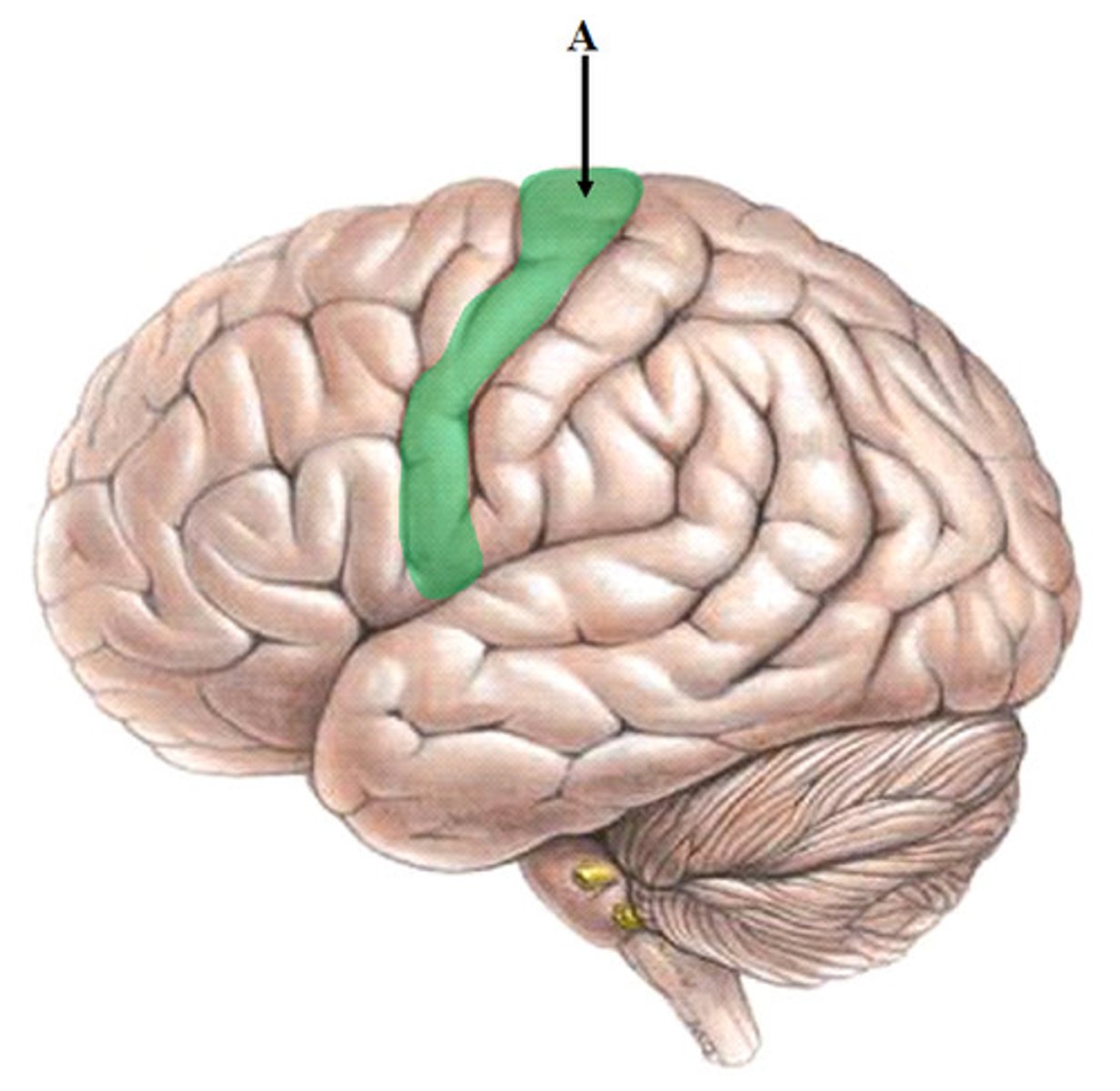
Postcentral gyrus
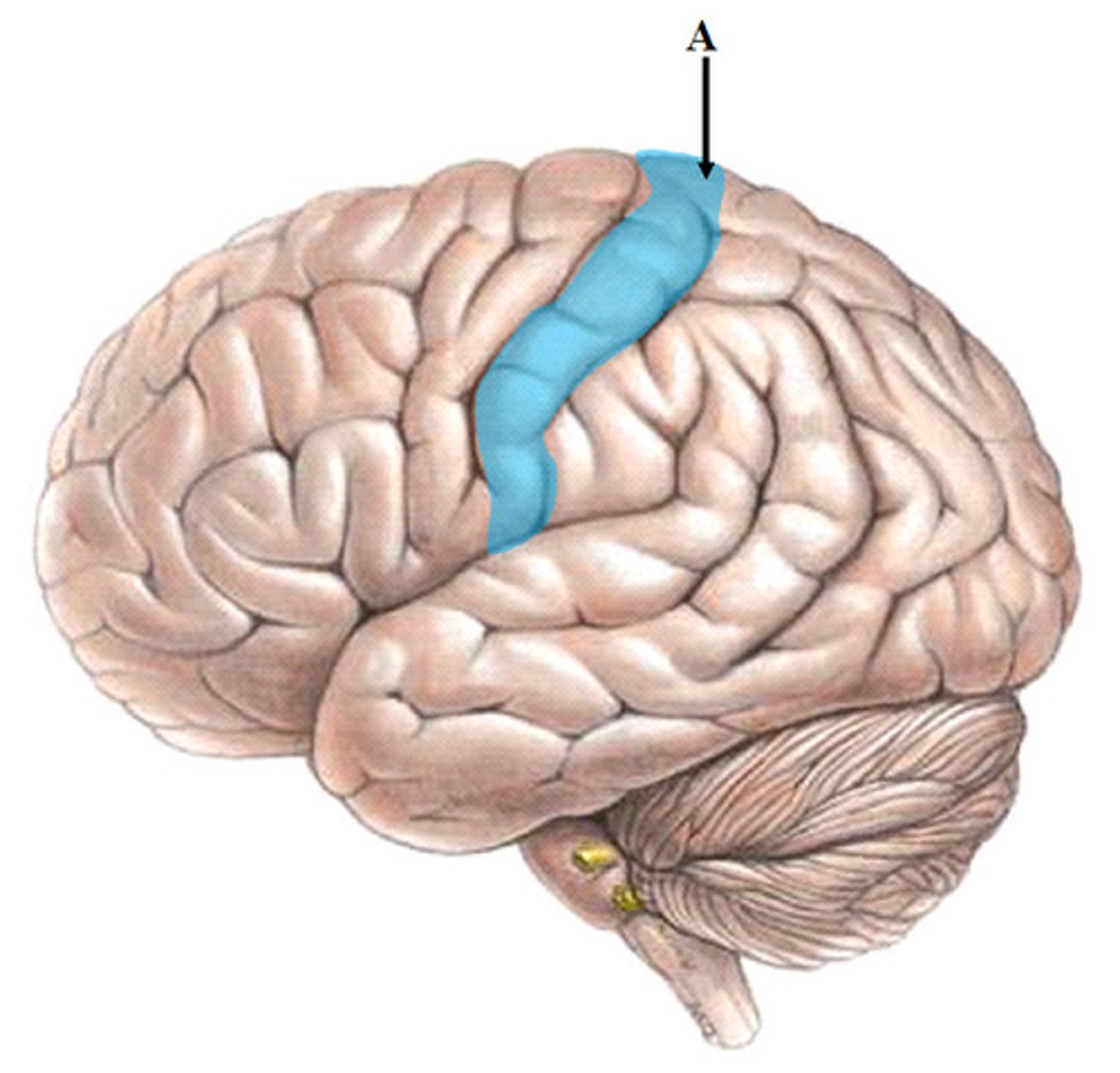
superior temporal lobe
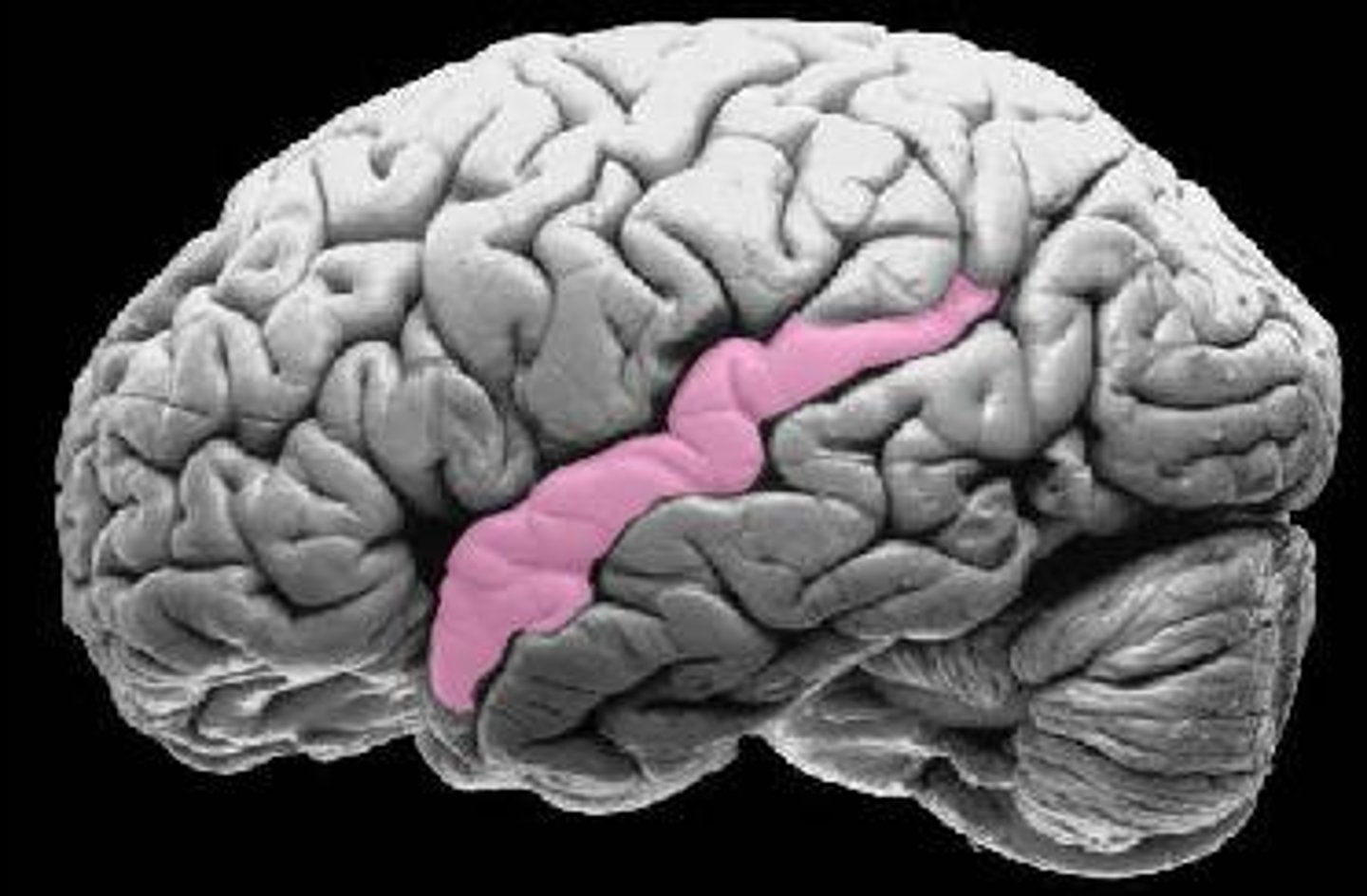
medial temporal lobe
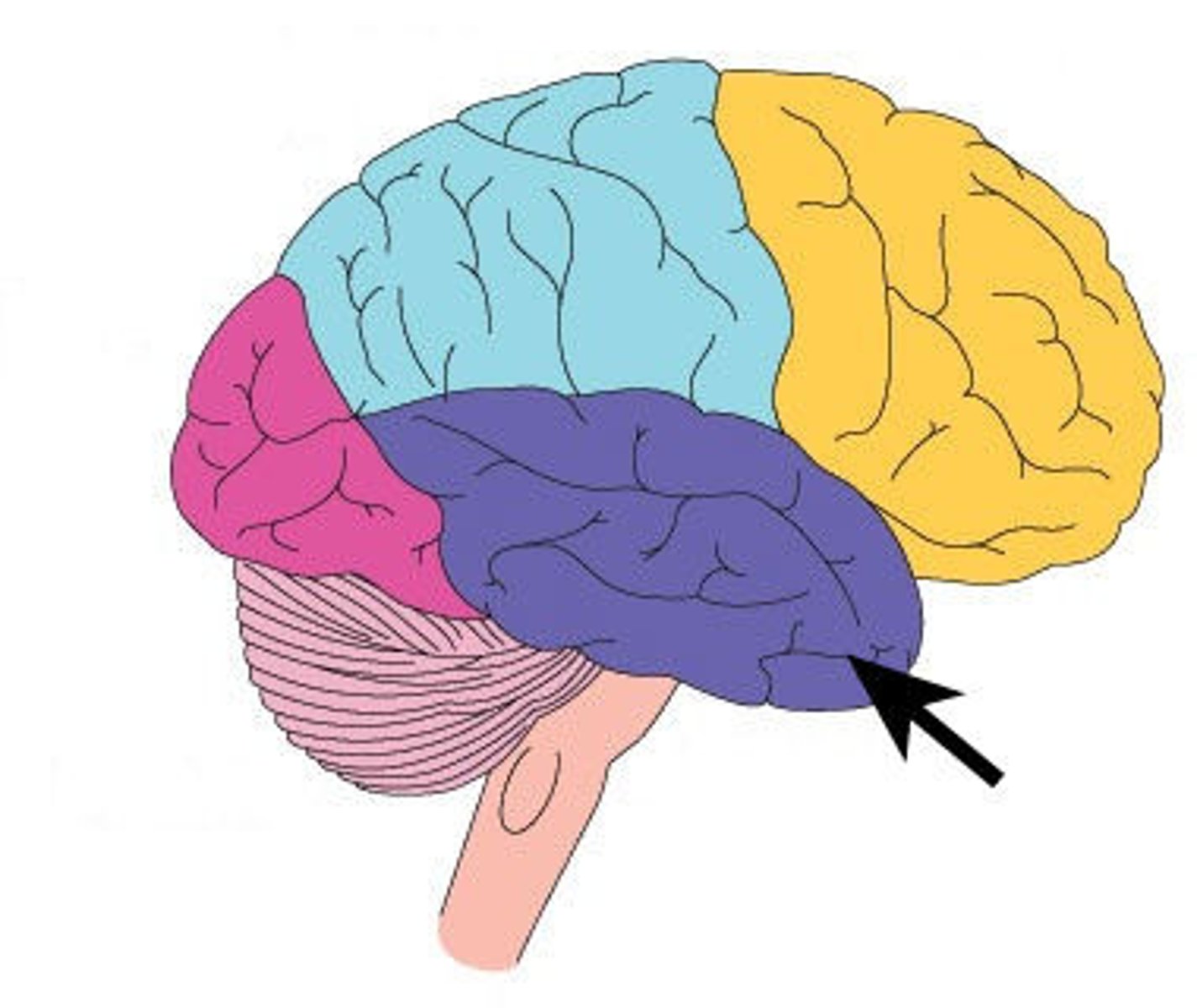
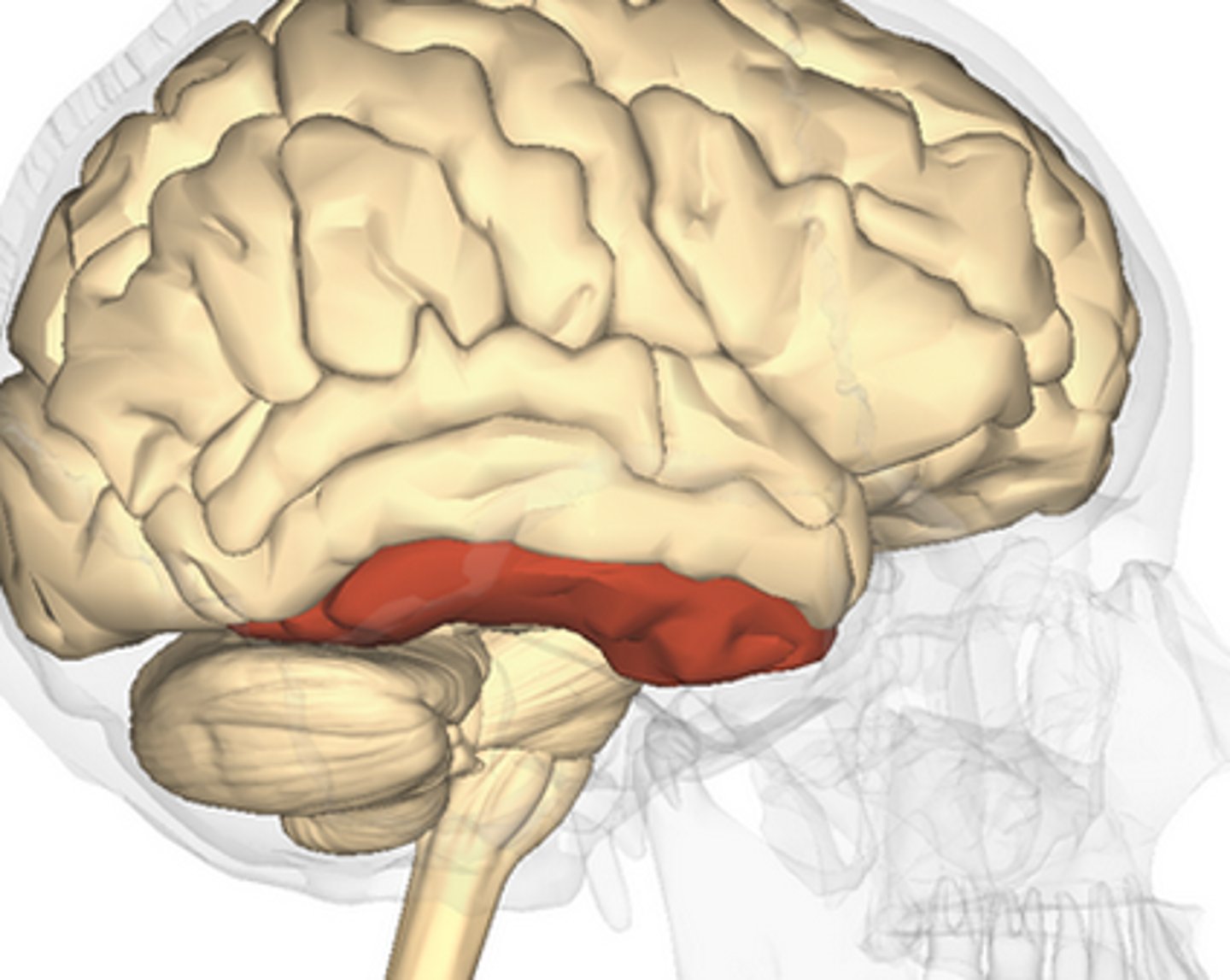
Inferior temporal lobe
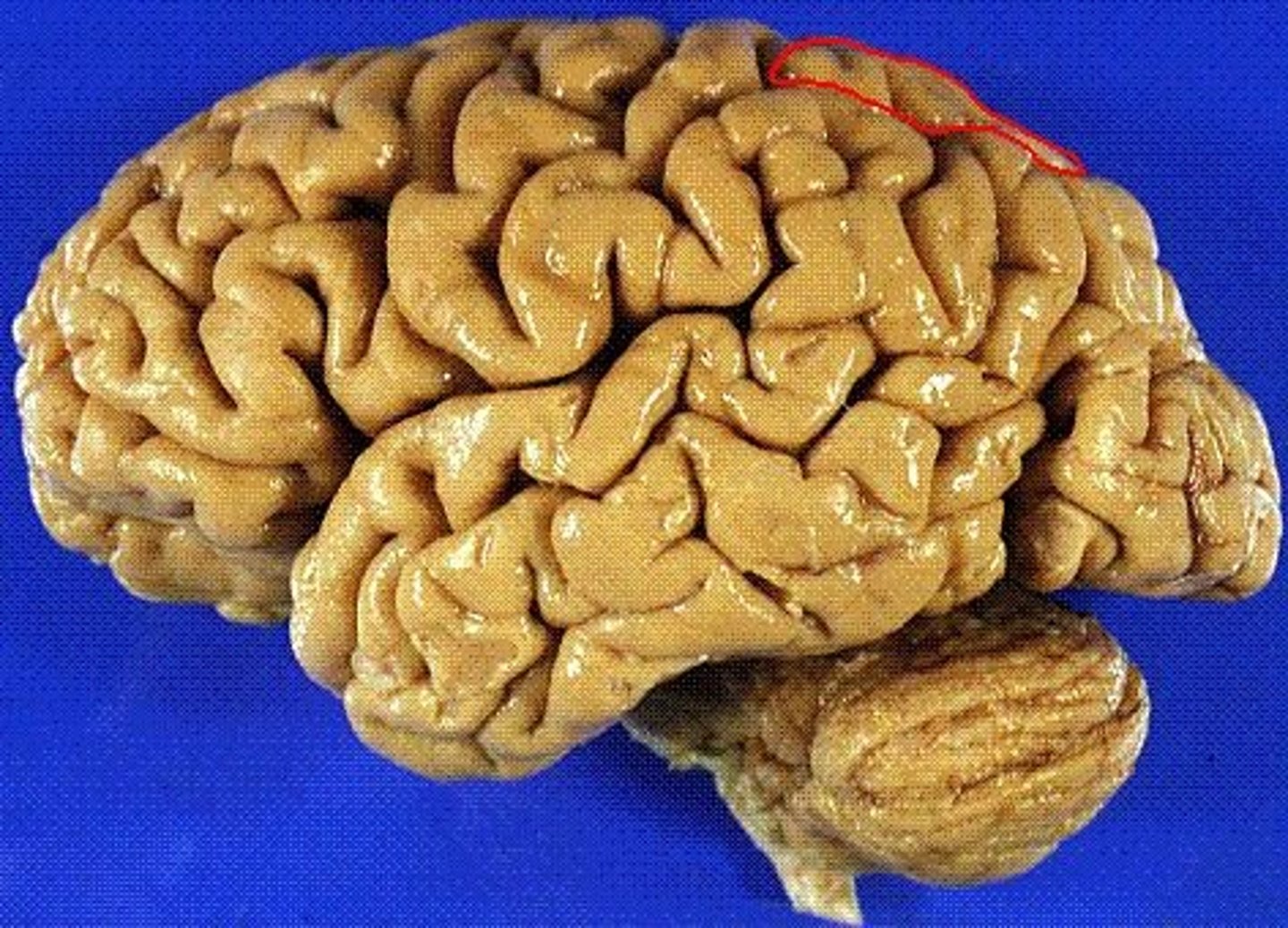
superior parietal lobule
Inferior parietal lobule