KAAP 309 Lab Practical 3 Study Guide
 Call Kai
 Learn
Learn Practice Test
 Spaced Repetition
 Match
Match Flashcards
 Knowt Play
1/99

There's no tags or description
Looks like no tags are added yet.
Name | Mastery | Learn | Test | Matching | Spaced | Call with Kai |
|---|
No analytics yet
Send a link to your students to track their progress
100 Terms
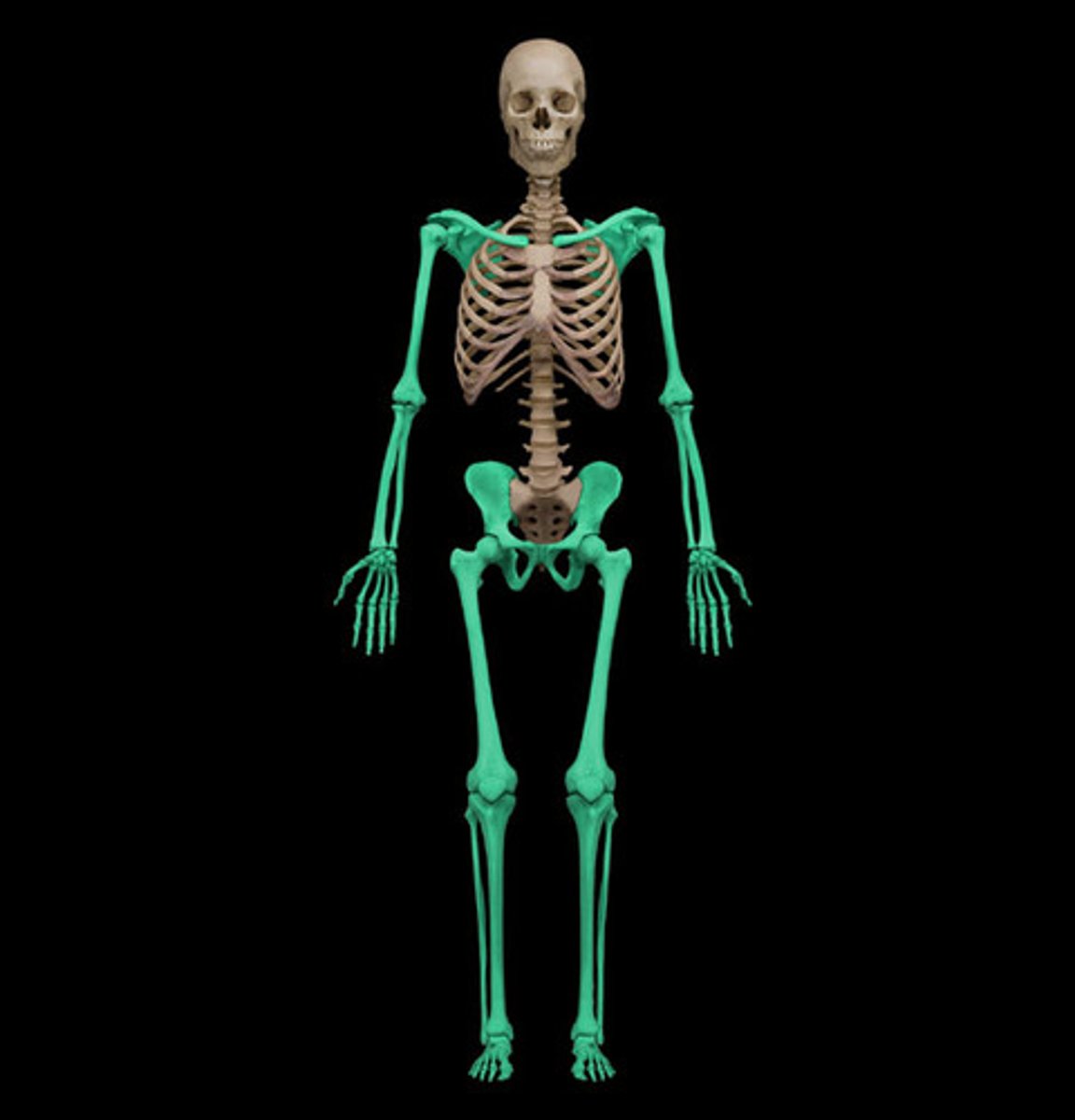
appendicular skeleton
- Bones of the limbs and limb girdles that are attached to the axial skeleton
- Includes the bones of the shoulder, pelvis, and upper and lower extremities
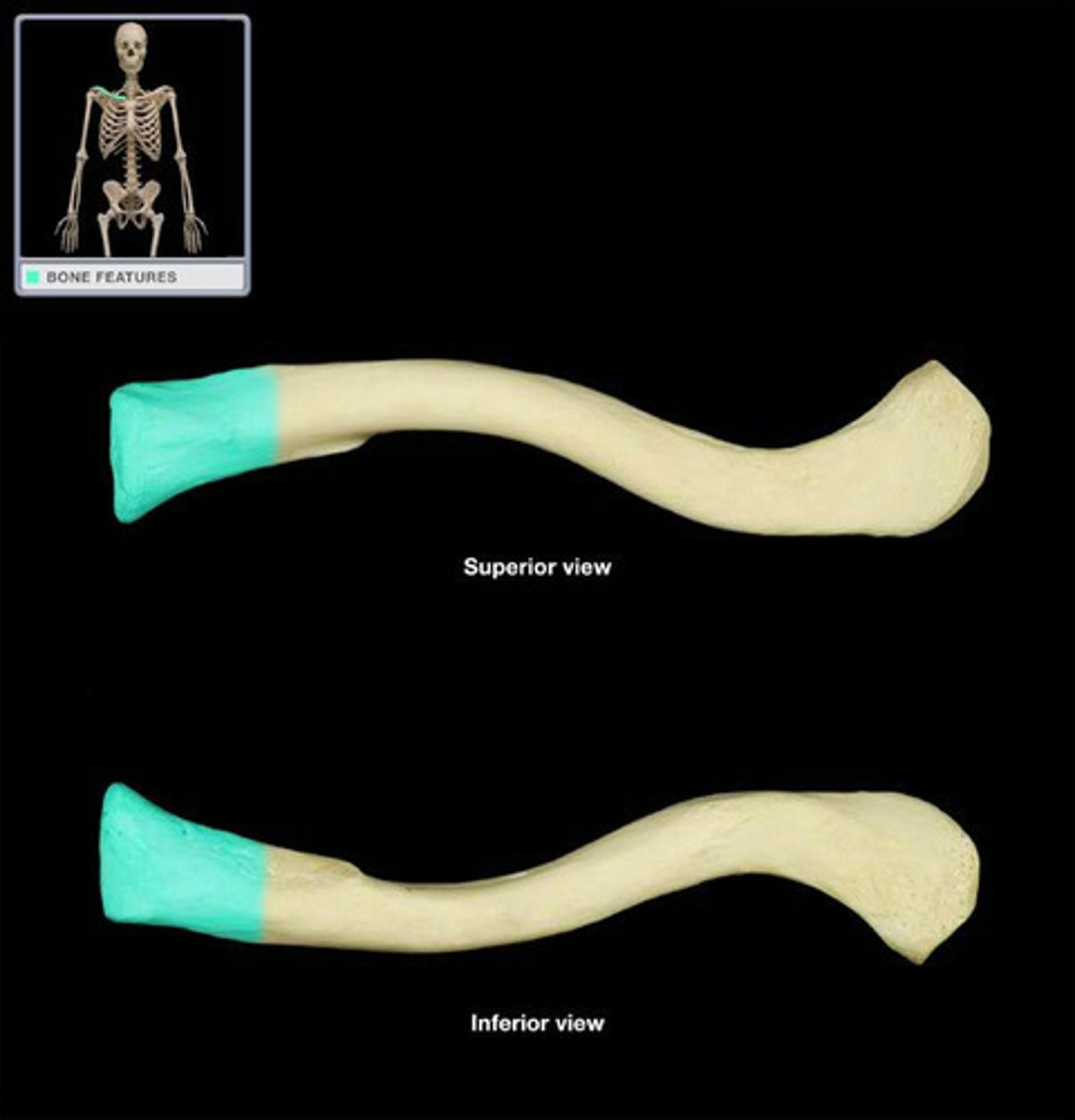
Clavicle - Sternal end
- collar bones "S" shaped
- connects to the sternum
- medial articulates w/sternum to form Sternoclavicular joint
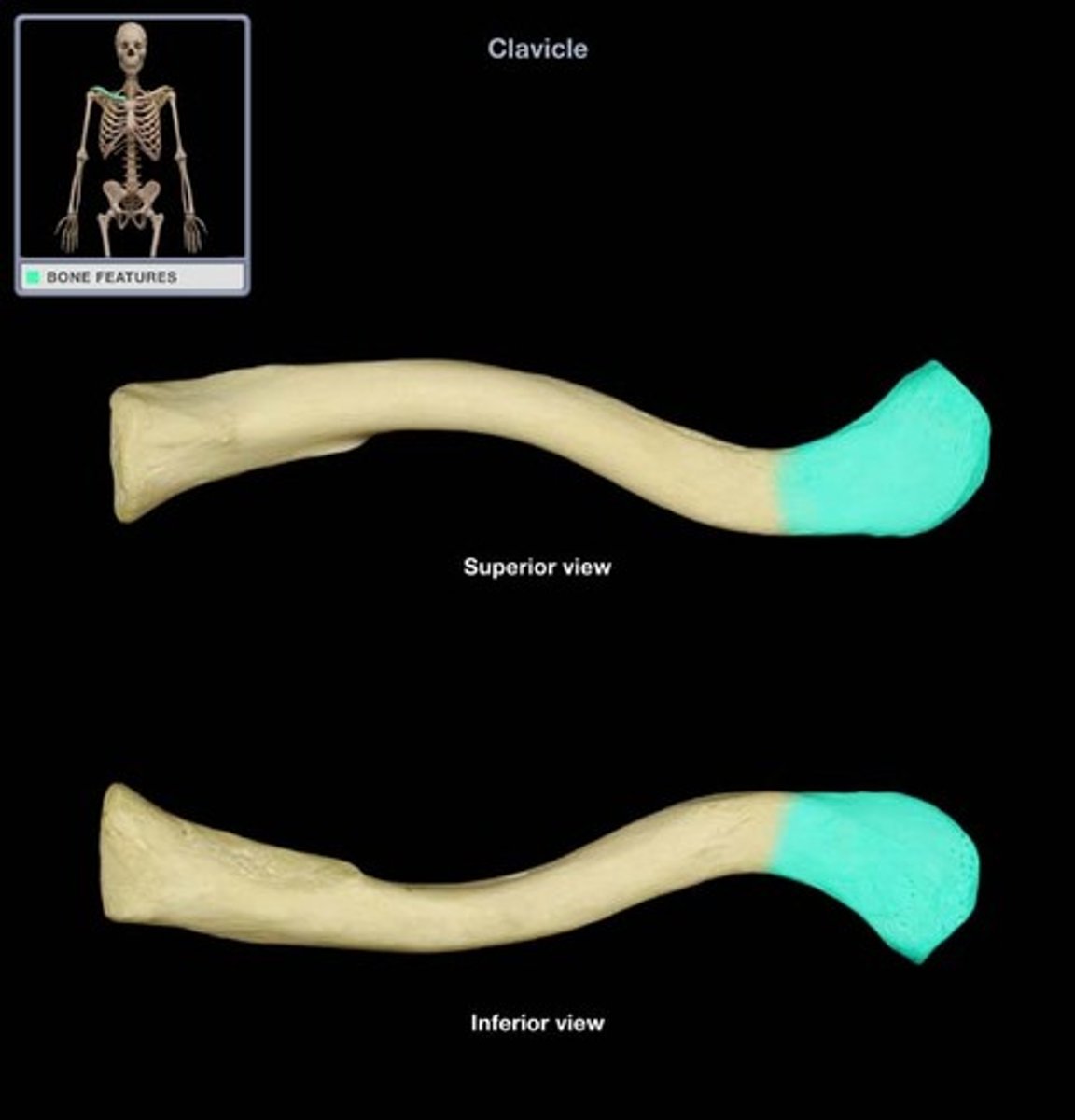
Clavicle - Acromial end
- flat lateral aspect
- articulates w/ the acromion process of the scapula to form the Acromioclavicular Jt - AC Joint
- synovial gliding joint
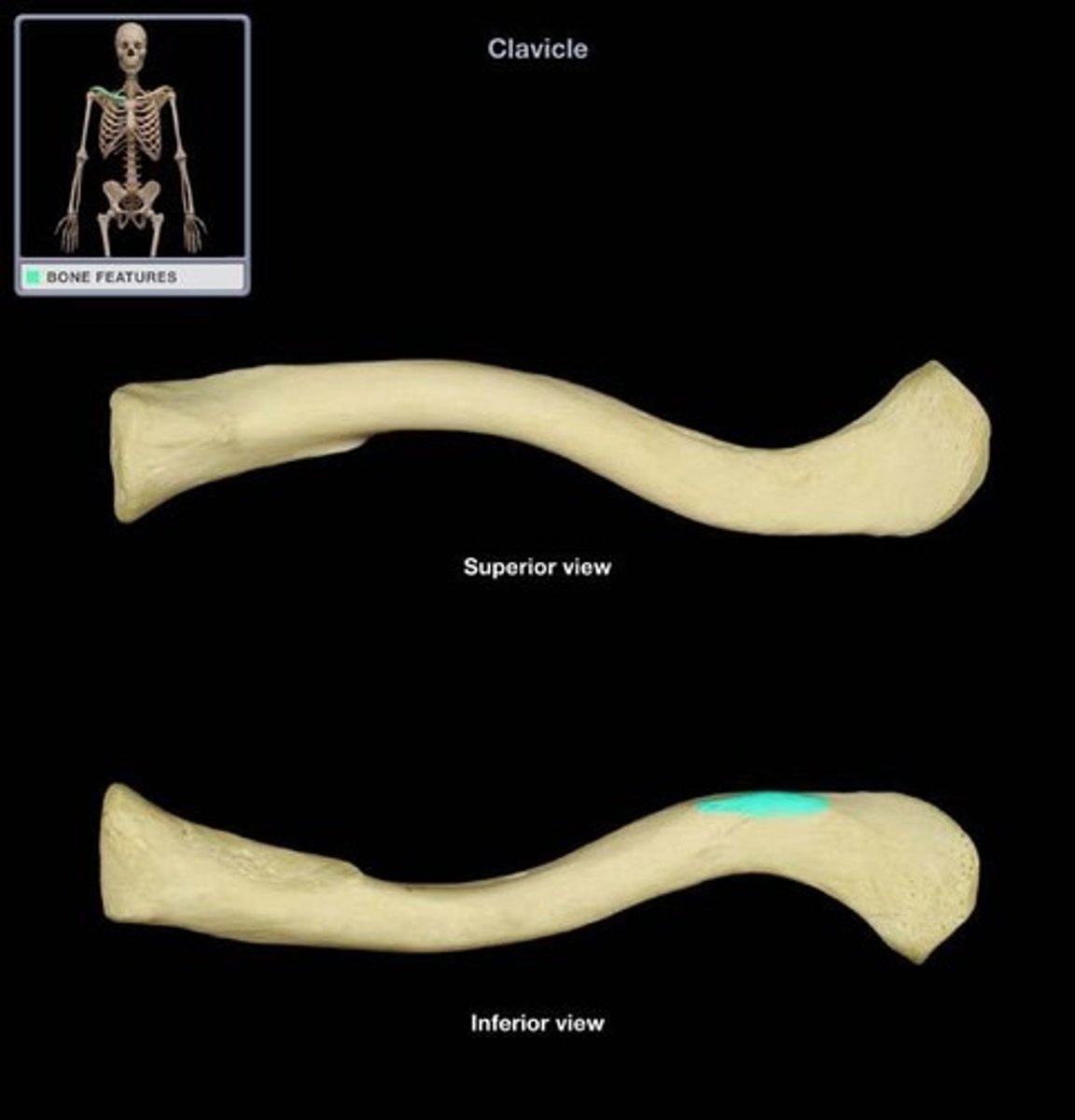
Clavicle - Conoid tubercle
- A small, cone-shaped projection located on the lateral, inferior end of the bone; serves to anchor ligaments
- inferior, on the acromial end
Scapula - medial border
- vertebral border
- closest to the spinal column
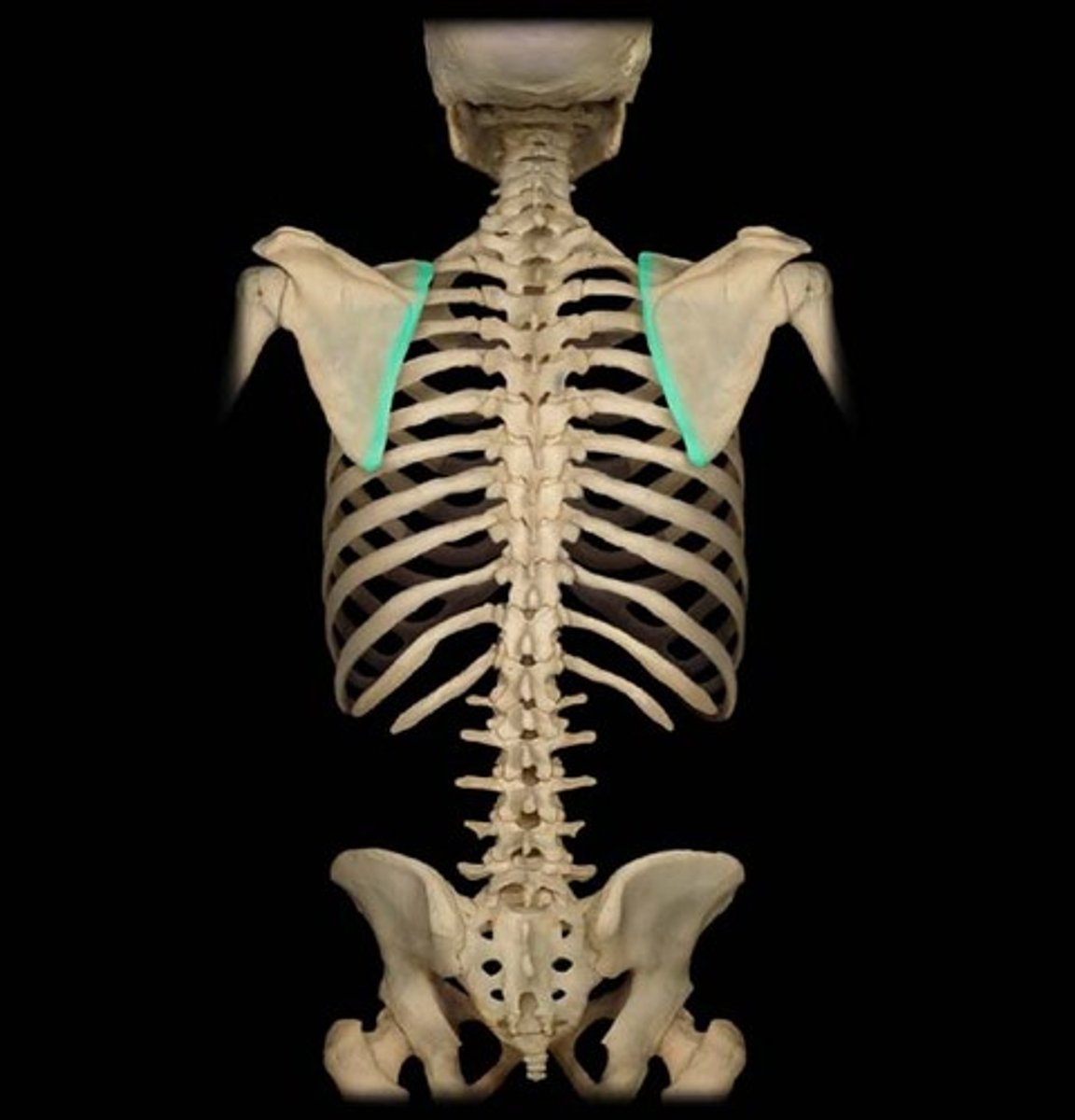
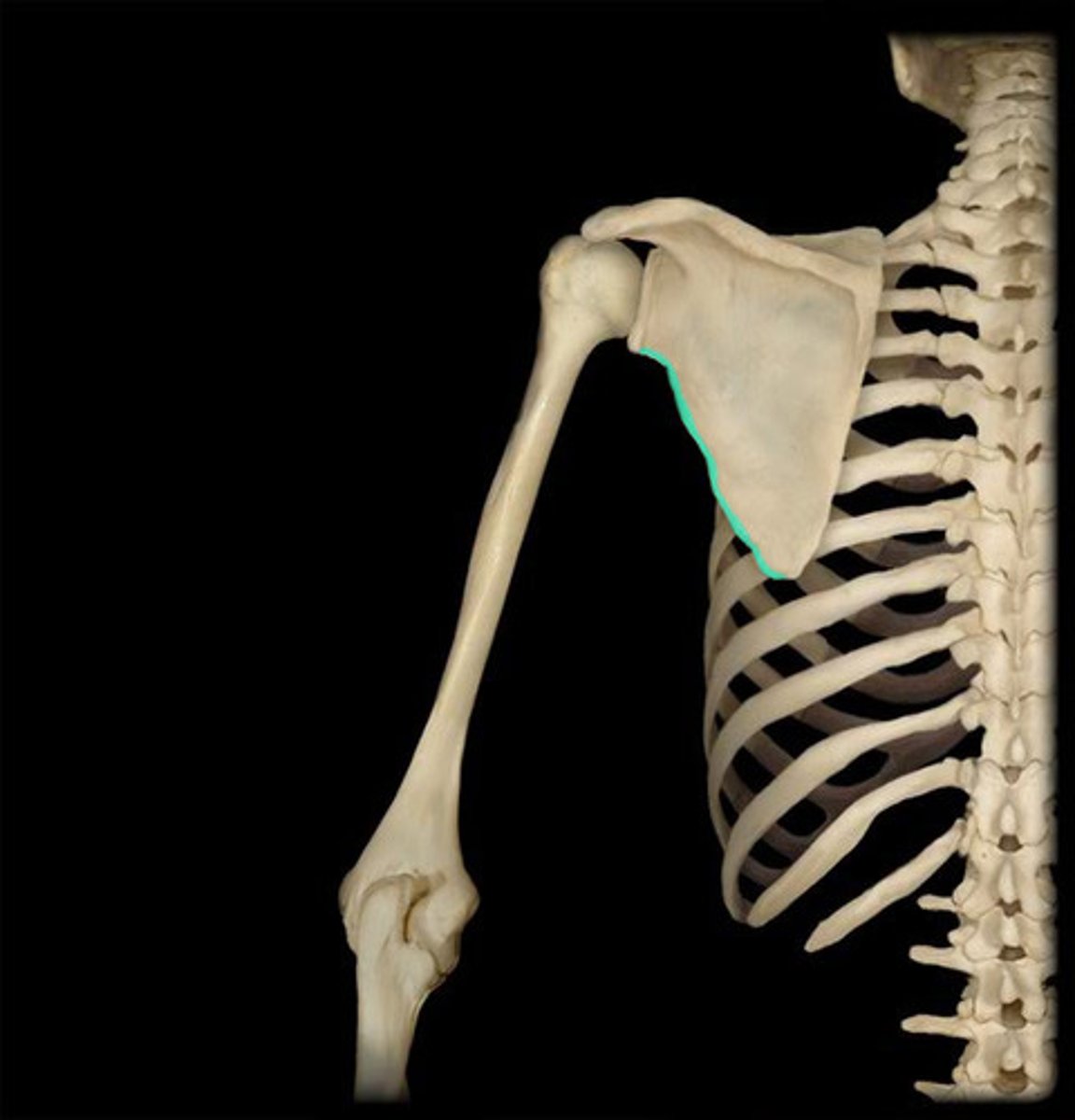
Scapula - lateral border
- axillary border
- attachment of the teres minor muscle
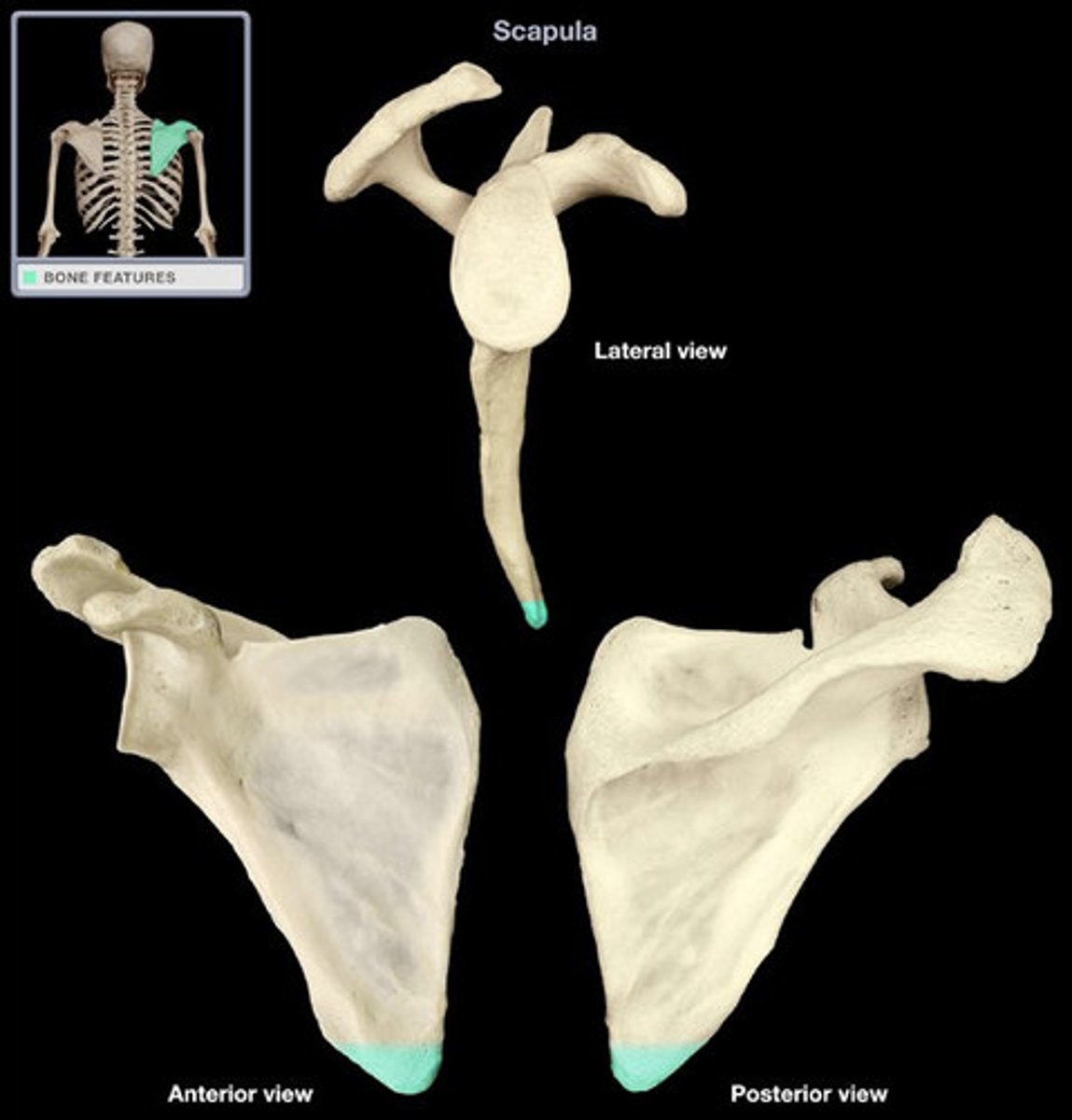
Scapula - inferior angle
- bottom of the scapula
- teres major origin
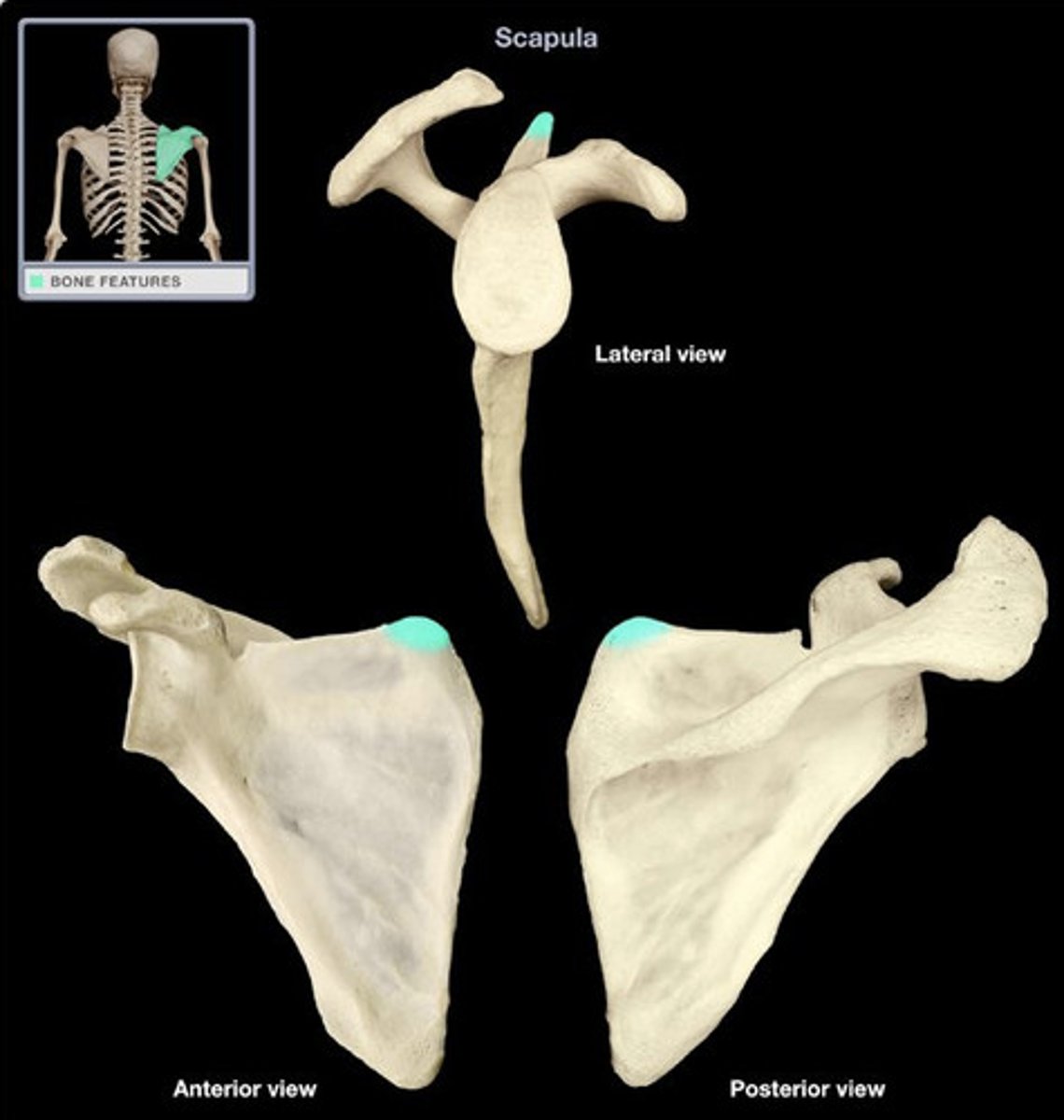
Scapula - Superior angle
between superior and medial borders
Scapula - Scapular spine (Posterior View)
- separates the supraspinous and infraspinous fossa
- attachment for the deltoid and trapezius muscles
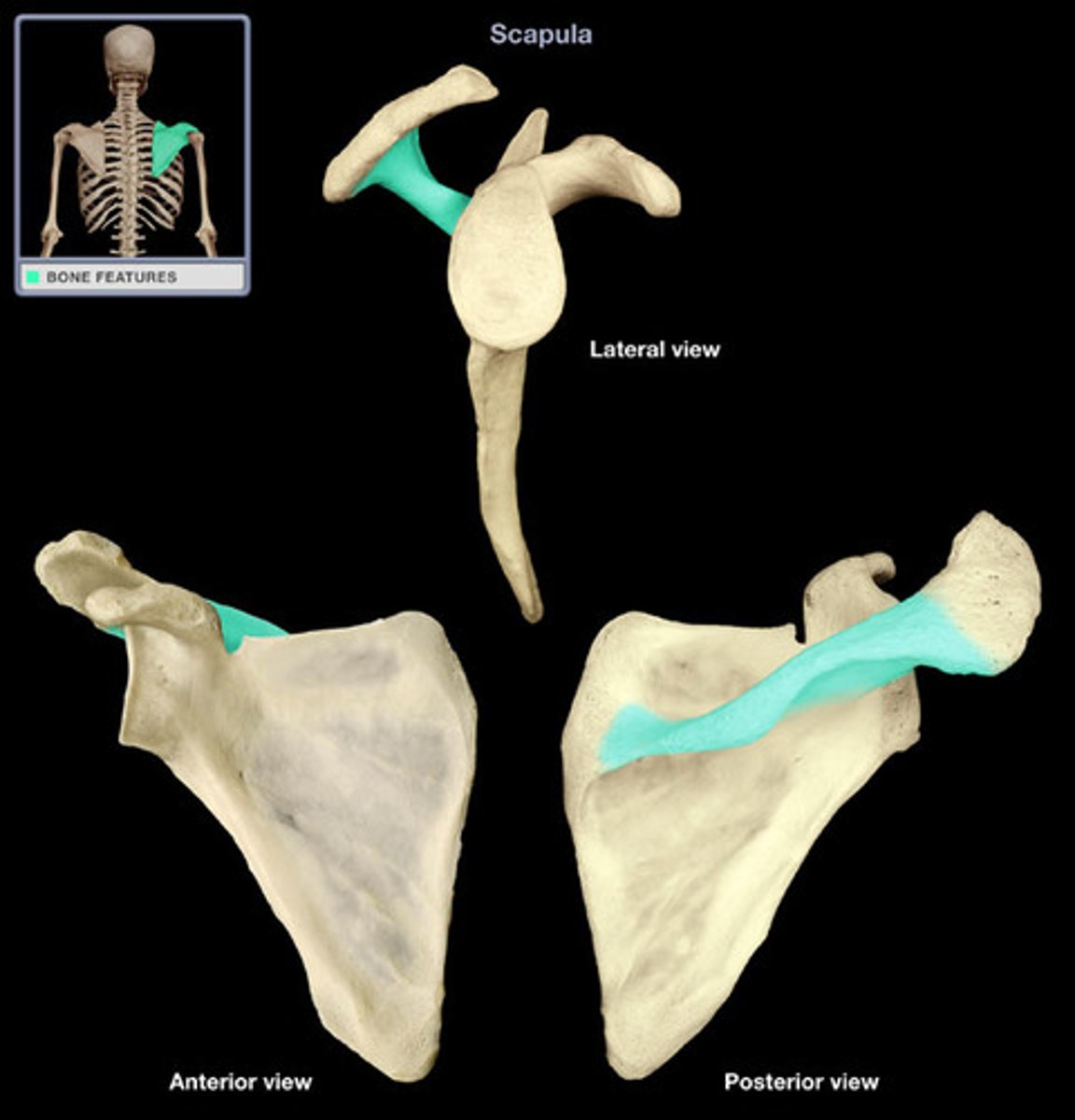
Scapula - Coracoid process
attached to pec muscle (pectoralis minor insertion)
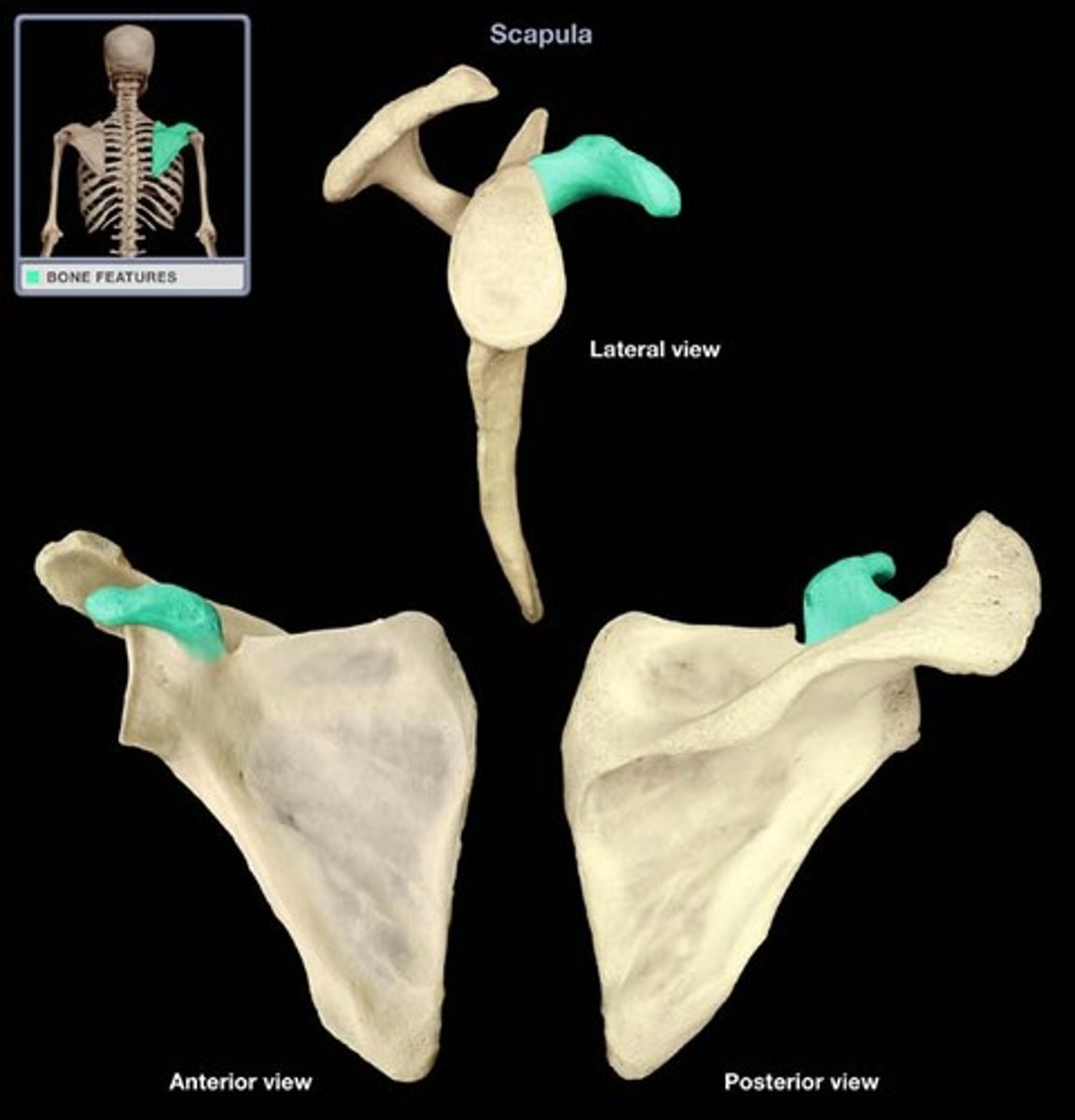
Scapula - Acromion
the lateral end of the spine of the scapula that articulates with the clavicle to form the AC joint
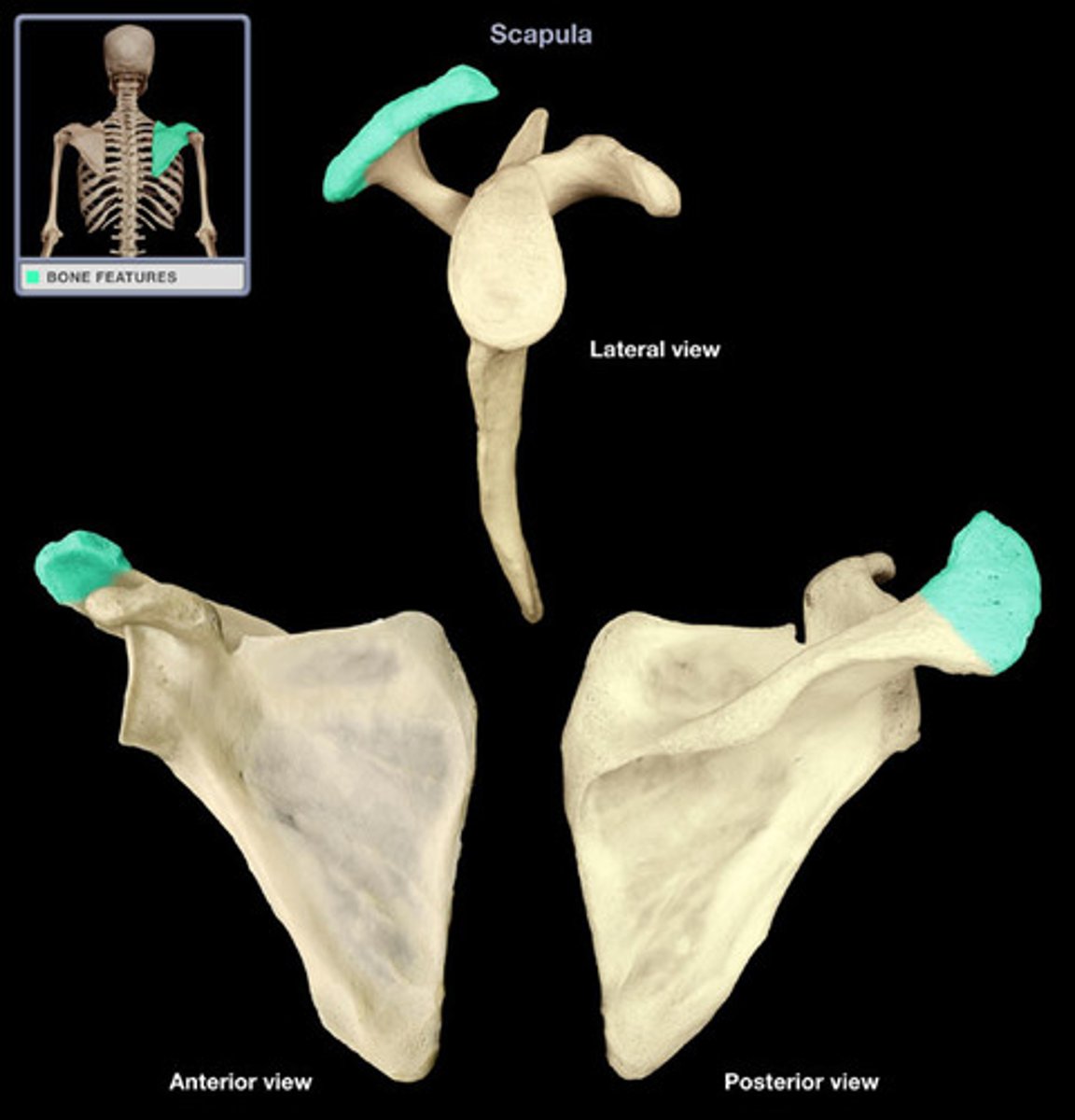
Scapula - supraspinous fossa
a depression located superior to the spine of the scapula
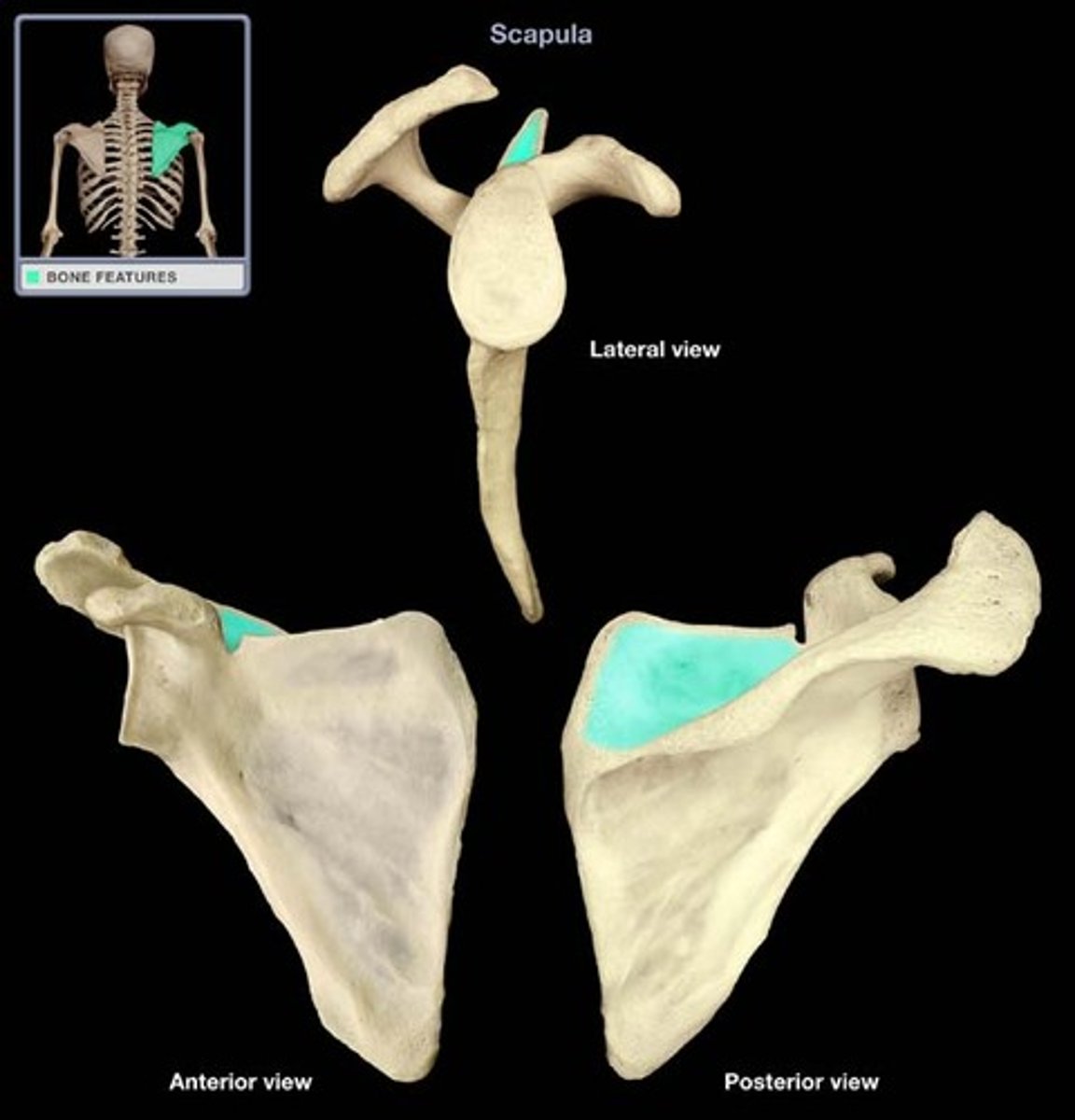
Scapula - Infraspinous fossa
a broad depression located inferior to the spine of the scapula
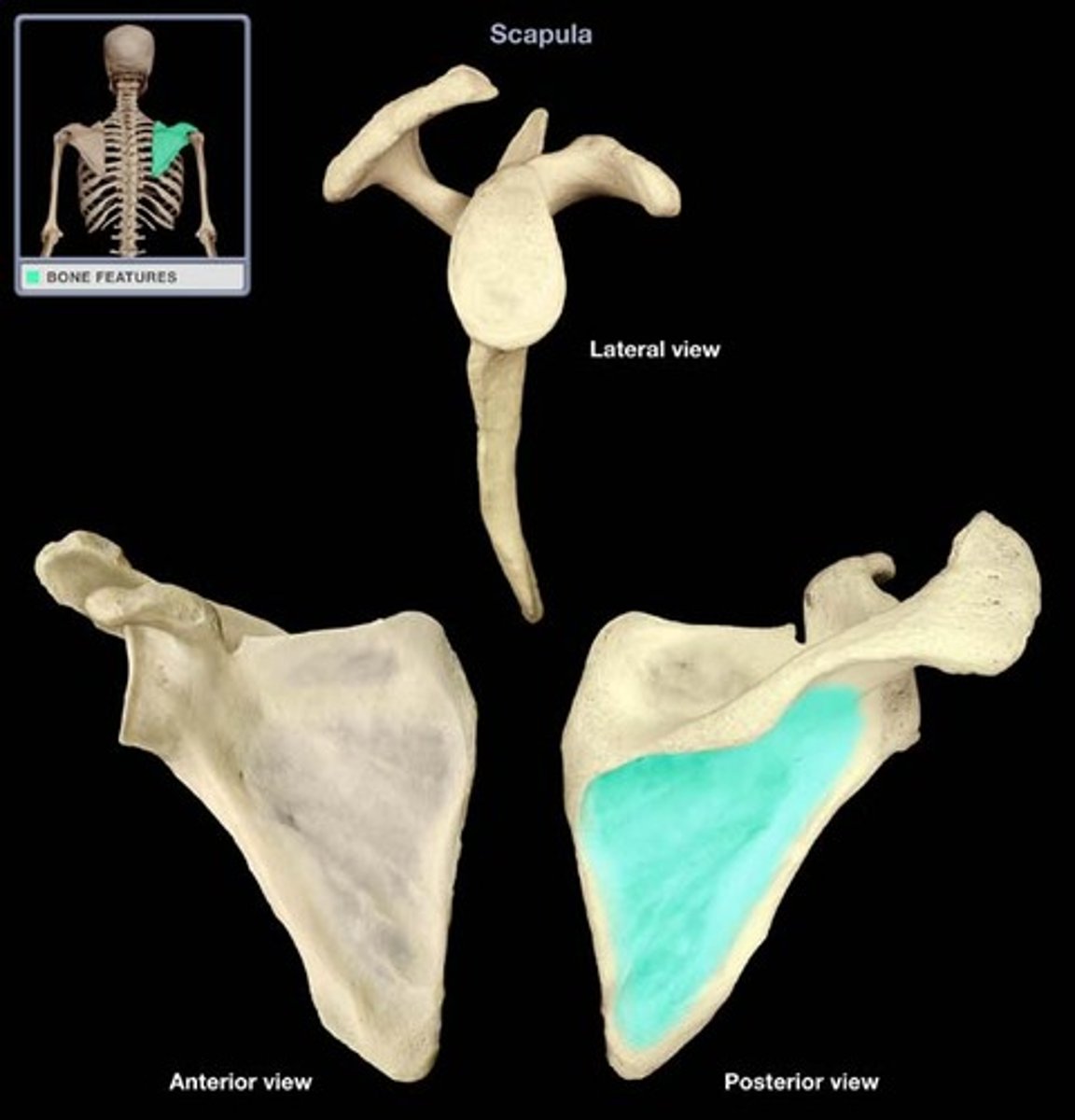
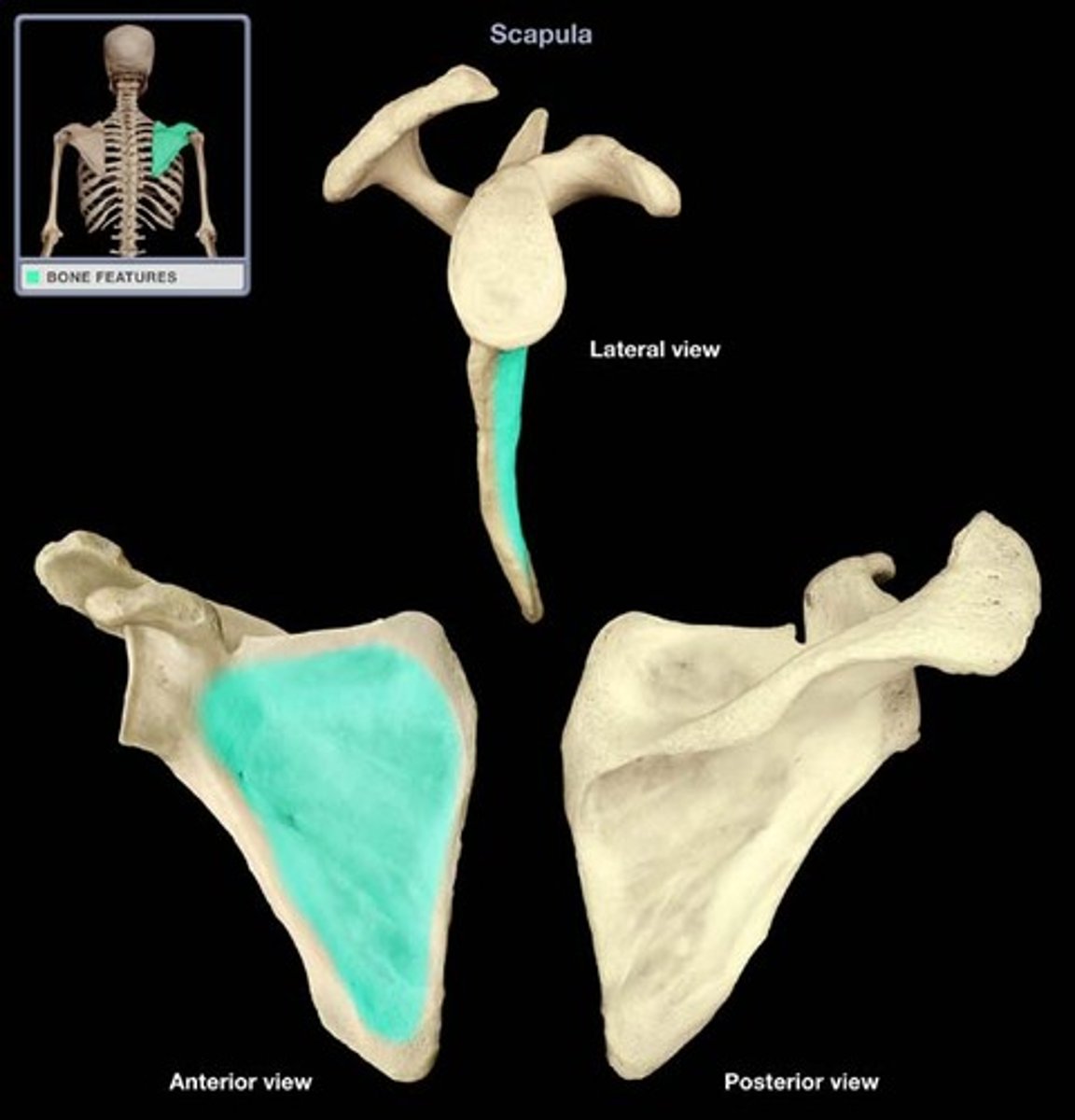
Scapula - Subscapular fossa
- a large shallow depression that forms the anterior surface of the scapula
- hugs ribcage
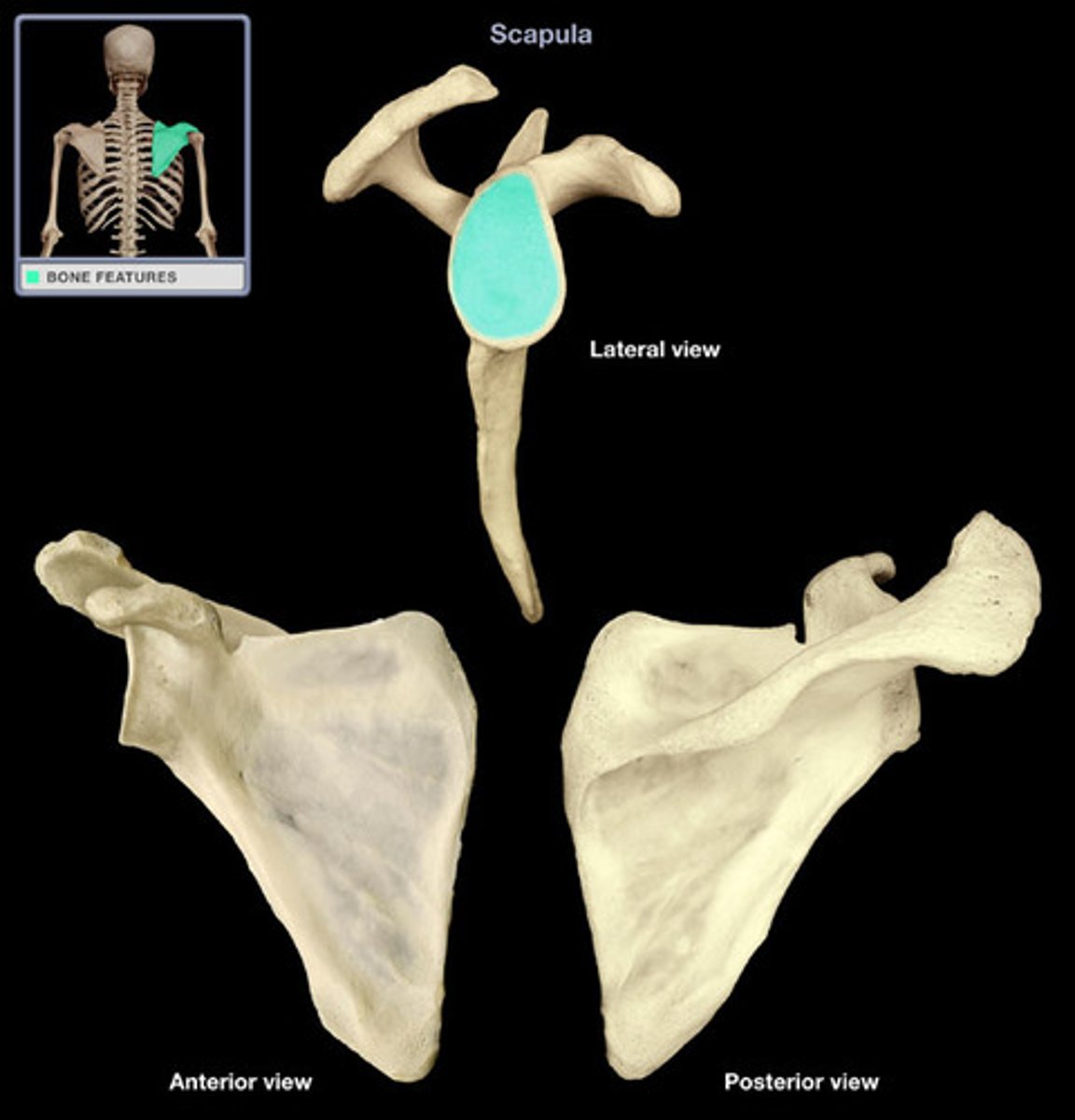
Scapula - glenoid fossa
slightly concave surface that articulates with humerus on superior lateral side above the axillary border and below the acromion process
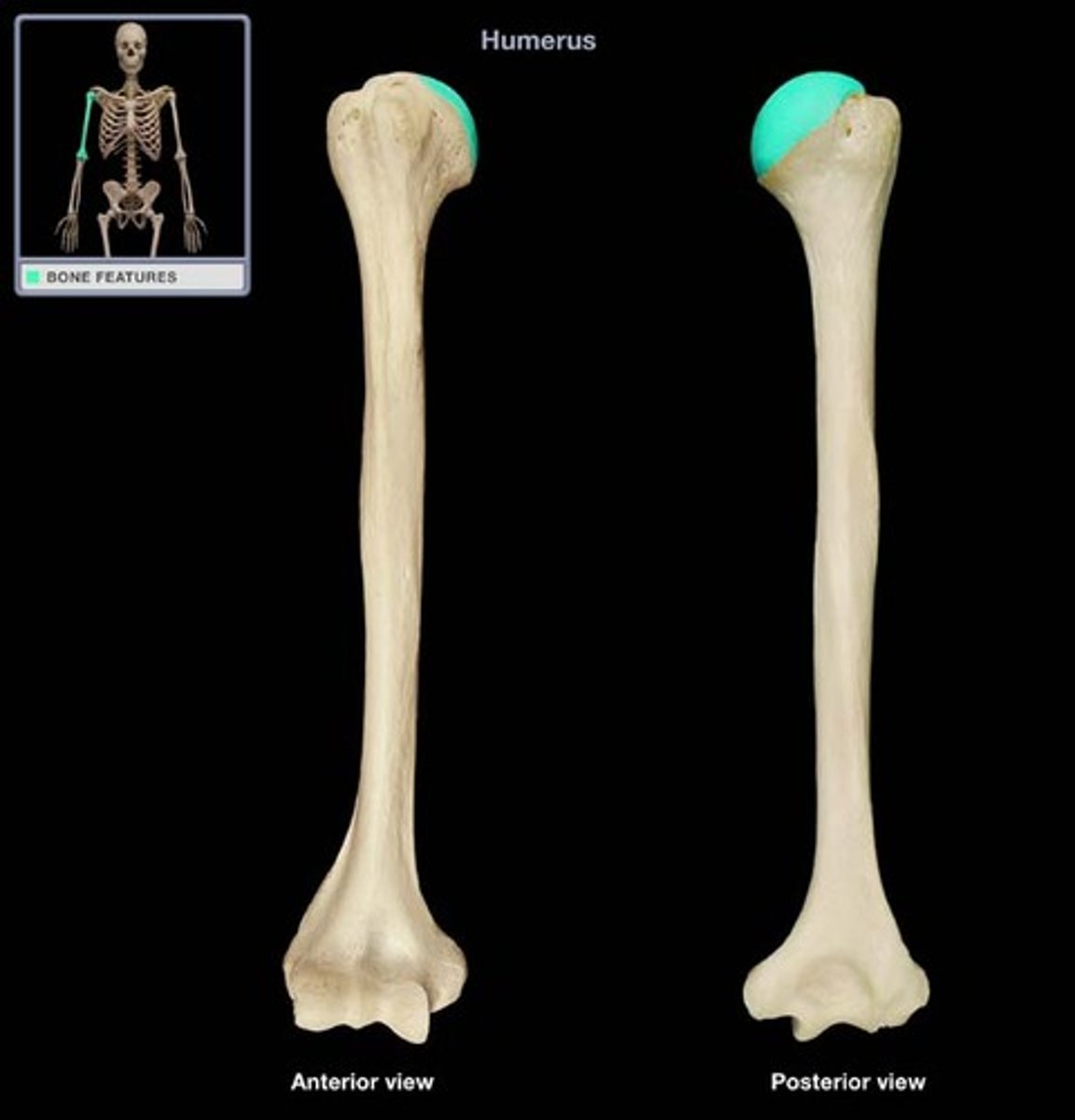
Humerus - Head
rounded section of the humerus that articulates with the glenoid cavity of the scapula
Humerus - Anatomical neck
circumferential groove separating the head from the tubercle
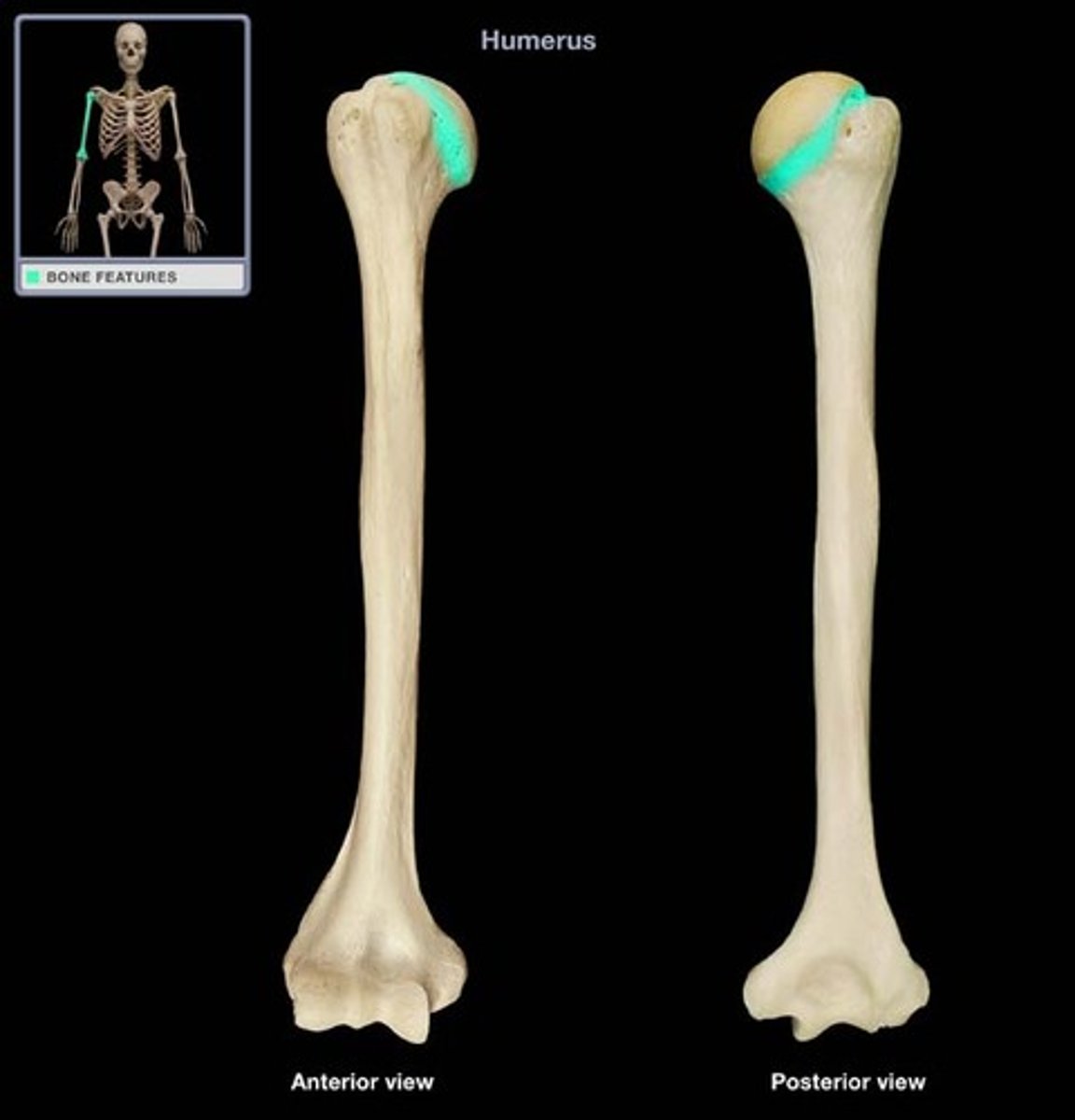
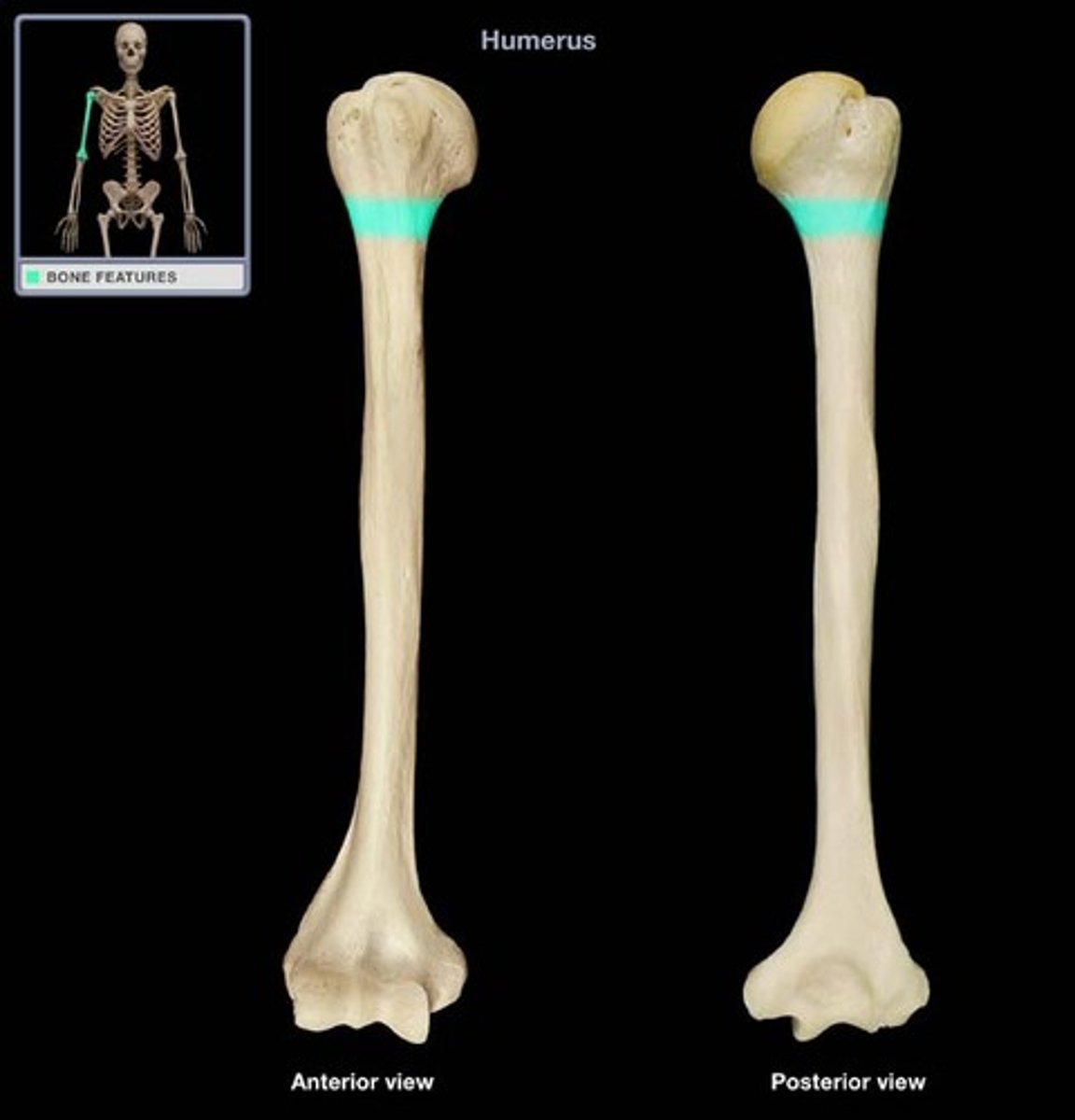
Humerus - Surgical neck
- slimmer part below tubercles
- common fracture sight
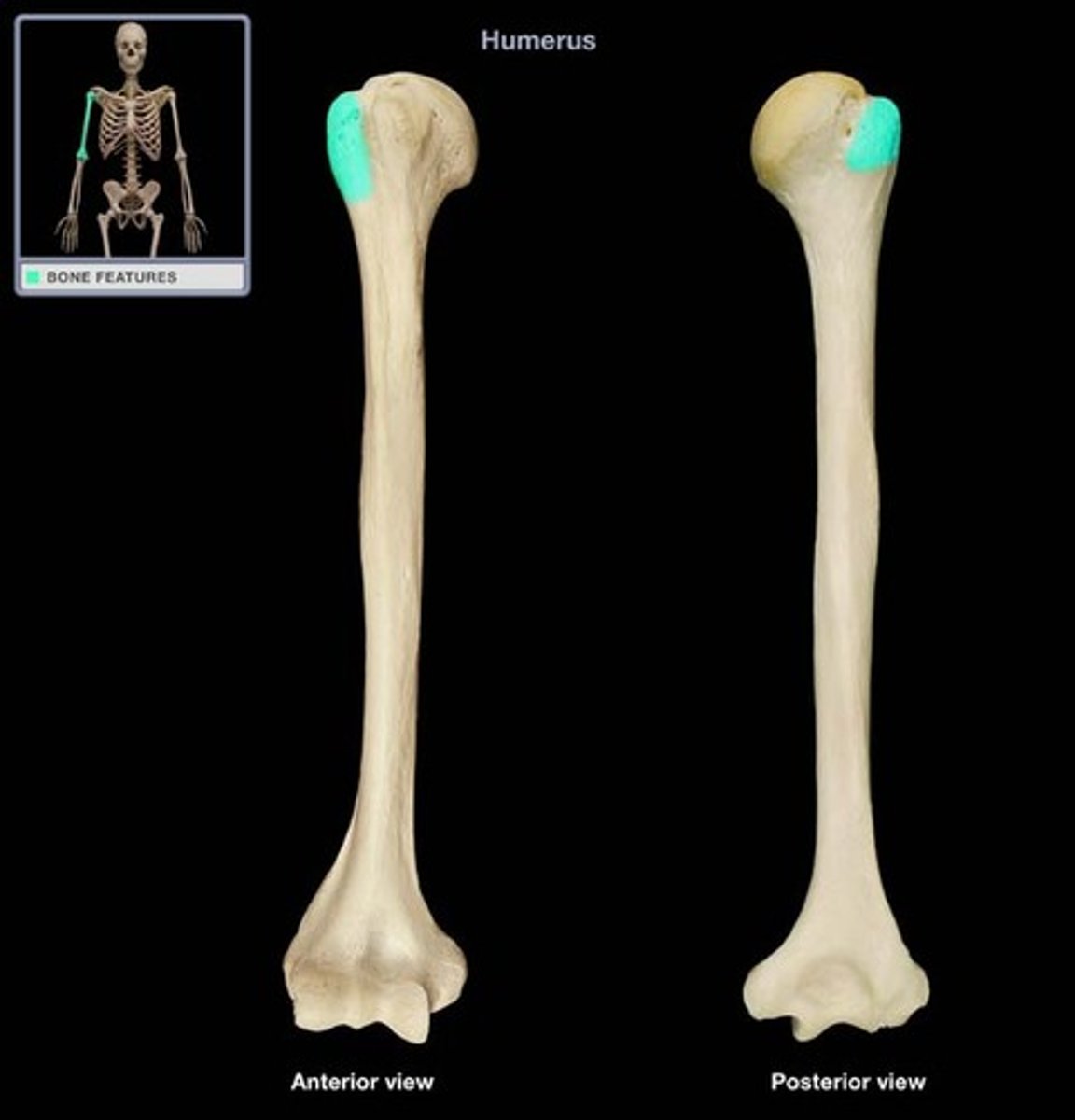
Humerus - Greater tubercle
- Large lateral prominence
- site of the attachment of rotator cuff muscles
- supraspinatus, infraspinatus, teres minor
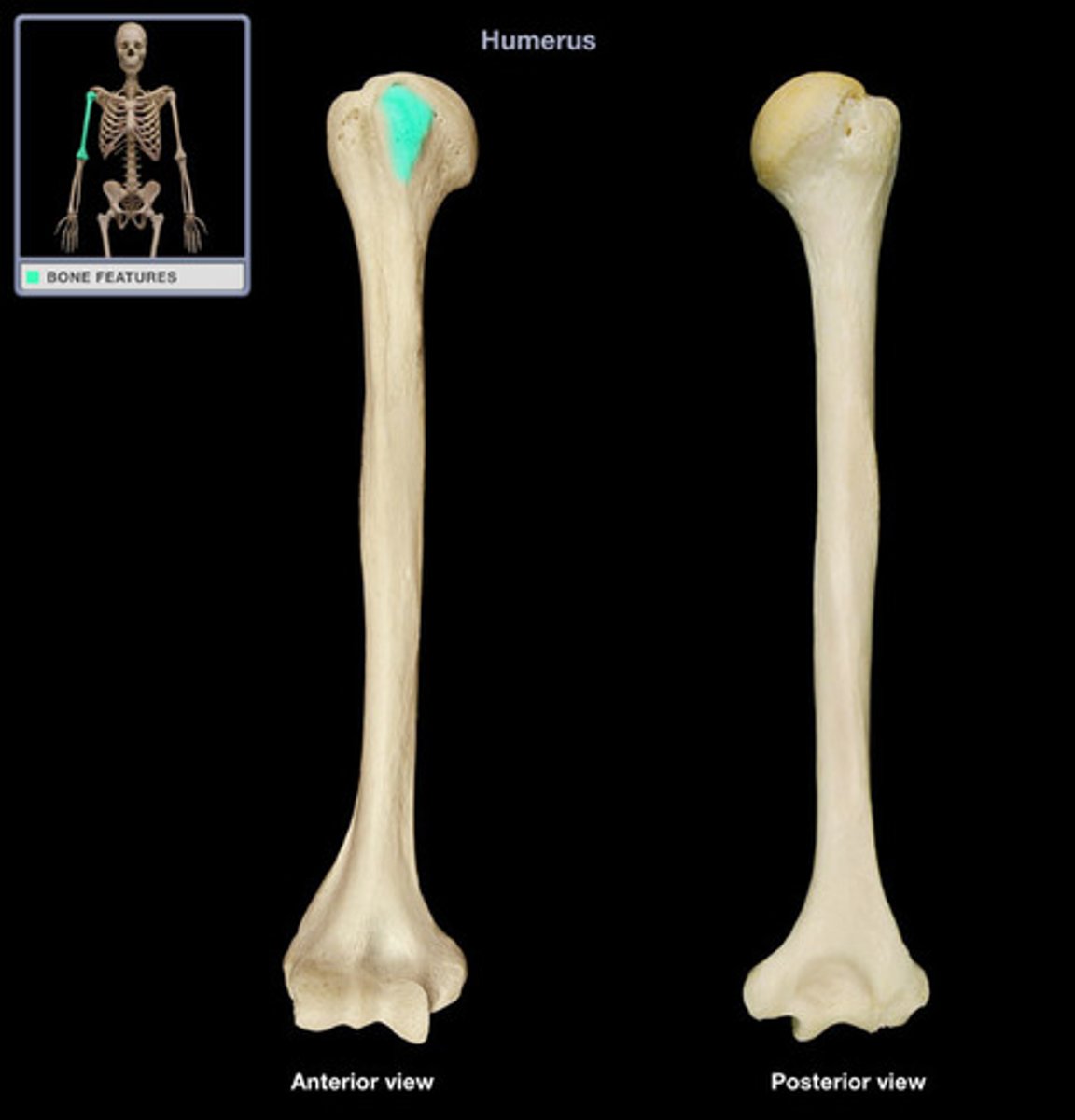
Humerus - Lesser tubercle
smaller medial prominence
Humerus - Intertubercular sulcus
- between the tubercles
- attachment of the latissimus dorsi and pectoralis major mm
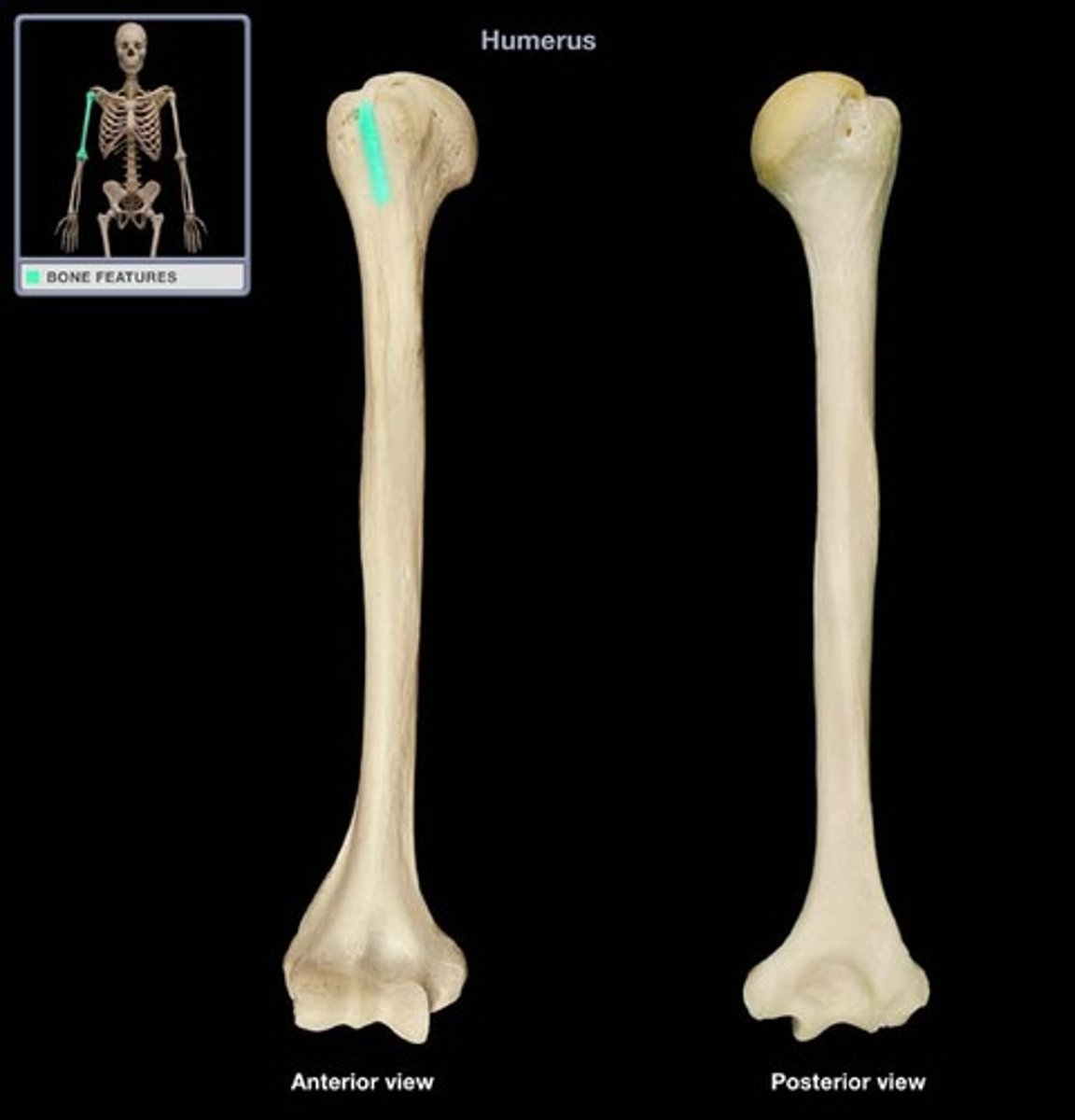
Humerus - Deltoid tuberosity
- rougher area
- insertion of deltoid
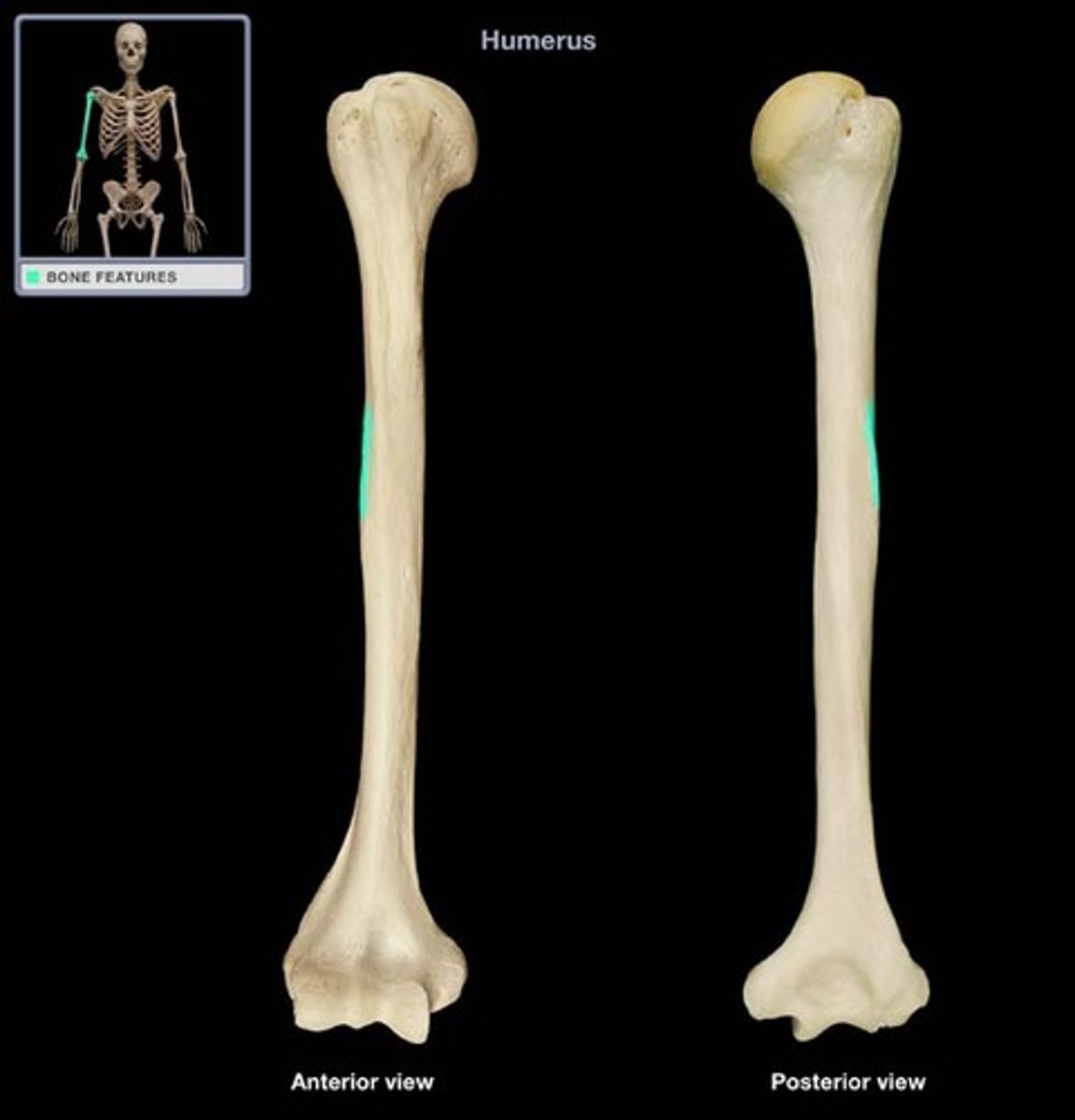
Humerus - Radial groove
small posterior groove, marks the course of the radial nerve
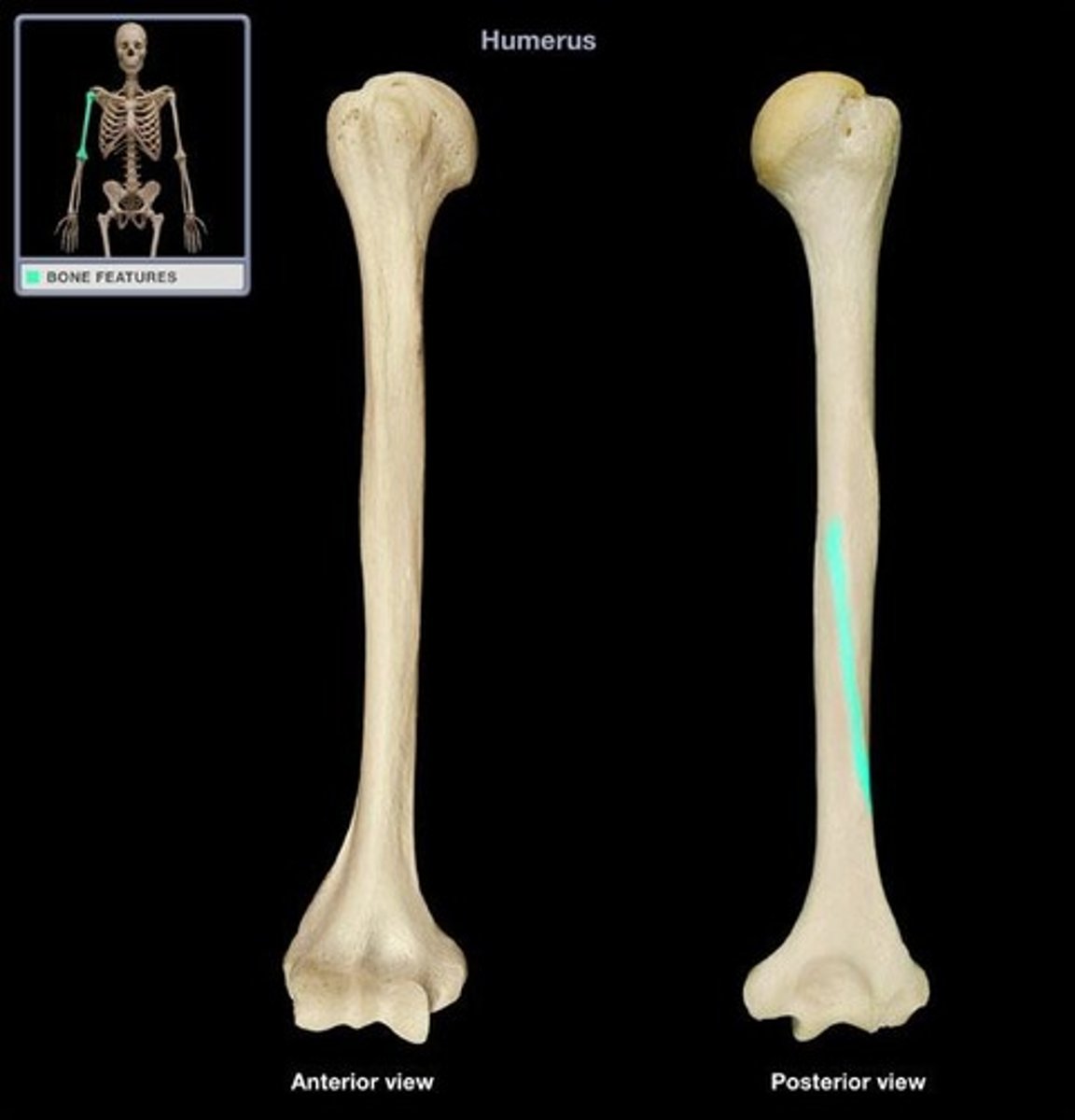
Humerus - Medial epicondyle
- rough condyle proximal to the trochlea
- origin of flexor carpi radialis
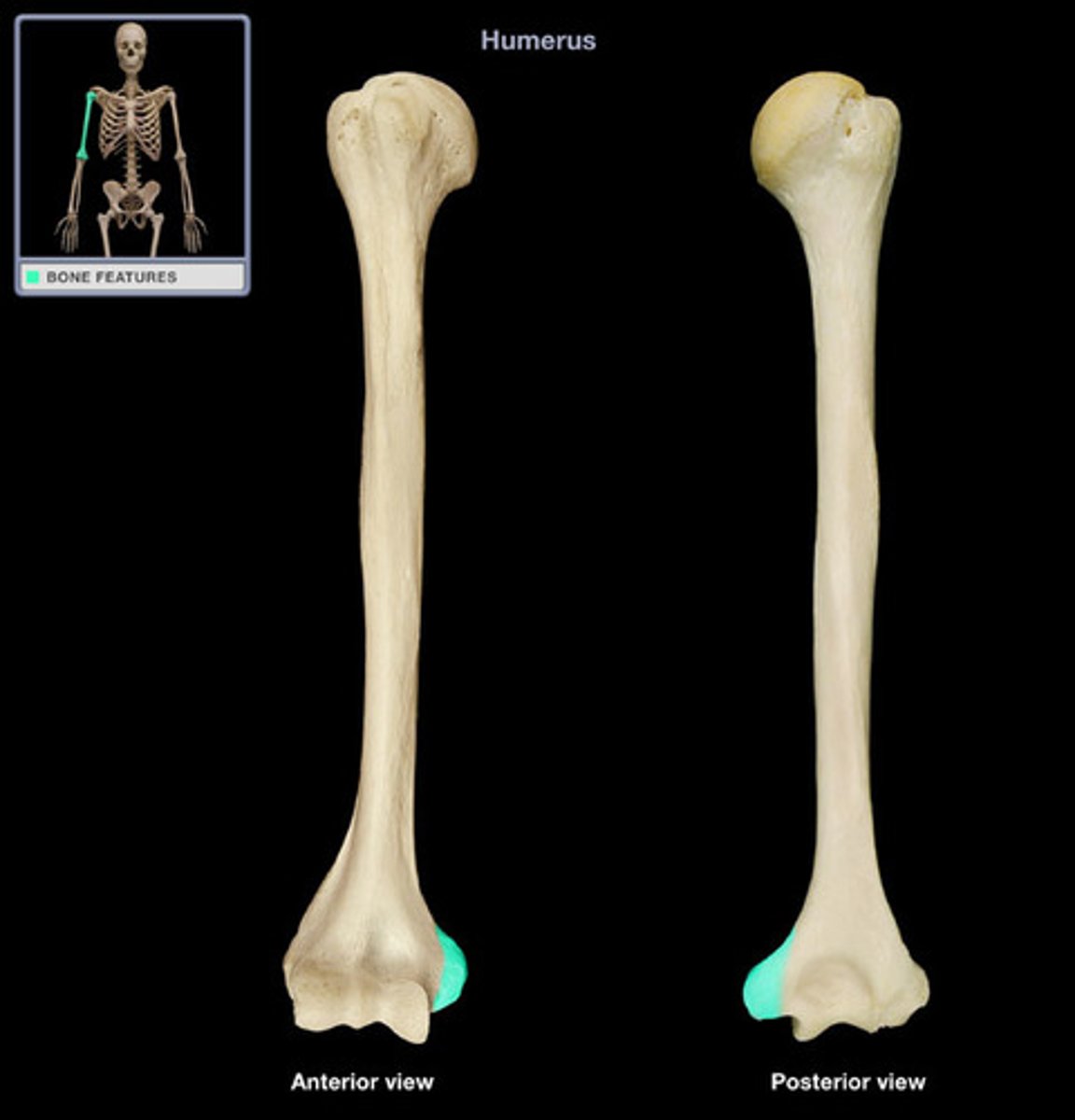
Humerus - Lateral epicondyle
- small condyle proximal to the capitulum
- origin of extensor carpi ulnaris
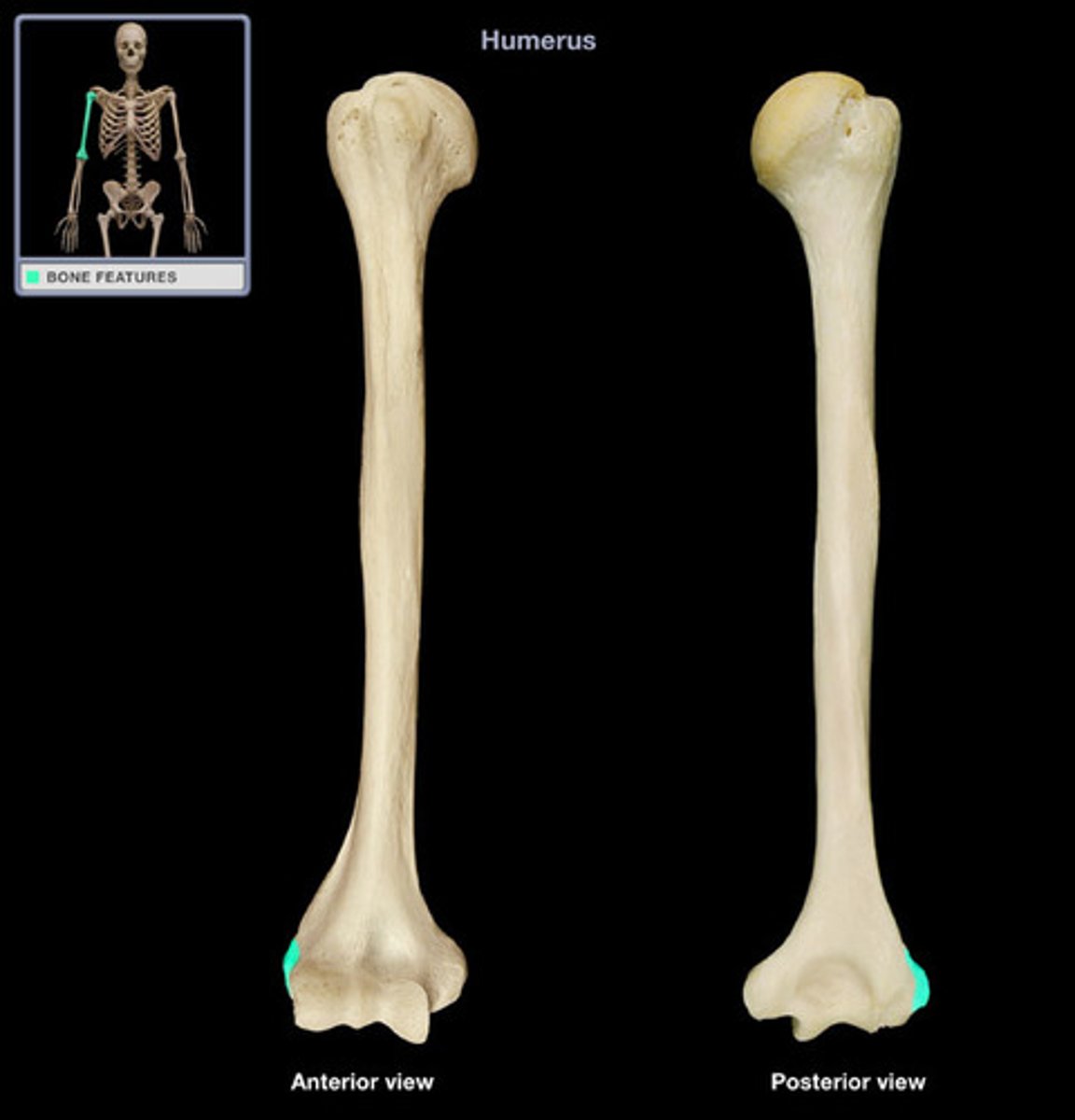
Humerus - Capitellum (capitulum)
always lateral
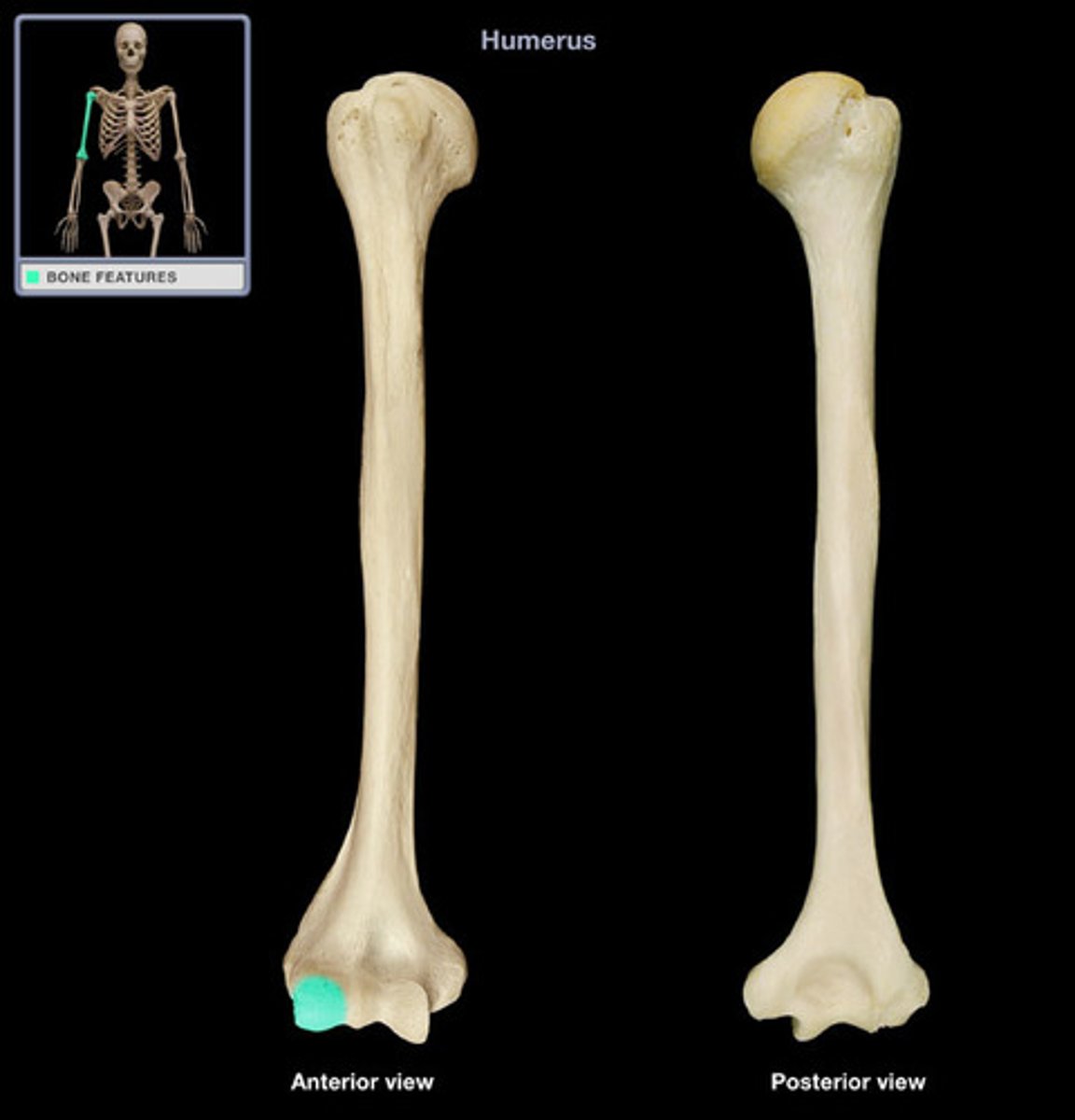
Humerus - Trochlea
- triangular shaped
- a flared medial condyle that articulates with the ulna
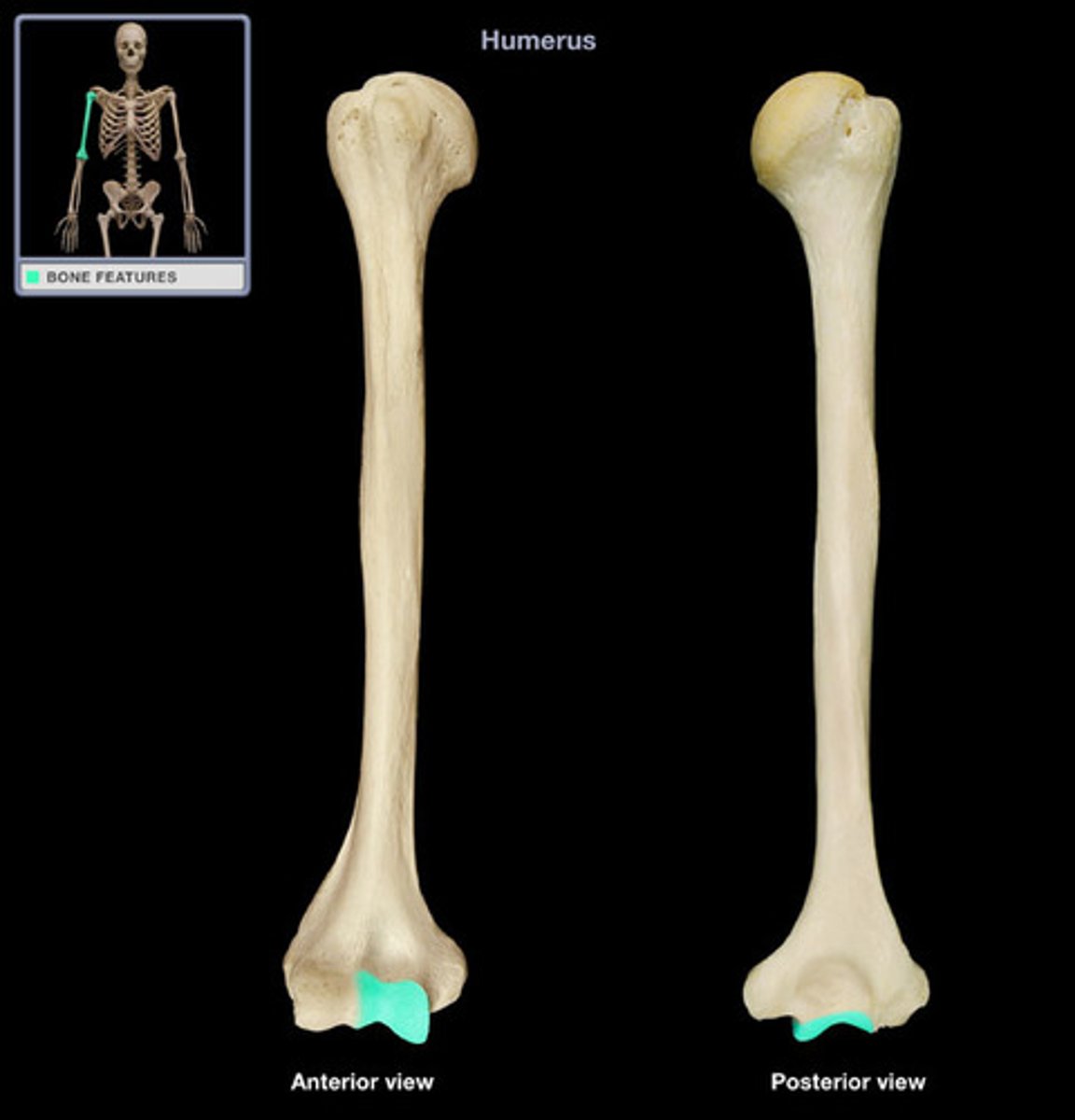
Humerus - Coronoid fossa
- small medial anterior depression
- receives the coronoid process of the ulna when the forearm is flexed
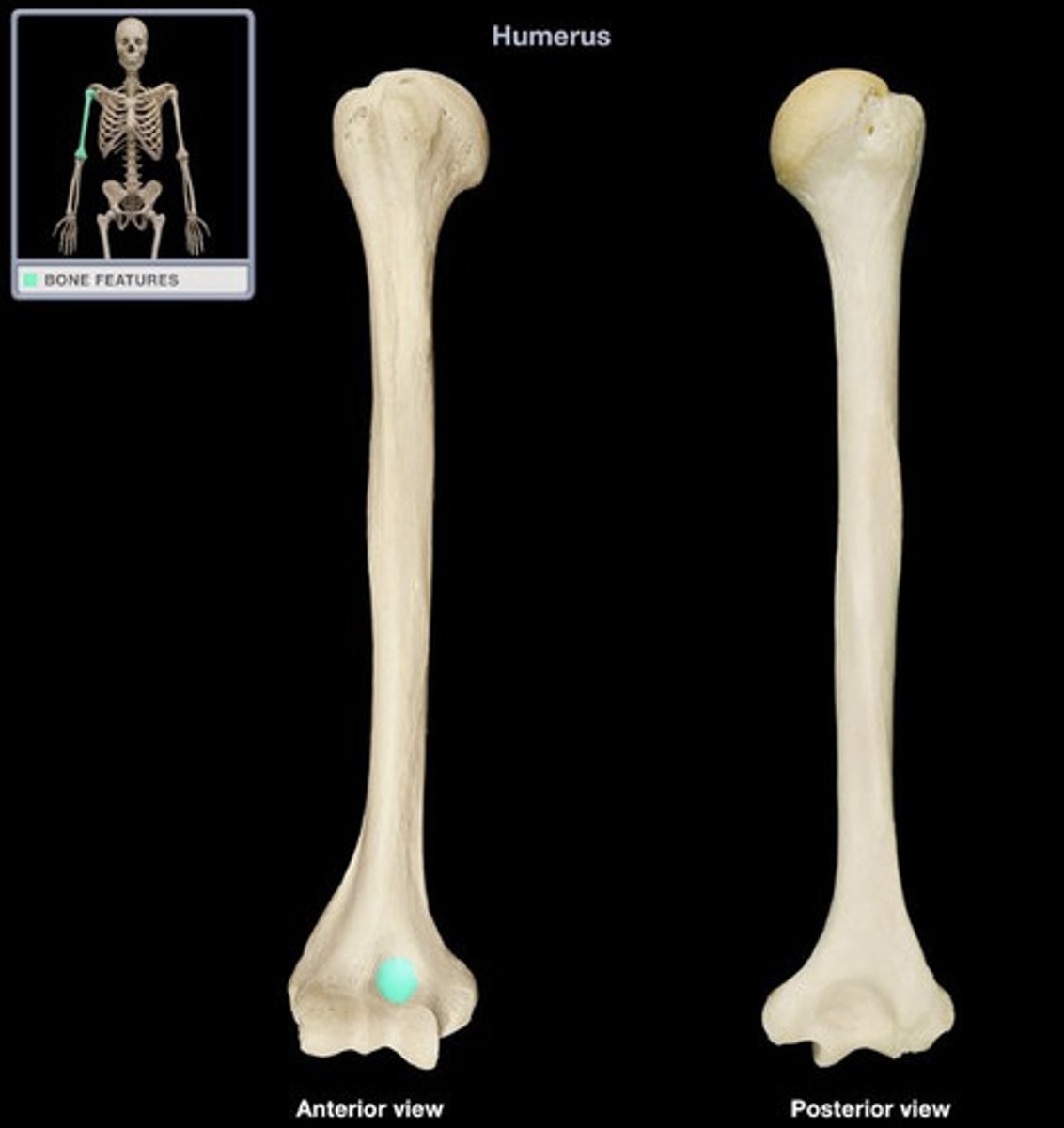
Humerus - Olecranon fossa
Ulna (olecranon)
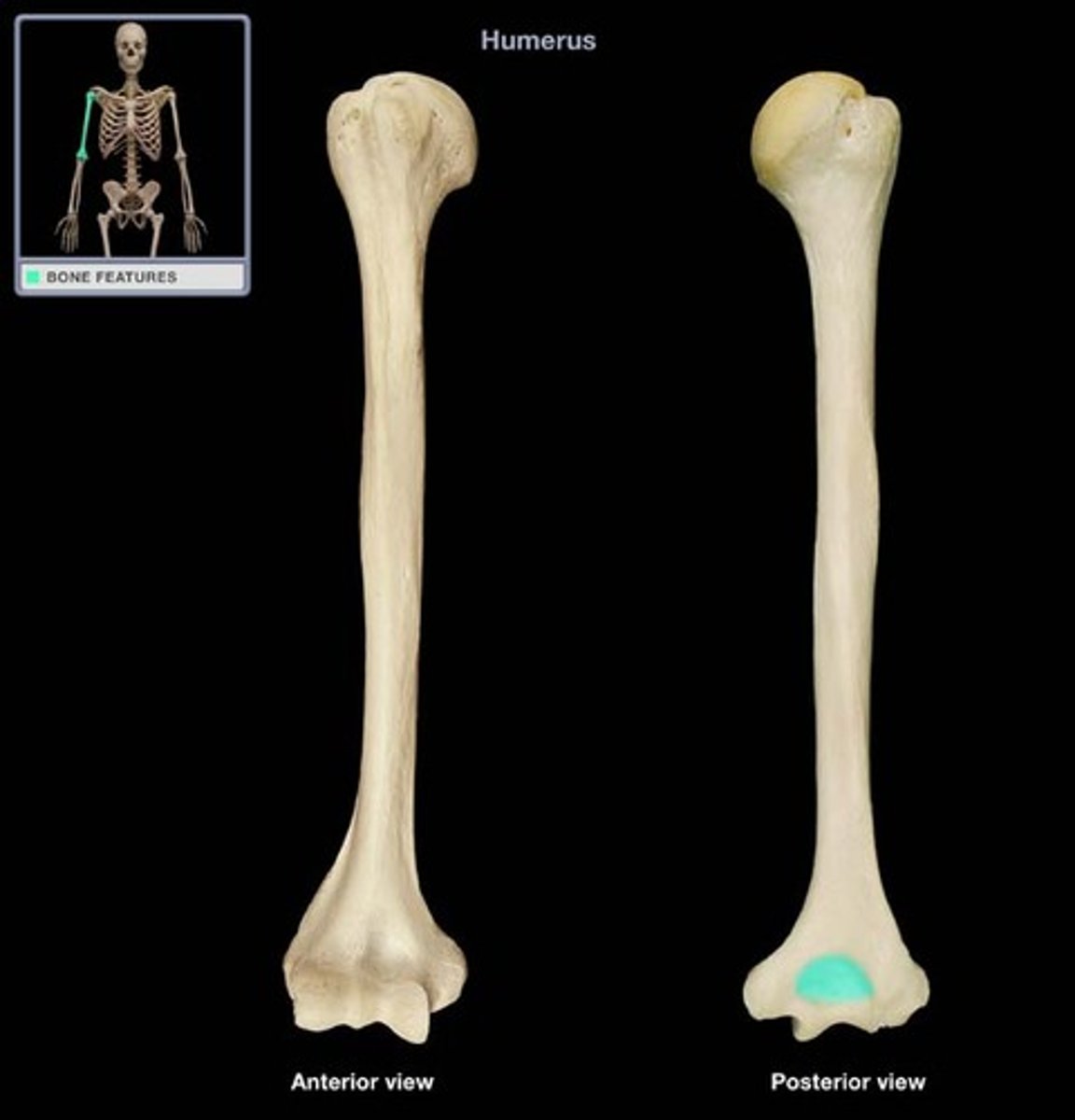
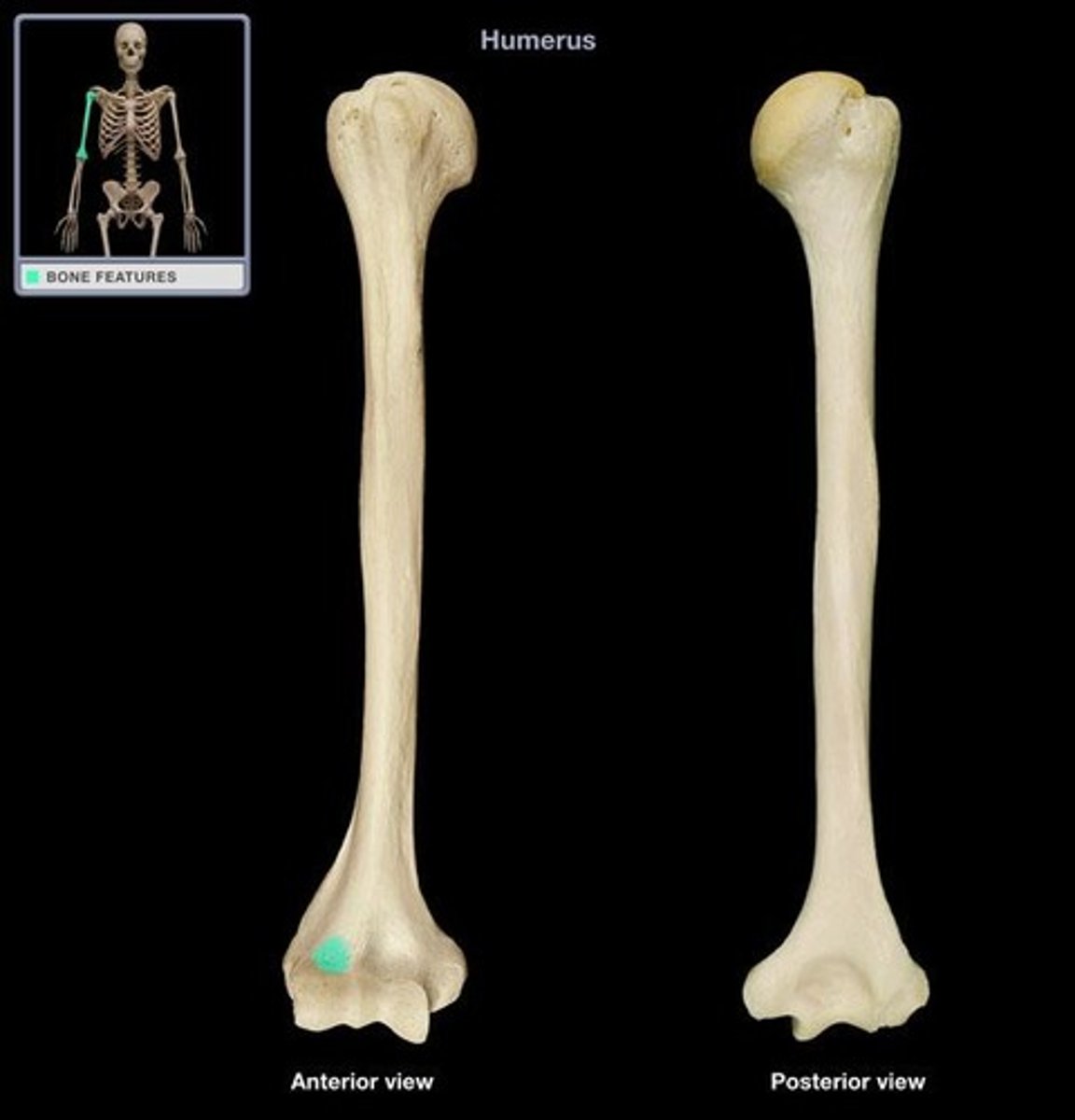
Humerus - Radial fossa
- small lateral depression
- receives the head of the radius when the forearm is flexed
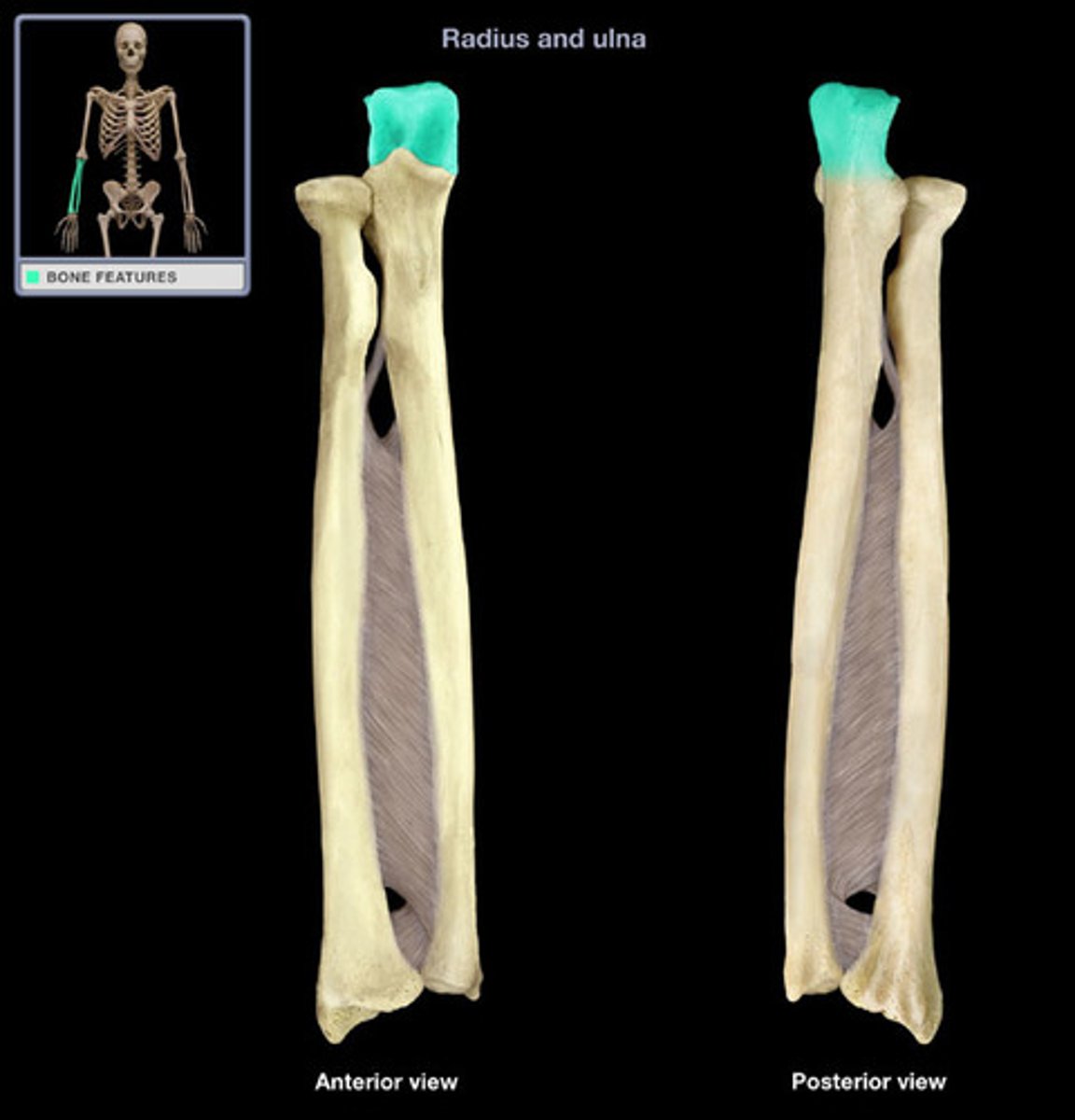
Ulna - Olecranon process
- back of ulna
- insertion of triceps brachii
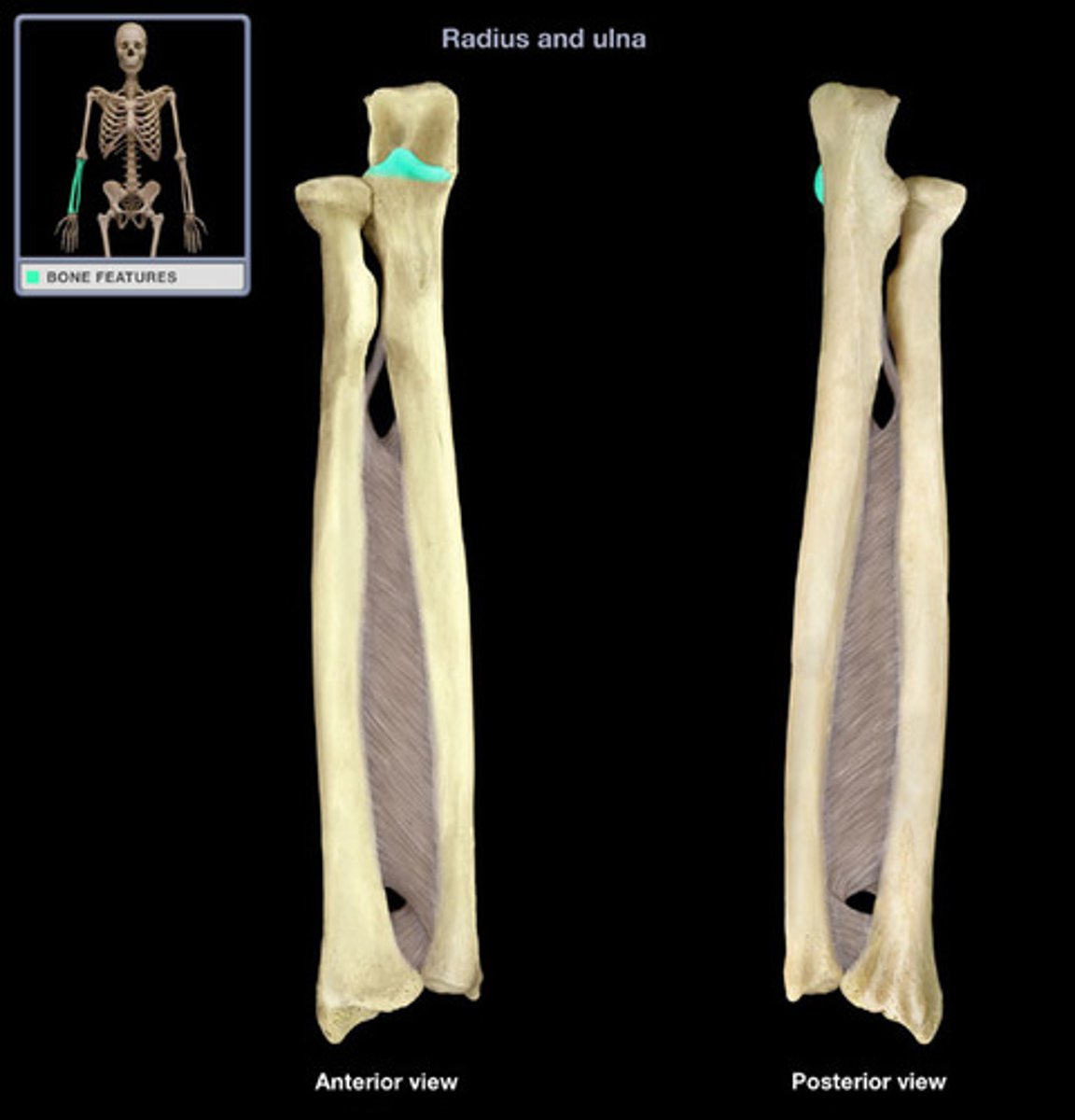
Ulna - Coronoid process
- allows flex at elbow
- located on the proximal end of the ulna
- smaller than and distal to the olecranon process
Ulna - trochlear notch
- deep notch that separates the olecranon and the coronoid process
- articulates with the trochlea of the humerus
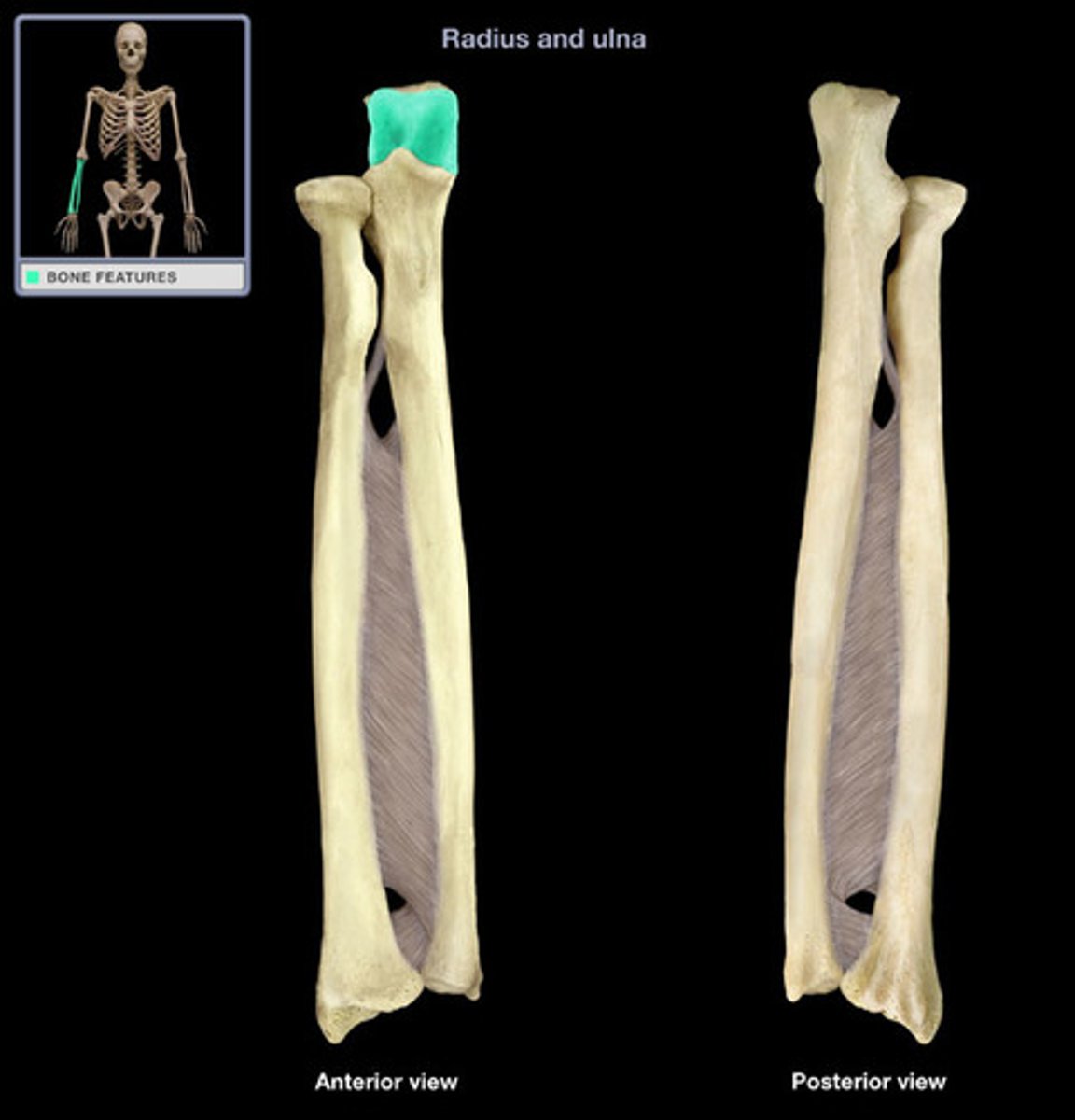
Ulna - Radial notch
- small proximal lateral notch that articulates with the head of the radius
- forms part of the proximal radioulnar joint
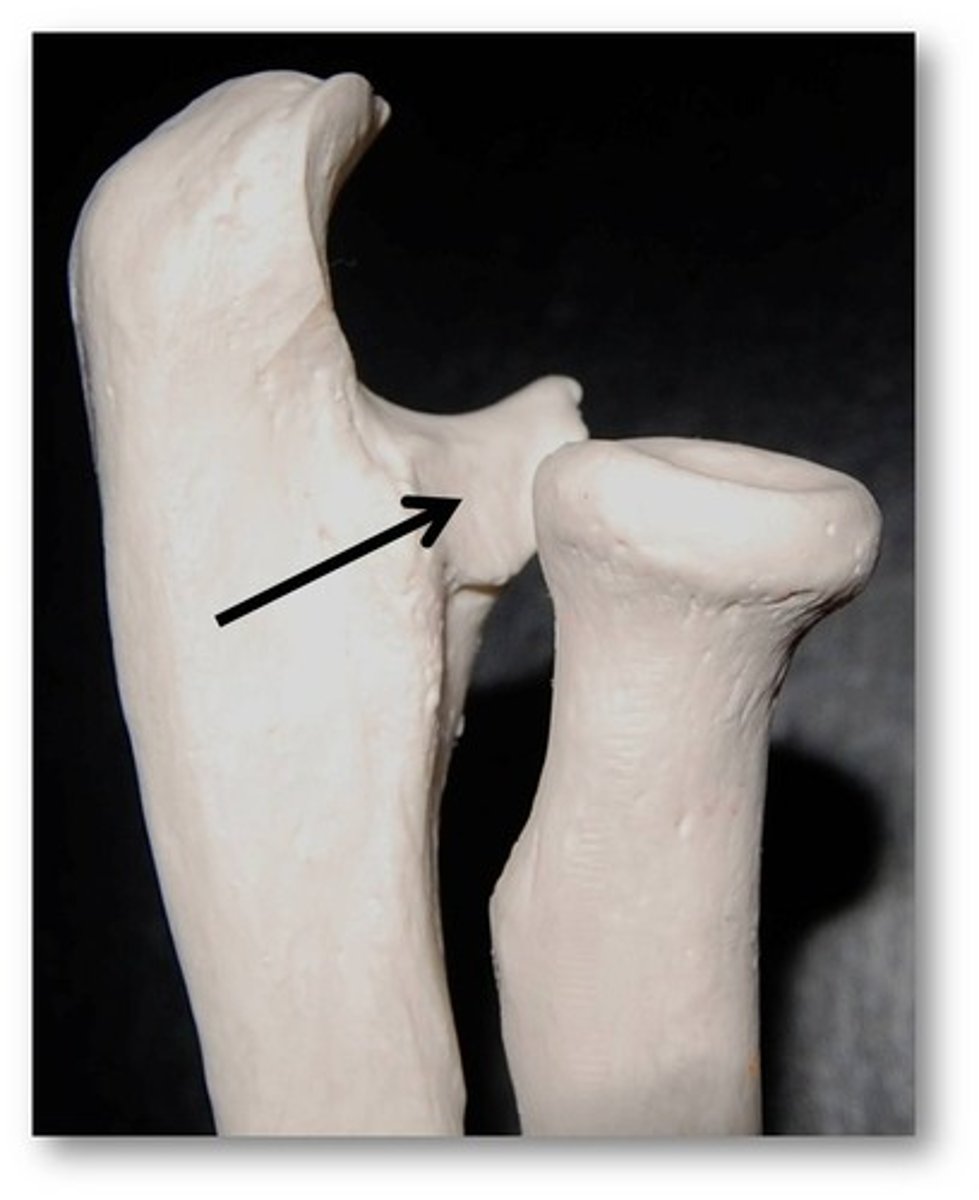
Ulna - Ulnar tuberosity
- just inferior to the coronoid process
- attachment for biceps brachii muscles
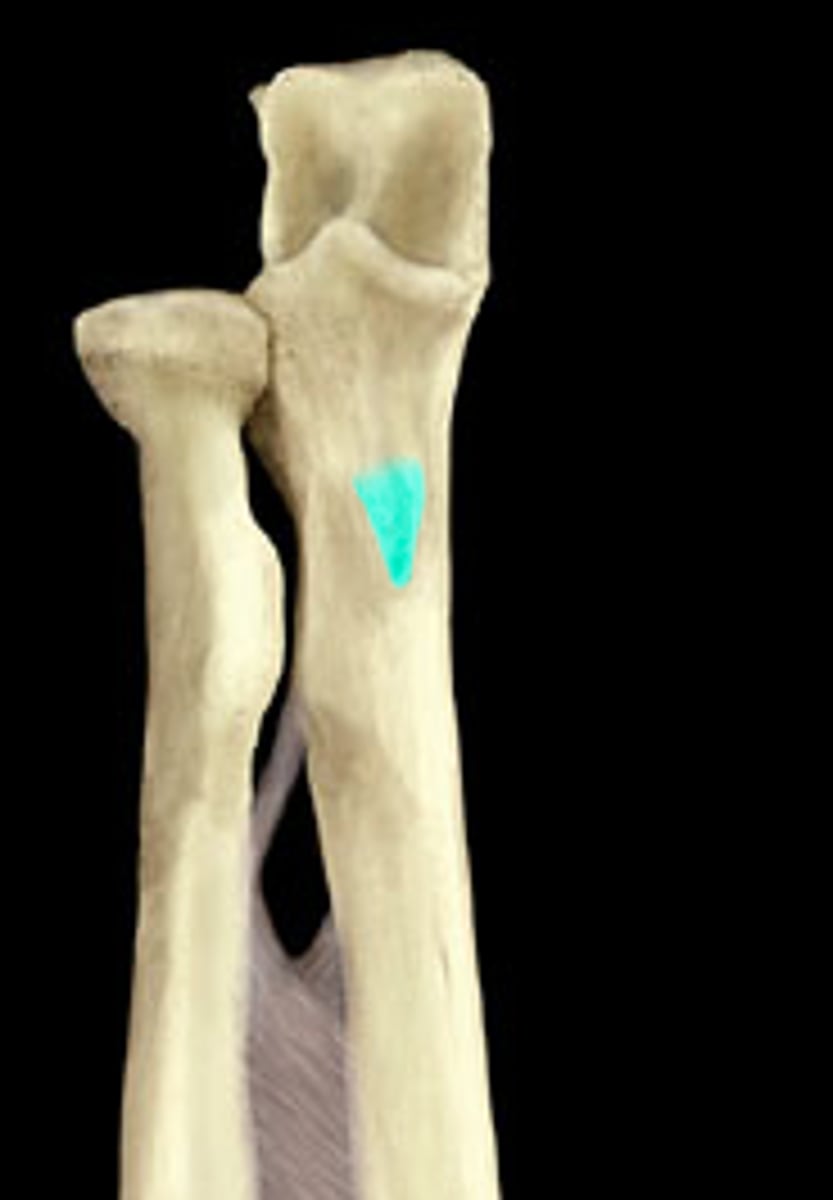
Ulna - Styloid process
- distal pointed projection
- located medial to the head of the ulna
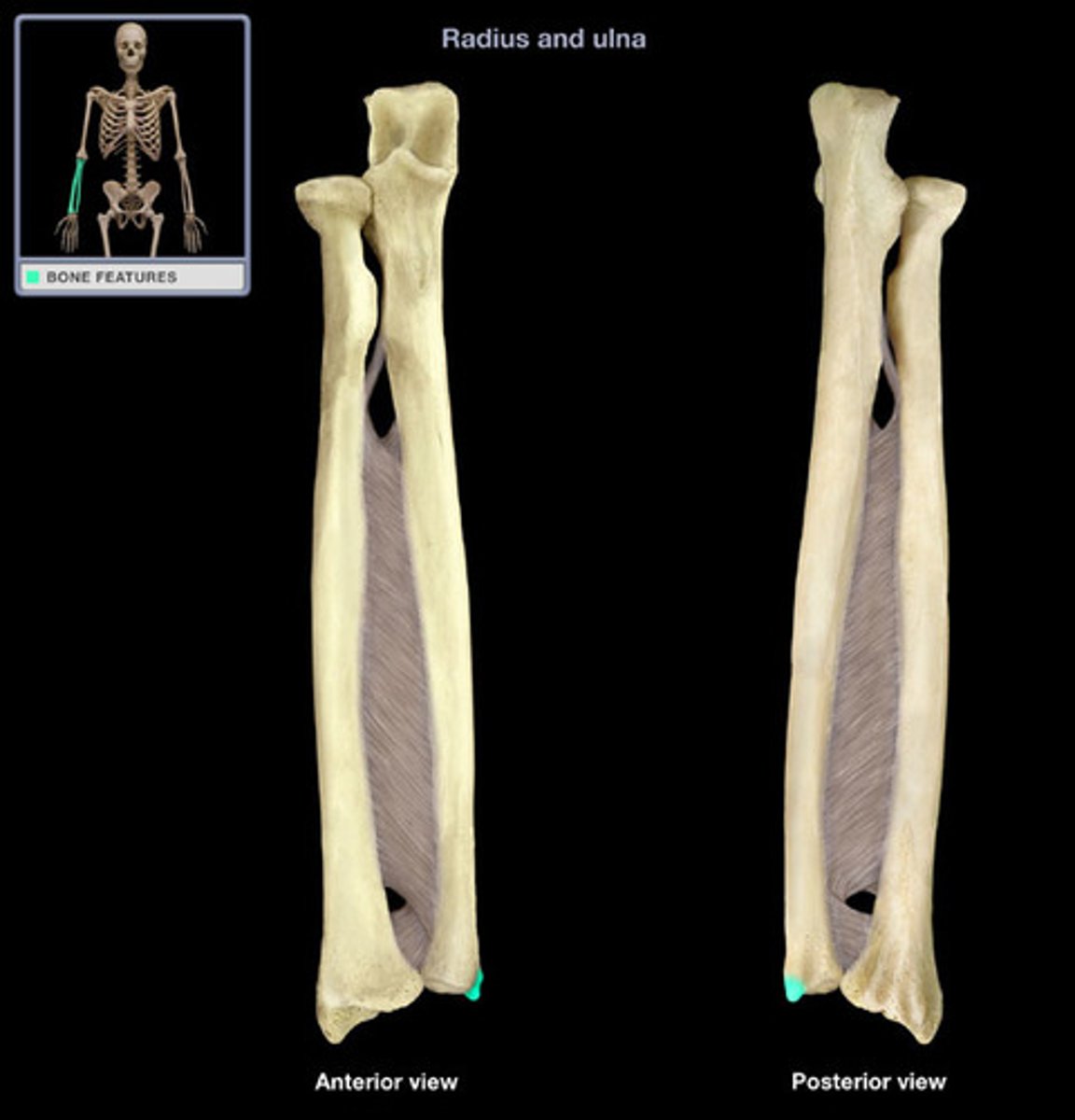
Ulna - head
- knob-shaped
- articulates with a notch on the radius and a wrist bone
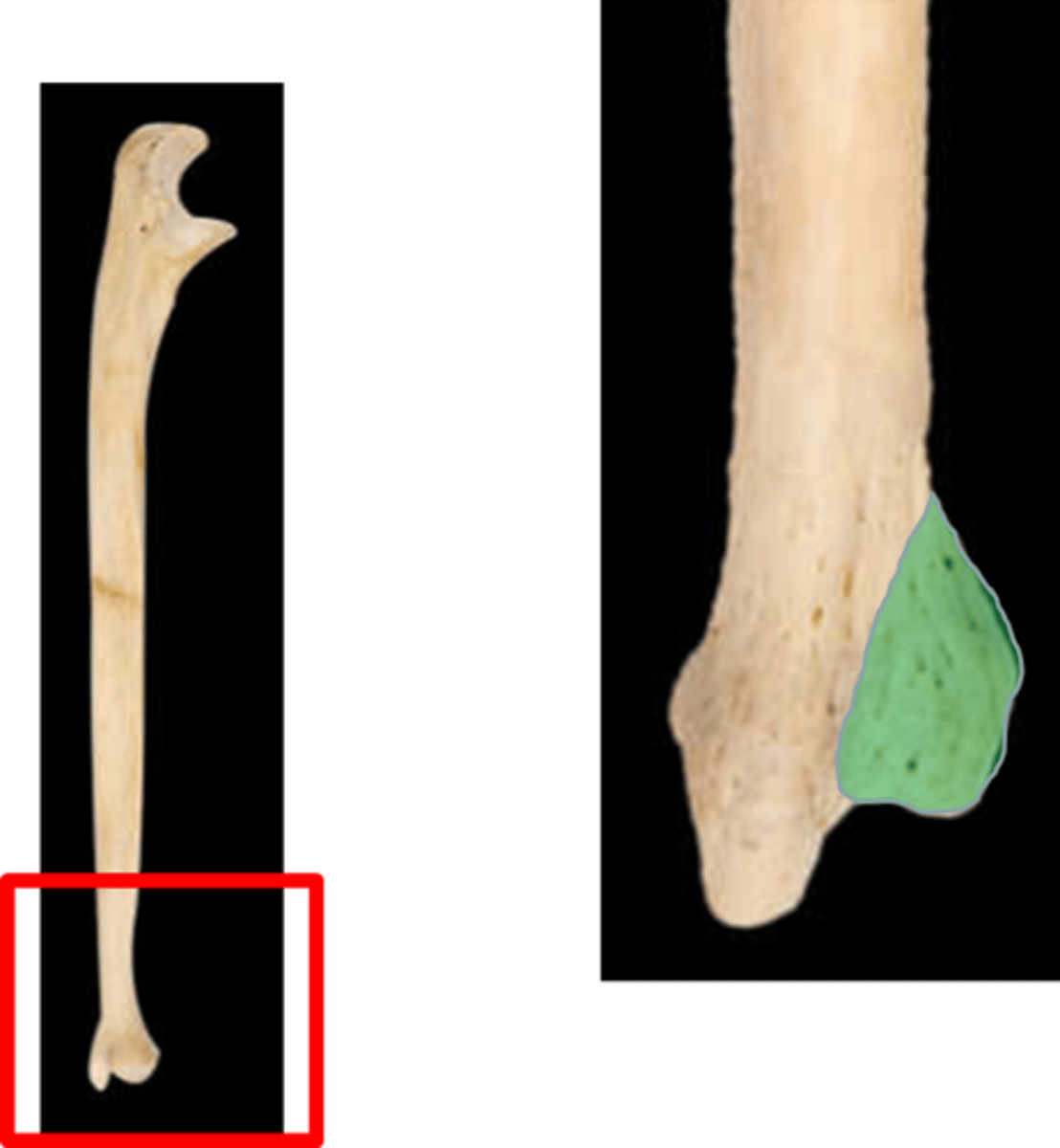
Radius - Dorsal tubercle
distal on posterior side, little bump
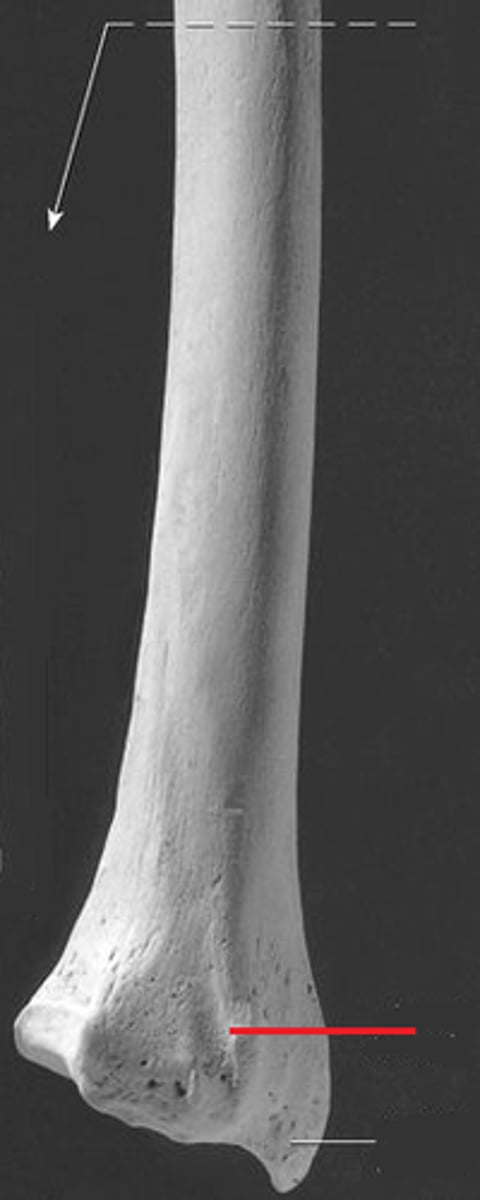
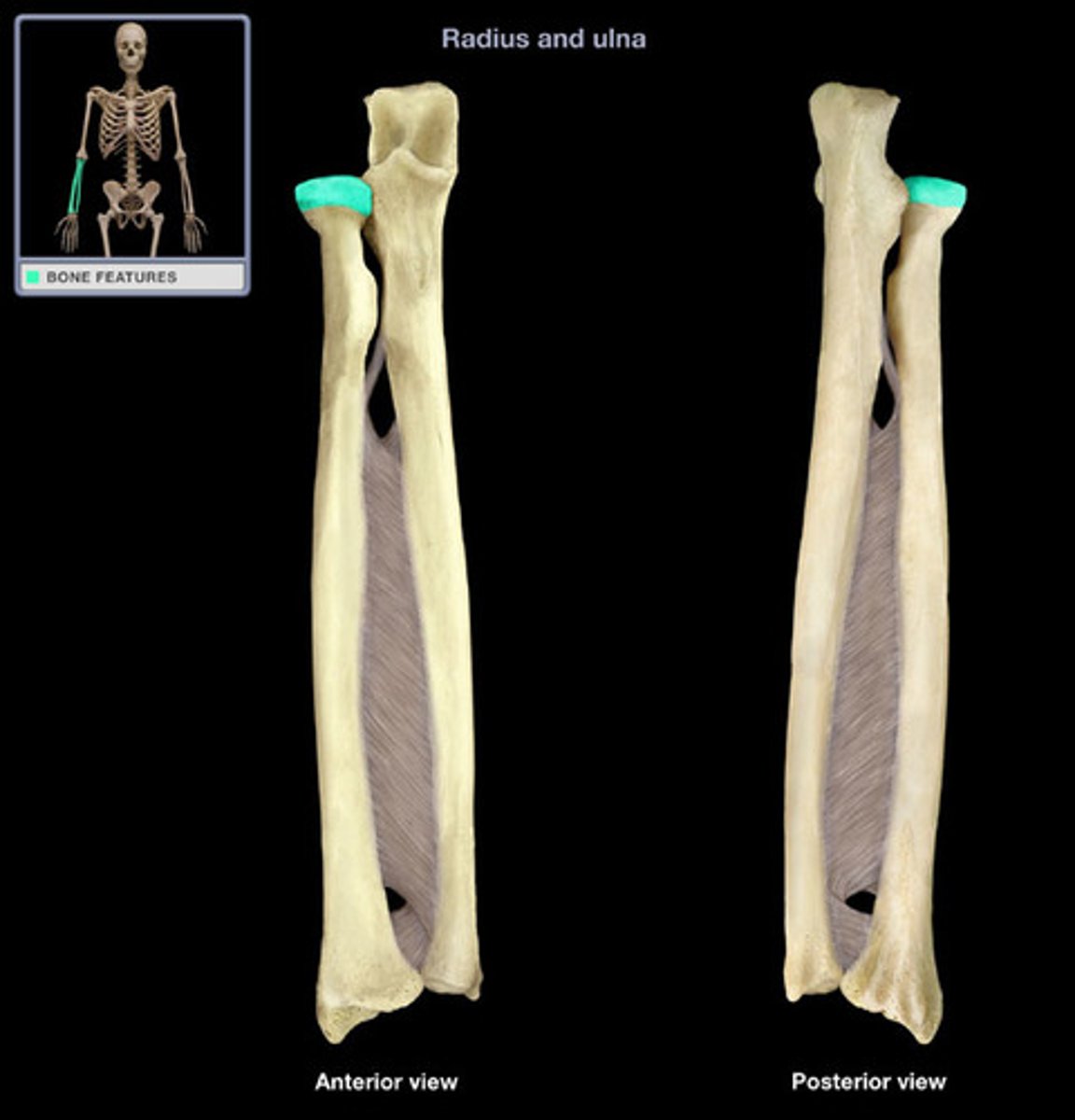
Radius - Head
- disk-shaped
- allows radius to pivot
- articulates with the humerus and the radial notch of the ulna
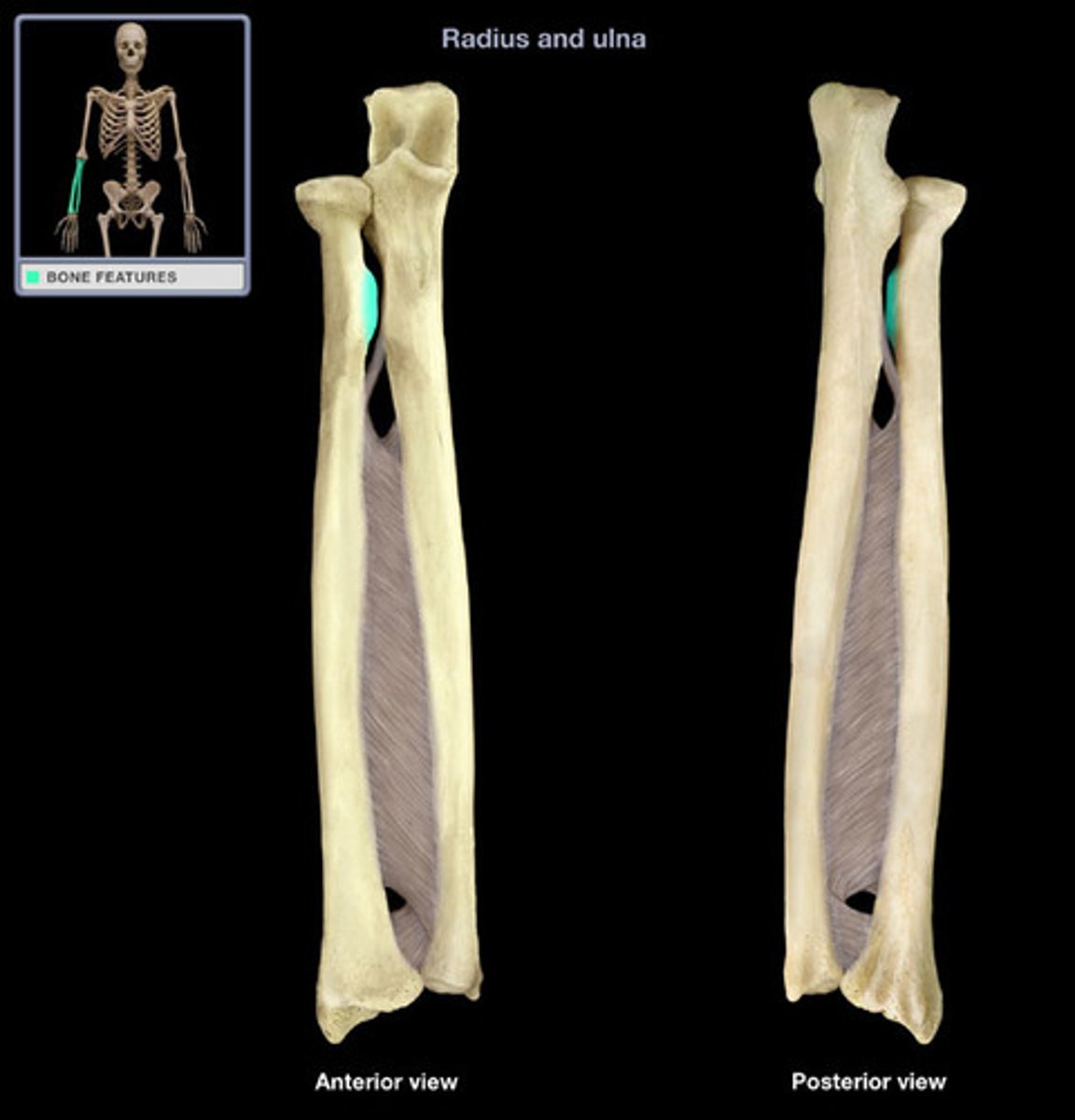
Radius - Radial tuberosity
insertion of biceps brachii
Radius - Styloid process
- projection of bone on the lateral surface of the distal radius bone
- wrist bones in the middle
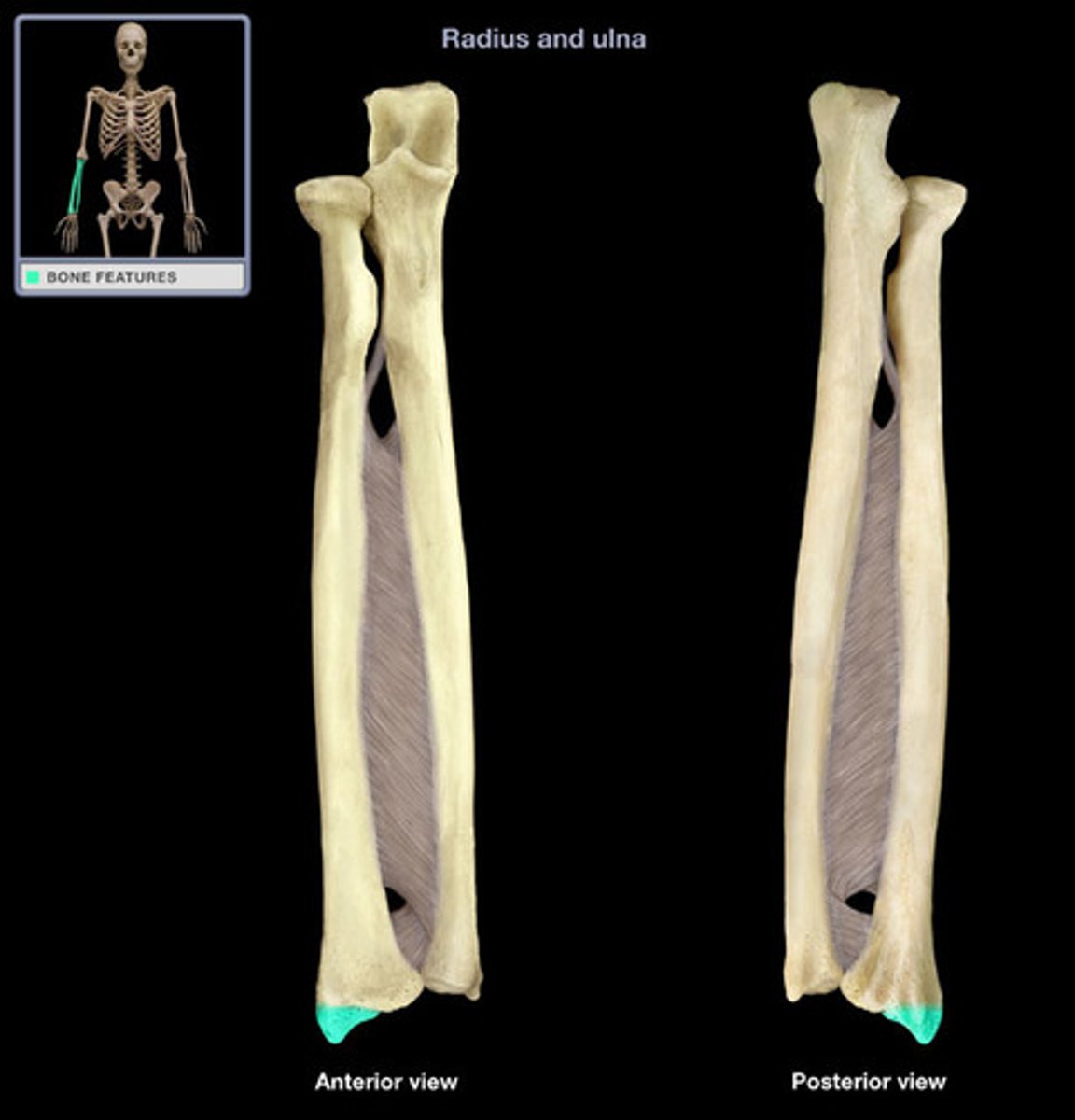
Hand - Scaphoid
- proximal row
- tooth-shaped bone
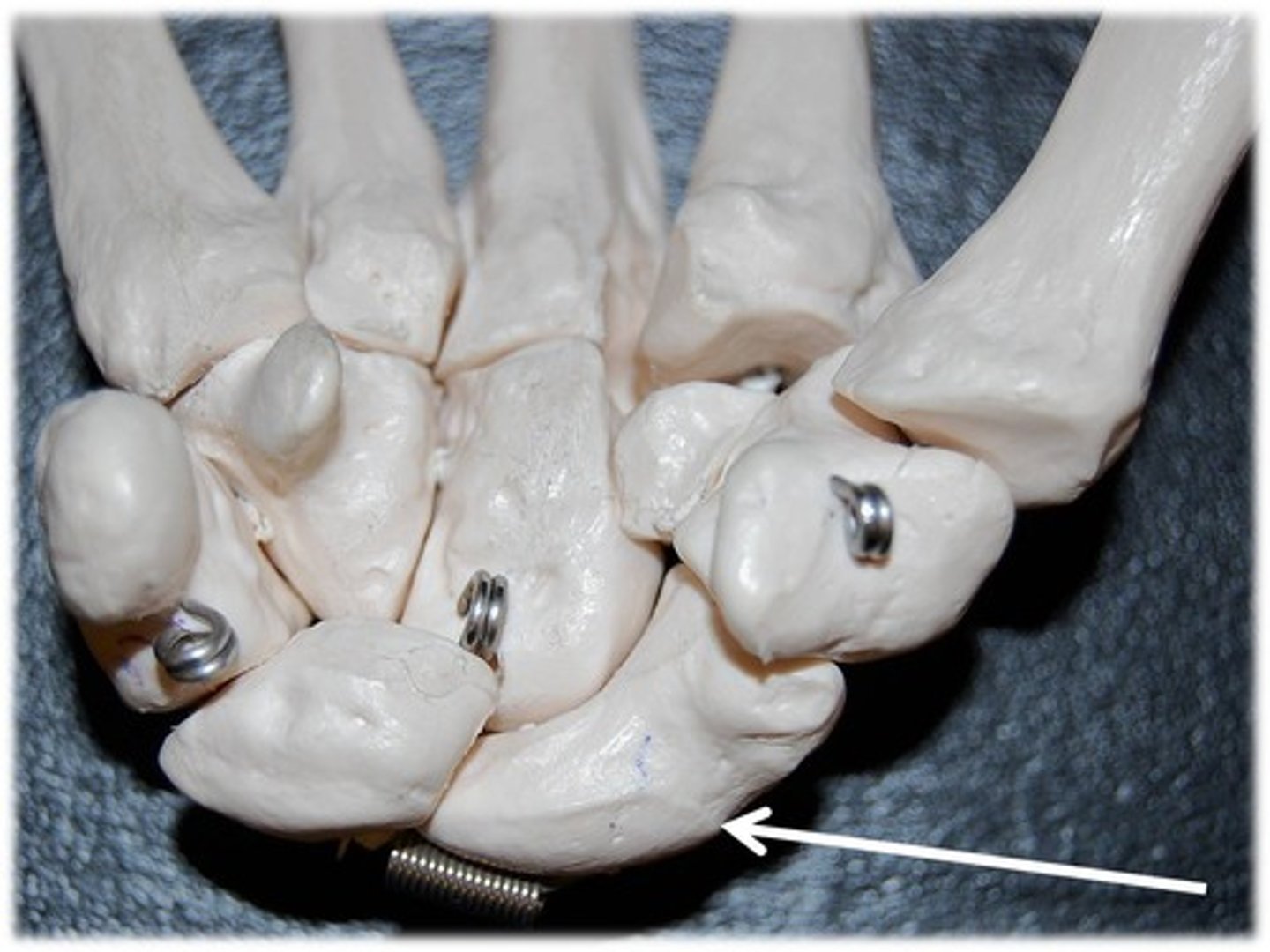
Hand - Lunate
- proximal row
- between scaphoid and triquetrum
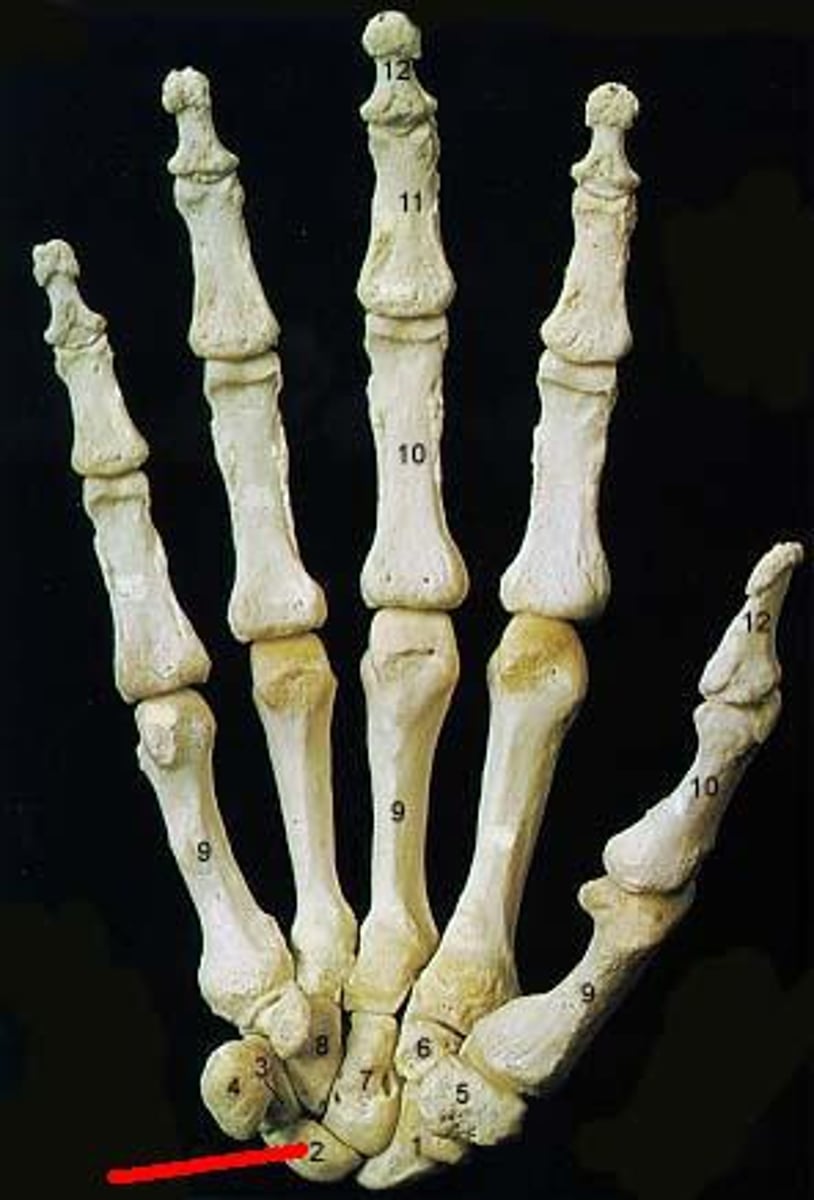
Hand - Triquetrum
- proximal row
- tiny wedge shaped bone
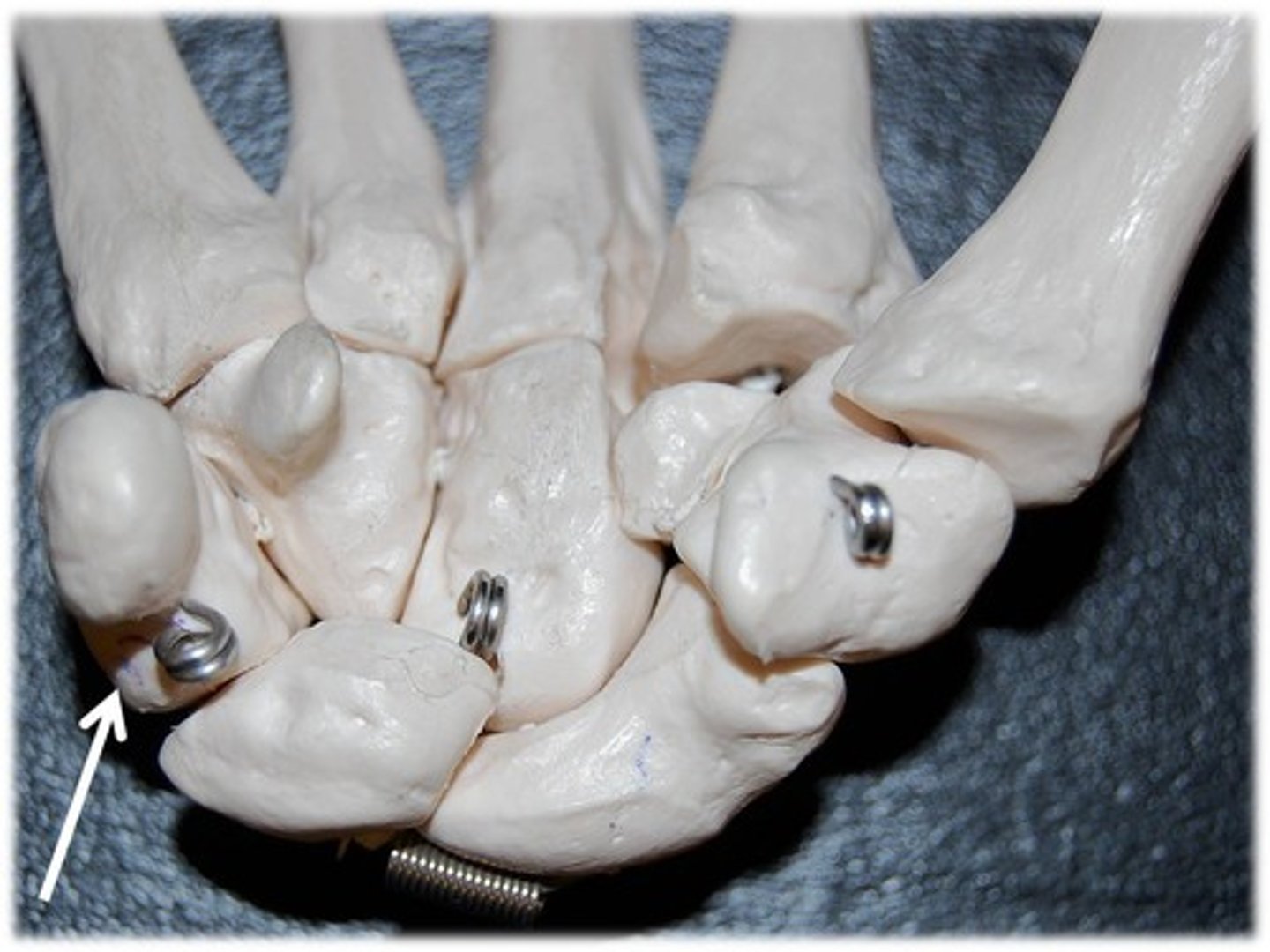
Hand - Pisiform
- proximal row
- the bone on top of triquetrium
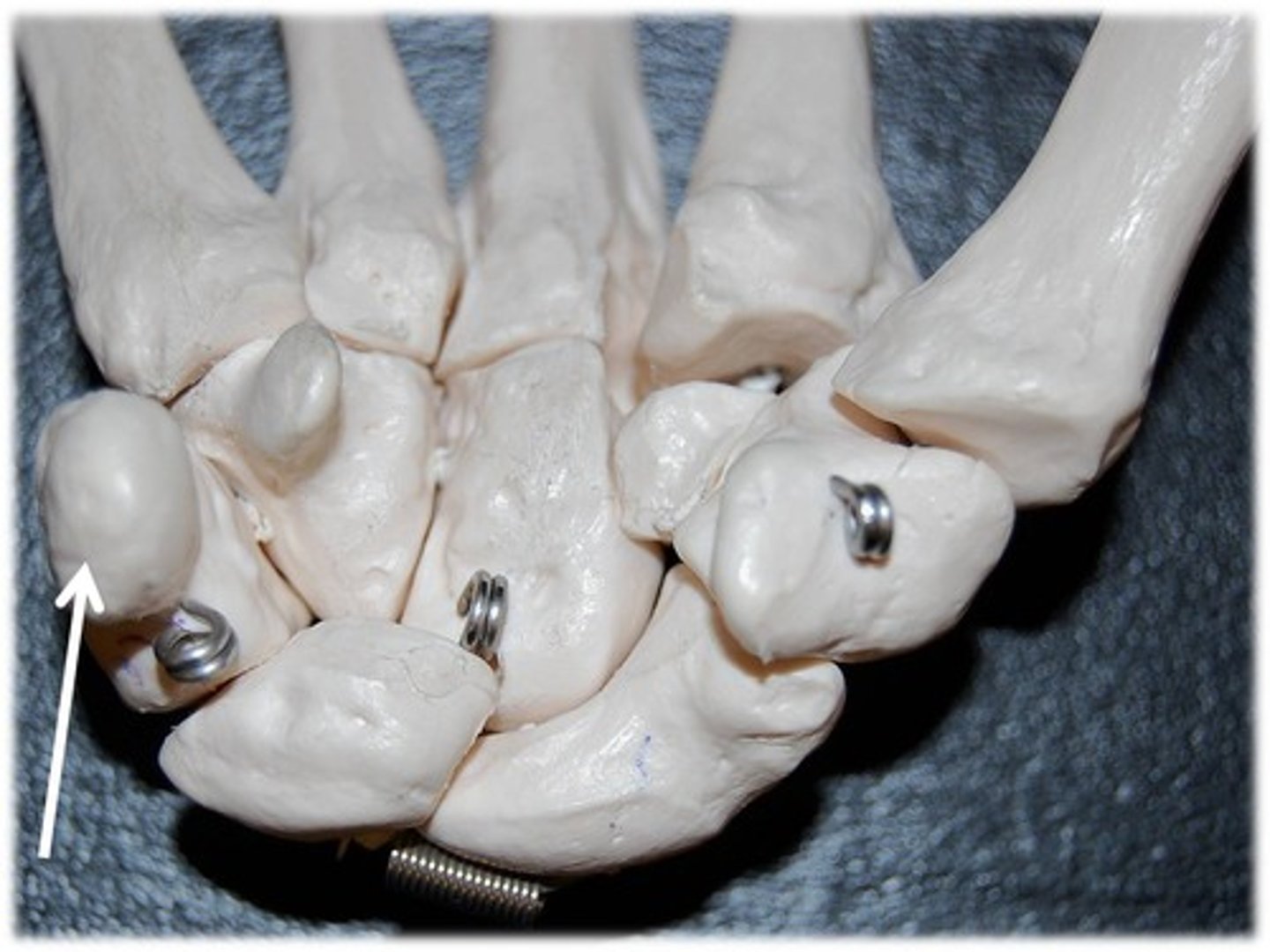
Hand - Trapezium
- distal row
- trapezium is under the thumb (articulating with the first metacarpal)
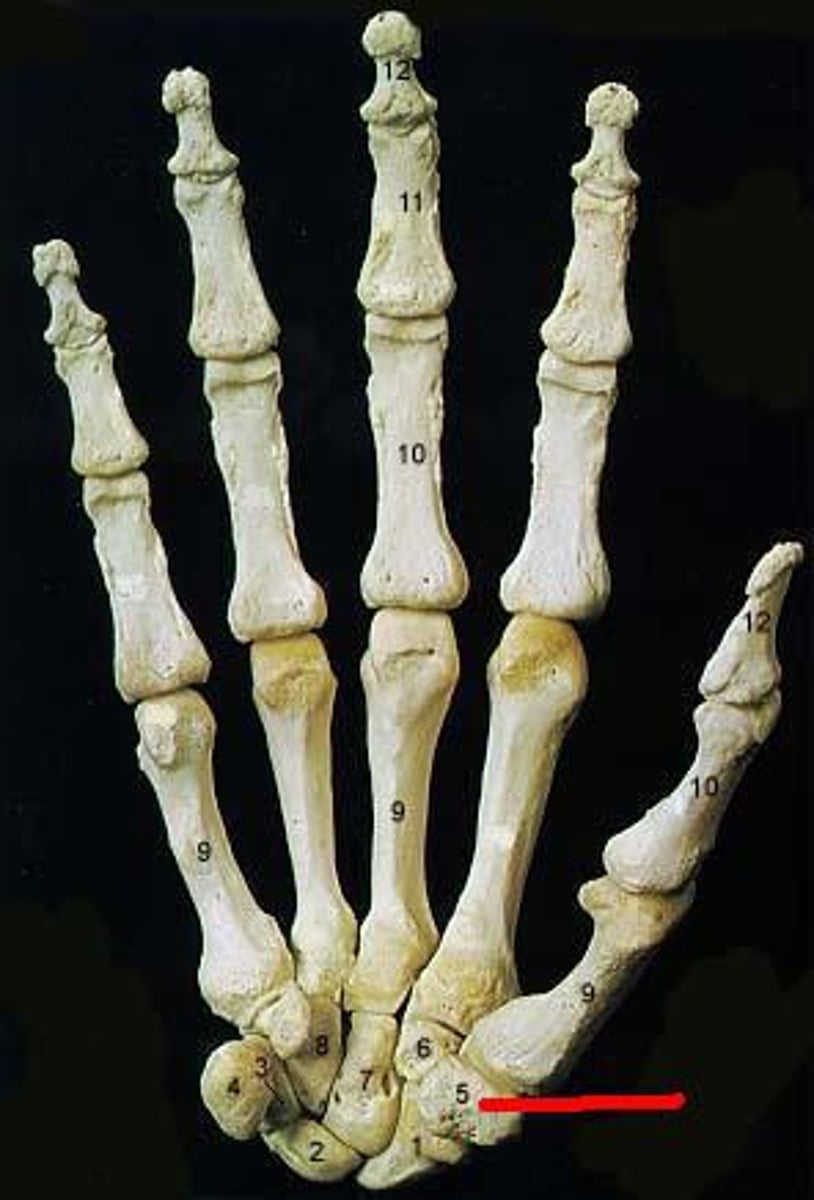
Hand - Trapezoid
- distal row
- tiny trapezoid shaped
- trapezoid is inside (surrounded by four other bones)
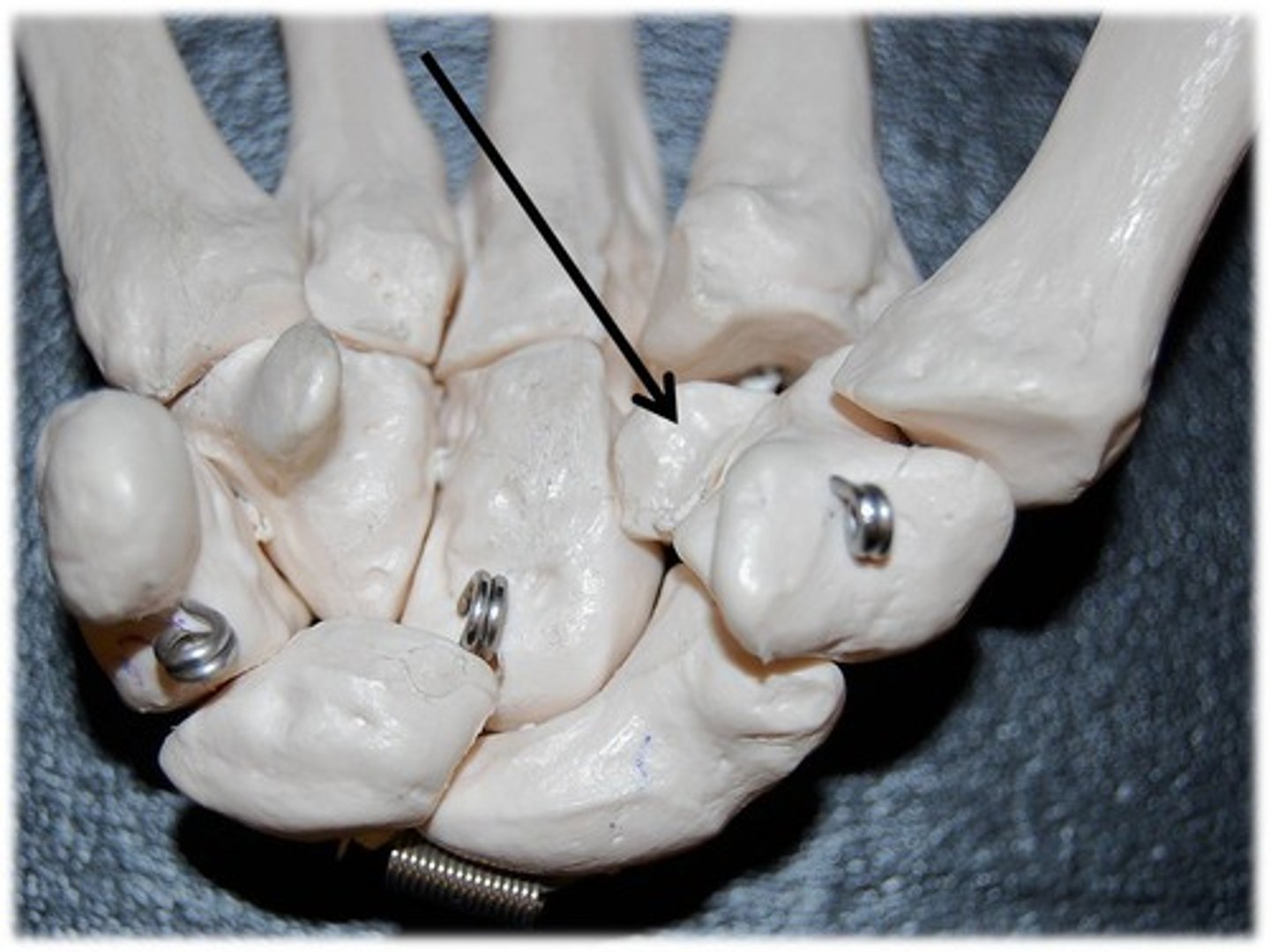
Hand - Capitate
- distal row
- columnar bone
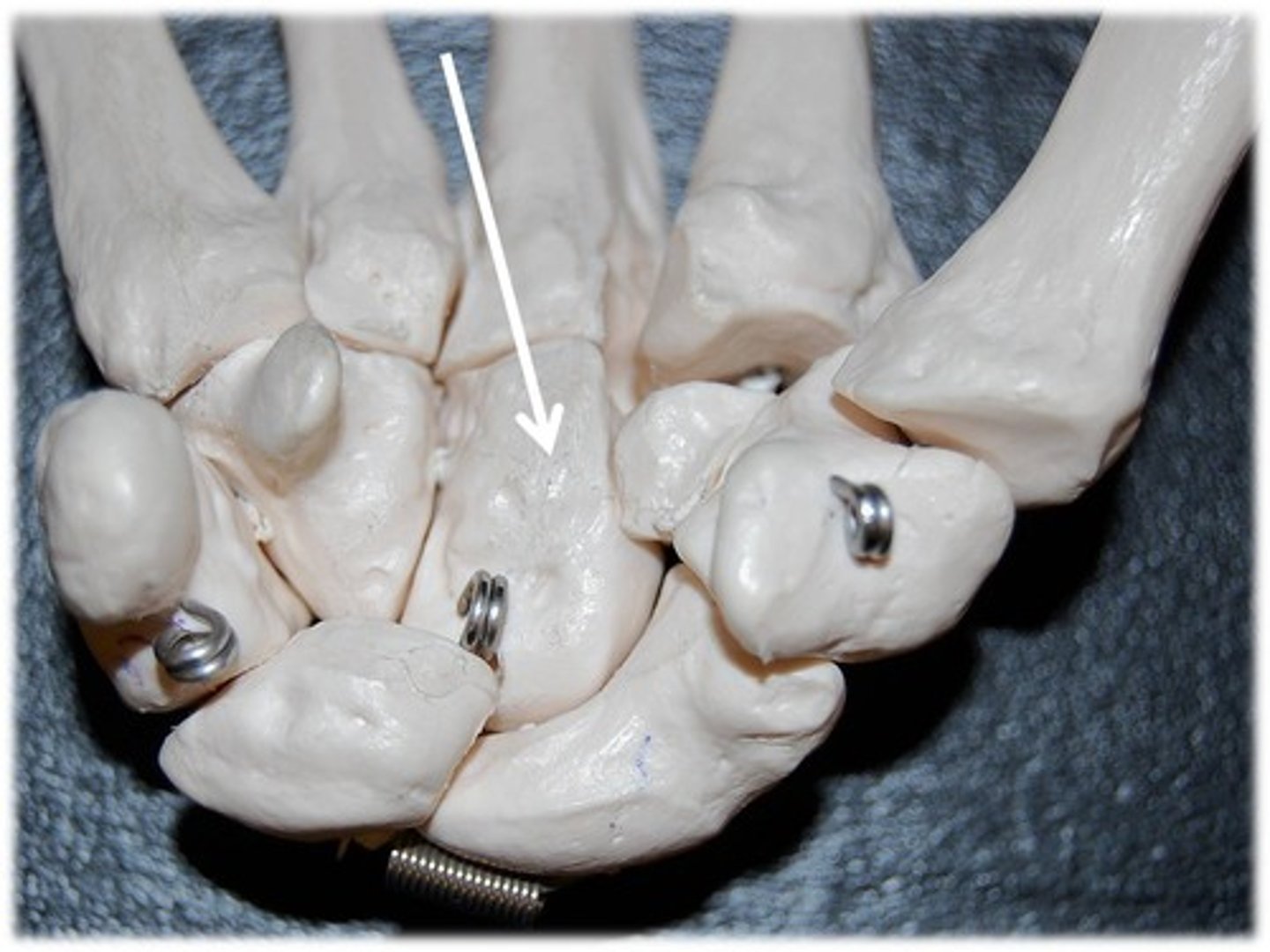
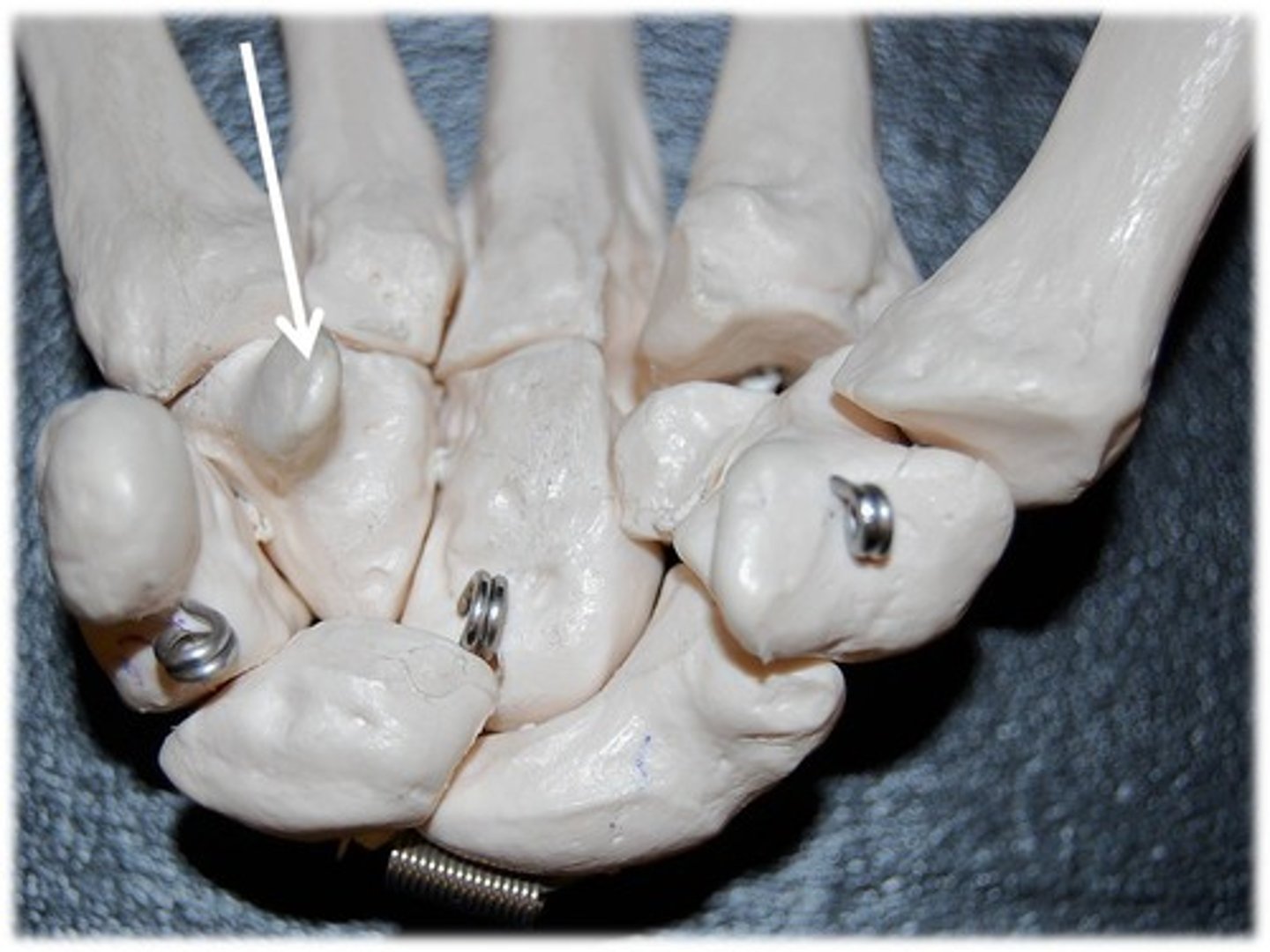
Hand - Hamate
- distal row
- has a hamulus
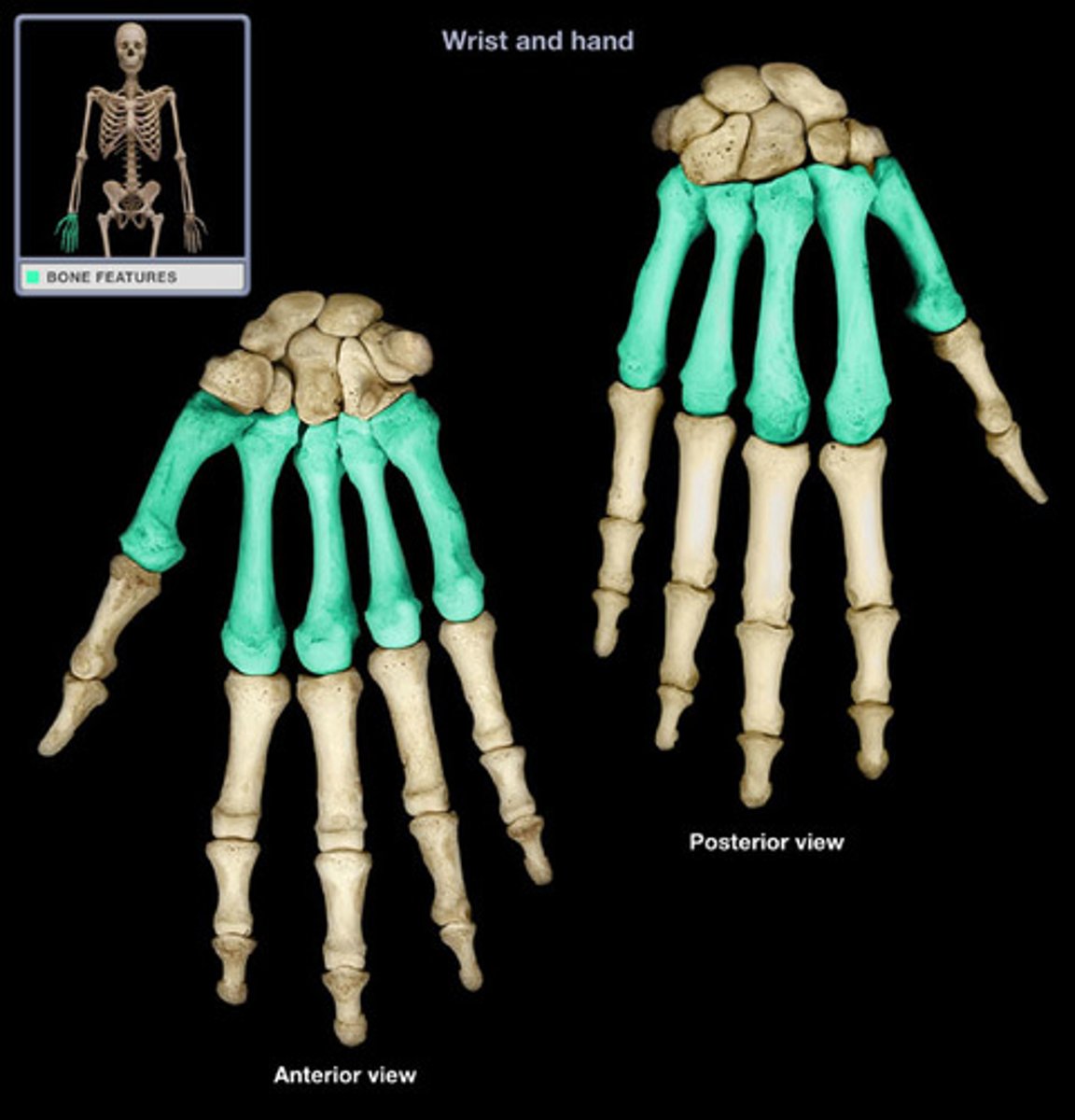
Metacarpals (1-5)
- the five bones that form the palms of the hand
- numbered one through five, starting with the thumb
- made of the head, body, and base
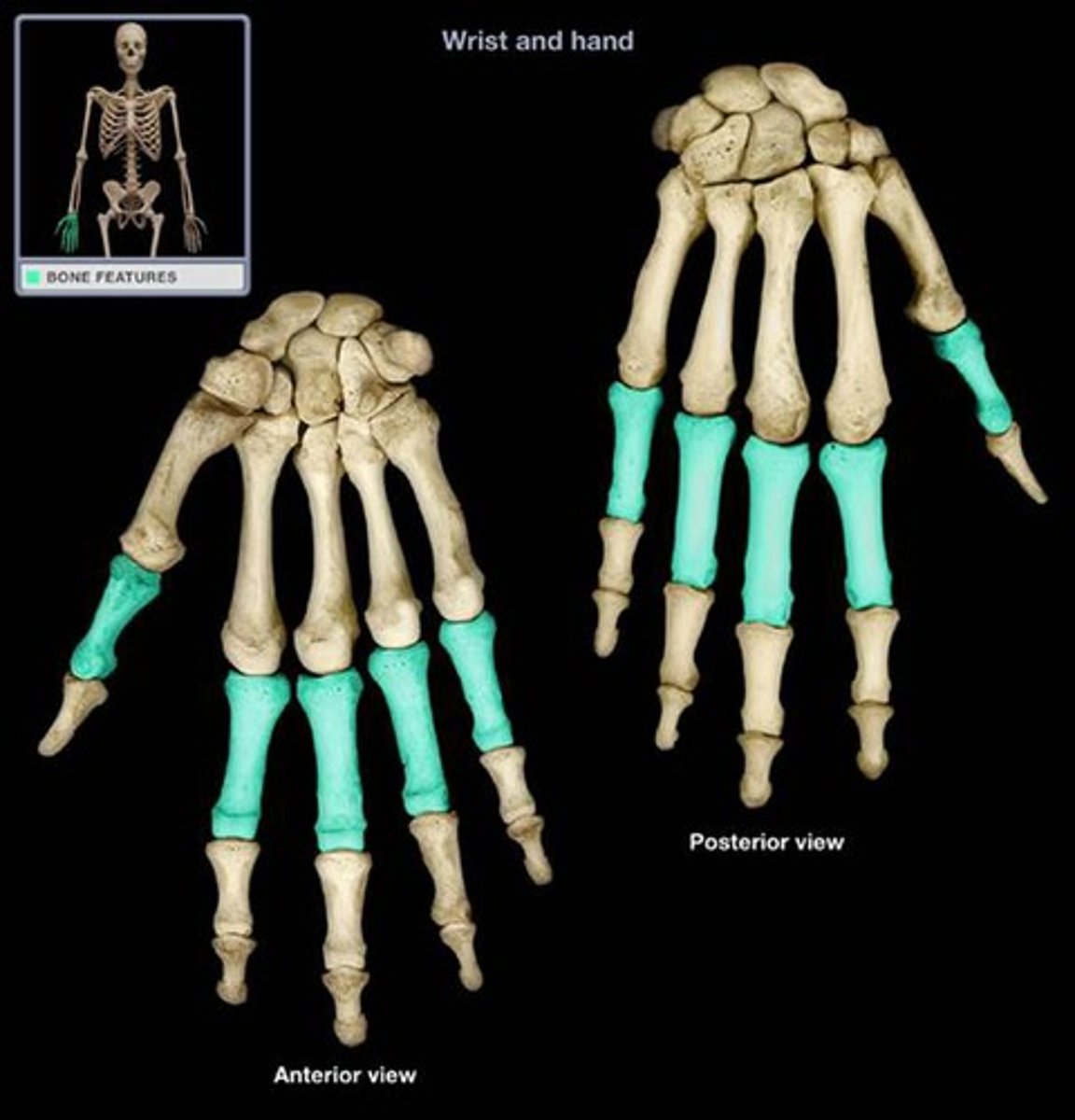
Proximal phalanges/phalanx (1-5)
- the phalanges closest to the wrist
- made of the head, body, and base
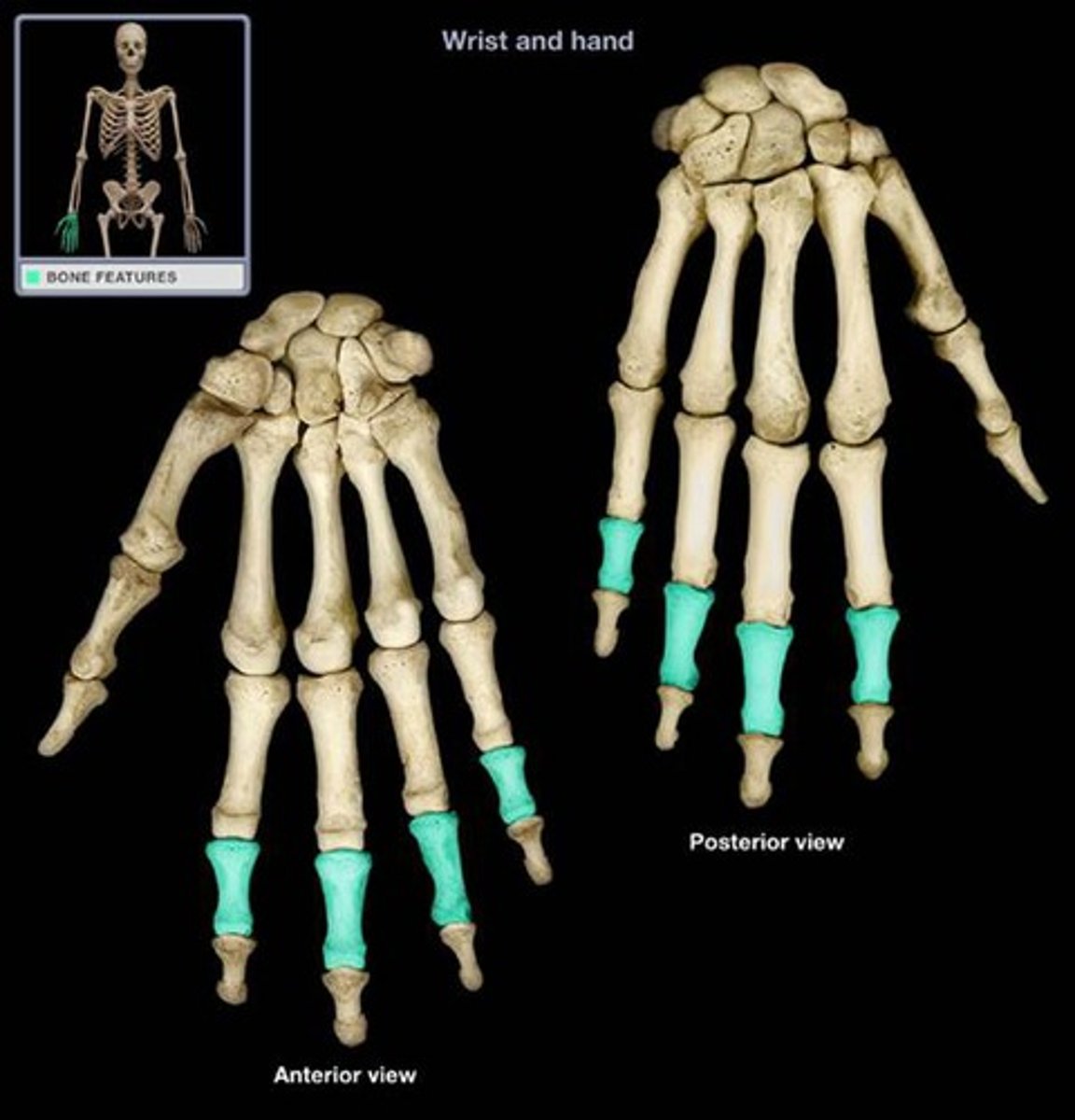
Middle phalanges/phalanx (2-5)
- made of the head, body, and base
- insertion of flexor digitorum superficialis
Distal phalanges/phalanx (1-5)
the phalanges furthest from the wrist
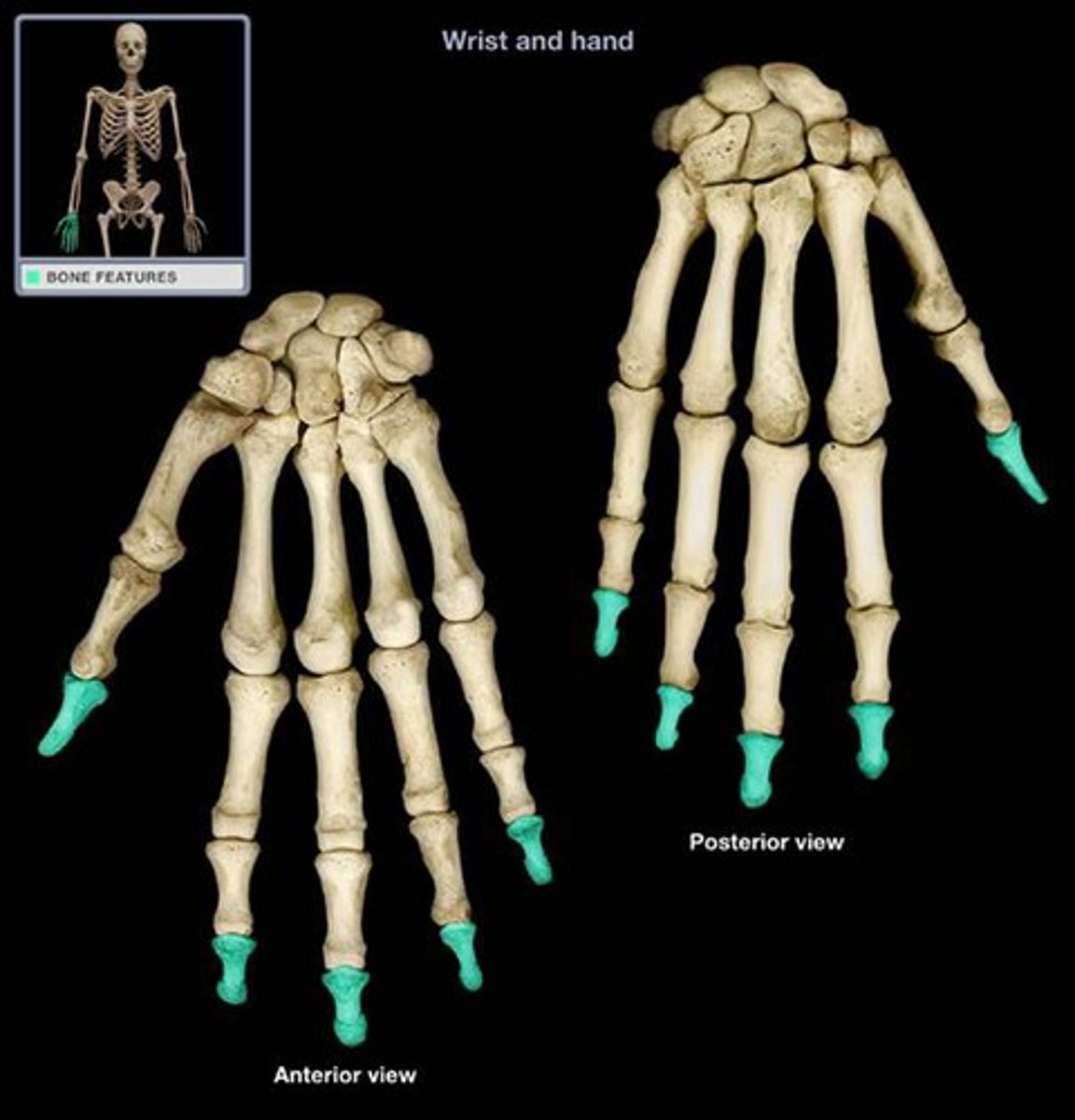
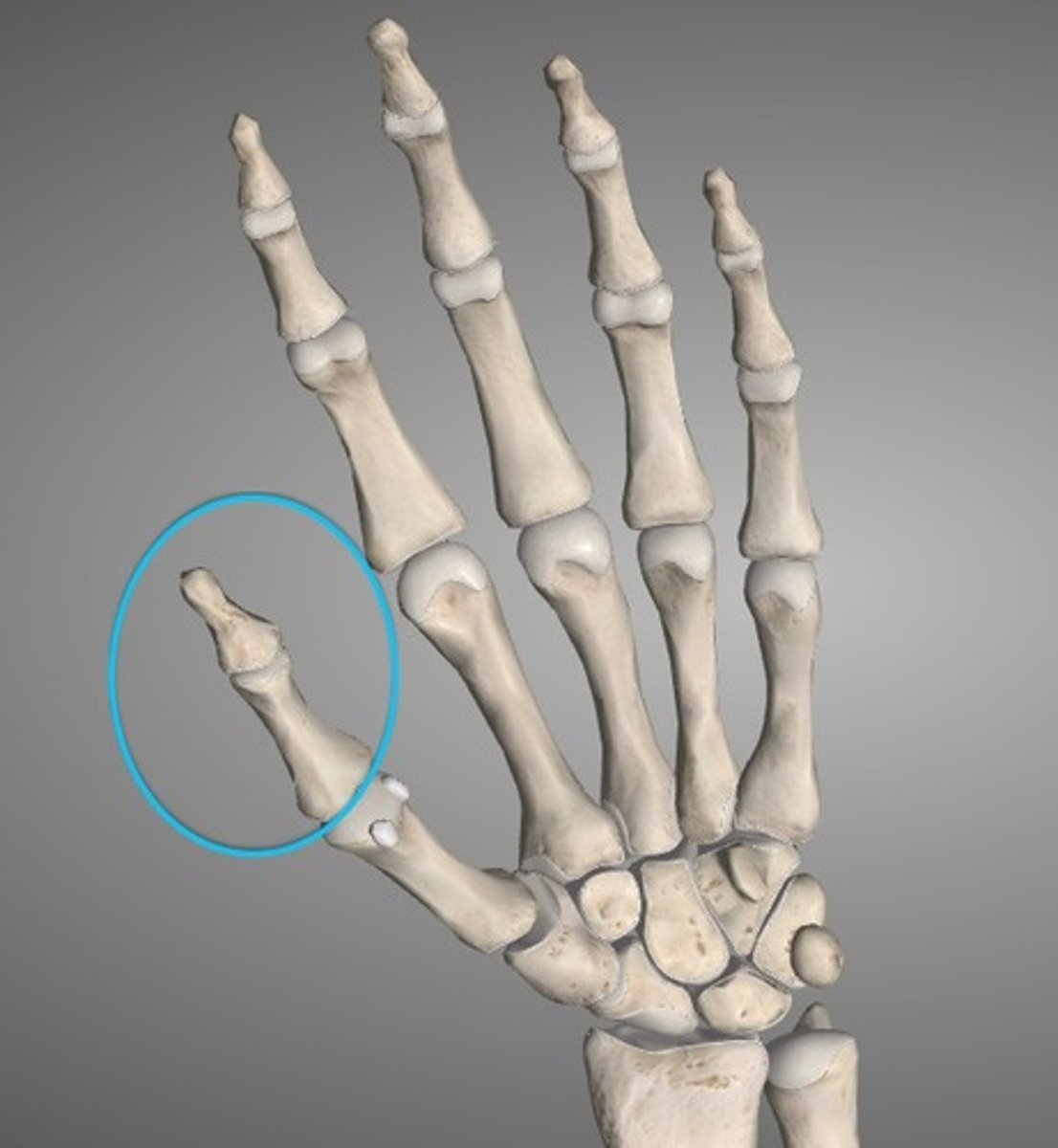
The thumb only has ____ phalanges
2 (proximal and distal)
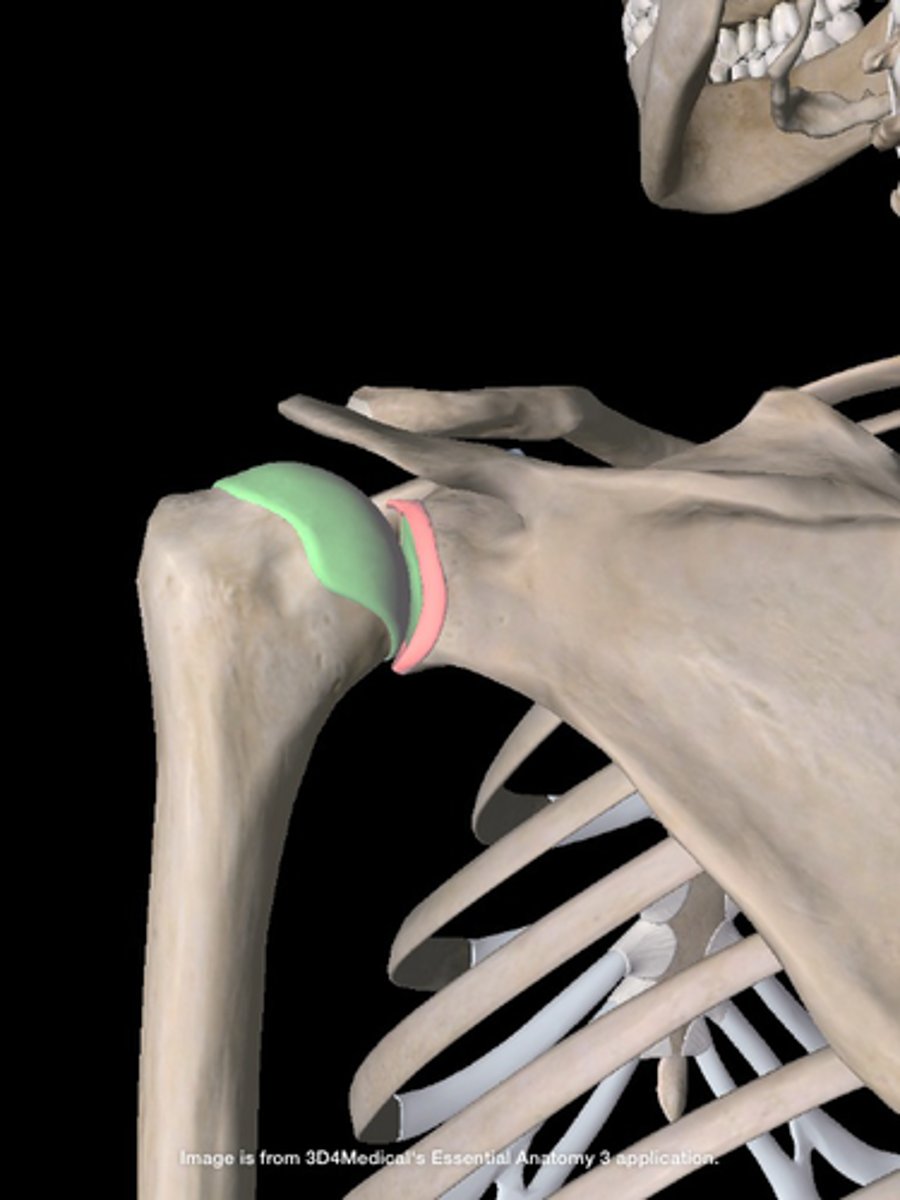
Glenohumeral joint
- The synovial ball-and-socket joint of the shoulder
- scapula, humerus, and clavicle
Coracohumeral ligament
Connects head of humerus to the coracoid process
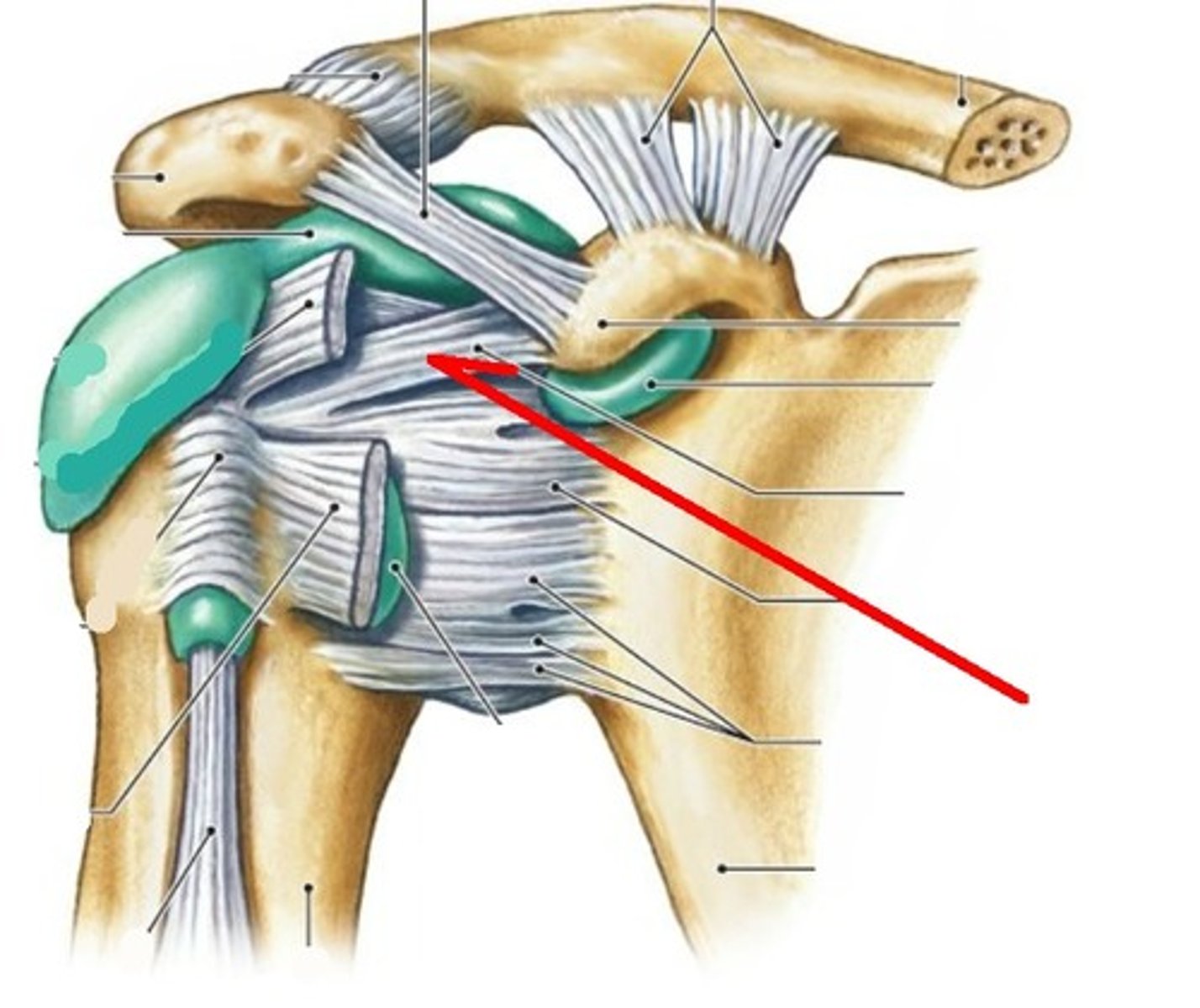
Transverse humeral ligament
narrow sheet that extends between the greater and lesser tubercles of the humerus
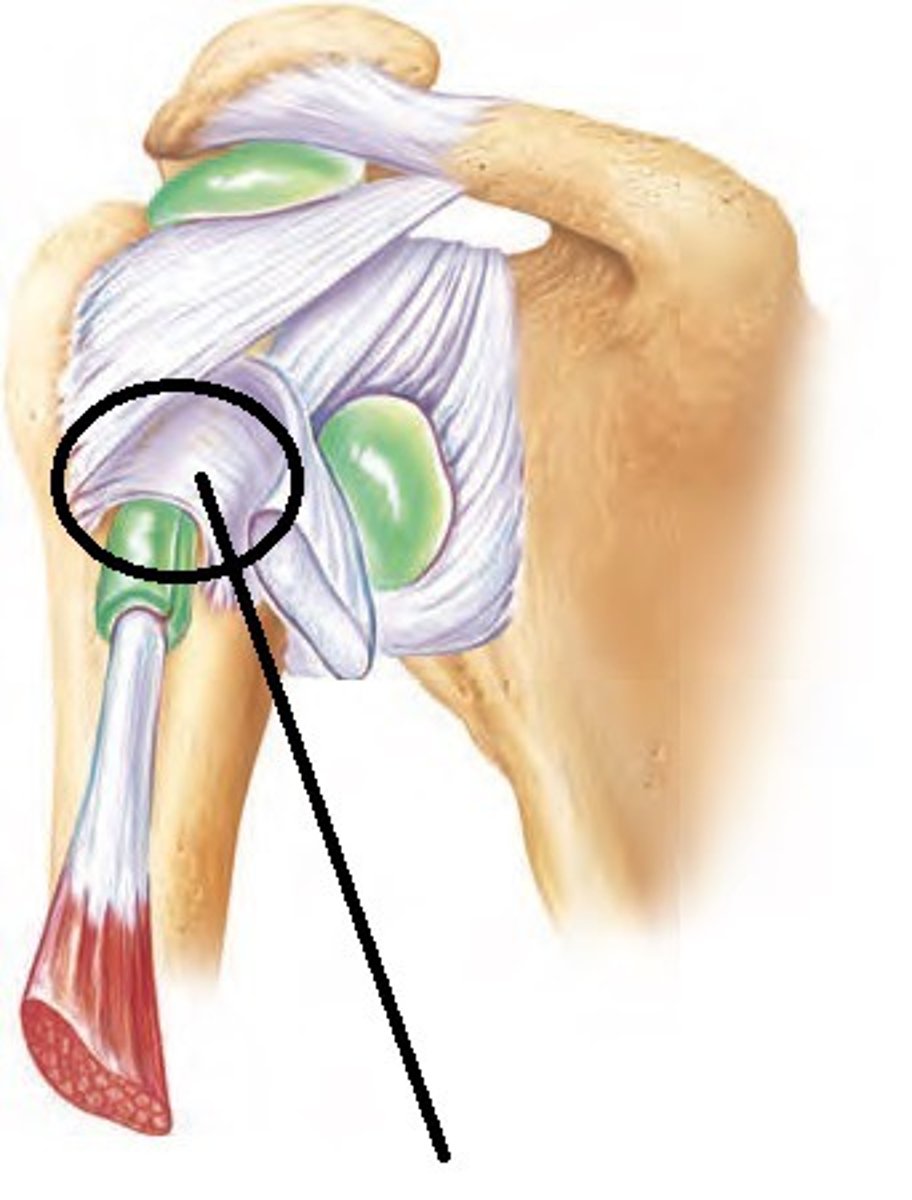
Glenoid labrum
fibrocartilage ring that deepens glenoid cavity
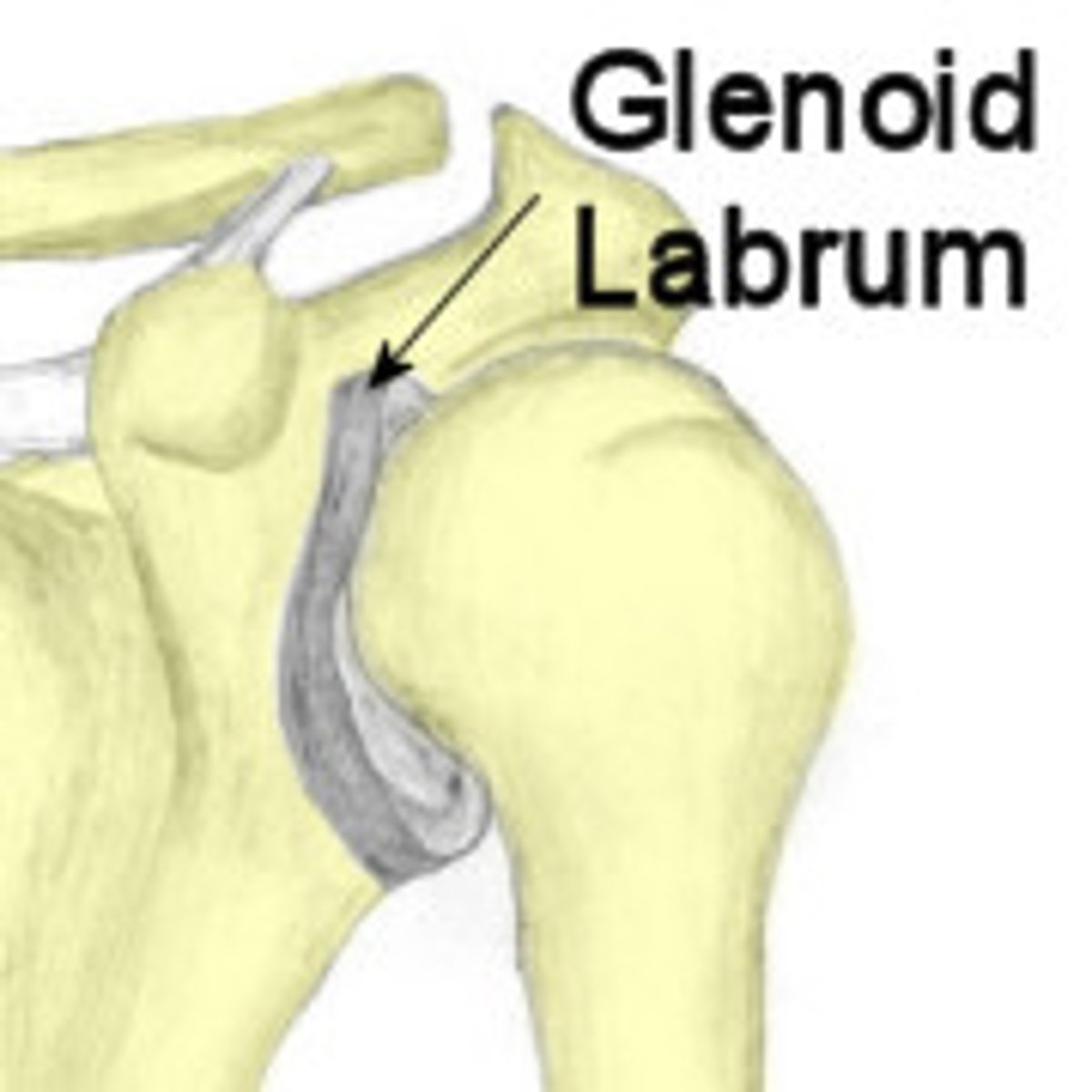
acromioclavicular ligament
connects the clavicle to the acromion
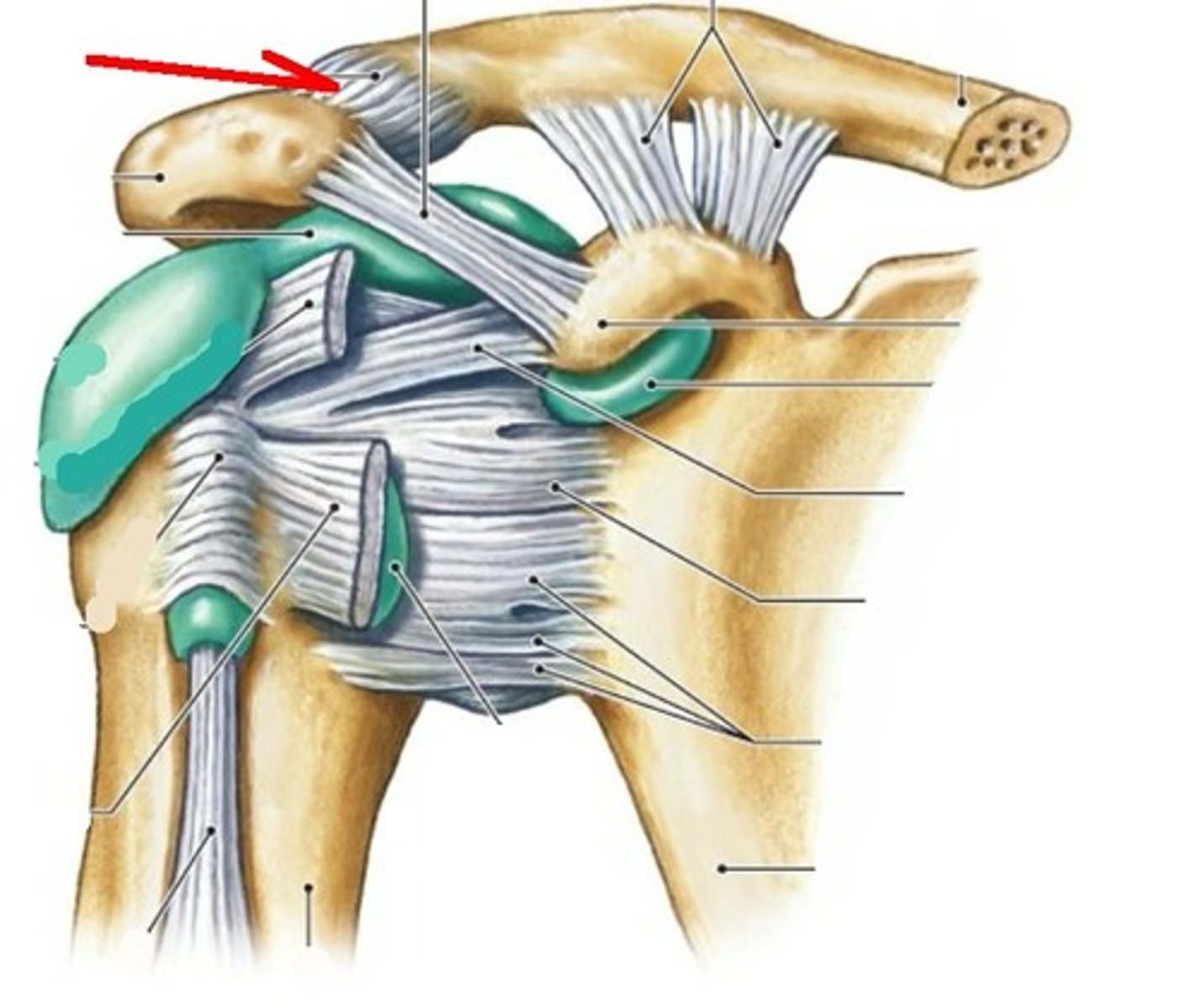
coracoclavicular ligament
connects the clavicle to the coracoid process
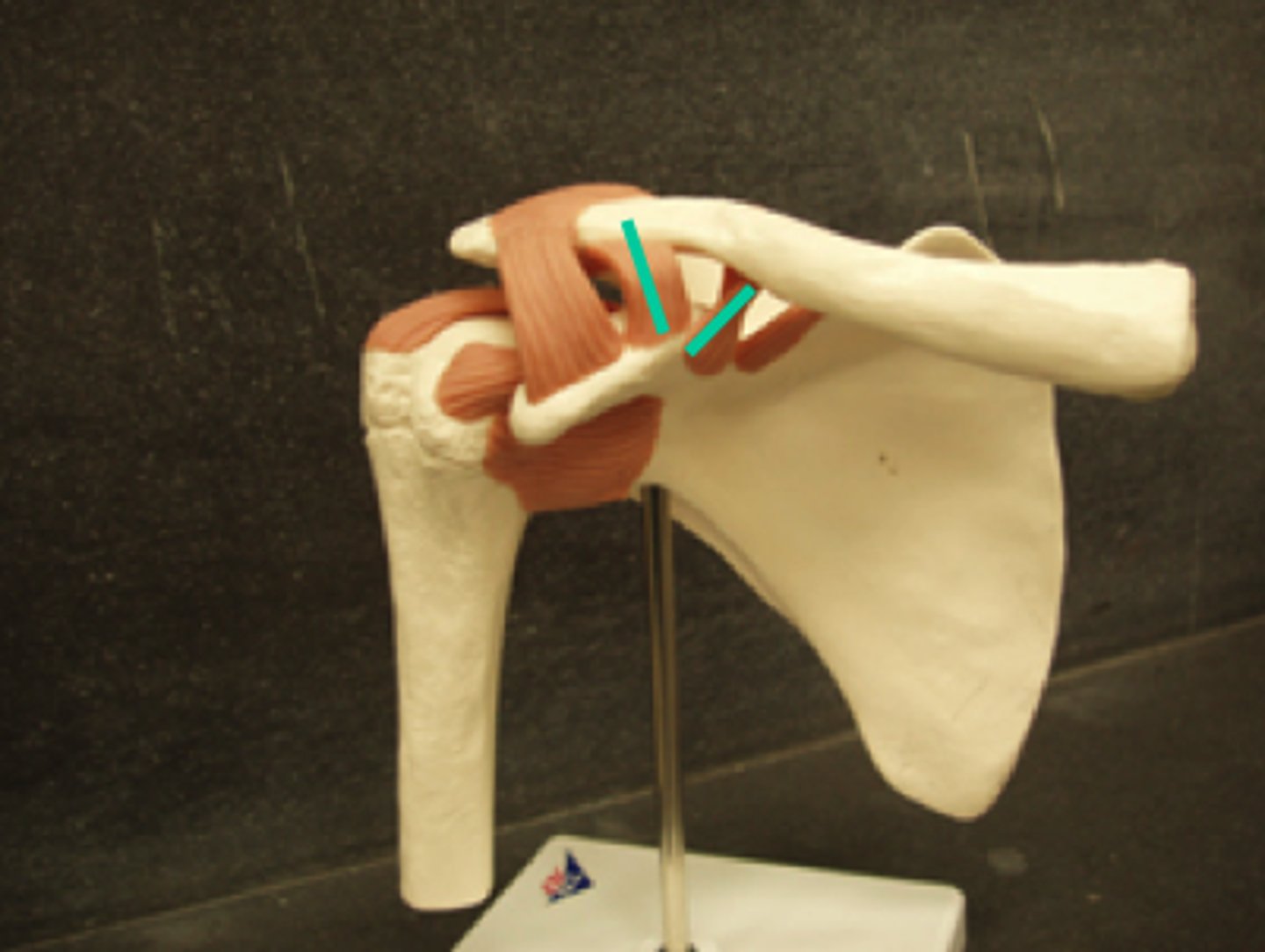
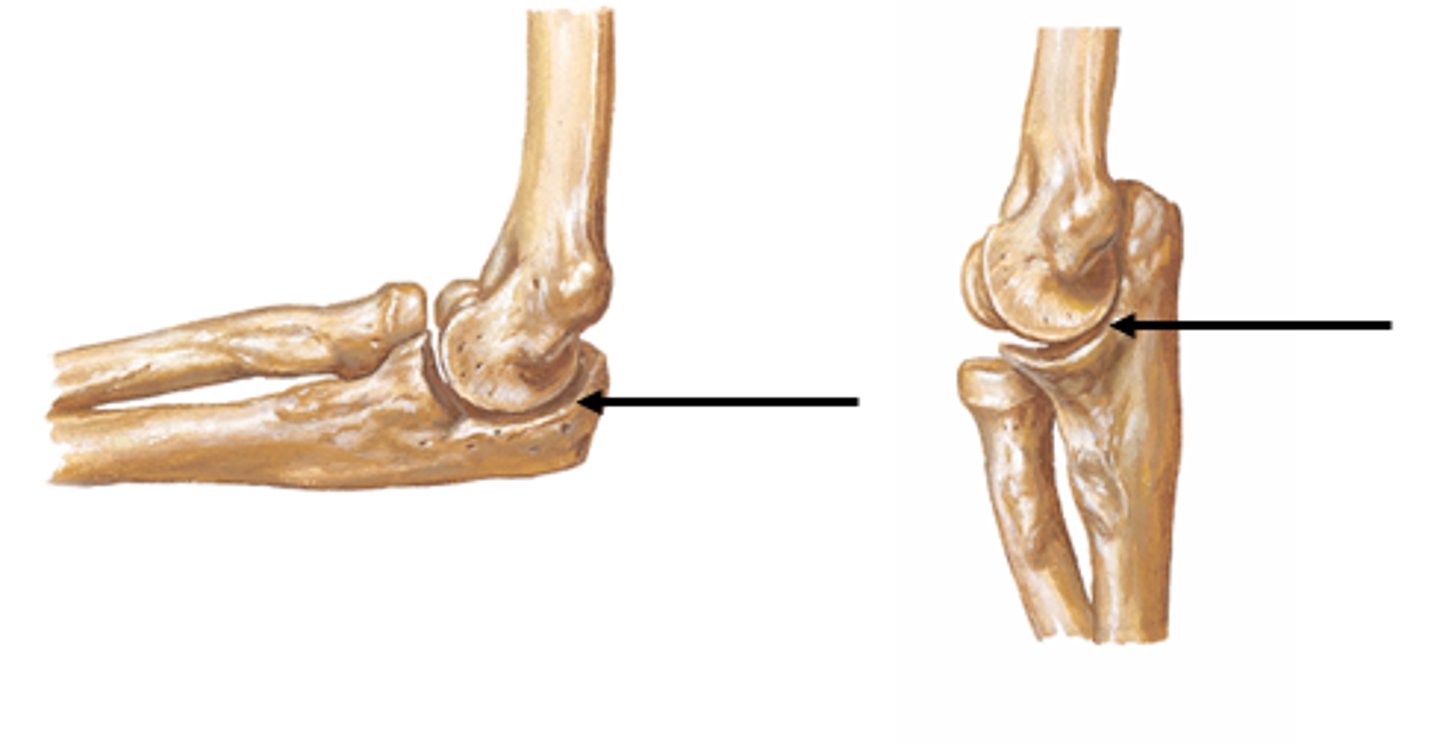
Humeroulnar joint
trochlea of humerus and trochlear notch of ulna
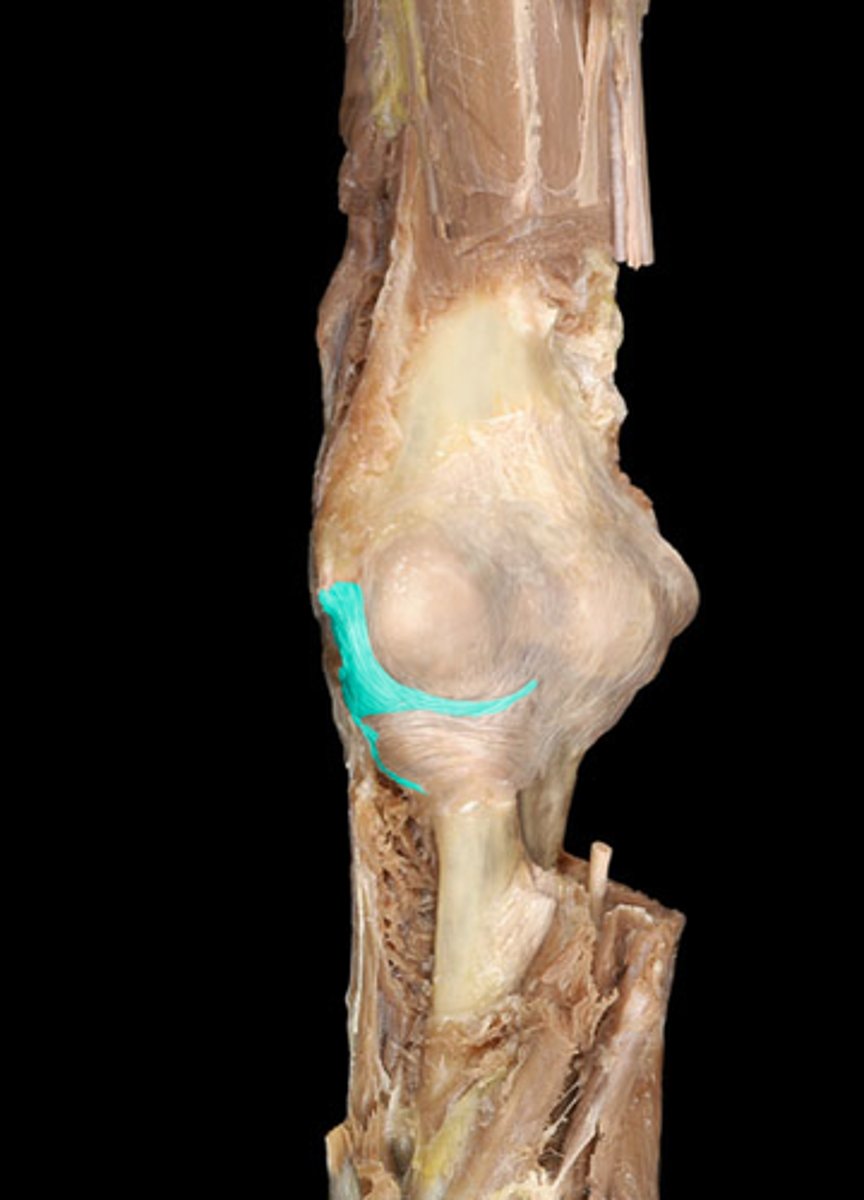
radial collateral ligament
connects the lateral epicondyle of the humerus to the radius
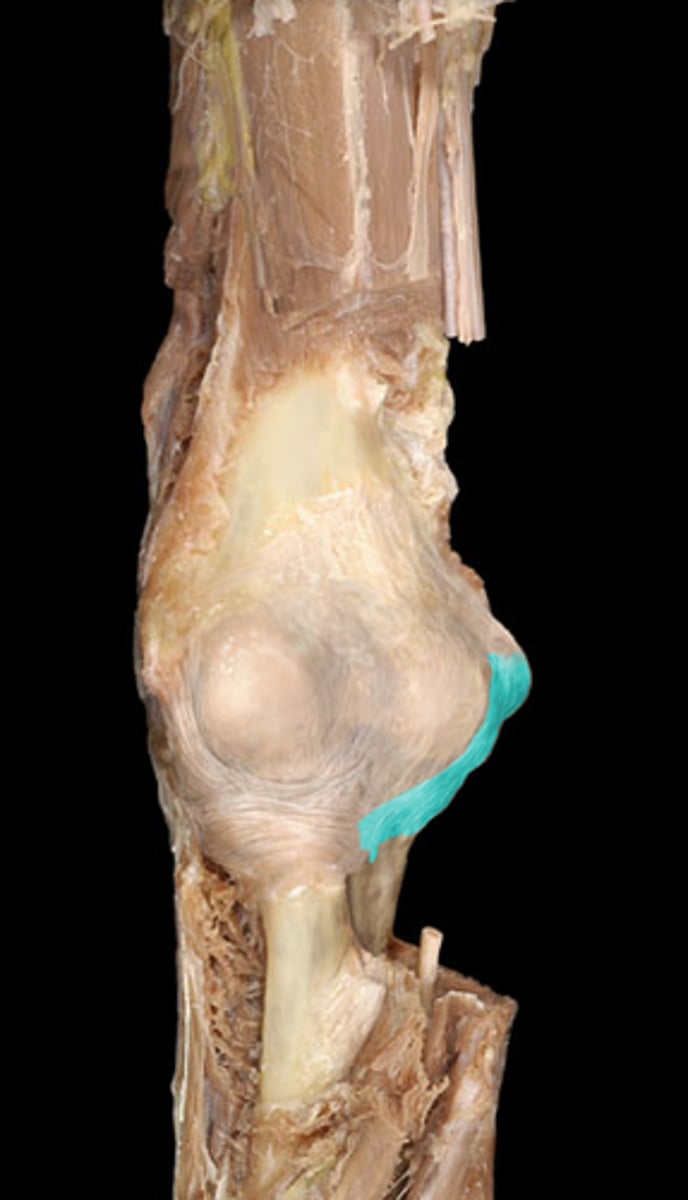
ulnar collateral ligament
Connects the medial epicondyle of the humerus to the ulna
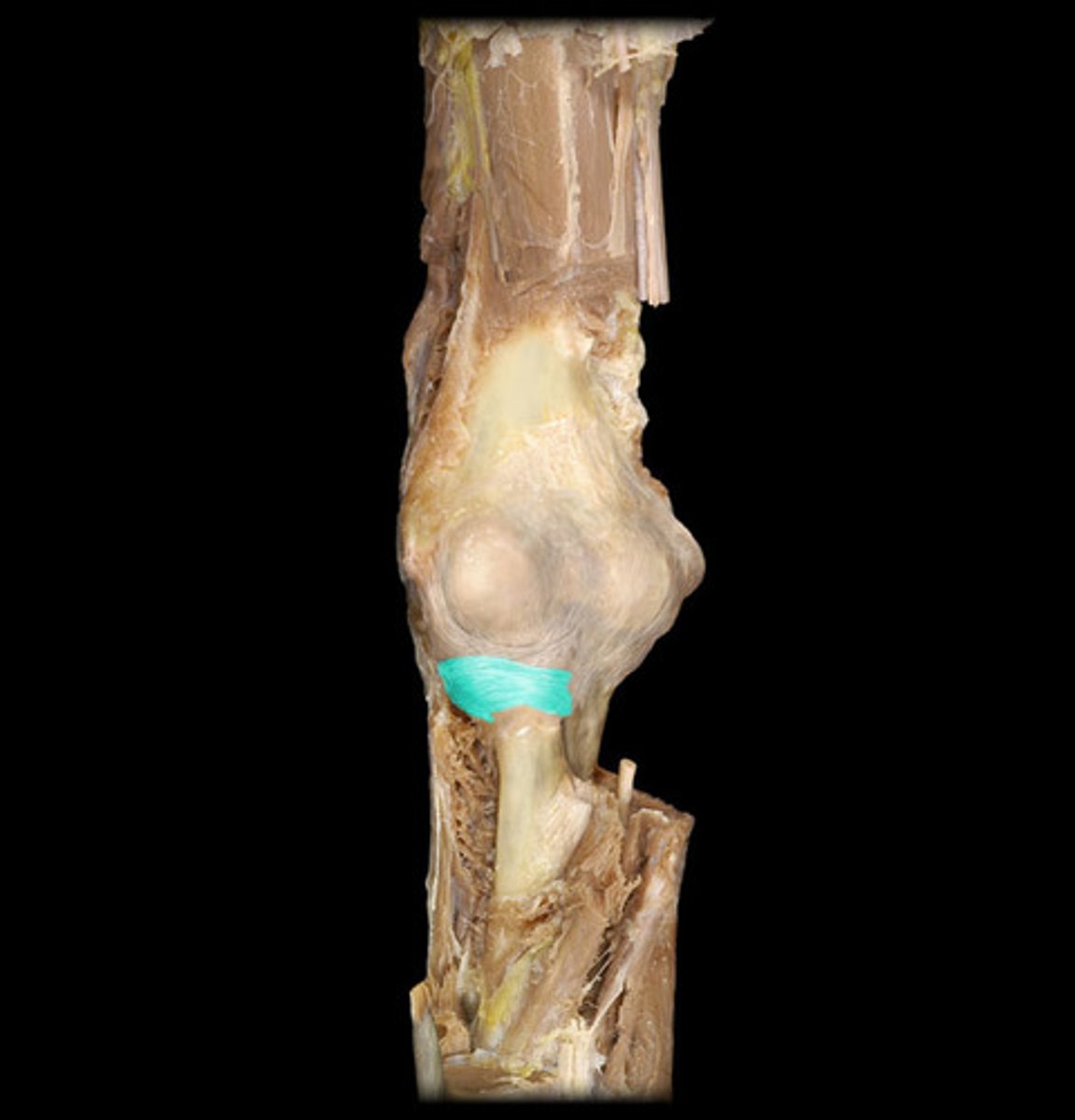
anular ligament
ring-shaped band of connective tissue below the elbow joint that encircles the head of the radius
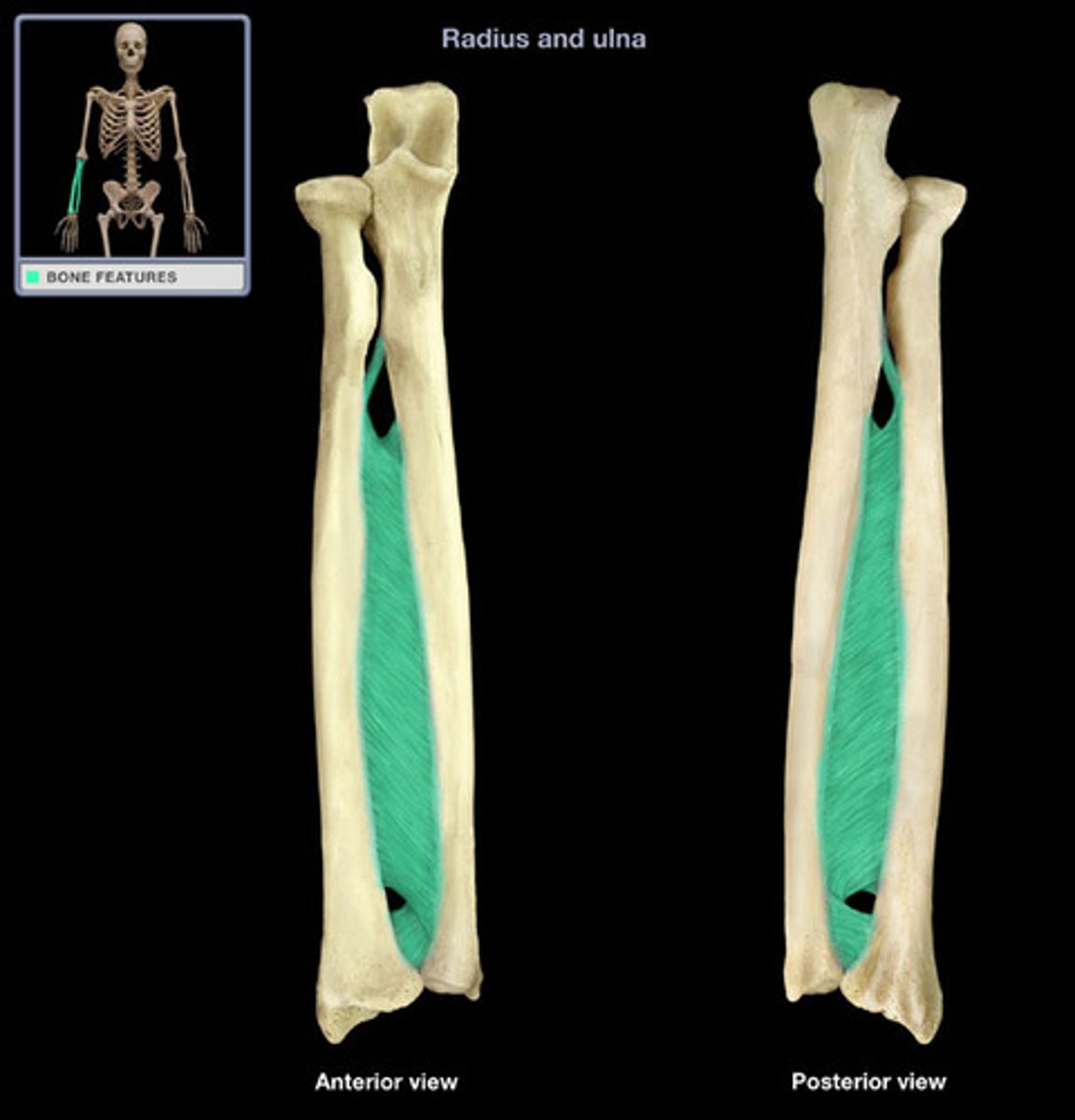
Interosseus membrane
membranous ligamental structure between the shafts of the ulna and radius bones
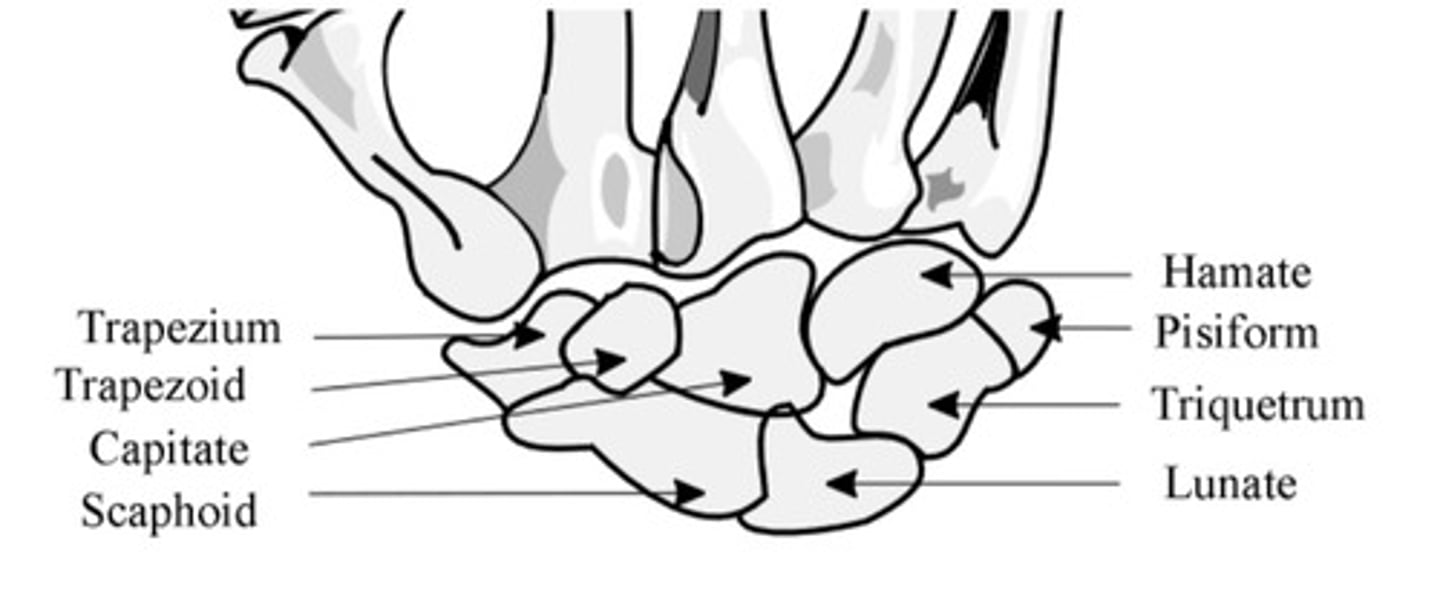
Mnemonic for the metacarpals (proximal to distal, radial to ulnar)
Some
Lovers
Try
Positions
That
They
Can't
Handle
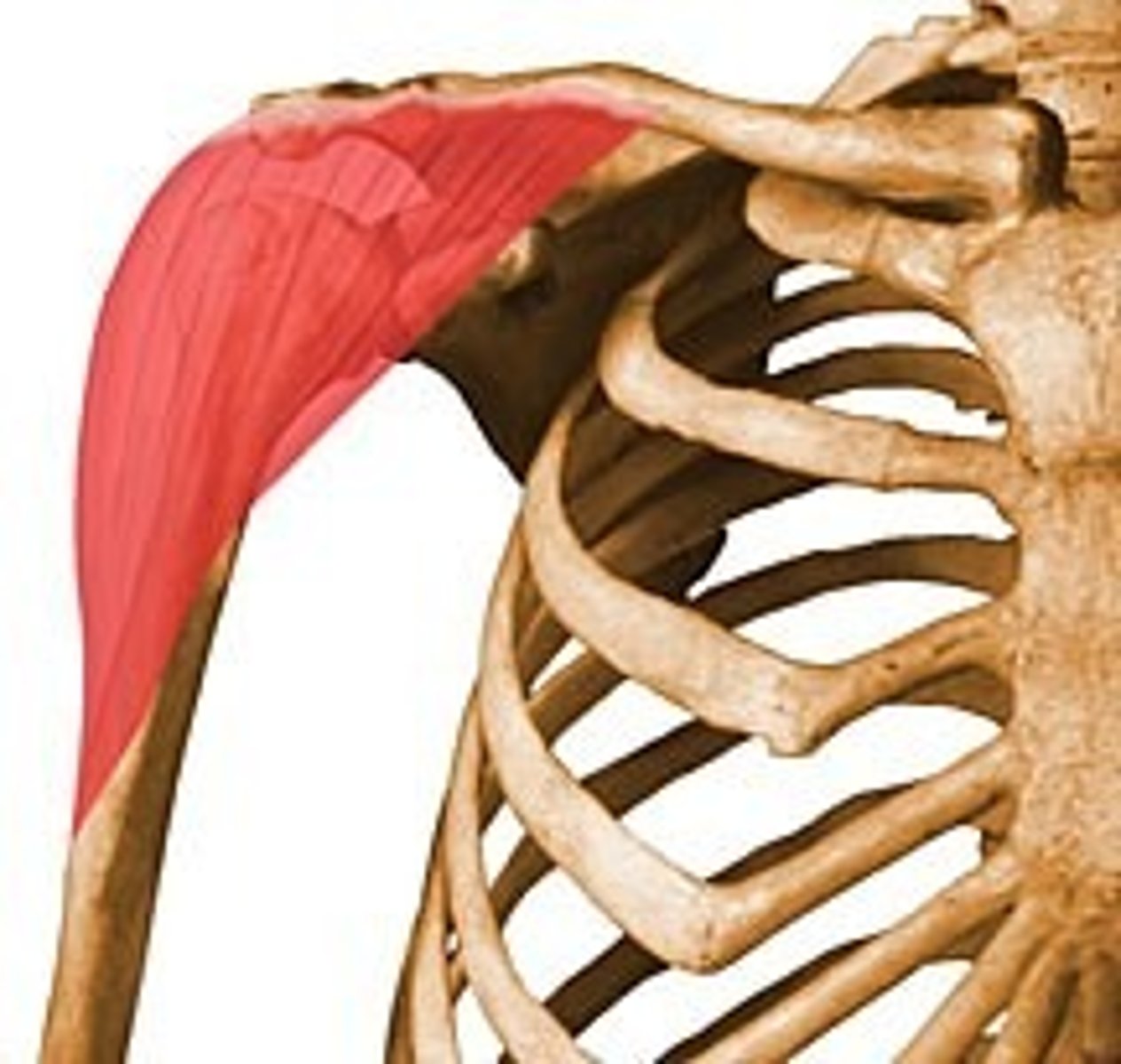
Deltoid muscle (anterior)
- Origin = clavicle
- Insertion = deltoid tuberosity (humerus)
- Primary Actions = shoulder flexion, pulling humerus anteriorly in sagittal plane, rotating humerus medially towards midline
- Innervation = axillary nerve
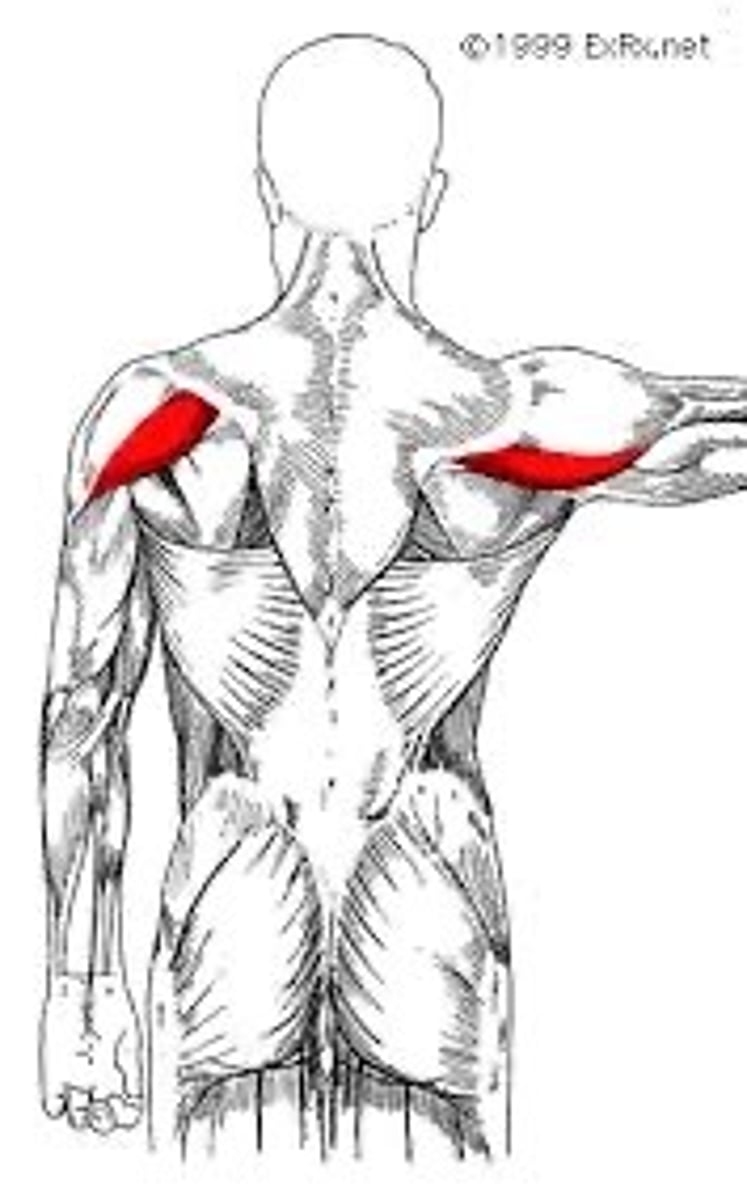
Deltoid muscle (posterior)
- Origin = spine of clavicle
- Insertion = deltoid tuberosity (humerus)
- Primary Actions = shoulder extension, pulling humerus anteriorly in sagittal plane, rotating humerus laterally from midline
- Innervation = axillary nerve
Deltoid muscle (lateral)
- Origin = acromion process of the clavicle
- Insertion = deltoid tuberosity (humerus)
- Primary Actions = shoulder abduction
- Innervation = axillary nerve
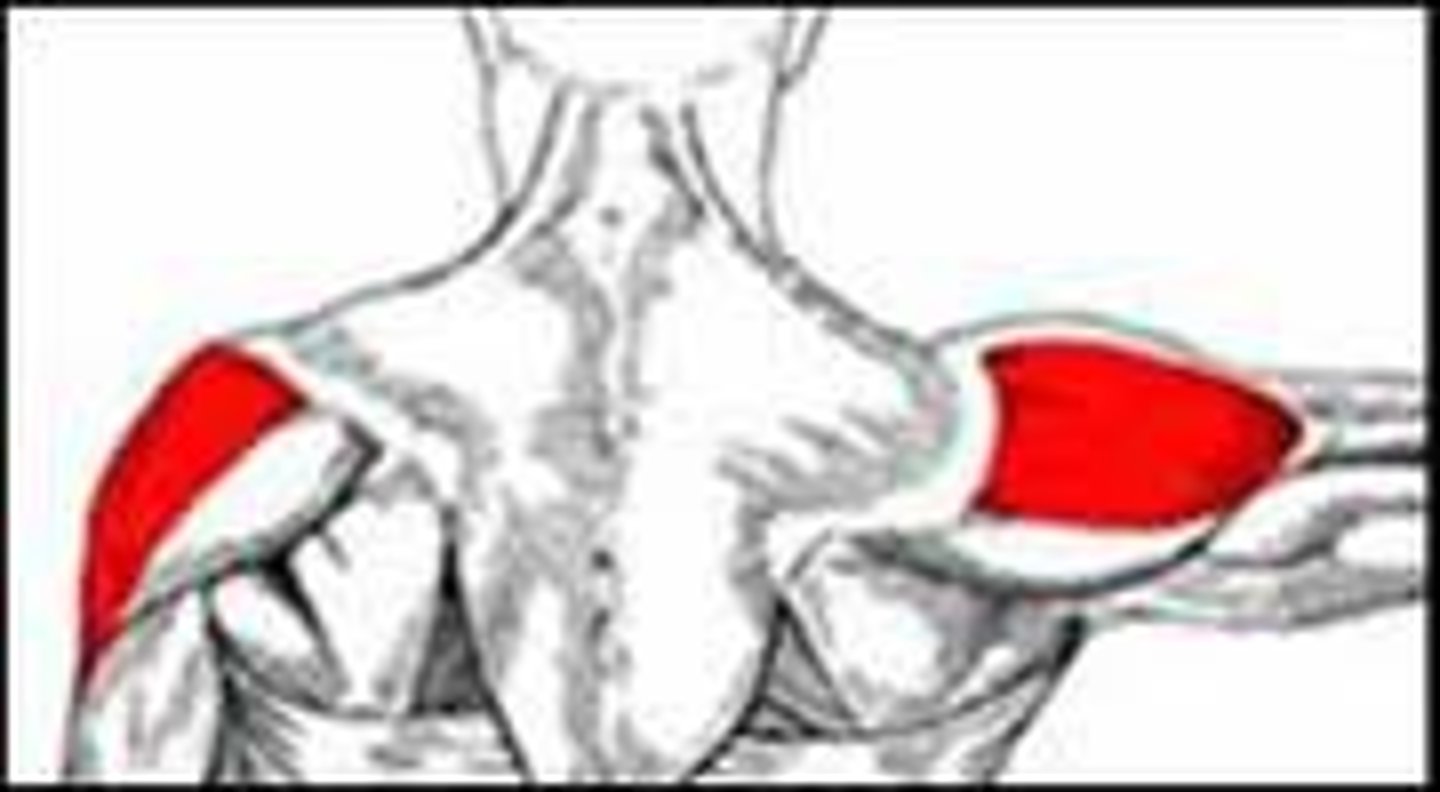
Supraspinatus muscle (Rotator Cuff)
- Origin = supraspinous fossa of the scapula
- Insertion = greater tubercle (humerus)
- Primary Actions = shoulder stabilization, shoulder abduction (away from midline)
- Innervation = Suprascapular nerve
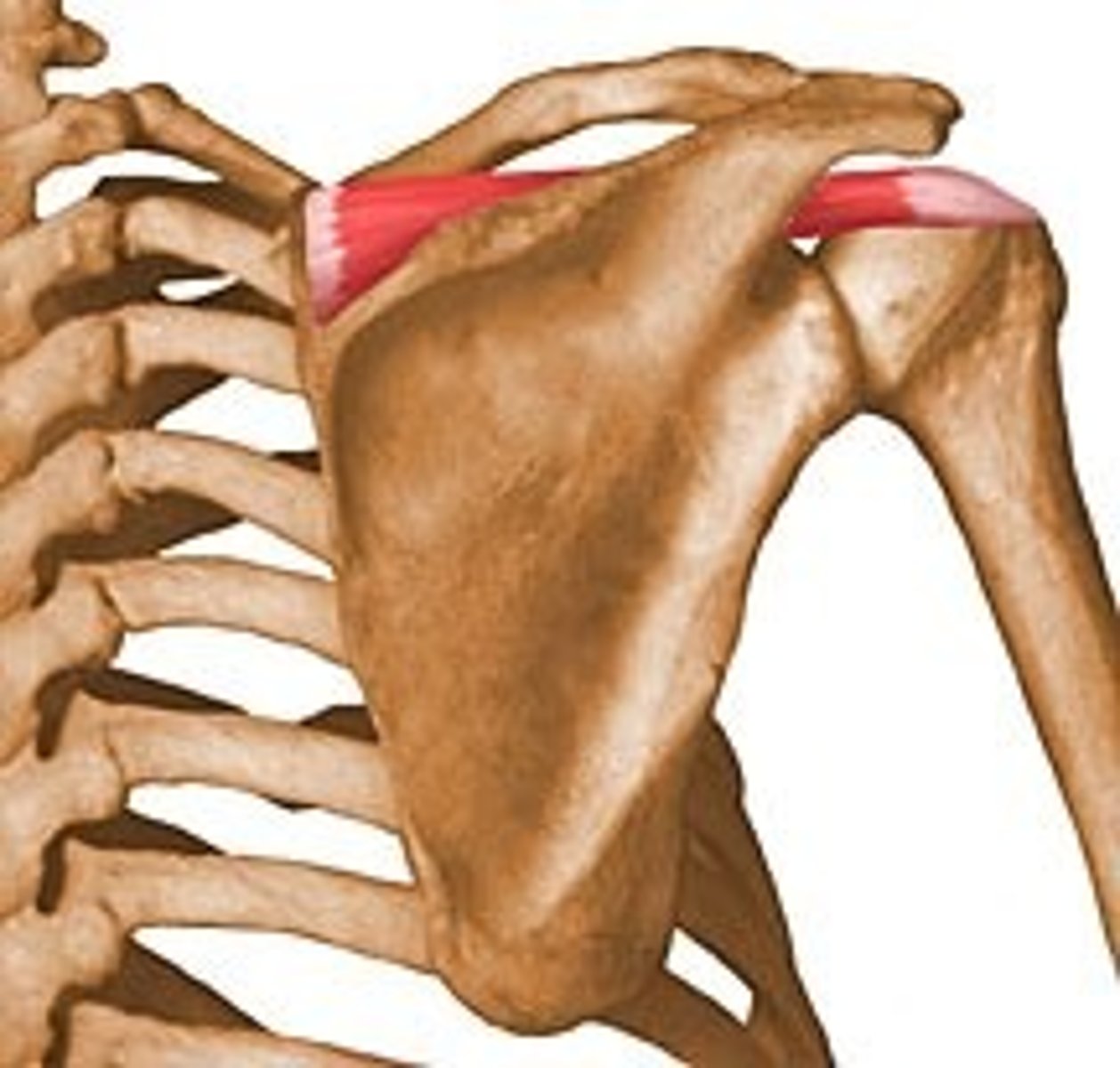
Infraspinatus muscle (Rotator Cuff)
- Origin = infraspinous fossa of the scapula
- Insertion = greater tubercle (humerus)
- Primary Actions = shoulder stabilization, shoulder lateral rotation
- Innervation = Suprascapular nerve
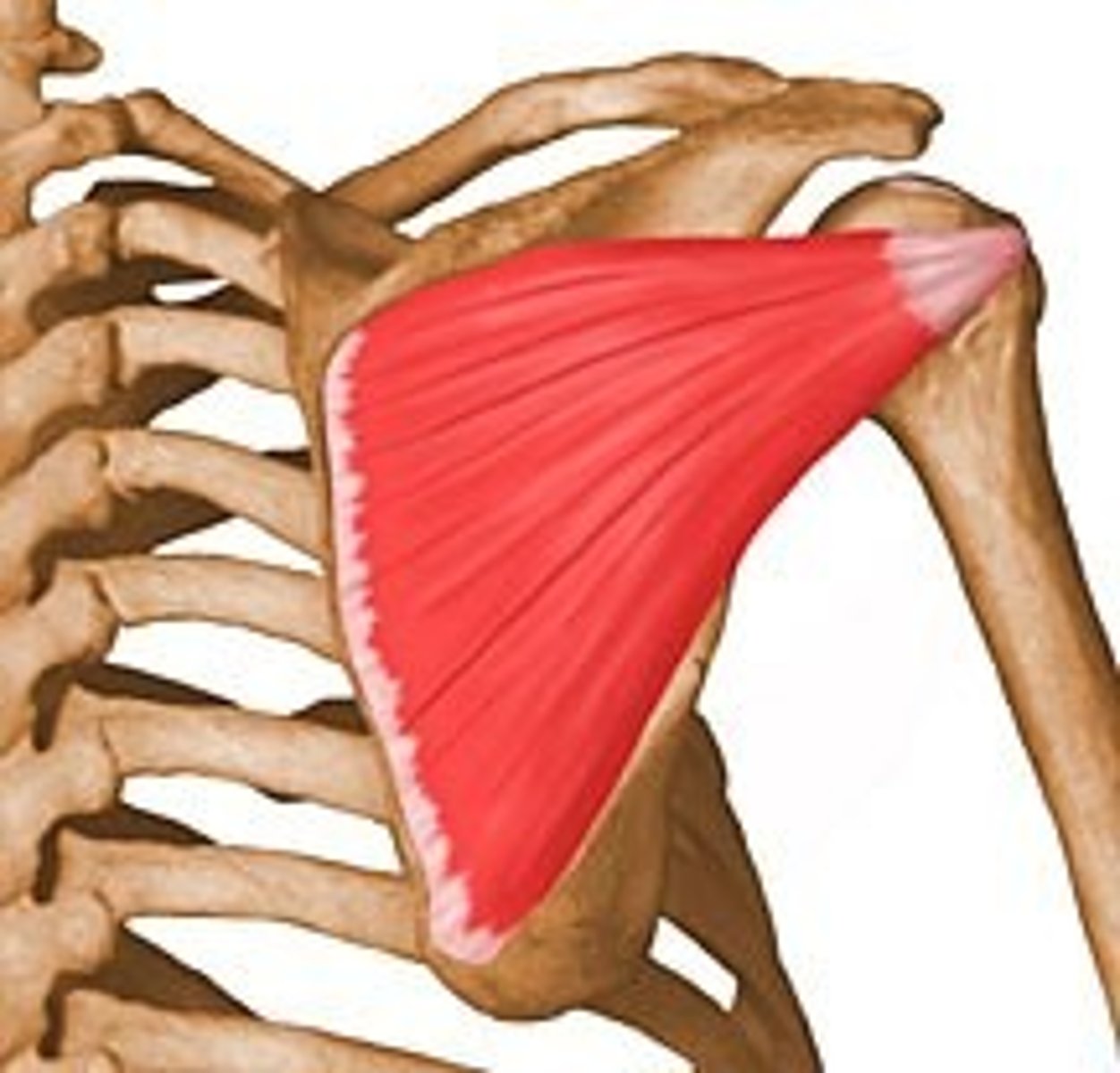
Teres minor muscle (Rotator Cuff)
- Origin = Posterolateral scapula
- Insertion = greater tubercle (humerus)
- Primary Actions = shoulder stabilization, shoulder lateral rotation
- Innervation = axillary nerve
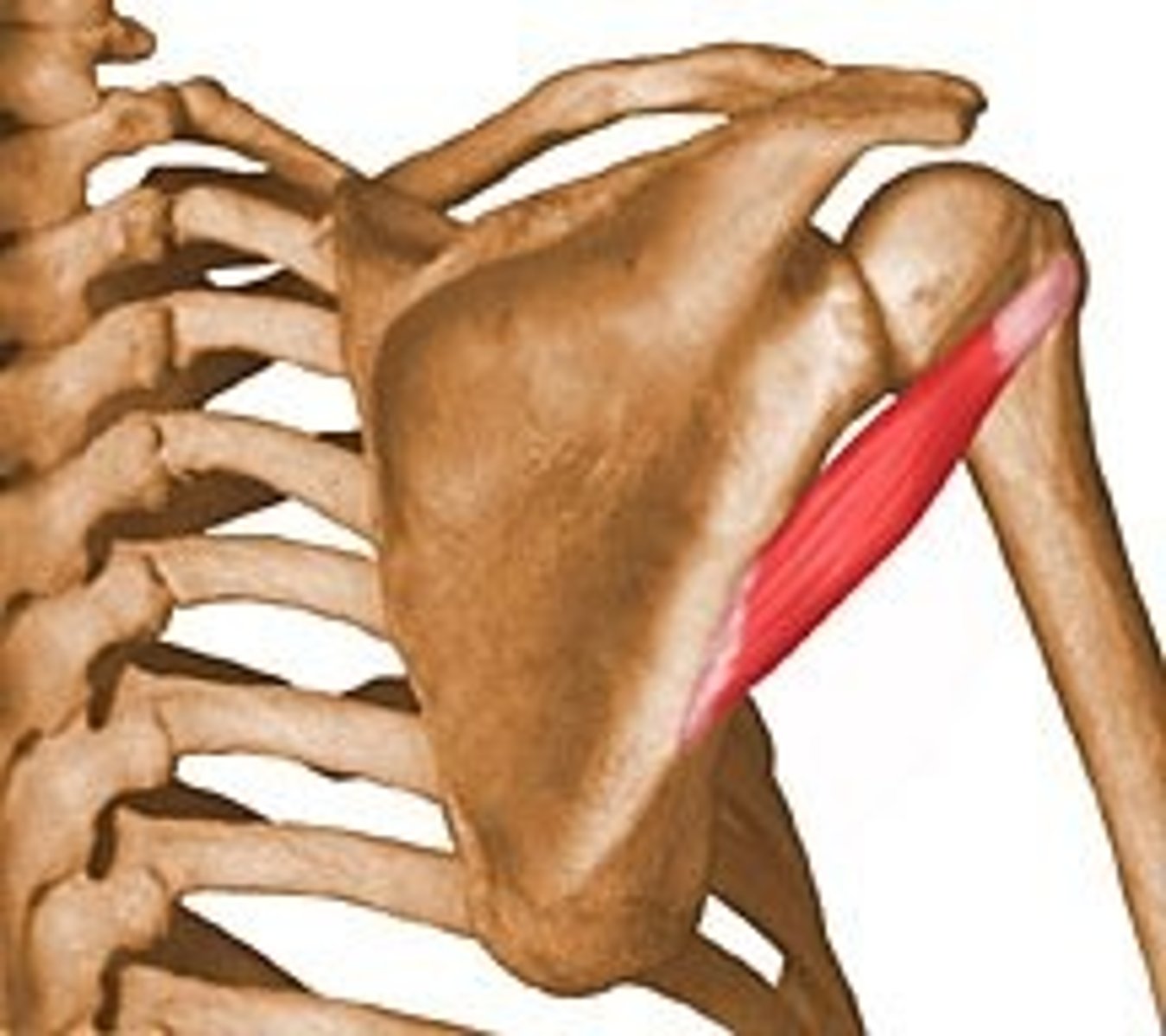
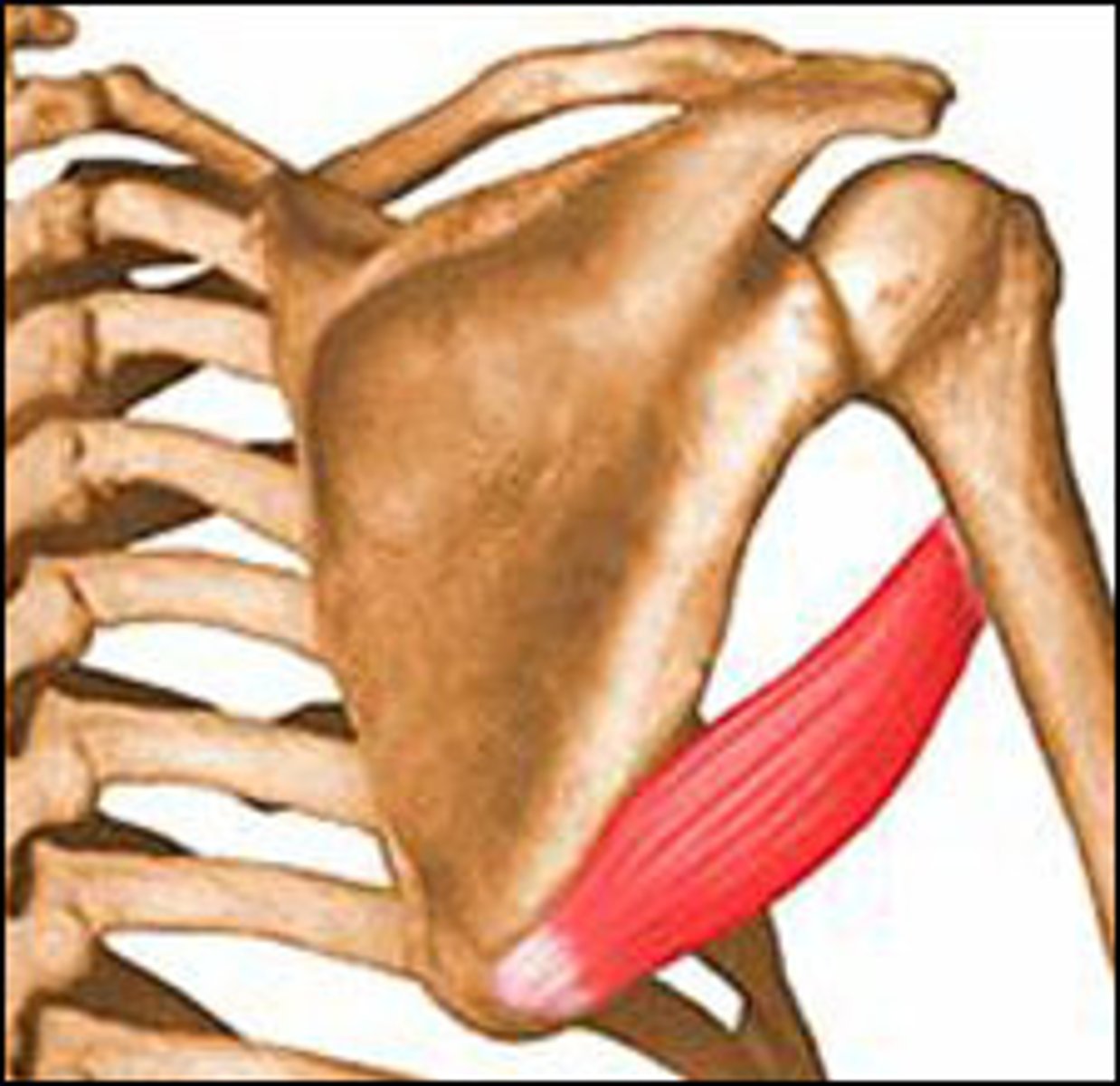
Teres major muscle (Little Lat)
- Origin = Inferior angle of the scapula
- Insertion = intertubercular groove/sulcus of humerus
- Primary Actions = shoulder extension, shoulder medial rotation
- Innervation = subscapular nerve
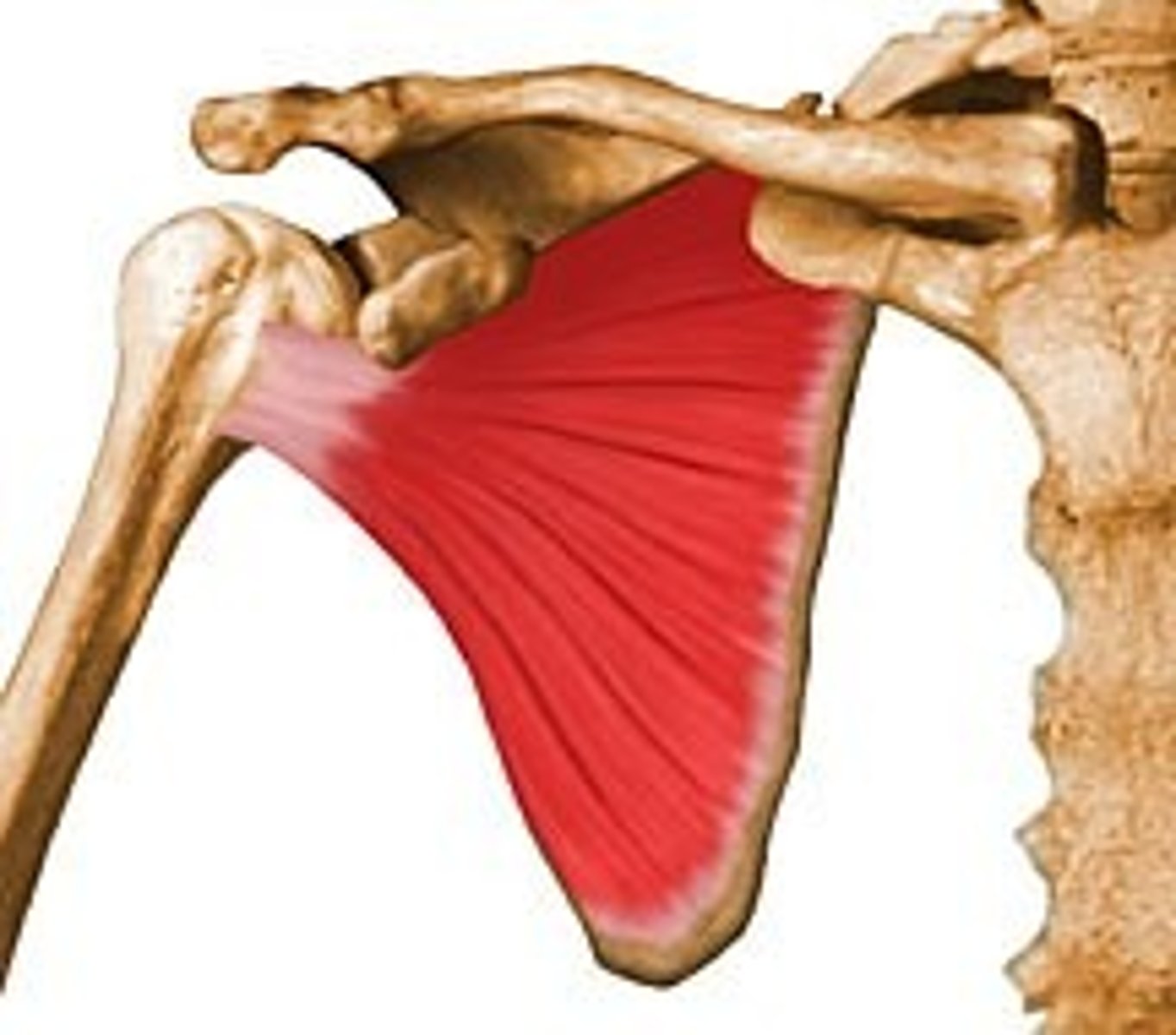
Subscapularis muscle (Rotator Cuff)
- Origin = Subscapular fossa
- Insertion = Lesser tubercle (humerus)
- Primary Actions = shoulder stabilization, shoulder medial rotation
- Innervation = Subscapular nerve
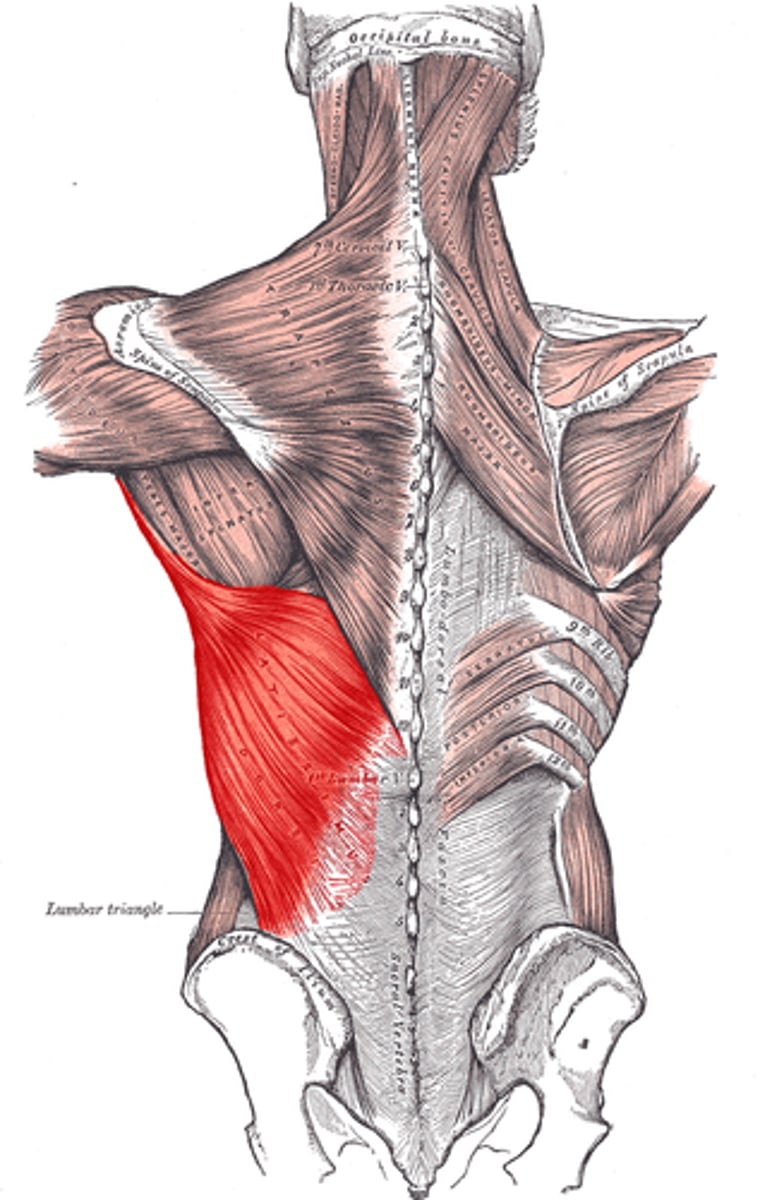
Latissimus dorsi muscle (Swimmers muscle)
- Origin = T7-L5, Lower ribs, Iliac Crest (Hip), Thoracolumbar fascia
- Insertion = Intertubercular sulcus/groove of humerus
- Primary Actions = shoulder extension (pull), shoulder adduction (depresses), shoulder medial rotation
- Innervation = Thoracodorsal nerve
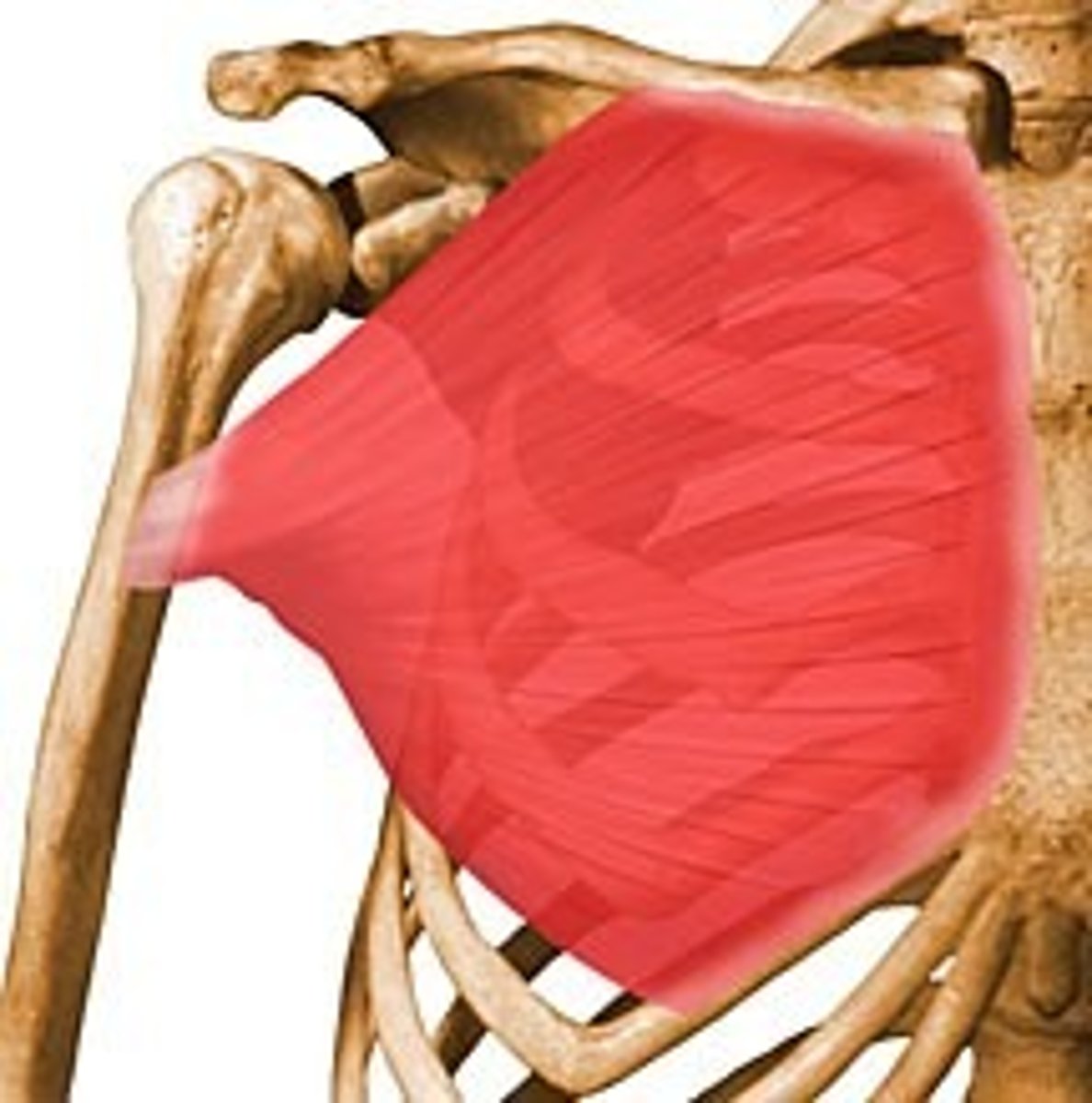
Pectoralis major muscle
- Origin = Clavicle, Sternum, Ribs (1-7)
- Insertion = Intertubercular sulcus/groove of humerus
- Primary Actions = Shoulder flexion (up to 90 degrees), shoulder adduction, shoulder medial rotation, extension from a flexed position
- Innervation = Medial and lateral pectoral nerves
Pectoralis minor muscle
- Origin = Ribs (3-5)
- Insertion = Coracoid process of the scapula
- Primary Actions = Scapular abduction, downward rotation of the scapula, depression of the scapula
- Innervation = Medial and lateral pectoral nerves
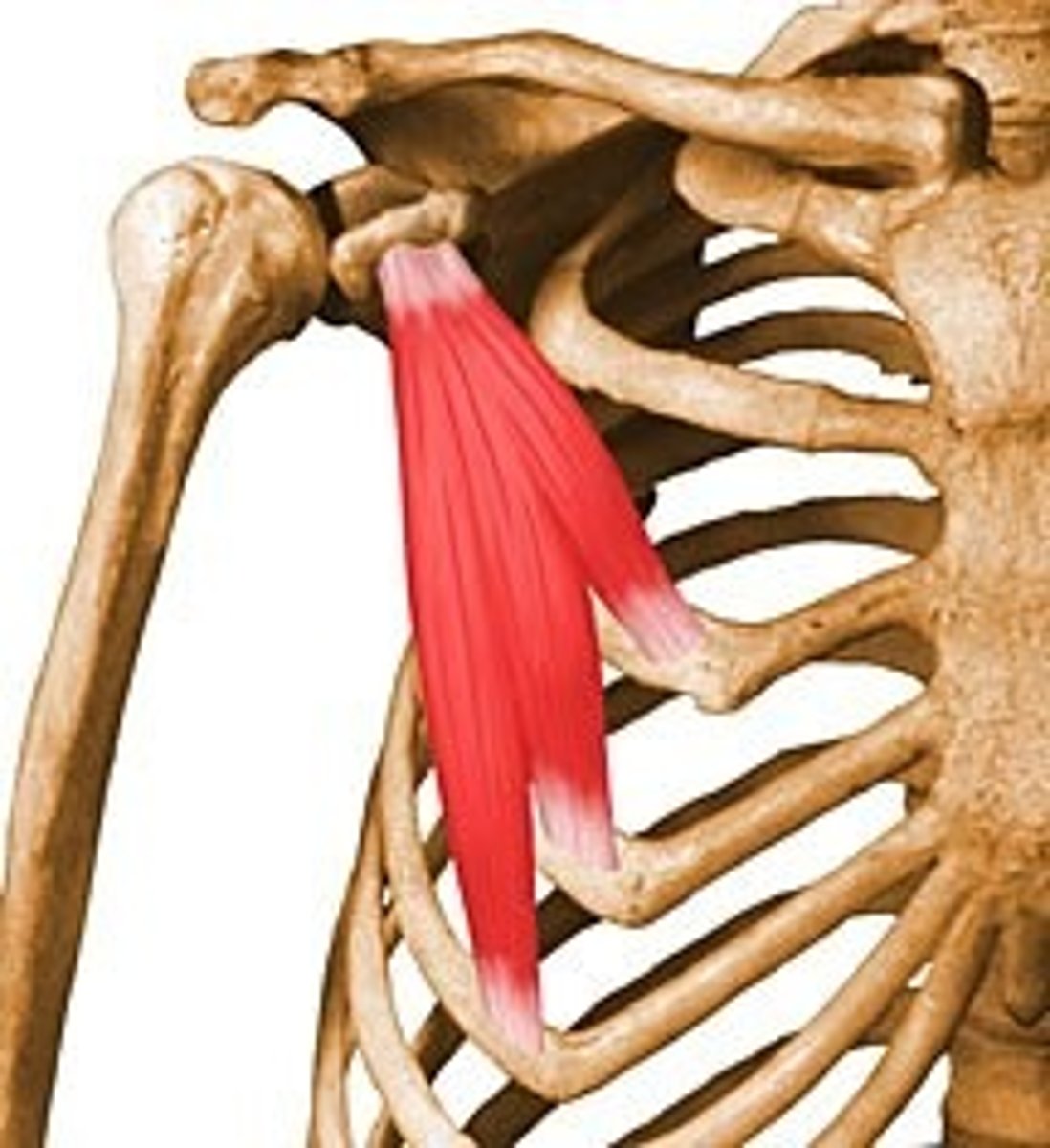
Coracobrachialis muscle
- Origin = Coracoid process (scapula)
- Insertion = Mid medial humerus
- Primary Actions = shoulder flexion, medial rotation
- Innervation = Musculocutaneous nerve
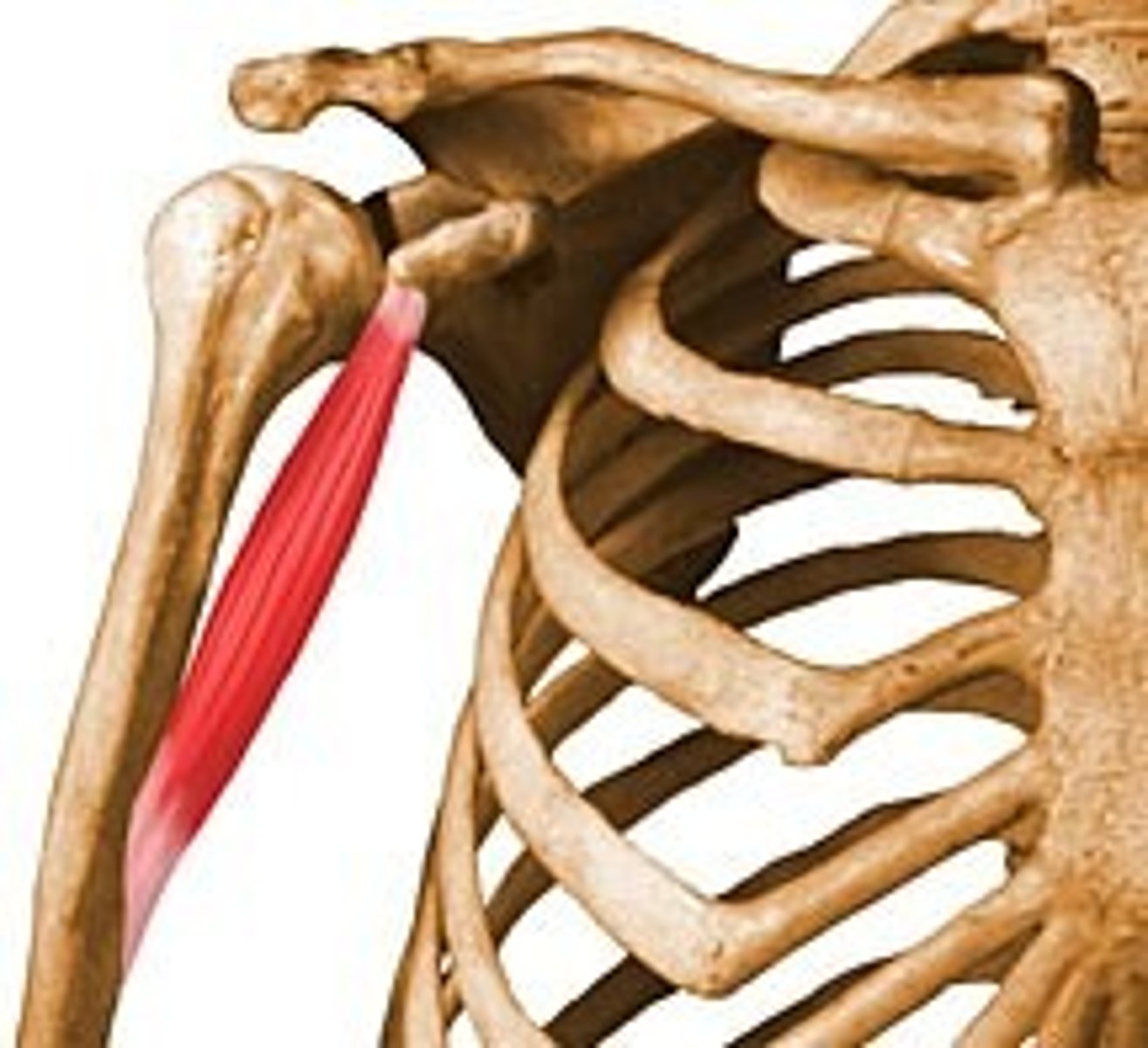
Biceps brachii muscle
- Origin:
Long Head = superior margin of the glenoid cavity
Short Head = coracoid process
- Insertion = radial tuberosity (muscle crosses over two joints)
- Primary Actions = Supination of forearm, elbow flexion, weak shoulder flexor, stabilization of shoulder
- Innervation = Musculocutaneous nerve
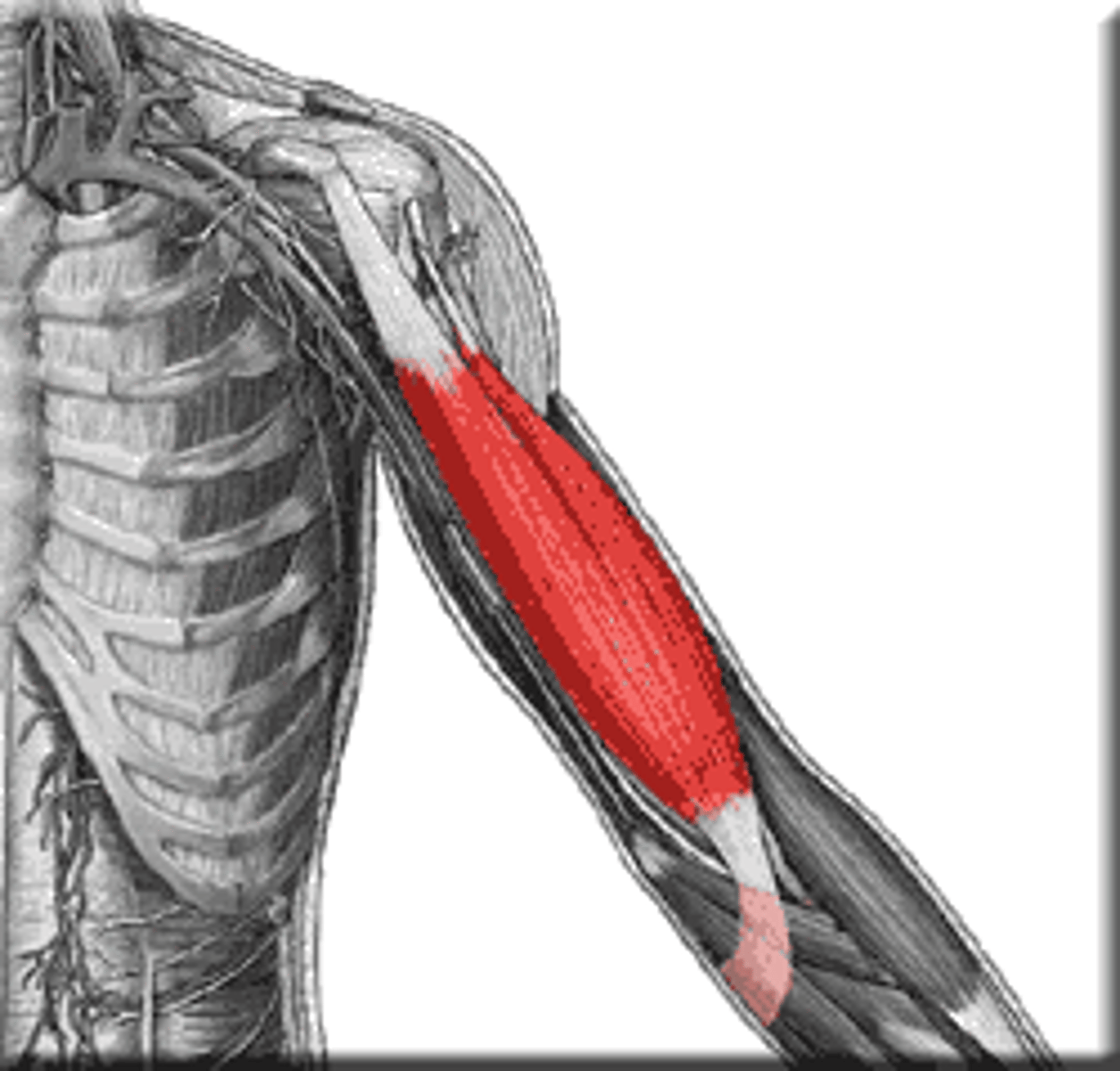
Brachialis muscle
- Origin = anterior distal humerus
- Insertion = coronoid process of the ulna
- Primary Actions = elbow flexion
- Innervation = Musculocutaneous and radial nerves
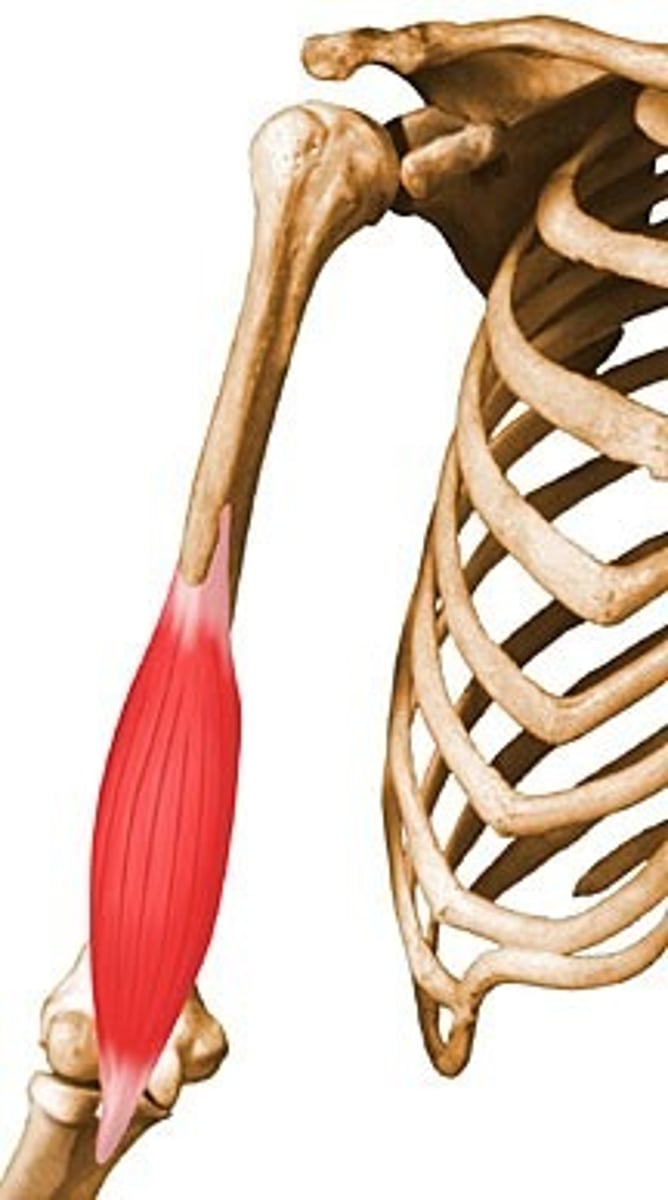
Triceps brachii muscle
- Origin:
Long Head = inferior margin of glenoid
Medial Head = posterior humerus
Lateral Head = posterior proximal humerus
- Insertion = olecranon process (muscle crosses over two joints)
- Primary Actions = elbow extension, long head adducts humerus
- Innervation = radial nerve
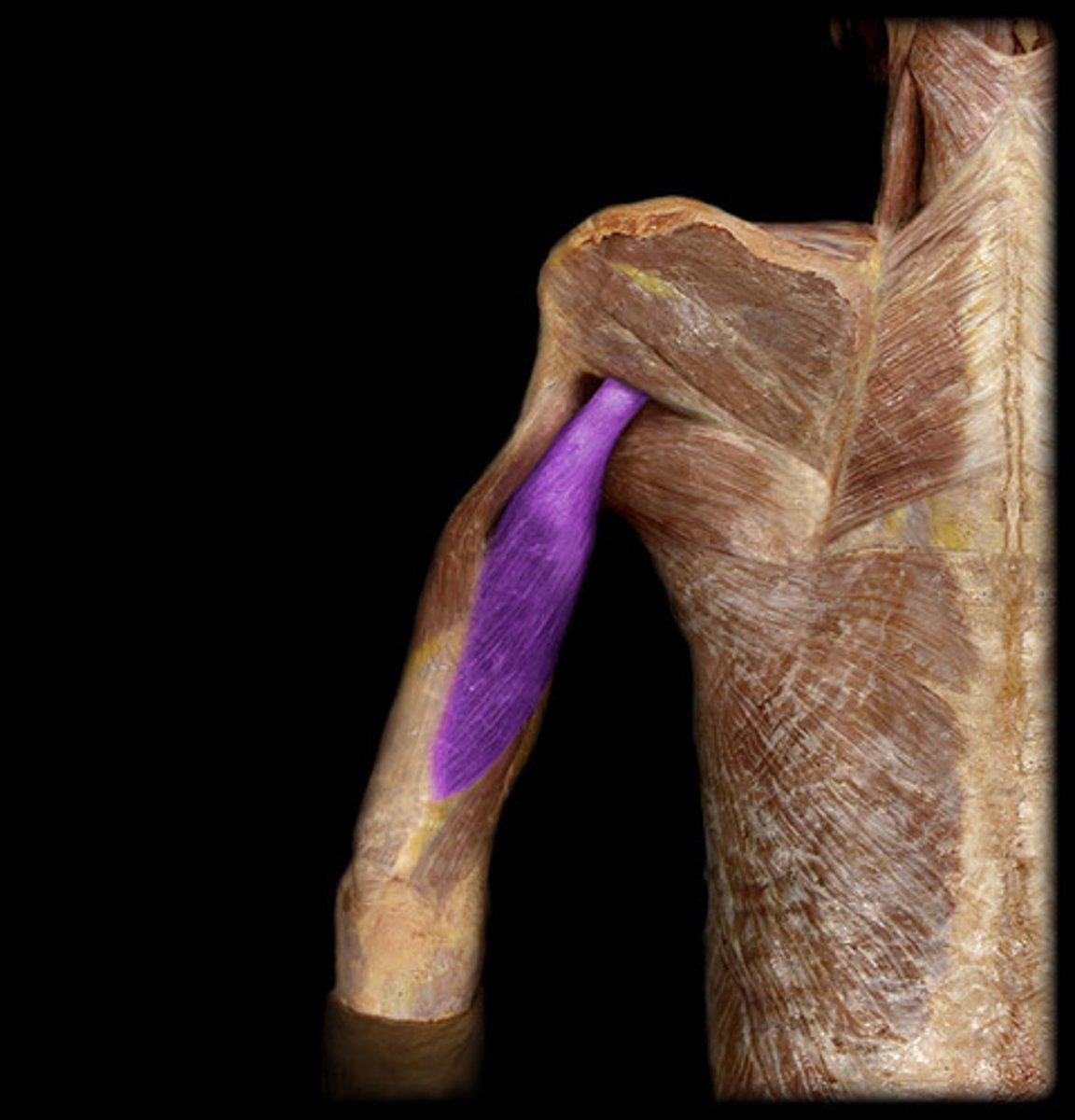
Pronator Teres muscle
- Origin = medial epicondyle of the humerus, coronoid process of the ulna
- Insertion = lateral surface of the radial shaft
- Primary Actions = pronation of elbow, weak elbow flexion
- Innervation = median nerve
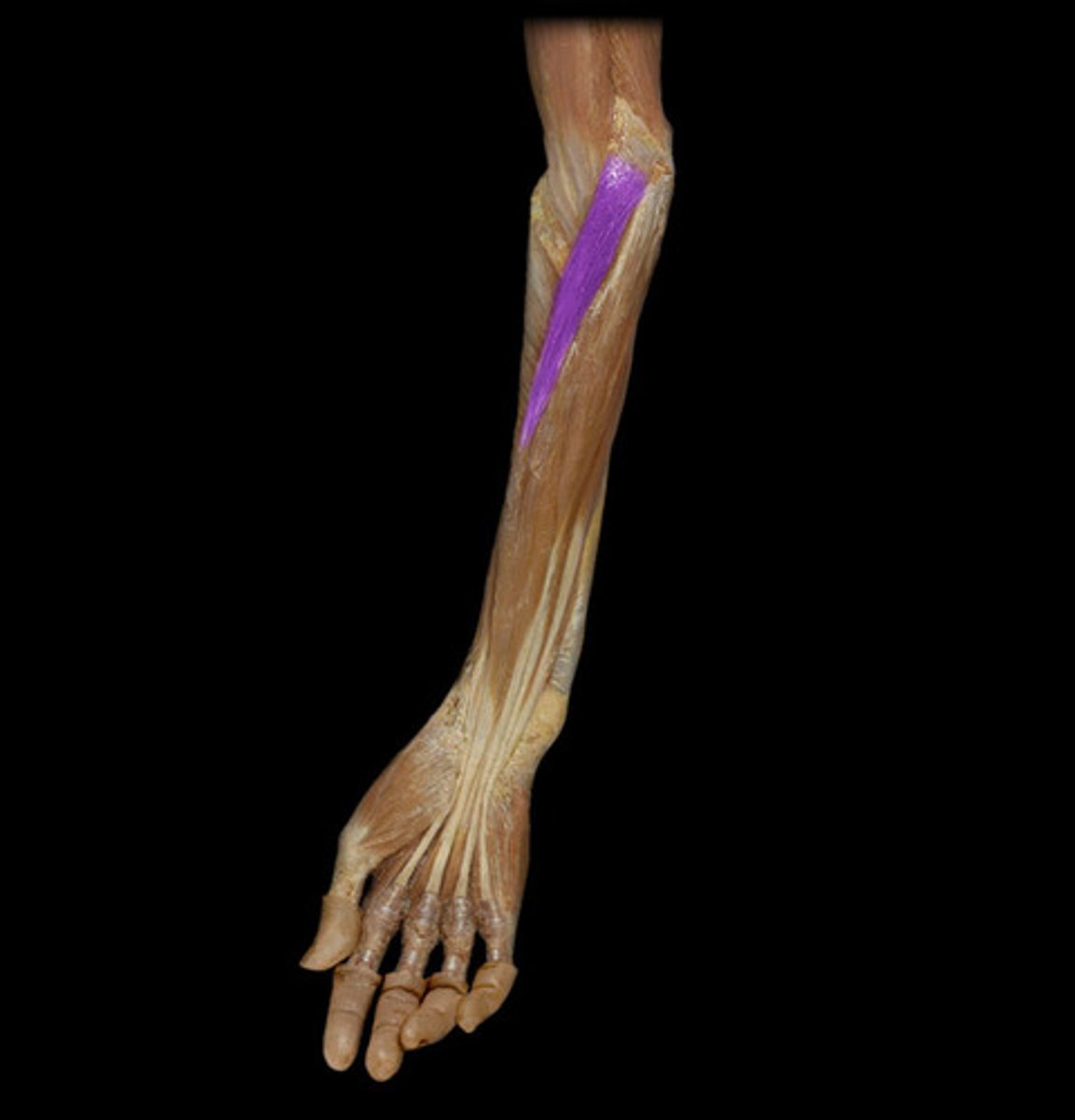
Flexor carpi radialis muscle
- Origin = medial epicondyle of the humerus
- Insertion = base of metacarpals 2-3
- Primary Actions = wrist flexion and radial deviation
- Innervation = median nerve
* runs towards the thumb
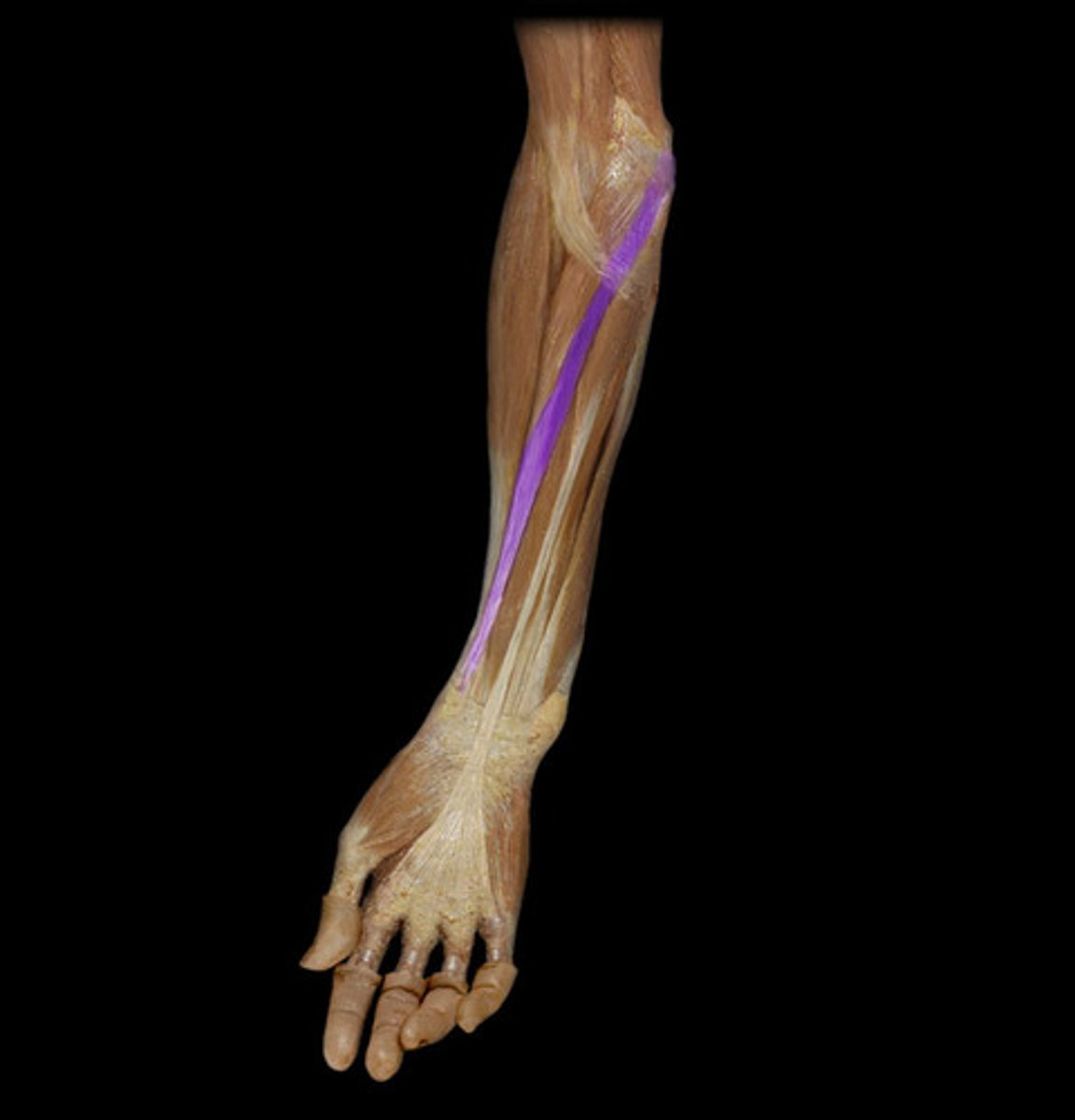
Palmaris longus muscle
- Origin = medial epicondyle of the humerus
- Insertion = palmar aponeurosis (fibrous tissue) and flexor retinaculum
- Primary Actions = wrist flexion and resistance to shear forces when overlying skin is stressed
- Innervation = median nerve
* connected to very, very long tendon
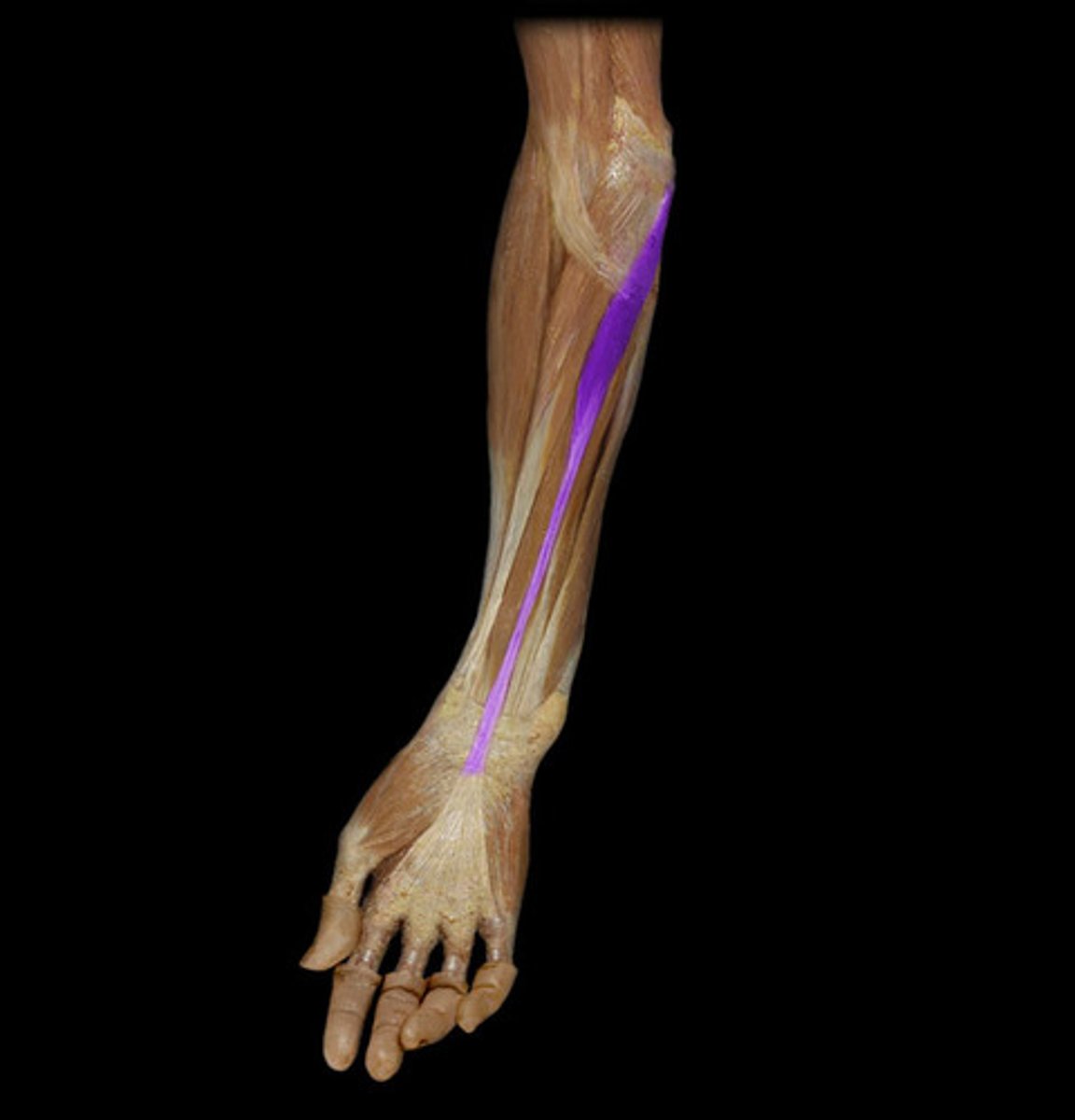
Flexor carpi ulnaris muscle
- Origin = medial epicondyle of the humerus
- Insertion = 5th metacarpal, hamate and pisiform
- Primary Actions = wrist flexion and ulnar deviation
- Innervation = ulnar nerve
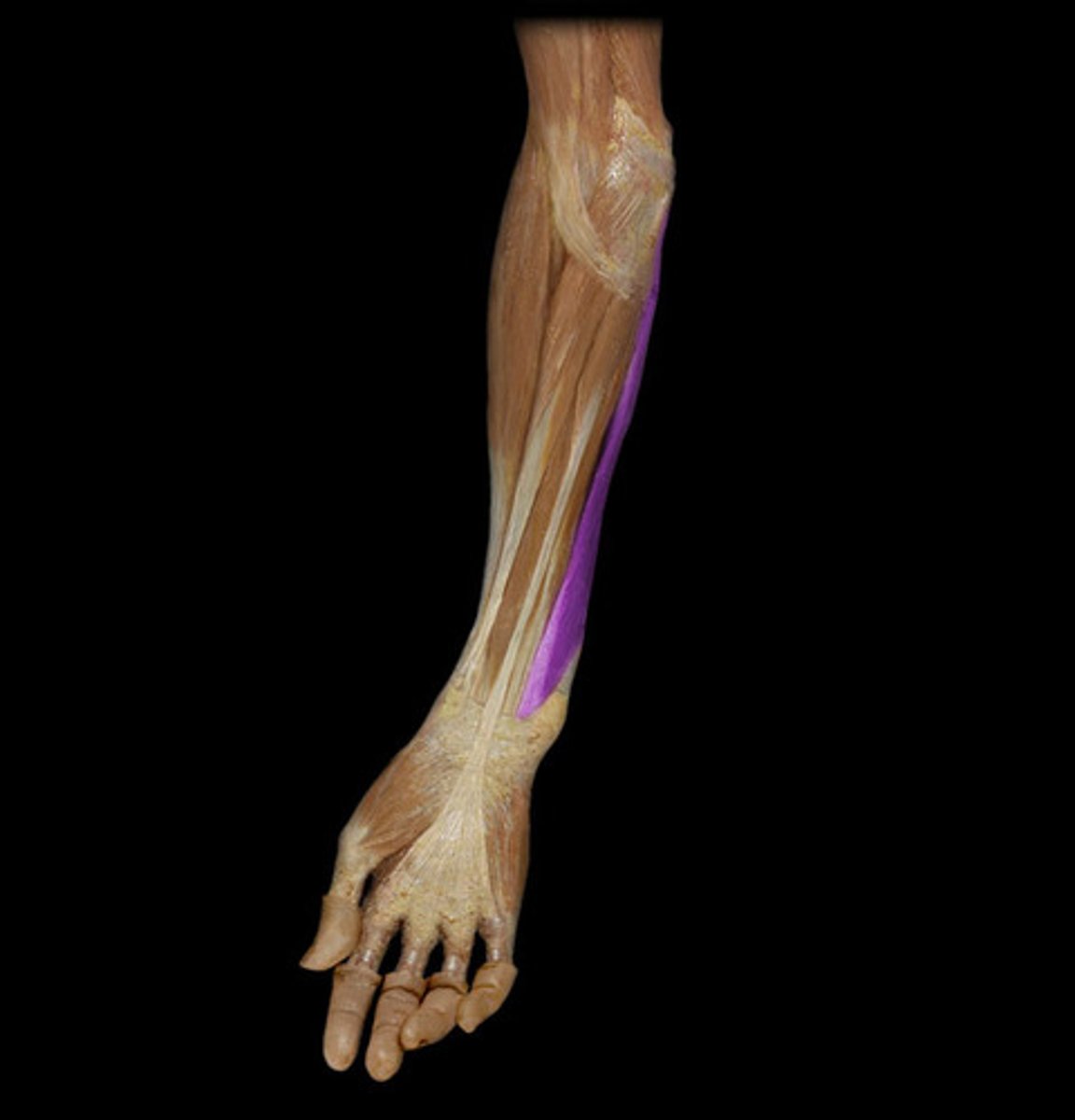
Flexor digitorum superficialis muscle
- Origin = medial epicondyle of the humerus, UCL, and coronoid process
- Insertion = Middle phalanges 2-5
- Primary Actions = wrist flexion, digit flexion at metacarpophalangeal (MCP) and Proximal interphalangeal (IP) joint
- Innervation = median nerve
* superficial to profundus muscles
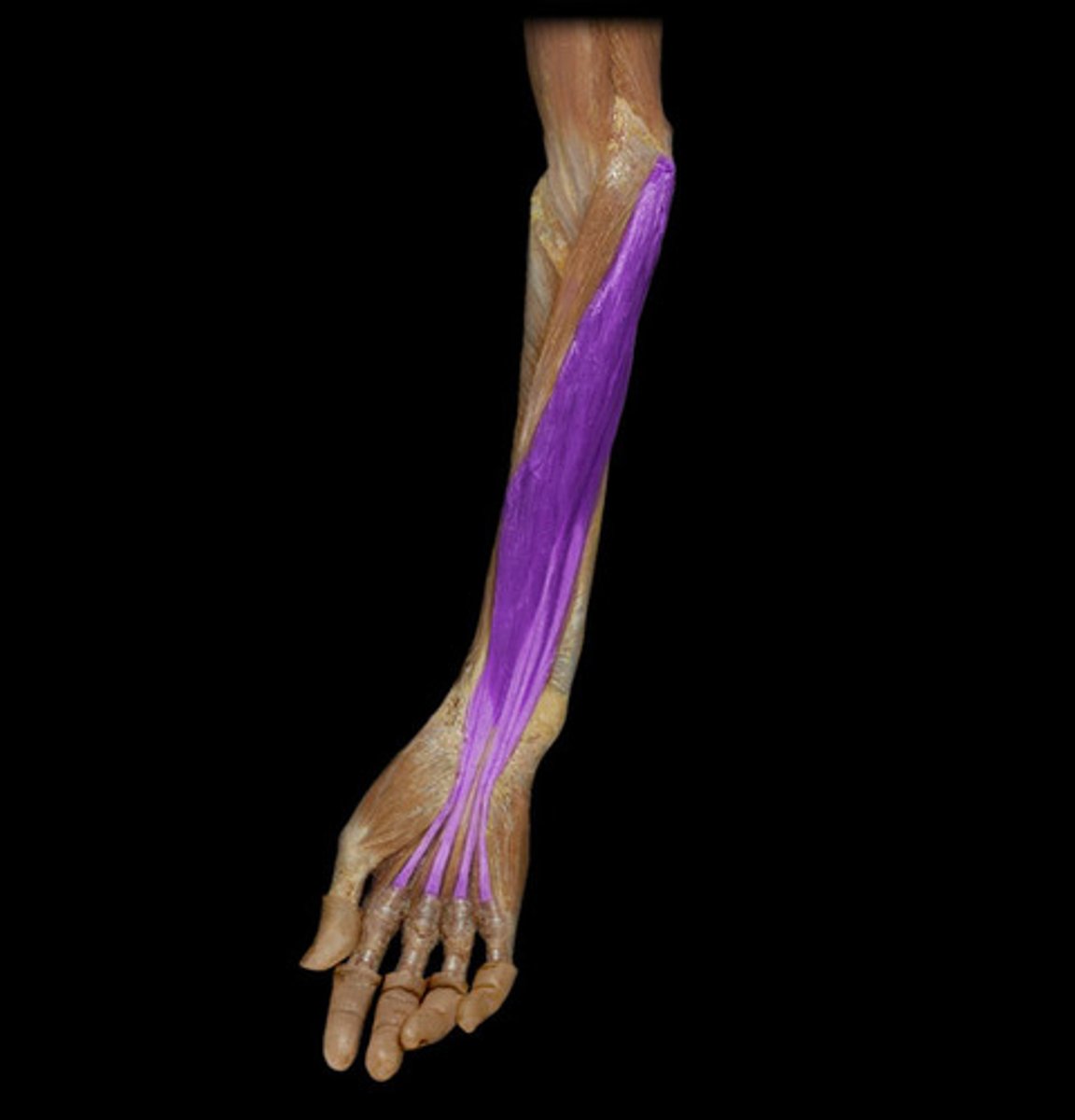
Flexor digitorum profundus muscle
- Origin = proximal ulna and interosseus membrane
- Insertion = distal phalanges of 2-5
- Primary Actions = wrist flexion, flexion at MCP, PIP, and DIP
- Innervation =
*deep and distal to superficialis muscles
** "That was really profound (deep)"
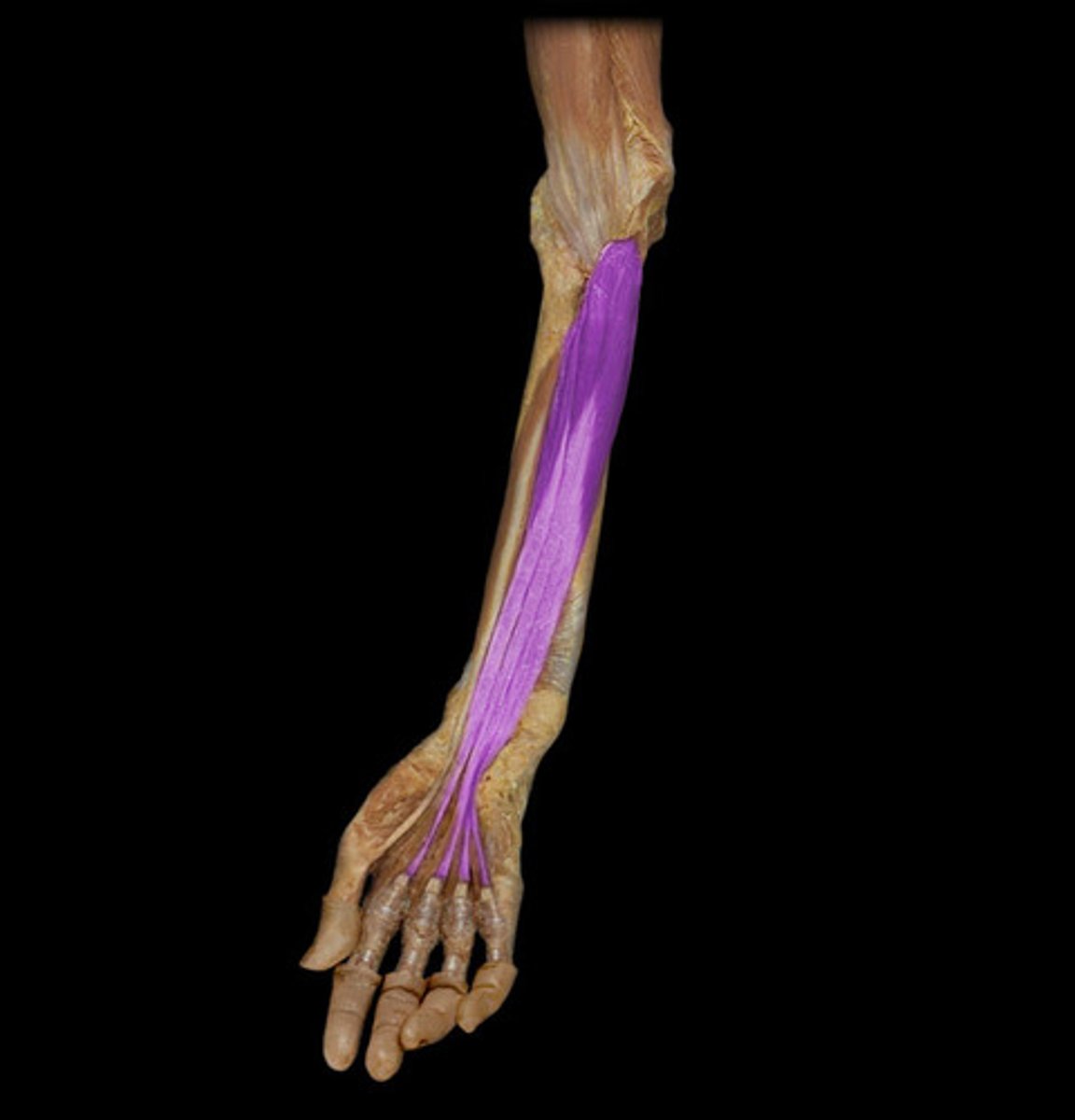
Flexor pollicis longus muscle (thumb)
- Origin = radius and interosseus membrane
- Insertion = distal phalanx of digit 1
- Primary Actions = flexes thumb at MCP and IP (no DIP!)
- Innervation = median nerve
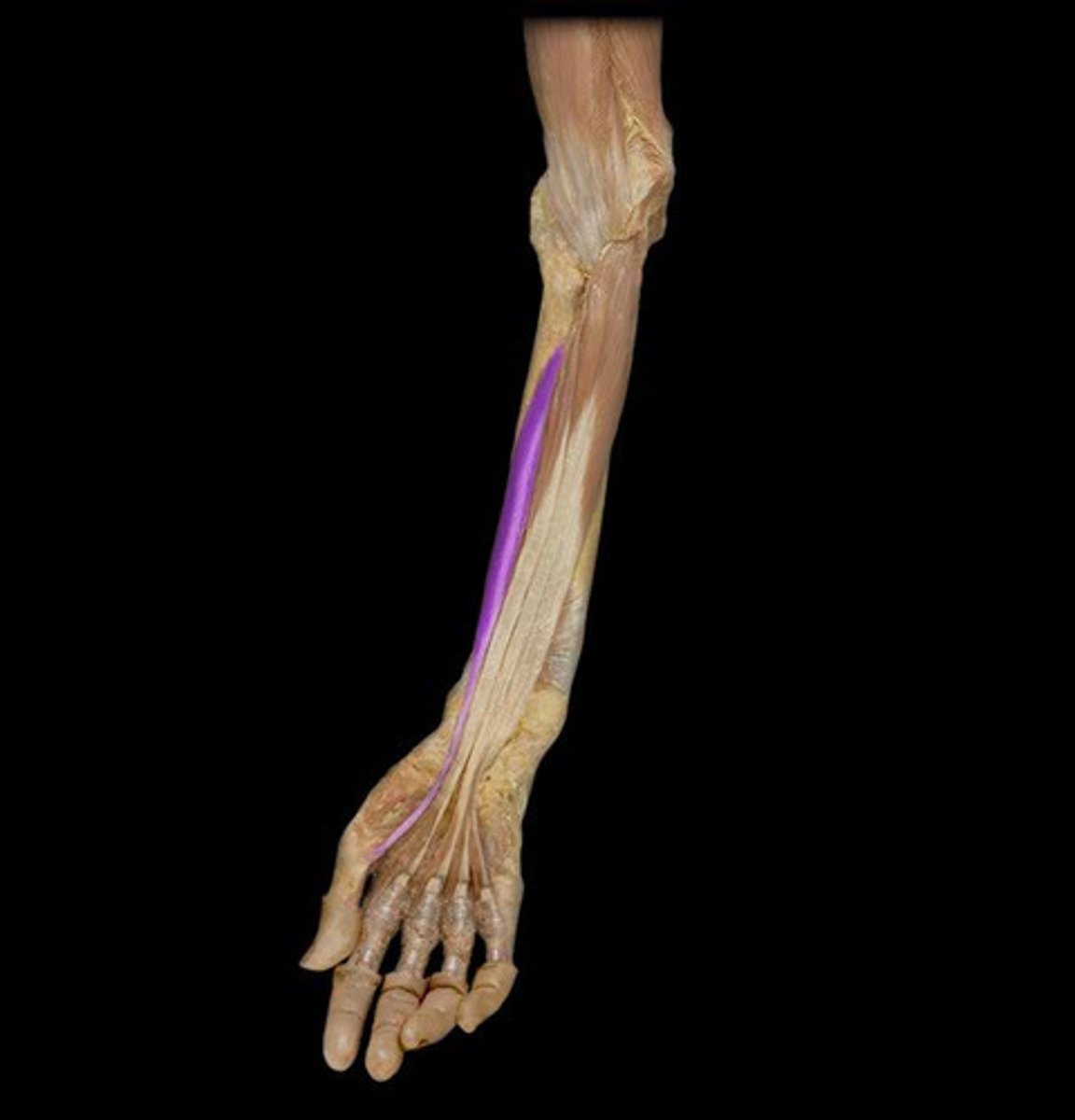
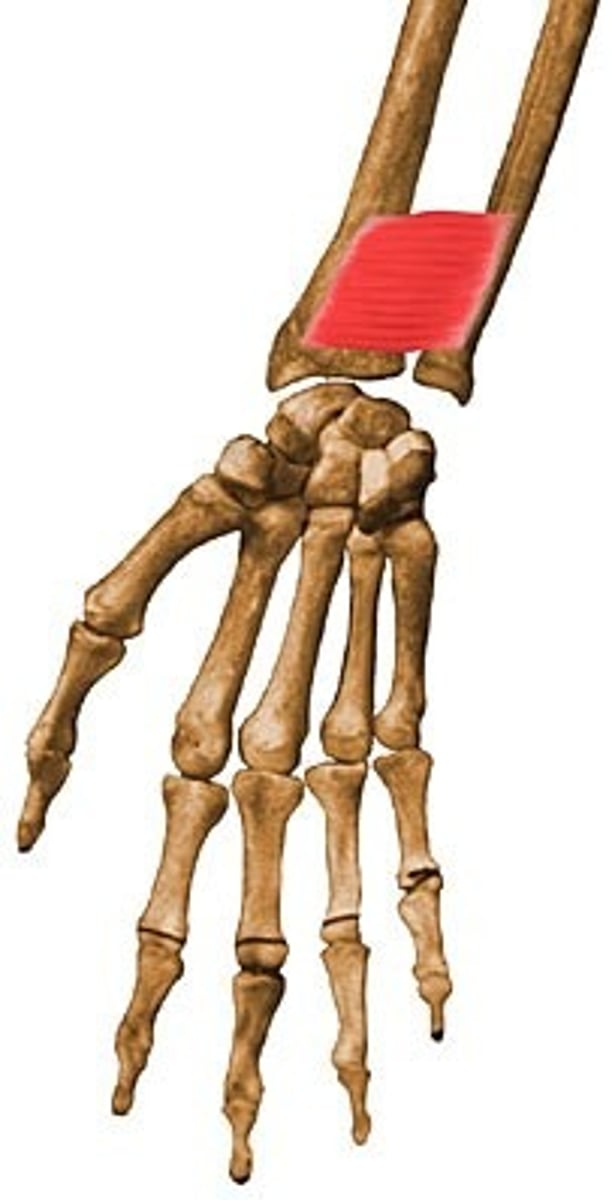
Pronator quadratus muscle
- Origin = anterior distal ulna
- Insertion = anterior distal radius
- Primary Actions = pronation, pulls radius closer to ulna (palm down)
- Innervation = median nerve
*quadrilateral-shaped
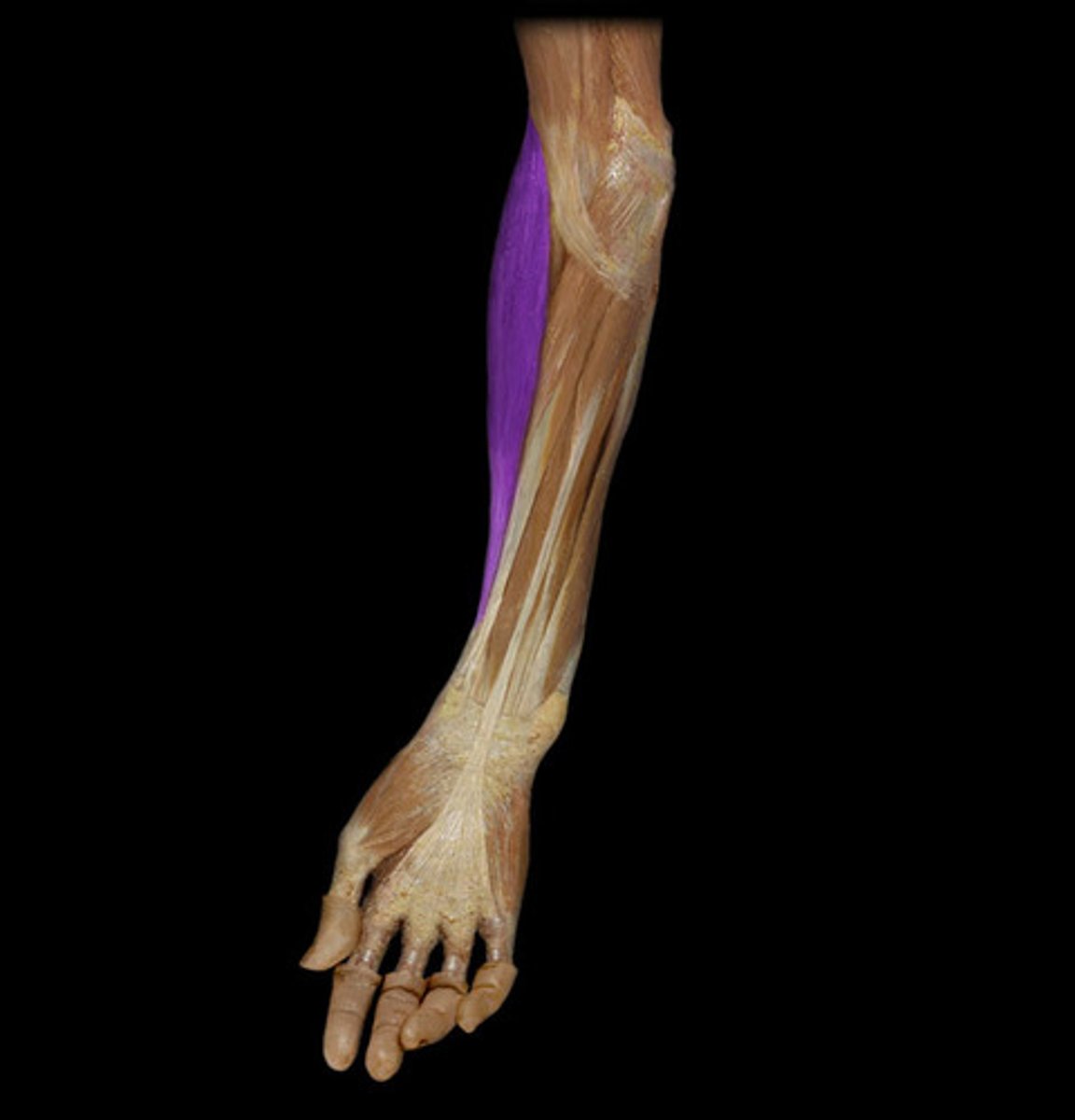
Brachioradialis muscle
- Origin = lateral supracondylar ridge of humerus
- Insertion = styloid process of the radius (distal side)
- Primary Actions = elbow flexion
- Innervation = radial nerve
* large beer-drinking muscle (points up)
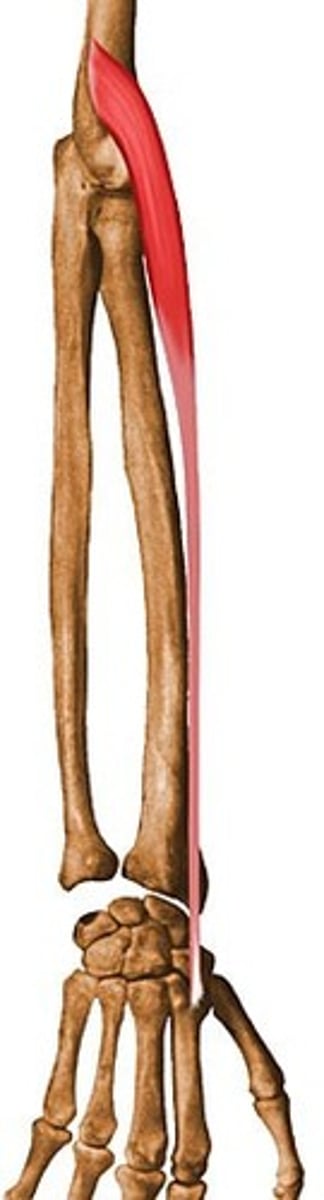
Extensor carpi radialis longus muscle
- Origin = lateral supracondylar ridge of humerus
- Insertion = base of 2nd metacarpal (radial side)
- Primary Actions = wrist extension, radial deviation/flexion
- Innervation = radial nerve
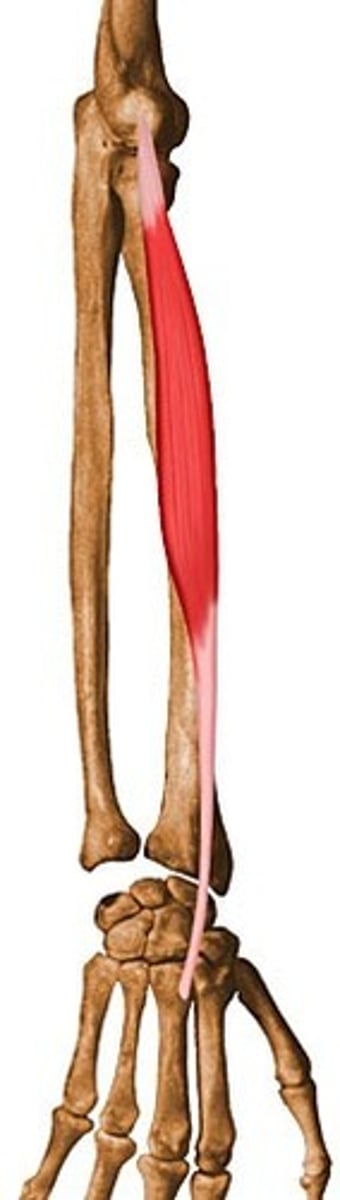
Extensor carpi radialis brevis muscle
- Origin = lateral epicondyle of the humerus (under supracondylar ridge)
- Insertion = base of 3rd metacarpal
- Primary Actions = wrist extension, radial deviation/flexion
- Innervation = radial nerve
* brevis = shorter (brevity)
** tucked underneath the anterior forearm
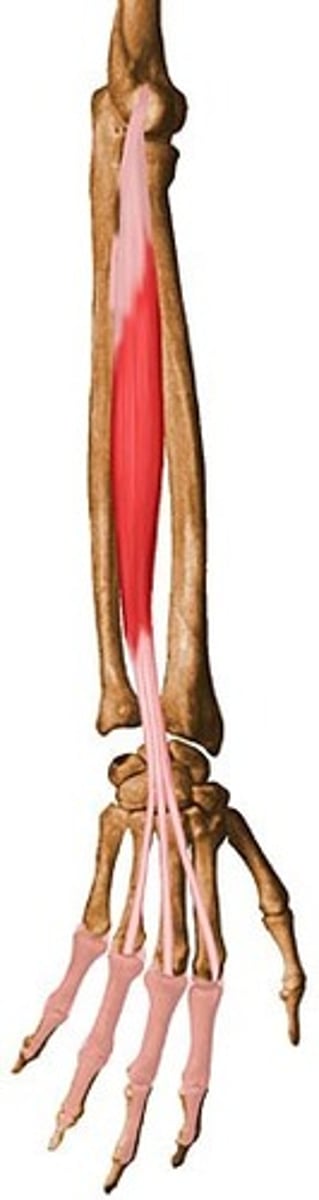
Extensor digitorum muscle
- Origin = lateral epicondyle of the humerus
- Insertion = dorsal (back) surface of phalanges 2-5
- Primary Actions = wrist extension, MCP, and PIP extension
- Innervation = radial nerve
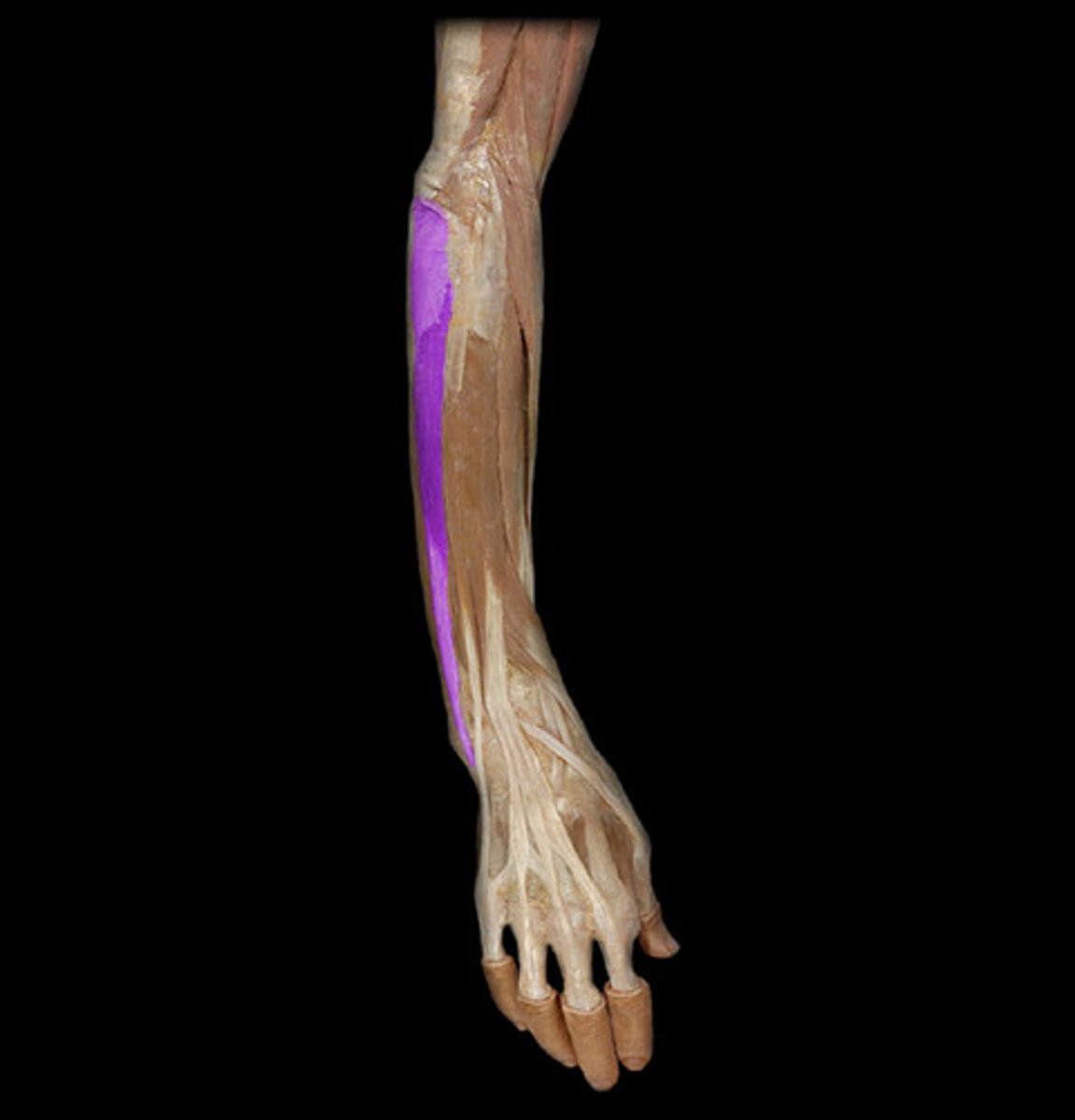
Extensor carpi ulnaris muscle
- Origin = lateral epicondyle of the humerus
- Insertion = base of 5th metacarpal (runs pinky side)
- Primary Actions = wrist extension, ulnar deviation/flexion
- Innervation = radial nerve
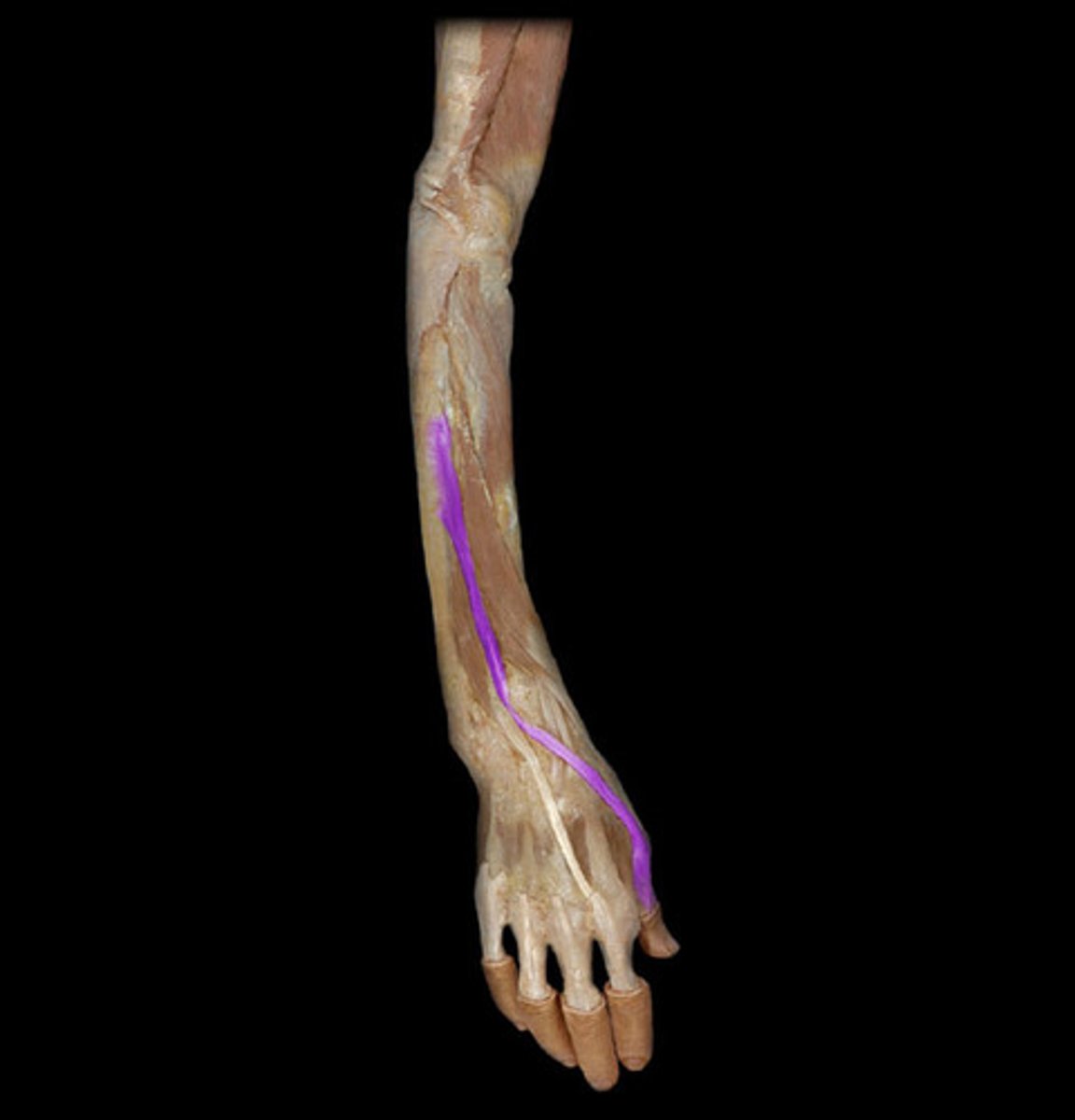
Extensor pollicis longus muscle (thumb)
- Origin = posterior ulna and interosseous membrane
- Insertion = distal phalanx of digit 1 (thumb)
- Primary Actions = extends MCP and IP of thumb, adducts, and laterally rotates thumb
- Innervation = radial nerve
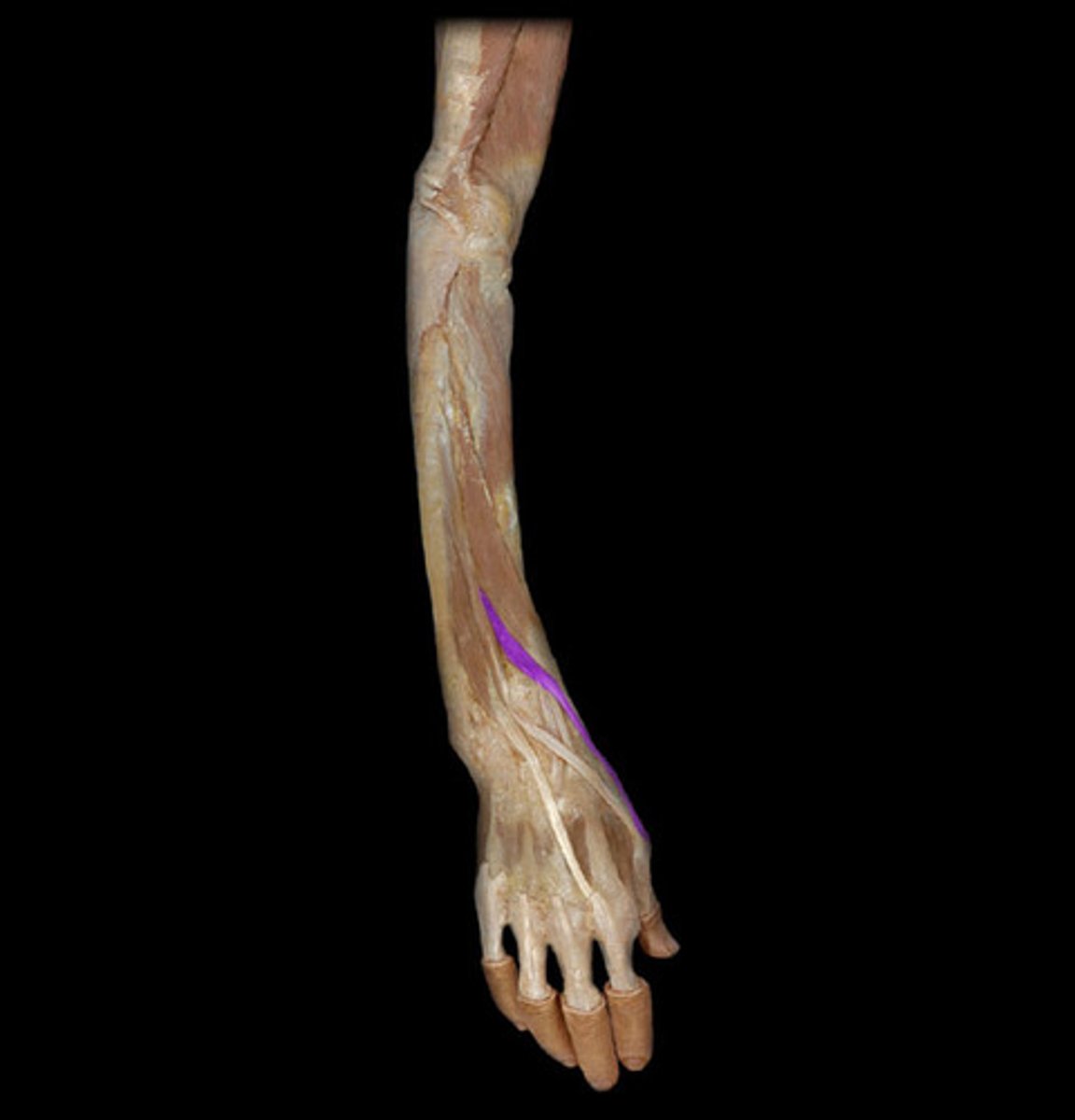
Extensor pollicis brevis muscle (thumb)
- Origin = shaft of radius and interosseous membrane
- Insertion = proximal phalanx of digit 1 (thumb)
- Primary Actions = extends MCP and IP of thumb
- Innervation = radial nerve
*shorter than extensor pollicis longus m.
Extensor indicis muscle (index finger)
- Origin = posterior surface of ulna and interosseous membrane
- Insertion = middle and distal phalanges of index finger (crosses wrist)
- Primary Actions = wrist and index finger extension
- Innervation = radial nerve
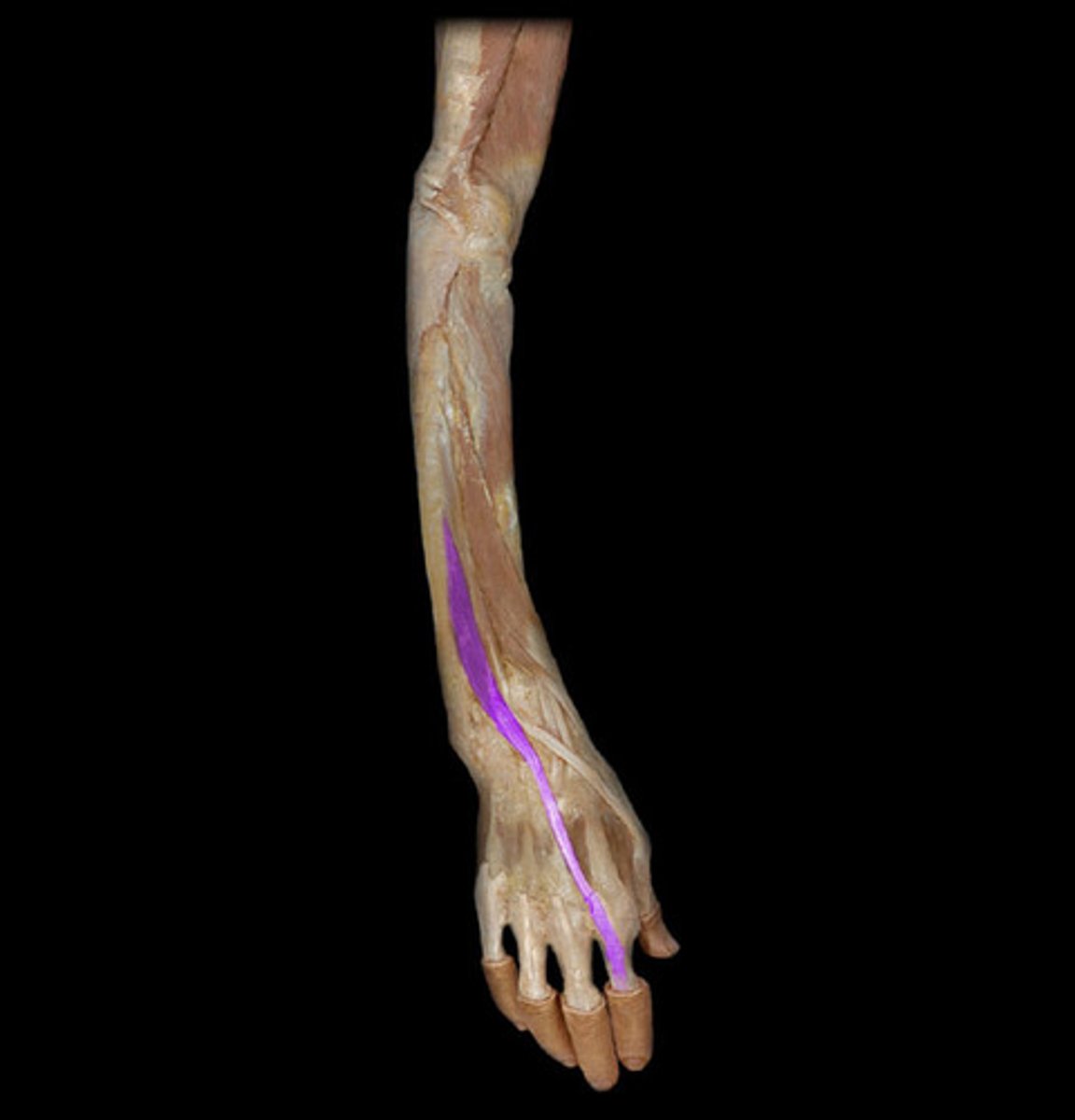
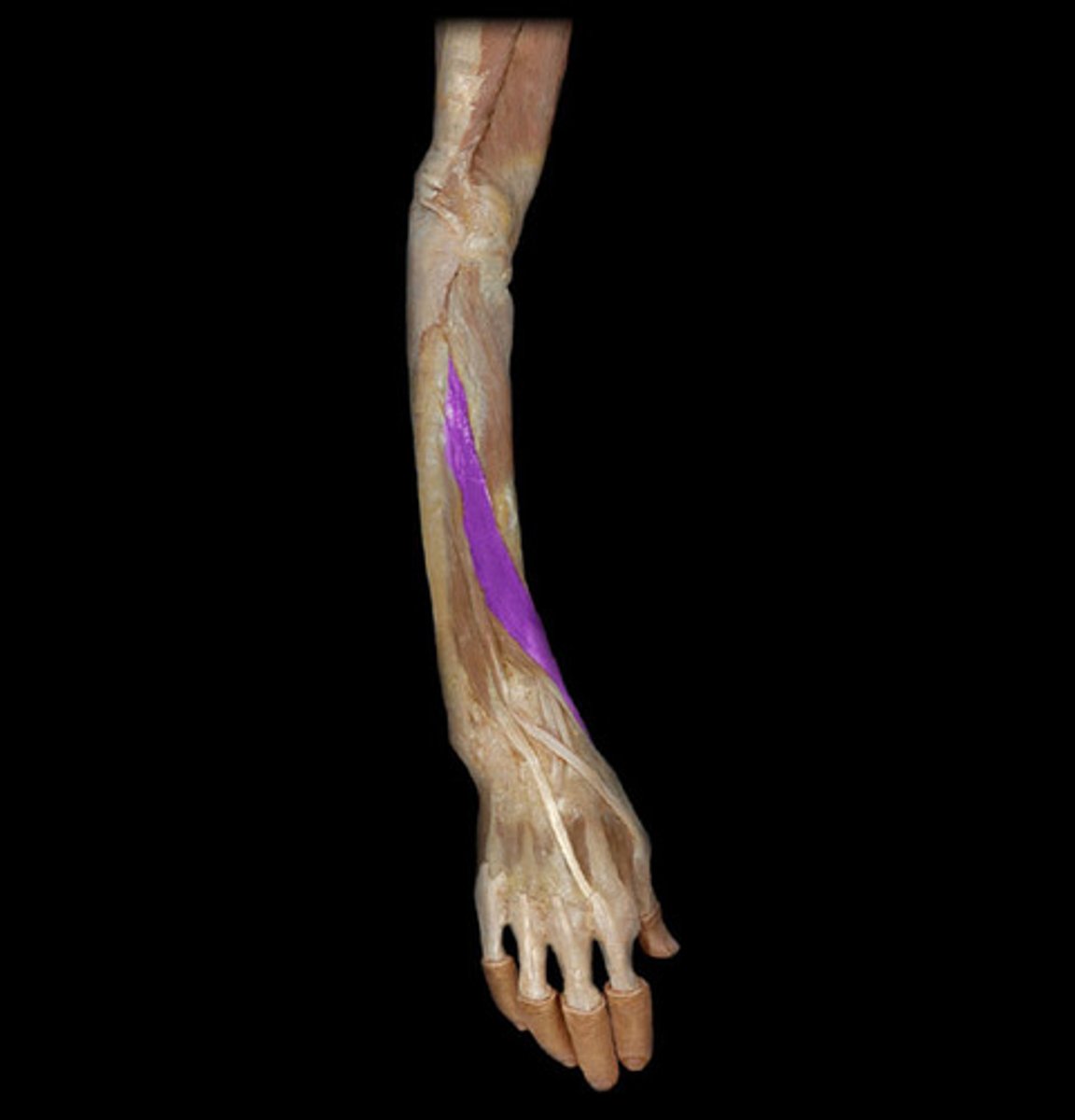
Abductor pollicis longus muscle (thumb)
- Origin = posterior surface of radius, ulna, and interosseous membrane
- Insertion = trapezium and base of metacarpal 1
- Primary Actions = thumb abduction and extension
- Innervation = radial nerve
Forearm muscles: anterior => flexion => _________ nerve
median
Forearm muscles: posterior => extension => _________ nerve
radial