Ch. 22: Reflection and Refraction
 Call Kai
 Learn
Learn Practice Test
 Spaced Repetition
 Match
Match Flashcards
 Knowt Play
1/10

There's no tags or description
Looks like no tags are added yet.
Name | Mastery | Learn | Test | Matching | Spaced | Call with Kai |
|---|
No analytics yet
Send a link to your students to track their progress
11 Terms
reflection vs refraction
-reflection: light bounces off
-refraction: light through material
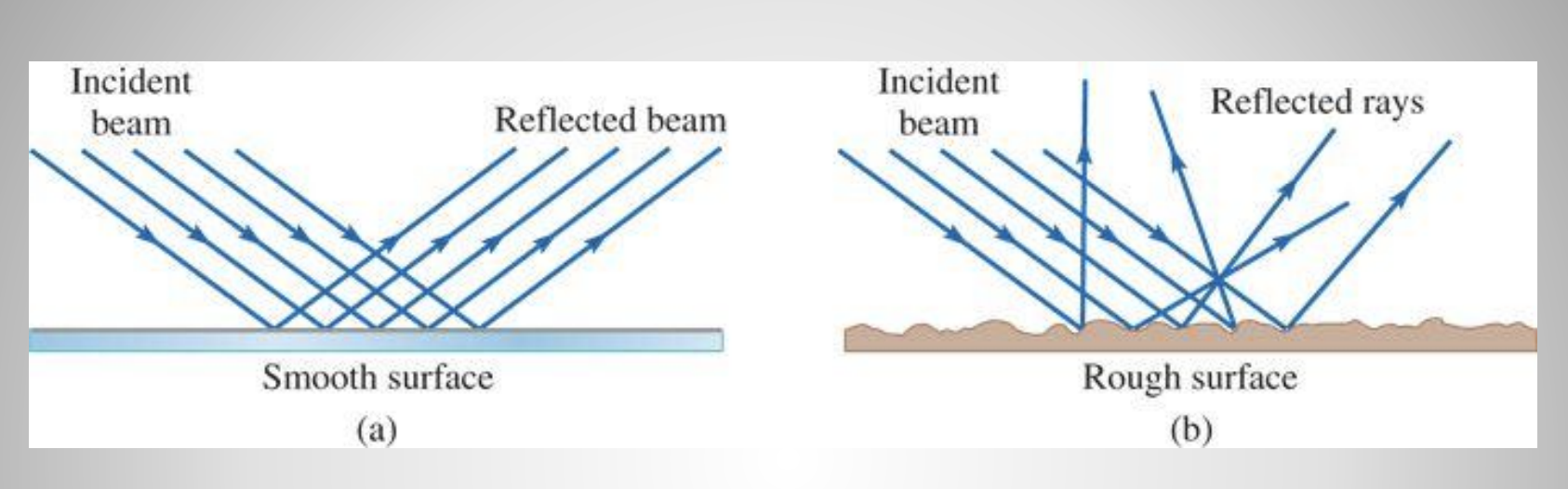
specular and diffuse reflection
-A beam of light reflecting from a mirror illustrates specular reflection (a)
-Diffuse reflection occurs when the same laser reflects from a rough surface (b) (*won’t use in this class!; light seperates)
*if smooth surface stays parallel and symmetric; if rough surface doesn’t stay parallel
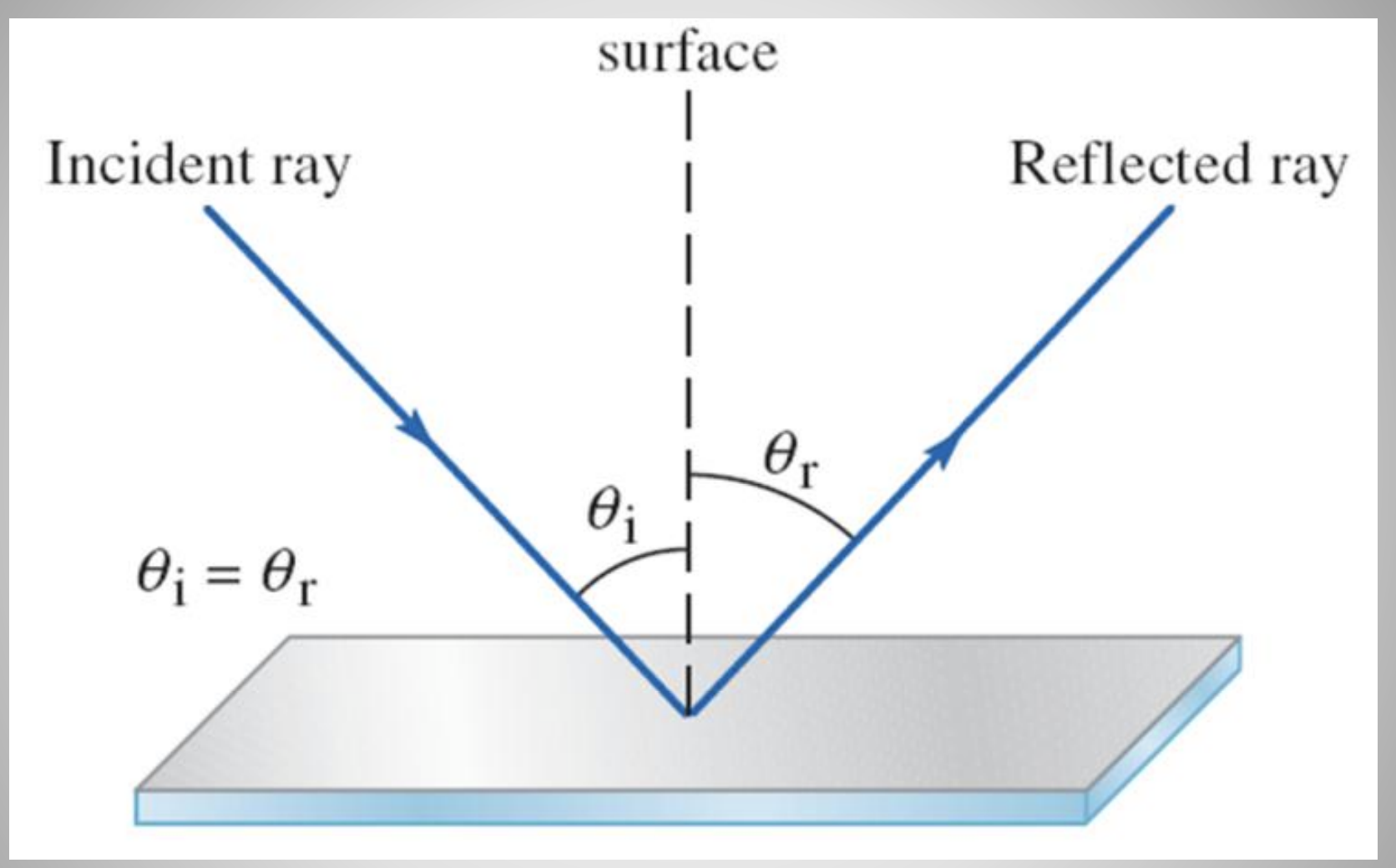
Law of Reflection
incident angle=reflected ray
*normal is always perpendicular to the surface
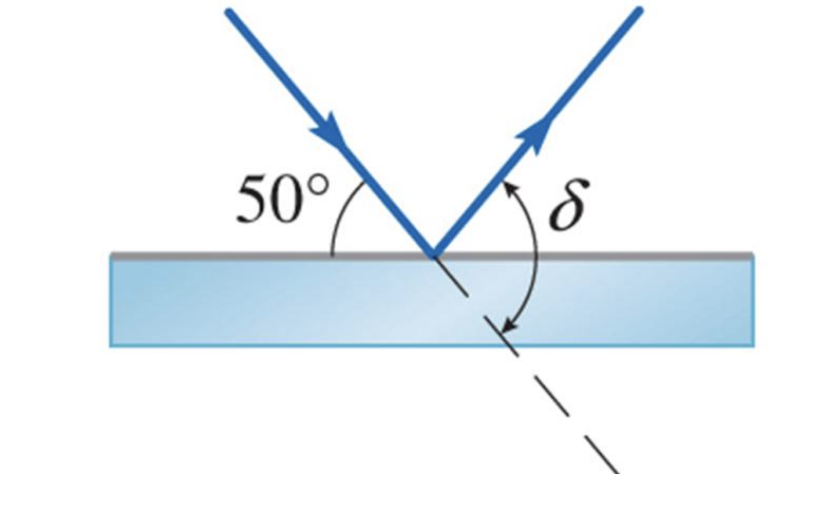
Angle of deviation
-angle from path taken and unobstructed path not taken
*angle between actual/deviated path and undeviated path/path would take if mirror not there
Index of Refraction
-for a given wave frequency = f = constant = v/wavelength
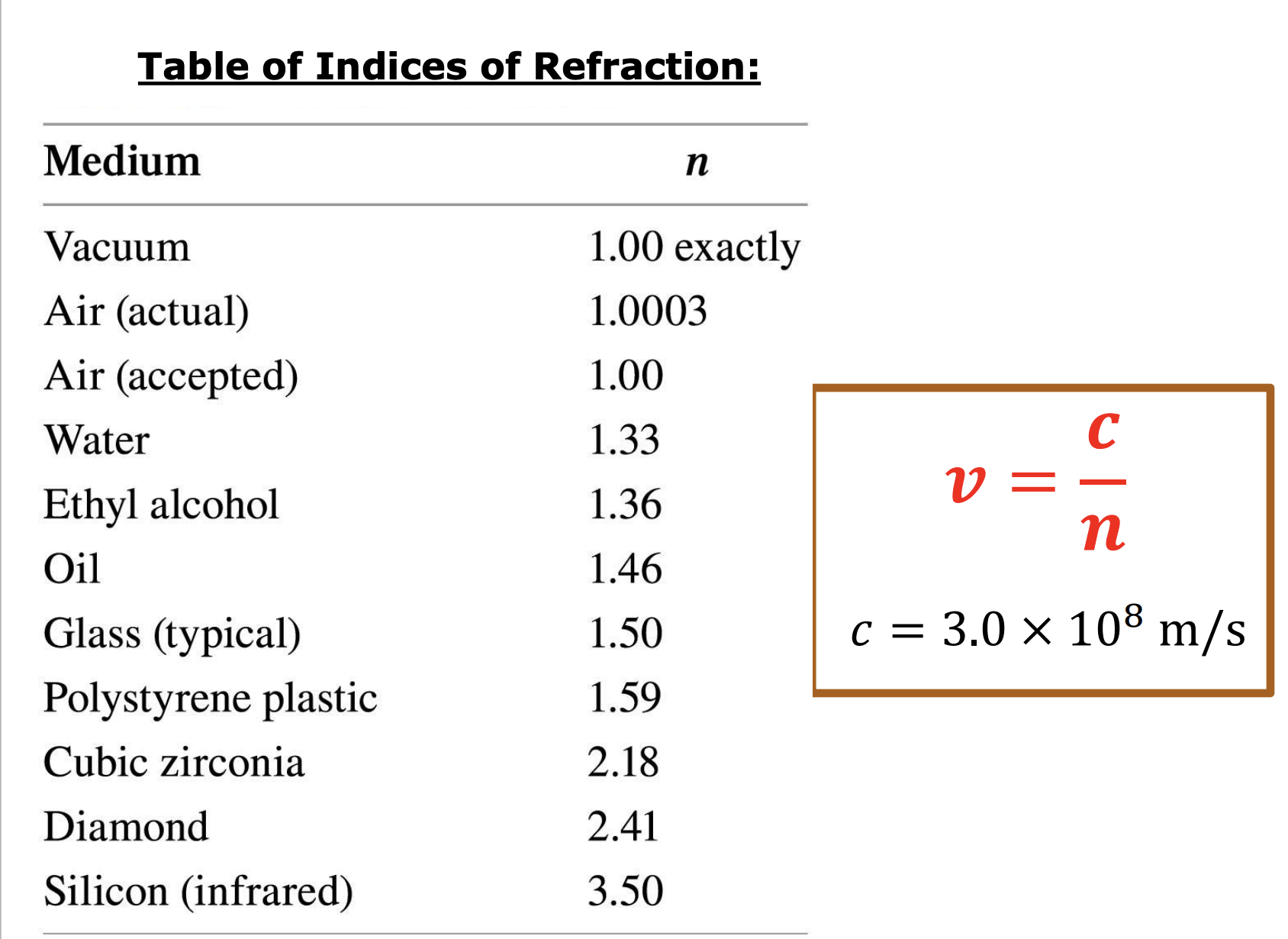
-The speed that the waves travel is determined by the index of refraction, n (*no units!; =1 for a vacuum, and increases as density increases; always positive and >1)
𝒗 = 𝒄/𝒏
-where c = speed of light in vacuum = 3.0 x 10⁸ m/s
-In many cases we will see both a transmission and a reflection of light.
*light passes through; bends light; light slows down
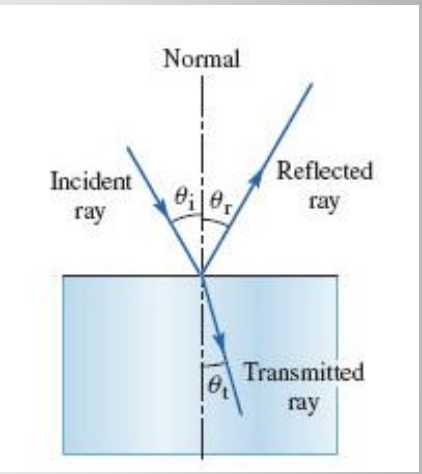
table of indices of refraction
-n increases as density increases
-vacuum=1 exactly; air=~1; water 1.33
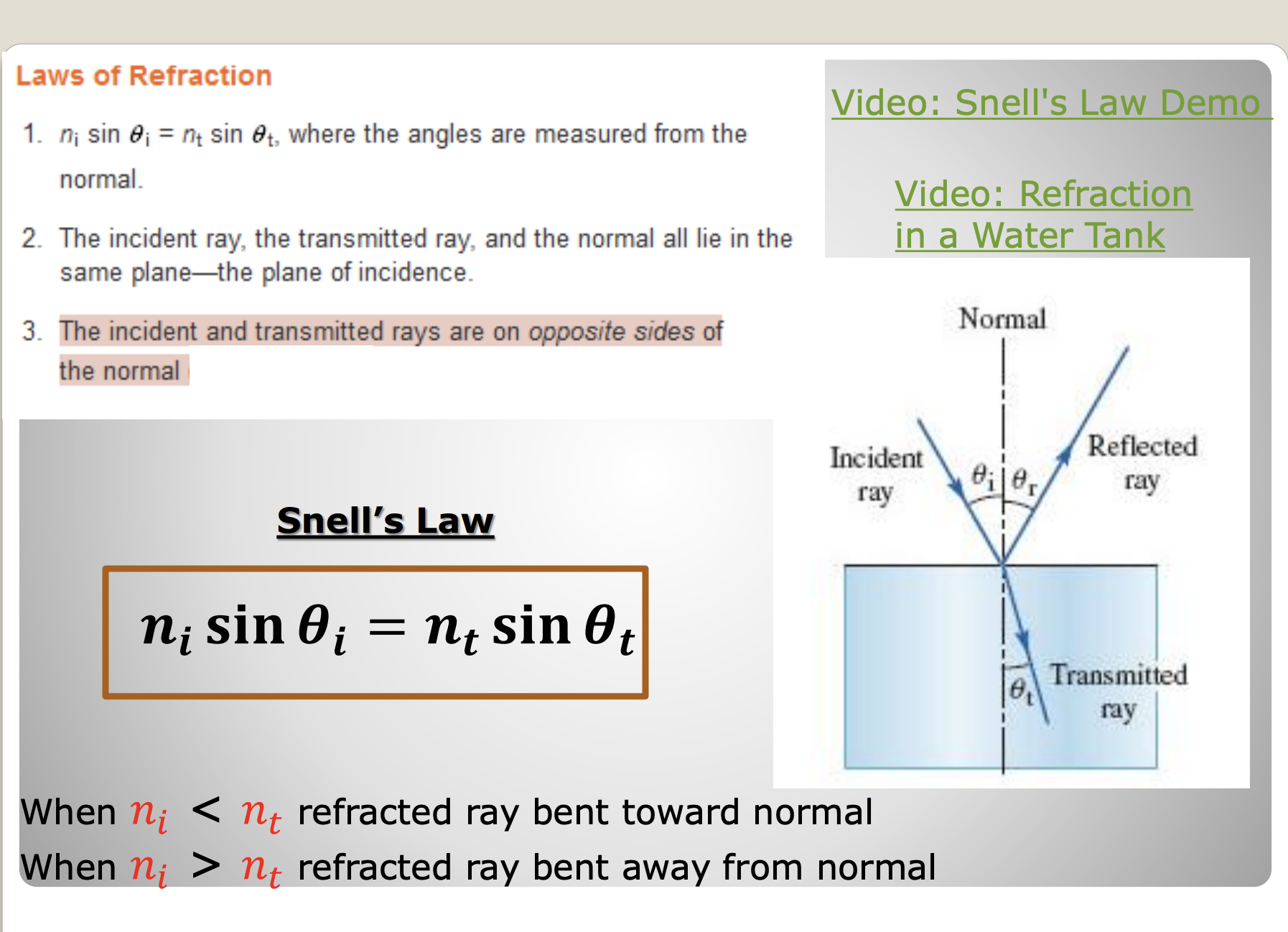
Laws of Refraction (aka Snell’s Law)
-When 𝑛𝑖 < 𝑛𝑡 refracted ray bent toward normal (*w/ respect to undeviated path)
-When 𝑛𝑖 > 𝑛𝑡 refracted ray bent away from normal (*bc high to low)
*both measured w/ respect to the normal
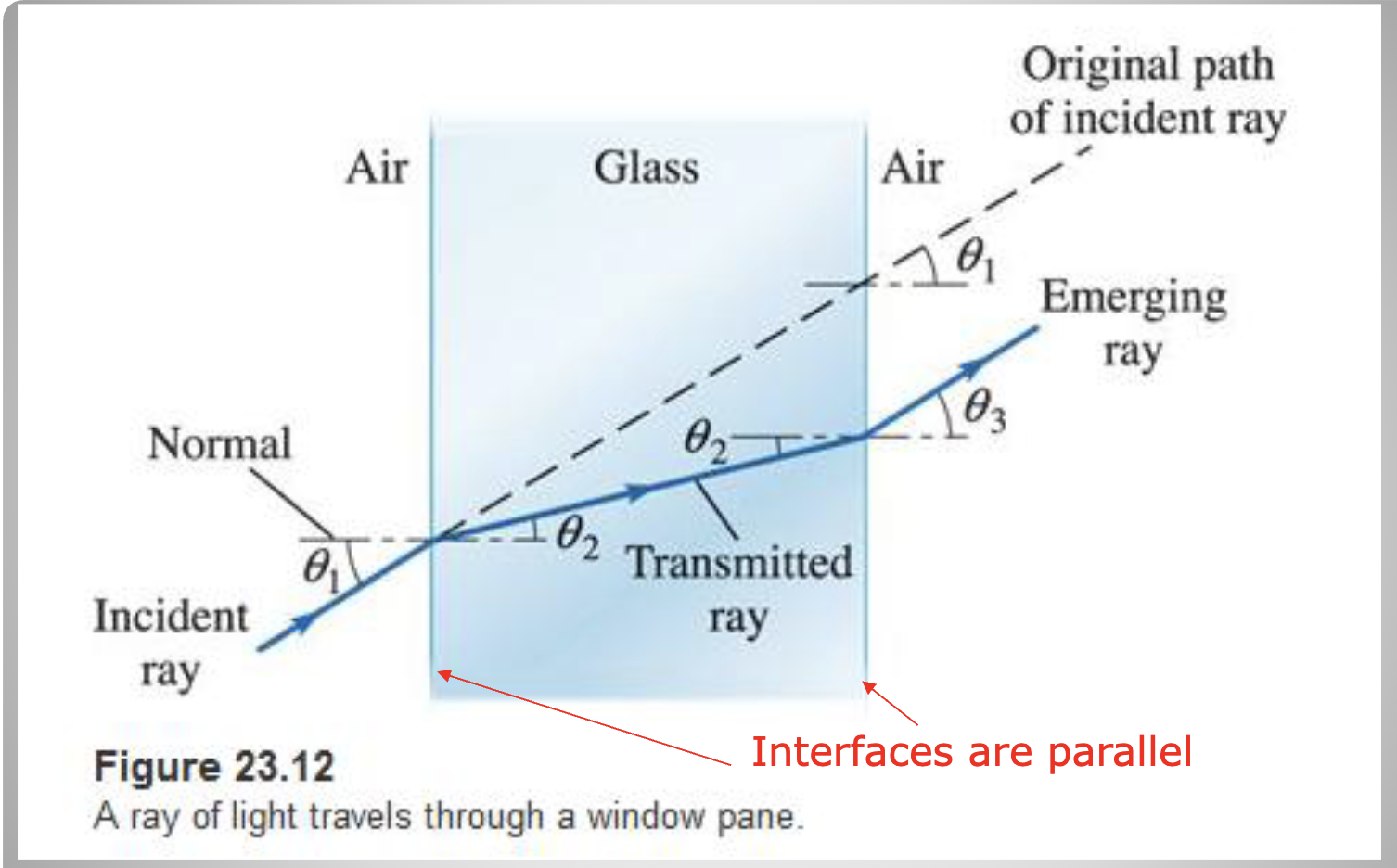
if more than 1 medium
-if interfaces are parallel, only have to know the first and last
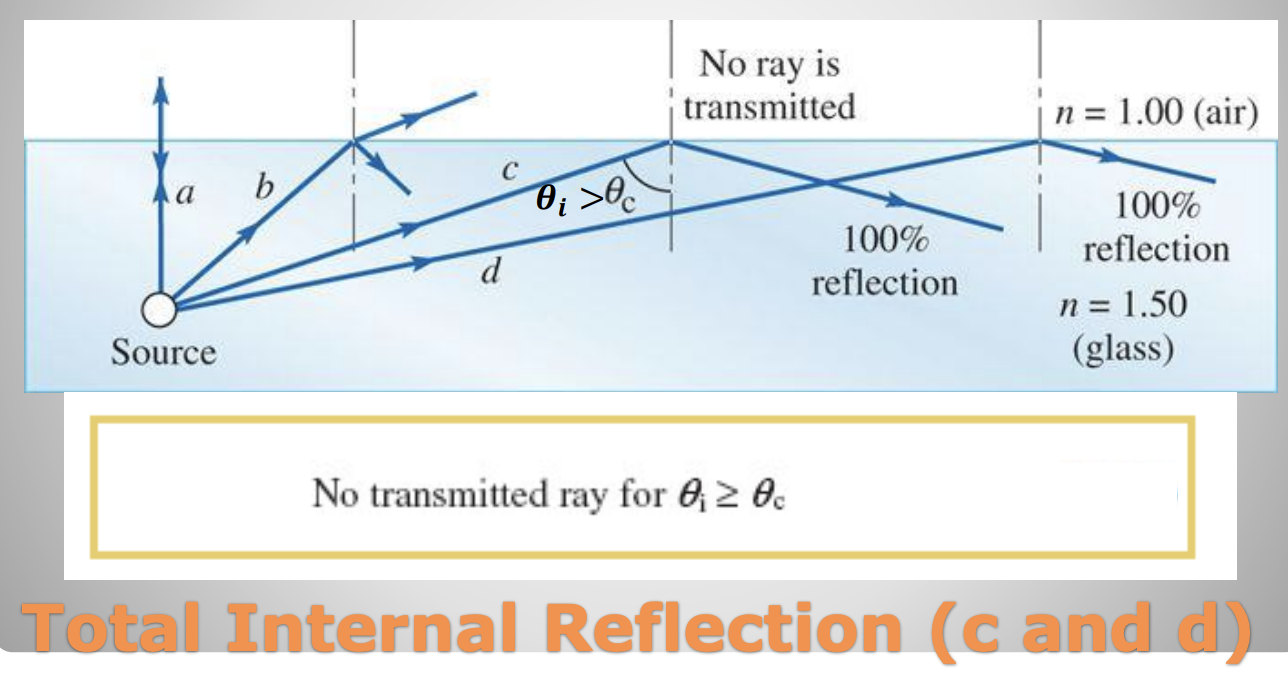
Total Internal Reflection (TIR)
-can occur when light attempts to move from a medium with a higher index of refraction to one with a lower index of refraction
*if incident angle just right will only reflect and not refraction; n high → low
critical angle
-A particular angle of incidence, called the critical angle, will result in an angle of refraction of 90°: 𝜽𝒄 = 𝐬𝐢𝐧−𝟏 (𝒏𝒕/𝒏𝒊)
-For angles of incidence greater than the critical angle, the beam is entirely reflected at the boundary.
*ni > nt always
TIR applications
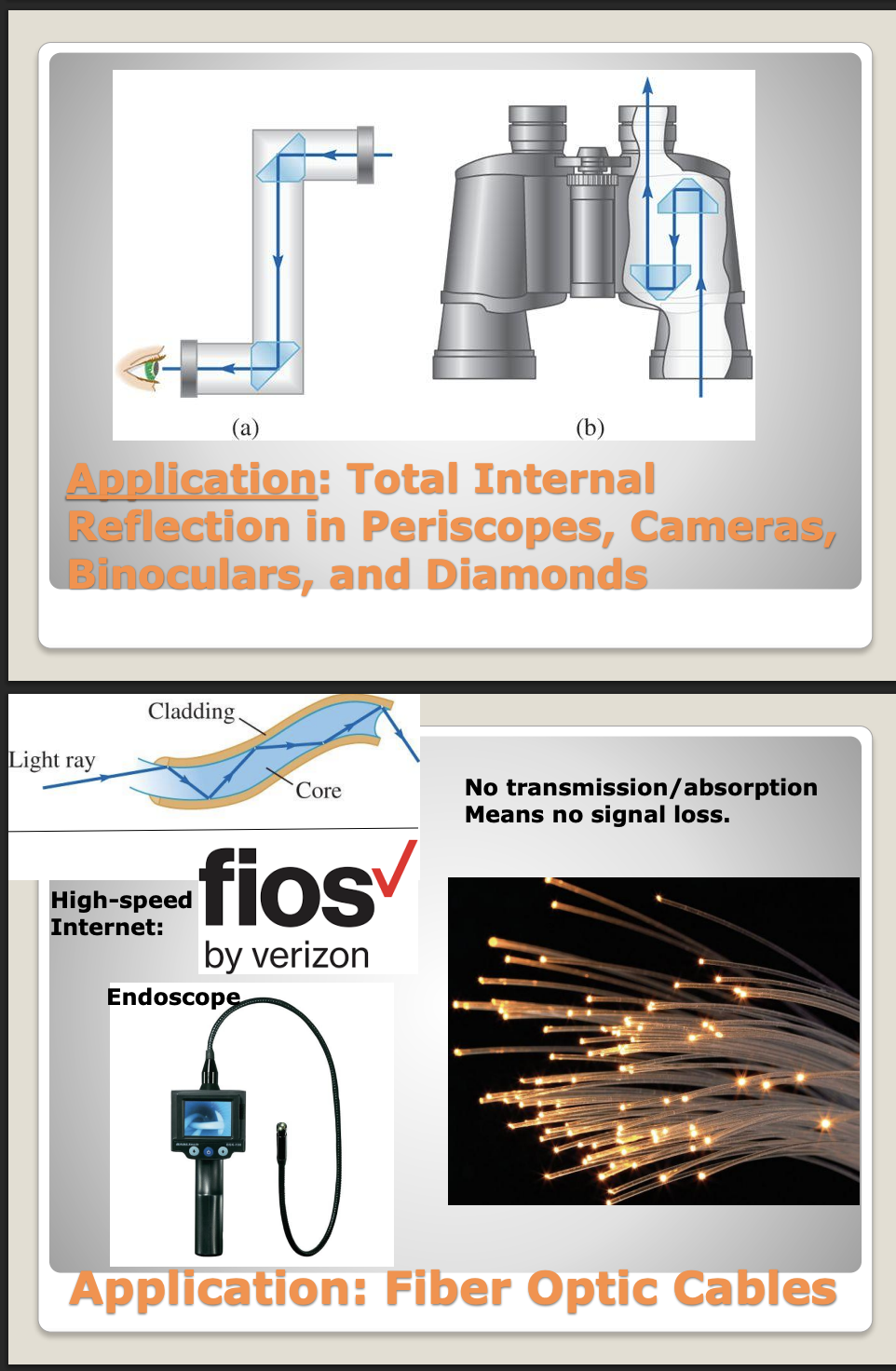
-Total Internal Reflection in Periscopes, Cameras, Binoculars, and Diamonds; control light path so get path you want; diamonds cut w/ many sides so increase TIR and sparkle more
-Fiber Optic Cables: transmit info w/ light; doesn’t refract/absorb light so don’t loose the signal