DNA Structure ands Genome Organizations
 Call Kai
 Learn
Learn Practice Test
 Spaced Repetition
 Match
Match Flashcards
 Knowt Play
1/70

There's no tags or description
Looks like no tags are added yet.
Name | Mastery | Learn | Test | Matching | Spaced | Call with Kai |
|---|
No analytics yet
Send a link to your students to track their progress
71 Terms
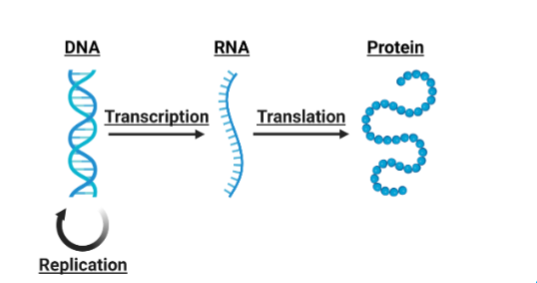
What is the Central Dogma of Moelcular Biology
True or False:
The central dogma is often refined
true
What did Oswald Avery’s Experiment look for?
What type of molecule contains the genetic information of a cell?
What was used in the model avery system of determining what molecule carried the genetic information
streptococcus pneumoniae
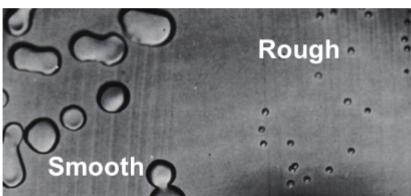
What were the two type of bacteria in streptococcus pneumoniae
smooth (s) cells
rough ( r ) cells
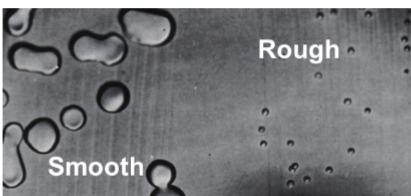
Describe the Smooth (S) cells in the experiment?
have a polysaccharide capsule
look smooth under microscope
virulent (cause disease)
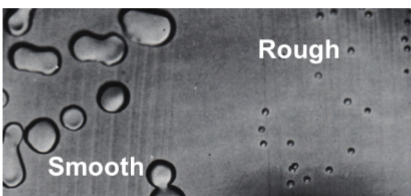
Describe the Rough (R) cells
no capsule
looks rough
non-virulent
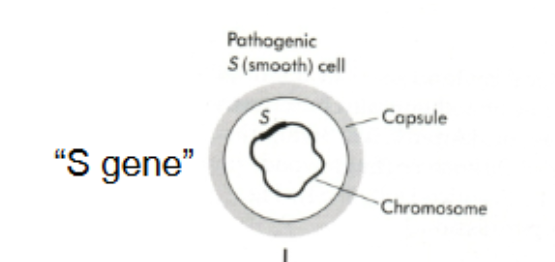
What is significant about the capsule in the smooth cells
it protects the bacteria from the immune system and without it bacteria would get destoryed so the capsule is deemed as a suvival trait- therefore it needs to be genetically controlled
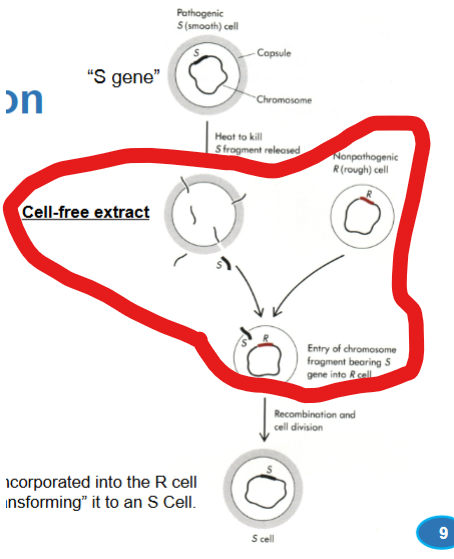
In the Avery Experiment:
Avery built on earlier work showing:
👉 Dead S cells could “transform” R cells into S cells
This process is called:
Bacterial transformation
Cells take up external DNA
Their traits change
What is the significance of this?
information move between cells and something from dead cells is still biologically active
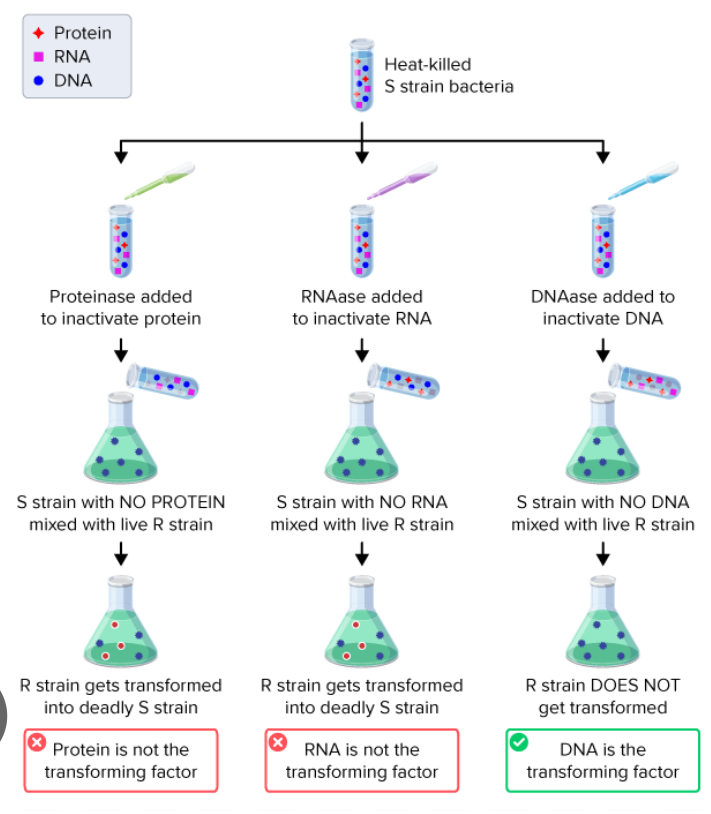
Step 2: Avery’s Key Experiment
Avery asked:
👉 What exactly is the “transforming material”?
He took dead S cells and separated their components:
Proteins
Lipids
Carbohydrates
RNA
DNA
Then he tested each one.
What were the critcal results when DNA was present
R-cells → transformed in to S cells
Step 2: Avery’s Key Experiment
Avery asked:
👉 What exactly is the “transforming material”?
He took dead S cells and separated their components:
Proteins
Lipids
Carbohydrates
RNA
DNA
Then he tested each one.
What were the critical reseults when DNA was destroyed
there was no transformation
Step 2: Avery’s Key Experiment
Avery asked:
👉 What exactly is the “transforming material”?
He took dead S cells and separated their components:
Proteins
Lipids
Carbohydrates
RNA
DNA
Then he tested each one.
What were the critical results when proteins were destroyed?
transformation still happened
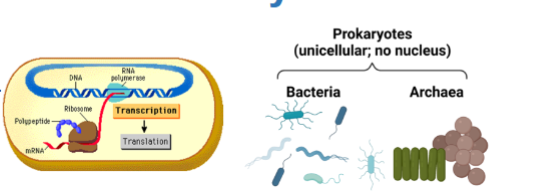
What is being described:
unicellular
no nucleus
DNA is in the cytoplasm
Prokaryotes
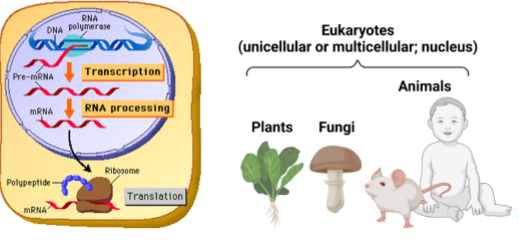
What is being described:
unicellular or muticellular
DNA in nucleus
Eukaryotes
What are DNA and RNA comprised of
nucleotides
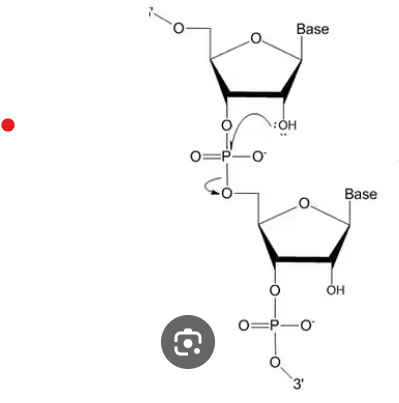
what is it calle dwhen something is a polymer of several nucleotides
oligonucleotides
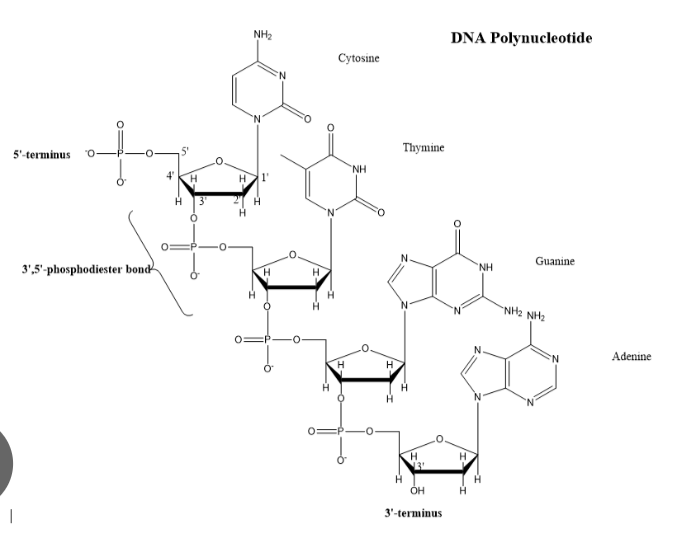
what is it called when it is a polymer of many nucleotides
polynucleotides
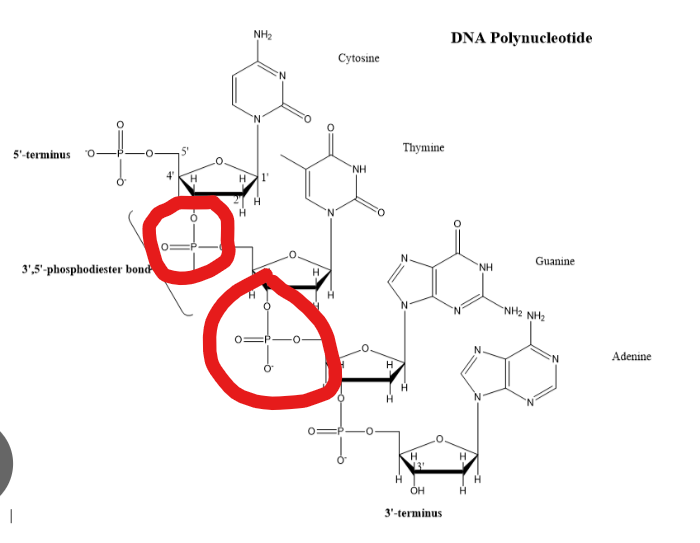
What connects each nucleotide in a polynucleotide
phosphodiester linkage
How can the sequence of polynucleotide be abbreviated
only using the base attached to each nucleotide
where do the phosphodiester linkages connect
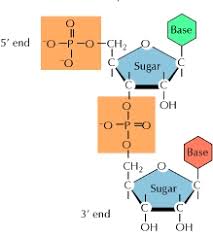
at the 3’ OH of 1 nucleotide and the 5’ phosphate of the next neculeotide
What direction are nucleotides labeled
from the 5’→3’
What is the first of Chargaffs Rules
DNA has concentrations in which A=T and G=C
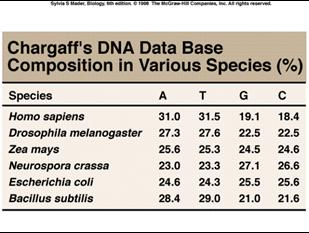
What is the second rule of chargaffs rules
Base composition # varies between species
Based on on Chargaff’s third rule answer this true or false question:
Base composition # is the same in different cells within an indivudual organism
true
what is the fourth of chargaffs rules
base composition (%) does NOT change with age, nutrition, and environment
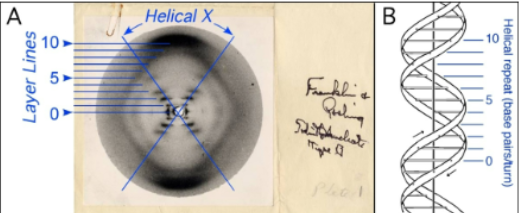
How is Rosalind Franklin so significant
she used X ray diffraction to show that DNA is helical with a consistent diameter
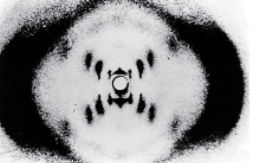
What does X-ray diffraction do?
bend (diffract) in different directions based onthe location of atoms in a macromolecule
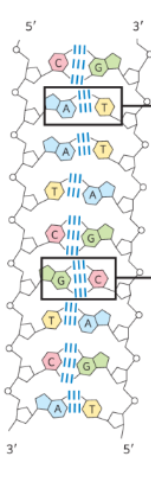
What is the chemical structure of DNA
its a repeating unit
DNA contains two unbranched polynucleotide chains i
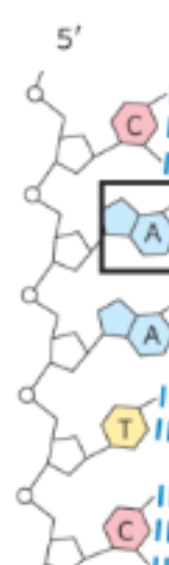
What is the repeating unit of DNA
2'-deoxyribonucleoside 5'-monophosphates (dNMP)
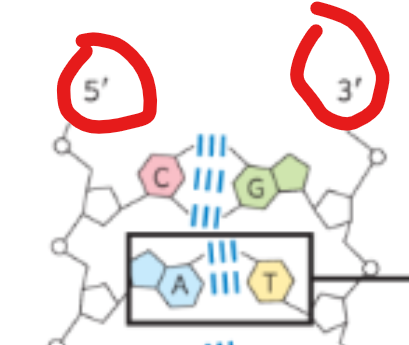
DNA contains two unbranched polynucleotide chains.
What type of orientation is it
antiparallel
DNA contains two unbranched polynucleotide chains.
Two chains interact by what type of bonding?
hydrogen bonding
DNA contains two unbranched polynucleotide chains
• Antiparallel orientation
• Two chains interact by hydrogen
bonding
What type of base pairing is it
Watson-Crick-Franklin base pairing
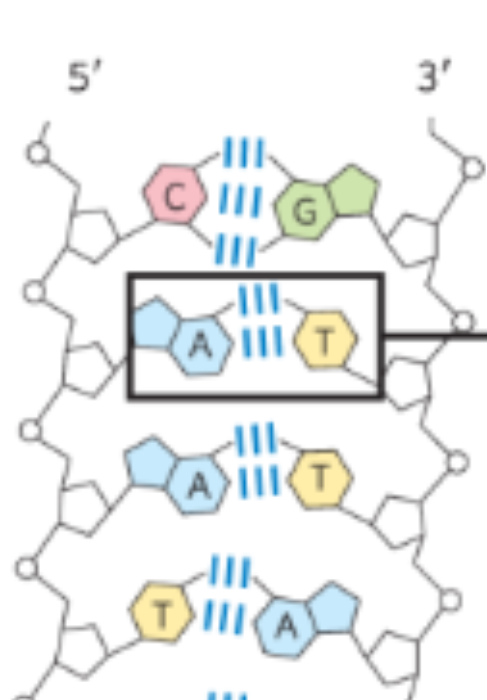
What is the sugar phosphate part of DNA called
backbone
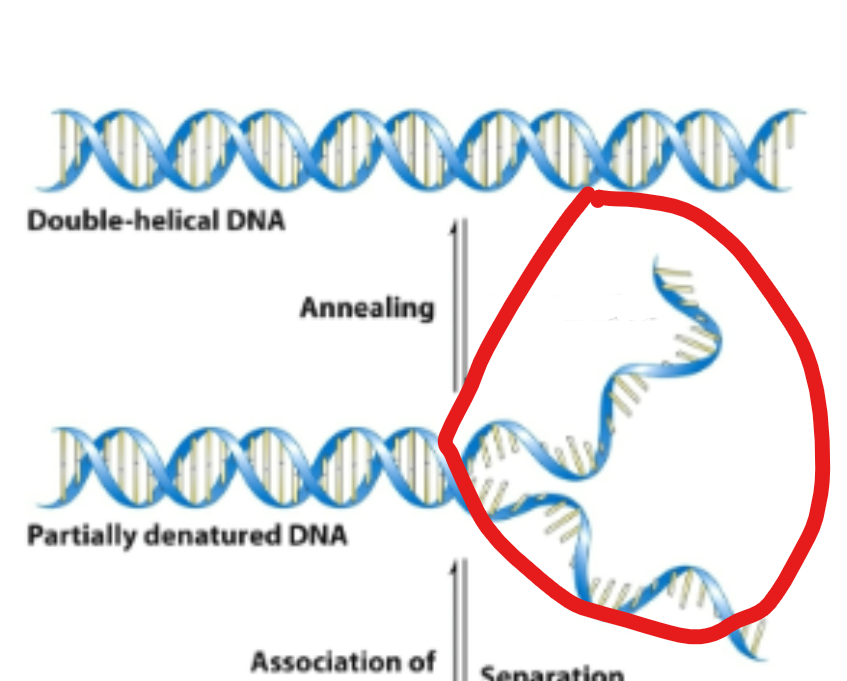
When seperating DNA strand, what is it called when you seperate two DNA strands
denaturing
What is the temperature at which a solution of DNA is 50% denatured
T(m)= melting temperature
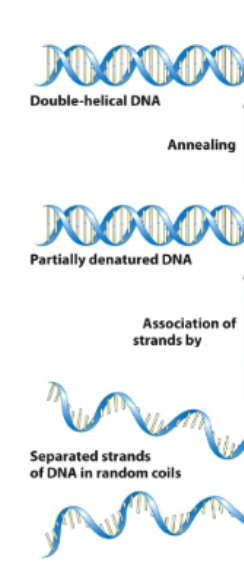
How do complementary single strands of DNA anneal to each other?
by base pairing
True or False:DNA is a long, flexible molecule
True
In a living cell, >99% of the DNA is in what conformation?
the B-DNA conformation
Which type of helix is B-DNA
a right handed helix
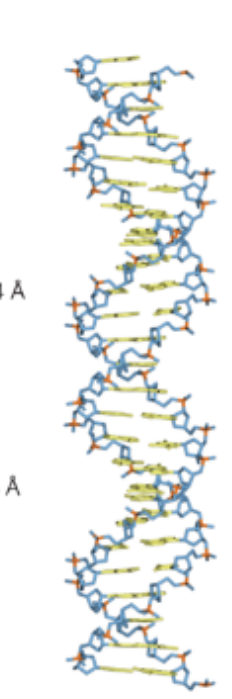
How do base pairs lay out in B-DNA
they are flat and perpindicular to the backbone
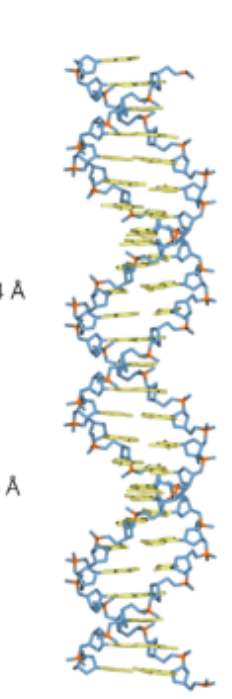
In B-DNA which portion of bases are on the interior
hydrophobic portions and base stacking interactions
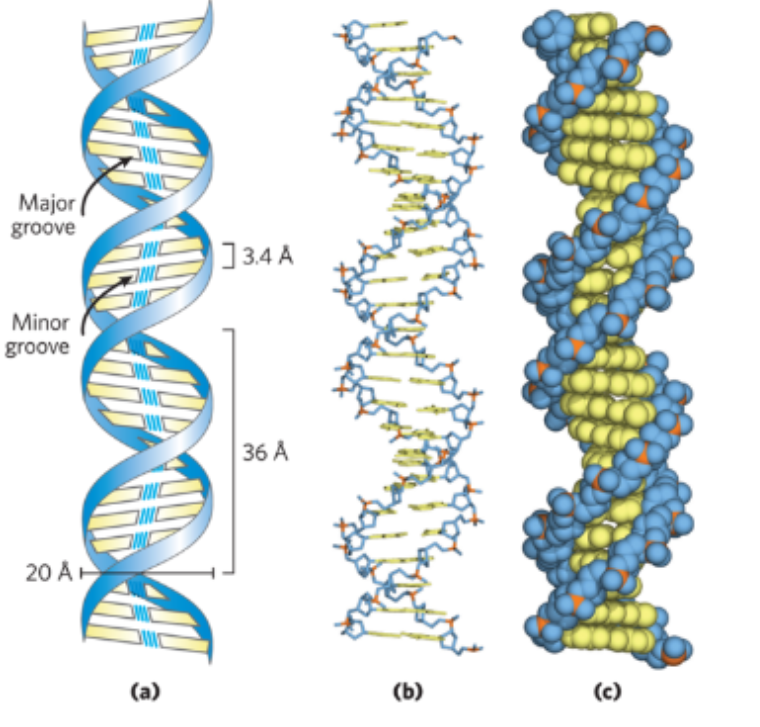
In B-DNA where are the base pairs exposed in
the major and minor grooves
What are the alternative forms of DNA
A-DNA and Z-DNA
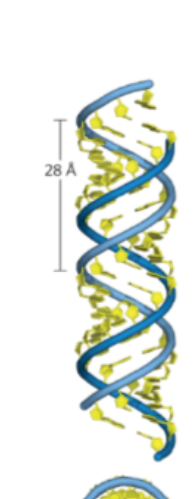
Which alternative form of DNA is being described:
the conformation of dehydrated DNA
a good structural model of double stranded and RNA-DNA hybrid
A-DNA
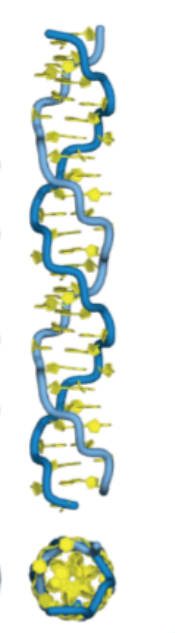
Which form of alternative DNA is:
<1% of cellular DNA
seen in regions with high G-C content
a left handed helix
Z-DNA
True or false: very small amounts of other conformations of DNA exist in eukaryotic cells called:
cruciform
triplex
quadruplex
true
What is typically a linear single-stranded polynucleotide chain
RNA
what type fo sugar backbone does RNA have
a ribose sugar phosphate backbone
In RNA what replaces Thymine
Uracil
which direction does the RNA sequence move in
5’→3’
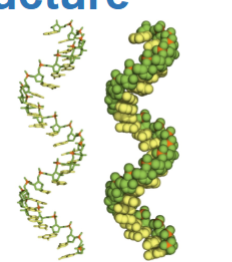
What make the helical shape in RNA
base stacking interactions
What can RNA base pair with
complementary regions of either RNA or DNA
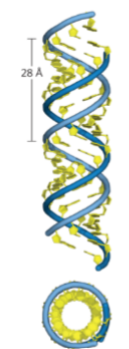
Wat does the RNA structure resemble?
the A-DNA conformation
What orientation are the strands of RNA
antiparallel
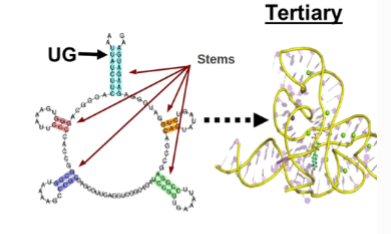
what type of pairing is allowed wheN RNA base pairs with itself or another RNA moelcule
G-U base pairing
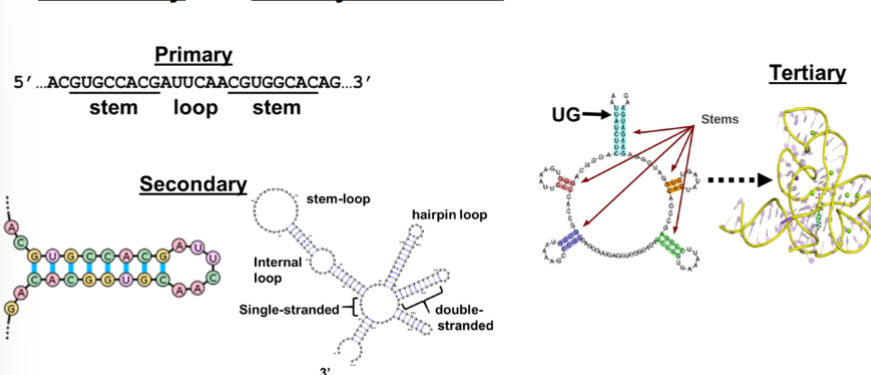
RNA moelcules form complex structures
Styructures come from the internal base pairing within an RNA
complex secondary and tertiary structure
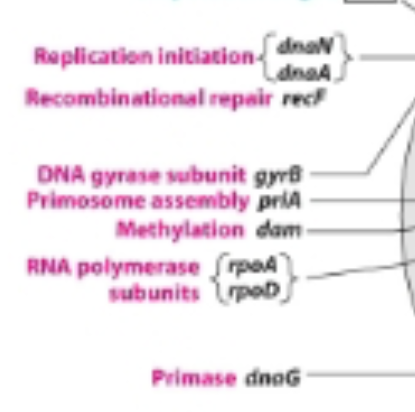
What is being described:
A ____ contains:
the DNA encoding a fucntional RNA or protein
the regulatory elements controlling its expression
gene
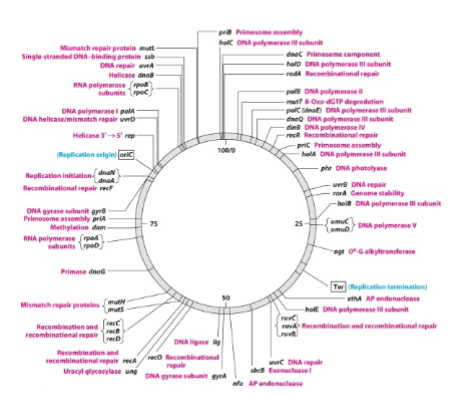
What is the complete set of geentic material present in a cell or organism
genome
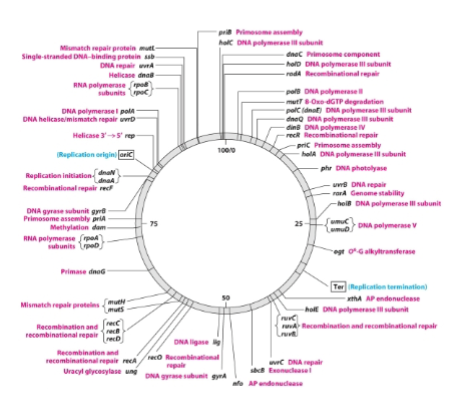
What does E. Coli have
A single circular chromosome ( DNA molecule that encodes genes) with the position of genes fixed within a species
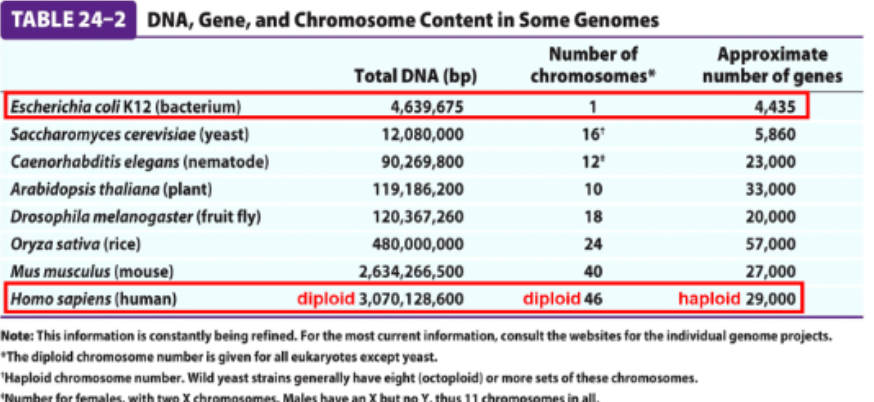
between a prokaryote and eukaryotes which has the lowest amount of DNA, number of chromosomes, and approximate number of genes
prokaryotes
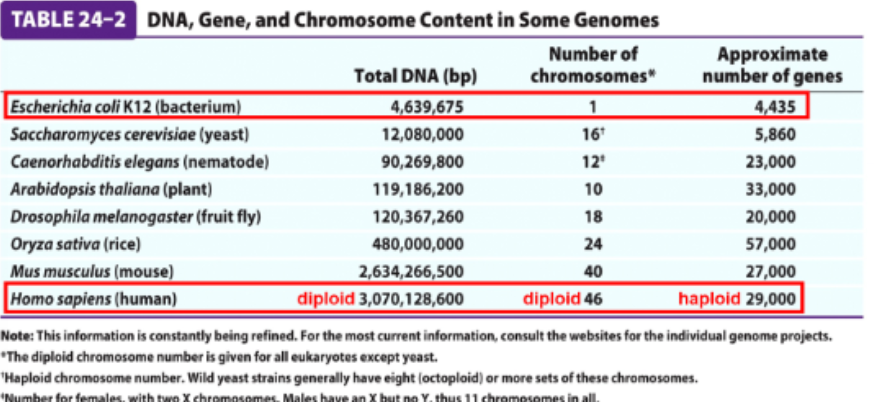
between a prokaryote and eukaryotes which has the highest amount of DNA, number of chromosomes, and approximate number of genes
eukaryotes
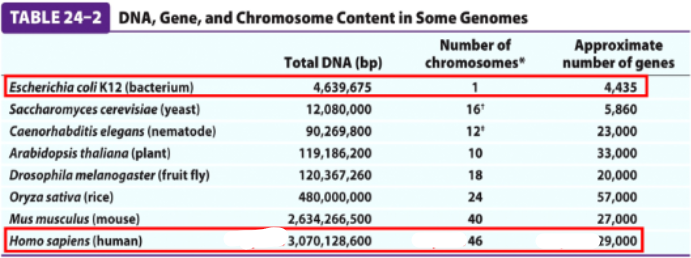
The largest amount of DNA is found within what specific part of a eukaryotes
diploid
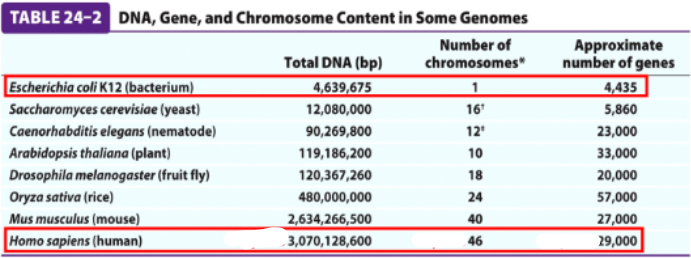
The largest amount of chromosomes is found within what specific part of a eukaryotes
diploid
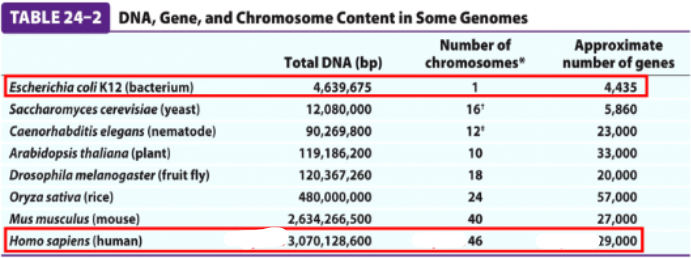
The largest amount of the number of genes is found within what specific part of a eukaryotes
haploid
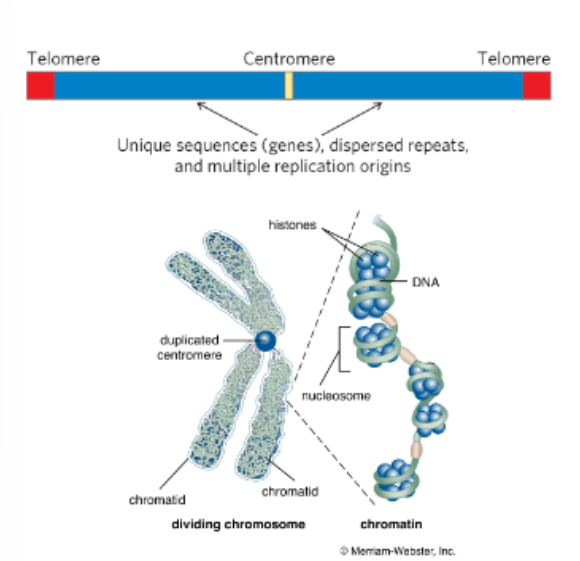
A human cell has 46 _____________
linear chromosomes
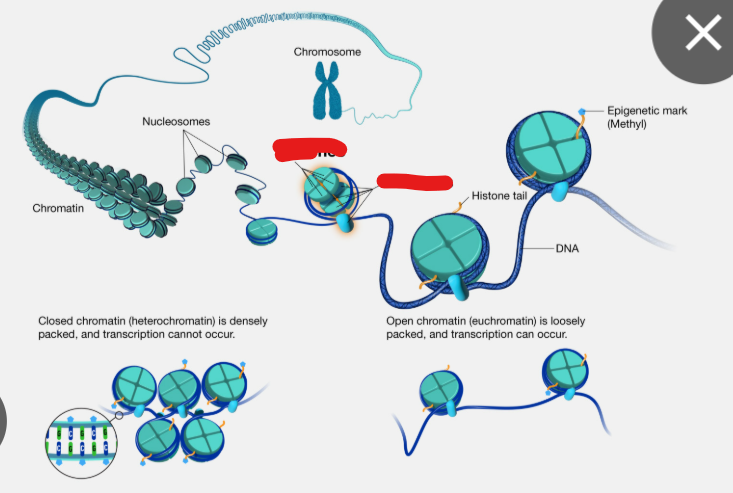
What do eukaryotes have bound to chromosomal DNA
proteins (histones)
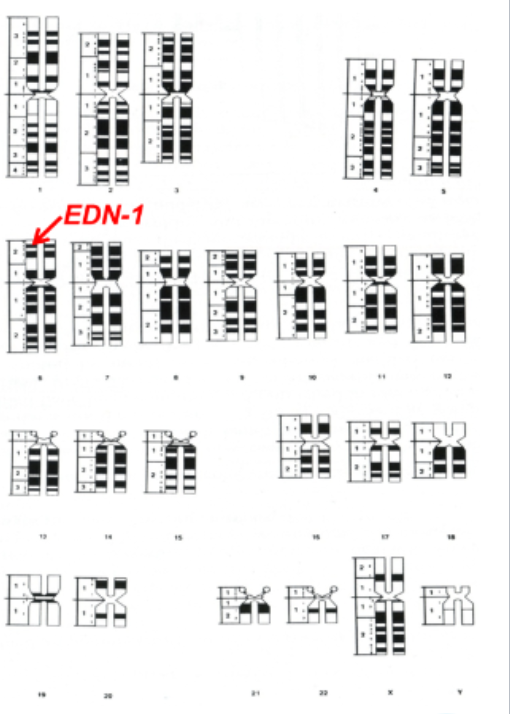
True or False: The position of genes are charcateristic of our species
true
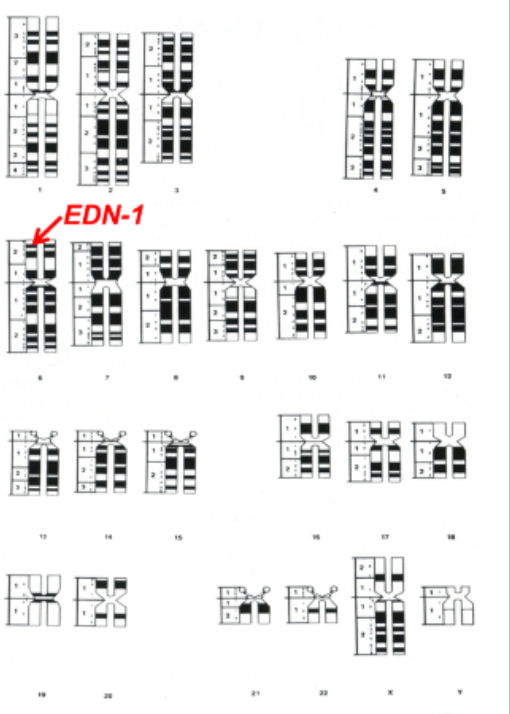
The positions of the genes are characteristic of our species.
What is an example of this?
the EDN1 gene is always located a 6p24
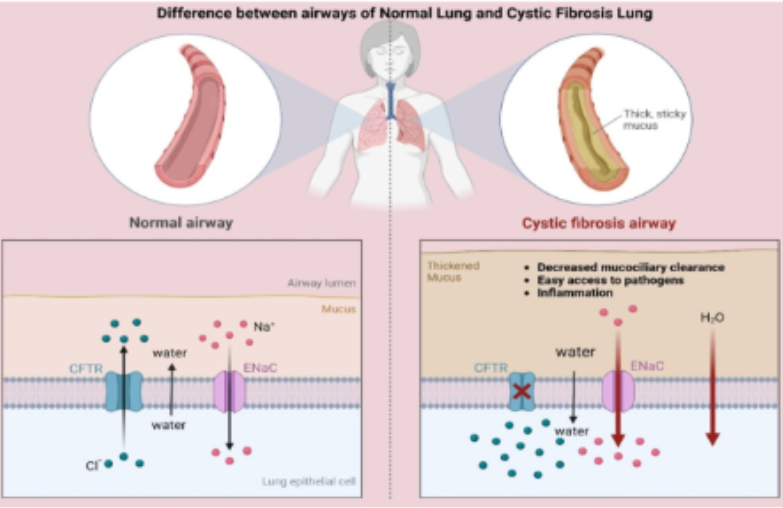
What is the significance of cystic firbosis
a tiny DNA change as simple as 3 nucleotides missing removes a single acid from CTFR
What does a missing piece of an amino acid from CFTR do?
it prevents the protein from folding correctly so the cell destroys it before it ever reaches the membrane
What happens if CTFR is not present
This small deletion disrupts the folding of the CFTR protein, impairing chloride transport and leading to thick mucus buildup in lungs and other organs. Chloride ions are not reabsorbed from the sweat duct back into the body, causing a high concentration of chloride (and sodium) to remain in the sweat.