Chapters 1-2: Scientific Foundations and Lab Practices, Introduction to the Structural Units
 Call Kai
 Learn
Learn Practice Test
 Spaced Repetition
 Match
Match Flashcards
 Knowt Play
1/90

Earn XP
Description and Tags
, Chemistry of Living Things, Cells, Tissues and Membranes
Name | Mastery | Learn | Test | Matching | Spaced | Call with Kai |
|---|
No analytics yet
Send a link to your students to track their progress
91 Terms
Science
The systematic study of the natural world through observation and experimentation, aiming to understand phenomena and develop explanations based on evidence.
Scientific Revolution
A period of significant advancement in scientific thought during the 16th and 17th centuries that transformed views of society and nature.
Francis Bacon
Created the scientific method in which schientists conduct experiments by testing hypotheses.
Nicolaus Copernicus
Developed the Copernican heliocentrism, an astronomical model that depicted the sun as the center of the universe and the planets orbiting the sun.
Leonardo da Vinci
Made discoveries in anatomy and engineering with foresight to modern engineering designs.
Galileo Galilei
Built telescopes to view the sky and was the first to explore the idea of inertia.
William Harvey
First to describe the circulatory system and how blood is pumped through the body by the heart.
Isaac Newton
Notable mathematics, physics, and astronomy discoveries; built the first reflecting telescope and devised the laws of motion and gravity.
Andreas Vesalius
Author and professor who was the first to describe human anatomy by dissection.
Age of Enlightenment
An intellectual and cultural movement in Europe during the 17th and 18th centuries, emphasizing reason, science, and individualism over tradition, influencing political and philosophical thought.
The four types of investigations are:
descriptive, comparative, experimental, and observational.
Data that are observed or recorded are called _____.
Empirical evidence
Internet domains that end in .org indicate a _______ website.
non-profit
Descriptive investigation
Observational investigations are used to _____.
compare two or more groups.
before beginning an investigation.
Biology
The scientific study of life and living organisms, encompassing various fields such as ecology, genetics, and physiology.
Anatomy
The branch of biology that deals with the structure and organization of living organisms, including their systems, organs, and tissues. The word anatomy comes from the Greek ana, meaning “apart,” and temuein, “to cut’
Physiology
The branch of biology that studies the functions and processes of living organisms and their parts, focusing on how systems work together to maintain life.
Disease
Any condition that impairs normal bodily functions/structures that produces symptoms, often resulting from infection, genetic factors, or environmental influences.
Gross Anatomy
The study of the structures of the body that can be observed without the use of a microscope, focusing on large-scale anatomical features.
Microscopic Anatomy
The study of biological structures at the cellular and tissue levels using a microscope, emphasizing details not visible to the naked eye.
Cytology
The branch of biology that studies the structure, function, and behavior of cells, focusing on cellular components and their interactions.
Histology
The study of the microscopic structure of tissues and their organization within organs, providing insight into their function and pathology.
Developmental Anatomy/Embryology
The branch of anatomy that studies the formation and development of an organism from fertilization to maturity, focusing on changes in structure throughout life stages.
Comparative Anatomy
The branch of anatomy that examines the similarities and differences in the anatomical structures of different species, providing insights into evolutionary relationships and adaptations.
Systematic Anatomy
The branch of anatomy that focuses on the systematic organization of the body's structures into organ systems, analyzing their relationships and functions.
Anatomical Position
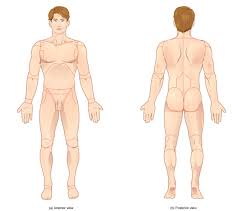
The standard position of the body used as a reference point in anatomy, where the body is standing erect, facing forward, with arms at the sides and palms facing forward.
Anterior/Ventral
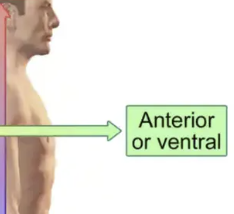
Refers to the front or belly side of the body.
Posterior/Dorsal
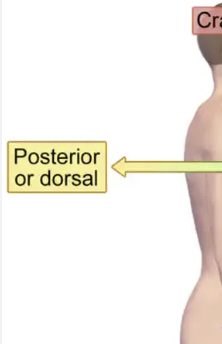
Refers to the back or spine side of the body.
Supine
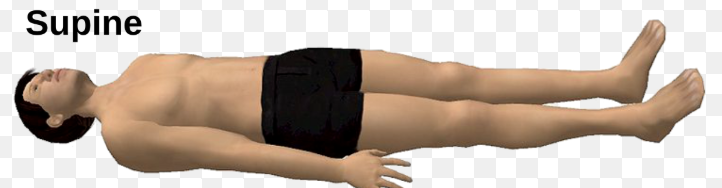
Refers to a body position lying face up, with the back on the ground.
Prone
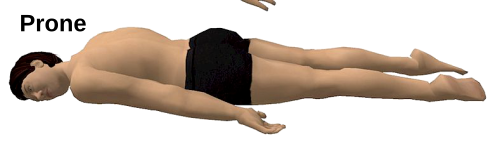
Refers to a body position lying face down, with the front on the ground.
Cephalic
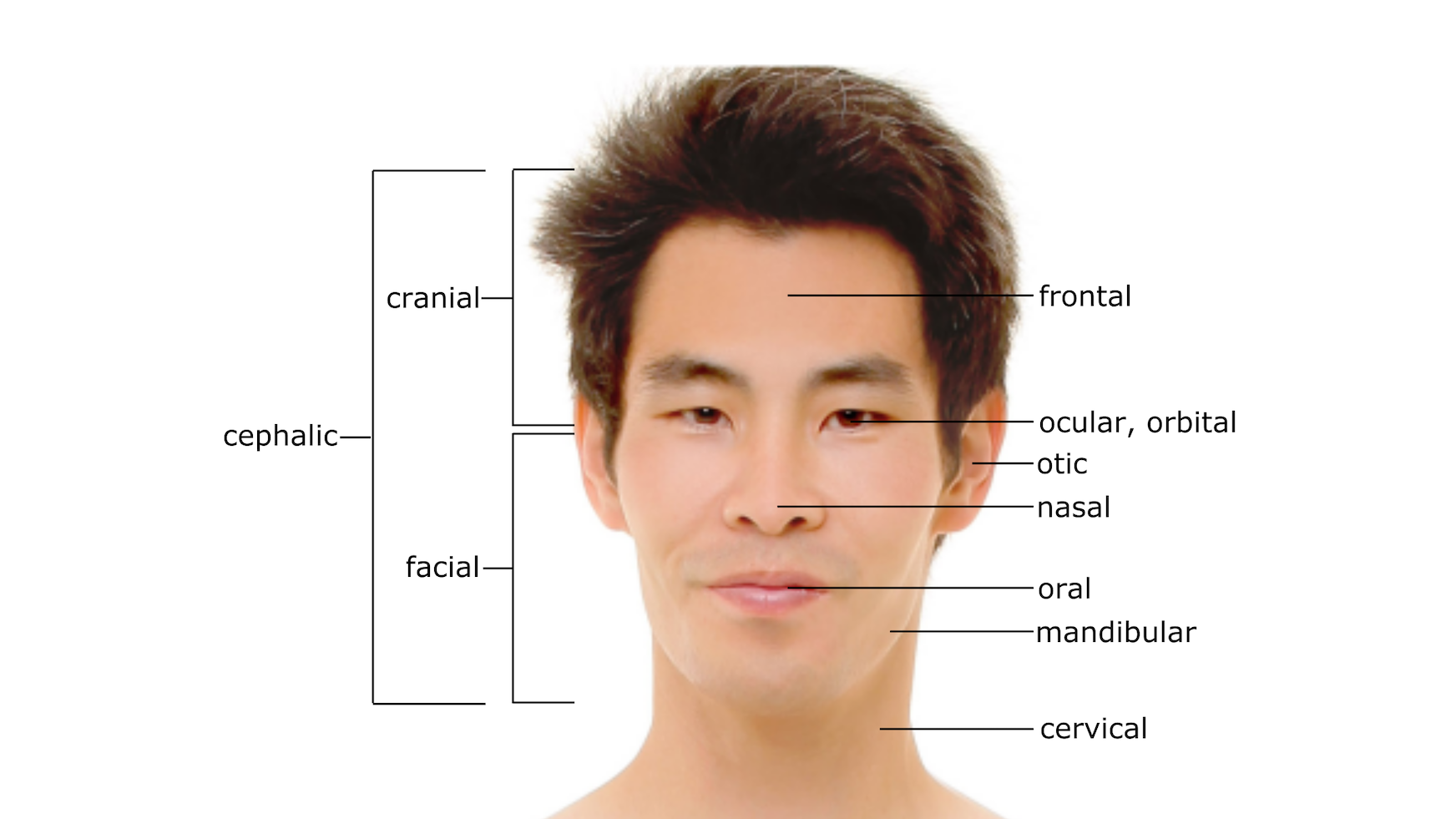
“Skull” or “Head End” of the body
Caudal
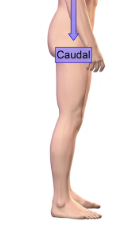
Refers to the "tail" or "lower" end of the body.
Superior
“Upper” or “Above Another”
Inferior
“Lower” or “Below Another”
Medial
Toward the midline or median plane of the body
Lateral
Toward the side of the body
Proximal
Toward the point of attachment to the body or closer to the trunk of the body.
Distal
Away from the point of attachment or farther from the trunk of the body.
Superficial/External
Toward the surface of the body or away from the core.
Deep/Internal
Away from the surface of the body or toward the core.
Planes
Imaginary lines that divide the body into sections.
Section
A cut made through the body in the direction of a certain plane.
Sagittal Plane
A vertical plane that divides the body into right and left parts.
Midsagittal Plane
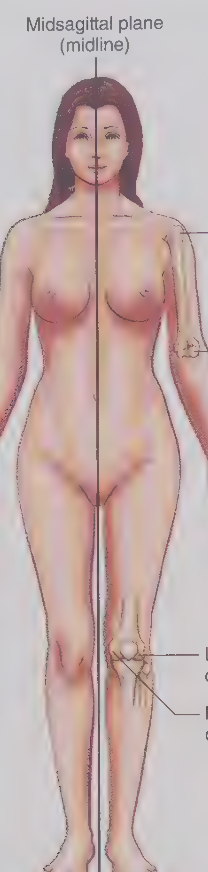
A specific type of sagittal plane that divides the body into equal right and left halves.
Coronal (Frontal) Plane
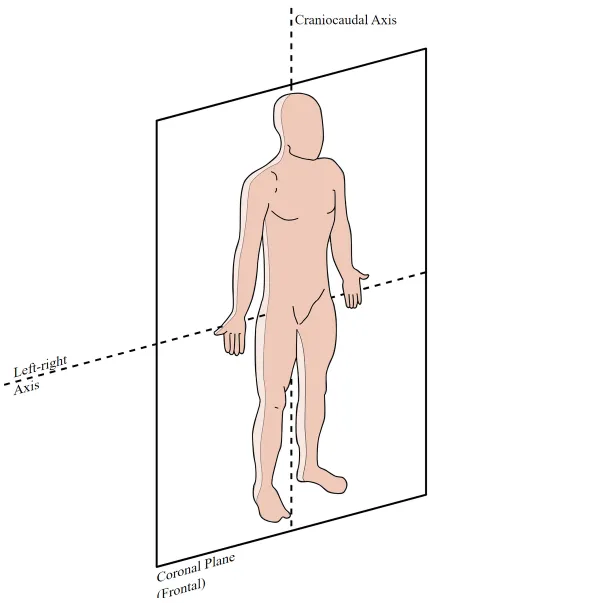
A vertical cut that divides the body into anterior and posterior parts.
Transverse
A horizontal cut that divides the body into upper and lower portions.
Dorsal Cavity
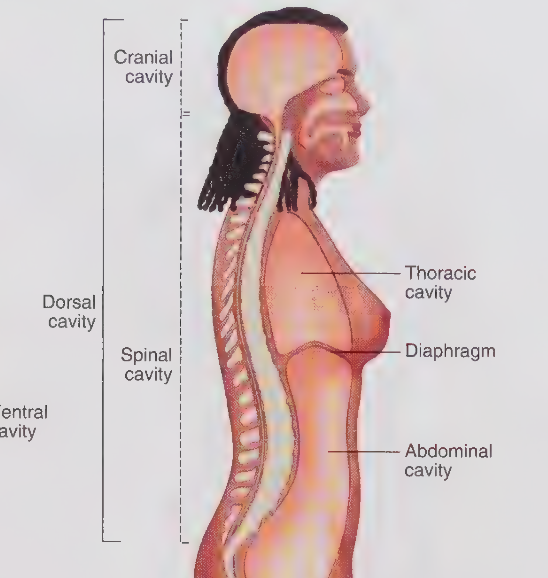
The space within the body that houses the brain and spinal cord.
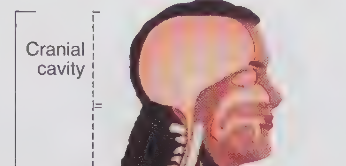
Cranial Cavity
The space within the skull that contains the brain.
Vertebral (Spinal) Cavity
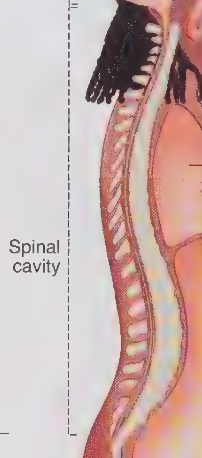
The space within the vertebral column that surrounds and protects the spinal cord.
The _____ divides the ventral cavity into two parts: the upper thoracic and abdominopelvic cavities.
diaphragm
Thoracic Cavity
The chamber within the rib cage that contains the heart and lungs, protected by the rib cage and diaphragm.
Mediastinum
The central compartment of the thoracic cavity that lies between the lungs and extends from the sternum to the vertebrae.
Pericardial Cavity
The space within the thoracic cavity that surrounds and contains the heart.
Abdominopelvic cavity
One large cavity with no separation between the abdomen and pelvis.
Abdominal cavity
The upper part of the abdominopelvic cavity, containing organs such as the stomach, liver, and intestines.
Pelvic cavity
The lower part of the abdominopelvic cavity that contains the bladder, reproductive organs, and rectum.
The abdominopelvic region is divided into ___ regions.
nine
Epigastric region
Located just below the sternum.
Hypochondriac Regions
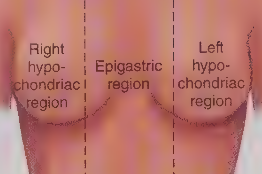
The areas located on either side of the epigastric region, below the ribs.
Umbilical Area

Located around the navel/umbilicus.
Lumbar regions
Extend from anterior to posterior (back pain = lumbar pain).
Hypogastric/Pubic region
The region located below the umbilical area, often associated with the lower abdomen.
Iliac/Inguinal areas
Regions located on either side of the hypogastric region, often associated with the groin and lower abdomen.
Orbital Cavity
The bony socket that contains the eye and its associated structures.
Nasal Cavity
The cavity within the skull that houses the nasal passages and assists in the respiratory process.
Oral Cavity
The space within the mouth that is bounded by the lips, cheeks, tongue, and palate, involved in digestion and speech.
Quadrants
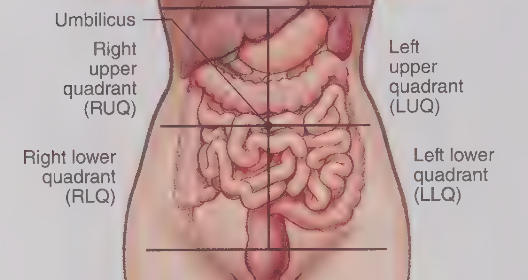
The four regions of the abdomen, each used to describe the location of organs and diagnose conditions.
Life functions
Essential processes necessary for maintaining life.
Cell
The basic structural and functional unit of all living organisms, capable of performing life functions.
Tissues
Groups of similar cells that work together to perform a specific function.
Organs
Structures composed of different types of tissues that work together to carry out specific functions in an organism.
Organ System
A group of organs that work together to perform complex functions essential for the survival of an organism.
Movement
The ability of an organism to change position or location through muscular or structural actions.
Ingestion
The process of taking in food and nutrients through the mouth, which is essential for providing energy and building materials for the body.
Assimilation
The process by which absorbed nutrients are incorporated into the cells and tissues of an organism, converting them into usable forms.
Digestion
The process of breaking down food into smaller molecules that can be absorbed and utilized by the body.
Transport
The process of moving absorbed nutrients throughout the body to cells and tissues where they are needed.
Respiration
The biochemical process by which organisms convert nutrients and oxygen into energy, releasing carbon dioxide and water as byproducts.
Immunity
The ability of an organism to resist infections and diseases through the action of its immune system, which includes various cells, tissues, and organs that recognize and attack pathogens.
Protection
The mechanisms that help defend an organism against harmful agents, including physical barriers like skin and innate and adaptive immune responses.
Growth
The enlargement of an organism due to synthesis and assimilation, resulting in an increase in the number and size of its cells.
Secretion
Formation and release of hormones from a cell or structure.
Excretion
The process by which an organism eliminates waste products and metabolic byproducts from its body, maintaining internal balance and homeostasis.
Regulation (Sensitivity)
The ability of an organism to detect and respond to changes in its internal or external environment, ensuring stability and adaptation.
Reproduction
The biological process by which organisms produce new individuals, ensuring the continuation of their species. This may occur through sexual or asexual means.
Homeostasis
The process through which organisms regulate their internal environment to maintain stable (in equilibrium), constant conditions despite external changes.
Negative feedback loop
A biological mechanism that counteracts a change in a system, restoring it to its set point. It is crucial for maintaining homeostasis in organisms.
Positive feedback loop
A biological mechanism that amplifies a change in a system, driving it away from its set point and enhancing the effect of the initial stimulus.
Metric system
A decimal-based system of measurement used globally, defined by units such as meters, liters, and grams, facilitating scientific calculations and conversions.