6.1, 6.2, 6.3, 6.5, & 6.6 Intro and Nonrenewable Energy
 Call Kai
 Learn
Learn Practice Test
 Spaced Repetition
 Match
Match Flashcards
1/39

There's no tags or description
Looks like no tags are added yet.
Name | Mastery | Learn | Test | Matching | Spaced | Call with Kai |
|---|
No analytics yet
Send a link to your students to track their progress
40 Terms
renewable energy sources
energy sources that can be replenished naturally, at or near the rate of consumption, and reused
nonrenewable energy sources
energy sources that exist in fixed amounts and cannot be replenished or regenerated in a timescale useable by humans
potentially renewable energy sources
biomass like wood, charcoal, animal waste, and biofuels like ethanol that can be potentially renewable if they're consumed at rates equal to or near regeneration
Developed countries energy use
High per-capita energy use due to high affluence, especially homes and cars. High use of commercial fuels, especially FFs
Developing countries energy use
Lower per-capita energy use due to low affluence, lack of electricity & car use. High use of subsistence fuels for personal home heating/cooking (wood, charcoal, etc.)
Industrialization/development & energy use
As countries develop, their total energy use increases, both due to pop. growth, and per-capita increase as affluence increases. Reliance on FFs especially increases
Commercial fuel sources
Fuel sources that are bought and sold on massive scales for industrial use like electricity generation or gasoline distribution. Primarily FFs.
Subsistence fuel sources
Fuel sources that are gathered by individuals (primarily in developing countries) for personal uses such as heating homes or cooking. Most commonly biomass such as wood, charcoal, dried animal waste or plant matter.
biofuel
Liquid fuel created from processed or refined biomass. Ex: fermentation of corn to produce ethanol
charcoal
charred wood used as a subsistence fuel source, primarily in developing countries
Peat
partially decayed organic matter found underneath bogs and marshes in anaerobic conditions. Can be turned into coal over time, but can also directly be burned as a biomass fuel
Lignite
the least energy dense form of coal
bituminous coal
The most common form of coal; produces a high amount of heat and is used extensively by electric power plants. Middle energy density
anthracite
the cleanest-burning and most energy-dense coal; almost pure carbon.
Natural gas
flammable gas, consisting largely of methane and other hydrocarbons, occurring naturally underground (often in association with petroleum) and used as fuel. Primarily for heating homes and generating electricity
petroleum (crude oil)
Liquid hydrocarbons formed from the compression of fossilized organic matter over millions of years. Extracted by drilling wells. Converted in refineries to a wide range of products such as plastic, asphalt, gasoline, and jet-fuel
tar sands/oil sands
a mixture of clay, sand, water, and a combustible organic material called bitumen (tar). Requires more energy to extract that conventional oil. Highly water intensive.
Bitumen (tar or pitch)
A degraded type of petroleum that forms when a petroleum migrates close to the surface, where bacteria metabolize some of the light hydrocarbons and others evaporate
Fossil fuels
Coal, oil, natural gas, and other fuels that are ancient remains of plants and animals compressed overtime into hydrocarbon compounds
combustion reaction
burning fossil fuels to release energy. Requires oxygen and fossil fuels as inputs and gives off CO2, water, and energy in the form of heat
Elecricity
A secondary energy source created from primary energy sources like fossil fuels or nuclear fuel (uranium). Also called an energy carrier
Steps to electricity generation
1. The burning fuel from coal transfers energy to
water, which becomes steam.
2. The kinetic energy contained within the steam
is transferred to the blades of a turbine, a large
device that resembles a fan.
3. As the energy in the steam turns the turbine,
the shaft in the center of the turbine turns the
generator.
4. This mechanical motion generates electricity.
hydraulic fracturing (fracking)
The process used to extract natural gas from the deep layers of rock in which it is embedded. Water, sand, and fracking chemicals are injected into the well to fracture the surrounding rock and release the natural gas stored in it.
Formation of coal
Peat is subjected to pressure from overlying sediment layers which compress it into lignite --> bituminous --> anthracite coal as time goes on. (Usually underneath wetlands, bogs, marshes, etc.)
Formation of petroleum
Petroleum is formed from decomposing phytoplankton (microscopic algae)found in locations where porous rocks, such as sandstone, are capped by nonporous rocks like shale. Petroleum forms over millions of years and fills the pore spaces in the rock.
formation of natural gas
Forms on top of petroleum deposits, as gasses are less dense than liquids. Can be extracted from the top of petroleum deposits.
Radioactivity
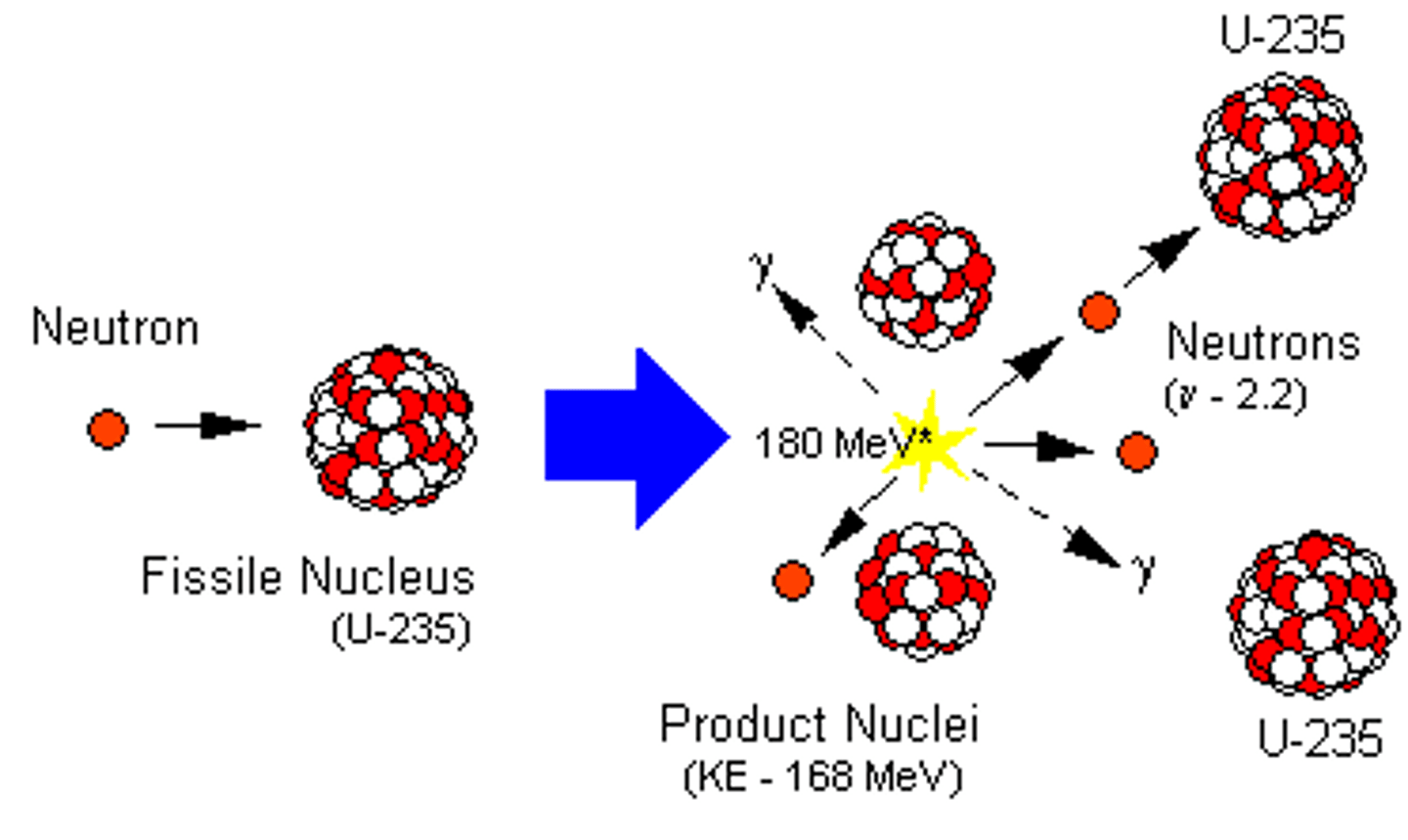
The spontaneous emission of radiation by an unstable atomic nucleus such as uranium-235.
Uranium-235
A radioactive isotope used to fuel most nuclear fission reactors.
Fission
The splitting of an atomic nucleus with neutrons in order to release energy. The energy given off can be used to heat water into steam, to turn a turbine and power an electric generator.
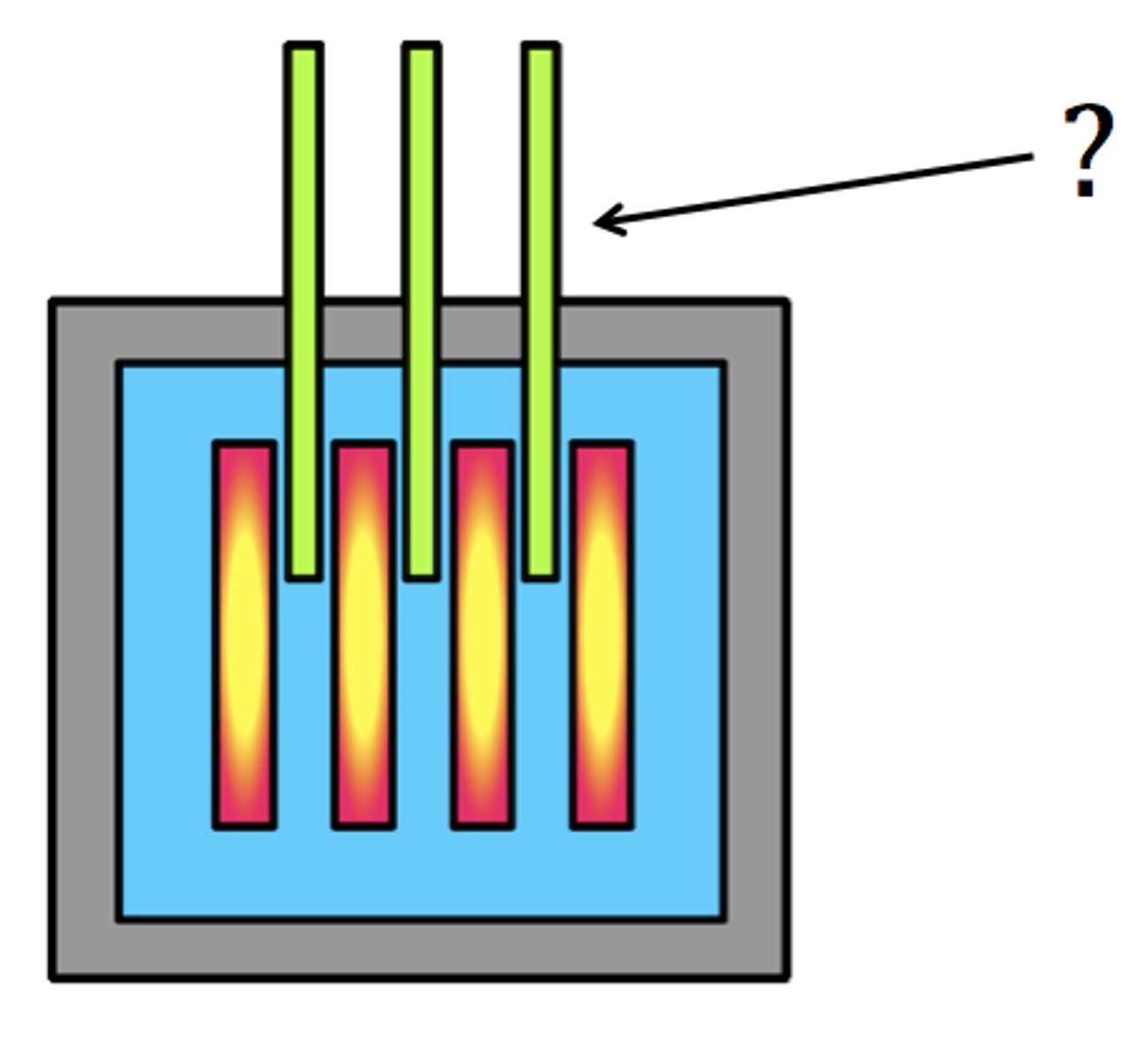
Reactor core
the thick steel vessel used to contain nuclear fuel rods in a nuclear power plant. Fission reaction occurs here to heat water into steam.
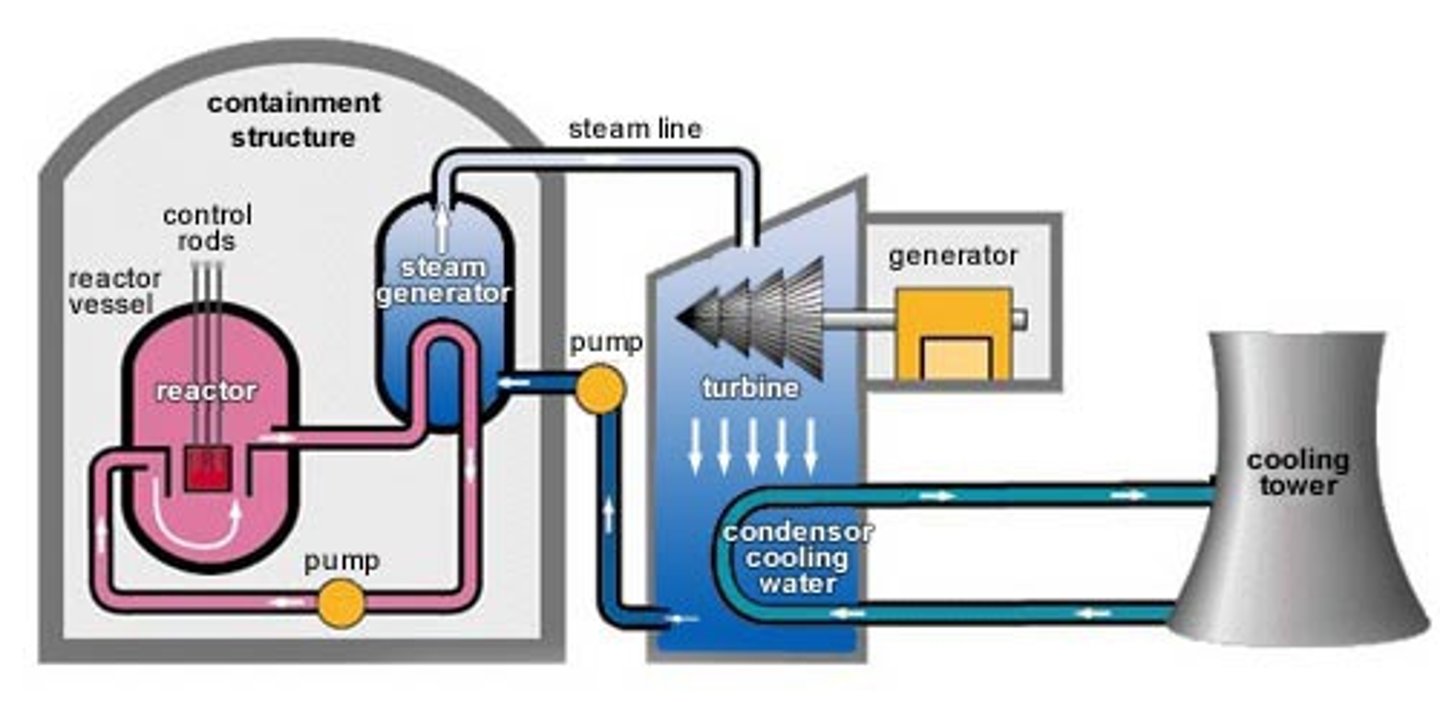
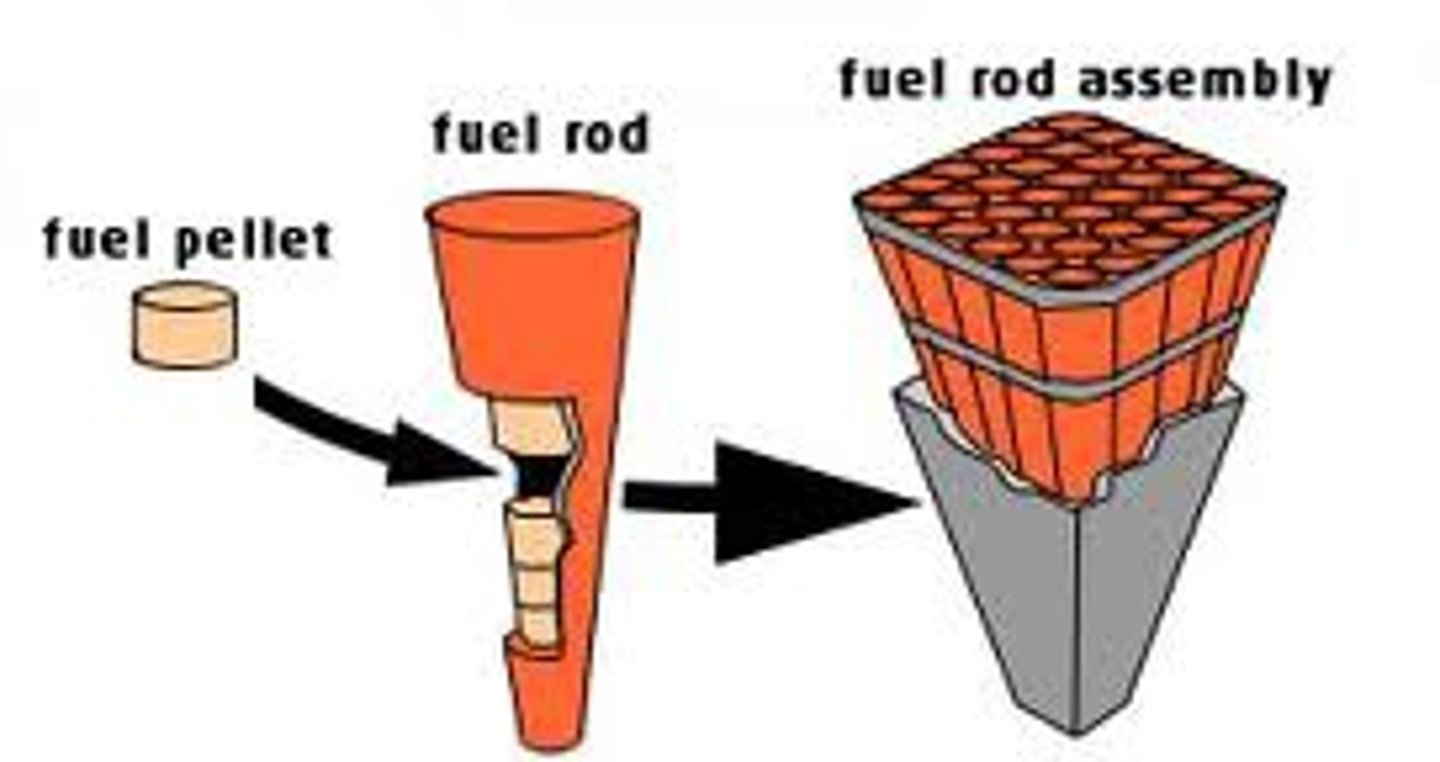
fuel rods
hollow metal cylinders filled with uranium fuel pellets for use in fission reactors. Found in the reactor core.
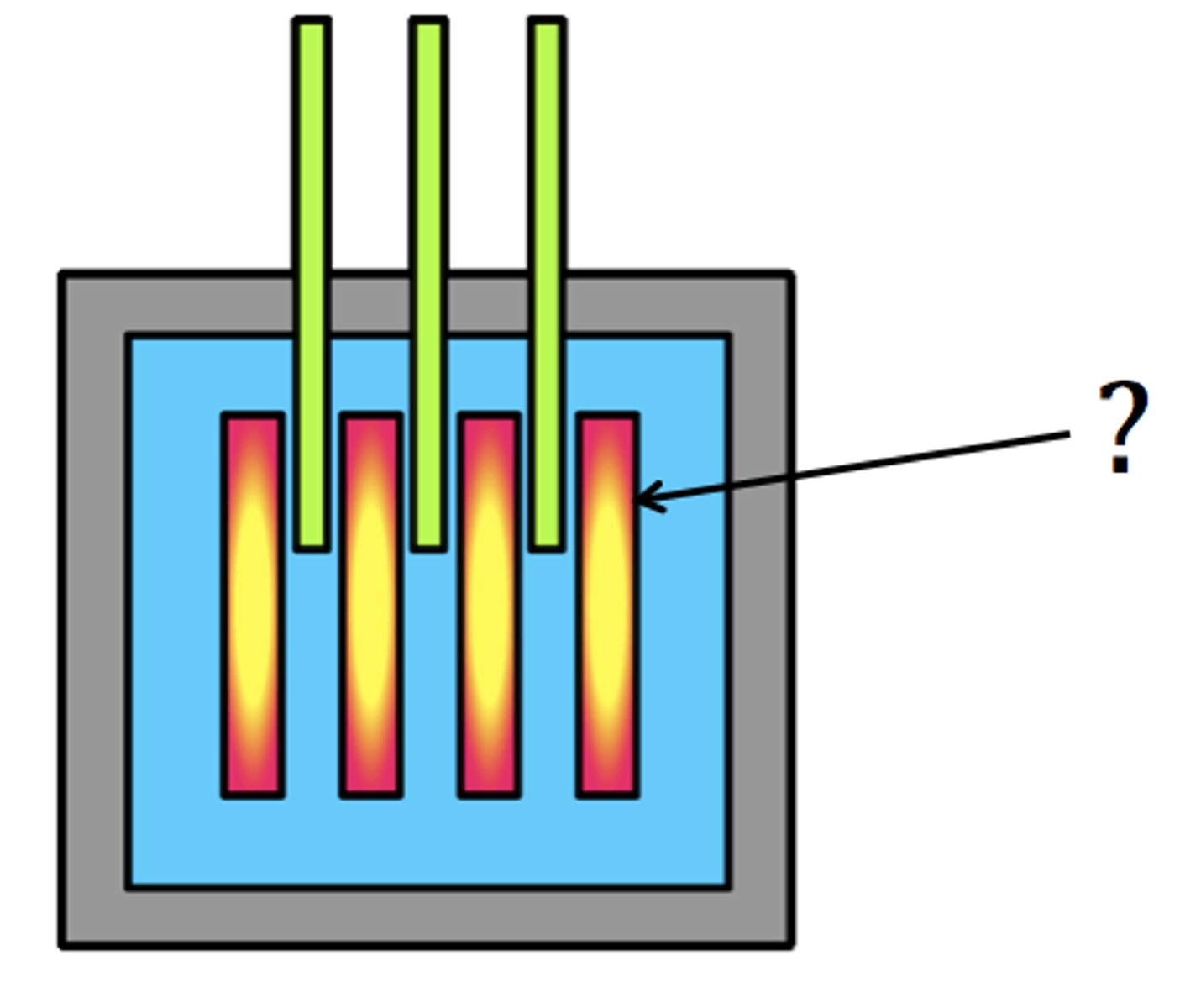
control rods
A cylindrical device inserted between the fuel rods in a nuclear reactor to absorb excess neutrons and slow or stop the fission reaction.
radioactive waste
Materials from a nuclear reaction that emit radiation; therefore, the materials must be safely stored for thousands of years
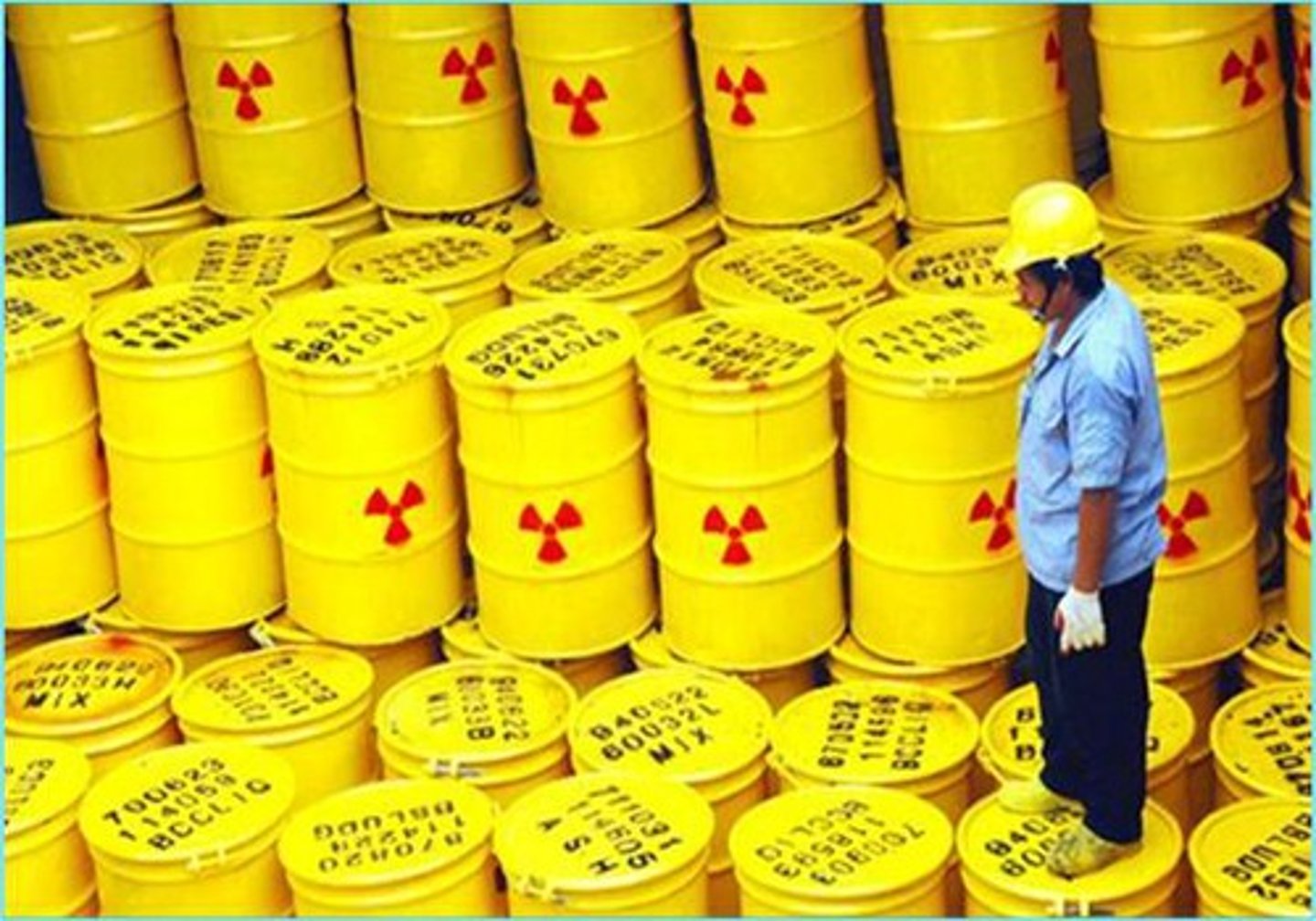
spent fuel rods
Fuel rods that no longer contain enough uranium 235 to be used in fission, but are still highly radioactive.
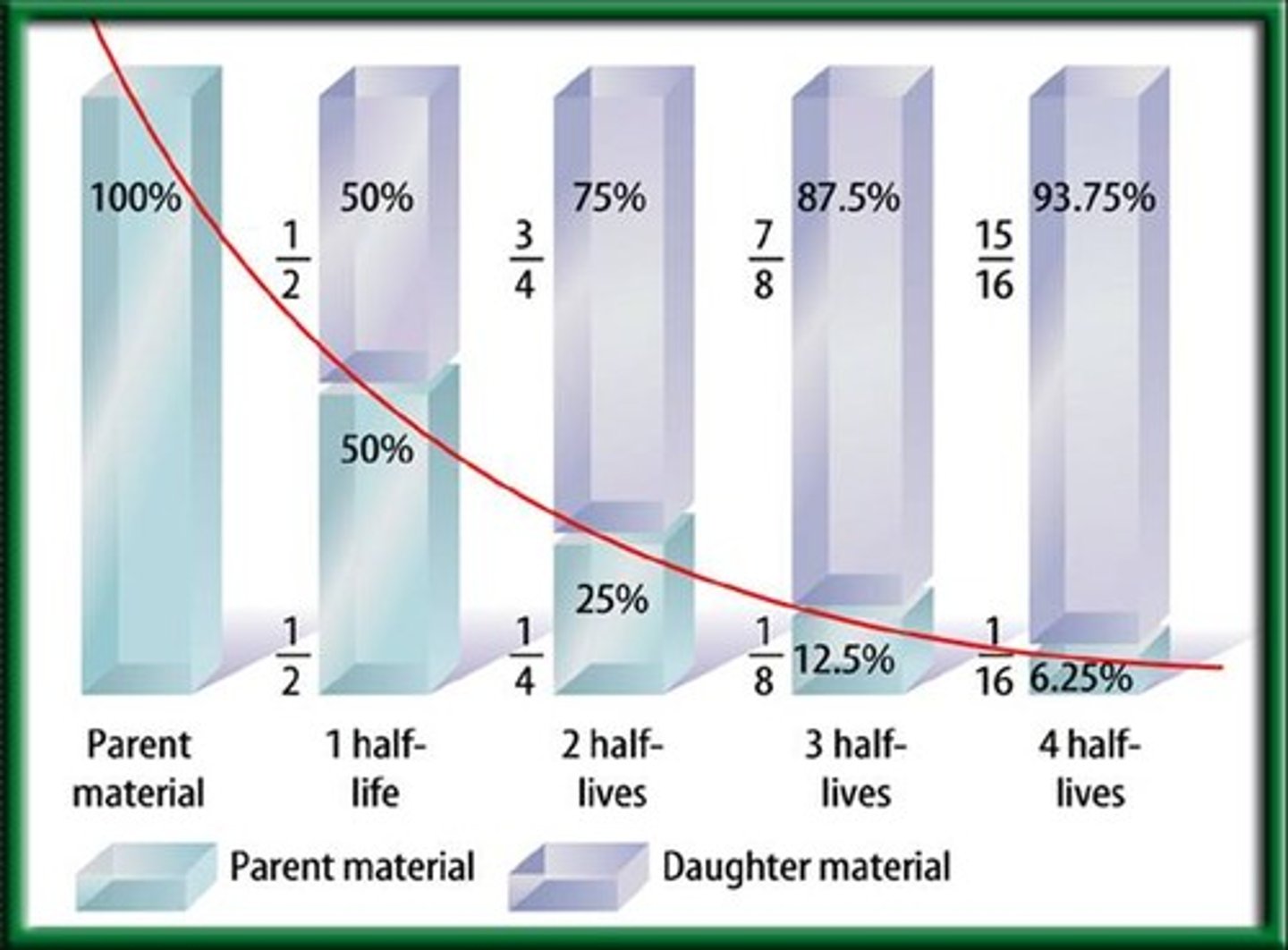
Half-life
length of time required for half of the radioactive atoms in a sample to decay
Three Mile Island
1979 - A mechanical failure (cooling valve stuck shut) and a human error at this power plant in Pennsylvania combined to cause a partial nuclear meltdown and release of radiation over a 16 mile radius.
Chernobyl
The nuclear power plant in the Ukraine that suffered two large explosions which released massive amounts of radioactive materials. It is the worst nuclear accident in history.
Fukushima, Japan
2011; meltdown of three nuclear reactors following a tsunami resulted in the second largest nuclear meltdown in history
Cooling tower
a tall, open-topped, cylindrical concrete tower, used for cooling water or condensing steam from an industrial process, especially the water used to cool nuclear reactor cores.
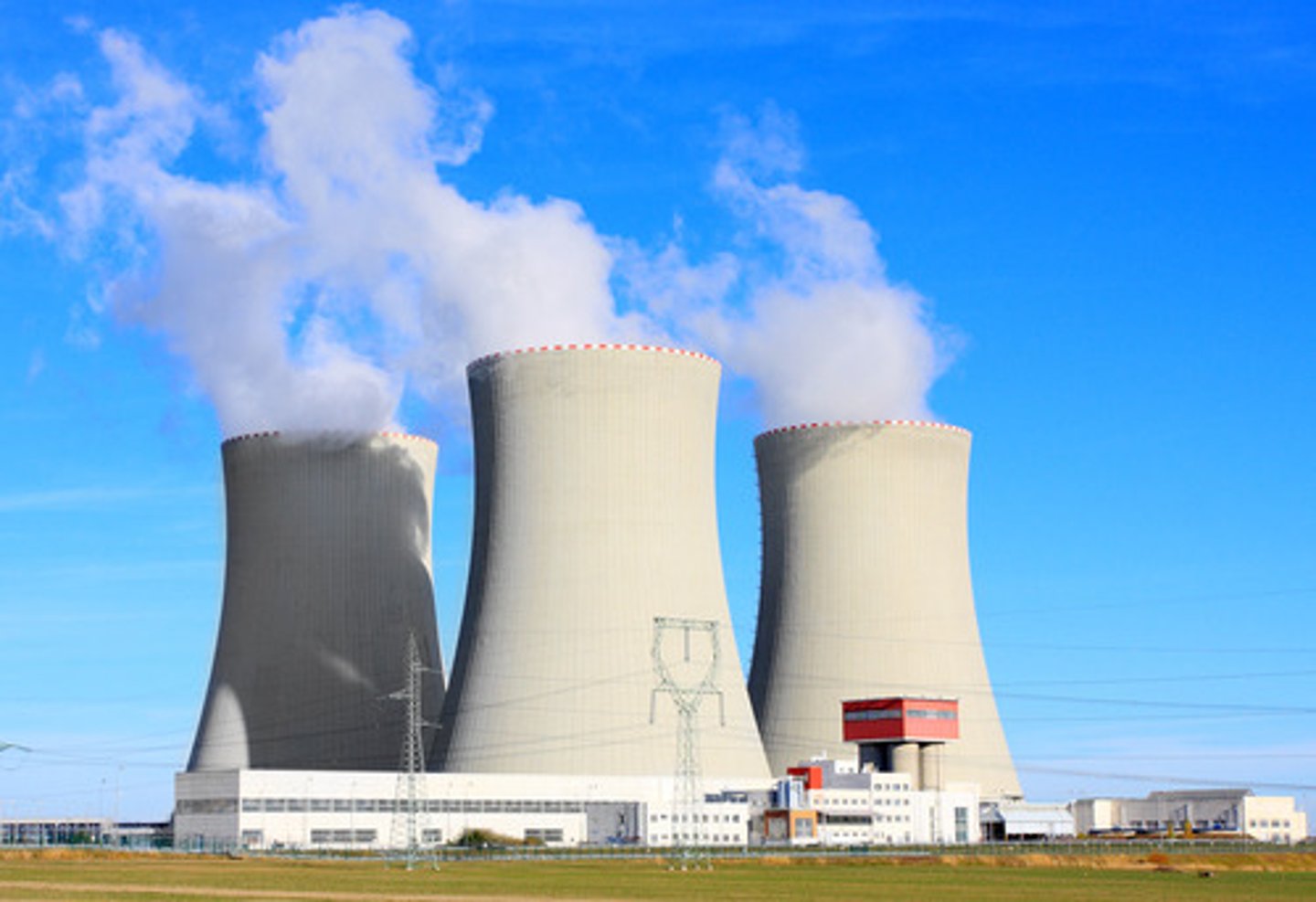
thermal pollution
A temperature increase in a body of water (often following discharge of hot water used to cool a nuclear reactor core) that can cause low O2 levels and death in aquatic organisms