Final- Microbiology
 Call Kai
 Learn
Learn Practice Test
 Spaced Repetition
 Match
Match Flashcards
 Knowt Play
1/199

There's no tags or description
Looks like no tags are added yet.
Name | Mastery | Learn | Test | Matching | Spaced | Call with Kai |
|---|
No analytics yet
Send a link to your students to track their progress
200 Terms
Which scientist conducted early experiments using maggots and rotting meat to disprove spontaneous generation?
Francesco Redi.
In the name Staphylococcus aureus, aureus is the
Species
The human microbiome consists of which of the following?
all microbes present on or in the body
The actively growing cell type of Chlamydia trachomatis is known as the elementary body.
False
Which are the three currently accepted domains?
|
Prokaryotes are classified into which domain(s)?
Domains Archaea and Bacteria
The lipopolysaccharide molecule is an important component of the cell membranes of which organisms?
Gram‑negative bacteria
How can primary and secondary syphilis be distinguished?
The presence of a hard chancre lesion indicates primary syphilis, whereas lesions of the skin and mucous membranes are found in secondary syphilis.
Which of the following best describes Borrelia burgdorferi?
a spirochete that causes Lyme disease
Which is the best description of the primary purpose of a phylogeny?
Phylogenies show evolutionary relatedness between organisms.
The resolution of a microscope can be improved by changing the
wavelength of light.
Cholera is best controlled by which of the following?
using good sanitation and hygiene practices to the greatest extent possible
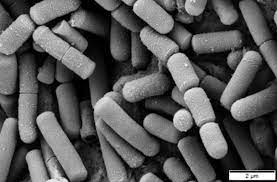
The type of bacteria depicted in Figure 4.4 can be best described as…
streptobacilli
Which pathogen causes toxic shock syndrome?
Staphylococcus aureus
Which of the following most specifically refers to positively charged dyes?
basic dyes
Capsules and slime layers are examples of which type of structure?
glycocalycx
Sporulation generally occurs under which of the following circumstances?
when conditions are unfavorable or there are insufficient nutrients
Which scientist performed an elegant series of experiments that finally and definitively disproved the theory of spontaneous generation?
Louis Pasteur
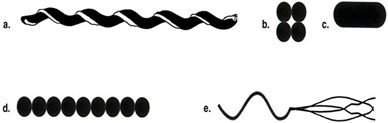
Which drawing in Figure 4.1 represents a bacillus?
C
Death from Clostridium botulinum is due to which of the following?
It paralyzes the muscles of the respiratory tract.
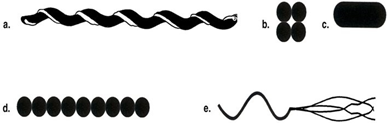
Which drawing in Figure 4.1 is streptococci?
D
Creutzfeldt-Jakob Disease is caused by...
a prion
Which of the following is a helical bacterial shape?
spirochete
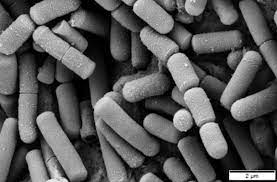
Figure 4.4 is an image of bacteria. It was likely obtained using which technique?
Light microscopy
The bacterial chromosome located in which of the following?
the nucleoid region
The idea that life could appear from nonliving materials was called which of the following?
the theory of spontaneous generation
In microscopy, the term resolution
refers to the ability to distinguish fine structure and detail in a specimen.
Which of the following statements best describes what happens when a bacterial cell (2%NaCl) is placed in a solution containing 5% NaCl?
Water will move out of the cell.
The use of phenol (carbolic acid) as a wound disinfectant was first practiced by
Lister.
Viruses are not included in phylogenetic trees for which of the following reasons?
They are acellular and nonliving.
How should a tick be removed?
It should be grasped gently with tweezers on the head, near its site of attachment, and pulled very carefully until it releases its grip.
The Swedish botanist known for having developed an important biological classification system is which of the following people?
Carolus Linnaeus
Normal microbiota are typically found in and on all the following body locations EXCEPT the
blood
Colonization of the human body occurs…
|
Which microscope is best used for observing the surfaces of intact cells and viruses?
|
The formal system for classifying and naming organisms was developed by
Carolus Linnaeus.
Dyes are often used during microscopy to increase which of the following?
contrast
Simple staining is often necessary to improve contrast in which microscope?
compound light microscope
Clostridium botulinum and Clostridium tetani are similar in that...
|
Which type of microscopy would work best for viewing internal cell structures?
|
Which of the following is not a common cause of bacterial meningitis?
Staphylococcus aureus

Identify the following chemical reaction:
dehydration synthesis reaction
ATP donates energy through the transfer of a/an _____.
phosphate group
You are performing a Gram stain on Gram-positive bacteria and you stop after the addition of the first dye. What is the appearance of the bacteria at this point?
purple
The general steps in a multiplication cycle of an animal virus are
Attachment, penetration, uncoating, synthesis, assembly, and release
The mechanism whereby an enveloped virus leaves a host cell is called
|
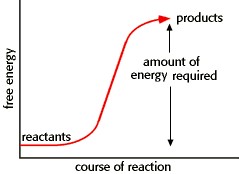
Which of the following best describes an endergonic reaction?
|
Which of the following refers to the term metabolism?
all the reactions in a cell or organism
Which animals are the most common reservoirs for rabies?
raccoons, bats, skunks, and foxes
Which of the following best describes catabolic pathways?
They break down large molecules into smaller components.
Tinea corporis is also known as:
ringworm
Which term specifically describes fatty acids that do not have any double bonds, triple bonds, or rings?
saturated
Jaundice is an important symptom of which disease?
hepatitis
The building blocks of polymers are called which of the following?
monomers
Genital herpes is most commonly caused by
herpes simplex virus 2
You are performing a Gram stain on Gram-negative bacteria and you stop after the decolorizer step. What is the appearance of the bacteria at this point?
colorless
A virus's ability to infect an animal cell depends primarily upon the
presence of receptor sites on the cell membrane.
Which of the following is the scientist is credited for first discovering viruses (specifically, tobacco mosaic virus)?
Dimitri Ivanovski
What virus commonly undergoes both antigenic shifts and antigenic drifts?
Influenza
Because enzymes affect the speed of chemical reactions without being consumed, they are referred to as:
catalysts.
What statement regarding enzymes is incorrect?
They increase the activation energy required for a chemical reaction to occur.
The definition of lysogeny is
|
Which describes the hydrocarbon tails in the plasma membrane?
|
You are performing a Gram stain on Gram-negative bacteria and you stop after the addition of the mordant. What is the appearance of the bacteria at this point?
purple
Herpes can be passed from mother to fetus, causing neonatal herpes.
True
Oncogenic viruses
|
Viral envelopes are acquired during which of the following steps?
release
What does it mean to say that HSV-1 is often latent?
It undergoes periods of inactivity when it resides in trigeminal nerve ganglia and does not cause symptoms.
The relatively mild viral disease usually caused by human herpesvirus-6 is better known as:
roseola
In a protein, which type of chemical linkage joins the amino acids?
peptide bonds
Which of the following is a novel enzyme found in retroviruses?
reverse transcriptase
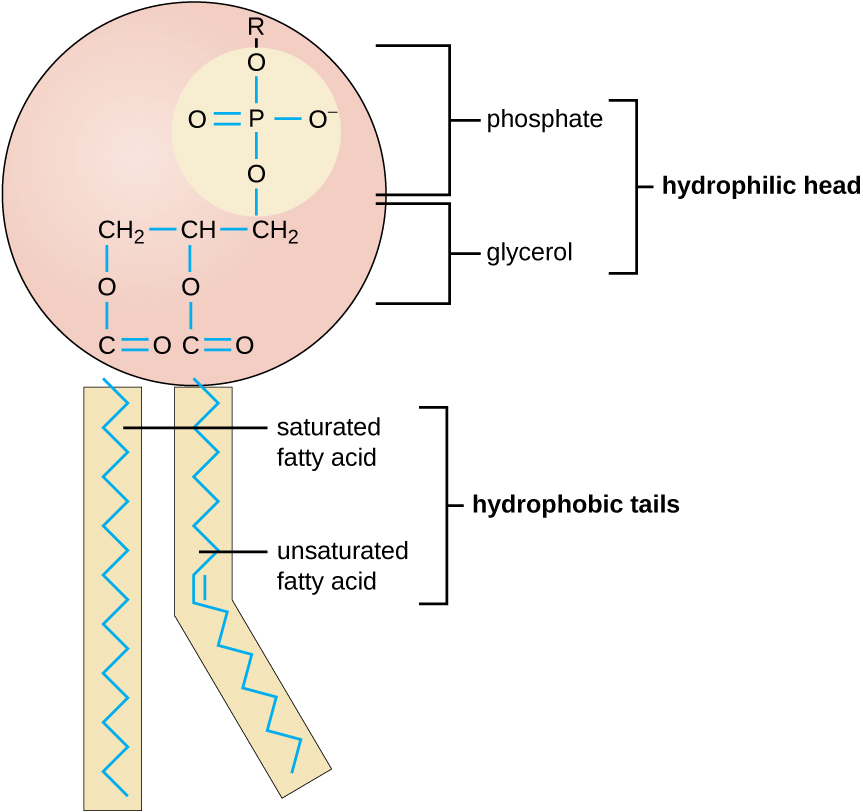
Which are the primary molecules making up plasma membranes in cells?
lipids
The sum of all chemical activities taking place in an organism is:
|
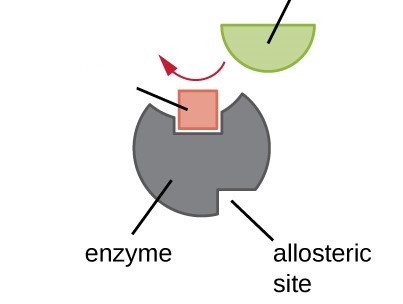
Which of the following is an inhibitor that blocks the substrate's ability to bind to an enzyme?
a competitive inhibitor
Which of the following statements is NOT true of lysogeny?
It causes lysis of host cells.
In the lysogenic cycle of bacteriophages, the integrated phage genome is known as which of the following?
prophage
Which of the following is mismatched?
Cellulose - eukaryote membranes
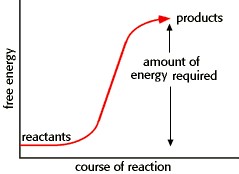
An endergonic reaction is one which __________.
requires energy to proceed
An acellular entity composed of a small circular RNA molecule without a capsid and capable of replicating its genome is known as which of the following?
viroid
The excision of the viral genome from the host chromosome is known as which of the following?
induction
Which of the following pairs of terms is mismatched?
bacteriostatic — kills vegetative bacterial cells
Which of the following methods is used to preserve food by slowing the metabolic processes of foodborne microbes?
freezing
Which method of microbial control introduces double-strand breaks into DNA?
ionizing radiation
Transformation is the transfer of DNA from a donor to a recipient cell
as naked DNA in solution.
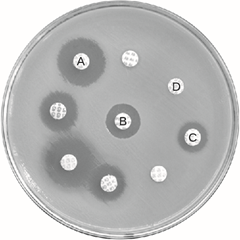
Examine the disk-diffusion assay shown below. Which antimicrobial
D
Which of the following actions would be most clearly considered bacteriostatic rather than bactericidal?
placing a bacterial culture in the −80°C freezer
C. perfringens is classified as which type of microorganism?
Obligate anaerobe
Which phenolic compound has commonly been added to soap and raises concerns about selection for more antimicrobial-resistant bacteria?
triclosan
The primary mode of Ebola transmission is:
Direct contact with infected body fluids
DNA is constructed of
two strands of nucleotides running in an antiparallel configuration.
According to the central dogma, which of the following represents the flow of genetic information in cells?
DNA to RNA to protein
Which of the following is not an example of an organism's phenotype?
the DNA sequence of a cellular genome
Which of the following correctly describes uracil and where is it found?
It is a nitrogenous base found in RNA only.
EHEC differs from ETEC in that EHEC:
Produces shiga toxin
Which type of microbes would most likely thrive in Utah's Great Salt Lake?
halophiles
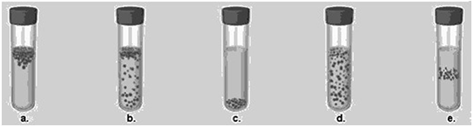
In Figure 6.3, which tube shows the expected growth pattern for an obligate anaerobe?
C
Autoclaves are designed to kill which of the following heat-resistant microbes?
endospores
Conjugation differs from reproduction because conjugation
transfers DNA horizontally, to nearby cells without those cells undergoing replication.
The microbes in a ____________ are dangerous and exotic, posing a high risk of aerosol-transmitted infections. Infections caused by these microbes are frequently fatal and without treatment or vaccines.
BSL4
Which of the following microbial control methods does not actually kill microbes or inhibit their growth but instead removes them physically from samples?
Filtration