Physiology of Thyroid Gland
 Call Kai
 Learn
Learn Practice Test
 Spaced Repetition
 Match
Match Flashcards
 Knowt Play
1/165

There's no tags or description
Looks like no tags are added yet.
Name | Mastery | Learn | Test | Matching | Spaced | Call with Kai |
|---|
No analytics yet
Send a link to your students to track their progress
166 Terms
highly vascularized
What is the blood supply to the thyroid like?
by cuboidal epithelial cells of the thyroid
How are thyroid hormones synthesized and secreted?
has basolateral membrane facing the blood and apical membrane facing follicular lumen
What is the polarity of a thyroid follicle like?
in the colloid of the thyroid follicle
Where is thyroid hormone stored?
because TH is made, stored, and released as needed, rather than being made as needed
Why is thyroid hormone stored in the colloid of the thyroid follicle?
one of the largest endocrine glands, weighing ~15-20 grams in adults
What is the size of the thyroid gland like?
-thyroxine (T4)
-triiodothyronine (T3)
What are the 2 main hormones made by the thyroid?
T3 is the more potent hormone (greater physiological effects), however T4 is in higher abundance in the blood
How do T3 and T4 compare?
by thyroid-stimulating hormone (TSH) made in the anterior pituitary gland
How is thyroid secretion primarily controlled?
the hypothalamus via thyroid-releasing hormone (TRH)
What is TSH secretion from the anterior pituitary controlled by?
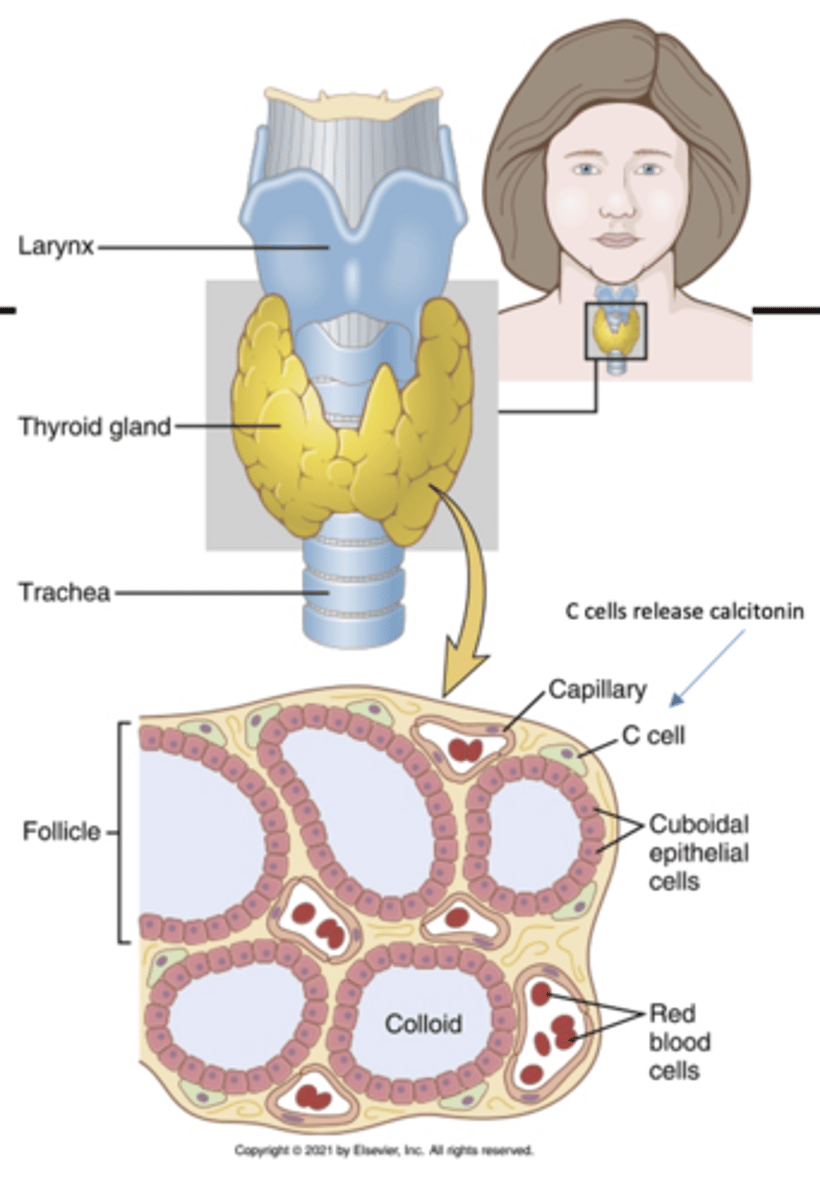
make calcitonin
What is the function of C cells of the thyroid?
features of the thyroid gland:
selective uptake from the diet to the thyroid
What is the uptake of iodine like in the body?
radiolabeled iodine is used to treat hyperthyroidism because it allows the radiation to destroy diseased thyroid tissue without harming the rest of the body
How can the selective uptake of iodine from the diet to the thyroid be used in pharmacotherapeutics?
pumps iodide into follicular cells and concentrates iodide into thyroid gland
What is the function of the iodide pump in the thyroid gland?
into the follicular cell
Where must iodide (I-) be pumped?
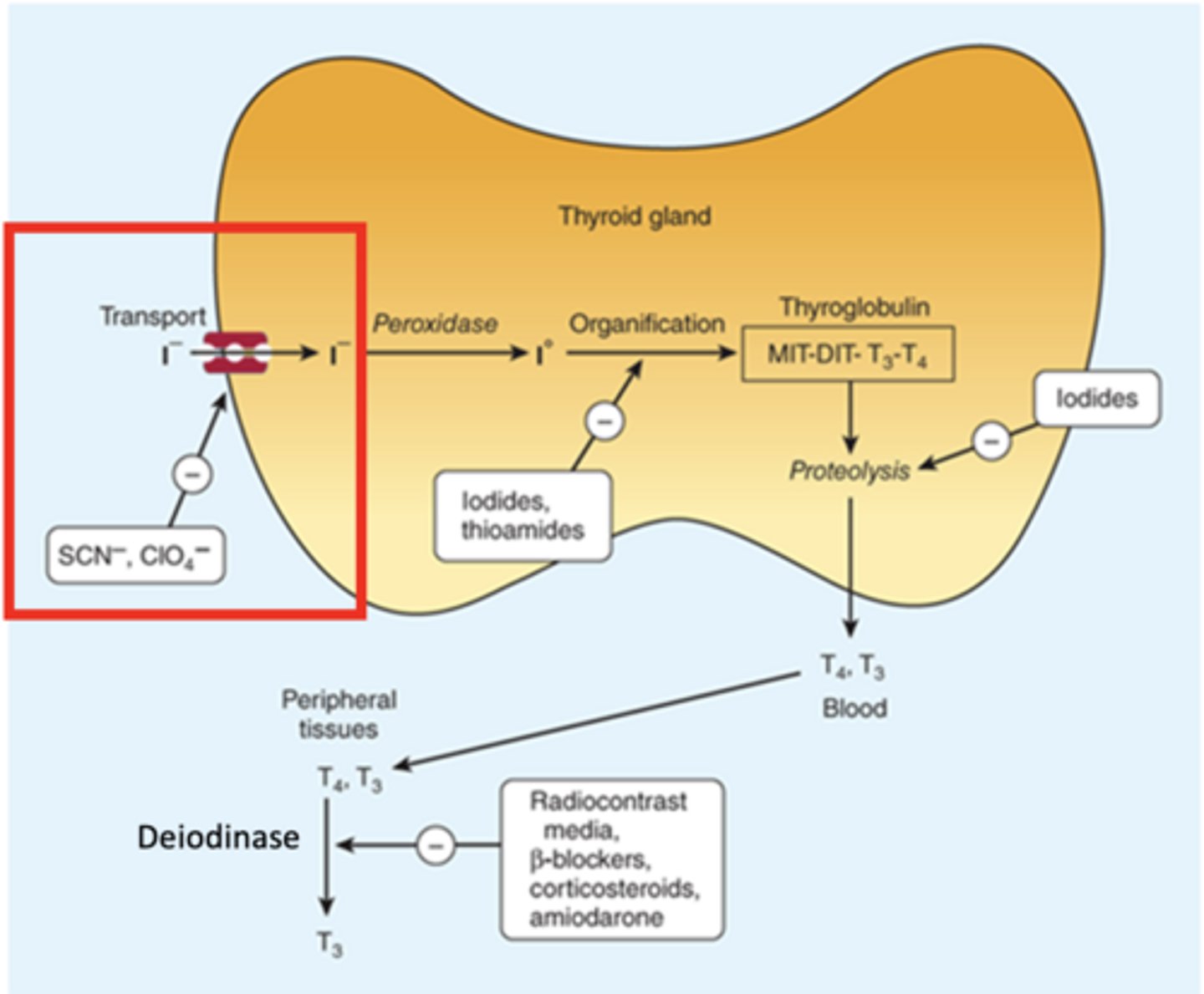
utilizes Na+ gradient and Na+/K+-ATPase to do this (Na+/I- symporter)
How is iodide pumped into the follicular cell?
iodide will get concentrated 30x into the follicular cells
What happens to iodide concentrations in the follicular cells under normal conditions?
TSH can enhance this response -> maximize to 250x
How can the concentration of iodide in the follicular cells be enhanced, and explain?
will decrease iodide pump
What will happen in the case of a loss of TSH?
-thiocyanate (SCN-)
-perchlorate (ClO4-)
What 2 substances will inhibit the Na+/I- symporter?
in cigarette smoke -> so smokers can develop hypothyroidism and experience a goiter
Where can thiocyanate be obtained, and explain?
because they are not making enough TH, there is no negative feedback so more TSH is released, which causes hypertrophy of the thyroid gland
Why does goiter develop in smokers who develop hypothyroidism?
use of Na+ gradient and Na+/K+-ATPase (Na+/I- symporter) to pump I- into the follicular cell:
a large glycoprotein responsible for carrying tyrosine residues
What is thyroglobulin (TG)?
inside of follicular cells
Where is thyroglobulin (TG) found?
tyrosine residues get incorporated into the protein (~70 tyrosine residues)
What happens to the thyroglobulin (TG) protein?
synthesized in the ER and released via the Golgi apparatus (MW is 335 kDa)
What is the synthesis of thyroglobulin (TG) like?
transports and stores T4/T3
What is the function of thyroglobulin (TG)?
it is hydrophilic, which helps to prevent the lipophilic T3/T4 hormones from being so easily diffusible across membranes!
What makes thyroglobulin (TG) effective at transporting and storing T4/T3?
peroxidases
What is required to incorporate iodine onto tyrosine residues?
hypothyroidism
What can occur in the event of a peroxidase deficiency?
oxidation of iodide converts it into iodine (I0)
(loses electrons)
What happens to iodide in the formation of TH?
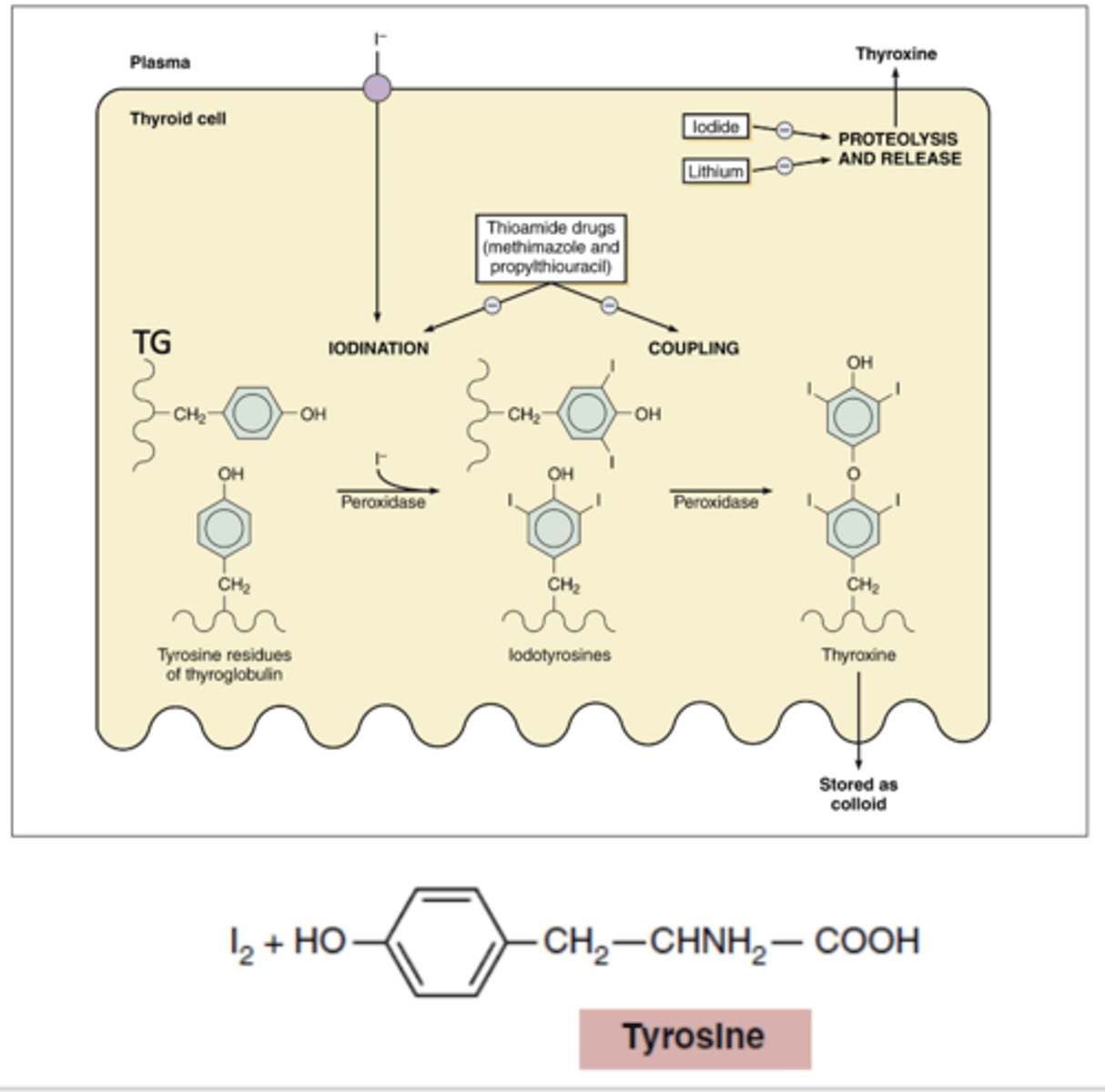
-oxidation
-organification
What 2 rapid processes does thyroglobulin (TG) undergo in the presence of peroxidases?
the binding of iodine with the thyroglobulin (TG) (addition of iodine residues!)
What is organification of thyroglobulin?
high levels of iodide can inhibit organification, thus synthesis of thyroid hormones -> called the Wolff-Chaikoff effect
What can inhibit organification, and explain?
a protective mechanism when there is high levels of iodine (such as places with high iodine diets) to help prevent hyperthyroidism due to excessive iodine intake
What is the Wolff-Chaikoff effect?
occurs quickly!
What is the rate at which organification occurs in the presence of peroxidases?
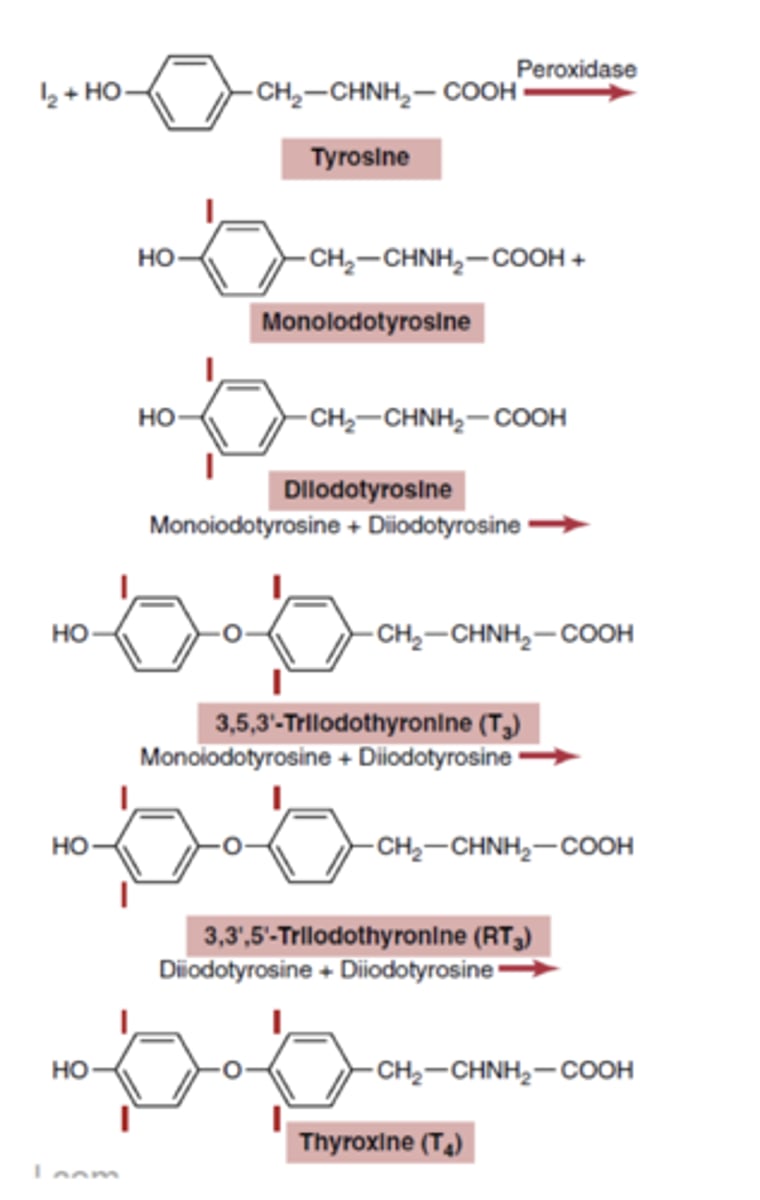
monoiodotyrosine (MIT)
What is tyrosine 1st iodized to via organification?
diiodotyrosine (DIT)
What is monoiodotyrosine (MIT) iodized to via organification?
they will become coupled to one another to form T3/T4 or rT3
What happens to the MIT and DIT formed by organification over time?
does not seem to have any biological activity
What is the function of reverse T3 (rT3)?
they are used by certain tissues to convert T4 to T3 to become activated just as it reaches the tissue
What is the function of deiodinases?
oxidation and organification of thyroglobulin are rapid processes in the presence of peroxidases:
in the colloid
Where is the storage of thyroid hormone?
the thyroid gland can store large amounts of TH
What is the level of storage of TH in the thyroid gland like?
it will take a while before a deficiency can be seen
What is the clinical significance of the thyroid gland being able to store large amounts of TH?
for 2-3 months (at least!)
For how long is the storage supply of TH in the thyroid gland sufficient?
TH is stored in the colloid!
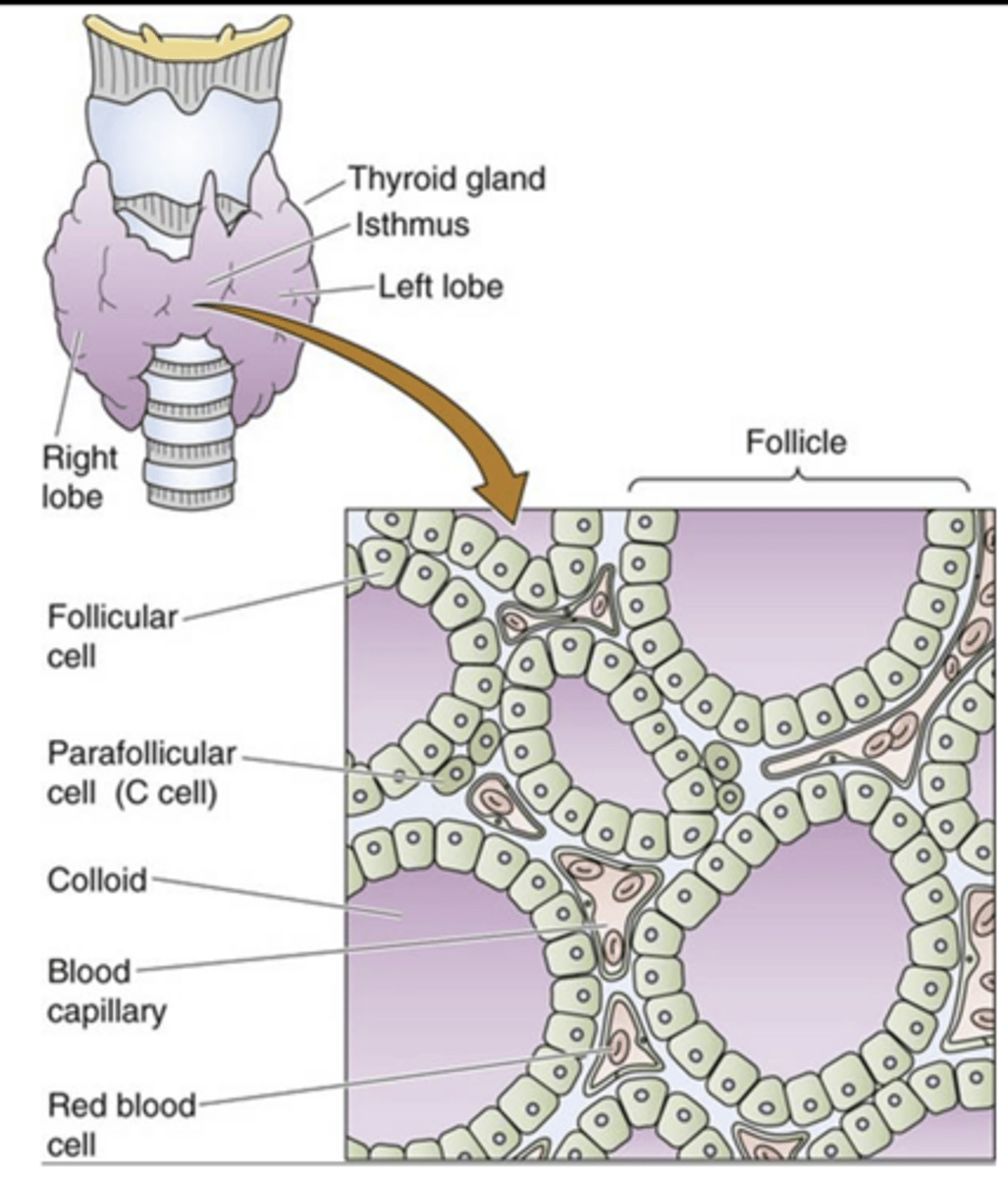
through lysosomal digestion of colloid
How does the release of T3/T4 stored in colloid occur?
most is NOT released into the circulating blood
What happens to most of the TG stored in follicular cells?
through receptor-mediated endocytosis after binding to megalin on the apical surface
How does colloid enter the thyroid gland?
hypothyroidism
What can occur in a patient who has a mutation in the megalin protein?
the megalin-TG complex is carried across the cell by transcytosis -> microtubules help in the transport
What happens to the megalin-TG complex after the binding occurs at the cell surface, and explain?
lysosomes fuse with these vesicles to digest the colloid and release T3/T4 into the free form
What happens once the vesicles containing the megalin-TG complex/colloid enter the follicular cells?
it can diffuse across lipid bilayer of the basolateral membrane and enter the blood
What then happens to the free T3/T4 in the follicular cell?
they will undergo de-iodination for recycling of components
What happens to the MIT and DIT that are released from the vesicle in the follicular cell?
tyrosine residues will get incorporated back into TG and iodine residues will be exported out of the apical membrane to undergo peroxidation again
What happens to the components of MIT and DIT upon their de-iodination in the follicular cell?
an iodide-chloride antiporter located on apical membrane
What is Pendrin?
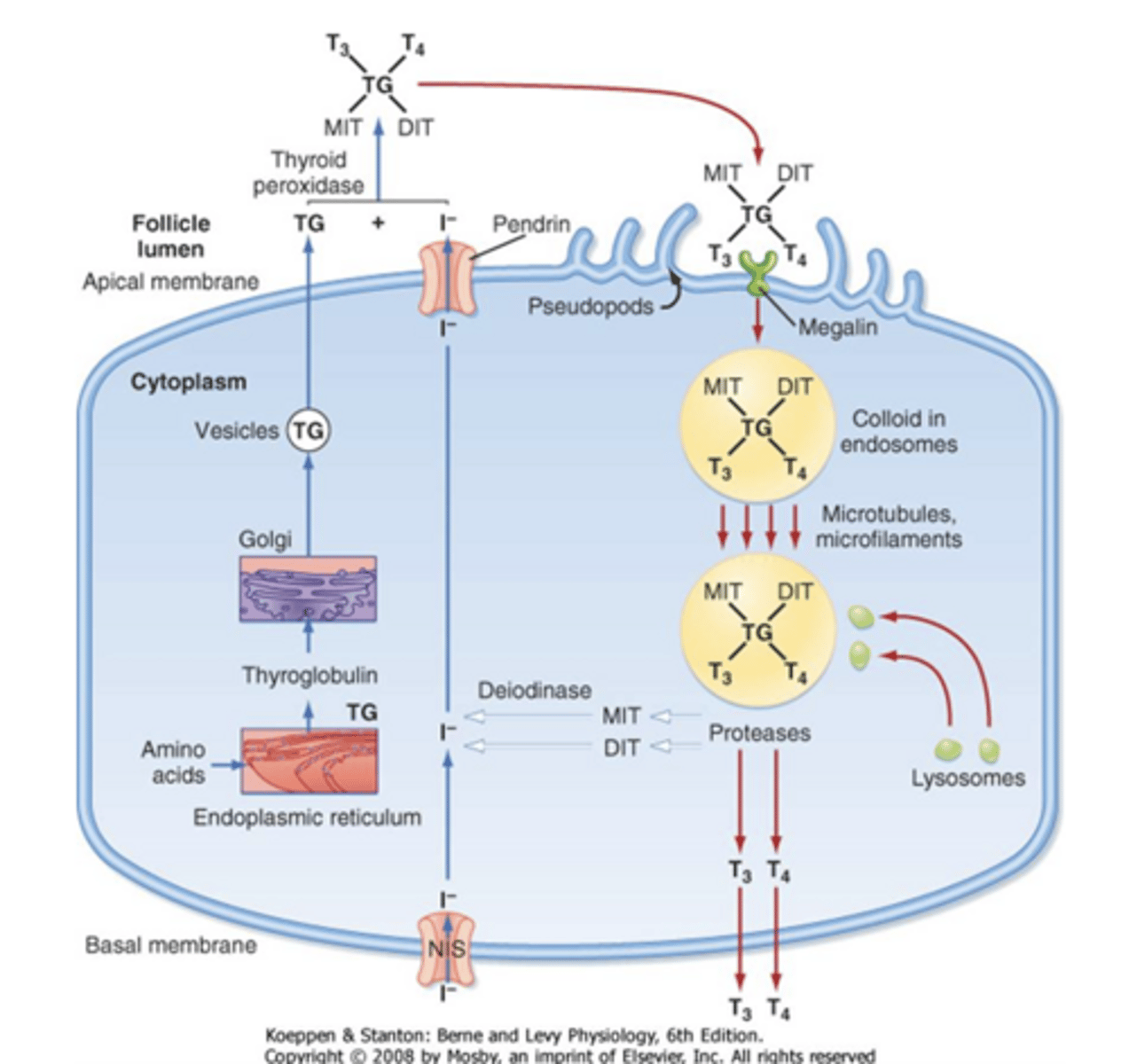
tyrosine residues get incorporated onto TG in the follicular cell
What 1st happens to tyrosine in the process of thyroid hormone synthesis?
iodide is transported into the follicular cell by symporter (Na+/I-)
What happens after tyrosine residues get incorporated onto TG in TH synthesis?
iodide will be exported via pendrin channel to the follicular lumen (colloid)
What happens after iodide is transported into the follicular cell by symporter (Na+/I-) in TH synthesis?
oxidation in the presence of hydrogen peroxide in the follicular lumen will allow for the organification of TG
What happens after iodide is exported via pendrin channel to the follicular lumen (colloid) in TH synthesis?
coupling via thyroid peroxidase allows for the addition of DIT + MIT or DIT + DIT to make T3 or T4 -> to be stored in the colloid
What happens after organification of TG in the follicular lumen?
it will undergo endocytosis via megalin and be brought into the follicular cell
What then happens to the matured TG?
lysosomes will degrade colloid and allow for the release of T3/T4 in the follicular cell
What happens to the matured TG inside the follicular cell?
any MIT or DIT will become de-iodinated and TG and iodide will get recycled
What happens to the other components of the colloid released into the follicular cell by the lysosomes?
summary of TH synthesis:
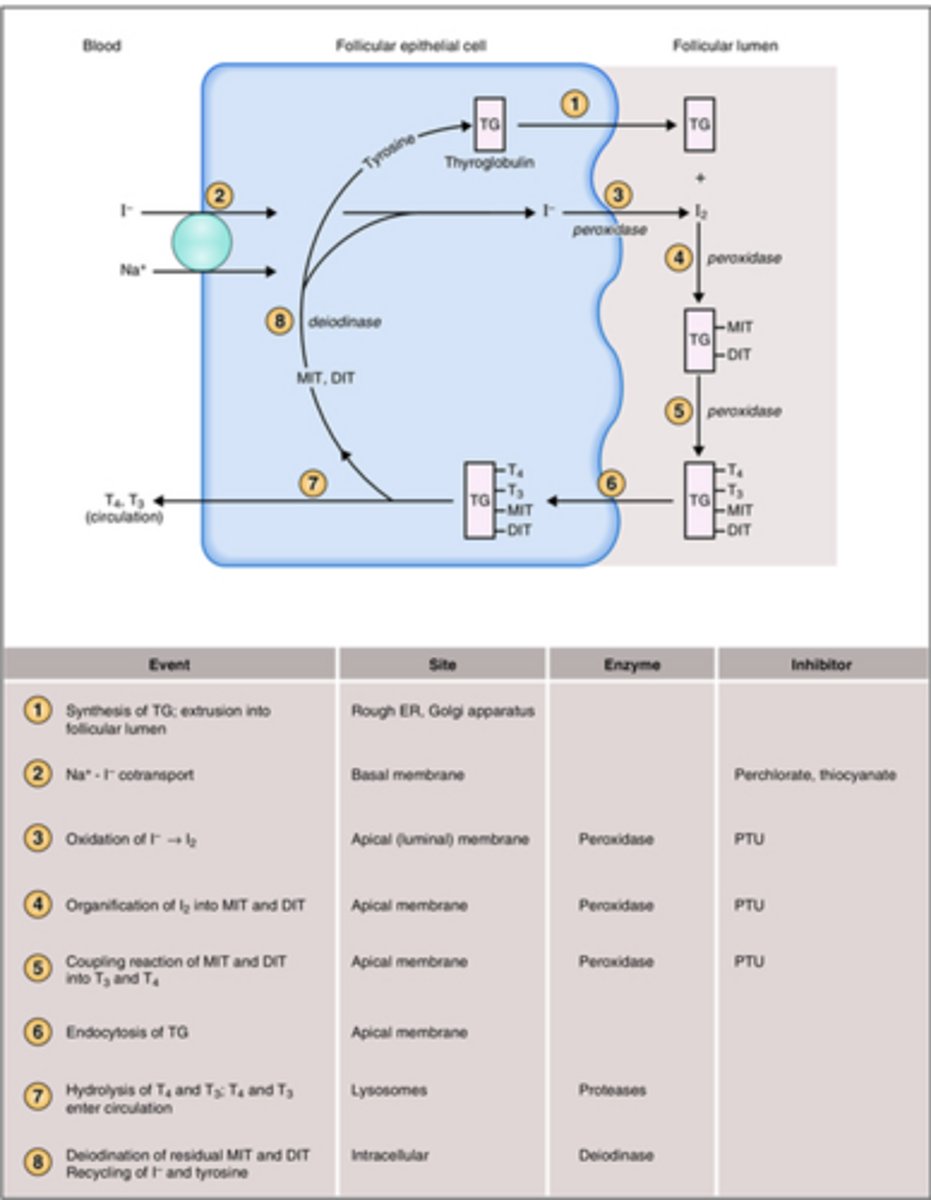
through thyroxine-binding globulin (TBG)
How is transport of T3/T4 in the blood done?
by peripheral deiodinases
How can T3 be formed in the blood?
binds to thyroxine-binding globulin (TBG) and a much smaller amount to albumin
What happens to more than 99% of T3/T4 upon entering the blood?
T4 has higher binding
How do the T4 and T3 binding capabilities to plasma proteins compare?
creates a "reservoir" -> so thyroid hormones can be released slowly into tissues or cell
What is the function of the majority of T3/T4 hormones binding to plasma proteins in the blood, and explain?
in the liver
Where is thyroxine-binding globulin (TBG) made?
if a patient has liver failure and cannot make TBG, this will increase the free concentration of T3/T4 and decrease stored TH -> which could feed back onto hypothalamus/pituitary and inhibit TH production
What is the clinical significance of thyroxine-binding globulin (TBG) being made in the liver?
will inhibit the degradation of TBG and could lessen the amount of free T3/T4 in the circulation, which could induce increased synthesis and release of more T3/T4 -> total T4/T3 levels would be increased, but due to binding capacity of TBG, the free levels would be normal
How could pregnancy or the use of oral contraceptives containing estrogen affect thyroxine-binding globulin (TBG), and explain?
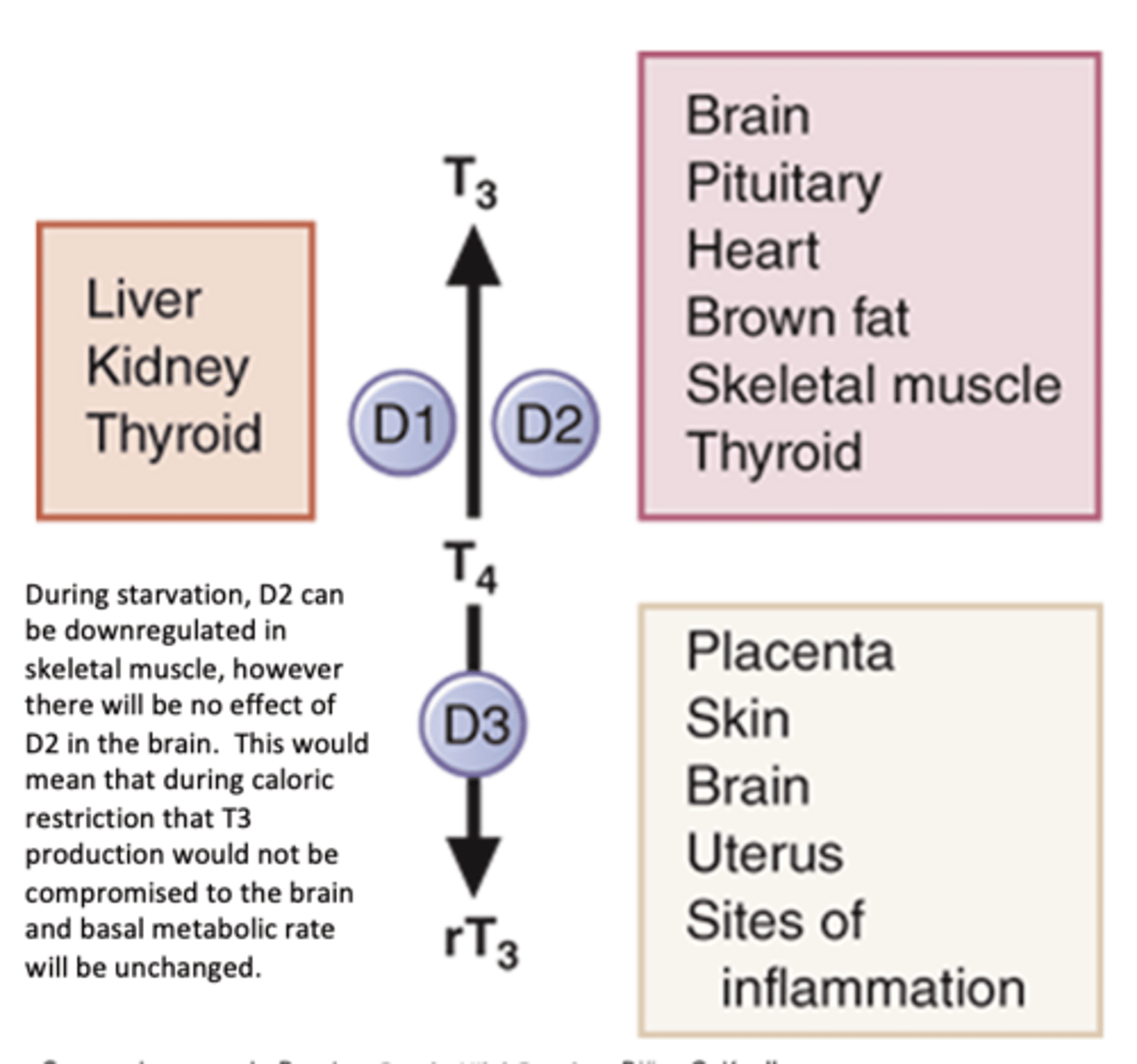
via de-iodination through peripheral deiodinases (aka 5’-iodinase) (D1 and D2)
How can T4 be converted to the more active T3?
converts T4 into rT3 (reverse T3)
What is the function of D3 deiodinase?
-liver
-kidney
-thyroid
In what 3 places is D1 found?
-brain
-pituitary
-heart
-brown fat
-skeletal muscle
-thyroid
In what 6 places is D2 found?
-placenta
-skin
-brain
-uterus
-sites of inflammation
In what 5 places is D3 found?
these are places where the body wants to protect from overactivation of BMR by converting T4 to rT3, which has no known body function
What is the significance of the places where D3 is found?
propylthiouracil (PTU)
What can D1 deiodinase be inhibited by?
could lead to hyperthyroidism
What happens if D1 deiodinase activity increases?
could lead to hypothyroidism
What happens if D1 deiodinase activity decreases?
overall, have a slow onset and long DOA
What is the onset and duration of action of thyroid hormones?
can be downregulated in skeletal muscle, however there will be no effect of D2 in the brain -> this means that during caloric restriction, T3 production is not compromised in the brain and BMR will be unchanged
What can happen to D2 deiodinase during starvation, and explain?
TH has a very prolonged effect on BMR
What is the duration of TH's effect on basal metabolic rate (BMR) like?
note how effect of TH does not occur over minutes to seconds...slow:
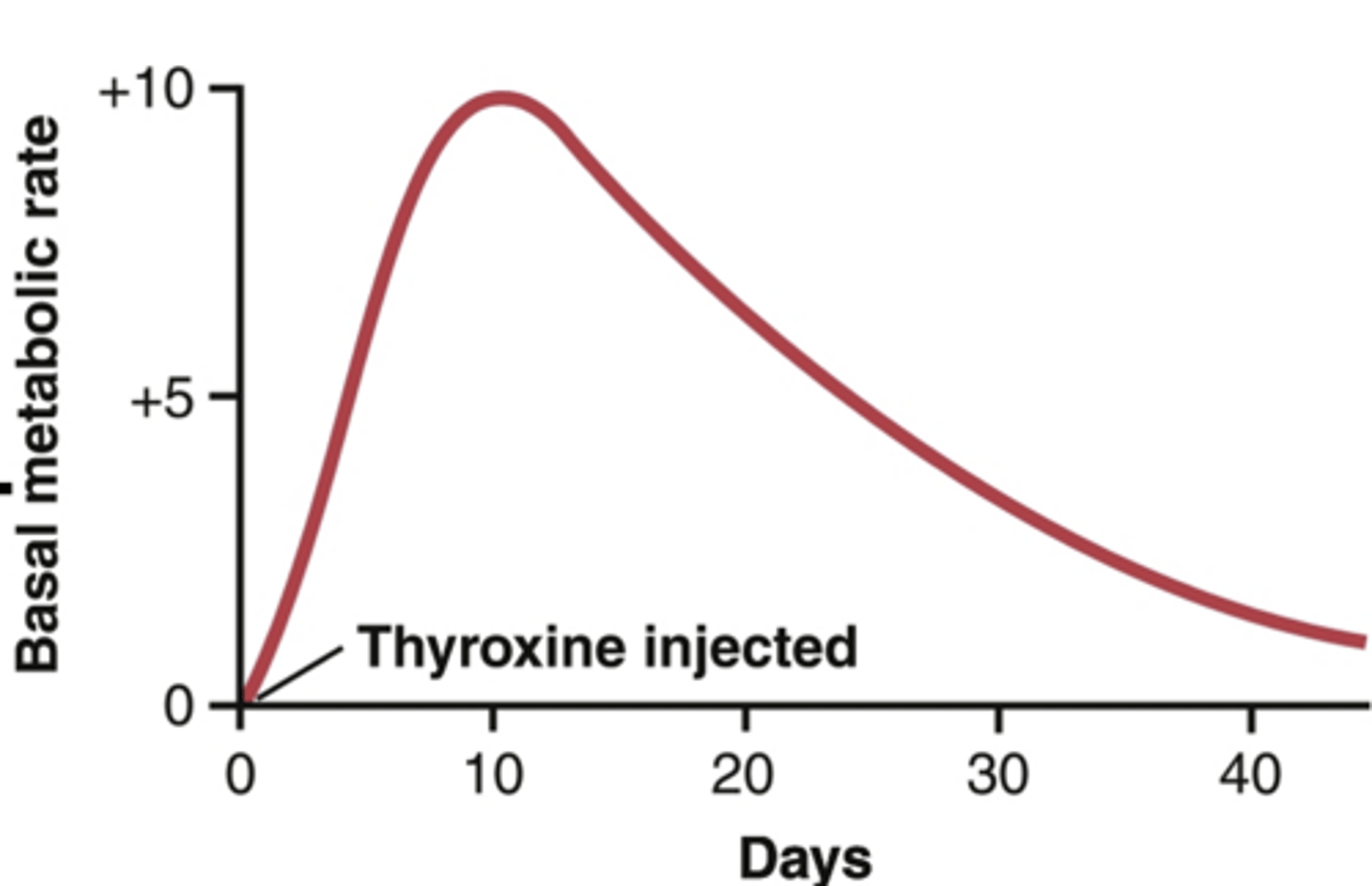
*TSH
*thyroid-stimulating immunoglobulins (TSIs) -> autoimmune disorders, like Grave's disease
*increased TBG levels (ex: pregnancy) -> increased free cytosolic amount
What are 3 main stimulatory factors for TH?
*deiodinase deficiency
*excessive iodide intake (Wolff-Chaikoff effect)
*perchlorate, thiocyanate
*propylthiouracil (PTU) -> blocks D1, which prevents T3 formation
*decreased TBG levels (ex: liver disease)
What are 6 main inhibitory factors for TH?
the hypothalamus
What is thyroid-releasing hormone (TRH) secreted by?
by paraventricular nuclei (PVN)
Where in the hypothalamus is TRH secreted from?
acts on thyrotrophs of the anterior pituitary gland -> to secrete TSH
What does TRH act on, and explain?
prolactin
What else does TRH stimulate the secretion of?
it acts on the thyroid gland to cause for release of T4/T3
How does TSH function?
can negatively feedback onto anterior pituitary to inhibit release of TSH
How can T3/T4 interact with the anterior pituitary?