Importance of Microorganisms: Nutrient Cycles, Food Production, and Disease
 Call Kai
 Learn
Learn Practice Test
 Spaced Repetition
 Match
Match Flashcards
 Knowt Play
1/248

There's no tags or description
Looks like no tags are added yet.
Name | Mastery | Learn | Test | Matching | Spaced | Call with Kai |
|---|
No analytics yet
Send a link to your students to track their progress
249 Terms
Why are microorganisms important?
Microorganisms play vital roles in nutrient cycling, food production, and life on Earth.
What role do some microorganisms play in nutrient cycling?
They convert nutrients from abiotic reservoirs into forms usable by living organisms.
What is nitrogen fixation?
A process where certain microorganisms convert atmospheric nitrogen into a usable form for plants.
What are some applications of microorganisms?
Food microbiology, sewage treatment, bioremediation, and genetic engineering.
What is bioremediation?
The use of microorganisms to remove or neutralize contaminants from the environment.
What are the six elements that constitute the majority of macromolecules in living organisms?
Carbon (C), Hydrogen (H), Nitrogen (N), Oxygen (O), Phosphorus (P), and Sulfur (S).
How do microorganisms contribute to food production?
They are involved in fermentation and other processes that produce food.
What is the significance of microorganisms in sewage treatment?
They help break down organic matter and pollutants in wastewater.
What is the impact of infectious microorganisms?
They are responsible for more deaths than all wars combined.
What is nutrient cycling?
The process by which nutrients are recycled in the ecosystem through biotic and abiotic reservoirs.
What are abiotic reservoirs?
Inorganic reservoirs where nutrients exist in forms that are unavailable to most organisms.
What is the role of microorganisms in accessing elements from inorganic reservoirs?
They convert these elements into forms that are usable by themselves and other organisms.
What are biogeochemical cycles?
Natural processes that recycle nutrients in various chemical forms from the environment to living organisms and back.
What is the relationship between microorganisms and emerging diseases?
Microorganisms can act as pathogens that cause new or re-emerging diseases.
What is the importance of studying microbial ecology?
It helps us understand the interactions between microorganisms and their environments.
What is food microbiology?
The study of microorganisms that inhabit, create, or contaminate food.
What is the role of microorganisms as model systems?
They are used in research to understand biological processes and disease mechanisms.
What is a key component of all organic molecules?
Carbon
How do all organisms obtain carbon?
From their environment in a usable form.
What is CO2 in the context of carbon cycling?
A key inorganic reservoir of carbon.
What process produces CO2 as a product?
Aerobic respiration.
What does carbon fixation involve?
The conversion of CO2 into sugars via photosynthesis.
Who performs most carbon fixation?
Microorganisms, primarily bacteria and algae.
What happens to carbon during cellular respiration?
It is converted back into CO2.
What percentage of organic compounds from producers is used to fuel cellular respiration in consumers?
10 - 15%.
What is atmospheric oxygen essential for?
Many living things.
What is produced as a waste product of photosynthesis?
Oxygen (O2).
What is nitrogen's role in living organisms?
It is an essential component of proteins and nucleic acids.
What is the key abiotic reservoir of nitrogen?
Atmospheric nitrogen (N2).
What is required to break the triple covalent bond in N2?
A large amount of energy.
What enzyme catalyzes nitrogen fixation?
Nitrogenase.
What types of nitrogenase enzymes exist?
Molybdenum (Mo), Vanadium (V), and Iron-only (Fe) nitrogenase.
What can inhibit nitrogenase activity?
Carbon monoxide (CO) and oxygen (O2).
What type of bacteria are capable of nitrogen fixation?
Diazotrophs.
What is Azotobacter known for?
Being a free-living diazotroph and a key nitrogen fixer in grasslands.
What do heterocysts in cyanobacteria do?
Fix nitrogen in an environment conducive for nitrogenase.
What is the relationship between Azospirillum and tropical grasses?
It attaches to roots and supplies usable nitrogen.
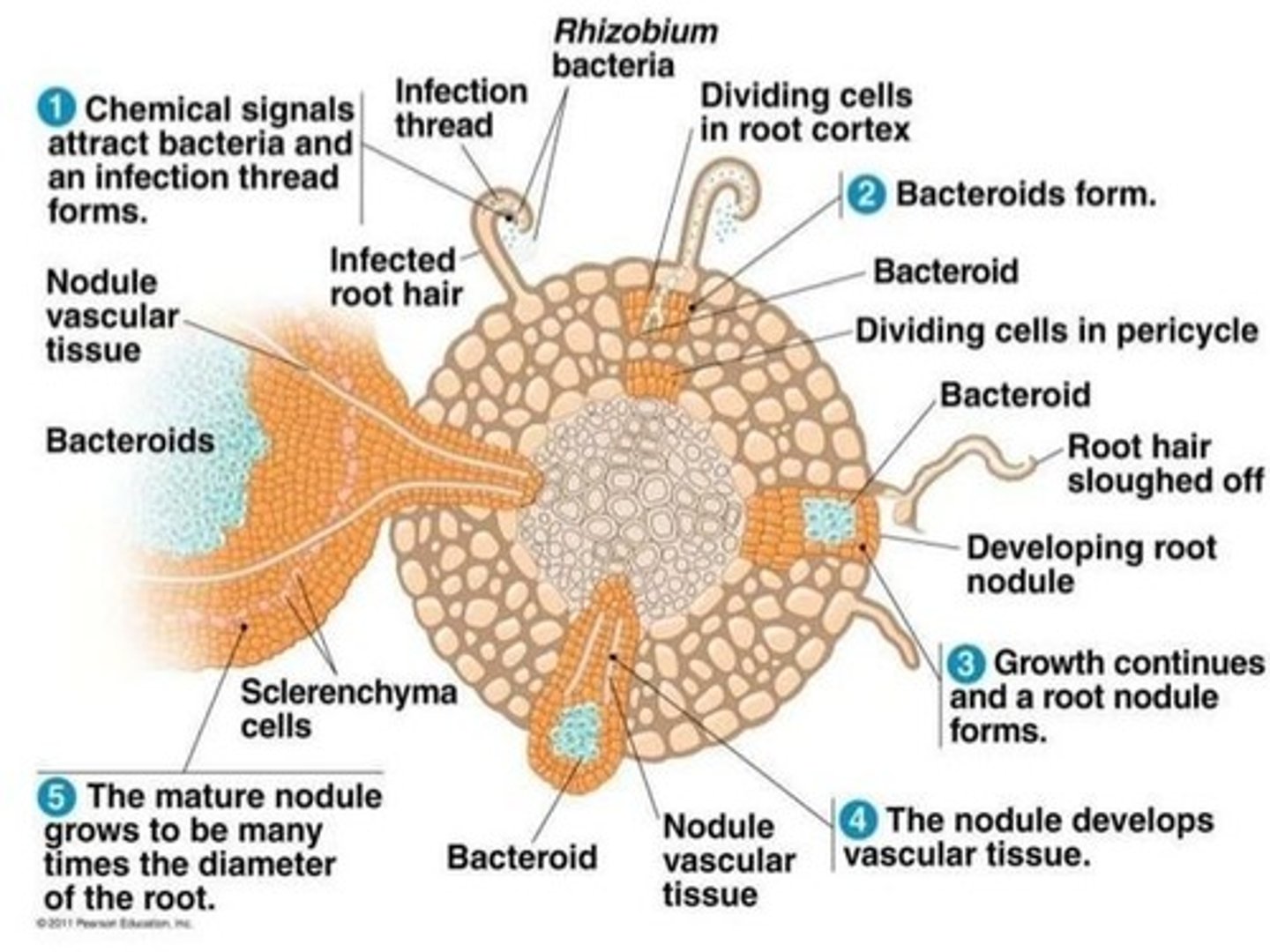
What is the role of Rhizobium in nitrogen fixation?
It forms endosymbiotic relationships with legume roots.
What is the significance of Acetobacter diazotrophicus?
It is an endosymbiotic diazotrophic bacterium associated with sugarcane roots.
What are inorganic reservoirs?
Reservoirs that are unavailable to most organisms.
Why are microorganisms important in nutrient cycling?
They convert various elements into forms usable by themselves and other organisms.
What is carbon's role in organic molecules?
Carbon is a key component of all organic molecules.
How do organisms obtain carbon?
All organisms must obtain carbon in a usable form from their environment.
What is CO2 in relation to carbon?
CO2 is a key inorganic reservoir of carbon.
What process produces CO2 as a byproduct?
Aerobic respiration.
What is carbon fixation?
The conversion of CO2 into sugars via photosynthesis.
Who performs carbon fixation?
Most photoautotrophs, which are primarily microorganisms like bacteria and algae.
What do autotrophs do with the sugars produced from carbon fixation?
They use some to fuel cellular respiration and convert others into various organic molecules.
What fraction of organic compounds is used to fuel cellular respiration in consumers?
A large fraction, while only a small fraction forms the biomass of the consumer.
What is the typical percentage of biomass that forms in the next trophic level?
Usually about 10%.
How is O2 produced?
As a waste product of photosynthesis.
Why is atmospheric nitrogen unusable by most organisms?
It is only usable by certain prokaryotic microorganisms.
What is the key step in the nitrogen cycle?
Nitrogen fixation, which moves nitrogen from the atmosphere to the biosphere.
What are diazotrophs?
Bacterial species capable of nitrogen fixation.
What is Azotobacter?
A free-living diazotroph that is a key nitrogen fixer in grasslands.
What is Rhizobium?
An endosymbiotic diazotrophic alphaproteobacterium that forms relationships with legume roots.
What is the role of nitrogenase in nitrogen fixation?
It catalyzes the conversion of N2 into NH3.
What happens to nitrogenase in the presence of O2?
It is irreversibly denatured and can only function in an environment devoid of O2.
What is the impact of carbon monoxide (CO) on nitrogenase?
It is a competitive inhibitor that can inhibit nitrogenase activity.
What is the significance of nitrogen fixation in ecosystems?
It provides usable nitrogen to plants, which is essential for their growth.
What type of bacteria live within plant cells?
Rhizobium
What do Rhizobium bacteria differentiate into?
Bacteroids
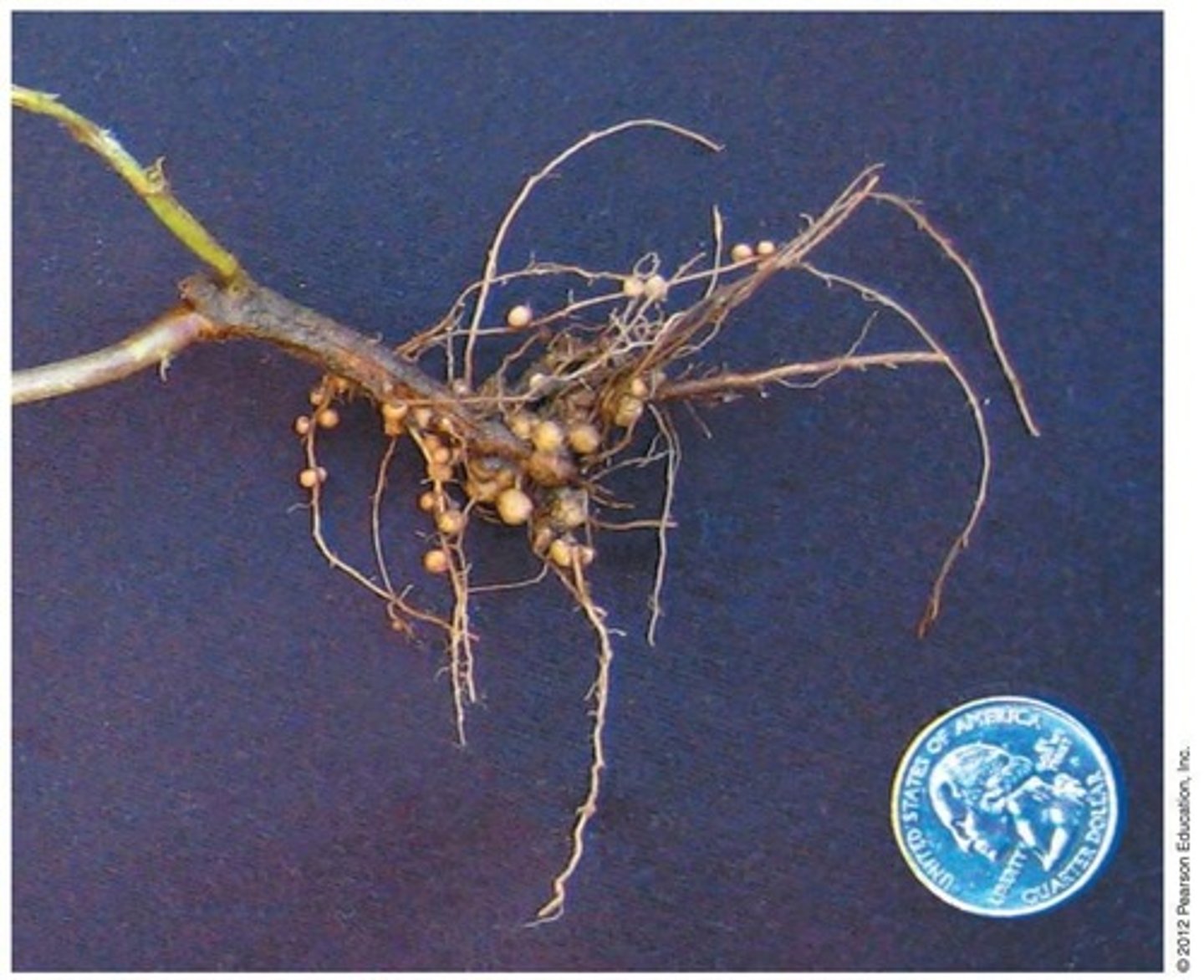
What do Rhizobium bacteria stimulate the formation of?
Root nodules
What type of relationship do Rhizobium and legume roots have?
Endosymbiotic relationship
What is the mutual benefit of the relationship between plants and Rhizobium?
Plants provide products of photosynthesis; bacteria provide fixed nitrogen.
What do plants infected with Rhizobium produce?
Leghemoglobin
What does leghemoglobin bind to?
Oxygen (O2)
What environment does leghemoglobin provide for nitrogenase?
O2-free environment
What do decomposers recycle?
Nutrients from waste and dead organisms
What form is over half of the Earth's organic carbon in?
Cellulose
Which organisms can break down cellulose?
Some microorganisms
What is the main process by which bacteria and fungi decompose organic matter?
Decomposition
What role do microorganisms play in food production?
They impart flavors, aromas, and can act as preservatives.
What are some products of milk fermentation?
Cheese, yogurt, buttermilk
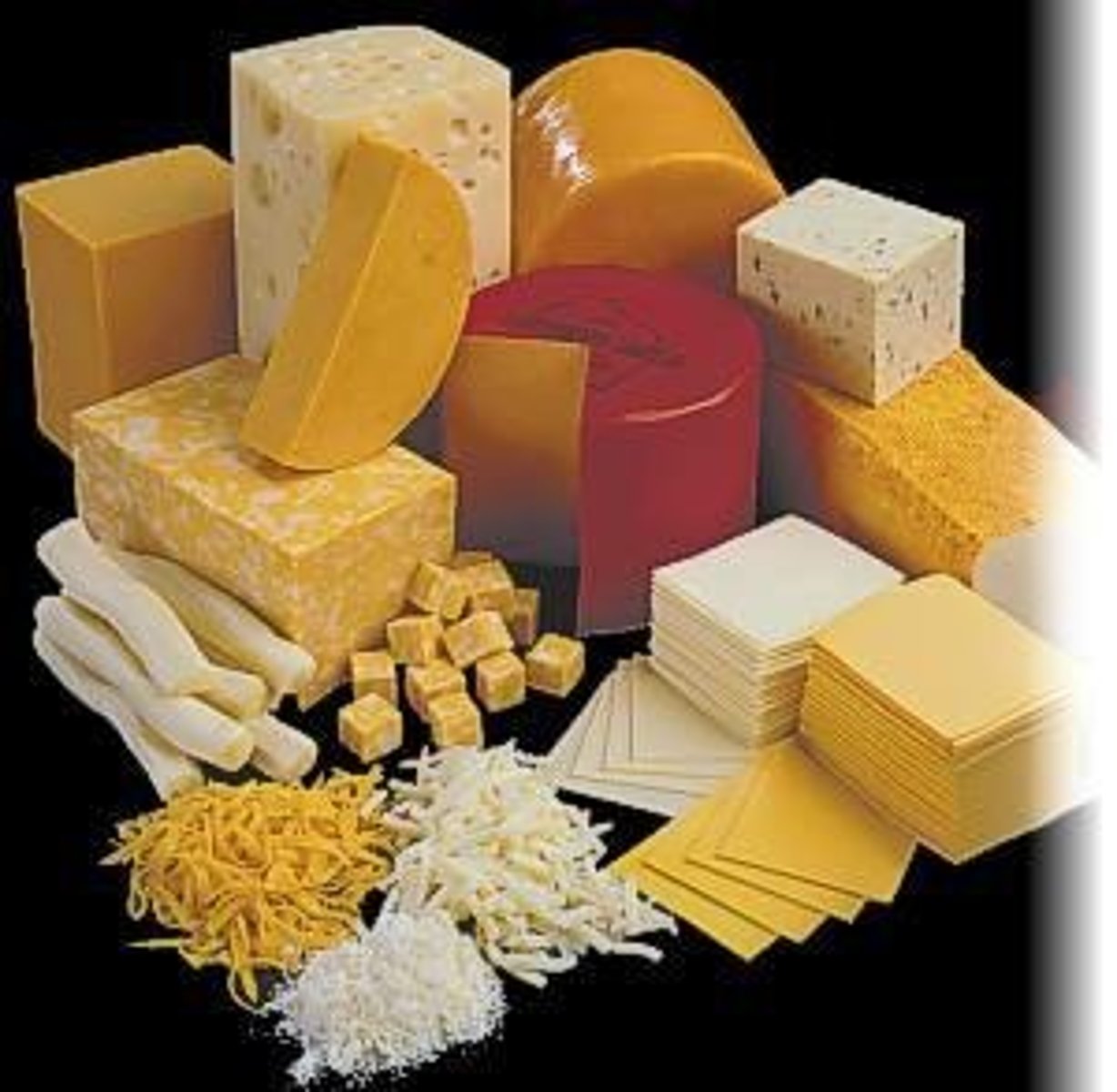
What type of bacteria is used to ferment milk?
Lactic acid bacteria
What are some foods produced by vegetable fermentation?
Sauerkraut, kimchi, soy sauce
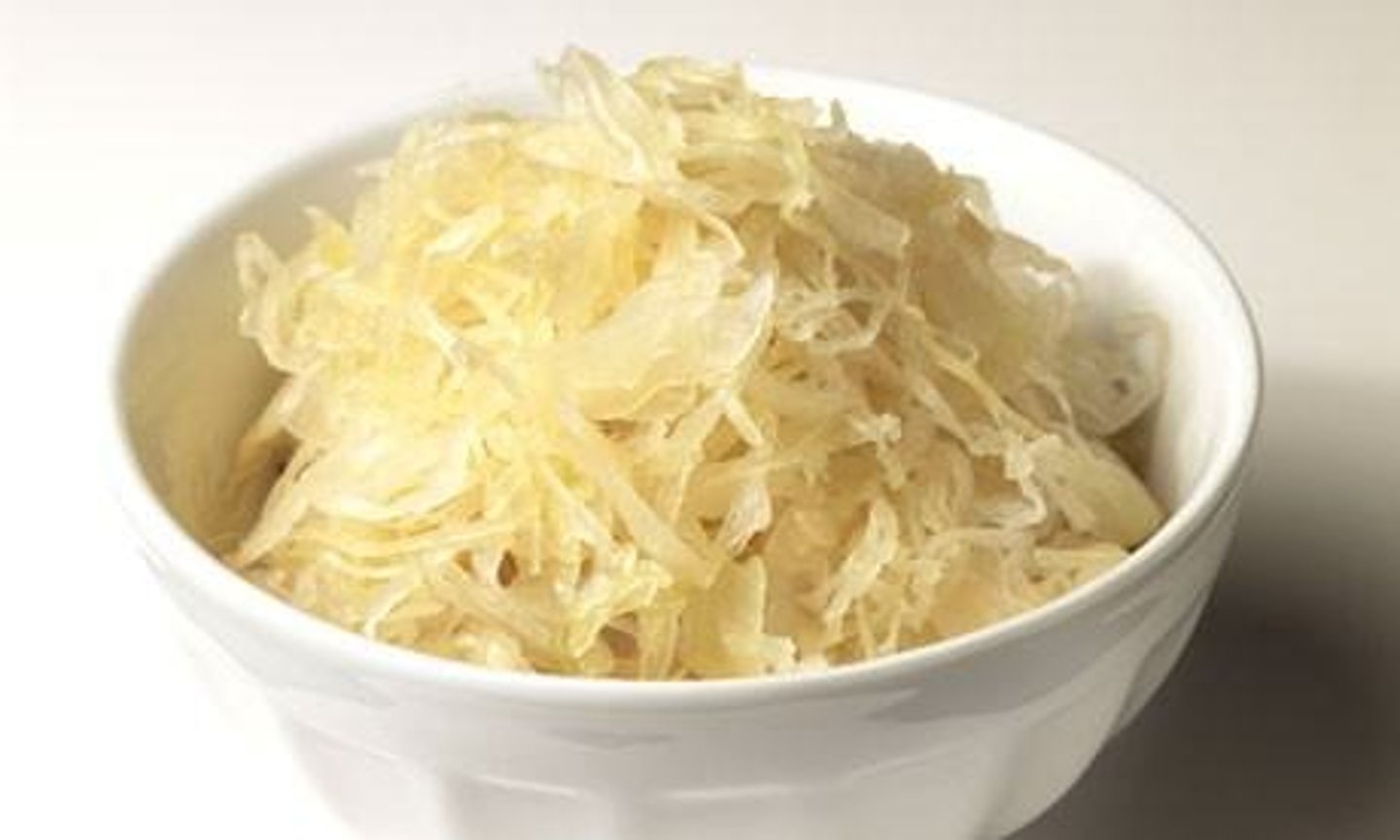
What type of bacteria generally ferments vegetables?
Lactic acid bacteria
What are some examples of fermented meat products?
Salami, pepperoni, summer sausage

What is fermented by lactic acid bacteria?
Various food products
What is the yeast used in fermentation for leavened breads?
Saccharomyces cerevisiae

What gas causes bread to rise during fermentation?
CO2
What happens to ethanol during the baking process?
Ethanol evaporates
What type of bacteria is used in sourdough breads?
Lactic acid bacteria
What gives sourdough bread its characteristic taste?
Lactic acid production
What can alcoholic fermentation do?
Quench your thirst
What are sugars from various sources fermented by?
Yeast Saccharomyces cerevisiae
What is the goal of wastewater treatment?
To remove or reduce contaminants in water
What are the components found in wastewater from homes and businesses?
Water, suspended solids, organic compounds, inorganic compounds, toxic metals, microorganisms
What can excess nutrients in sewage promote?
Eutrophication
What occurs during algal blooms?
Death and decomposition of autotrophs consumes oxygen
What are the four phases of traditional sewage treatment?
1. Settling tanks, 2. Aeration, 3. Chlorination, 4. Anaerobic fermentation of sludge
What happens to heavier materials in settling tanks during sewage treatment?
They settle as sludge and are removed
What types of pollutants can microbes degrade?
Petroleum, PCBs, DDT
What are some products that microbes can synthesize?
Cellulose, ethanol, insecticides, antibiotics, amino acids, enzymes, vitamins, plastics
What is biotechnology?
The use of microbes to make practical products
What are the three main goals of genome manipulation?
1. Elimination of undesirable phenotypes, 2. Combining beneficial traits, 3. Creation of organisms that synthesize desirable products
What is recombinant DNA technology?
A method to intentionally modify the genomes of organisms
What can be produced through genetically modified cells?
Human insulin, growth factors, clotting factors VIII and IX
What are the main cells used in biotechnology?
Mainly microbial cells
What virus are papayas sensitive to?
Papaya ringspot virus