applied things to remember
 Call Kai
 Learn
Learn Practice Test
 Spaced Repetition
 Match
Match Flashcards
 Knowt Play
1/57

There's no tags or description
Looks like no tags are added yet.
Name | Mastery | Learn | Test | Matching | Spaced | Call with Kai |
|---|
No analytics yet
Send a link to your students to track their progress
58 Terms
SI units:
Mass = kg
Length = m
Time = s
Speed = m/s
Acceleration = m/s^2
Weight = N or kg m/s^2
Force = weight
forces
Weight - acts vertically downwards
Normal reaction - force perpendicular to surface when object is in contact (opposite of weight)
Friction - force opposing motion between 2 rough surfaces
Tension - if object is being pulled by string, force on object = tension in string
Thrust/Compression - if object is being pushed by light rod, thrust/compression in rod is acting on object
Buoyancy - upward force on body that allows it to float
Air resistance - opposes motion (weight)
Particle assumptions
rotational forces and air resistance can be ignored
mass of object is concentrated at single point
dimensions of object = negligible
Air resistance negligible/smooth surface assumptions
Ignore frictional effects on object/between object and surface due to air resistance
rod assumptions
all dimensions but 1 = negligible
mass concentrated along a line
no thickness
rigid
lamina
object has area but negligible thickness
mass is distributed across flat surface
uniform body
mass distributed evenly
mass is concentrated at single point at centre (centre of mass
light object
mass is small compared to other masses e.g. string/pulley
treat object as = 0 mass
tension the same at both ends of a light string
smooth surface
assume that there is no friction between surface and objects
rough surface
any surface that is not smooth
objects in contact experience a frictional force if moving
wire
rigid thin length of metal
treat as one-dimensional
smooth and light pulley
all pulleys are smooth and light
pulley has no mass
tension is same on either side of pulley
bead
particle with hole in it for threading
moves freely along wire/string
tension is same on either side of bead
peg
support from which body can be suspended/rested
dimensionless and fixed
can be rough or smooth as specified
gravity
force of attraction between all objects
acceleration due to gravity = g
assume all objects with mass are attracted towards earth
earth’s gravity is uniform and acts vertically down
g is constant, taken as 9.8m/s² unless stated otherwise
magnitude of displacement vector
distance
magnitude of velocity vector
speed
if v = ai + bj, magnitude =
|v| = sq root (a²+b²)
population
whole set of items that are of interest
census
observes/measures every member of a population
sample
selection of observations taken from a subset of the population, used to find out information about the population as a whole
census v sample
| Advantages | Disadvantages |
census |
|
|
sample |
|
|
three types of random sampling
simple random sampling
sampling frame (list of people/things), allocate each with unique number, choose numbers at random
systematic sampling
required elements chosen at regular intervals from ordered list
stratified sampling
population divided into mutually exclusive strata (e.g. males and females), random sample taken from each
number sampled in stratum = (no in stratum/no in population) x overall sample size
simple random sampling advantages vs disadvantages
Advantages | Disadvantages |
|
|
systematic sampling advantages vs disadvantages
Advantages | Disadvantages |
|
|
stratified sampling advantages vs disadvantages
Advantages | Disadvantages |
|
|
two types of non-random sampling
quota sampling
interviewer/researcher selects sample reflecting characteristics of whole population
opportunity sampling
taking sample from people who are available at the time of study and who fit the criteria you are looking for
quota sampling: advantages vs disadvantages
Advantages | Disadvantages |
|
|
opportunity sampling advantages vs disadvantages
Advantages | Disadvantages |
|
|
continuous variable
variable that can take any value in a given range e.g. time (2, 2.1, 2.01 secs)
discrete variable
variable that can only take specific values in a given range (eg. number of girls in a family)
class boundaries (in grouped frequency tables)
tell you maximum and minimum values in each class
FOR CONTINUOUS: OFTEN THEY HAVE BEEN ROUNDED
E.G. UPPER CLASS BOUNDARY FOR 30-31MM = 31.5
midpoint of class (in grouped frequency table)
average of class boundaries (1/2 x lower c.b + upper c.b)
class width (in grouped frequency table)
upper class boundary - lower class boundary (difference between c.bs)
UK locations in large data set
Leuchars: town in Scotland
Leeming: village in North Yorkshire
Heathrow: hamlet in Greater London
Hurn: village in Dorset (South West England)
Camborne: town in Cornwall (South West England)
total daily sunshine, mean windspeed, max gust = unknown for first half of may 1987
international locations in large data set
Beijing: capital city of China
Perth: capital city of Western Australia (state of Australia)
Jacksonville: city in Florida (state of USA)
only have:
daily mean temp
daily total rainfall
daily mean pressure
daily mean windspeed
LDS locations near coast
jacksonville
perth
camborne
hurn
leuchars
total days LDS covers
184 days
LDS locations in different hemispheres
perth in southern hemi, has winter when UK in summer
LDS: UK great storm and effects
15-16 october 1987
wind speeds high
south and south-east affected
skews some variables (wind/gust/rain)
won’t have much impact on some (sunshine/cloud cover)
time periods of LDS
May to October 1987
May to October 2015
variables in LDS
daily mean (air) temp in °C to 1dp
daily total rainfall in mm to 1dp
daily total sunshine in hr to 1dp
daily maximum relative humidity as % to nearest integer
daily mean windspeed and direction in knots (1kn=1.15mph) given to nearest integer and degrees to nearest 10
daily maximum gust and direction in knots
cloud cover in Oktas (1/8ths of sky covered by cloud, discrete data)
daily mean visibility in decametres (1Dm = 10m) horizontally
daily mean pressure in hectopascals (1hPa = 100Pa = 1 millibar)
daily mean air temp in LDS
average of hourly temperature readings between 0900-0900 GMT
daily total rainfall in LDS
measured for 24hrs starting at 0900 GMT
- ‘tr’ (trace of rain) = less than 0.05mm, use 0 or 0.025
daily maximum relative humidity in LDS
if above 95% - associated with mist and fog
daily mean windspeed and direction in LDS
windspeed described using Beaufort conversion (calm, light etc)
wind direction given as cardinal direction (NESW)
averaged for 24 hours starting at 0000GMT
daily maximum gust and direction in LDS
same units as windspeed+direction
maximum instantaneous speed over 24 hours
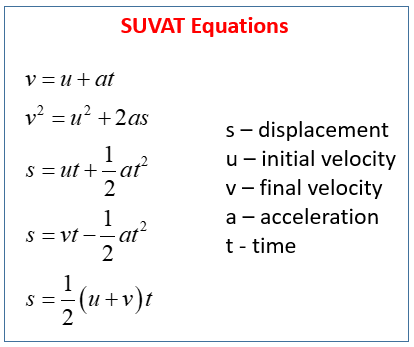
suvat
outliers using quartiles
either:
greater than Q3+k(Q3-Q1)
less than Q1-k(Q3-Q1)
variance =
mean of the squares - square of the means
standard deviation =
sq root variance
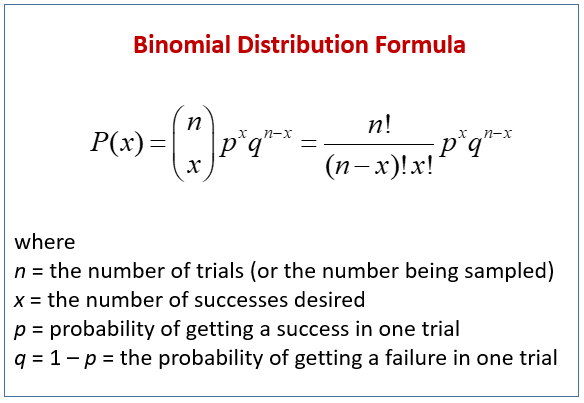
binomial distribution
mutually exclusive
no outcomes in common (do not overlap)
P(A or B) = P(A) + P(B)
independent events
one event has no effect on another
P(A and B)= P(A) x P(B)
discrete uniform distribution
when all probabilities are the same
newton’s first law
object at rest will stay at rest, object moving at constant velocity will continue moving with constant velocity unless unbalanced force acts on it
newton’s second law
F=ma
W=
mg