1.1.3 +1.1.1 Held Together by a Thread
 Call Kai
 Learn
Learn Practice Test
 Spaced Repetition
 Match
Match Flashcards
 Knowt Play
1/34

Earn XP
Description and Tags
Also includes information from 1.1.1(*Small Amount)
Name | Mastery | Learn | Test | Matching | Spaced | Call with Kai |
|---|
No analytics yet
Send a link to your students to track their progress
35 Terms
BQ:What is an outpatient center?
BQ:Anyplace that offers health care that are administered without an overnight stay in the hospital.
There are 11 body systems. What are they? (More review on PLTW from last year)
-Integumentary system
-skeletal system
-muscular system
-lymphatic system
-endocrine system
-cardiovascular system
-Urinary system
-Reproductive system
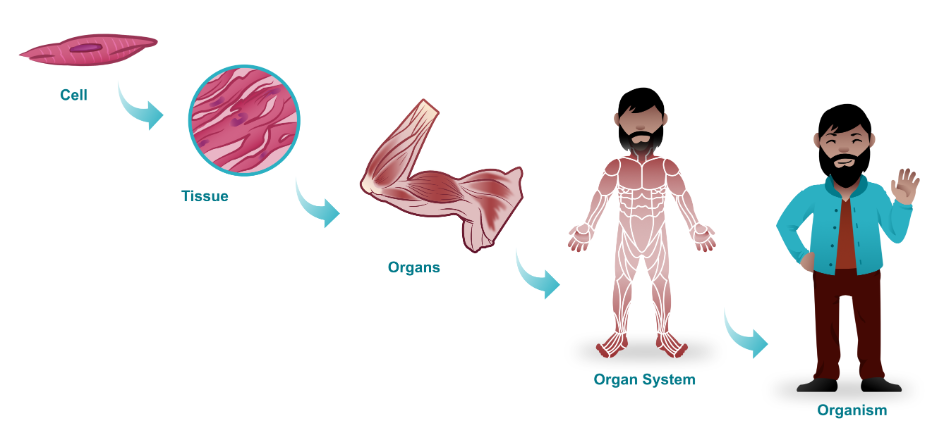
What is the hierarchy of the human body systems.
It goes from cell→tissue→organ→organ system→Organism
Here is an analogy- room→apartment→apartment complex→neighborhood →town
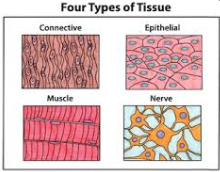
What are the four different tissue types?
Nervous, Epithelial, Muscle,and Connective tissue.
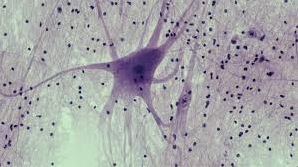
BQ:What is the tissue that is made up of specialized cells called neurons that work to receive,interpret, and respond to signals?
BQ:Nervous tissue, which is also what the nerves, brain and spinal cord is composed of.
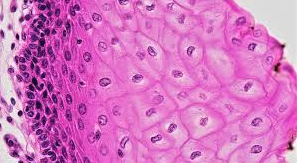
BQ:What tissue lines the outer surface of organs and blood vessels,absorbs, secretes, protects,and senses for us?
It is also the outer layer of your skin and lines the respiratory tract.
BQ:Epithelial tissue, which is lined in sheets,connected to another ,and made up of epithelial cells.
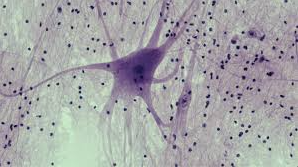
What tissues type is this?
This is nervous tissue that is often characterized by the visible neurons that you can see.
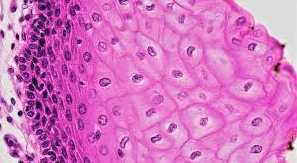
What tissue type is this?
This is epithelial tissue and it can be characterized by it columnar structure.
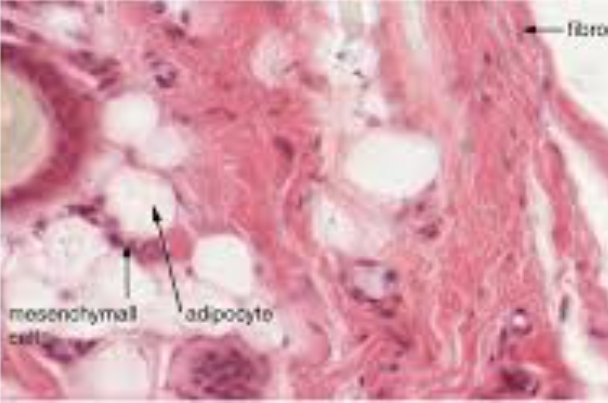
What tissue type is this?
This is connective tissue and it is often characterized by its white circles and pink surrounding tissues.
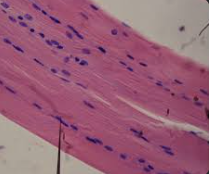
What tissue type is this?
This is muscle tissue and it is characterized by its smaller dots.
BQ:an integrated group of cells with a common function and/or structure
BQ:TISSUE
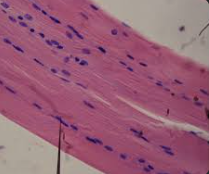
BQ:What is this tissue? This tissue's responsibility is to make up the muscles in the body and provide the muscles the ability to contract. The muscle can be striated, smooth, or cardiac. Striated muscle tissue, also known as skeletal muscle tissue, is attached to bones
BQ:This is muscle tissue which is found all throughout the body for example:
-smooth muscle tissue is in the walls of internal organs.
-Cardiac muscle tissue is in the walls of the heart.
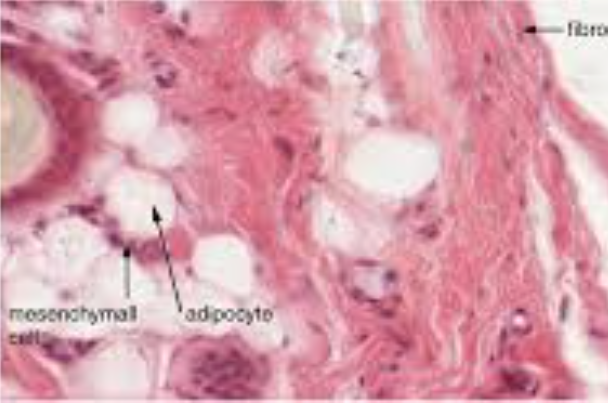
BQ: What tissue type is this? It supports and connects other tissue types like holding organs in place,attaching muscle to bone,link bones with joints, and enables other tissue to allow the lung to stretch.
BQ:This is connective tissue which is found in the body attached to and in between other tissue type.
*Adipose which is another term for fat is a connective tissue.
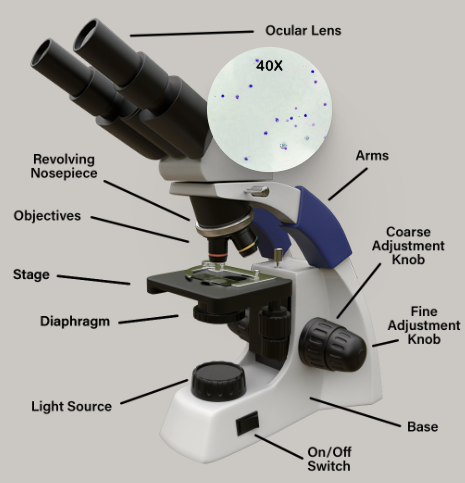
BQ: What is this? The study of the microscopic anatomy of tissues. It is also known as microanatomy.
BQ: HISTOLOGY
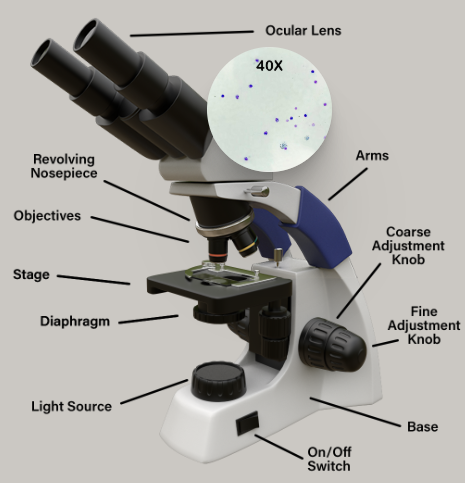
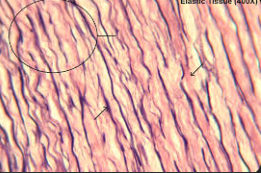
BQ:What is this subcategory tissue type?*HINT- It is a connective tissue that provides strength and resistance to stretching.
BQ:This is elastic tissue!!
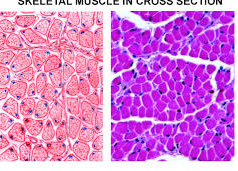
BQ:What is this subcategory tissue type? *HINT- It is a muscular tissue that provides structural and metabolic(stores glucose) functions.
BQ: It is skeletal muscle!!
NOTE**
So actually blood is a connective tissue queen(:
BQ:What is this? The way in which a living organism or bodily part functions
BQ:physiology
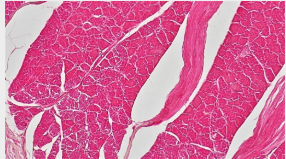
BQ:Is this healthy and what type of tissue is this?
BQ:Normal skeletal muscle slide showing cross-sectional and elongated muscle striations. No evidence of inflammation. White space visible on the slide is an artifact produced when the muscle contracts during slide processing.
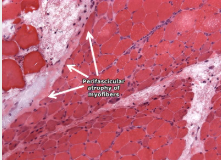
BQ: Is this healthy and what tissue type is it?
Evidence of inflammation is noted between cross-sectional skeletal muscle. Atrophy of the muscle is also present indicating dermatomyositis.
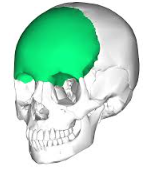
What bone of the skull is this?
Frontal bone
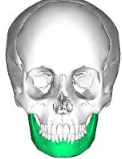
What bone of the skull is this?
Mandible
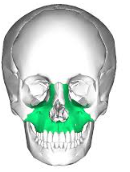
What bone of the skull is this?
Maxilla
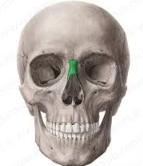
What bone of the skull is this?
nasal
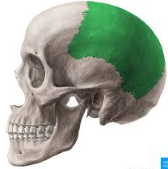
What bone of the skull is this?
Left parietal
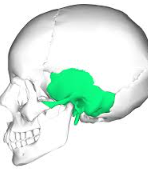
What bone of the skull is this?
left temporal
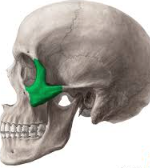
What bone of the skull is this?
Left Zygomatic
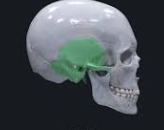
What bone of the skull is this?
Right temporal
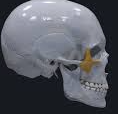
What bone of the skull is this?
Right zygomatic
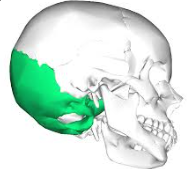
What bone of the skull is this?
Occipital bone
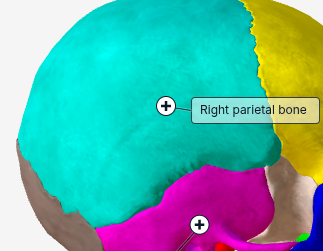
What bone of the skull is this?*FREE ANSWER
Right parietal
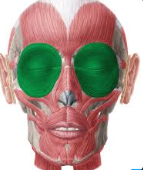
BQ:WHAT MUSCLE IS THIS ON THE FACE?
BQ:The orbicularis oculi is situated beneath the eyelid and acts as an opener/closer of the eye. THE STRIATIONS ARE AROUND LIKE A CIRCLE WHICH CORRESPONDS WITH THE BLINKING MOVEMENT THAT YOU SEE.
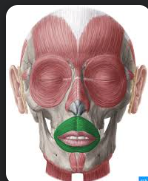
BQ:WHAT MUSCLE IS THIS ON THE FACE?
BQ:This is the Orbicularis oris which is the muscle that is under the lips and some of the lips and it can make the pucker that you see in lips. THE STRIATIONS ARE AROUND LIKE A CIRCLE WHICH CORRESPONDS TO THE PUCKERING MOVEMENT THAT YOU SEE.
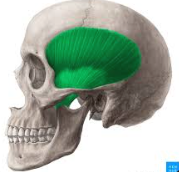
BQ:WHAT MUSCLE IS THIS ON THE FACE?
BQ:This is the temporalis which is the muscle that controls jaw movement like chewing and opening your mouth. THE STRIATIONS ARE UP AND AND DOWN LIKE A VERTICAL WHICH CORRESPONDS TO THE UP DOWN MOVEMENT OF CHEWING AND OPENING YOUR MOUTH.
BQ:WHAT DISEASE IS THIS?-sudden weakness in the muscles on one side of the face. Often the weakness is short-term and improves over weeks.
BQ:Bell’s Palsy