Oral cavity and Exocrine Glands
 Call Kai
 Learn
Learn Practice Test
 Spaced Repetition
 Match
Match Flashcards
 Knowt Play
1/38

Earn XP
Description and Tags
LECTURE 5
Name | Mastery | Learn | Test | Matching | Spaced | Call with Kai |
|---|
No analytics yet
Send a link to your students to track their progress
39 Terms
what is the oral vestibule
the area between the lips and cheek and the teeth and gums
what is oral cavity proper?
space posterior and medial to the upper an dlower dental arches
what forms the roof of oral cavity proper (OCP) ?
hard palate
soft palte
what forms the walls of OCP?
alveolar bone of jaws
what forms the floor of OCP?
anterior 2/3 of the tongue
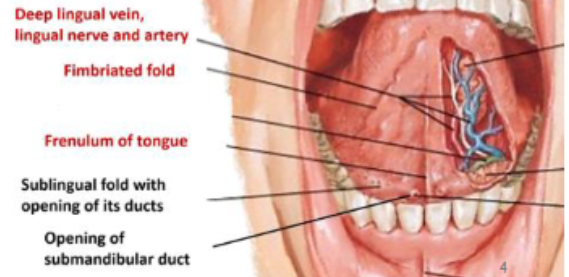
what is the frenulum and what lies on either side of it?
mucous membrane fold under the tongue, with an opening on either side of it of the submandibular gland. there is also the sublingual folds and ducts on either side.
what are the muscles of the lips and cheeks?
orbicularis oris
buccinator
what innervates the regions of skin and oral mucosa of the lips and cheek
top lip: superior labial branch → infraorbital nerve CNV1
cheeks: buccal branch → mandibular nerve CNV3
lower lip: inferior labial branch → mental nerve
what provides sensation to the tongue and mucous membranes?
most sensory innervation comes from CN V except taste sensation to tongue is from Chorda Tympani nerve (CN VII)
what innervates the hard and soft palates?
the greater palatine and nasopalatine nerves of CNV3
glossopharyngeal nerve sensory of soft palate.
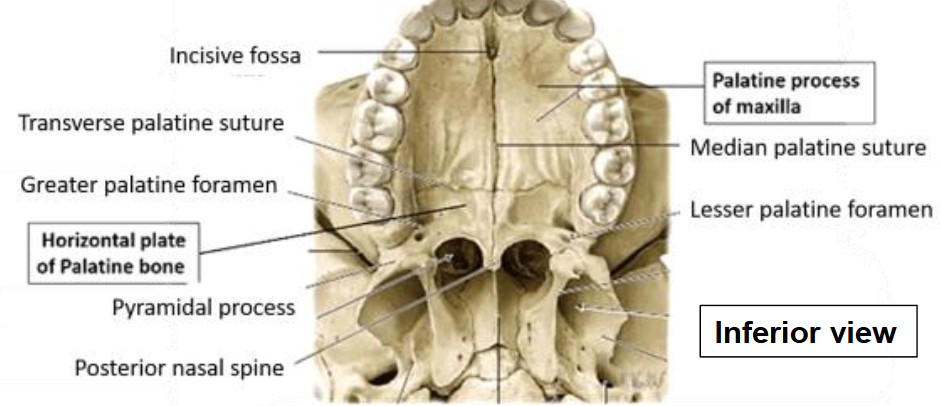
what bones form the hard palate?
palatine process of maxilla
horizontal plate of the palatine bones
what forms the soft palate?
5 muscles converge from above and below and descend onto the palate. connects to the hard palate via aponeurosis.
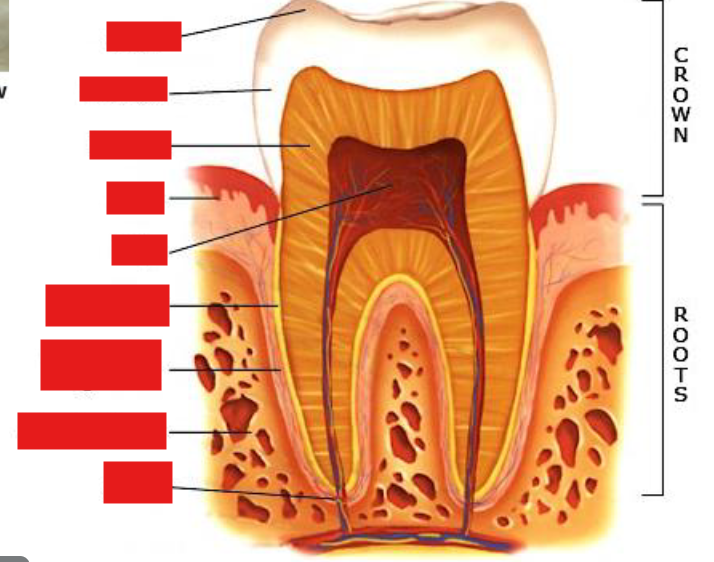
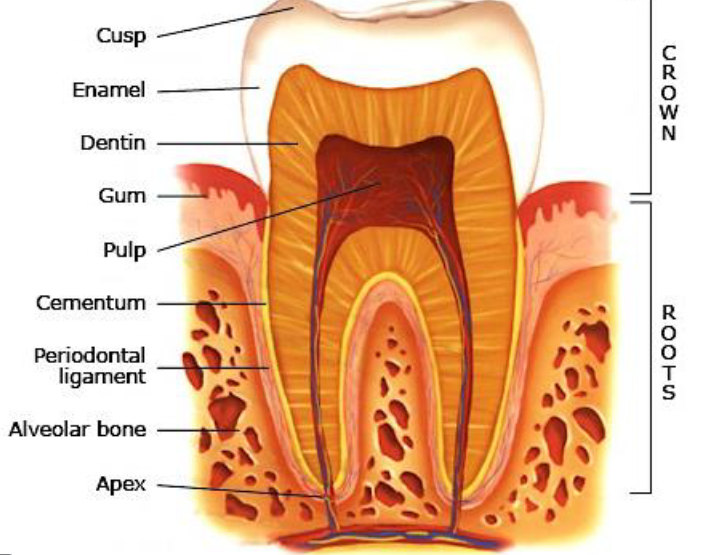
what nerve supplies the oral cavity and gteeth?
the trigeminal nerve CNV2 CNV3
what is the function of the muscles of the tongue?
speech
chewing
swallowing
taste
oral cleansing
where does the root of the tongue attach?
the hyoid bone
what is the terminal sulcus and what does it do?
it is a v shaped groove with divides the tongue into:
pre-sulcal → anterior 2/3
post-sulcal → pharynx
what is the function of the lingual septum?
separates the intrinsic and extrinsic muscles in each half of the tongue
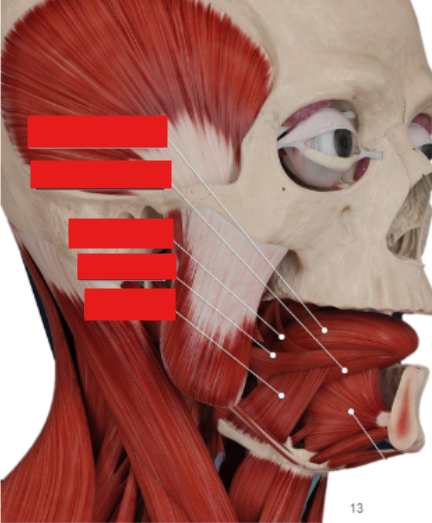
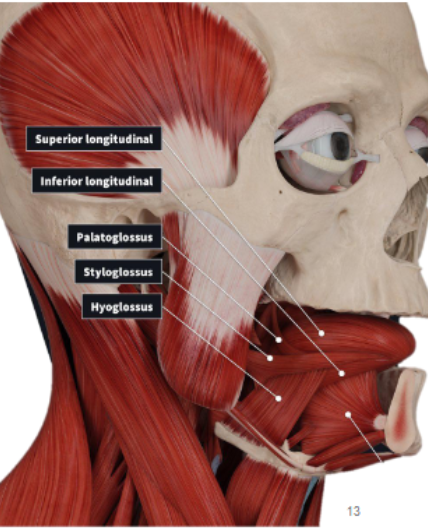
what is the action of the genioglossus
depresses
retracts
wags
what is the action of the hyoglossus?
depresses
draws side down
what is the action of the styloglossus
retracts
elevates (curls sides)
what is the action of the palatoglossus?
elevates posterior tongue
depresses soft palate
what provides motor innervation to the tongue
hypoglossal nerve CNXII except palatoglossus (CNX)
what is the innervation for the anterior 2/3 of the tongue?
normal sensation → lingual nerve CNV
taste → chorda tympani CNVII
what provides sensory innervation to the postsulcal tongue?
glossopharyngeal nerve CNIX
what is the function of the lacrimal glands?
secretes lacrimal fluid (tears) onto the conjunctiva onto the eye. it drains into the lacrimal sac → nasolacrimal duct.
what provides secretomotor innervation to the lacrimal glands?
greater petrosal nerve CNVII → pterygopaltine ganglion → joins zygomatic nerve → stimulates lacrimation
what are the smallest salivary glands?
sublingual glands
describe the location of the sublingual glands
on the floor of oral cavity proper beneath sublingual glands. lies between genioglossus (medially) and mylohyoid (laterally)
describe the location of the superficial and dep arms of the submandibular glands
superficial: outside the boundary of the oral cavity, below mandible
deep: hooks around the posterior margin of the mylohyoid muscle
what is the name of the duct that carries secretions of the submandibular gland?
wharton’s duct - 5 cm long
what is t secretomotor innervation of the sublingual and submandibular glands?
chorda tympani nerve CNVII (submandibular ganglion)
what provides sensory innervation to the sublingual and submandibular glands?
lingual branch of mandibular nerve
what pierces through the buccinator muscle?
parotid duct of the parotid gland
what provides secretomotor innervation to the parotid glands?
glossopharyngeal nerve
what can cause hypoglossal nerve palsy?
trauma such as fracture mandible
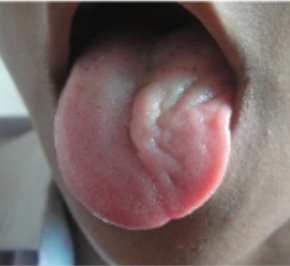
how does hypoglossal nerve palsy present?
paralysis and atrophy of the tongue
deviates towards paralysed side.
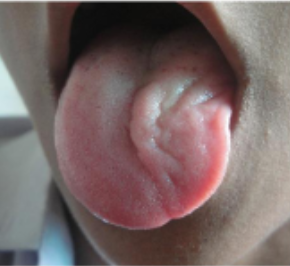
what is sialography
injection of contrast medium for
screening of salivary gland obstructio