Globalisation
 Call Kai
 Learn
Learn Practice Test
 Spaced Repetition
 Match
Match Flashcards
 Knowt Play
1/45

There's no tags or description
Looks like no tags are added yet.
Name | Mastery | Learn | Test | Matching | Spaced | Call with Kai |
|---|
No analytics yet
Send a link to your students to track their progress
46 Terms
Globalisation
Increasing inter-connectiveness of the world economically, culturally and politically
TNC
Trans-national corporation
MNC
Multi-national corporation
FDI
Foreign direct investment
Globalisation history
1712 = steam engine
1866 = telegram cable
1876 = telephone
1985 = mobile phone
Containerisation
Movement of goods using ships/transport using standard containers
Costs fallen 100% since 1950s
Mass Air Transport
1970 = jumbo jet (524people)
Open Skies Agreement resulted in increased competition and lower prices
Air freight increased 15% since 1970
Political globalisation
Increasing number and power of associations which influence/govern the world
Imperialism
Country that doesn't directly rule another but influences economically (USA)
IMF
Based in Washington, DC
Gives loans from HIC to LIC (must open to outside investment)
World Bank
Based in Washington, DC
Gives grants to certain countries under strict conditions
WTO
Based in Switzerland
Advocates open markets - freetrade
UN
In charge of peacekeeping
Undemocratic - 5 have veto power
Indonesia
Valuable resources yet poor living conditions and 1$ a day wages
General Suharto opened the economy for exploitation with IMF and WTO
Loans not used properly and increased development gap with interest payments
Only 20% of resource revenue is gained by government (80% TNC gain)
China Open Door Policy
Policy change = Free-market policies 1979 and joined WTO 2001
SEZ = shenzhen most successful, mainly export related manufacturing areas
Impact of policy = 300m moved to cities, 200 cities with over 1m, 50% GDP from SEZ, 300m middle class, Earnings $227 1978 > $7,591 2014
Offshoring
Company buys a factory that produces their products
Outsourcing
Company hires a factory to make goods on their behalf
Switched off areas
Corruption, debt, crime, unskilled labour, weak market, unstable
AT Kearney Index
Ranks cities by analysing cultural experience, political engagement - count TNC HQs, museums and foreign embassies
E.g London highest in Europe
FDI change
1980-2000 up 20%
Most by MNCs to HICs
28% to NICs
TNC motives
Raw materials, cheap labour, market seeking, accounting, political leverage and environmental exploitation
North Korea
Autocracy with isolationist policy
No social media/ heavy internet censors
Death punishment for breaking many rules ("traitor of the fatherland")
Coca-Cola India
Reason for move = free water, low wage labour and open invite
Problems = Agriculture stopped due to lack of water, high ground pollution, workers paid little Euro1.50, 50 villages have water shortages, polluted water into Ganges
HSBC
HQ in London, largest banking group
Employs 332,000 in 80+ countries
Offshoring angered workers and Trade Unions in UK/USA due to job losses
Anti-globalisation
Protests against TNCs
E.g France; Radio must play 40% French music, National Front, Burkini ban
Global Shift
Relocation of industry that has moved towards Asia from 1980s
Due to open-door policy, TNC power and FDI
Global Shift benefits
Employment and higher wages
Basic amenities can now be afforded
Higher state revenue increase social security
Global Shift drawbacks
Poor workers rights, low wages and long shifts in poor conditions
Income disparity (urban/rural)
Water depletion and Deforestation
Global Shift China
Positives = most FDI and 10% trade share, infrastructure, poverty reduction and better education (94% literacy)
Negatives = Loss farmland (3m ha polluted), health issues (over 30,000 deaths from respiratory problems), loss biodiversity
Detroit
Population declined 50% to 0.9m
Automobile industry left when wages rised
30% unemployed, 1/3 in poverty
Migration impacts
Positive = skilled, more revenue and can work in services
Negative = Congestion, habitat loss, higher crime and stretched services
Global Hub
City with global connections, strong infrastructure and many TNCs
Elite Migration
Very skilled migrants (Oligarchs)
High political, cultural and social influence
Source nation issues = brain drain and depopulation
Host nation = economic benefits, increased revenue, social tensions from lack of housing, shortage of school places
Cultural Diffusion
Spread of culture, seen as form of soft power
Influence culture
TNCs, media, migrants, tourists
Asian cultural change
Traditional diet = rice, seafood, low meat and dairy
New diet = more meat, dairy, fruit
Environmental Impact = deforestation for grazing, overgrazing causes desertification (80% desertification N China), fertiliser use
Development indicators
HDI = on quality of life, living, freedoms and environment
GII = measures gender disparity on health and empowerment
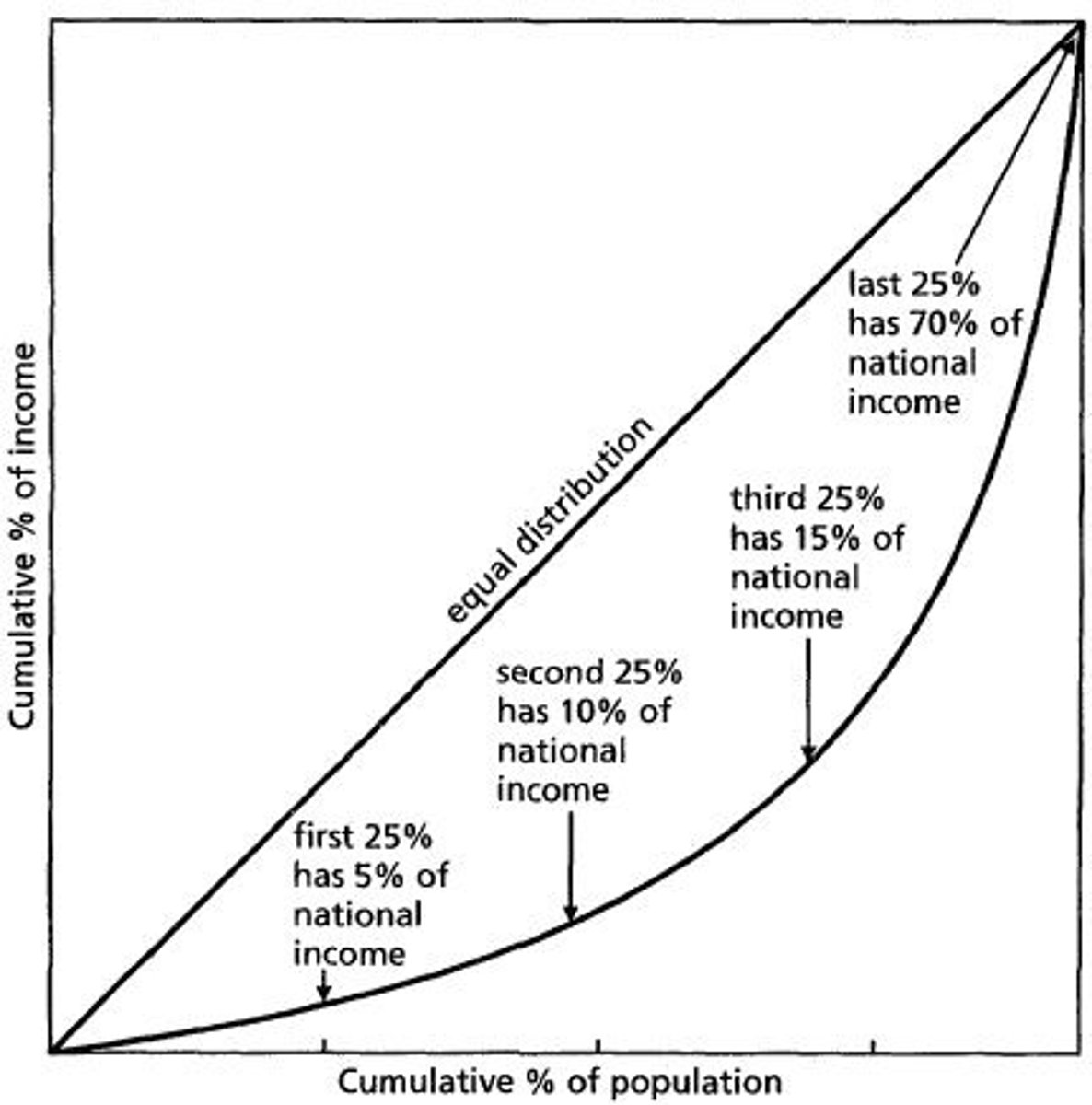
Lorenz Curve
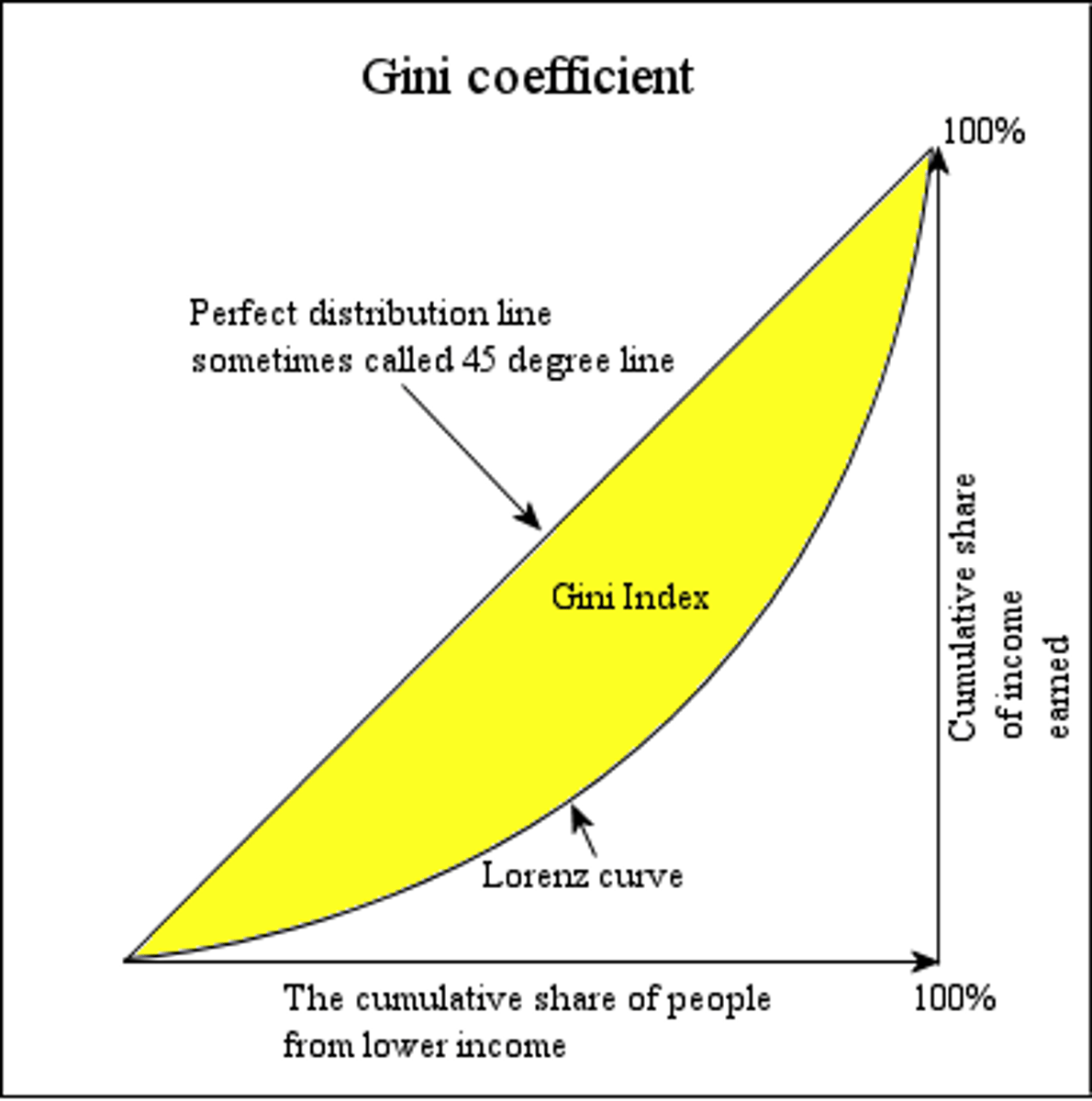
Gini Coefficient
Number 0-1 that measures the degree of income inequality
Trade Protectionism
Increase tariffs to protest domestic industry against foreign competitive markets
Attitude to migration
IPSOS MORI:
77% GB wanted reduced migration 2015 but 72% wanted more NHS staff
Localism
Prioritising local goods over regional which supports local production, history and culture
Local to Ludlow
Promote food/drink products within 30 miles
Supports local producers
Reduce environmental impact by selling compost bags and reduce packaging
Fairtrade
Established 1992 to help LICs farmers with higher wages
60% increase in last 5 years
Eco footprint
Measures human demand on nature
Recycling
Manage resource consumption
Cut emissions (EU 58% 2001-10)
GB keep britain tidy introduced litter programmes to stop beach and park litter