GCSE Physics: P4 - Electric circuits
 Call Kai
 Learn
Learn Practice Test
 Spaced Repetition
 Match
Match Flashcards
 Knowt Play
1/106

There's no tags or description
Looks like no tags are added yet.
Name | Mastery | Learn | Test | Matching | Spaced | Call with Kai |
|---|
No analytics yet
Send a link to your students to track their progress
107 Terms
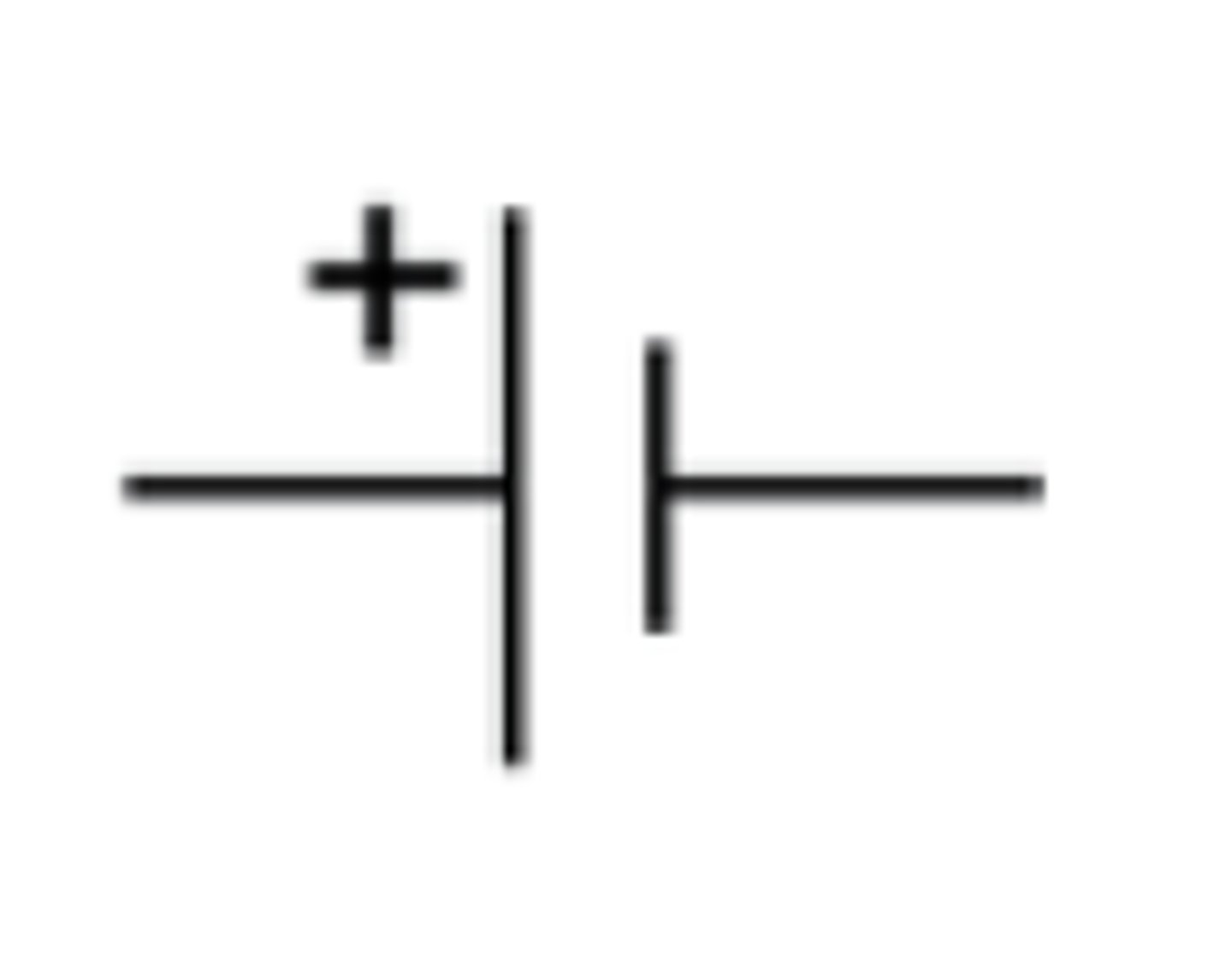
What is the circuit symbol for a cell?
Cell
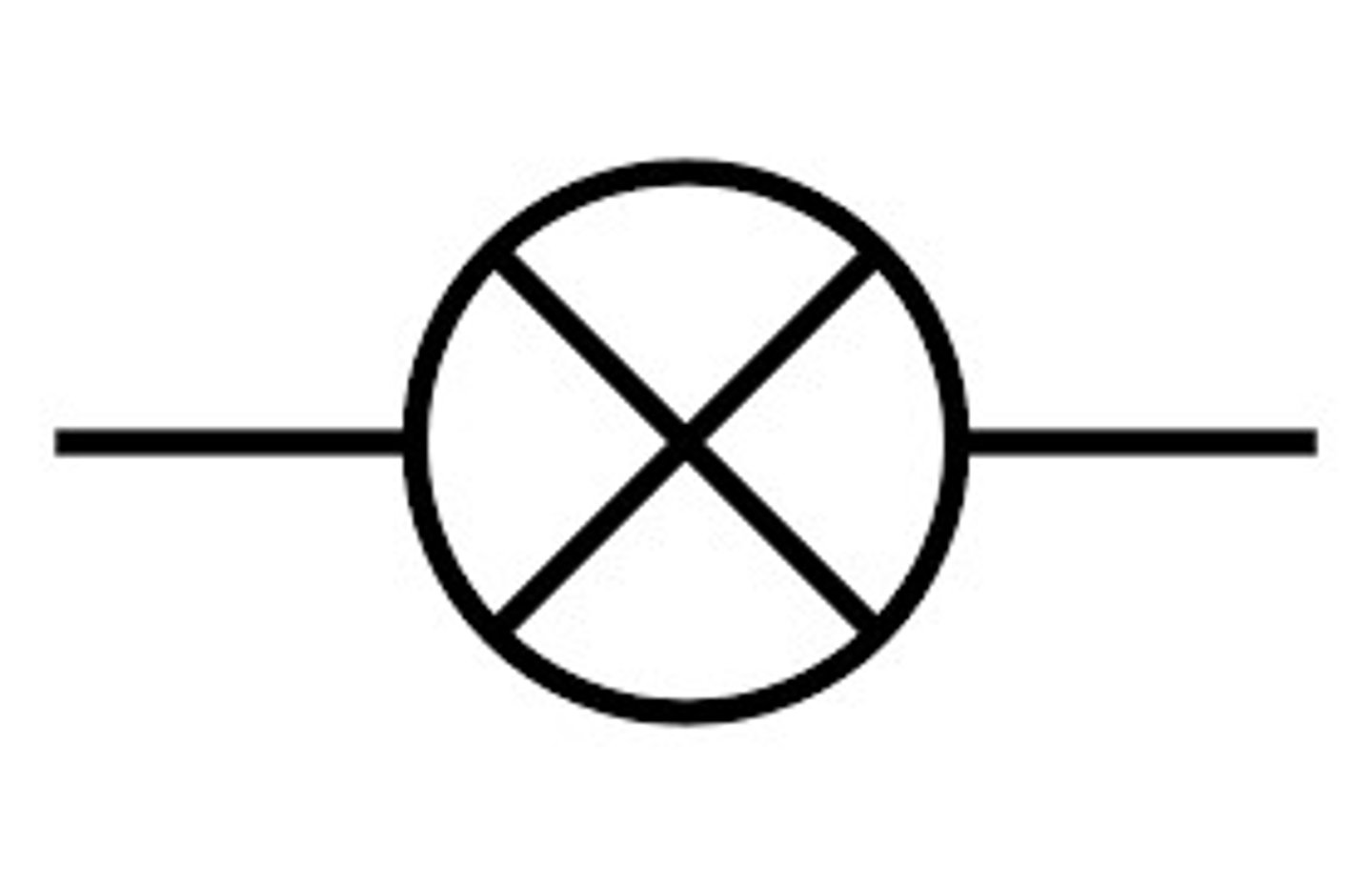
What is the circuit symbol for a lamp?
Lamp
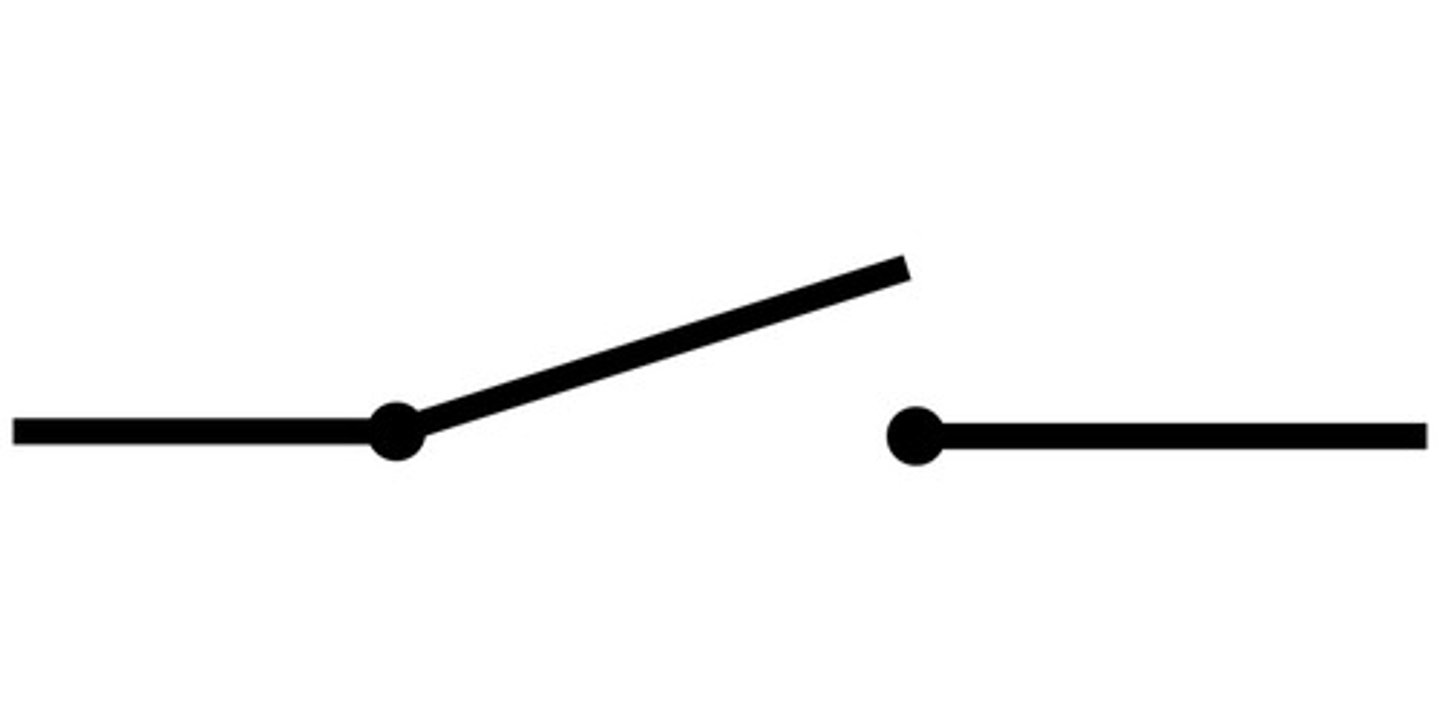
What is the circuit symbol for an open switch?
Open switch
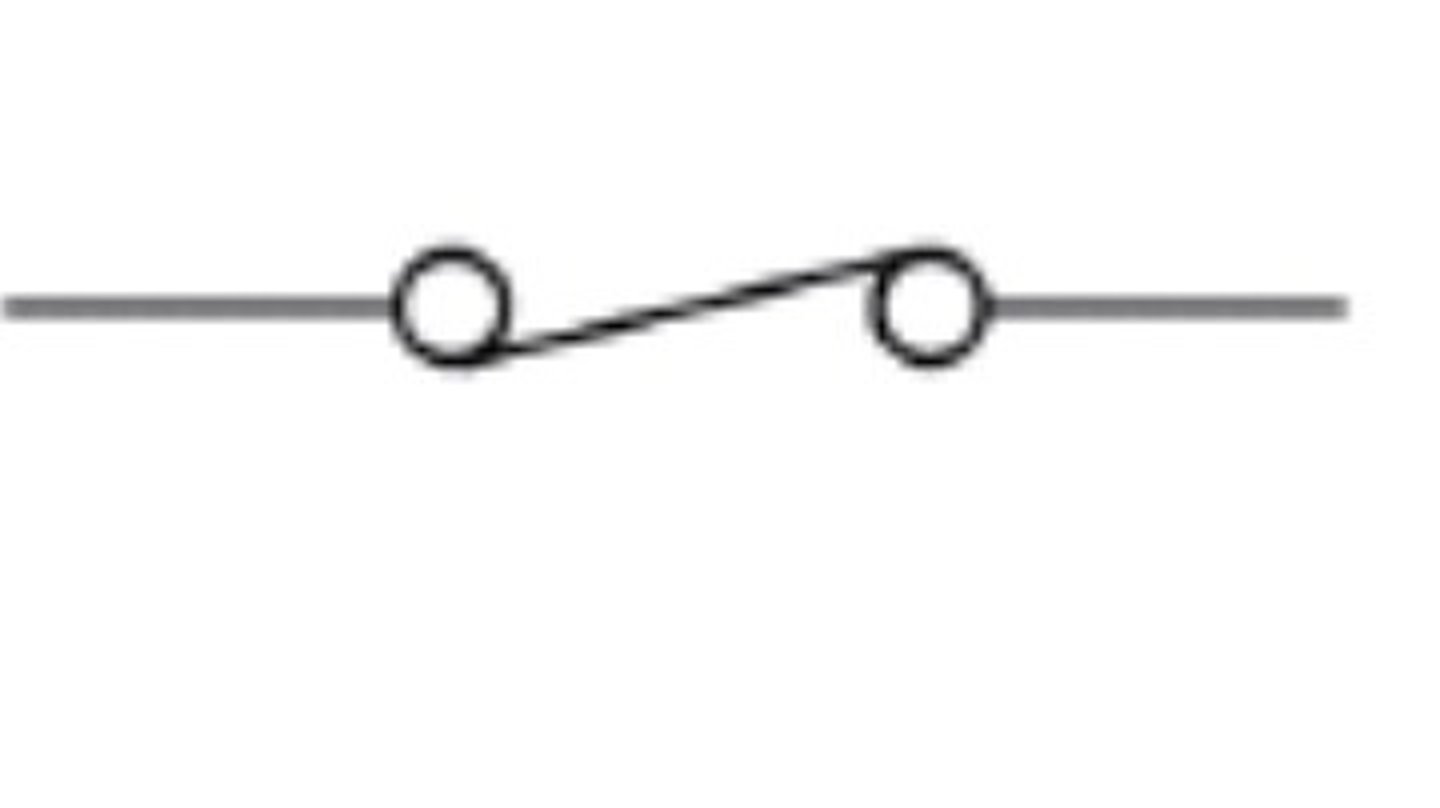
What is the circuit symbol for a closed switch?
Closed switch
Describe the current in a series circuit.
Current is the same throughout the entire circuit when in series
Describe the changes in energy stores as the current flows through the lamp
electrical energy transfers to light energy and thermal energy when it flows through lamp
Where does current flow from in a circuit
from the negative end of the cell to the positive end
What do electrons do in a circuit?
carry energy from the cell to the other circuit components - where electrical energy is transferred to other forms of energy
How much energy do electrons have by the time they reach the positive end of the circuit?
less energy as some electrical energy has been transferred into other types of energy in the circuit components
What is a series circuit?
A circuit that only has one path for the electric current to flow through
What is electric current?
a flow of electric charge around a circuit
How is current measured?
amperes (A)
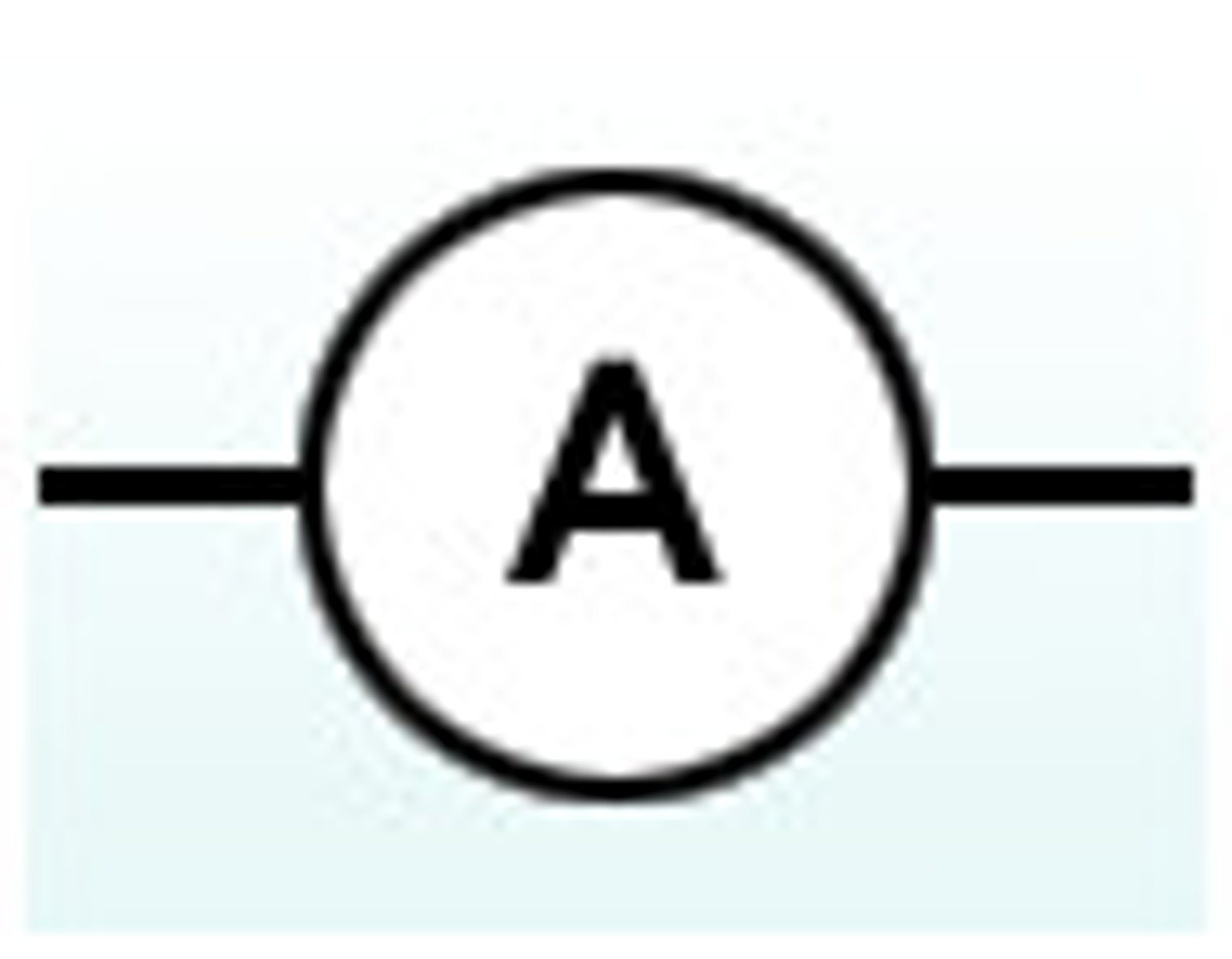
What can we measure current with?
Ammeter
What happens if a component breaks in a series circuit?
the circuit will no longer function as current can not flow
What happens if a component breaks in a parallel circuit?
- the circuit will still function
- because each component is connected to the power supply separately
E.g. Christmas tree lights are connected in parallel
Describe the current in a parallel circuit
current splits into different branches
What is a parallel circuit?
a circuit that has more than one path for electric current to flow through
Describe the energy stores in a circuit
- cell has a chemical energy store
- electrons carry electrical energy around the circuit
- electrical energy is transferred to other energy stores when electrons pass through the components
What is potential difference?
a measure of how much energy is transferred between two points in a circuit
What is potential difference measured in?
volts (V)
How do we measure potential difference?
- using a voltmeter
- the voltmeter must always be connected in parallel
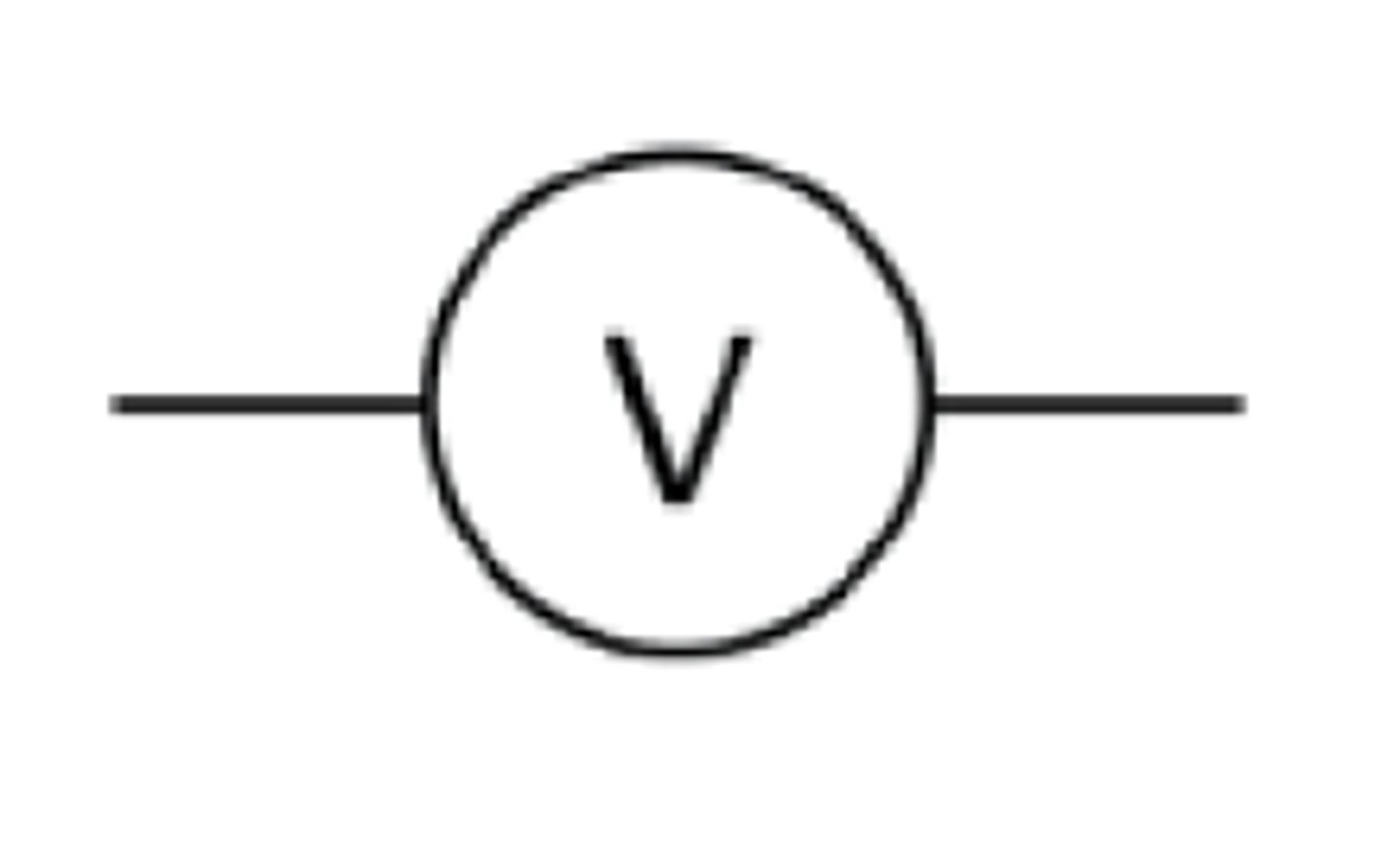
What is the circuit symbol for a voltmeter?
Voltmeter
How do we calculate the total potential difference in a series circuit?
the sum of each component's potential difference is equal to the total potential difference in a series circuit
How do we calculate the total potential difference in a parallel circuit?
in a parallel circuit, the potential difference across each component is the same
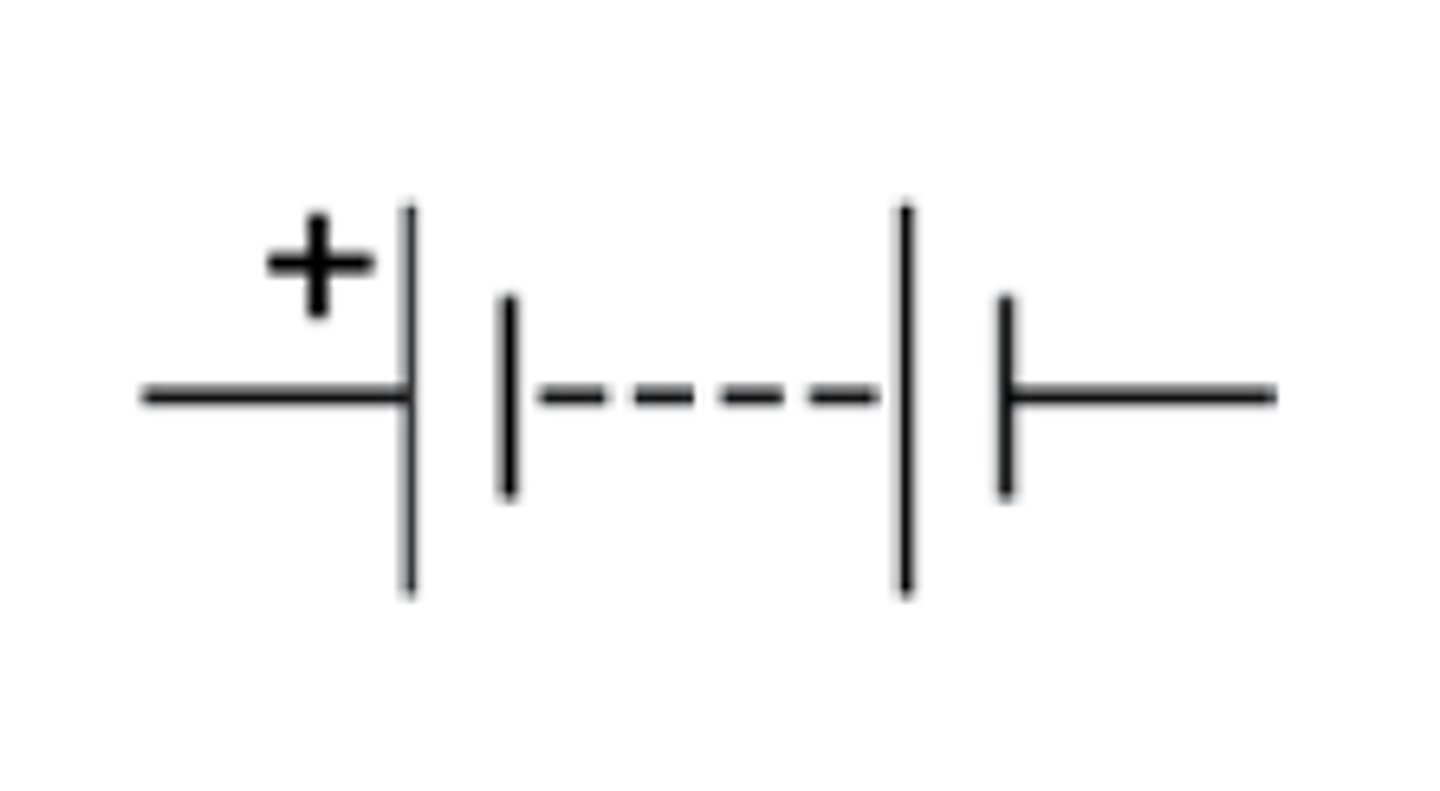
What is the circuit symbol for a battery?
Battery
What would happen if the cells in a circuit were facing the wrong direction?
the potential difference would equal 0 volts
What is electric charge measured in?
coulombs (C)
How do we calculate electric charge?
Q=It
I=Q/t
t=Q/I
Electric charge (C) = Current (A) x time (s)
What is electric charge?
a property of matter that causes a force when in an electric field
How do we calculate energy transfer by components in an electric circuit?
E=QV
Energy transferred (J) = charge flow (C) X potential difference (V)
What is resistance?
the opposition to the flow of current
What does it mean if the circuit has high resistance?
it is harder for current to flow through the circuit
What does it mean if the circuit has low resistance?
it is easier for current to flow through the circuit
How do we calculate resistance in a circuit?
R=V/I
V=IR
I= V/R
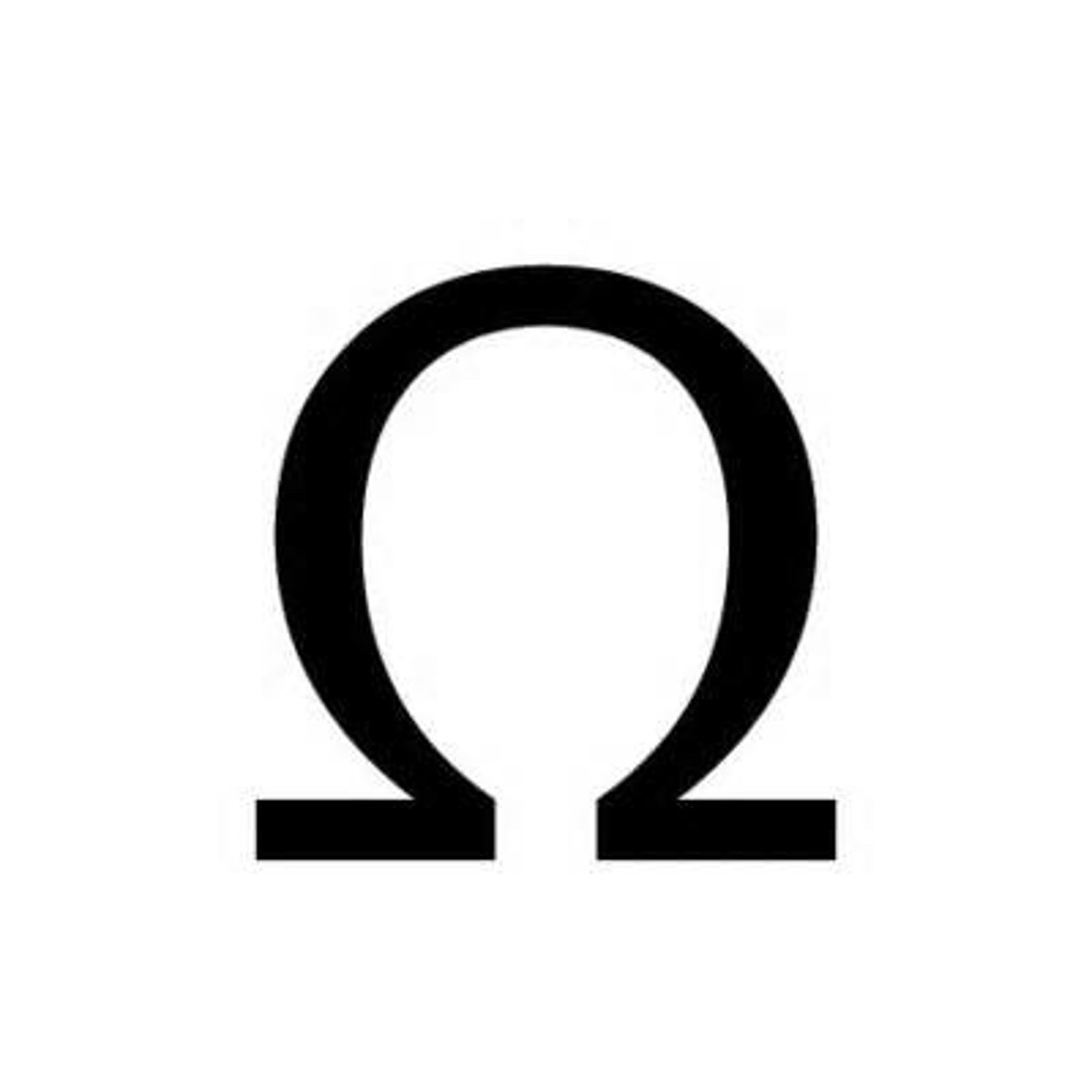
Resistance (Ω) = potential difference (V) / current (A)
What do we measure resistance in?
Ohms
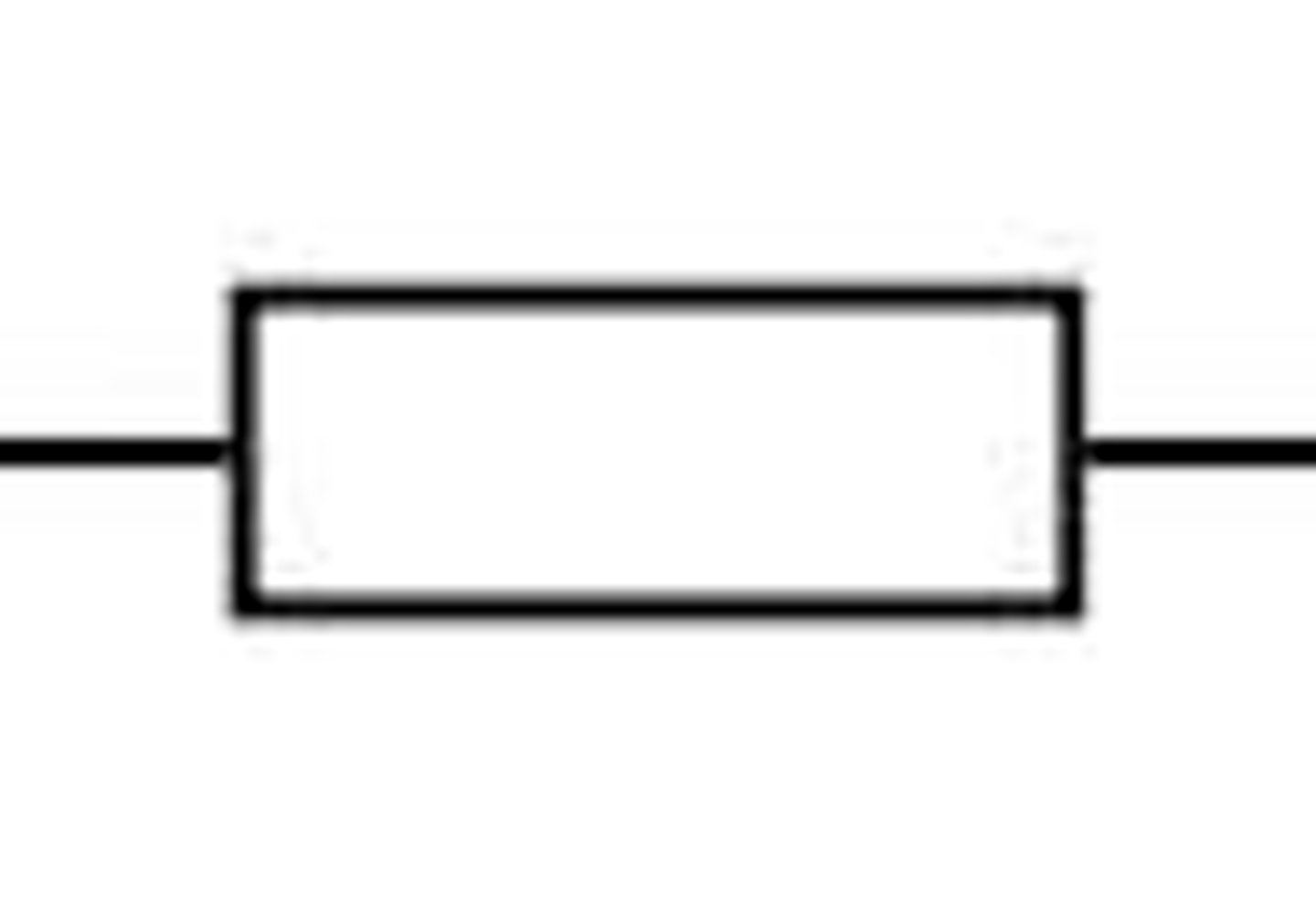
What is the circuit symbol for a resistor?
Resistor
How can resistors be useful?
resistors can reduce the brightness of a lamp
What is a resistor?
an electrical component that opposes the flow of current
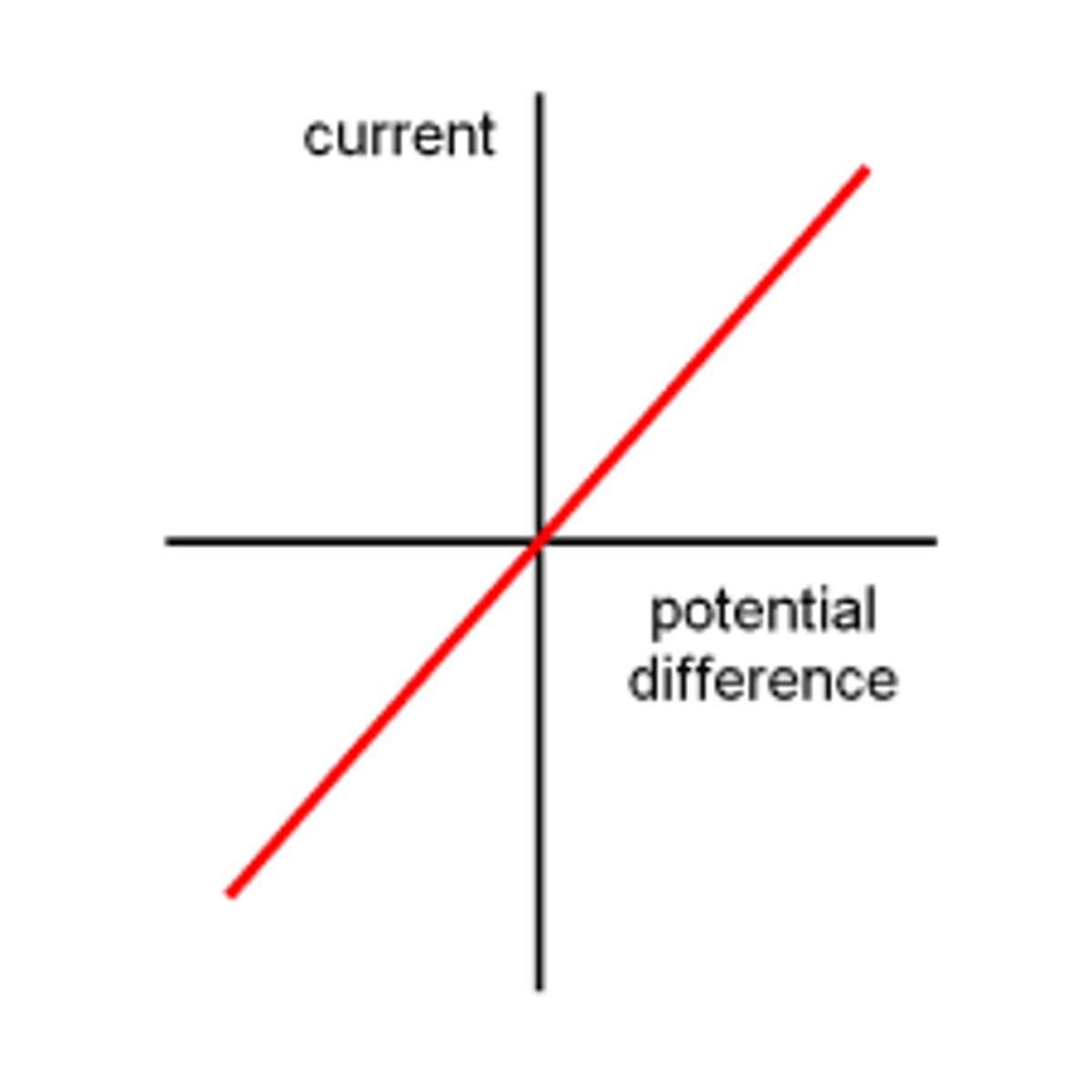
What is an ohmic conductor?
A resistor in which the current is directly proportional to the potential difference at a constant temperature
Draw a current-potential difference graph for a resistor
Describe the features of a filament lamp
- wire is made of metal, metal ions vibrate more to resist flow of electrons when temperature of the lamp increases
- very tightly coiled
- very thin
- it becomes very hot when an electric current passes through it
When does a filament lamp give out light?
when the filament lamp's filament becomes very hot it will give out light
Is a resistor an ohmic conductor?
Yes - a resistor's current and potential difference are directly proportional because there are no changes in temperature
Is a filament lamp an ohmic conductor?
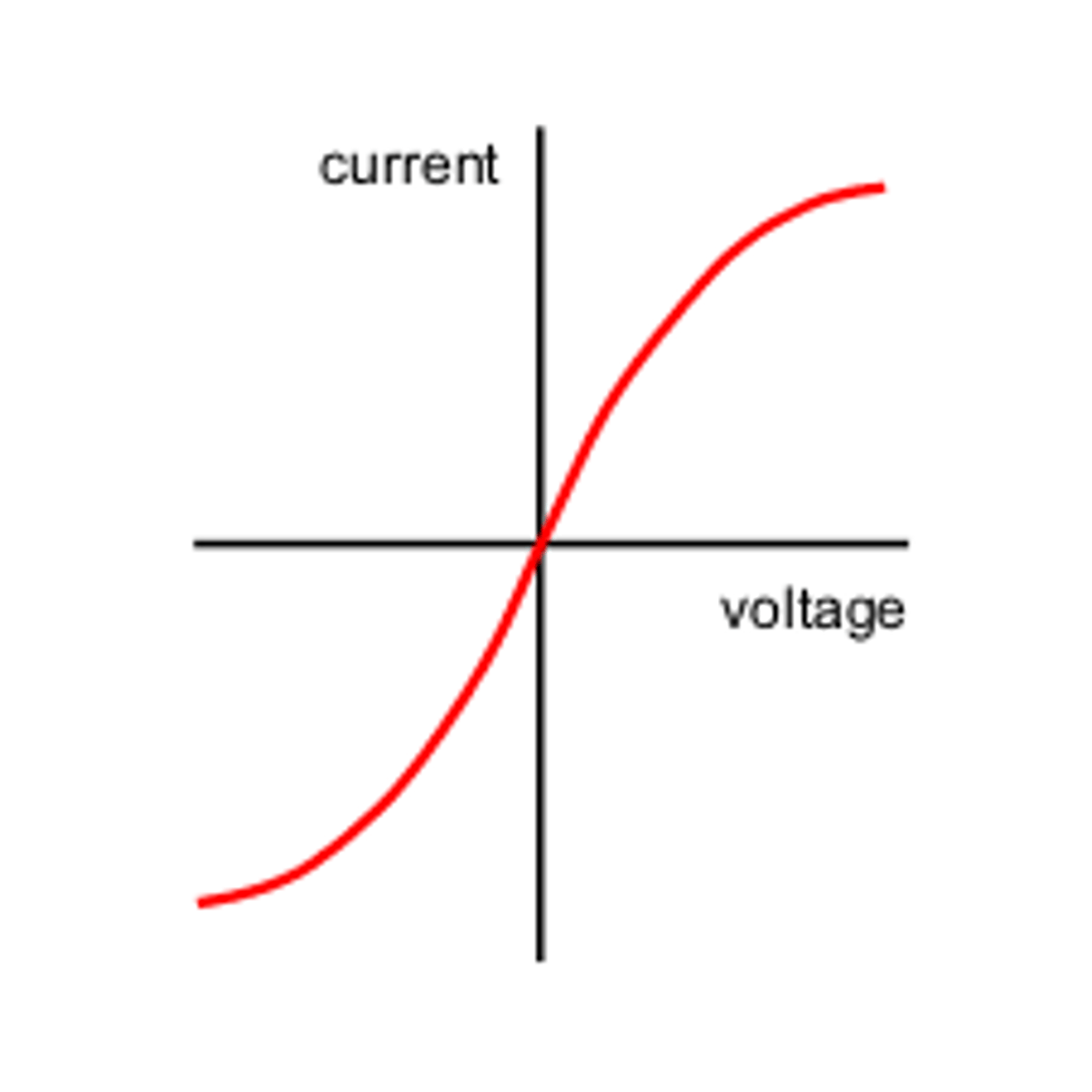
No - a filament lamp's current is not directly proportional to the potential difference as there are changes in temperature
Draw the current-potential difference graph for a filament lamp
How does resistance change in a filament lamp?
resistance increases in a filament lamp as the filament becomes hot and its temperature increases
Why does potential difference increase in a filament lamp?
- atoms in the filament vibrate more at higher temperatures
- this causes the electrons to collide more with the atoms in a wire, so more energy is needed to drive the current through the filament
- current no longer increases
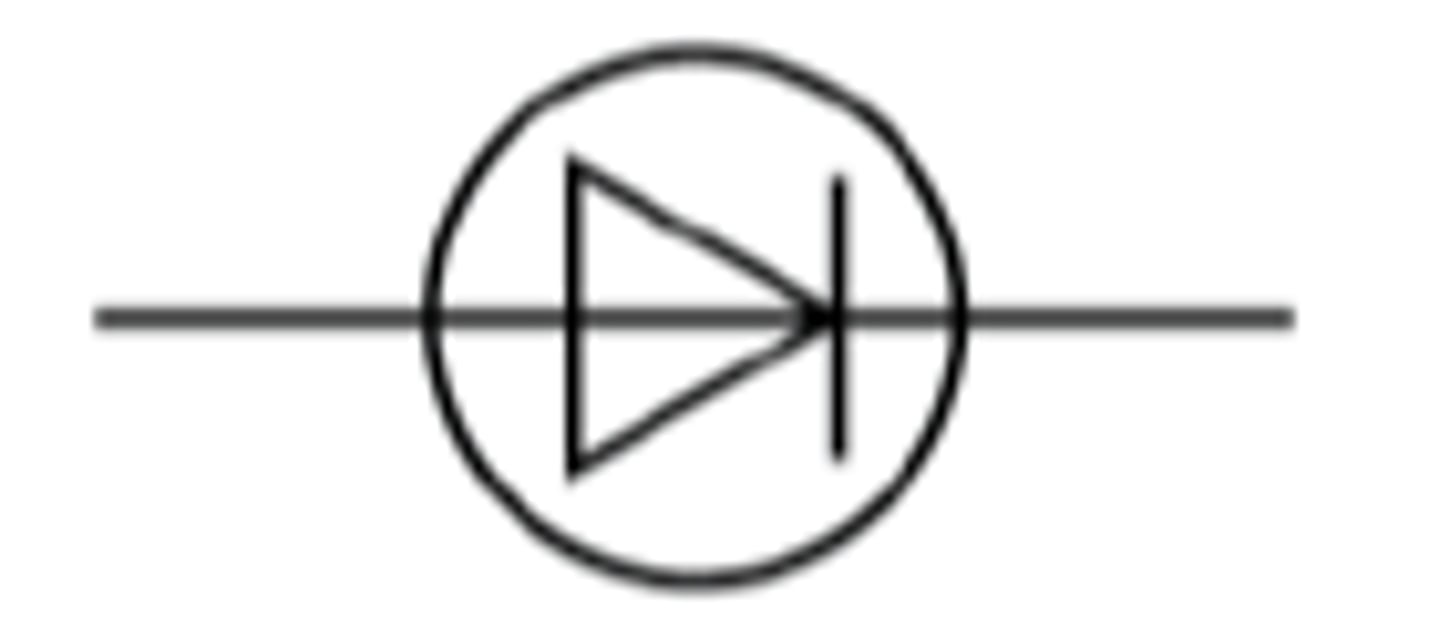
What is a diode?
a component that only allows current to flow in one direction only
What is the circuit symbol for a diode?
Draw the current-potential difference graph for a diode
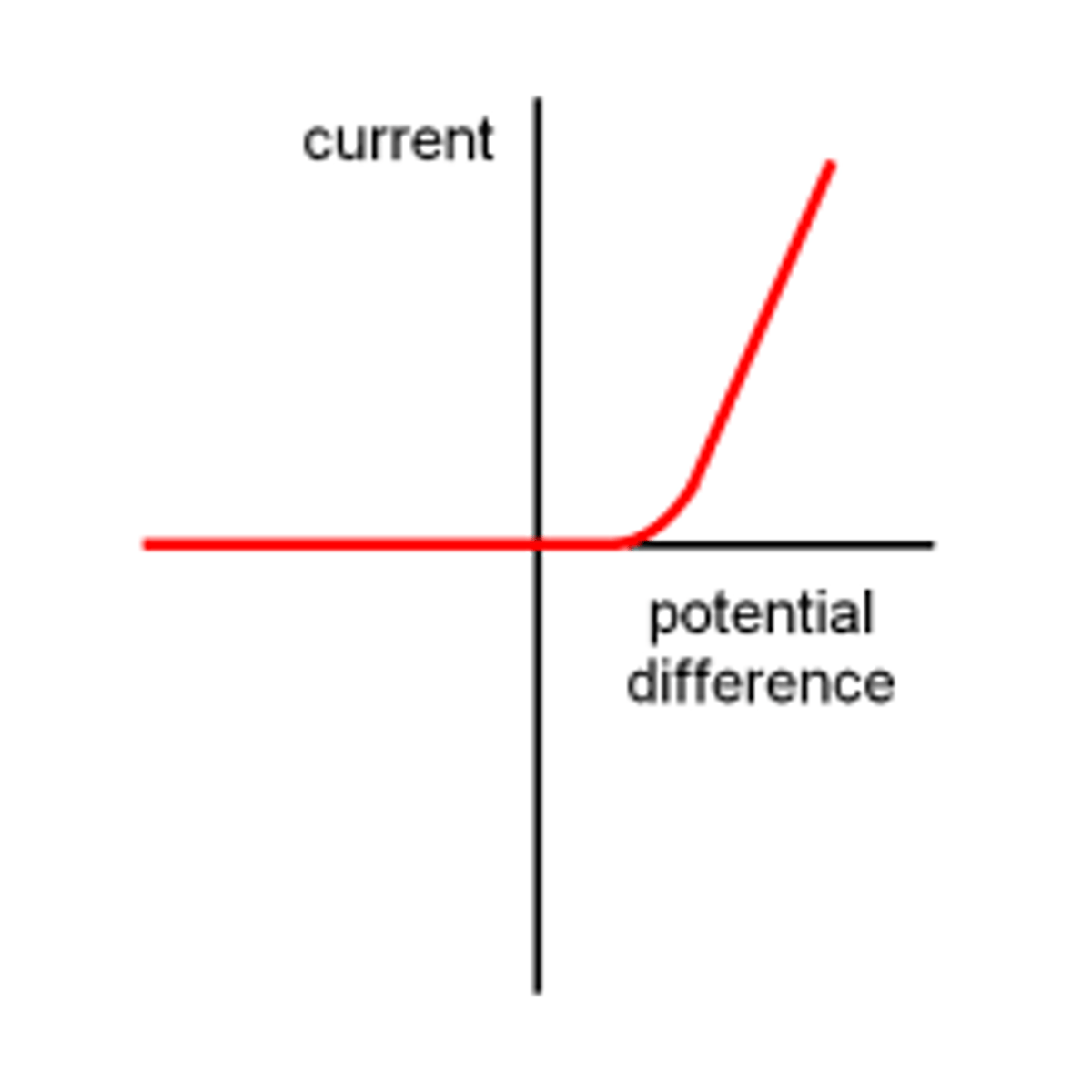
Why does a diode have high resistance?
to oppose current when it tries to flow in the other direction
How are diodes useful?
diodes can control the flow of current in a circuit
What is an LED (Light Emitting Diode)?
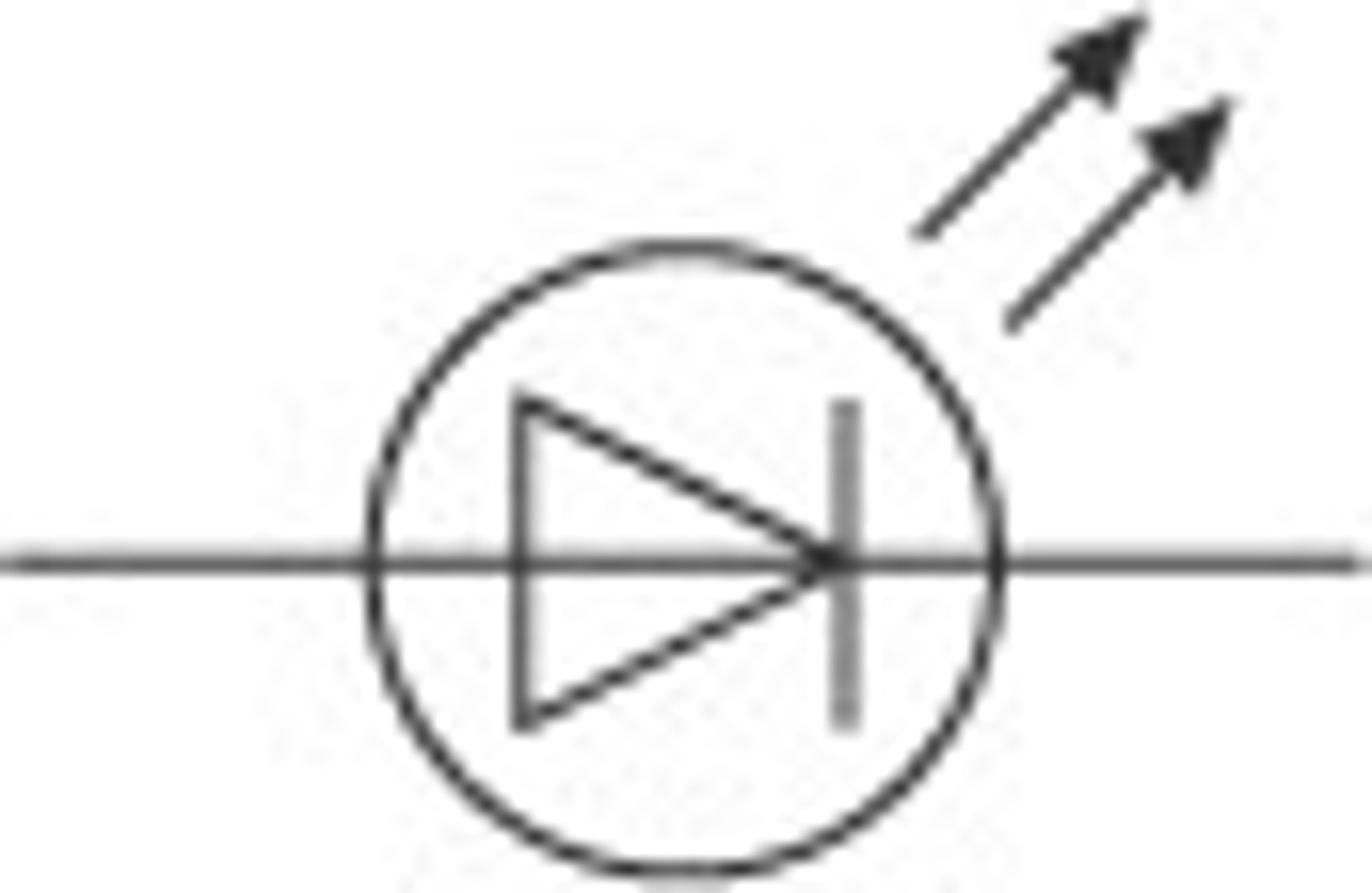
a component that allows current to flow in only one direction. It gives off light when current flows through it
Why are LEDs used in many different appliances?
LEDs are extremely energy-efficient
What is the circuit symbol for an LED?
Light-emitting diode
How is resistance calculated in series?
resistors in series add together to equal the total resistance as the current has to pass through each resistor
How is resistance calculated in parallel?
total resistance of 2 resistors in parallel is less than the resistance of the smallest resistor
What is an LDR (Light Dependent Resistor)?
a resistor that depends on the intensity of light
What is the circuit symbol for an LDR?
Light-dependent resistor
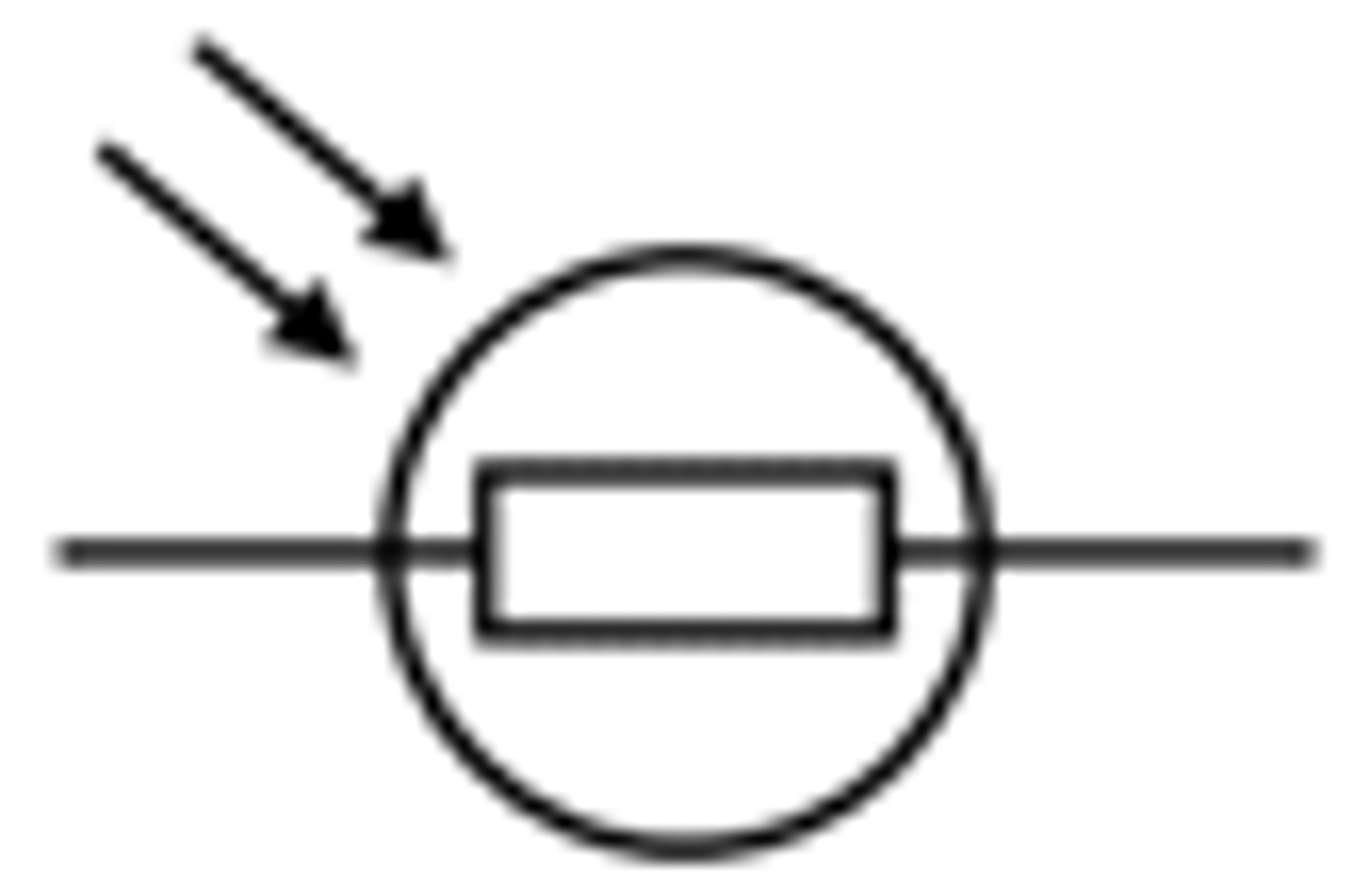
What is the resistance of an LDR in dark conditions?
In dark conditions, an LDR has a high resistance and it is difficult for current to pass through it
What is the resistance of an LDR in light conditions?
In light conditions, an LDR has very low resistance and it is easier for current to pass through it
How are LDRs useful?
they can detect light
What is a possible use of an LDR?
LDRs turn the screen of a mobile phone off to save battery when the user is having a conversation
What is a thermistor
a temperature dependent resistor
What is the circuit symbol for a thermistor?
Thermistor
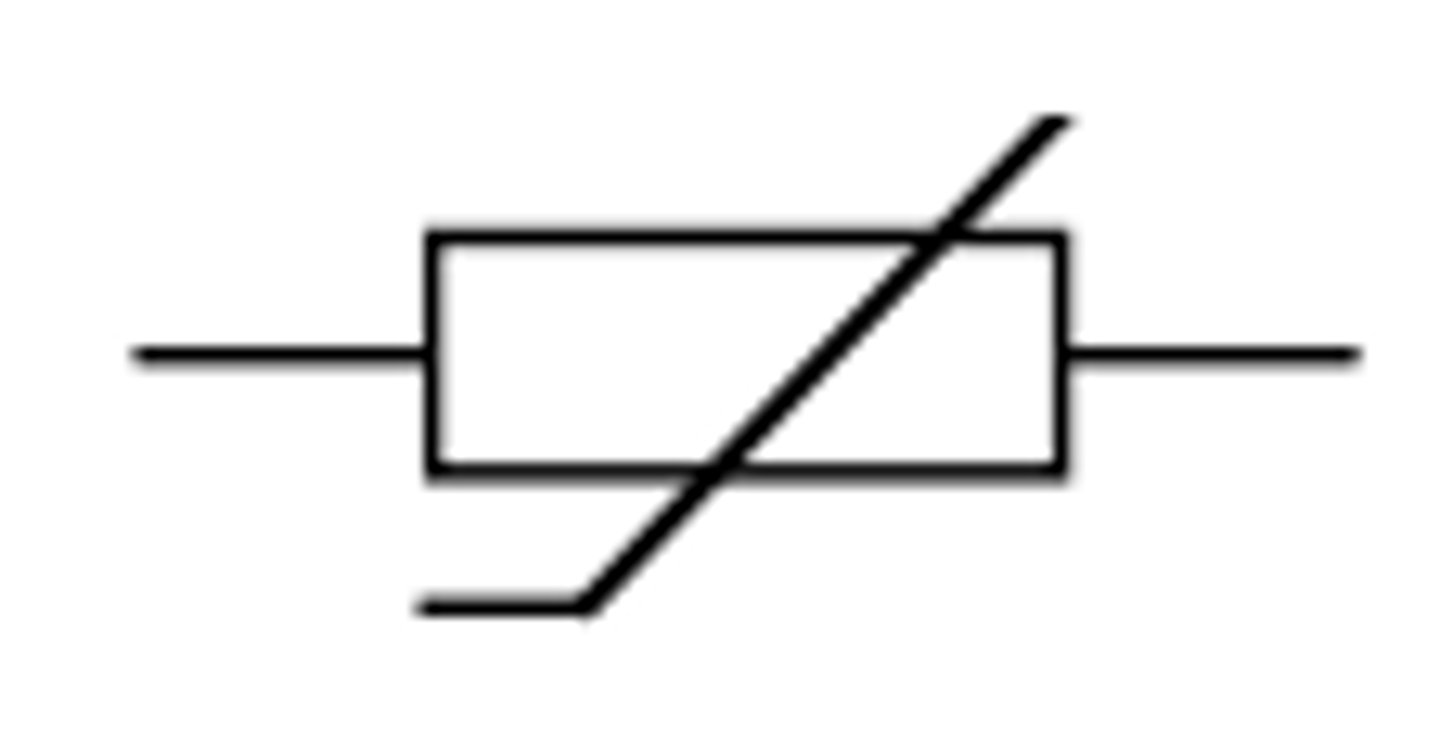
What is the resistance of a thermistor like under cool conditions?
resistance of the thermistor is high under cool conditions and it is difficult for current to pass through the thermistor
What is the resistance of a thermistor like under warm conditions?
resistance of the thermistor is low under warm conditions and it is easier for current to pass through the thermistor
What happens to the resistance of a thermistor if temperature increases?
resistance decreases in the thermistor if temperature increases
What are some uses of thermistors?
- thermistors can be used as thermostats in computers
- thermistors can be used in incubators for premature babies. The babies have to be kept warm so the thermistor detects whether the temperature has fallen and if it has then a lamp switches on and an alarm sounds
What equipment is required when carrying out a practical on how resistance depends on the length of the wire in a circuit?
1 battery
1 ammeter
1 voltmeter
a length of wire
Required Practical 3: Resistance
What are the steps needed to investigate how resistance depends on the length of the wire in a circuit?
1) Attach the wire to a metre ruler and connect wire to rest of the circuit using 2 crocodile clips
2) Move the crocodile clips apart to increase length of the wire
3) Use an ammeter to measure the current and a voltmeter to measure the potential difference of the circuit
4) Then calculate the resistance at different lengths of the wire using the equation R=V/I and record results
5) We can conclude that resistance is directly proportional to the length of the wire by plotting results on a graph
What are some issues with this practical investigating how resistance depends on the length of the wire in a circuit
Zero Error:
- when a reading on measuring instrument should read zero but does not
- this is a systematic error and can't be reduced by repeating the practical
- zero error is caused by error in the positioning of the crocodile clips on the wire
- we have to subtract the zero error from all of the readings
Heating Effects:
- if we use a lower p.d. and only turn on the current when taking a reading this will prevent the results from being inaccurate due to the temperature of the wire increasing to cause resistance to increase
What is meant by zero error?
- a systematic error where a result should be equal to 0, but is not
- zero errors must be subtracted from the final results of a practical
Why is it not necessary to use two different measuring instruments that both give results to the same decimal place?
- both measuring instruments have the same resolution
- so the start and end temperatures are only needed to be measured
What is a variable resistor?
a resistor which can change the length of the wire that the current flows through
What equipment is required in a practical investigating current and potential difference characteristics in circuit?
1 battery
1 ammeter
1 voltmeter
1 resistor
1 variable resistor
Required Practical 4: Current/PD Characteristics
What are the steps involved in a practical investigating current and potential difference characteristics?
1) Use voltmeter and ammeter to measure potential difference and current in the resistor and record the readings
2) Adjust variable resistor and take new readings on voltmeter and ammeter several times to gain a range of readings
3) Switch direction of battery to make direction of potential difference reversed and voltmeter and ammeter to read negative values, do this several times for range of results
4) Plot a graph detailing our results - results will vary based on which component is being investigated
What are the results in a practical investigating current and potential difference characteristics in a resistor?
Current through the resistor will be directly proportional to the potential difference
What would happen if we replaced the resistor with a filament lamp?
- the current through the lamp would not be directly proportional to the potential difference
- as there are changes in temperature
- when resistance increases as temperature of the filament increases
What would happen if we replaced the resistor with a diode?
the current can only flow in one direction so if the variable resistor is reversed, there will be no current in the diode in the opposite direction due to its high resistance
What problems could there be in this practical investigating current and potential difference characteristics in circuit components?
If the temperature of the circuit becomes too hot, this will impact our results as ohmic conductors only have directly proportional current and potential difference characteristics if the temperature is constant
Why are metals good conductors?
electrons can easily flow through them
E.g. Copper
Why do insulators not conduct electricity?
electrons can not move through them
E.g. Plastic, cloth
What is static electricity?
an imbalance of electric charge on the surface of a material
Explain an example of static electricity:
If we rub a cloth and a plastic rod together, friction will occur and electrons will move from the plastic rod onto the cloth. The cloth will be negatively charged as it has gained electrons. The plastic rod will be positively charged as it has lost electrons.
How can static electricity cause a spark and be dangerous?
Static electricity can cause electrostatic charge to build up and cause a spark and trigger an explosion.
E.g. a spark can be caused as fuel flows through a refuelling pipe.
What is an electric field?
a region where charge experiences a force
Objects with opposite charges....
atrract
Objects with the same charge.....
repel
What does an electric field look like?
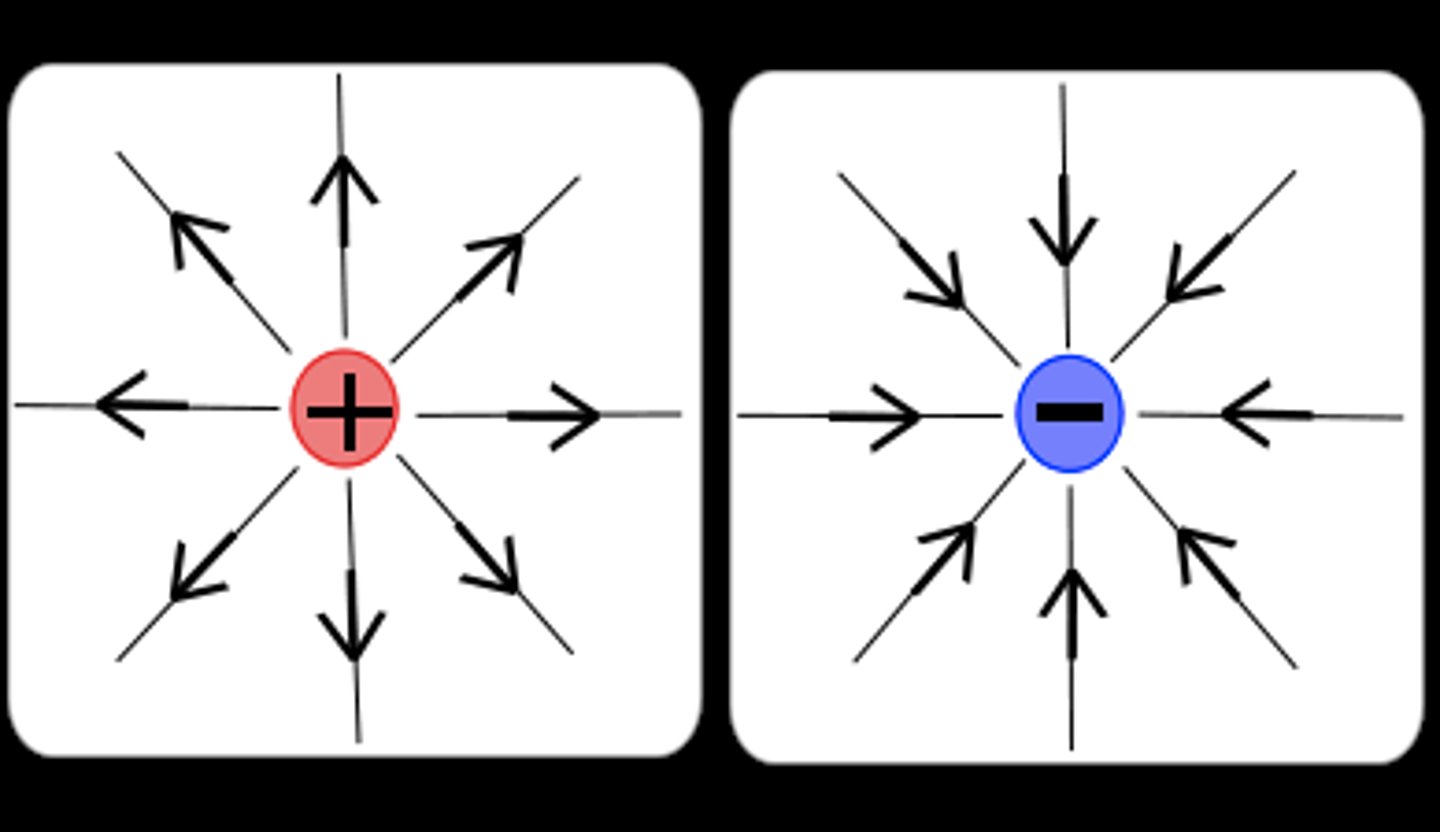
How does the strength of an electric field change with distance?
the closer the electric field is to the object, the stronger the electric field will be
Why does adding resistors in series increase the total resistance?
the total resistance in series is the sum of all the components resistance added together. So if more resistors are added, there are more components to add up to the total resistance
Why does adding resistors in parallel decrease the total resistance?
adding more resistors in parallel creates more paths for current to flow through, so resistance decreases
How are transformers used in the national grid
- step-up transformers increase potential difference and decrease current of electricity for energy-efficient transmission
- then, step-down transformers reduce potential difference to 230 V when it reaches mains electricity in people's homes
How does increasing the potential difference of electricity at a given power affect the current?
- current will decrease
Explain why the potential difference-current graph of a filament lamp curves as the current increases
- temperature of the filament increases as current flows through it
- as temperature increases, the resistance increases
- the greater the resistance, the flatter the graph, so the graph curves as current increases
How do filament lamps waste energy?
- filament lamps waste energy as heat
What is meant by energy efficient?
energy efficient means the amount of energy supplied that is transferred in a useful form
What are transformers used for?
- in the National Grid, step-up transformers increase the potential difference and reduce the current to reduce the loss of energy through the transmission cables
- step-down transformers decrease the potential difference before it reaches homes
What is the effect of increasing the potential difference of electricity at a given power?
Increasing the potential difference of electricity at a given power decreases the current.