Chem AO2 questions
 Call Kai
 Learn
Learn Practice Test
 Spaced Repetition
 Match
Match Flashcards
 Knowt Play
1/3

There's no tags or description
Looks like no tags are added yet.
Name | Mastery | Learn | Test | Matching | Spaced | Call with Kai |
|---|
No analytics yet
Send a link to your students to track their progress
4 Terms
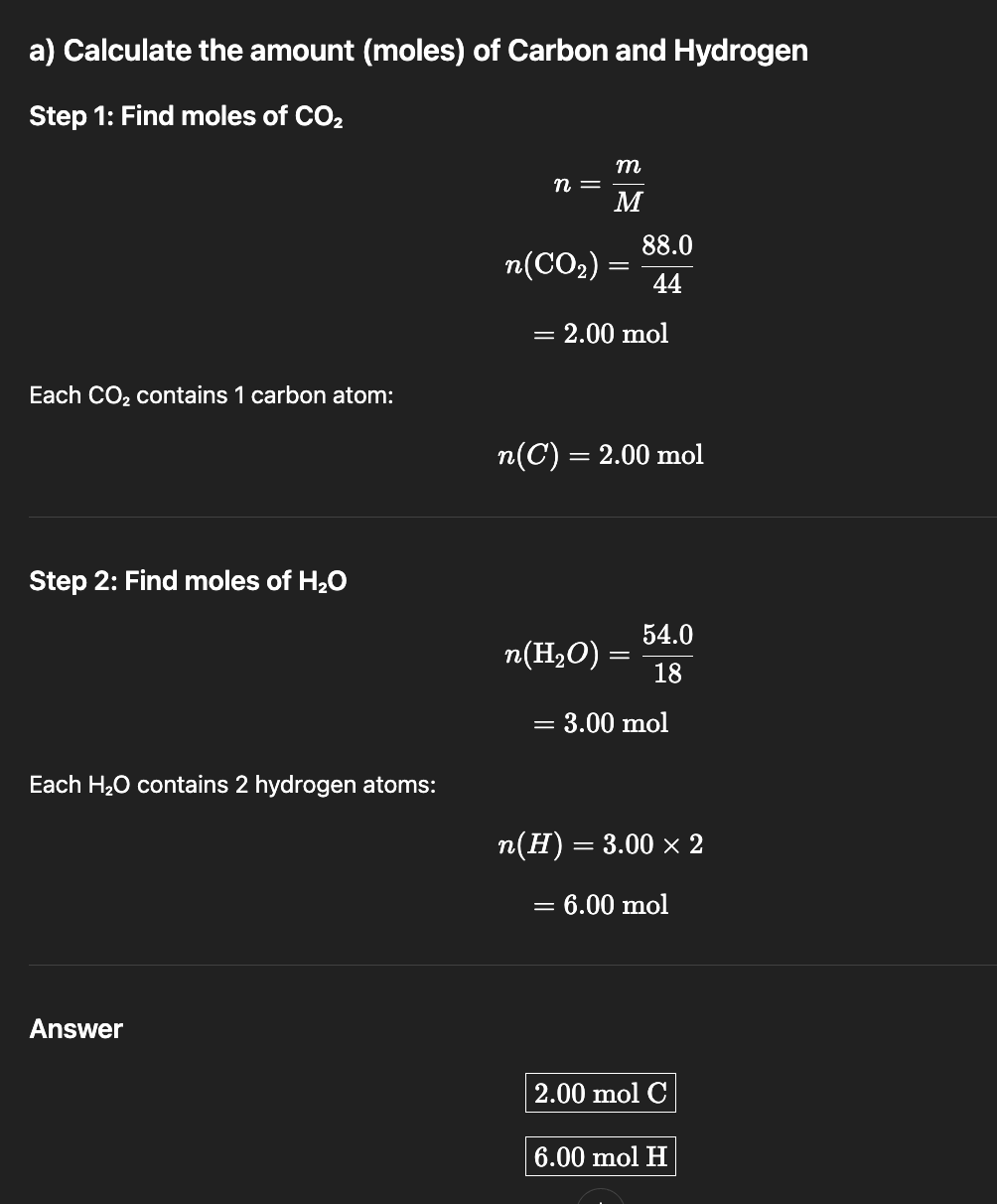
hydrocarbon was completely combusted in excess oxygen.
In the experiment:
88.0 g of carbon dioxide gas was produced
54.0 g of water was produced
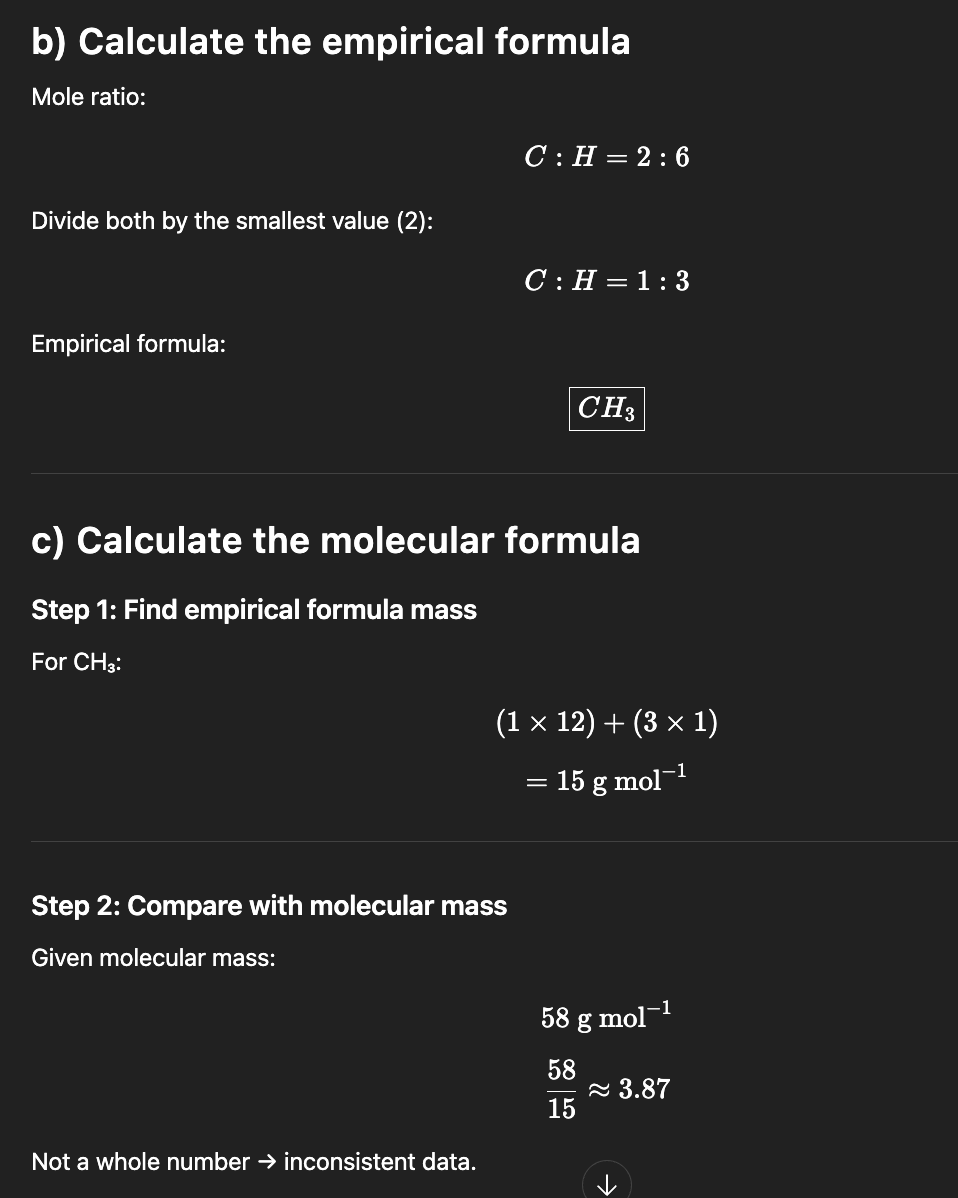
The molar mass of the hydrocarbon was later found to be 58 g mol⁻¹.
a.
Calculate the amount, in moles, of carbon and hydrogen produced in this experiment.
b.
Using this information, determine the empirical formula of the hydrocarbon.
c.
Determine the molecular formula of the hydrocarbon.
Useful molar masses?
Application
There are many different methods of determining the empirical formula of a compound. To
determine the empirical formula of a hydrocarbon, a combustion reaction can be used.
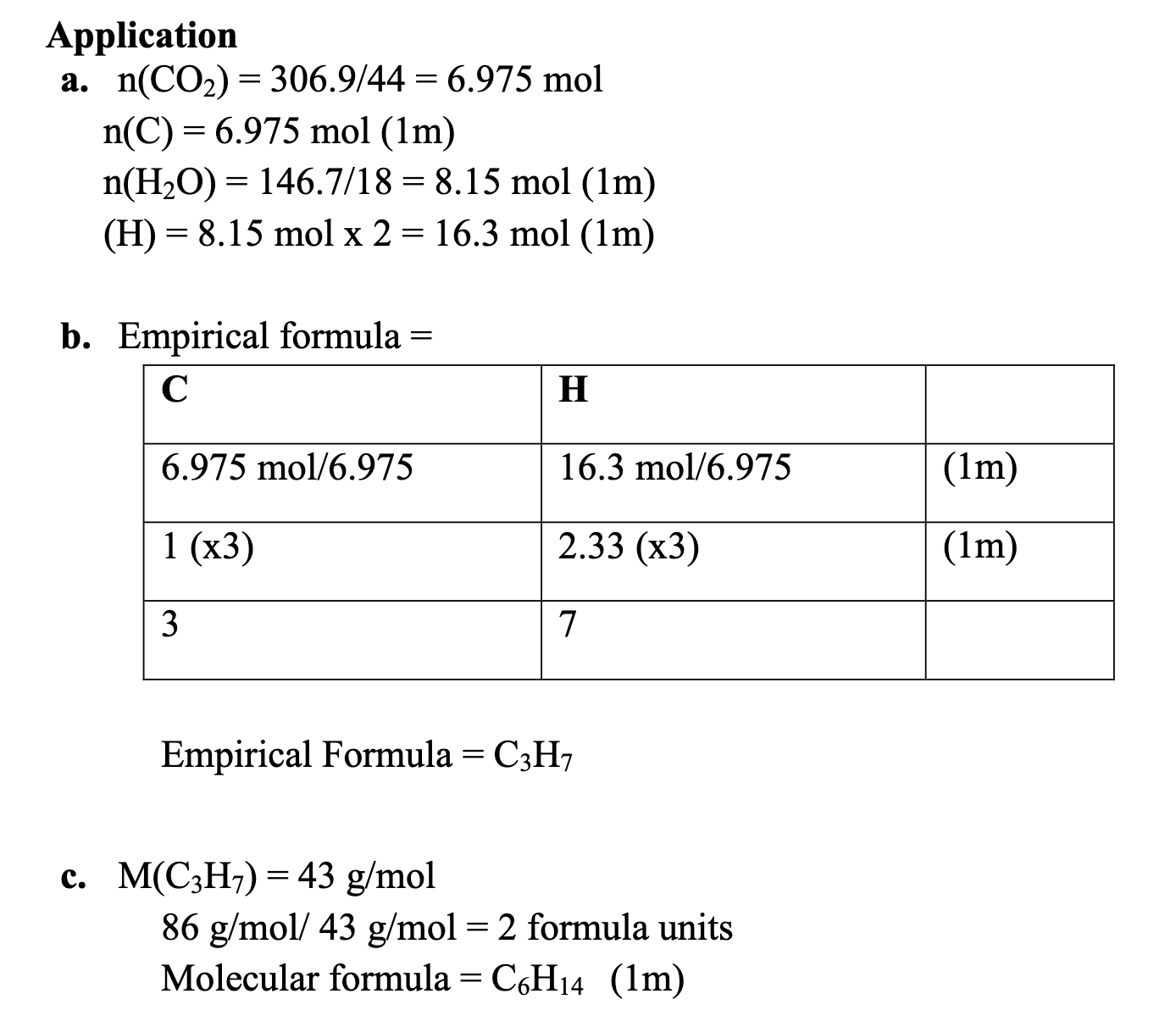
In one experiment, 100 g of an unidentified hydrocarbon was combusted in excess oxygen,
and 306.9 g of Carbon Dioxide gas and 146.7g of water were produced.
a. Calculate the amount, in moles, of Carbon and Hydrogen produced in this experiment
(3 Marks)
_____________________________________________________________________
_____________________________________________________________________
_____________________________________________________________________
b. Using this information, calculate the empirical formula of the hydrocarbon combusted
in this experiment (2 Marks)
_____________________________________________________________________
_____________________________________________________________________
_____________________________________________________________________
c. If the molecular mass of this compound is found to be (86 g/mol), identify the
molecular formula of the organic compound. (1 Mark)
a
a
a
a