MCB 2004 Dr. Dennis Quizzes 1 & 2 (Exam 1)
 Call Kai
 Learn
Learn Practice Test
 Spaced Repetition
 Match
Match Flashcards
 Knowt Play
1/39

There's no tags or description
Looks like no tags are added yet.
Name | Mastery | Learn | Test | Matching | Spaced | Call with Kai |
|---|
No analytics yet
Send a link to your students to track their progress
40 Terms
The hypothesis that cowpox could provide protection against smallpox was tested by ________ and provided the basis for the first vaccine.
Edward Jenner
Fungal infections are studied by
mycologists
Work by ________ laid the foundations of immunology with the development of vaccines.
Jenner and Pasteur
Microorganisms characterized by the absence of a nucleus are called
prokaryotes.
Which of the following is an incorrect pairing?
Protozoa; multicellular
They are unicellular
Proof that a microbe could cause disease was provided by
Koch.
A dehydration synthesis reaction between glucose (C6H12O6) and fructose (C6H12O6) produces a molecule of sucrose (C12H22O11). Why don't the two individual molecular formulae add up to the same number of atoms in the sucrose product?
In a dehydration reaction, a water molecule (H2O) is removed from the final molecule formed.
What is the type of bond holding hydrogen and oxygen atoms together in a single H2O molecule?
covalent bond
Which of the following statements regarding protein structure is FALSE?
Tertiary structures are formed only from covalent bonds.
Table 2.1
16/8 O; 12/6 C; 1/1 H
Using the information in Table 2.1, calculate the molecular weight of ethanol, C2H5OH.
46
Which molecule is composed of a chain of amino acids?
protein
An E. coli culture that has been growing at 37°C is moved to 25°C. Which of the following changes must be made in its plasma membrane to help it cope with the decrease in temperature?
The number of unsaturated chains must increase.
Which type of molecule is composed of (CH2O) units?
carbohydrate
The negative stain is used to
determine cell size.
You are studying a cell structure that is approximately 100 nm in size. Which of the following provides the greatest magnification you can use to see this structure?
scanning electron microscope
Which microscope achieves the highest magnification and greatest resolution?
electron microscope
Which two staining techniques employ a mordant?
Gram stain; Flagella stain.
A virus measures 100 nm in length. What is its length in μm?
0.1 μm
Which microscope is used to observe viruses and the internal structure of thinly sectioned cells?
transmission electron microscope
Which of the following places the steps in the correct sequence?1-Staining
2-Making a smear
3-Fixing
2-3-1
Which structure protects bacteria from being phagocytized?
capsule
Each of the following statements concerning the gram-positive cell wall is true EXCEPT
it protects the cell in a hypertonic environment.
Which of the following is NOT a typical characteristic of most bacterial plasma membranes?
contains cholesterol
Antibiotics that target cell wall synthesis ultimately cause bacterial cell death as a result of
osmotic lysis
Which of the following organisms is a prokaryote?
archaea
Which one of the following organisms has a cell wall?
fungi
A particular type of inclusion body that is used to orient bacteria in three-dimensional space in a fluid environment is the
gas vacuole.
What is the fate of pyruvic acid in an organism that uses aerobic respiration?
It is converted into acetyl CoA.
Sulfanilamide is an antimicrobial drug that mimics the shape of an important substrate for a particular bacterial enzyme, thereby inhibiting the enzyme. This type of inhibition is known as
competitive inhibition.
Which of the following uses glucose for carbon and energy?
chemoheterotroph
Gallionella bacteria can get energy from the reaction Fe2+ → Fe3+. This reaction is an example of
oxidation.
Chemical reactions that can proceed toward either anabolism or catabolism are called
amphibolic.
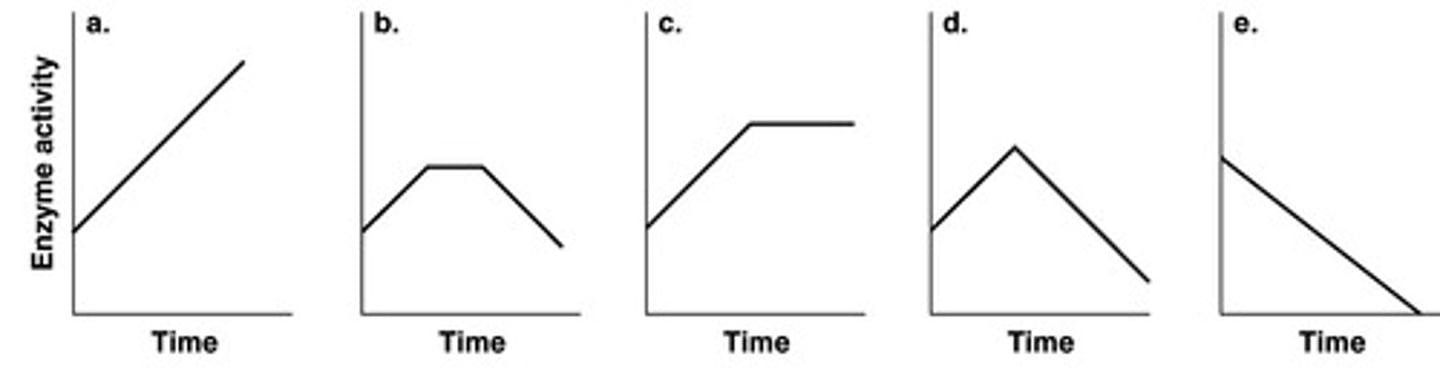
Which of the graphs in Figure 5.5 best illustrates the activity of an enzyme that is saturated with substrate?
c
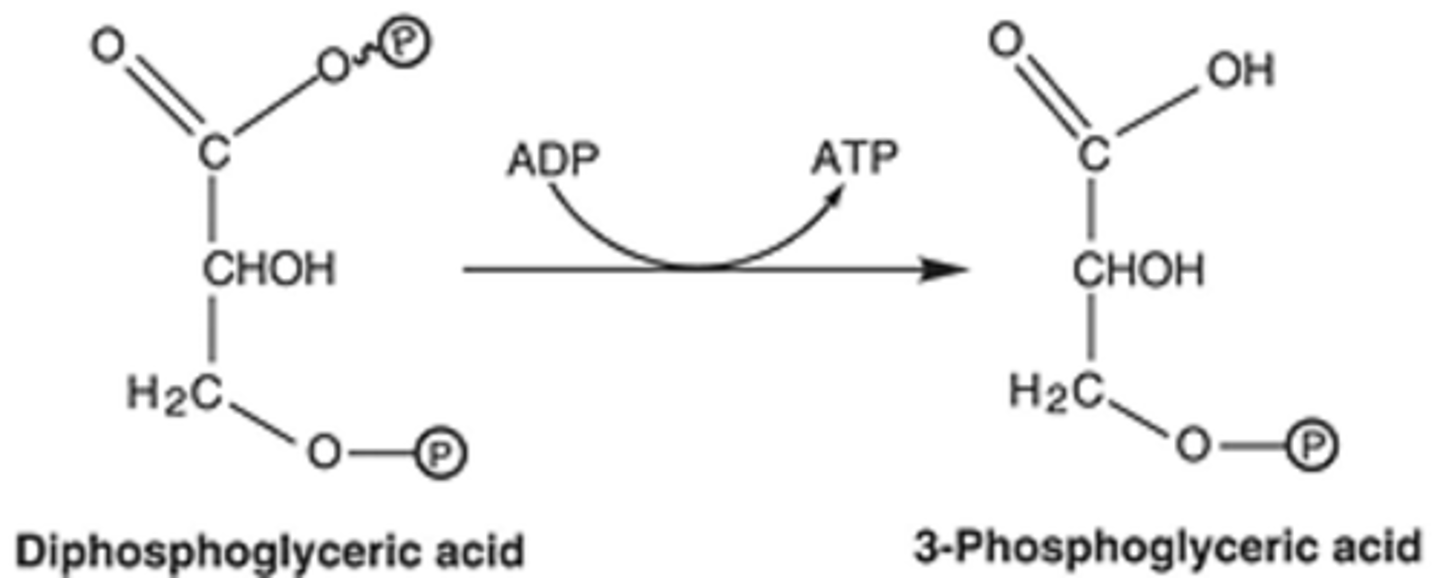
How is ATP generated in the reaction shown in Figure 5.4?
substrate-level phosphorylation
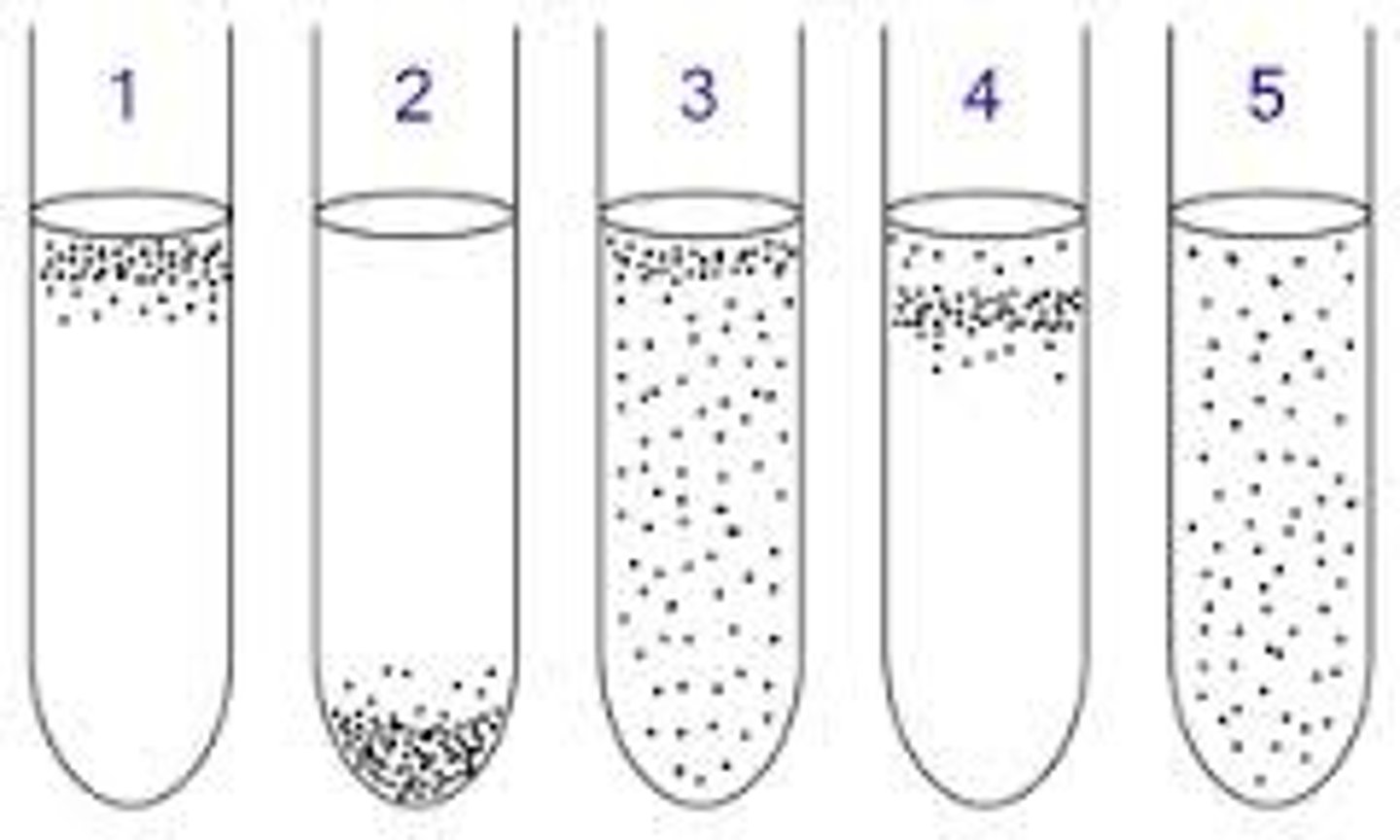
In Figure 6.3, which tube shows the expected growth pattern for a microaerophile?
e
________ are complex communities of various types of microbes that adhere to surfaces.
Biofilms
The ________ of a population is the time it takes for the cells to double in number.
generation time
A sample of well water is tested for its bacterial content in a plate count assay. A one-milliliter sample of the water is diluted in a 1:10 dilution series. One milliliter of the fourth dilution tube is plated in a pour plate. After incubation, the plate has 83 colonies, indicating that the original water sample contained
830,000 cells per milliliter.
A capnophile is a microorganism that thrives in conditions of high
carbon dioxide levels.
A sample of milk is tested for its bacterial content in a plate count assay. A one-milliliter sample of the milk is diluted in a 1:10 dilution series. One milliliter of the third dilution tube is plated in a pour plate. After incubation, the plate has 54 colonies, indicating that the original milk sample contained
54,000 cells per milliliter.