4.2 Energy, power and resistance
 Call Kai
 Learn
Learn Practice Test
 Spaced Repetition
 Match
Match Flashcards
 Knowt Play
1/45

There's no tags or description
Looks like no tags are added yet.
Name | Mastery | Learn | Test | Matching | Spaced | Call with Kai |
|---|
No analytics yet
Send a link to your students to track their progress
46 Terms
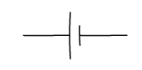
What does a cell look like?
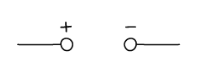
What does a DC power supply look like?
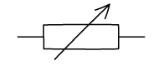
What does a variable resistor look like?
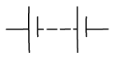
What does a battery look like?
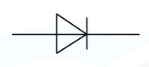
What does a diode look like?
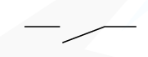
What does a switch look like?
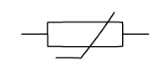
What does a thermistor look like?
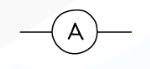
What does an ammeter look like?
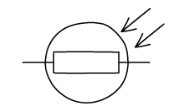
What does a LDR look like?
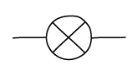
What does a lamp look like?
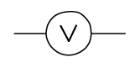
What does a voltmeter look like?
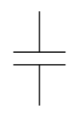
What does a capacitor look like?
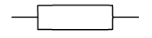
What does a fixed resistor look like?
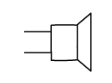
What does a loud speaker look like?
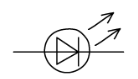
What does a LED look like?
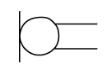
What does a microphone look like?
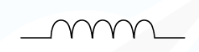
What does an inductor look like?
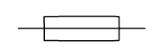
What does a fuse look like?
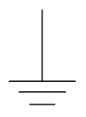
What does an earth look like?
What does an AC power supply look like?

What does a variable voltage supply look like?
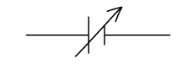
What does a potentiometer look like?
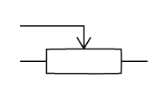
What does a galvometer look like?
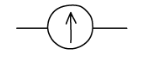
What is e.m.f.?
The work done per unit charge, transferring energy into electrical energy
What is p.d.?
The work done per unit charge, transferring energy from electrical energy into other types of energy
What is the difference between e.m.f. and p.d.?
Emf is equal to the terminal potential difference when no current flows. It is the amount of energy provided by the battery to each coulomb of charge passing through. On the other hand pd is the work done per unit charge transferring from electrical energy to other energy stores
What is the ideal resistance for a voltmeter and why?
Infinite so it doesn’t affect pd
Define 1V
1JC⁻¹
Define 1Ω
1VA⁻¹
What is the resistance of a component?
A measure of the difficulty of making currents pass through the component
What is Ohms law?
The current through a conductor is directly proportional to the potential difference across it, provided the physical conditions (e.g. temperature), do not change
What’s the name of a conductor that obeys ohms law?
Ohmic conductor
What does it mean if a metal has a positive temperature resistance?
The resistance increases with temperature
What causes a metal to have a positive temperature coefficient?
At higher temperatures, the atoms and ions in a metal vibrate more, increasing the chances of collision with the free electrons, which slows the free electrons down, decreasing the current per volt of p.d. across the metal ∴ increasing resistance
What happens to resistance as the temperature increases with a negative temperature coefficient thermistor?
An increase in temperature increases the number density of free electrons, so the resistance decreases
What is resistivity (ρ)?
The resistance of a 1m length of the material that a cross-sectional area of 1m² → how difficult it is for current to flow through the material
What is resistivity measured in?
ohm meter (Ωm)
What formula can be used to calculate resistivity?
ρ = RA/L
How does light intensity affect LDRs?
The higher the light intensity the lower the resistance
What does the graph look like for an ohmic conductor (e.g. a fixed resistor)?
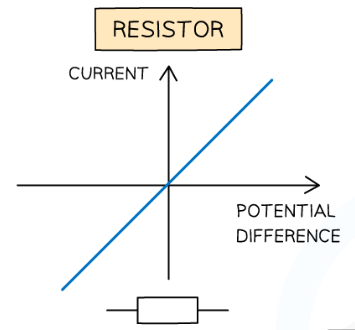
What does the graph look like for an filament lamp?
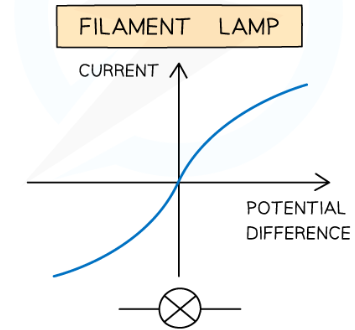
What does the graph look like for a semiconductor (e.g. diode)?
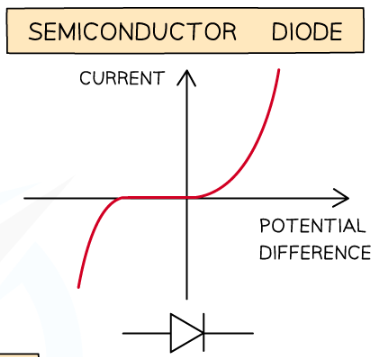
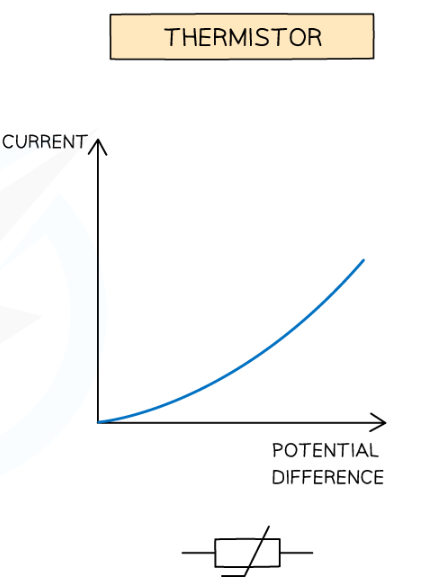
What does the graph look like for a thermistor?
Why does the gradient decrease for a filimant lamp IV characteristics graph?
The temperature of the filament increases as the current increases, so the atoms and ions vibrate more, colliding more often and increasing the resistance ∴ decreasing the gradient
Why does the gradient increase for a thermistor IV characteristics graph?
As voltage rises, the current causes self-heating which lowers resistance ∴ gradient increases
pag 3